Patient Monitoring Devices Market

Patient Monitoring Devices Market by Product (Multiparameter, Glucose CGM, Wearables, EEG, EMG, ECG, ILR, MCT, Pulse Oximeter, Fetal, Neonatal, BP, Hemodynamic, Spirometer, Capnograph), End User (Hospital, ICU, ASC), & Region - Global Forecast to 2031



PATIENT MONITORING DEVICES MARKET SIZE, SHARE & GROWTH SNAPSHOT
Source: Secondary Research, Interviews with Experts, MarketsandMarkets Analysis
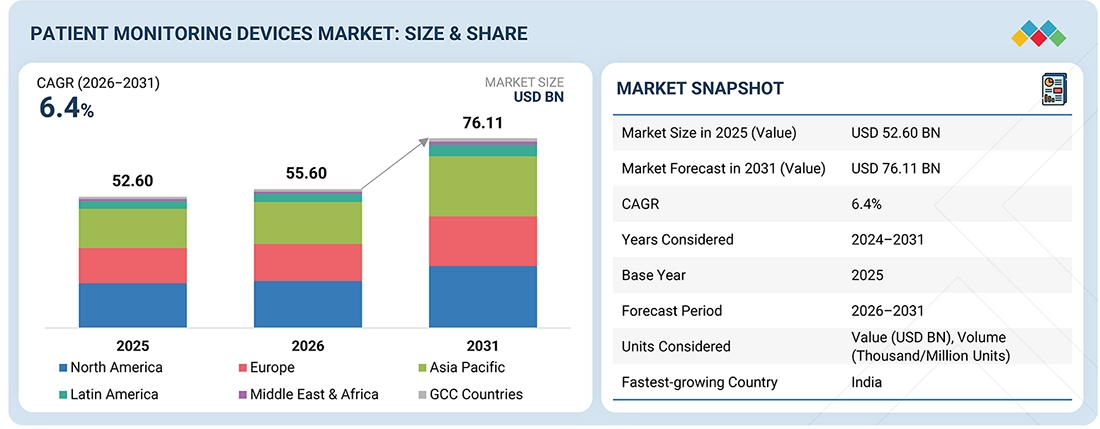
The global patient monitoring devices market is projected to grow from USD 55.60 billion in 2026 to USD 76.11 billion by 2031, at a CAGR of 6.4% during the forecast period. The market was valued at USD 52.60 billion in 2025. Revenue growth in the patient monitoring devices market is increasingly shifting toward connected, remote, and technology-enabled monitoring solutions that support continuous disease management and preventive care. The rising prevalence of chronic diseases, including cardiovascular diseases, diabetes, respiratory disorders, and hypertension, is expanding demand for advanced monitoring technologies that enable timely diagnosis and improved clinical decision-making. Market opportunities are moving beyond traditional hospital-based monitoring toward remote patient monitoring, wearable technologies, and Artificial Intelligence-enabled systems, driven by the growing need for decentralized healthcare delivery and improved patient management. Additionally, increasing investments by hospitals and healthcare providers in connected healthcare infrastructure are accelerating the adoption of next-generation patient monitoring solutions to enhance outcomes, optimize workflows, and address healthcare system pressures globally.
KEY TAKEAWAYS
-
MARKET SNAPSHOT:
Base Year Market Size (2025): USD 52.60 Billion
Current Market Size (2026): USD 55.60 Billion
Forecast Market Size (2031): USD 76.11 Billion
CAGR (2026–2031): 6.4% -
SEGMENT LEADERSHIP:
Regional Outlook: India is expected to register the highest CAGR of 9.1% during the forecast period.
Product Leader: Blood glucose monitoring devices segment is expected to register a CAGR of 6.4% during the forecast period.
End User Leader: Hospitals & clinics are projected to grow at a CAGR of 6.4% till 2031. -
MARKET OUTLOOK & COMPETITIVE LANDSCAPE:
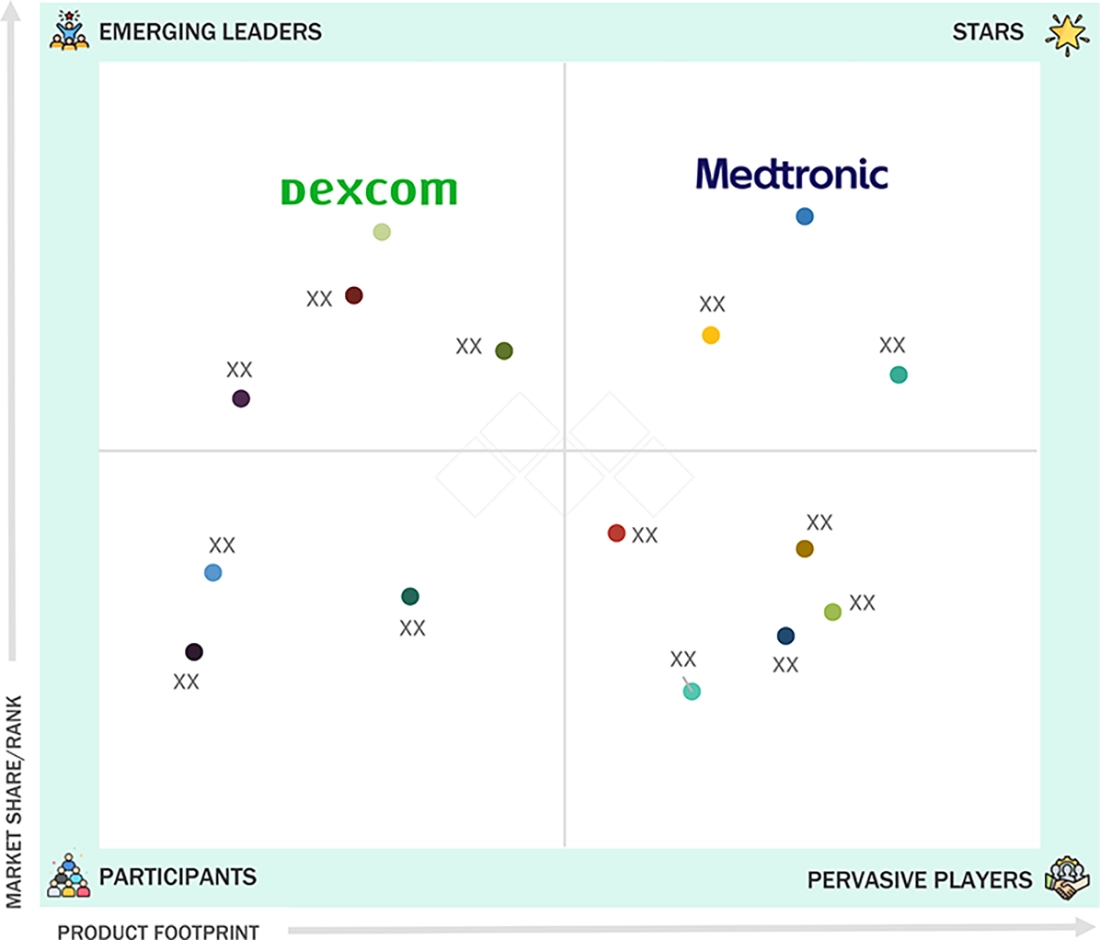
Medtronic Plc (Ireland), Abbott Laboratories (US), GE HealthCare (US), Philips Healthcare (Netherlands), and Nihon Kohden Corporation (Japan) were identified as Star Players in the patient monitoring devices market due to their strong focus on innovation, extensive product portfolios, broad industry presence, and robust operational and financial capabilities.
Dexcom, Inc. (US), Compumedics Limited (Australia), and Nonin Medical, Inc. (US) are some startups and SMEs due to their strong product portfolio and business strategies.
Rapid improvements in healthcare infrastructure across emerging economies are significantly contributing to the growth of the patient monitoring devices market. Governments and private healthcare providers across regions such as Asia-Pacific, Latin America, and parts of the Middle East and Africa are increasing investments in hospitals, specialty care centers, and critical care facilities. These investments are aimed at improving healthcare delivery and expanding access to advanced medical technologies, thereby increasing the adoption of patient monitoring systems. Additionally, rising healthcare expenditure and expanding health insurance coverage are enabling broader access to monitoring and diagnostic solutions. Public health initiatives and digital healthcare programs are also accelerating the deployment of connected monitoring technologies. As a result, underserved regions are witnessing increasing demand for cost-effective and advanced patient monitoring devices, creating opportunities for manufacturers to introduce innovative and accessible solutions tailored to local healthcare needs.
TRENDS & DISRUPTIONS IMPACTING CUSTOMERS' CUSTOMERS
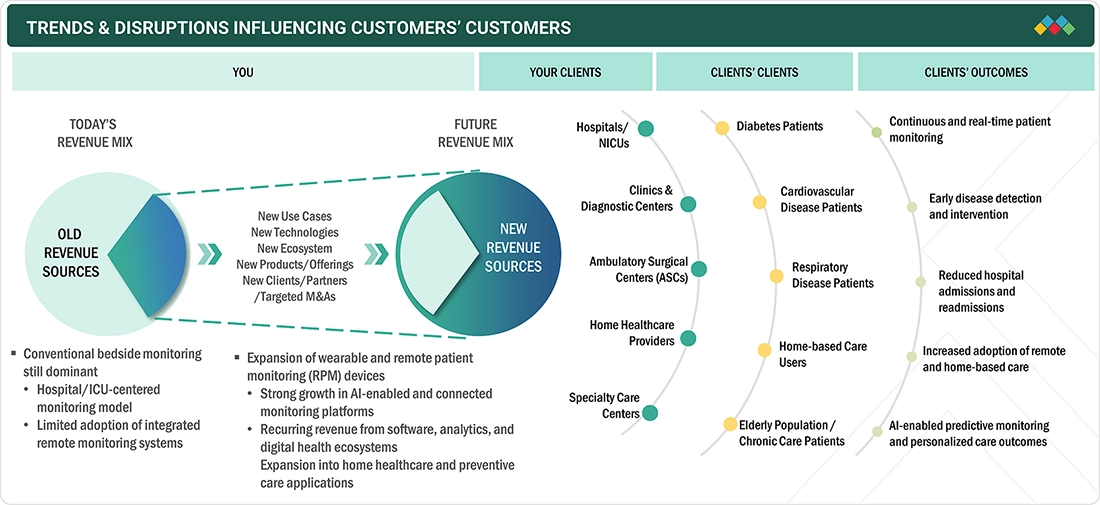
The patient monitoring devices market is evolving from traditional standalone monitoring systems toward connected, intelligent, and patient-centric healthcare platforms that support hospitals, home care, and remote care settings. Rising demand for continuous monitoring, wearable technologies, and non-invasive devices is reshaping customer expectations across healthcare facilities. Digital ecosystems integrating remote patient monitoring, AI-enabled analytics, telehealth, and smart device connectivity are accelerating adoption. As healthcare providers increasingly prioritize real-time data, early diagnosis, and personalized care, manufacturers are focusing on compact designs, wearable solutions, software-driven monitoring, strategic partnerships, and integrated care models. The growing shift toward home-based care and connected healthcare infrastructure is further driving innovation across the patient monitoring devices market.
Source: Secondary Research, Interviews with Experts, MarketsandMarkets Analysis
MARKET DYNAMICS

Level
-
Rising prevalence of chronic diseases

-
Growing aging population


Level
-
Availability of alternative diagnostic and monitoring approaches

-
Stringent regulatory requirements for device approval


Level
-
Growing demand for remote and home-based patient monitoring

-
Expansion of wearable and AI-enabled monitoring technologies


Level
-
Rising adoption of refurbished monitoring devices

-
Limited healthcare infrastructure in developing regions

Source: Secondary Research, Interviews with Experts, MarketsandMarkets Analysis
Driver: Rising prevalence of chronic diseases
The increasing prevalence of chronic diseases such as cardiovascular disorders, diabetes, respiratory diseases, and hypertension is a major driver for the patient monitoring devices market. Patients suffering from these conditions require continuous monitoring for early diagnosis, disease management, and timely intervention. The growing burden of chronic illnesses, combined with an aging population and increasing healthcare awareness, has significantly increased demand for monitoring technologies. Additionally, healthcare providers are increasingly adopting advanced monitoring systems to improve patient outcomes and reduce hospital readmissions. The expansion of remote care and home-based healthcare is further accelerating demand for continuous monitoring solutions.
Restraint: Availability of alternative diagnostic and monitoring approaches
One of the key restraints in the patient monitoring devices market is the availability of alternative diagnostic methods and treatment approaches. In some cases, physicians rely on periodic laboratory testing, imaging procedures, or traditional clinical assessments rather than continuous monitoring devices. Cost concerns, workflow limitations, and varying clinical preferences can also reduce dependence on advanced monitoring systems. As a result, patient monitoring devices may not always be the primary solution across all healthcare settings.
Opportunity: Growing demand for remote and home-based patient monitoring
The increasing adoption of telehealth and home healthcare services presents a significant opportunity for the patient monitoring devices market. As healthcare systems prioritize preventive care and reduce hospital burden, demand for connected monitoring technologies is rising. Wearable devices, wireless monitoring systems, and AI-enabled platforms allow healthcare providers to monitor patients remotely while improving convenience and reducing healthcare costs. Advances in digital health infrastructure and smartphone integration are further supporting market expansion.
Challenge: Rising adoption of refurbished monitoring devices
The growing adoption of refurbished patient monitoring devices presents a challenge for manufacturers of new systems. Hospitals and healthcare facilities, particularly in cost-sensitive markets, often prefer refurbished devices due to their lower cost. This reduces demand for newly manufactured equipment and impacts revenue growth. Concerns regarding quality, maintenance, and limited standardization of refurbished devices also create challenges for the market, while increasing pricing pressure on original device manufacturers.
PATIENT MONITORING DEVICES MARKET: COMMERCIAL USE CASES ACROSS INDUSTRIES
| COMPANY | USE CASE DESCRIPTION | BENEFITS |
|---|---|---|
 |
Develops advanced patient monitoring solutions including continuous monitoring systems for cardiovascular, respiratory, and critical care applications across hospitals and homecare settings. | The company’s solutions provide real-time patient data, improve clinical decision-making, and support better patient outcomes across healthcare settings. |
 |
Offers patient monitoring solutions including continuous glucose monitoring (CGM), cardiac monitoring, and connected care technologies for hospitals and remote care settings. | Its advanced sensor technologies enhance disease management, enable remote monitoring, and improve overall patient care efficiency. |
 |
Provides integrated patient monitoring systems for intensive care units, emergency departments, and perioperative settings with advanced analytics and connectivity features. | These systems improve workflow efficiency, enable centralized monitoring, and support seamless integration across hospital networks. |
 |
Delivers connected patient monitoring platforms with wearable technologies and remote monitoring capabilities across acute and home healthcare environments. | The solutions enhance patient safety, provide AI-driven insights, and support effective remote care management. |
 |
Manufactures patient monitoring and diagnostic systems focused on critical care, emergency care, and hospital monitoring applications. | Its technologies deliver reliable performance, improve monitoring accuracy, and support efficient patient management in clinical environments. |
Logos and trademarks shown above are the property of their respective owners. Their use here is for informational and illustrative purposes only.
MARKET ECOSYSTEM
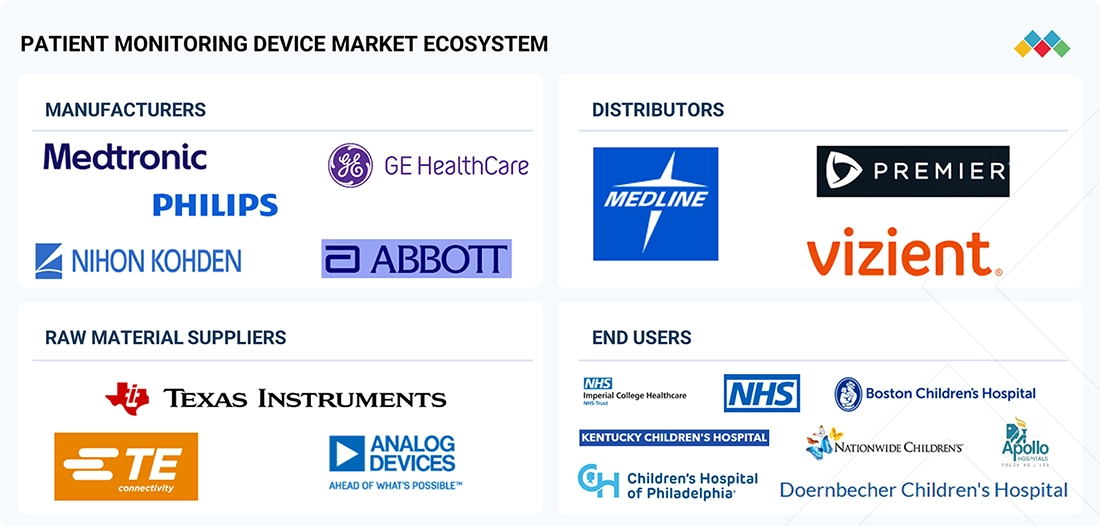
The ecosystem map of the overall patient monitoring devices market comprises the key elements present across the healthcare value chain and defines these elements through the involvement of multiple stakeholders. It includes patient monitoring systems such as bedside monitors, wearable monitoring devices, cardiac monitoring systems, blood glucose monitoring devices, respiratory monitoring equipment, and remote patient monitoring platforms, along with related sensors, software platforms, connectivity solutions, and associated services. Manufacturers in this market are involved in research, product development, regulatory approvals, and commercialization of monitoring technologies. These companies may operate through in-house manufacturing facilities or collaborate with contract development and manufacturing organizations (CDMOs) for production and assembly. Distributors within this ecosystem include medical device suppliers, third-party distributors, healthcare technology providers, and e-commerce channels that support product availability across regions. Research and development activities involve in-house R&D centers, academic institutions, healthcare organizations, and technology partners contributing to innovations such as AI-enabled monitoring, wearable sensors, wireless connectivity, and real-time data analytics. Regulatory agencies and certification bodies play a critical role in ensuring compliance with safety, quality, and performance standards before products reach the market. The end-user segment includes hospitals, clinics, ambulatory care centers, home healthcare settings, and long-term care facilities where patient monitoring devices are widely deployed. These end users represent major demand drivers within the ecosystem. Additionally, investors, healthcare organizations, government agencies, and reimbursement bodies act as key influencers, shaping product innovation, adoption trends, and expansion strategies in the patient monitoring devices market.
Logos and trademarks shown above are the property of their respective owners. Their use here is for informational and illustrative purposes only.
MARKET SEGMENTS
Source: Secondary Research, Interviews with Experts, MarketsandMarkets Analysis
Patient Monitoring Devices Market, by Product
Product Growth Leader: The blood glucose monitoring devices segment is expected to register a CAGR of 6.4% during the forecast period, driven by the rising prevalence of diabetes, increasing demand for continuous disease management, and growing adoption of connected monitoring technologies. The segment includes self-monitoring blood glucose (SMBG) devices, continuous glucose monitoring (CGM) devices, and wearable glucose monitoring devices. Other major product categories include ECG devices, implantable loop recorders (ILRs), pulse oximeters, spirometers, EEG machines, blood pressure monitors, fetal & neonatal monitors, and wearable temperature monitoring devices. Increasing adoption of connected healthcare, remote monitoring, and wearable technologies is further driving market growth.
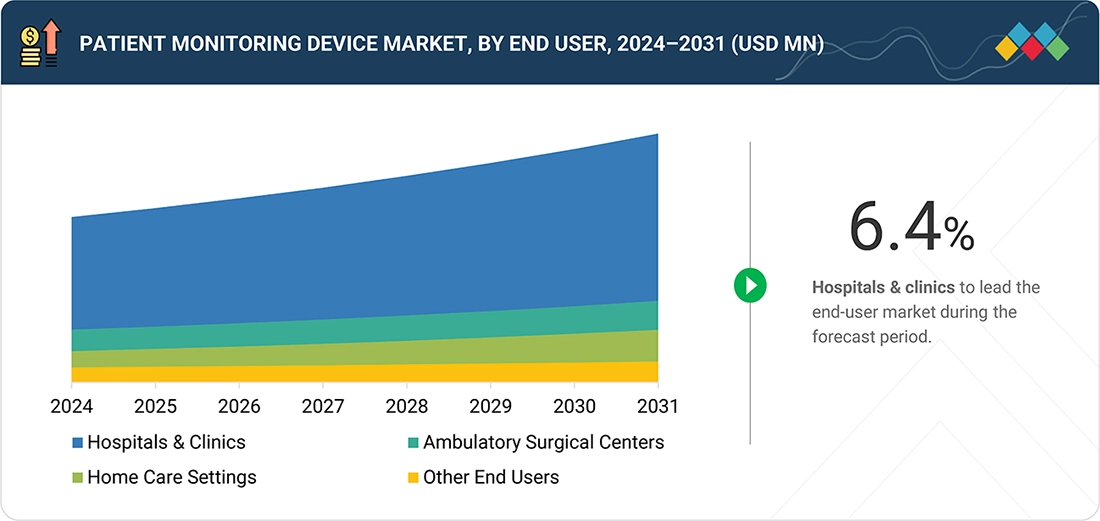
Patient Monitoring Devices Market, by End User
End User Leader: Hospitals & clinics account for the largest share of the patient monitoring devices market and are projected to grow at a CAGR of 6.4% through 2031, driven by increasing patient admissions, the rising prevalence of chronic diseases, and growing demand for continuous monitoring in critical care and emergency settings. Hospitals and clinics extensively utilize multiparameter monitors, ECG systems, pulse oximeters, blood pressure monitors, fetal & neonatal monitors, and hemodynamic monitoring systems for real-time patient assessment and disease management. Additionally, increasing investments in connected healthcare technologies and integrated monitoring platforms are further driving adoption to improve patient safety, workflow efficiency, and clinical outcomes.
REGION
Rapid Healthcare Expansion in APAC Driving Patient Monitoring Market Growth
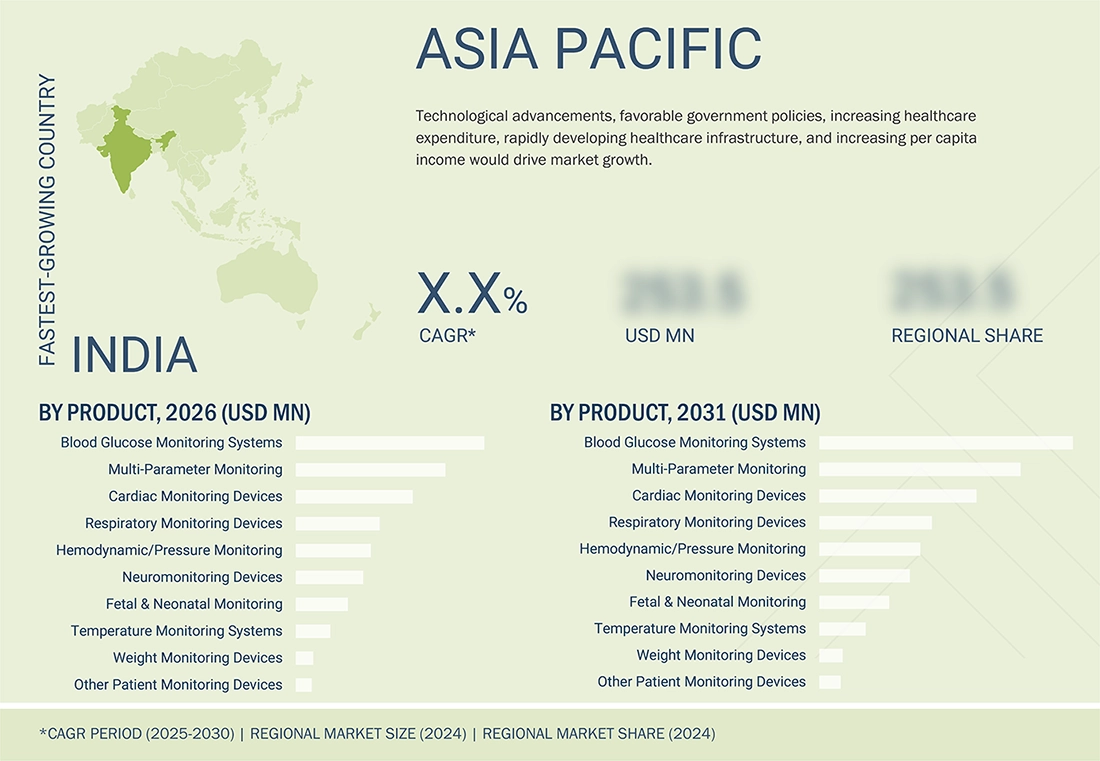
Healthcare infrastructure across Asia Pacific is rapidly evolving, driven by economic growth, increasing healthcare expenditure, and stronger government focus on improving healthcare access. Countries such as India, China, and Indonesia are investing significantly in building hospitals, upgrading healthcare facilities, and expanding critical care capabilities. The establishment of modern hospitals and specialty care centers in both urban and rural regions is improving access to advanced healthcare technologies, including patient monitoring systems. Additionally, private healthcare providers are increasingly investing in digital healthcare infrastructure and connected care solutions. The expansion of tier-2 and tier-3 cities as healthcare hubs is further increasing demand for monitoring technologies in previously underserved areas. With improved healthcare infrastructure comes increased procurement of patient monitoring devices such as multiparameter monitors, ECG systems, pulse oximeters, and wearable monitoring solutions, making infrastructure expansion a key driver of market growth in the region.
India expected to register the highest CAGR during the forecast period
India is expected to register the highest CAGR of 9.1% during the forecast period, supported by increasing healthcare investments, expanding hospital infrastructure, rising adoption of advanced monitoring technologies, and growing demand for connected healthcare solutions. The increasing focus on improving healthcare access across urban and emerging healthcare centers is further supporting the adoption of patient monitoring devices in the country.
PATIENT MONITORING DEVICES MARKET: COMPANY EVALUATION MATRIX
The patient monitoring devices market is characterized by the presence of established global manufacturers and specialized technology providers competing through continuous product innovation, connected healthcare platforms, and remote patient monitoring solutions. Medtronic Plc (Star Player) maintains a leading market position with its broad portfolio spanning cardiac monitoring, hemodynamic monitoring, wearable technologies, respiratory monitoring, and remote patient monitoring solutions, supported by its extensive global distribution network and strong healthcare provider relationships. Dexcom, Inc. (Emerging Leader) continues to strengthen its competitive position through its specialization in continuous glucose monitoring (CGM) technologies and rapid innovation in connected patient care. The company has expanded its portfolio with advanced sensor-based monitoring platforms that enable real-time data sharing, smartphone connectivity, and remote patient management, reinforcing its presence in the fast-growing digital health and wearable monitoring segments.
Source: Secondary Research, Interviews with Experts, MarketsandMarkets Analysis
KEY MARKET PLAYERS
- Medtronic Plc (Ireland)
- Abbott Laboratories (US)
- Dexcom, Inc. (US)
- GE HealthCare (US)
- Philips Healthcare (Netherlands)
- Nihon Kohden Corporation (Japan)
- Mindray Medical International Ltd. (China)
- Edwards Lifesciences Corporation (US)
- Getinge AB (Sweden)
- Baxter International Inc. (US)
- Drägerwerk AG & Co. KGaA (Germany)
- Boston Scientific Corporation (US)
- Masimo Corporation (US)
- Omron Corporation (Japan)
- ARCHIMED SAS (Natus Medical) (France)
- Compumedics Limited (Australia)
- Nonin Medical, Inc. (US)
MARKET SCOPE
| REPORT METRIC | DETAILS |
|---|---|
| Base Year | 2025 |
| Base Year Market Size (2025) | USD 52.60 Billion |
| Current Market Size (2026) | USD 55.60 Billion |
| Projected Market Size (2031) | USD 76.11 Billion |
| Growth Rate | CAGR of 6.4% from 2026–2031 |
| Forecast Period | 2026–2031 |
| Years Considered | 2024–2031 |
| Units Considered | Value (USD BN), Volume (Thousand/Million Units) |
| Report Coverage | Revenue Forecast, Company Ranking, Competitive Landscape, Growth Factors, and Trends |
| Segments Covered | By Product, End User, and Region |
| Regional Scope | North America, Europe, Asia Pacific, Latin America, Middle East & Africa |
| Report Code | MD 2436 |
| Published | 2026-06-12 |
| Prepared By | MarketsandMarkets™ Healthcare Research Team |
| Last Reviewed | 2026-07-24 |
WHAT IS IN IT FOR YOU: PATIENT MONITORING DEVICES MARKET REPORT CONTENT GUIDE
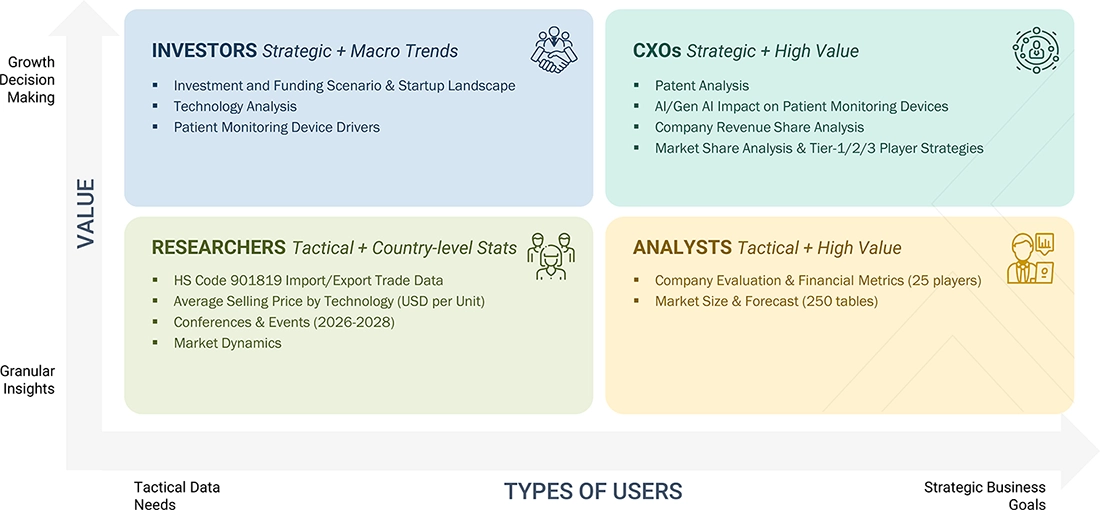
DELIVERED CUSTOMIZATIONS
We have successfully delivered the following deep-dive customizations:
| CLIENT REQUEST | CUSTOMIZATION DELIVERED | VALUE ADDS |
|---|---|---|
| Product Analysis | Comparative analysis of patient monitoring device technologies by product type, including multiparameter monitors, blood glucose monitoring devices, wearable monitoring systems, ECG, EEG, pulse oximeters, fetal & neonatal monitors, hemodynamic monitoring systems, spirometers, and capnography devices, along with evaluation across hospital, ICU, ambulatory, and homecare applications. | Assessment of device performance through parameters such as monitoring accuracy, real-time connectivity, portability, ease of use, AI integration, remote monitoring capability, maintenance requirements, and cost efficiency to support optimal product selection and healthcare outcomes. |
| Company Information | Detailed profiles of leading global and regional patient monitoring device manufacturers including Medtronic Plc., Abbott Laboratories, GE HealthCare, Philips Healthcare, Nihon Kohden, Mindray, and Masimo, covering product portfolios, monitoring technologies, strategic initiatives, geographic presence, partnerships, and recent product developments. | Competitive benchmarking across key players highlighting positioning by technological innovation, connected healthcare capabilities, product differentiation, pricing strategies, distribution networks, and focus areas such as critical care, remote patient monitoring, and home healthcare. |
| Geographic Analysis | In-depth regional assessment of the global patient monitoring devices market across North America, Europe, Asia Pacific, Latin America, and Middle East & Africa, with analysis of healthcare infrastructure, digital health adoption, and critical care capacity trends. | Country-level market sizing, CAGR forecasts, chronic disease prevalence analysis, healthcare expenditure trends, aging population assessment, and demand outlook across major markets such as the US, Germany, UK, China, India, and Japan. |
RECENT DEVELOPMENTS
- July 2026: GE HealthCare entered a 10-year, approximately $500 million Care Alliance with Catholic Health covering technology modernization across its hospital and ambulatory network. The agreement includes AI-powered monitoring applications and upgraded maternal-infant care monitoring technologies, alongside more than 1,300 technology additions and system-wide equipment modernization, making the agreement directly relevant to the deployment and expansion of patient-monitoring technologies.
- June 2026: Medtronic Plc received FDA 510(k) clearance for its Nellcor™ pulse oximetry system with Nell-EQ™ intelligent processor, a new pulse-oximetry processing technology designed to provide more consistent and reliable SpO2 and pulse-rate monitoring across diverse patient populations, skin tones, and clinical settings. The system was evaluated across the full range of skin tones and also supports Perfusion Index and Heart Rate Variability parameters, making the development directly relevant to patient monitoring devices.
- June 2026: Philips Healthcare launched the IntelliVue Patient Monitor 6000 Series, a new patient-monitoring solution designed for rural hospitals, ambulatory surgery centers, and other healthcare settings. The series provides built-in core measurements, expandable monitoring capabilities through the IntelliVue Measurement Rack 6000 and new Flexible Link technology, and connectivity options including HL7 and integration with the Philips patient-monitoring ecosystem. The launch represents a direct new-product development within patient monitoring devices.
- May 2026: Abbott Laboratories secured CE Mark for Libre Duo and Libre Duo 10 Day, described by Abbott as the world's first dual glucose-ketone sensing technology, combining continuous glucose and ketone monitoring in a single biowearable sensor. The systems measure both parameters every minute, integrate with Abbott's Libre digital health ecosystem for data sharing with caregivers and healthcare providers, and extend continuous physiological monitoring beyond conventional glucose-only monitoring.
- April 2026: Nihon Kohden Corporation launched the Life Scope E7 (BSM-5700 series) bedside patient monitor in India following CDSCO import clearance. The multi-parameter monitoring system is designed for ICUs, NICUs, emergency rooms, operating rooms, and general wards and integrates ECG, SpO2, invasive and non-invasive blood pressure, temperature, CO2, anesthetic gases, EEG and aEEG monitoring, along with EMR connectivity through HL7.
Table of Contents
 Exclusive indicates content/data unique to MarketsandMarkets and not available with any competitors.
Methodology
The study involved major activities in estimating the current market size for the patient monitoring devices market. Exhaustive secondary research was done to collect information on the patient monitoring devices market. The next step was to validate these findings, assumptions, and sizing with industry experts across the value chain using primary research. Different approaches, such as top-down and bottom-up, were employed to estimate the total market size. After that, the market breakup and data triangulation procedures were used to estimate the market size of the segments and subsegments of the patient monitoring devices market.
Secondary Research
This research study involved the extensive use of secondary sources, directories, databases such as Dun & Bradstreet, Bloomberg Businessweek, and Factiva, white papers, and Companies House documents. Secondary research was undertaken to identify and collect information for this extensive, technical, market-oriented, and commercial study of the patient monitoring devices market. It was also used to obtain important information about the top players, market classification, and segmentation according to industry trends to the bottom-most level, geographic markets, and key developments related to the market. A database of the key industry leaders was also prepared using secondary research.
Primary Research
In the primary research process, various supply- and demand-side sources were interviewed to obtain qualitative and quantitative information for this report. Primary sources from the supply side included industry experts such as CEOs, VPs/Managing Directors, Marketing Heads/Directors, Sales Directors, Marketing/Sales Managers, Regional/Area Sales Managers, Export/Import Heads/Managers, and Other Market-Related Personnel from various companies and organizations operating in the patient monitoring devices market. Primary sources from the demand side included Law Enforcement Agencies, Vice Presidents, C-level Executives, Department Heads, Enterprises, Individuals, Supply Management Team of Hospitals, Clinic Personnel, and Laboratory Technicians.
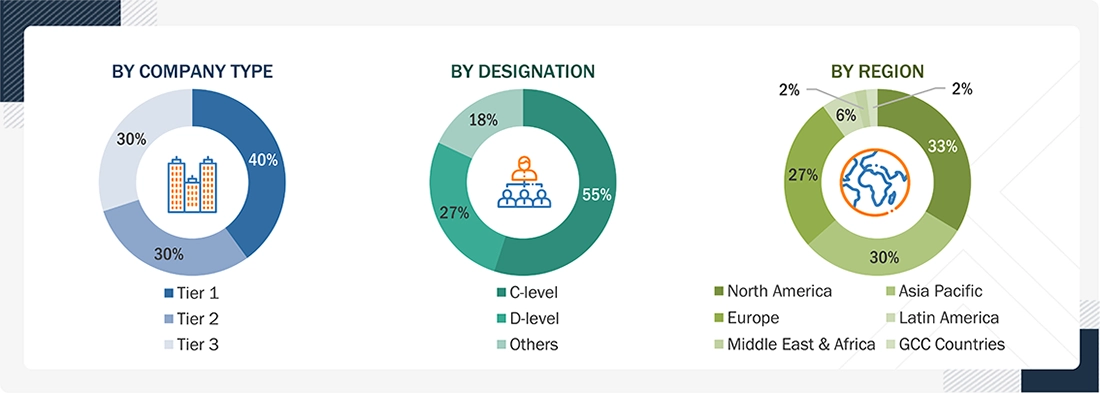
Note 1: C-level primaries include CEOs, COOs, CTOs, and VPs.
Note 2: Other primary roles include sales, marketing, and product management.
Note 3: Companies are classified into tiers based on their total revenue. As of 2025: Tier 1 = >USD 1 billion, Tier 2 = USD 500 million to USD 1 billion, and Tier 3 = USD 500 million.
To know about the assumptions considered for the study, download the pdf brochure
Market Size Estimation
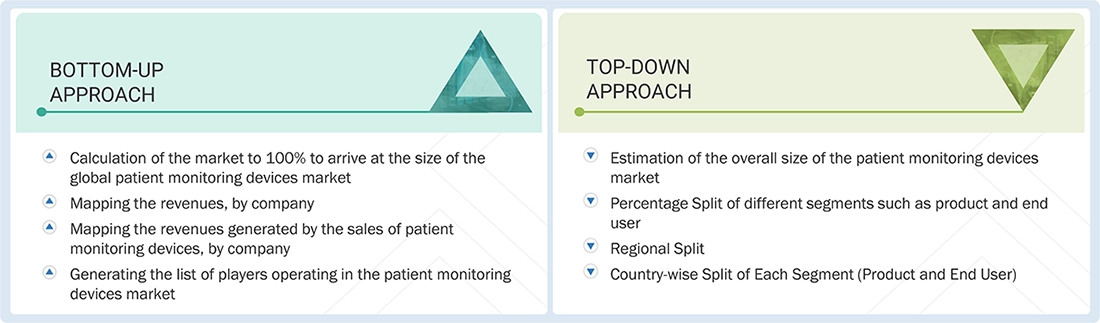
Both top-down and bottom-up approaches were used to estimate and validate the total size of the patient monitoring devices market. These methods were also used extensively to estimate the sizes of various market subsegments. The research methodology used to estimate the market size includes the following:
Patient Monitoring Devices Market : Top-Down and Bottom-Up Approach
Data Triangulation
The entire market was split into two segments when the market size was determined. Data triangulation and market breakdowns were used as needed to complete the market engineering process and derive precise statistics for all segments.
pproach for deriving the market size and estimating market growth.
sing secondary data from paid and unpaid sources, the market rankings for the major players were determined following a thorough analysis of their sales of patient monitoring devices. Due to data restrictions, the revenue share in certain cases was determined after a thorough analysis of the product portfolio of big corporations and their individual sales performance. This information was verified at each stage by in-depth interviews with professionals in the field.
Market Definition
Patient monitoring devices continuously measure and track physiological parameters to manage various medical conditions, including cardiovascular diseases, diabetes, respiratory disorders, neurological conditions, and critical care situations, providing real-time insights into patient health.
Key Stakeholders
- Patient monitoring device manufacturing companies
- Patient monitoring device components and accessories manufacturing companies
- Patient monitoring device suppliers and distributors
- Hospitals and clinics
- Ambulatory surgical centers (ASCs)
- Home healthcare service providers
- Physicians, intensivists, cardiologists, and healthcare professionals
- Research laboratories and academic institutions
- Contract manufacturers and technology solution providers
- Digital health and remote patient monitoring platform providers
- Regulatory authorities and healthcare organizations
- Distributors, suppliers, and commercial service providers
Report Objectives
- To describe, analyze, and forecast the patient monitoring devices market by product, end user, and region
- To describe and forecast the patient monitoring devices market for key regions, namely, North America, Europe, the Asia Pacific, Latin America, the Middle East and Africa, and GCC Countries
- To provide detailed information regarding drivers, restraints, opportunities, and challenges influencing the growth of the patient monitoring devices market
- To strategically analyze the ecosystem, regulations, patenting trend, value chain, Porter’s five forces, and prices pertaining to the market under study
- To strategically analyze micromarkets1 with respect to individual growth trends, prospects, and contributions to the overall market
- To analyze market opportunities for stakeholders and provide details of the competitive landscape for market players
- To profile key players and comprehensively analyze their market shares and core competencies2 in the patient monitoring devices market
- To analyze competitive developments such as collaborations, acquisitions, product launches, expansions, and R&D activities in the patient monitoring devices market
Customization Options
With the given market data, MarketsandMarkets offers customizations as per your company’s specific needs. The following customization options are available for the report:
Company Information
- Detailed analysis and profiling of additional market players (up to 5)
Product Analysis
- Product matrix, which gives a detailed comparison of the product portfolios of each company
Geographic Analysis
- Further breakdown of the Rest of Asia Pacific patient monitoring devices market into Vietnam, New Zealand, and others.
- Further breakdown of the Rest of Latin America patient monitoring devices market by country, including Colombia, Chile, Ecuador, and others.
- Further breakdown of the Rest of Europe patient monitoring devices market into Belgium, Russia, the Netherlands, Switzerland, and others.
Key Questions Addressed by the Report
What is the projected growth outlook for the global patient monitoring devices market through 2031?
The global patient monitoring devices market is projected to grow from USD 55.60 billion in 2026 to USD 76.11 billion by 2031, registering a CAGR of 6.4% during the forecast period. The market was valued at USD 52.60 billion in 2025, driven by increasing demand for remote patient monitoring, digital healthcare solutions, and advanced monitoring technologies.
Which region is expected to register the highest growth in the patient monitoring devices market?
India is expected to register the highest CAGR of 9.1% during the forecast period in the patient monitoring devices market. Growth is supported by increasing healthcare infrastructure development, rising adoption of advanced monitoring systems, and growing demand for improved patient care solutions.
Which product segment is expected to witness significant growth in the patient monitoring devices market?
The blood glucose monitoring devices segment is expected to register a CAGR of 6.4% during the forecast period. Increasing prevalence of diabetes and growing adoption of continuous glucose monitoring solutions are contributing to segment growth.
Which end user segment is expected to dominate the patient monitoring devices market through 2031?
Hospitals & clinics are projected to remain a major end user segment in the patient monitoring devices market, growing at a CAGR of 6.4% till 2031. These healthcare facilities continue to adopt advanced monitoring systems for critical care, diagnostics, and patient management.
What types of patient monitoring devices are covered in the market?
The patient monitoring devices market covers multiparameter monitors, glucose continuous glucose monitoring (CGM) devices, wearable monitors, electroencephalography (EEG), electromyography (EMG), electrocardiography (ECG), implantable loop recorders (ILR), mobile cardiac telemetry (MCT), pulse oximeters, fetal monitors, neonatal monitors, blood pressure monitors, hemodynamic monitors, spirometers, and capnographs.
What are the key factors driving the growth of the patient monitoring devices market?
The patient monitoring devices market is driven by the rising prevalence of chronic diseases, increasing demand for continuous health monitoring, adoption of wearable healthcare technologies, growth of remote patient monitoring solutions, and advancements in connected medical devices.
Who are the key players operating in the global patient monitoring devices market?
Key players profiled in the patient monitoring devices market include Medtronic Plc, Abbott Laboratories, Dexcom, Inc., GE HealthCare, Philips Healthcare, Nihon Kohden Corporation, Mindray Medical International Ltd., Edwards Lifesciences Corporation, Getinge AB, Baxter International Inc., Drägerwerk AG & Co. KGaA, Boston Scientific Corporation, Masimo Corporation, Omron Corporation, ARCHIMED SAS (Natus Medical), Compumedics Limited, and Nonin Medical, Inc.
Which companies are recognized as star players and emerging companies in the patient monitoring devices market?
Medtronic Plc, Abbott Laboratories, GE HealthCare, Philips Healthcare, and Nihon Kohden Corporation were identified as Star Players due to their strong focus on innovation, extensive product portfolios, broad industry presence, and robust operational capabilities. Dexcom, Inc., Compumedics Limited, and Nonin Medical, Inc. have established themselves among startups and SMEs through strong product portfolios and business strategies.


Personalize This Research
- Triangulate with your Own Data
- Get Data as per your Format and Definition
- Gain a Deeper Dive on a Specific Application, Geography, Customer or Competitor
- Any level of Personalization
Let Us Help You
- What are the Known and Unknown Adjacencies Impacting the Patient Monitoring Devices Market
- What will your New Revenue Sources be?
- Who will be your Top Customer; what will make them switch?
- Defend your Market Share or Win Competitors
- Get a Scorecard for Target Partners

Custom Market Research Services
We Will Customise The Research For You, In Case The Report Listed Above Does Not Meet With Your Requirements
Get 10% Free CustomisationTESTIMONIALS

JAYANT RAJPUROHIT
Director of Market Insights, Data and Analytics
SFI Health,
Leading Pharmaceutical Companywww.sfihealth.com/

We at SFI Health approached MarketsandMarkets for an Opportunity Assessment on "Incidence and Prevalence of Focus Indications" as we wanted to know the most attractive HCPs like Physician, Functional MD, Naturopath and Pharmacist. The project was critical for us to ensure our focus on the right target which would enable sustainable growth and profitability for SFI Health. The business insights provided exceeded our expectations and we were extremely impressed. The team at MarketsandMarkets is highly professional and detail oriented and very well understood our business needs. MarketsandMarkets offers a unique combination of expertise and dedicated engagement model. We identified 2 new products to be launched in coming months, based on the research findings provided by MarketsandMarkets. We are happy with the services and would strongly recommend MarketsandMarkets to my peers in the industry.

BEATRIZ DE LA CALLE
Head of Commercial Analytics
Qualicaps,
Leading Pharmaceutical Companywww.qualicaps.com/

We partnered with MarketsandMarkets for an assessment study on hard empty capsules. The team was extremely professional in understanding our business requirements and we received timely responses to all our queries. The market intelligence and the recommendations has met our business requirements. We were extremely impressed to see the final study results; it really exceeded our expectations. The market intelligence offered by MarketsandMarkets, and clarity on next steps will help us achieve our business objective for the Year 2021. We are happy with the services and would strongly recommend MarketsandMarkets to my peers in the industry.

Bob Williams,
Senior Director Business Development & Innovation
Bracco Diagnostics Inc.,
Italian Multinational in life sciences sector and a World Leader in imaging diagnosticsimaging.bracco.com/us-en
We were pleased with targeted insights that MarketsandMarkets identified from a custom study on the 'Radiation Dose Management Solutions Market'. Your team identified and characterized the market participants as well as underlying trends accurately. This study was useful to Bracco in formulating business strategies for our dose monitoring product lines and we thank MarketsandMarkets for the job well done.
Cody Coonradt,
Market Development and Strategy Manager
3M Health Information Systems,
Leader in Health care Coding, Payment & Analytics Solutions.www.3m.com/3M/en_US/health-information-systems-us
The value for our organization comes from three things: depth of research, specificity of segments and being easy to work with. As important as the first two are, the third can't be underestimated. MarketsandMarkets, maybe more than any other research vendor, wants to know what is top of mind for our team and what big questions we are grappling to answer.
Their customer first approach and high value engagement model, have given us great analysis and excellent value for money






Growth opportunities and latent adjacency in Patient Monitoring Devices Market