
Philippines Animal Disinfectants Market (2024-2029)

The Philippines Animal Disinfectants Market was valued at $15 Million in 2024 and projected to reach to $21.2 Million by 2029, representing a compound annual growth rate of 7.2%. The Philippines animal disinfectants market is positioned for sustained growth through 2029, supported by expanding commercial livestock operations and heightened disease prevention awareness among farmers.


| Market Size in | USD 26.32 MN |
| Market Forecast in | |
| CAGR | |
| Forecast Period | |
| Units Considered | Value (USD MN) |
Philippines Animal Disinfectants Market Trends and Insights
- This growth trajectory reflects increasing awareness of biosecurity protocols and disease prevention in the Philippines' livestock and poultry sectors.
- The Philippines market is driven by rising demand for effective sanitation solutions across farms, processing facilities, and veterinary clinics as producers prioritize animal health and productivity. In the Philippines, the animal disinfectants market benefits from expanding commercial farming operations and stricter regulatory requirements for disease control.
- The forecast period (2024–2029) anticipates sustained expansion as the Philippines strengthens its agricultural infrastructure and adopts modern farming practices.
- Market participants in the Philippines are responding to heightened biosecurity concerns and the need to prevent disease outbreaks in densely populated farming regions..
Key Market Statistics
- CAGR (2024-2029) 7.2% CAGR
- Market Size, 2024 ~USD 15 Million
- Forecast, 2029 ~USD 21.2 Million
- Country Philippines
Philippines Animal Disinfectants Market Overview
Market Valuation :
The Philippines animal disinfectants market reached USD 15.0 million in 2024, with projections to expand to USD 21.2 million by 2029, driven by intensifying biosecurity measures across livestock operations.
Growth Trajectory :
At a CAGR of 7.2%, the Philippines market is experiencing steady expansion, outpaced slightly by the global average of 7.9%, reflecting regional adoption of disease prevention protocols in poultry and swine farming.
Biosecurity Awareness :
Rising consciousness among Philippine farmers regarding animal health management and disease control is catalyzing demand for effective disinfectant solutions across commercial and smallholder farming operations.
Livestock & Poultry Focus :
The Philippines' significant poultry and swine sectors are primary growth drivers, with increasing regulatory requirements and disease outbreaks prompting higher adoption of professional-grade disinfectant products.
Philippines Animal Disinfectants Market Dynamics
- Government initiatives promoting biosecurity standards and recurring disease challenges in poultry and swine sectors are accelerating product adoption.
- The market benefits from increasing farm mechanization and professionalization of agricultural practices across the archipelago. Future growth will be underpinned by rising incomes enabling smallholder farmers to invest in preventive health measures, coupled with stricter import regulations requiring certified disinfection protocols.
- Distribution channel expansion and localized product offerings tailored to Philippine farming conditions will further drive market penetration, particularly in rural regions where biosecurity adoption remains nascent..
Market Ecosystem
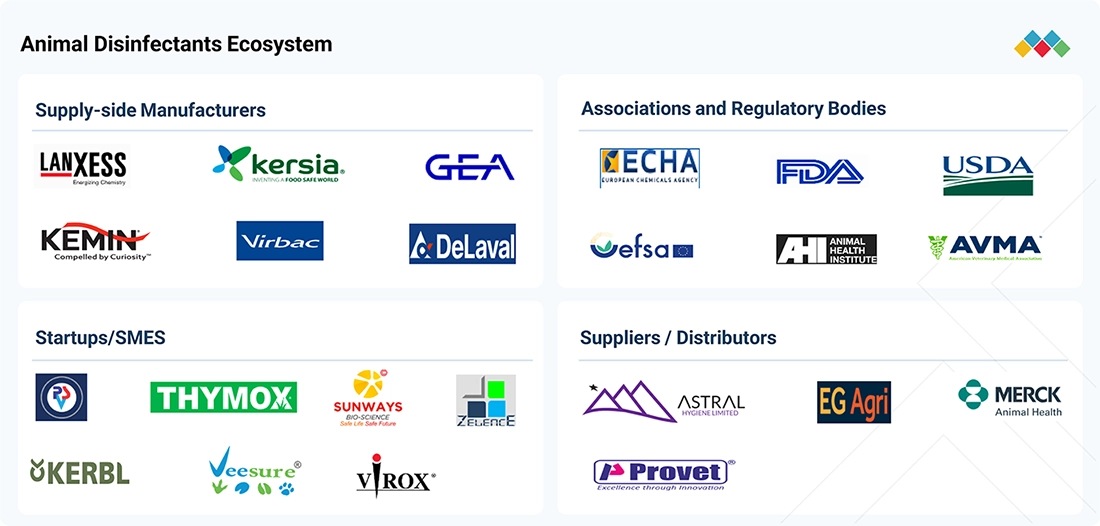
ANIMAL DISINFECTANTS MARKET: COMMERCIAL USE CASES ACROSS INDUSTRIES
| COMPANY | USE CASE DESCRIPTION | BENEFITS |
|---|---|---|
 |
LANXESS strengthened its animal biosecurity business by combining its livestock and poultry biosecurity capabilities and expanding its portfolio of disinfectants, cleaners, and biosecurity solutions. The company also operates dedicated production sites and R&D centers and develops solutions targeting major livestock and poultry pathogens. | Strengthened global biosecurity capabilities, broader product coverage, greater control over active-ingredient supply, and stronger positioning across livestock, poultry, and aquaculture markets |
 |
Kersia developed comprehensive Cleaning, Disinfection & Protection programs for pig and poultry farms, combining cleaning, surface and air disinfection, water disinfection, wheel and foot disinfection, and other biosecurity measures. Its approach includes a structured seven-stage cleaning and disinfection methodology adapted to farm-specific risks and constraints | Expanded the company from individual products toward integrated biosecurity solutions, strengthened customer relationships, improved farm-level disease prevention, and supported recurring demand across multiple hygiene applications |
 |
GEA developed an integrated dairy hygiene portfolio covering CIP cleaning and disinfection, alkaline and acid cleaning, intermediate cluster disinfection, and manual facility cleaning. Its CIP solutions are designed to clean pipelines, bulk tanks, and milking and metering equipment, while its hygiene specialists can customize programs for individual farms. | Strengthened GEA's position as an integrated dairy hygiene provider, increased cross-selling opportunities around milking systems, and improved customer value through combined equipment and hygiene solutions |
Logos and trademarks shown above are the property of their respective owners. Their use here is for informational and illustrative purposes only.
Related Ecosystem
Feed And Animal Nutrition
- Animal-Based Sealants
- Camera Systems
- Lactic Acid
- Tricalcium Phosphate
- Citric Acid
- AZELIS HOLDINGS SA
- NOVUS INTERNATIONAL, INC.
- Feedone Co., Ltd.
- NOSAN CORPORATION
- Mitsui & Co., Ltd.
Key Takeaways
- The Philippines animal disinfectants market is valued at USD 15.0 million in 2024 and will reach USD 21.2 million by 2029.
- The Philippines market is growing at a CAGR of 7.2%, driven by biosecurity awareness and disease prevention initiatives.
- Expanding commercial farming and stricter regulatory requirements are key growth drivers in the Philippines.
- The Philippines market reflects rising adoption of modern sanitation practices across livestock, poultry, and veterinary sectors.
Animal Disinfectants Market Report Scope
| Report Metric | Details |
|---|---|
| Base Year | 2024 |
| Fastest Growing Segment | IODINE (Type) |
| Forecast Period | 2024–2029 |
| Growth Rate | CAGR of 7.9% from 2024 to 2029 |
| Largest Segment | LIVESTOCK (Animal Type) |
| Market Size Base Year (Billions) | ~USD 3.9 (2024) |
| Revenue Forecast (Billions) | ~USD 5.7 (2029) |
| Segments Covered | Form, Type, Application, Sub-Type, Subtype, Animal Type |
Philippines Animal Disinfectants Market Report Segmentation
6 segment dimensions are covered across the global market.
By Form
- Liquid
- Powder
By Type
- Chlorine
- Chlorine Dioxide
- Chlorohexidine
- Continuous Biosecurity
- Glut-Quat Mixes
- Glycolic Acid
- Hydrogen Peroxide
- Iodine
- Lactic Acid
- Other Types
- Peracetic Acid
- Phenolic Acid
- Quaternary Compounds
- Terminal Biosecurity
By Application
- Aquaculture
- Dairy Cleaning
- Equine
- Pets
- Poultry
- Ruminant
- Swine
By Sub-Type
- Aerial Disinfection
- Bulk Tanks
- Cip
- Continuous Biosecurity
- Continuous Disinfection
- Drinking Water
- Equipment
- Footbaths
- Hand Sanitation
- Hoof Care
- Milking Systems
- Pipelines
- Surface Disinfection
- Surface Disinfection Housing
- Teat Dips
- Terminal Biosecurity
- Vehicle
- Water Lines
By Subtype
- Aerial Disinfection
- Equipment
- Surface Disinfection Housing
- Water Lines
By Animal Type
- Companion
- Livestock
Target Audience
- Agricultural Input Distributors : Philippine distributors need market intelligence to stock appropriate disinfectant products, understand demand patterns by region and farm type, and identify growth opportunities in underserved agricultural areas.
- Livestock & Poultry Producers : Commercial and smallholder farmers require insights into market trends, product availability, and biosecurity best practices to make informed purchasing decisions and improve herd/flock health management.
- Veterinary & Animal Health Companies : Manufacturers and suppliers need Philippines-specific market data to develop localized product portfolios, establish distribution partnerships, and align offerings with regional biosecurity regulations.
- Agricultural Investment Firms : Investors evaluating opportunities in Philippine agribusiness require detailed market analysis to assess growth potential, competitive dynamics, and return prospects in the animal health sector.
- Government & Regulatory Bodies : Philippine agricultural agencies need market intelligence to inform biosecurity policy development, disease prevention initiatives, and support programs for livestock producers adopting preventive health measures.
Key Companies in the Philippines Animal Disinfectants Market
| Company | HQ | Ownership | Strongest segments |
|---|---|---|---|
| FEED ONE CO., LTD. | Japan | Public Company | Poultry feed (layers, breeders, broilers, quail),Pig feed (nursery, grow-finish, sow),Cattle feed (dairy, beef, Wagyu), |
| NOSAN CORPORATION | Japan | Private Company | Livestock feed (poultry, swine, dairy, beef),Aquaculture feed (marine and freshwater species, prawns, shellfish),Pet food and sanitary products (dogs and cats), |
| CERMAQ GROUP AS | Norway | Private Company | Atlantic salmon,Trout,Coho and other salmonids, |
| LANXESS | Germany | Public Company | Specialty Additives,Advanced Intermediates,Consumer Protection, |
| ZOETIS | United States | Public Company | Companion animal pharmaceuticals and parasiticides,Livestock vaccines and pharmaceuticals,Animal health diagnostics and biodevices, |
| NEOGEN CORPORATION | United States | Public Company | Food Safety diagnostics and software,Animal Safety instruments, consumables, and care products,Genomics services for livestock and companion animals, |
| ECOLAB | United States | Public Company | Global Institutional & Specialty,Global Water,Global Pest Elimination, |
| GEA GROUP AKTIENGESELLSCHAFT | Germany | Public Company | Separation & Flow Technologies (separators, decanters, valves, pumps),Liquid & Power Technologies (brewing, liquid processing, evaporation, drying),Food & Health Technologies (meat, poultry, seafood, vegan, pharma processing), |
| SOLVAY | Belgium | Public Company | Soda ash and derivatives,Sodium bicarbonate,Hydrogen peroxide, |
| VIRBAC | France | Public Company | Companion animal parasiticides and anti-infectives,Companion animal nutrition and petfood,Behavioral and specialty care (pheromones, mobility, dermatology, dental), |
| DIVERSEY HOLDINGS LTD. | United States | Private Company | Institutional – healthcare, hospitality, foodservice, retail, BSC,Food & Beverage – brewing, beverage, dairy, processed foods,Other and cross-segment services, |
FEED ONE CO., LTD.
FEED ONE CO., LTD. is a Japanese public company founded in 2014 with 935 employees. The company operates in the animal feed and nutrition sector.
NOSAN CORPORATION
NOSAN CORPORATION is a Japanese private company founded in 1931 with 1,079 employees. The company operates in the animal feed and agricultural products sector.
CERMAQ GROUP AS
CERMAQ GROUP AS is a Norwegian private company founded in 1994 with 4,361 employees. The company is a major player in aquaculture and salmon farming.
LANXESS
LANXESS is a German public company founded in 1863 with 11,630 employees. The company is a leading specialty chemicals manufacturer serving diverse industries.
ZOETIS
ZOETIS is a United States-based public company founded in 2012 with 14,500 employees. The company is a global leader in animal health pharmaceuticals and diagnostics.
NEOGEN CORPORATION
NEOGEN CORPORATION is a United States-based public company founded in 1981 with 2,974 employees. The company provides food and animal safety solutions and diagnostics.
ECOLAB
ECOLAB is a United States-based public company founded in 1923 with 48,000 employees. The company is a global leader in water, hygiene, and infection prevention solutions.
GEA GROUP AKTIENGESELLSCHAFT
GEA GROUP AKTIENGESELLSCHAFT is a German public company founded in 1881 with 19,670 employees. The company is a leading supplier of process technology and equipment for diverse industries.
SOLVAY
SOLVAY is a Belgian public company founded in 1863 with 8,400 employees. The company is a global chemical and advanced materials manufacturer.
VIRBAC
VIRBAC is a French public company founded in 1968 with 6,442 employees. The company specializes in animal health pharmaceuticals and veterinary products.
DIVERSEY HOLDINGS LTD.
DIVERSEY HOLDINGS LTD. is a United States-based private company founded in 1923 with 9,000 employees. The company is a global provider of cleaning and hygiene solutions.
Reasons to Buy this Report
- Market-Specific Sizing : Access precise valuation data for the Philippines market (USD 15.0M in 2024) with country-specific forecasts through 2029, enabling accurate budget allocation and investment planning for regional expansion.
- Growth Opportunity Assessment : Understand the 7.2% CAGR trajectory specific to Philippines, identifying high-potential segments within poultry and swine sectors where biosecurity investments are accelerating fastest.
- Competitive Positioning : Benchmark your products and strategies against Philippines market dynamics, including regional biosecurity trends, regulatory requirements, and farmer adoption patterns distinct from global markets.
- Distribution Strategy Development : Leverage Philippines-specific insights to optimize channel selection, identify underserved rural regions, and tailor go-to-market approaches for smallholder and commercial farming segments.
- Risk Mitigation : Anticipate Philippines-specific market drivers including disease outbreaks, regulatory changes, and seasonal farming cycles to develop resilient business strategies and contingency planning.
Frequently asked questions
What is the current size of the animal disinfectants market in the Philippines?
The Philippines animal disinfectants market was valued at USD 15.0 million in 2024.
What is the projected market size for animal disinfectants in the Philippines by 2029?
The Philippines animal disinfectants market is projected to reach USD 21.2 million by 2029.
What is the CAGR for the animal disinfectants market in the Philippines?
The Philippines animal disinfectants market is expected to grow at a CAGR of 7.2% from 2024 to 2029.
What are the main drivers of growth in the Philippines animal disinfectants market?
Key drivers in the Philippines include expanding commercial farming operations, stricter disease control regulations, heightened biosecurity awareness, and increased adoption of modern sanitation practices.
Which sectors in the Philippines are driving demand for animal disinfectants?
The livestock, poultry, processing facilities, and veterinary clinic sectors in the Philippines are primary drivers of animal disinfectants demand.
RESEARCH METHODOLOGY
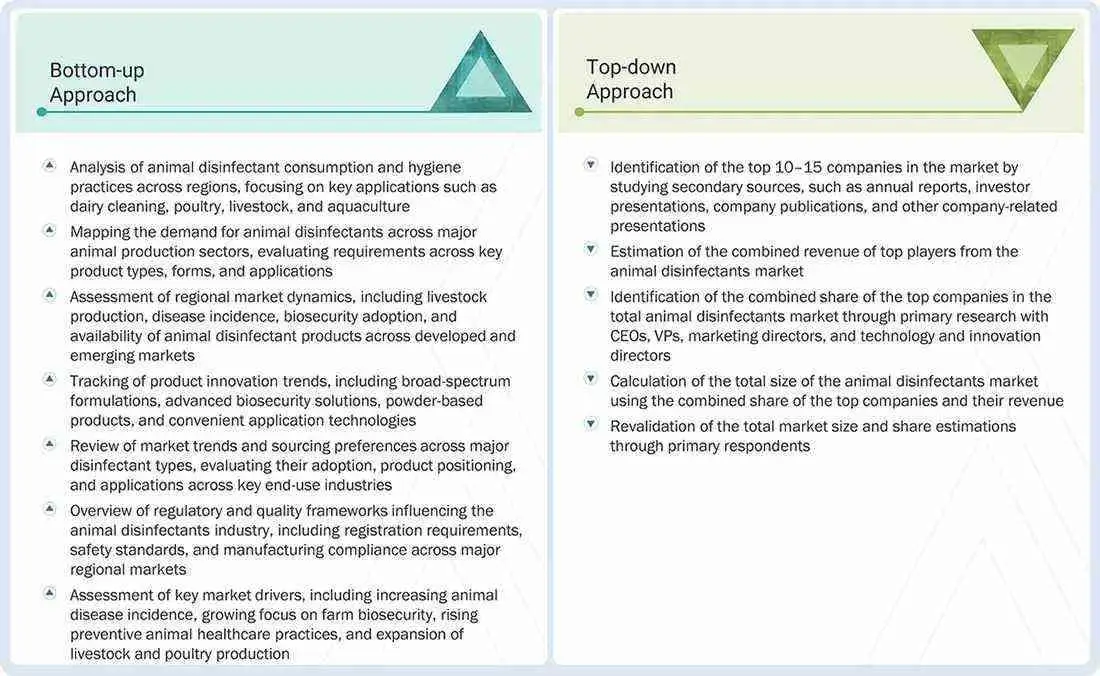
This study employed two primary approaches to estimate the current size of the animal disinfectants market. Exhaustive secondary research was carried out to collect information on the type, form, animal type, application, and end user (qualitative) of the market. The next step involved validating these findings, assumptions, and sizing with industry experts across the value chain through primary research. The top-down and bottom-up approaches were employed to estimate the complete market size. Thereafter, data triangulation was used to estimate the market size of segments and subsegments.
Secondary Research
This research study used extensive secondary sources—directories and databases such as Bloomberg Businessweek and Factiva—to identify and collect information for a technical, market-oriented, and commercial market study. In the secondary research process, sources such as annual reports, press releases & investor presentations of companies, white papers, animal disinfectants and animal health-related journals, certified publications, articles from recognized authors, directories, and databases were referred to identify and collect information. Secondary research was mainly used to obtain key information about the industry’s supply chain, the pool of key players, and market classification and segmentation based on the industry trends to the bottom-most level, regional markets, and key developments from market- and technology-oriented perspectives.
Primary Research
Extensive primary research was conducted after obtaining information regarding the animal disinfectants market scenario through secondary research. Several primary interviews were conducted with market experts from the demand and supply sides across all regions. Primary data was collected through questionnaires, emails, and telephonic interviews. The primary sources from the supply side included various industry experts, such as chief experience officers (CXOs), vice presidents (VPs), directors from business development, marketing, research, and development teams, and related key executives from distributors and key opinion leaders.
Primary interviews were conducted to gather insights, including market statistics, revenue data from products and services, market breakdowns, market size estimations, market forecasting, and data triangulation. Primary research also helped to understand the various trends related to type, form, animal type, application, and end user (qualitative), and region. Stakeholders from the demand side were interviewed to understand the buyers’ perspective on suppliers, products, and the outlook for their business, which will impact the overall market.
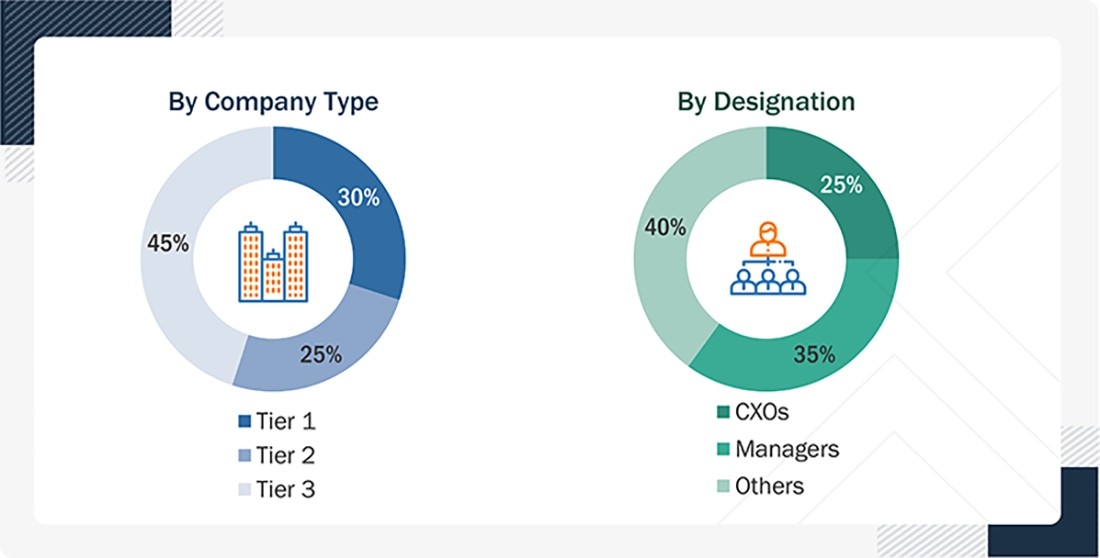
Note: The three tiers of the companies are defined based on their total revenues in 2024 or 2025, based on the availability of financial data: Tier 1: Revenue >USD 1 billion; Tier 2: USD 100 million ≤ revenue ≤ USD 1 billion; Tier 3: Revenue <USD 100 million.
|
COMPANY |
DESIGNATION |
|
LANXESS (Germany) |
Regional Sales Manager |
|
Zoetis (US) |
Marketing Manager |
|
Kersia Group (France) |
General Manager |
|
Ecolab (US) |
Sales Manager |
|
GEA Group Aktiengesellschaft (Germany) |
Sales Manager |
|
Solvay (Belgium) |
Sales Executive |
To know about the assumptions considered for the study, download the pdf brochure
Market Size Estimation
The top-down and bottom-up approaches were used to estimate and validate the total size of the animal disinfectants market. These approaches were also used extensively to determine the size of various subsegments in the market. The research methodology used to estimate the market size includes the following details:
- The key players in the industry and the overall markets were identified through extensive secondary research.
- All shares, splits, and breakdowns were determined using secondary sources and verified through primary sources.
- All possible parameters that affect the market covered in this research study were accounted for, viewed in extensive detail, verified through primary research, and analyzed to obtain final quantitative and qualitative data.
- The research included the study of reports, reviews, and newsletters of top market players, along with extensive interviews for opinions from leaders, such as CEOs, directors, and marketing executives.
Data Triangulation
After determining the overall market size from the estimation process explained above, the total market was split into several segments and subsegments. The data triangulation procedure was employed, wherever applicable, to estimate the overall animal disinfectants market and obtain precise statistics for all segments and subsegments. The data was triangulated by studying various factors and trends from the demand and supply sides. The market size was also validated using the top-down and bottom-up approaches.
Market Definition
The animal disinfectants market encompasses a broad range of chemical and formulated antimicrobial products used across animal housing, equipment, water systems, transportation facilities, veterinary premises, and other environments associated with animal production and care. These products play an important role in controlling bacteria, viruses, fungi, and other microorganisms that can compromise animal health and farm biosecurity.
Major product categories include quaternary ammonium compounds, chlorine-based disinfectants, iodine compounds, hydrogen peroxide and peracetic acid formulations, phenolic compounds, and other specialized disinfectant technologies, available in forms such as liquids, powders, foams, and concentrates.
Product selection depends on factors including target pathogens, application environment, surface characteristics, contact time, and compatibility with animals and equipment. The market forms an important part of the broader animal health and biosecurity industry, supported by increasing disease-prevention requirements, expansion of intensive livestock and poultry production, greater focus on farm hygiene, and growing adoption of effective biosecurity practices.
Key Stakeholders
- Supply-side: Animal disinfectant manufacturers, active ingredient manufacturers, chemical suppliers, formulation companies, contract manufacturers, private-label producers, and companies providing packaging and specialty formulation solutions. These stakeholders support the production and supply of disinfectants for livestock, poultry, swine, aquaculture, companion animals, and veterinary applications.
- Technology providers: Companies offering disinfection technologies, formulation technologies, automated application and spraying systems, foaming and fumigation equipment, water-system disinfection solutions, pathogen testing, quality-control systems, biosecurity monitoring, and process optimization technologies. These technologies support product efficacy, application efficiency, pathogen control, and farm biosecurity.
- Demand-side: Livestock and poultry producers, dairy farms, swine farms, aquaculture operations, veterinary clinics and hospitals, animal shelters, animal transportation and processing facilities, feed and animal-health companies, distributors, retailers, and contract farming operations that purchase, distribute, or use animal disinfectants.
- Regulatory side: Government agencies and regulatory authorities responsible for registering and approving disinfectant products, active ingredients, labeling, manufacturing practices, environmental and animal safety, quality compliance, and import/export requirements. These organizations oversee product safety, efficacy, manufacturing standards, and regulatory compliance across the animal disinfectants industry.
- Associations and industry bodies:
- World Organisation for Animal Health (WOAH)
- Food and Agriculture Organization (FAO)
- Animal Health Institute (AHI)
- American Veterinary Medical Association (AVMA)
- US Poultry & Egg Association
- National Pork Producers Council (NPPC)
- International Poultry Council (IPC)
Report Objectives
- To determine and project the size of the animal disinfectants market based on type, form, animal type, application, end user, and region from 2026 to 2031
- To identify the attractive opportunities in the market by determining the largest and fastest-growing segments across regions
- To provide detailed information about the key factors influencing market growth (drivers, restraints, opportunities, and challenges)
- To analyze the opportunities in the market for stakeholders and provide details of the competitive landscape for market leaders
- To analyze the micro markets with respect to individual growth trends, prospects, and their contribution to the total market
- To identify and profile the key players in the market
- To understand the competitive landscape and identify the major growth strategies adopted by players across the key regions.
Available customizations:
With the given market data, MarketsandMarkets offers customizations according to company-specific scientific needs. The following customization options are available for the report:
PRODUCT ANALYSIS
Product matrix, which gives a detailed comparison of the product portfolio of each company
SEGMENTAL ANALYSIS
With the given market data, MarketsandMarkets offers customizations according to company-specific scientific needs.
- Further breakdown of other types of animal disinfectants market
- Further breakdown of research laboratories and other end users of animal disinfectants
COMPANY INFORMATION
- Detailed analyses and profiling of additional market players (up to five)
Get the Full Animal Disinfectants Market Report
Full forecast, segment splits, and company analysis for all Animal Disinfectants Market.
- US Animal Disinfectants Market
- Canada Animal Disinfectants Market
- Mexico Animal Disinfectants Market
- France Animal Disinfectants Market
- Germany Animal Disinfectants Market
- UK Animal Disinfectants Market
- Spain Animal Disinfectants Market
- Italy Animal Disinfectants Market
- Russia Animal Disinfectants Market
- Turkey Animal Disinfectants Market
- Poland Animal Disinfectants Market
- Netherlands Animal Disinfectants Market
- Denmark Animal Disinfectants Market
- Greece Animal Disinfectants Market
- China Animal Disinfectants Market
- India Animal Disinfectants Market
- Japan Animal Disinfectants Market
- Vietnam Animal Disinfectants Market
- South Korea Animal Disinfectants Market
- Brazil Animal Disinfectants Market
- Argentina Animal Disinfectants Market
- Peru Animal Disinfectants Market
- Chile Animal Disinfectants Market
Need a Tailored Report?
Customize this report to your needs
Get 10% FREE Customization
Customize This Report
