
US Armor Materials Market (2025-2030)

The US Armor Materials Market was valued at $4986.5 Million in 2025 and projected to reach to $7080 Million by 2030, representing a compound annual growth rate of 7.26%. The US armor materials market is positioned for sustained growth through 2030, driven by continued federal defense spending and modernization initiatives.


| Market Size in | USD 26.32 MN |
| Market Forecast in | |
| CAGR | |
| Forecast Period | |
| Units Considered | Value (USD MN) |
US Armor Materials Market Trends and Insights
- This expansion reflects the US's strategic investments in defense modernization, law enforcement equipment upgrades, and emerging civilian protective applications.
- The US market benefits from advanced manufacturing capabilities, substantial government procurement budgets, and ongoing technological innovation in lightweight composite and ceramic armor solutions. Driving the US market's 7.26% compound annual growth rate are increased defense spending, heightened security concerns, and the development of next-generation ballistic protection materials.
- The US continues to lead in armor material research and development, with significant contributions from both established defense contractors and emerging material science companies.
- By 2030, the US armor materials market is expected to capture a substantial share of North American demand, supported by military modernization programs and evolving threat assessments..
Key Market Statistics
- CAGR (2025-2030) 7.26% CAGR
- Market Size, 2025 ~USD 4986.5 Million
- Forecast, 2030 ~USD 7080 Million
- Country US
US Armor Materials Market Overview
Market Valuation :
The US armor materials market is valued at $4,986.5 million in 2025, with a projected CAGR of 7.26% through 2030, reaching $7,080 million by forecast end.
Defense Modernization Drive :
US government investments in defense modernization and military equipment upgrades are primary growth catalysts, supporting demand for advanced armor materials across federal agencies.
Law Enforcement Expansion :
Increased funding for law enforcement protective equipment and body armor upgrades across state and local agencies is driving sustained demand for high-performance armor materials.
Civilian Protection Growth :
Emerging civilian applications including personal protective equipment and infrastructure security solutions are creating new market opportunities beyond traditional defense sectors.
US Armor Materials Market Dynamics
- Strategic investments in next-generation protective technologies and advanced manufacturing capabilities position American suppliers competitively.
- Law enforcement modernization programs and expanding civilian protective applications create diversified revenue streams beyond traditional military procurement.
- The market benefits from domestic manufacturing expertise, established supply chains, and regulatory frameworks supporting innovation in armor material development and deployment..
Market Ecosystem
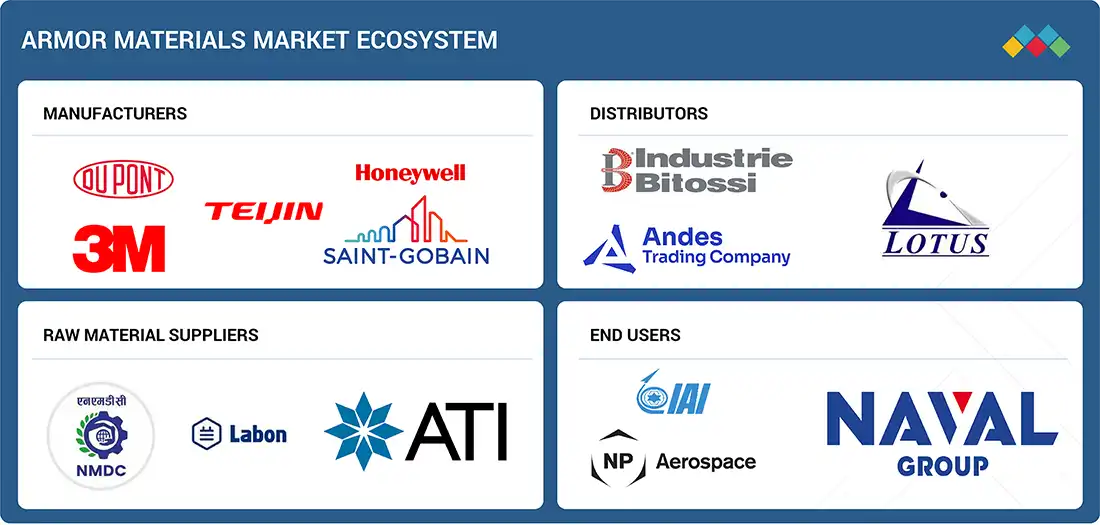
Armor Materials Market: COMMERCIAL USE CASES ACROSS INDUSTRIES
| COMPANY | USE CASE DESCRIPTION | BENEFITS |
|---|---|---|
 |
Integration of advanced ceramics and composites in armored vehicles and naval vessels | Provides lightweight yet high-strength protection, improving mobility and survivability in combat zones |
 |
Supplies Kevlar aramid fibers for body armor, helmets, and vehicle armor | Delivers superior ballistic resistance with reduced weight, enhancing soldier protection and comfort |
 |
Manufactures bulletproof vests, helmets, and vehicle armor systems using UHMWPE and ceramics | Offers cost-effective and modular protection solutions, widely adopted by military and law enforcement |
 |
Uses composite armor materials in military aircraft and land systems | Enhances aircraft survivability against ballistic threats while maintaining fuel efficiency through weight reduction |
 |
Develops soft and hard body armor for police and defense personnel | Ensures high protection levels with ergonomic designs, improving mobility and comfort during field operations |
Logos and trademarks shown above are the property of their respective owners. Their use here is for informational and illustrative purposes only.
Related Ecosystem
Defence Platforms And Systems
- Sensors
- Unmanned Ground Vehicles (UGV)
- Fighter Aircraft
- Special Mission Aircraft
- Antennas
- BAE Systems plc
- Thales group
- LOCKHEED MARTIN CORPORATION
- Northrop Grumman Corporation
- L3Harris Technologies, Inc.
Ceramics And Glass
- Zirconia
- Alumina Ceramics
- Silicon Carbide
- Silicon Nitride
- Titanate Ceramics
- Saint-gobain
- 3M COMPANY
- Kyocera Corporation
- COORSTEK INCORPORATED
- CERAMTEC GMBH
Fibers And Composites
- Polyetheretherketone (PEEK)
- Polyphenylene Sulfide (PPS)
- Epoxy Resin
- Polycarbonate
- Polyester Resin
- Toray Industries, Inc.
- Teijin Limited
- Sgl carbon se
- Hexcel Corporation
- Solvay sa
Key Takeaways
- The US armor materials market is valued at $4,986.5 million in 2025 and will reach $7,080 million by 2030, representing a 7.26% CAGR.
- The US market is driven by substantial defense budgets, military modernization initiatives, and increased demand for advanced protective equipment.
- The US leads in armor material innovation, with significant investments in lightweight composites and ceramic technologies.
- By 2030, the US is expected to maintain its dominant position in North American armor materials demand through continued government procurement and technological advancement.
Armor Materials Market Report Scope
| Report Metric | Details |
|---|---|
| Base Year | 2025 |
| Fastest Growing Segment | PARA-ARAMID FIBER (Material Type) |
| Forecast Period | 2025-2030 |
| Growth Rate | CAGR of 7.47% from 2025 to 2030 |
| Largest Segment | VEHICLE ARMOR (Application) |
| Market Size Base Year (Billions) | ~USD 14.58 (2025) |
| Revenue Forecast (Billions) | ~USD 20.9 (2030) |
| Segments Covered | Material Type, Application |
US Armor Materials Market Report Segmentation
2 segment dimensions are covered across the global market.
By Material Type
- Ceramics
- Composites
- Fiberglass
- Metals & Alloys
- Other Material Types
- Para-Aramid Fiber
- Uhmwpe
By Application
- Aerospace Armor
- Body Armor
- Civil Armor
- Marine Armor
- Vehicle Armor
US: ARMOR MATERIALS MARKET, BY APPLICATION, 2025–2030
| Segment | 2025 | 2026 | 2027 | 2028 | 2029 | 2030 | CAGR (%) |
|---|---|---|---|---|---|---|---|
| AEROSPACE ARMOR | 1628.1 | 1738 | 1859.1 | 2006.1 | 2169.5 | 2351.3 | 7.63 |
| BODY ARMOR | 863.9 | 918.9 | 978.5 | 1050.3 | 1128.6 | 1214.2 | 7.04 |
| CIVIL ARMOR | 137 | 144.8 | 153.2 | 163.3 | 174.2 | 186 | 6.3 |
| MARINE ARMOR | 83.1 | 87.4 | 91.9 | 97.5 | 103.6 | 110.1 | 5.79 |
| VEHICLE ARMOR | 2274.4 | 2422.3 | 2582.9 | 2776.1 | 2987.3 | 3218.4 | 7.19 |
| TOTAL | 4986.5 | 5311.4 | 5665.6 | 6093.4 | 6563.2 | 7080 | 7.26 |
Target Audience
- Defense Contractors & Manufacturers : Need comprehensive US market data to inform product development, capacity planning, and competitive positioning in military armor material procurement.
- Law Enforcement Agencies : Require market intelligence on available armor materials, pricing trends, and supplier capabilities to optimize protective equipment procurement budgets.
- Investment & Private Equity Firms : Seek validated market sizing and growth projections for the US armor materials sector to evaluate investment opportunities and portfolio company valuations.
- Material Science & Technology Companies : Need US-specific market insights to guide R&D investments, commercialization strategies, and partnerships in advanced armor material development.
- Government & Policy Analysts : Require detailed market data to assess defense spending effectiveness, identify supply chain vulnerabilities, and inform procurement policy decisions.
Reasons to Buy this Report
- Market Size & Growth Validation : Confirm the US market valuation of $4,986.5M in 2025 and validate the 7.26% CAGR projection to $7,080M by 2030 for accurate business planning and investment decisions.
- Competitive Landscape Intelligence : Understand the competitive positioning of US armor material manufacturers, identify market leaders, and assess competitive advantages in the domestic market.
- Segment & Application Analysis : Access detailed breakdowns of US market segments including defense, law enforcement, and civilian applications to identify high-growth opportunities and target markets.
- Government Procurement Insights : Gain intelligence on US federal defense spending trends, procurement cycles, and law enforcement modernization budgets driving armor material demand.
- Strategic Market Entry Planning : Develop data-driven market entry strategies, partnership opportunities, and expansion plans specific to the US armor materials market dynamics and regulatory environment.
Frequently asked questions
What is the current size of the US armor materials market?
The US armor materials market is estimated at $4,986.5 million in 2025 and is projected to grow to $7,080 million by 2030.
What is the growth rate of the US armor materials market?
The US armor materials market is expected to grow at a compound annual growth rate (CAGR) of 7.26% from 2025 to 2030.
What factors are driving growth in the US armor materials market?
Key drivers include increased defense spending, military modernization programs, heightened security concerns, and advancements in lightweight composite and ceramic armor technologies.
Which materials dominate the US armor materials market?
The US market is characterized by advanced materials including ceramic composites, ballistic steel, aramid fibers, and polyethylene-based solutions used in body armor and vehicle protection.
Who are the primary consumers of armor materials in the US?
Primary consumers include the US Department of Defense, law enforcement agencies, private security firms, and increasingly, civilian protective equipment manufacturers.
RESEARCH METHODOLOGY
The study involved four main activities in estimating the armor materials market size. Extensive secondary research was conducted to gather information on the market, its peer markets, and its parent market. The next step was to validate these findings, assumptions, and size estimates with industry experts across the value chain through primary research. Both top-down and bottom-up approaches were used to calculate the complete market size. Then, market breakdown and data triangulation procedures were employed to estimate the sizes of segments and subsegments.
Secondary Research
Secondary sources used in this study included annual reports, press releases, and investor presentations from companies; white papers; certified publications; articles by recognized authors; and reputable websites such as Factiva, ICIS, Bloomberg, and others. The study’s findings were verified through primary research by conducting extensive interviews with key officials like CEOs, VPs, directors, and other executives.
Primary Research
The armor materials market includes stakeholders such as raw material suppliers, end-product manufacturers, and regulatory organizations involved in the supply chain. The demand side of this market is driven by key opinion leaders across various applications for armor materials. The supply side is influenced by technological advancements and diverse application industries. Interviews with primary sources from both the supply and demand sides of the market provided qualitative and quantitative information.
The breakdown of profiles of the primary interviewees is illustrated in the figure below:
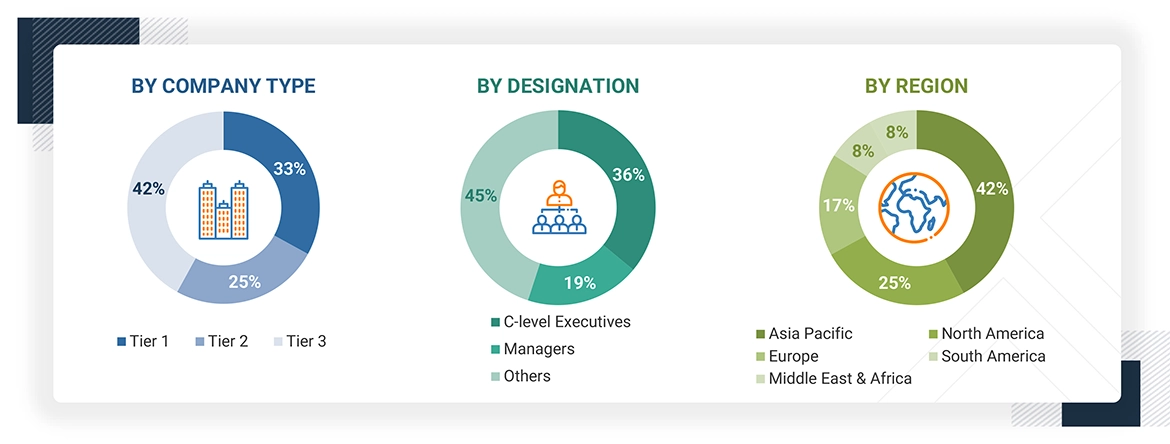
Note: Tier 1, Tier 2, and Tier 3 companies are classified based on their market revenue in 2023/2024, available in the public domain, product portfolios, and geographical presence.
Other designations include consultants and sales, marketing, and procurement managers.
To know about the assumptions considered for the study, download the pdf brochure
| COMPANY NAME | DESIGNATION | |
|---|---|---|
| 3M Company | Senior Manager | |
| DuPont de Nemours, Inc. | Innovation Manager | |
| Teijin Limited | Vice President | |
| Saint-Gobain S.A. | Production Supervisor | |
| Honeywell International Inc. | Sales Manager | |
Market Size Estimation
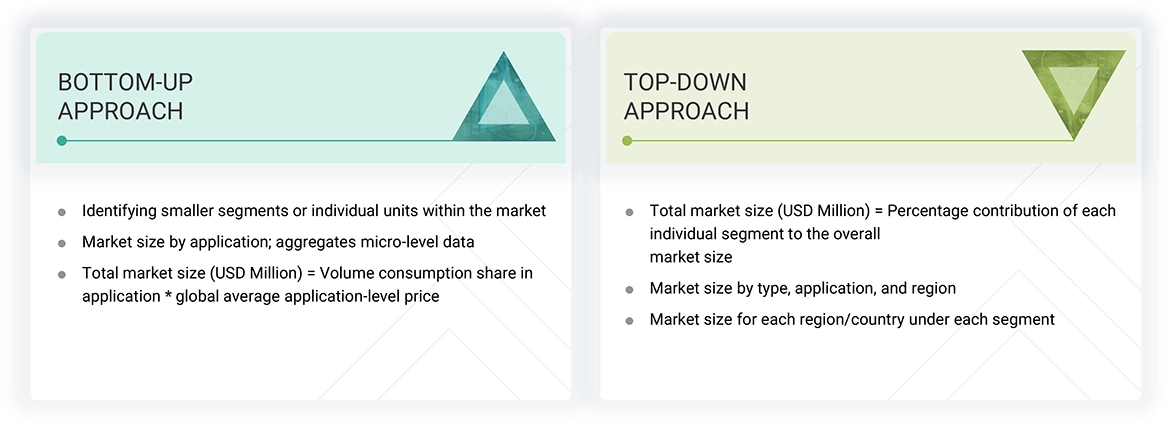
Both top-down and bottom-up approaches were used to estimate and validate the total size of the armor materials market. These methods were also used extensively to estimate the size of various subsegments within the market. The research methodology used to estimate the market size includes the following:
- The key players in the industry have been identified through extensive secondary research.
- The industry’s supply chain has been mapped through both primary and secondary research.
- All percentage shares, splits, and breakdowns have been calculated using secondary sources and verified with primary sources.
- All relevant parameters affecting the markets covered in this research have been thoroughly examined, verified through primary research, and analyzed to produce the final quantitative and qualitative data.
Data Triangulation
After determining the overall market size—using the market size estimation processes described above—the market was divided into several segments and subsegments. Data triangulation and market breakdown methods were used as needed to complete the entire market analysis and obtain precise data for each segment and subsegment. The data was triangulated by examining various factors and trends from both the demand and supply sides in the armor materials industry.
Market Definition
According to the book titled “Introduction to Armor Materials” by Gopalakrishnan Shankaranarayanan, “armor materials are those materials that can resist penetration or damage from bullets, bombs, mines, and other ballistic or explosive threats. These materials typically have high strength, durability, and toughness, as well as special properties such as hardness, resilience, and deformation resistance. Armor is a layer or combination of protective layers on military and civilian assets, such as vehicles, individuals, building components, and other objects, to protect them from damage inflicted by weapons in hostile environments and war situations. Armor is made of different materials, such as metals & alloys, ceramics, composites, para-aramid fiber, ultra-high-molecular-weight polyethylene (UHMWPE), and fiberglass. Different materials have different properties, and parameters such as weight, flexibility, ballistic protection, machinability, fire resistance, and cost are considered when specifying armor against potential threats.
Stakeholders
- Manufacturers, dealers, and suppliers of armor materials and their raw materials
- Manufacturers across various end-use industries such as consumer electronics, automotive, electrical systems/wire harnessing, industrial distribution, flexo printing & paper, medical & hygiene, packaging, and other sectors
- Traders, distributors, and suppliers of armor materials
- Regional manufacturers’ associations and armor material associations
- Government agencies, regional agencies, and research organizations
Report Objectives
- To analyze and forecast the armor materials market in terms of value and volume
- To provide detailed information about the key factors (drivers, restraints, opportunities, and challenges) influencing market growth
- To define, segment, and project the size of the global armor materials market based on type, application, and region
- To project the market size for five main regions: North America, Europe, Asia Pacific, the Middle East & Africa, and South America, with their key countries
- To analyze the micromarkets1 concerning individual growth trends, prospects, and their contribution to the overall market
- To analyze opportunities in the market for stakeholders and provide a competitive landscape of the market leaders
- To track and analyze R&D and competitive developments such as expansions, product launches, collaborations, investments, partnerships, agreements, developments, collaborations, and mergers & acquisitions in the armor materials market
Get the Full Armor Materials Market Report
Full forecast, segment splits, and company analysis for all Armor Materials Market.
- Canada Armor Materials Market
- Mexico Armor Materials Market
- Russia Armor Materials Market
- France Armor Materials Market
- UK Armor Materials Market
- Germany Armor Materials Market
- Italy Armor Materials Market
- Poland Armor Materials Market
- China Armor Materials Market
- India Armor Materials Market
- South Korea Armor Materials Market
- Japan Armor Materials Market
- Australia Armor Materials Market
- Indonesia Armor Materials Market
- Philippines Armor Materials Market
- Brazil Armor Materials Market
- Argentina Armor Materials Market
- Israel Armor Materials Market
- Saudi Arabia Armor Materials Market
- UAE Armor Materials Market
- Rest Of Europe Armor Materials Market
- Rest Of Asia Pacific Armor Materials Market
- Algeria Armor Materials Market
- Rest Of The Middle East Armor Materials Market
- Rest Of South America Armor Materials Market
- Africa Armor Materials Market
- Latin America Armor Materials Market
Need a Tailored Report?
Customize this report to your needs
Get 10% FREE Customization
Customize This Report
