
India Cancer/Tumor Profiling Market (2022-2027)

The India Cancer/Tumor Profiling Market was valued at $98.5 Million in 2022 and projected to reach to $140.5 Million by 2027, representing a compound annual growth rate of CAGR 7.4%. India's cancer/tumor profiling market is poised for sustained growth as the country grapples with an increasing cancer burden and healthcare modernization.


| Market Size in | USD 26.32 MN |
| Market Forecast in | |
| CAGR | |
| Forecast Period | |
| Units Considered | Value (USD MN) |
India Cancer/Tumor Profiling Market Trends and Insights
- This growth reflects India's increasing burden of cancer cases and rising adoption of precision medicine diagnostics across oncology centers and hospitals.
- India's healthcare infrastructure is progressively integrating advanced tumor profiling technologies to improve patient outcomes and treatment personalization. The expansion of India's cancer/tumor profiling market is driven by growing awareness of genomic testing, improved healthcare accessibility in tier-2 and tier-3 cities, and government initiatives supporting cancer care.
- India's rising middle-class population and increased healthcare spending are accelerating demand for molecular diagnostics and targeted therapy options.
- By 2027, India is expected to emerge as a key market for cancer profiling solutions in the Asia Pacific region, supported by both public and private sector investments in oncology infrastructure..
Key Market Statistics
- CAGR (2022-2027) CAGR 7.4%
- Market Size, 2022 ~USD 98.5 Million
- Forecast, 2027 ~USD 140.5 Million
- Country India
India Cancer/Tumor Profiling Market Overview
Market Size & Growth :
India's cancer/tumor profiling market reached USD 98.5 million in 2022 and is projected to grow to USD 140.5 million by 2027, representing a CAGR of 7.4%, driven by increasing cancer incidence and precision medicine adoption.
Rising Cancer Burden :
India faces a growing cancer epidemic with over 1.4 million new cases annually. This escalating disease burden is driving demand for advanced diagnostic profiling solutions across oncology centers, hospitals, and diagnostic laboratories nationwide.
Precision Medicine Adoption :
Indian healthcare institutions are increasingly adopting tumor profiling technologies for personalized treatment planning. Genomic testing and molecular diagnostics are becoming standard practice in major metropolitan and tier-2 cities.
Healthcare Infrastructure Expansion :
India's oncology infrastructure is rapidly modernizing with improved laboratory facilities, skilled workforce development, and government initiatives supporting cancer care. This expansion is facilitating wider accessibility to profiling services across regions.
India Cancer/Tumor Profiling Market Dynamics
- The adoption of precision medicine diagnostics is accelerating across major oncology centers, hospitals, and diagnostic laboratories, particularly in metropolitan areas.
- Government initiatives promoting cancer screening and early detection are expected to further drive market expansion. The market will benefit from rising healthcare expenditure, growing awareness among patients and physicians, and technological advancements in genomic profiling.
- However, challenges including high testing costs, limited reimbursement coverage, and uneven geographic distribution of advanced diagnostic facilities may moderate growth rates compared to global markets.
- Strategic partnerships and localized solutions will be critical for market players targeting India's diverse healthcare landscape..
Market Ecosystem
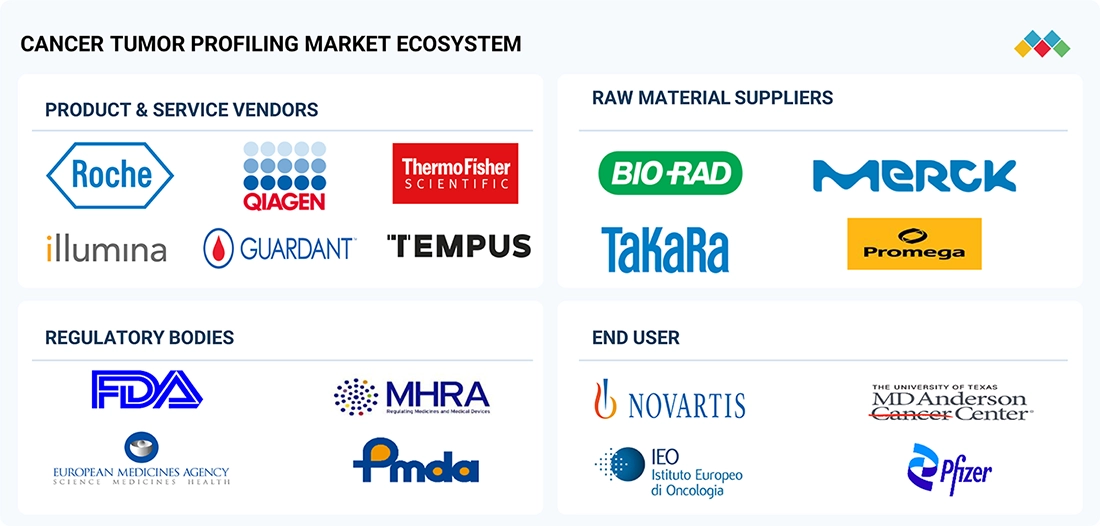
CANCER TUMOR PROFILING MARKET: COMMERCIAL USE CASES ACROSS INDUSTRIES
| COMPANY | USE CASE DESCRIPTION | BENEFITS |
|---|---|---|
 |
Through Foundation Medicine and Roche Diagnostics, the company provides comprehensive genomic profiling (CGP) solutions using tissue and liquid biopsy-based testing to identify actionable biomarkers and support companion diagnostic applications for targeted therapies and immunotherapies. | Enables accurate patient stratification, improves therapy selection, supports biomarker-driven treatment decisions, and accelerates adoption of precision oncology workflows. |
 |
Provides next-generation sequencing (NGS) platforms and oncology-focused assays, including TruSight Oncology Comprehensive, to enable multi-gene tumor profiling and detection of clinically relevant biomarkers across solid tumors. | Supports comprehensive biomarker identification, improves laboratory testing scalability, enables decentralized genomic testing, and supports pharmaceutical companion diagnostic development. |
 |
Provides liquid biopsy-based tumor profiling solutions, including Guardant360 CDx and related genomic testing platforms, for detecting actionable genomic alterations, monitoring treatment response, and supporting therapy selection in advanced cancers. | Enables minimally invasive testing, facilitates repeat monitoring, identifies resistance mechanisms, and expands access to precision oncology testing for patients with limited tissue availability. |
Logos and trademarks shown above are the property of their respective owners. Their use here is for informational and illustrative purposes only.
Related Ecosystem
Key Takeaways
- India's cancer/tumor profiling market is valued at USD 98.5 million in 2022 and will reach USD 140.5 million by 2027 at a 7.4% CAGR.
- India's growing cancer incidence and adoption of precision medicine are primary drivers of market expansion through 2027.
- India's healthcare sector is increasingly integrating genomic testing and molecular diagnostics into oncology treatment protocols.
- India's market growth is supported by government healthcare initiatives, rising disposable incomes, and expanding diagnostic infrastructure.
Cancer/Tumor Profiling Market Report Scope
| Report Metric | Details |
|---|---|
| Base Year | 2022 |
| Fastest Growing Segment | NEXT-GENERATION SEQUENCING (Technology) |
| Forecast Period | 2022-2027 |
| Growth Rate | CAGR of 10.6% from 2022 to 2027 |
| Largest Segment | RESEARCH APPLICATIONS (Application) |
| Market Size Base Year (Billions) | ~USD 9.67 (2022) |
| Revenue Forecast (Billions) | ~USD 16 (2027) |
| Segments Covered | Technology, Cancer Type, Biomarker Type, Application, Type |
India Cancer/Tumor Profiling Market Report Segmentation
5 segment dimensions are covered across the global market.
By Technology
- Immunoassays
- In Situ Hybridization
- In-Situ Hybridization
- Mass Spectrometry
- Microarrays
- Next-Generation Sequencing
- Other Technologies
- Others Technologies
- Polymerase Chain Reaction
By Cancer Type
- Breast Cancer
- Colorectal Cancer
- Lung Cancer
- Melanoma Cancer
- Other Cancers
- Prostate Cancer
By Biomarker Type
- Genetic Biomarkers
- Genomic Biomarkers
- Other Biomarkers
- Protein Biomarkers
By Application
- Clinical Applications
- Research Applications
By Type
- Biomarker Discovery
- Diagnostics
- Monitoring & Treatment
- Personalized Medicine
- Prognostics
- Screening
Target Audience
- Diagnostic Companies & Lab Operators : Need India-specific market data to assess expansion opportunities, benchmark performance against local competitors, and develop pricing strategies aligned with India's healthcare economics and reimbursement landscape.
- Pharmaceutical & Biotech Firms : Require insights into India's precision oncology adoption rates and patient profiling trends to inform companion diagnostic development, clinical trial strategies, and targeted drug commercialization in the Indian market.
- Healthcare Investors & PE Firms : Need validated market sizing and growth projections for India to evaluate investment opportunities in diagnostic startups, hospital chains, and healthcare technology companies operating in the oncology profiling space.
- Hospital & Oncology Center Administrators : Seek market intelligence on profiling service demand, technology adoption trends, and competitive offerings to make informed decisions on diagnostic infrastructure investments and service portfolio expansion.
- Government & Policy Makers : Require market data to inform cancer care policies, healthcare infrastructure planning, reimbursement frameworks, and initiatives supporting precision medicine accessibility across India's diverse healthcare ecosystem.
Reasons to Buy this Report
- India-Specific Market Sizing : Access precise market valuation data for India's cancer/tumor profiling sector with validated historical figures (2022: USD 98.5M) and reliable forecasts through 2027, enabling accurate business planning and investment decisions.
- Growth Opportunity Assessment : Understand India's 7.4% CAGR trajectory compared to global 10.6% growth, identifying unique market dynamics, growth drivers, and regional variations to optimize market entry and expansion strategies.
- Competitive Landscape Intelligence : Gain insights into India's oncology infrastructure development, adoption patterns of precision medicine, and competitive positioning of diagnostic providers to inform product development and go-to-market strategies.
- Regulatory & Reimbursement Insights : Understand India-specific healthcare policies, reimbursement challenges, government cancer initiatives, and regulatory pathways affecting market accessibility and pricing strategies for profiling services.
- Customer Segmentation Data : Identify and prioritize key customer segments across Indian oncology centers, hospitals, diagnostic labs, and healthcare providers with actionable insights on adoption rates and service demand patterns by region and institution type.
Frequently asked questions
What is the current size of India's cancer/tumor profiling market?
India's cancer/tumor profiling market was valued at USD 98.5 million in 2022 and is expected to grow to USD 140.5 million by 2027.
What is the projected growth rate for India's cancer/tumor profiling market?
India's cancer/tumor profiling market is projected to grow at a CAGR of 7.4% from 2022 to 2027.
What factors are driving growth in India's cancer/tumor profiling market?
Key drivers include rising cancer incidence, increased adoption of precision medicine, government healthcare initiatives, improved diagnostic infrastructure, and growing healthcare spending in India.
Which regions in India are seeing the most growth in tumor profiling adoption?
India's tier-2 and tier-3 cities are experiencing accelerated adoption of cancer profiling technologies alongside established metropolitan oncology centers.
How does India's market compare to the global cancer/tumor profiling market?
India's 7.4% CAGR is lower than the global CAGR of 10.6%, reflecting India's developing healthcare infrastructure and market maturity relative to developed nations.
RESEARCH METHODOLOGY
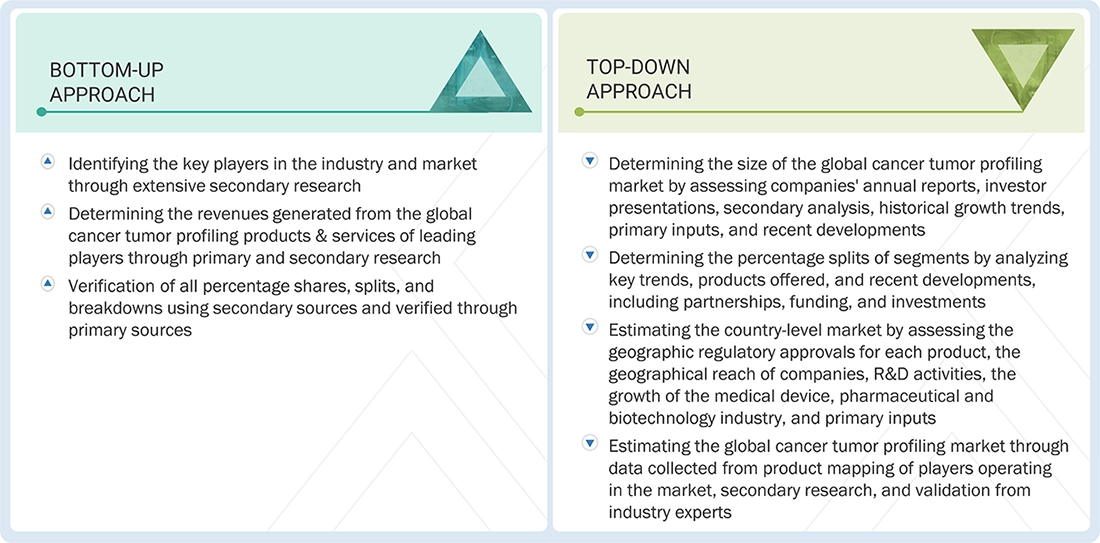
This study involved four major activities in estimating the current size of the cancer tumor profiling market. Exhaustive secondary research was conducted to collect information on the market, its peer markets, and the broader precision-oncology ecosystem. The findings, assumptions, and market sizing estimates were then validated through primary research with participants across the value chain. Both top-down and bottom-up approaches were used to estimate the complete market. Following this, data triangulation was applied to finalize the market size and the values of individual segments and subsegments.
Secondary Research
Secondary research was used to identify and gather information for this extensive technical, market-oriented, and commercial study. Public-sector sources included the US Food and Drug Administration (FDA), National Institutes of Health (NIH), National Cancer Institute (NCI), National Center for Biotechnology Information (NCBI), Centers for Disease Control and Prevention (CDC), World Health Organization (WHO), International Agency for Research on Cancer (IARC), Global Cancer Observatory (GLOBOCAN), European Medicines Agency (EMA), European Commission, and relevant national health ministries and cancer registries.
Company and industry sources included annual reports, SEC and other regulatory filings, investor presentations, earnings releases, product catalogs, regulatory databases, company websites, scientific publications, clinical trial registries, peer-reviewed journals, and publications from pathology, genomics, oncology, and laboratory medicine associations. These sources were used to identify major participants, product and service portfolios, regulatory approvals, installed sequencing and pathology capabilities, test volumes, oncology revenue exposure, partnerships, clinical-trial activity, regional presence, technology adoption, and market developments.
Secondary data were analyzed to estimate the overall cancer tumor profiling market and to construct preliminary splits by product and service, technology, sample type, application, cancer type, end user, and region. The resulting estimates were subsequently validated and refined through primary research.
Primary Research
In-depth interviews were conducted with primary respondents, including executives of diagnostics and life-science companies, laboratory directors, molecular pathologists, oncologists, sequencing specialists, product managers, business-development leaders, clinical-trial professionals, and subject-matter experts. Interviews were conducted across both the supply and demand sides to validate market definitions, adoption levels, average selling prices, test volumes, technology mix, regional variation, end-user behavior, growth assumptions, and competitive positioning:
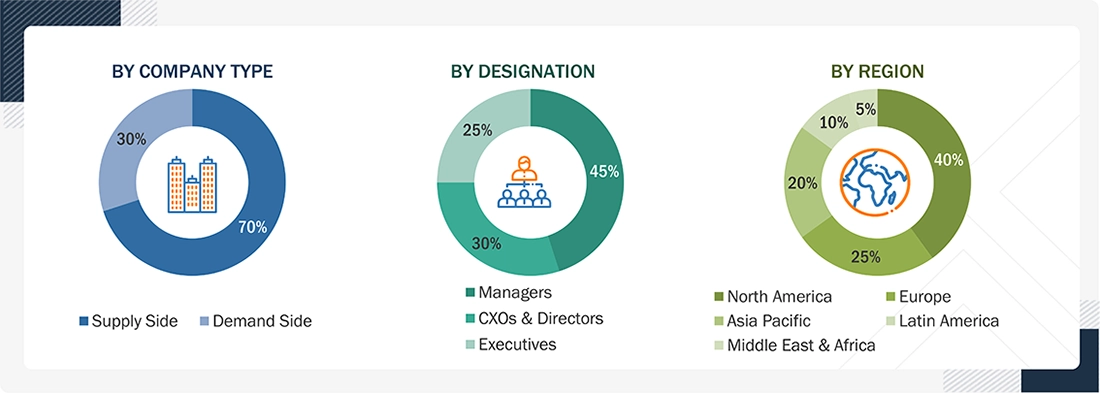
To know about the assumptions considered for the study, download the pdf brochure
Market Size Estimation
The global cancer tumor profiling market was estimated through multiple complementary approaches. A detailed market-engineering model was used to estimate and validate the overall market and each segment. The process combined company-level revenue analysis, product and service mapping, test-volume assessment, installed-base evaluation, average selling price analysis, end-user demand estimation, and regional adoption patterns. The research methodology used to estimate the market size includes the following:
Cancer Tumor Profiling Market : Top-Down and Bottom-Up Approach
Data Triangulation
After estimating the overall market through the market-size estimation process, the total market was split into the defined segments and subsegments. To complete the market-engineering process and arrive at the final statistics, data triangulation was employed. The process examined factors and trends from both the demand and supply sides and reconciled company revenues, test volumes, installed systems, consumable pull-through, service revenue, technology adoption, cancer incidence, biomarker-testing patterns, and regional market conditions.
The final estimates were checked for consistency across all dimensions. For example, the product and service totals were reconciled with technology, sample type, application, cancer type, end user, and regional totals. Company-share estimates were also compared with the independently derived global market size to ensure that no major revenue pools were omitted or double-counted.
Market Definition
Cancer tumor profiling refers to the analysis of molecular, genomic, proteomic, and histopathologic characteristics of tumor material to support cancer diagnosis and molecular characterization, prognostic or risk assessment, treatment selection, companion diagnostic use, treatment-response and resistance monitoring, residual disease assessment, post-treatment surveillance, recurrence detection, biomarker discovery, and oncology drug development.
The market includes instruments and systems; assays, kits, reagents, and consumables; clinical tumor profiling testing services; and biopharmaceutical, clinical-trial, and companion diagnostic services. It covers next-generation sequencing, PCR-based technologies, immunohistochemistry, in situ hybridization, and other tumor profiling technologies applied to tissue, whole blood and plasma, bone marrow, and other relevant samples across solid tumors and hematologic malignancies.
The market excludes unrelated general laboratory testing, non-oncology molecular diagnostics, routine pathology procedures that do not contribute to tumor characterization, and hereditary or germline testing performed outside a cancer tumor profiling workflow.
Key Stakeholders
- Manufacturers and distributors of cancer tumor profiling instruments and systems
- Assay, kit, reagent, antibody, probe, and consumable suppliers
- Next-generation sequencing, PCR, IHC, and ISH technology providers
- Clinical tumor profiling and liquid-biopsy testing laboratories
- Hospitals, dedicated cancer centers, and oncology clinics
- Independent and specialty reference laboratories
- Pharmaceutical and biotechnology companies
- Contract research organizations and central laboratories
- Companion diagnostic developers and service providers
- Research institutes and academic medical center laboratories
- Regulatory agencies, reimbursement bodies, and cancer registries
- Market research and consulting firms
- Private equity firms, venture capitalists, and other investors.
Report Objectives
- To define, describe, segment, and forecast the global cancer tumor profiling market by offering, technology, sample type, application, cancer type, end user, and region
- To provide detailed information regarding the major factors influencing market growth, including drivers, restraints, opportunities, and challenges
- To analyze micromarkets with respect to individual growth trends, prospects, and contributions to the overall cancer tumor profiling market
- To analyze market opportunities for stakeholders and provide details of the competitive landscape for key players
- To forecast the size of the market segments with respect to six regions: North America(US and Canada), Europe (Germany, France, the UK, Italy, Spain, and the Rest of Europe), Asia Pacific (China, Japan, India, South Korea, Australia, and the Rest of Asia Pacific), Latin America (Brazil, Mexico, Argentina, and the Rest of Latin America), the Middle East [GCC and the Rest of Middle East], and Africa
- To profile the key players and comprehensively analyze their product portfolios, market positions, and core competencies
- To track and analyze company developments such as product launches & approvals, partnerships, acquisitions, agreements, collaborations, expansions, and other developments
- To benchmark players within the market using the proprietary “Company Evaluation Matrix” framework, which analyzes market players on various parameters within the broad categories of business and product excellence strategy
Available customizations:
With the given market data, MarketsandMarkets offers customizations as per the company’s specific needs. The following customization options are available for the report:
Geographic Analysis
-
Further breakdown of the Rest of Europe cancer/tumor profiling market, by country
-
Further breakdown of the Rest of Asia Pacific cancer/tumor profiling market, by country
Company Information
-
Detailed analysis and profiling of additional market players (up to five)
-
Further breakup of additional Asia Pacific countries by offering, deployment mode, enterprise size, application, and vertical
-
Further breakup of additional Middle Eastern & African countries by offering, deployment mode, enterprise size, application, and vertical
Segment Analysis
- Cross-segment analysis
Get the Full Cancer/Tumor Profiling Market Report
Full forecast, segment splits, and company analysis for all Cancer/Tumor Profiling Market.
- Canada Cancer/Tumor Profiling Market
- US Cancer/Tumor Profiling Market
- France Cancer/Tumor Profiling Market
- Germany Cancer/Tumor Profiling Market
- Italy Cancer/Tumor Profiling Market
- Spain Cancer/Tumor Profiling Market
- UK Cancer/Tumor Profiling Market
- China Cancer/Tumor Profiling Market
- Japan Cancer/Tumor Profiling Market
- Rest Of Europe Cancer/Tumor Profiling Market
- Roapac Cancer/Tumor Profiling Market
Need a Tailored Report?
Customize this report to your needs
Get 10% FREE Customization
Customize This Report
