
Canada Carbon Fiber Market (2026-2031)

The Canada Carbon Fiber Market was valued at $118.8 Million in 2026 and projected to reach to $144 Million by 2031, representing a compound annual growth rate of 3.9%. Canada's carbon fiber market demonstrates steady growth potential, supported by ongoing infrastructure renewal projects and increasing adoption of lightweight composite materials in construction applications.


| Market Size in | USD 26.32 MN |
| Market Forecast in | |
| CAGR | |
| Forecast Period | |
| Units Considered | Value (USD MN) |
Canada Carbon Fiber Market Trends and Insights
- In 2026, Construction & Infrastructure accounted for $118.8 million in market value, driven by increasing demand for lightweight, high-strength materials in structural reinforcement, bridge rehabilitation, and building facades.
- Construction & Infrastructure applications benefit from carbon fiber's superior strength-to-weight ratio and corrosion resistance, enabling longer-lasting infrastructure solutions with reduced maintenance costs. By 2031, the Construction & Infrastructure segment is projected to reach $144.0 million, expanding at a compound annual growth rate of 3.9%.
- This moderate but steady growth reflects rising adoption in seismic retrofitting, concrete reinforcement, and sustainable building practices across developed and emerging markets.
- Construction & Infrastructure continues to gain traction as regulatory standards for durability and environmental performance tighten, positioning carbon fiber as a preferred material for next-generation infrastructure projects..
Key Market Statistics
- CAGR (2026-2031) 3.9% CAGR
- Market Size, 2026 ~USD 118.8 Million
- Forecast, 2031 ~USD 144 Million
- Country Canada
Canada Carbon Fiber Market Overview
Moderate Growth Trajectory :
Canada's carbon fiber market is projected to grow from $118.8 million in 2026 to $144.0 million by 2031, representing a steady CAGR of 3.9%, reflecting stable demand in construction and infrastructure applications.
Construction & Infrastructure Leadership :
The Construction & Infrastructure segment dominates Canada's carbon fiber market, driven by increasing adoption in bridge rehabilitation projects, structural reinforcement, and modern building facades across major urban centers.
Lagging Global Growth :
Canada's 3.9% CAGR trails the global market growth of 7.2%, indicating slower adoption rates and potential opportunities for market acceleration through infrastructure investment and technological advancement.
Infrastructure Investment Potential :
Government infrastructure modernization initiatives and aging bridge rehabilitation programs present significant growth catalysts for carbon fiber adoption in Canadian construction and civil engineering projects.
Canada Carbon Fiber Market Dynamics
- The 3.9% CAGR reflects a maturing market with consistent demand from the construction and infrastructure sector, particularly in bridge rehabilitation and structural reinforcement initiatives across provinces. Looking ahead to 2031, market expansion will be driven by government infrastructure spending, technological improvements in carbon fiber manufacturing, and growing awareness of material benefits in sustainable building practices.
- However, market growth remains constrained by higher material costs and competition from alternative composites, suggesting opportunities for innovation and cost optimization to accelerate adoption rates..
Market Ecosystem
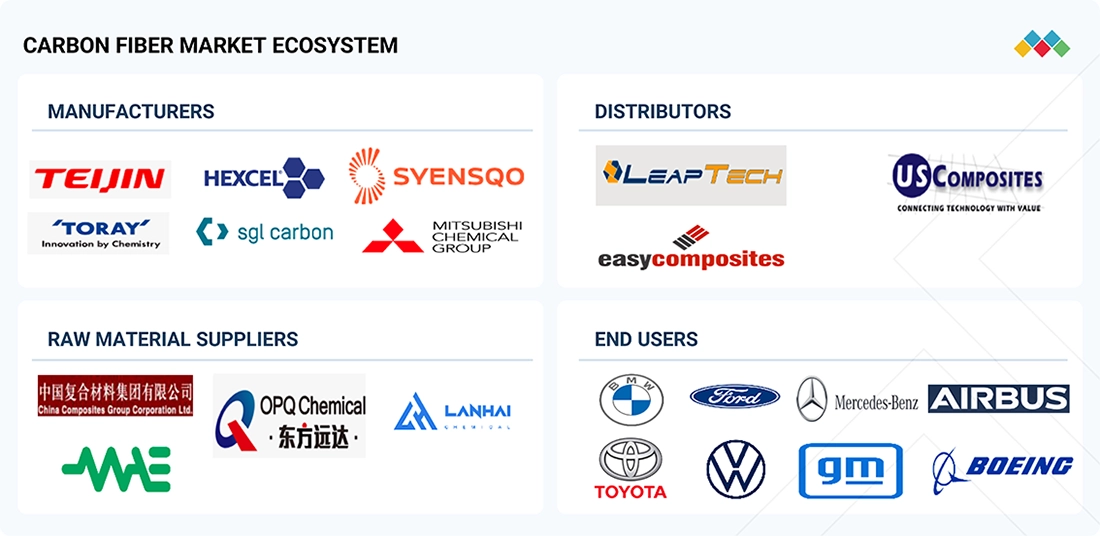
CARBON FIBER MARKET: COMMERCIAL USE CASES ACROSS INDUSTRIES
| COMPANY | USE CASE DESCRIPTION | BENEFITS |
|---|---|---|
 |
Utilizes carbon fiber composites extensively in aircraft fuselage, wings, and structural components to reduce aircraft weight and improve fuel efficiency in commercial and defense aircraft programs. | Enables significant weight reduction, improved fuel efficiency, enhanced fatigue resistance, and lower maintenance costs while maintaining structural integrity. |
 |
Deploys carbon fiber composites in next-generation aircraft structures, including wings, empennage, and cabin components, to improve aircraft performance and sustainability. | Enhances fuel savings, corrosion resistance, operational efficiency, and passenger capacity while reducing carbon emissions. |
 |
Uses carbon fiber components in high-performance electric vehicles for lightweight body structures, battery enclosures, and interior applications. | Improves vehicle range, acceleration, structural stiffness, and overall energy efficiency. |
 |
Incorporates carbon fiber reinforced plastics (CFRP) in passenger cells, roof structures, and lightweight automotive platforms for premium and electric vehicles. | Reduces vehicle weight, enhances crash performance, and improves fuel efficiency and EV battery performance. |
 |
Applies carbon fiber composites in large wind turbine blades to improve blade length, durability, and aerodynamic performance. | Supports higher energy generation efficiency, reduced blade weight, and improved turbine reliability for offshore and onshore wind projects. |
Logos and trademarks shown above are the property of their respective owners. Their use here is for informational and illustrative purposes only.
Related Ecosystem
Homeland Security
- Heat Pumps
- Humidifiers
- Ip Cameras
- Monitors
- Navigation Systems
- Thales group
- Elbit Systems Ltd.
- LOCKHEED MARTIN CORPORATION
- L3Harris Technologies, Inc.
- Northrop Grumman Corporation
Automotive Advance Technologies
- Battery Electric Vehicle (BEV)
- Light Commercial Vehicles (LCVs)
- Fuel Cell Electric Vehicle (FCEV)
- Hybrid Electric Vehicle (HEV)
- Internal Combustion Engine (ICE)
- BOSCH LIMITED
- Continental ag
- Visteon Corporation
- DENSO Corporation
- ZF FRIEDRICHSHAFEN AG
Fibers And Composites
- Polyetheretherketone (PEEK)
- Polyphenylene Sulfide (PPS)
- Epoxy Resin
- Polycarbonate
- Polyester Resin
- Toray Industries, Inc.
- Teijin Limited
- Sgl carbon se
- Hexcel Corporation
- Solvay sa
Key Takeaways
- Construction & Infrastructure segment valued at $118.8M in 2026, forecast to grow to $144.0M by 2031 at 3.9% CAGR
- Construction & Infrastructure applications drive demand through structural reinforcement, bridge rehabilitation, and seismic retrofitting solutions
- Construction & Infrastructure benefits from carbon fiber's lightweight, corrosion-resistant properties enabling extended infrastructure lifespan
- Construction & Infrastructure adoption accelerating due to stricter durability regulations and sustainability-focused building standards globally
Carbon Fiber Market Report Scope
| Report Metric | Details |
|---|---|
| Base Year | 2026 |
| Fastest Growing Segment | RECYCLED (Raw Material) |
| Forecast Period | 2026–2031 |
| Growth Rate | CAGR of 7.2% from 2026 to 2031 |
| Largest Segment | VIRGIN (Raw Material) |
| Market Size Base Year (Billions) | ~USD 6.41 (2026) |
| Revenue Forecast (Billions) | ~USD 9.07 (2031) |
| Segments Covered | Raw Material, Fiber Type, Modulus, Product Type, Application, End-Use Industry |
Canada Carbon Fiber Market Report Segmentation
6 segment dimensions are covered across the global market.
By Raw Material
- Pan-Based
- Pitch-Based
By Fiber Type
- Recycled
- Virgin
By Modulus
- High Modulus
- Intermediate Modulus
- Standard Modulus
By Product Type
- Continuous Fiber
- Long Fiber
- Short Fiber
By Application
- Composites
- Non-Composites
By End-Use Industry
- Aerospace & Defense
- Automotive
- Construction & Infrastructure
- Marine
- Medical & Healthcare
- Other End-Use Industries
- Pipes
- Pressure Vessels
- Sporting Goods
- Wind Energy
CANADA: CARBON FIBER MARKET, BY END-USE INDUSTRY, 2026–2031
| Segment | 2026 | 2027 | 2028 | 2029 | 2030 | 2031 | CAGR (%) |
|---|---|---|---|---|---|---|---|
| AEROSPACE & DEFENSE | 69.03 | 73.9 | 79.1 | 84.6 | 90.4 | 96.6 | 6.9 |
| AUTOMOTIVE | 7.78 | 8.35 | 9 | 9.6 | 10.3 | 11.1 | 7.3 |
| CONSTRUCTION & INFRASTRUCTURE | 3.25 | 3.38 | 3.5 | 3.6 | 3.8 | 3.9 | 3.7 |
| MARINE | 5.2 | 5.46 | 5.7 | 6 | 6.3 | 6.7 | 5.1 |
| MEDICAL & HEALTHCARE | 6.11 | 6.38 | 6.7 | 7 | 7.3 | 7.6 | 4.5 |
| OTHER END-USE INDUSTRIES | 5.83 | 6.07 | 6.3 | 6.6 | 6.8 | 7.1 | 4.1 |
| PIPES | 2.39 | 2.49 | 2.6 | 2.7 | 2.8 | 2.9 | 4.2 |
| PRESSURE VESSELS | 17.58 | 19.31 | 21.2 | 23.3 | 25.6 | 28.1 | 9.8 |
| SPORTING GOODS | 17.33 | 18.16 | 19 | 19.9 | 20.9 | 21.9 | 4.8 |
| WIND ENERGY | 15.57 | 16.78 | 18.1 | 19.5 | 21 | 22.7 | 7.8 |
| TOTAL | 150.1 | 160.3 | 171.2 | 182.8 | 195.3 | 208.5 | 6.8 |
Target Audience
- Construction & Engineering Firms : Need market intelligence on carbon fiber adoption trends, material specifications, and cost-benefit analysis for bridge rehabilitation and structural reinforcement projects across Canada.
- Material Suppliers & Manufacturers : Require detailed market sizing, growth forecasts, and segment analysis to optimize production capacity, pricing strategies, and distribution networks for Canadian construction applications.
- Infrastructure Development Companies : Seek insights on material innovation trends, government spending patterns, and competitive landscape to inform procurement decisions and project feasibility assessments for Canadian infrastructure initiatives.
- Investment & Private Equity Firms : Need comprehensive market data, growth projections, and segment performance metrics to evaluate investment opportunities in Canadian carbon fiber manufacturers and composite material companies.
- Government & Policy Makers : Require market analysis and adoption trends to inform infrastructure policy, material standards development, and investment allocation decisions for sustainable construction initiatives across Canada.
Key Companies in the Canada Carbon Fiber Market
| Company | HQ | Ownership | Strongest segments |
|---|---|---|---|
| CYTEC SOLVAY GROUP | United States | Private Company | PAN-based standard and intermediate modulus carbon fibers,Aerospace prepregs and resin infusion systems (carbon-fiber-based),Industrial-grade prepregs, structural/surfacing adhesives, and process materials, |
| TORAY INDUSTRIES, INC. | Japan | Public Company | PAN-based carbon fiber – continuous, virgin, standard & intermediate modulus,PAN-based carbon fiber – long/short, nonwovens, and non-composite uses,Pitch-based and high-modulus specialty fibers, |
| MITSUBISHI CHEMICAL GROUP CORPORATION | Japan | Public Company | PAN-based carbon fiber,Pitch-based and high-modulus fiber,Carbon fiber reinforced plastics (CFRP) and composite parts, |
| SYENSQO | Belgium | Public Company | PAN-based carbon fiber (all modulus, all product forms),Pitch-based and high-modulus niche fibers,Virgin fiber-based composite systems, |
| TEIJIN LIMITED | Japan | Public Company | PAN-based carbon fiber,Pitch-based carbon fiber,Virgin fiber, |
| SGL CARBON | Germany | Public Company | PAN-based continuous carbon fiber (standard and intermediate modulus),Carbon fiber-reinforced composites (preforms, components, structures),Special graphite and carbon-ceramic products linked to carbon fiber, |
| HEXCEL CORPORATION | United States | Public Company | PAN-based virgin carbon fiber and prepregs,Pitch-based and high-modulus specialty fibers,Recycled and short/long fiber products, |
| HS HYOSUNG ADVANCED MATERIALS | South Korea | Public Company | PAN-based carbon fiber,Pitch-based carbon fiber,Virgin fiber, |
| ZHONGFU SHENYING CARBON FIBER CO., LTD. | China | Public Company | PAN-based virgin carbon fiber (standard and intermediate modulus, mainly continuous),Carbon fiber fabrics, prepregs, and composite products (including wind blade and structural components),Recycled and short/long fiber products for sporting goods and industrial uses, |
| KUREHA CORPORATION | Japan | Public Company | PAN-based virgin continuous fiber (composites-focused),PAN-based virgin long and short fiber (chopped/milled),Pitch-based and high-modulus specialty fiber, |
| JIANGSU HENGSHEN CO., LTD. | China | Private Company | PAN-based virgin carbon fiber (standard & intermediate modulus),Prepregs, fabrics, and composite intermediates,Finished composite products and structures, |
| CHINA NATIONAL BLUESTAR (GROUP) CO., LTD. | China | Private Company | PAN-based carbon fiber,Pitch-based carbon fiber,Virgin fiber, |
CYTEC SOLVAY GROUP
Cytec Solvay Group is a private company founded in 1993 and headquartered in the United States. With 4,600 employees, the company operates as a significant player in its industry sector.
TORAY INDUSTRIES, INC.
Toray Industries, Inc. is a Japanese public company founded in 1926 with 46,294 employees. The company is a major multinational corporation operating across multiple industrial sectors.
MITSUBISHI CHEMICAL GROUP CORPORATION
Mitsubishi Chemical Group Corporation is a Japanese public company established in 1933 with 56,678 employees. As a major multinational enterprise, the company operates across diverse chemical and materials sectors.
SYENSQO
Syensqo is a Belgian public company with a long history, founded in 1863 and employing 13,000 people. The company is an established multinational corporation with significant global operations.
TEIJIN LIMITED
Teijin Limited is a Japanese public company founded in 1918 with 15,689 employees. The company operates as a major multinational enterprise in advanced materials and related industries.
SGL CARBON
SGL Carbon is a German public company established in 1878 with 3,577 employees. The company is a long-established manufacturer operating in the carbon and advanced materials sector.
HEXCEL CORPORATION
Hexcel Corporation is a United States-based public company founded in 1946 with 5,563 employees. The company is a significant manufacturer in the advanced composites and materials industry.
HS HYOSUNG ADVANCED MATERIALS
HS Hyosung Advanced Materials is a South Korean public company with 953 employees. The company operates as a specialized manufacturer in the advanced materials sector.
ZHONGFU SHENYING CARBON FIBER CO., LTD.
Zhongfu Shenying Carbon Fiber Co., Ltd. is a Chinese private company founded in 2006 with 3,267 employees. The company specializes in carbon fiber manufacturing and related products.
KUREHA CORPORATION
Kureha Corporation is a Japanese public company founded in 1944 with 3,941 employees. The company operates as a manufacturer in the chemicals and advanced materials sectors.
JIANGSU HENGSHEN CO., LTD.
Jiangsu Hengshen Co., Ltd. is a Chinese private company established in 2007 with 1,517 employees. The company operates as a manufacturer within its industry sector.
CHINA NATIONAL BLUESTAR (GROUP) CO., LTD.
China National Bluestar (Group) Co., Ltd. is a Chinese private company founded in 1984. The company operates as a chemical and materials enterprise in China.
Reasons to Buy this Report
- Canada-Specific Market Sizing : Access precise market valuations for Canada's carbon fiber sector with validated 2026-2031 projections, enabling accurate budgeting and investment decisions tailored to the Canadian market landscape.
- Construction Segment Deep Dive : Understand the dominant Construction & Infrastructure segment's dynamics, including bridge rehabilitation trends, building facade applications, and structural reinforcement opportunities unique to Canadian projects.
- Competitive Growth Analysis : Benchmark Canada's 3.9% CAGR against global 7.2% growth to identify market gaps, competitive advantages, and strategic opportunities for market share expansion in underperforming regions.
- Infrastructure Investment Tracking : Monitor government infrastructure spending initiatives and modernization programs driving carbon fiber adoption, enabling proactive positioning in high-growth project categories and regional markets.
- Strategic Market Entry Planning : Leverage Canada-focused insights to develop market entry strategies, identify key customer segments, and optimize product positioning for construction and infrastructure applications across provinces.
Frequently asked questions
What is the market size of Construction & Infrastructure in the carbon fiber sector?
The Construction & Infrastructure segment was valued at $118.8 million in 2026 and is projected to reach $144.0 million by 2031, representing a 3.9% CAGR.
What are the primary applications of carbon fiber in Construction & Infrastructure?
Construction & Infrastructure applications include structural reinforcement, bridge rehabilitation, seismic retrofitting, concrete strengthening, and building facade systems.
Why is carbon fiber preferred in Construction & Infrastructure projects?
Construction & Infrastructure projects favor carbon fiber for its exceptional strength-to-weight ratio, corrosion resistance, durability, and ability to extend infrastructure lifespan while reducing maintenance costs.
What factors are driving growth in the Construction & Infrastructure carbon fiber market?
Construction & Infrastructure growth is driven by increasing regulatory standards for durability, rising adoption of sustainable building practices, aging infrastructure requiring rehabilitation, and demand for lightweight structural solutions.
How does the Construction & Infrastructure segment compare to other carbon fiber end-use industries?
Construction & Infrastructure represents a specialized segment with moderate growth (3.9% CAGR) compared to higher-growth sectors, reflecting its focus on long-term infrastructure projects and regulatory-driven adoption.
RESEARCH METHODOLOGY
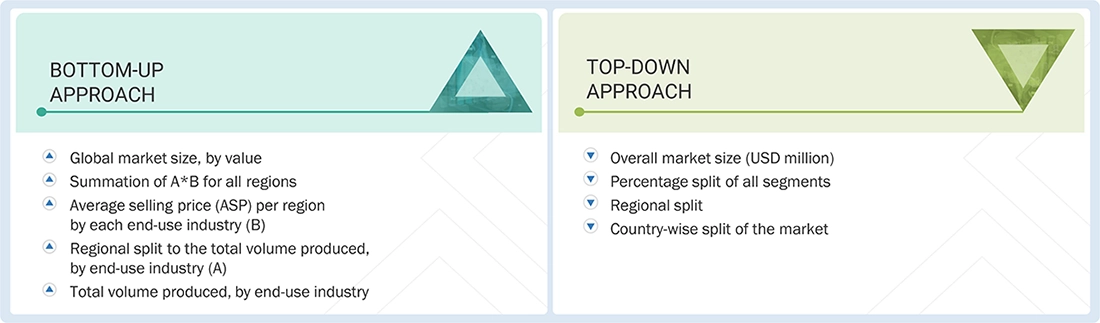
The study involves two major activities in estimating the current market size for the carbon fiber market. Exhaustive secondary research was done to collect information on the market, peer market, and parent market. The next step was to validate these findings, assumptions, and sizing with industry experts across the value chain through primary research. Both top-down and bottom-up approaches were employed to estimate the complete market size. After that, market breakdown and data triangulation were used to estimate the market size of segments and subsegments.
Secondary Research
Secondary sources referred to for this research study include financial statements of companies offering carbon fiber and information from various trade, business, and professional associations. Secondary research has been used to obtain critical information about the industry’s value chain, the total pool of key players, market classification, and segmentation according to industry trends to the bottom-most level and regional markets. The secondary data was collected and analyzed to arrive at the overall size of the carbon fiber market, which was validated by primary respondents.
Primary Research
Extensive primary research was conducted after obtaining information regarding the carbon fiber market scenario through secondary research. Several primary interviews were conducted with market experts from both the demand and supply sides across major countries of North America, Europe, Asia Pacific, the Middle East & Africa, and Latin America. Primary data was collected through questionnaires, emails, and telephonic interviews. The primary sources from the supply side included various industry experts, such as chief experience officers (CXOs), vice presidents (VPs), business development/marketing directors, product development/innovation teams, related key executives from the carbon fiber industry, system integrators, component providers, distributors, and key opinion leaders. Primary interviews were conducted to gather insights such as market statistics, data on revenue collected from the products and services, market breakdowns, market size estimations, market forecasting, and data triangulation. Primary research also helped in understanding the various trends related to raw material type, fiber type, modulus, product type, application, end-use industry, and region. Stakeholders from the demand side, such as CIOs, CTOs, CSOs, and installation teams of the customers/end users who are seeking carbon fiber services, were interviewed to understand the buyer’s perspective on the suppliers, products, component providers, and their current usage of carbon fiber and future outlook of their business which will affect the overall market.
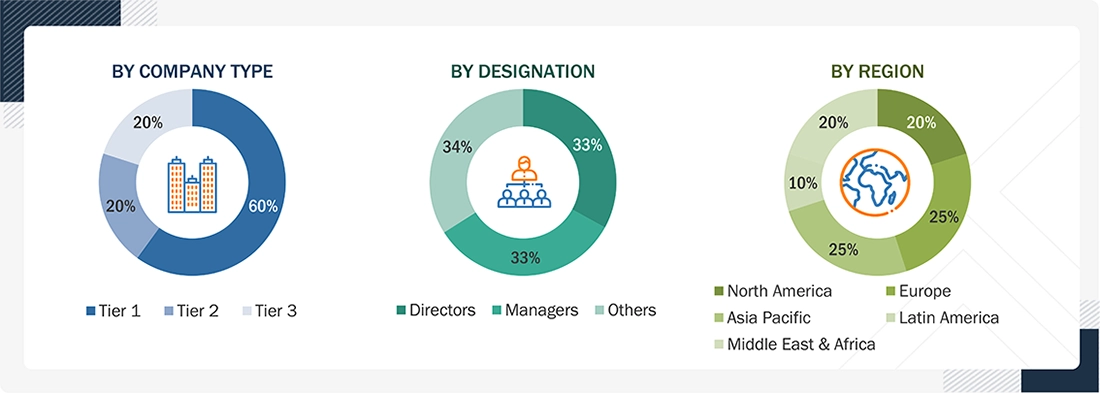
To know about the assumptions considered for the study, download the pdf brochure
Market Size Estimation
The research methodology used to estimate the size of the carbon fiber market includes the following details. The market sizing was undertaken from the demand side. The market was upsized based on the demand for carbon fiber in different applications at the regional level. Such procurements provide information on the demand aspects of the carbon fiber industry for each application. For each application, all possible segments of the carbon fiber market were integrated and mapped.
Carbon Fiber Market : Top-Down and Bottom-Up Approach
Data Triangulation
After arriving at the overall size from the market size estimation process explained above, the total market was split into several segments and subsegments. The data triangulation and market breakdown procedures explained below were implemented, wherever applicable, to complete the overall market engineering process and arrive at the exact statistics for various market segments and subsegments. The data was triangulated by studying various factors and trends from the demand and supply sides. Along with this, the market size was validated using both the top-down and bottom-up approaches.
Market Definition
Carbon fiber is a long, thin strand of material made from carbon. It is produced by baking precursors, such as polyacrylonitrile (PAN), pitch, and rayon, in an inert atmosphere to dissociate elements other than carbon through a process called pyrolysis. Carbon fiber is lightweight and has excellent strength, low specific gravity, excellent modulus of elasticity, and high corrosion resistance. There are different types of carbon fibers, including high-strength (HS)/standard modulus, intermediate modulus, and high-modulus, each with varying mechanical properties. Carbon fibers used as composite materials are used to make aircraft & spacecraft parts, bicycle frames, pipes & tanks, wind blades, golf shafts, badminton rackets, automobile springs, sailboat masts, automotive structural parts, and various other parts where lightweight and high strength are required. Non-composite applications of carbon fiber include filtration materials, conductive electrodes in batteries and supercapacitors, heat shields, industrial brushes, and electrical components, utilizing its strength, conductivity, and heat resistance in various industries.
Key Stakeholders
- Carbon Fiber Manufacturers
- Carbon Fiber Distributors and Suppliers
- Universities, Governments, and Research Organizations
- Associations and Industrial Bodies
- R&D Institutes
- Environmental Support Agencies
- Investment Banks and Private Equity Firms
- Research and Consulting Firms
Report Objectives
- To define, describe, and forecast the carbon fiber market size in terms of volume and value
- To provide detailed information regarding the key factors, such as drivers, restraints, opportunities, and challenges influencing the market growth
- To analyze and project the global carbon fiber market by raw material type, fiber type, modulus, product type, application, end-use industry, and region
- To forecast the market size concerning five main regions (along with country-level data), namely, North America, Europe, Asia Pacific, the Middle East & Africa, and Latin America, and analyze the significant region-specific trends
- To strategically analyze micromarkets with respect to individual growth trends, prospects, and contributions of the submarkets to the overall market
- To analyze the market opportunities and the competitive landscape for stakeholders and market leaders
- To assess recent market developments and competitive strategies, such as agreements, contracts, acquisitions, and product developments/product launches, to draw the competitive landscape
- To strategically profile the key market players and comprehensively analyze their core competencies
Available customizations:
MarketsandMarkets offers the following customizations for this market report: :
- Additional country-level analysis of the carbon fiber market
Product Analysis
- Product matrix, which provides a detailed comparison of the product portfolio of each company’s market
Get the Full Carbon Fiber Market Report
Full forecast, segment splits, and company analysis for all Carbon Fiber Market.
- Germany Carbon Fiber Market
- France Carbon Fiber Market
- UK Carbon Fiber Market
- Italy Carbon Fiber Market
- Spain Carbon Fiber Market
- US Carbon Fiber Market
- China Carbon Fiber Market
- Japan Carbon Fiber Market
- South Korea Carbon Fiber Market
- Taiwan Carbon Fiber Market
- UAE Carbon Fiber Market
- Saudi Arabia Carbon Fiber Market
Need a Tailored Report?
Customize this report to your needs
Get 10% FREE Customization
Customize This Report
