
Japan Cell Based Assays Market (2025-2030)

The Japan Cell Based Assays Market was valued at $596.9 Million in 2025 and projected to reach to $879.2 Million by 2030, representing a compound annual growth rate of 8.1%. Japan's cell-based assays market is poised for significant growth through 2030, driven by increasing demand from pharmaceutical companies conducting drug discovery and development.


| Market Size in | USD 26.32 MN |
| Market Forecast in | |
| CAGR | |
| Forecast Period | |
| Units Considered | Value (USD MN) |
Japan Cell Based Assays Market Trends and Insights
- Japan's advanced pharmaceutical and biotechnology infrastructure, combined with strong government support for life sciences research, positions the country as a key regional hub for cell-based assay adoption.
- The market in Japan is driven by increasing demand for drug discovery and development, rising investment in personalized medicine, and the country's aging population requiring innovative therapeutic solutions. Japan's cell based assays market benefits from the nation's leadership in precision medicine and regenerative biology research.
- Japan's pharmaceutical companies and contract research organizations (CROs) are increasingly integrating cell-based assays into their workflows to accelerate time-to-market and reduce development costs.
- Between 2025 and 2030, Japan is expected to see heightened adoption across academic institutions, clinical laboratories, and biopharmaceutical firms, supported by technological advancements and regulatory frameworks that encourage innovation in cellular diagnostics and drug testing..
Key Market Statistics
- CAGR (2025-2030) 8.1% CAGR
- Market Size, 2025 ~USD 596.9 Million
- Forecast, 2030 ~USD 879.2 Million
- Country Japan
Japan Cell Based Assays Market Overview
Market Valuation Growth :
Japan's cell-based assays market is valued at USD 596.9 million in 2025 and is projected to reach USD 879.2 million by 2030, demonstrating robust expansion driven by increased R&D investments in pharmaceutical and biotechnology sectors.
Strong CAGR Performance :
Japan's market is growing at 8.1% CAGR from 2025-2030, outpacing the global growth rate of 7.3%, reflecting the country's accelerated adoption of advanced cell-based assay technologies and methodologies.
Advanced Infrastructure & Support :
Japan's well-established pharmaceutical and biotechnology infrastructure, combined with substantial government funding for life sciences research, creates a favorable ecosystem for cell-based assay innovation and commercialization.
Regional Hub Status :
Japan's position as a key regional hub for cell-based assay adoption in Asia-Pacific is strengthened by its regulatory expertise, skilled workforce, and collaborative research institutions driving market expansion.
Japan Cell Based Assays Market Dynamics
- The country's commitment to precision medicine and personalized healthcare, coupled with substantial investments in biotechnology infrastructure, will accelerate market penetration.
- Japanese pharmaceutical firms are increasingly adopting cell-based assays to reduce animal testing and improve drug efficacy predictions, aligning with both regulatory requirements and ethical standards. Government initiatives supporting life sciences research and the presence of leading academic institutions will continue to fuel innovation in cell-based assay technologies.
- Strategic partnerships between Japanese biotech companies and international pharmaceutical firms will expand market opportunities.
- Additionally, growing applications in toxicology testing, disease modeling, and regenerative medicine will create new revenue streams, positioning Japan as a critical market within the Asia-Pacific region..
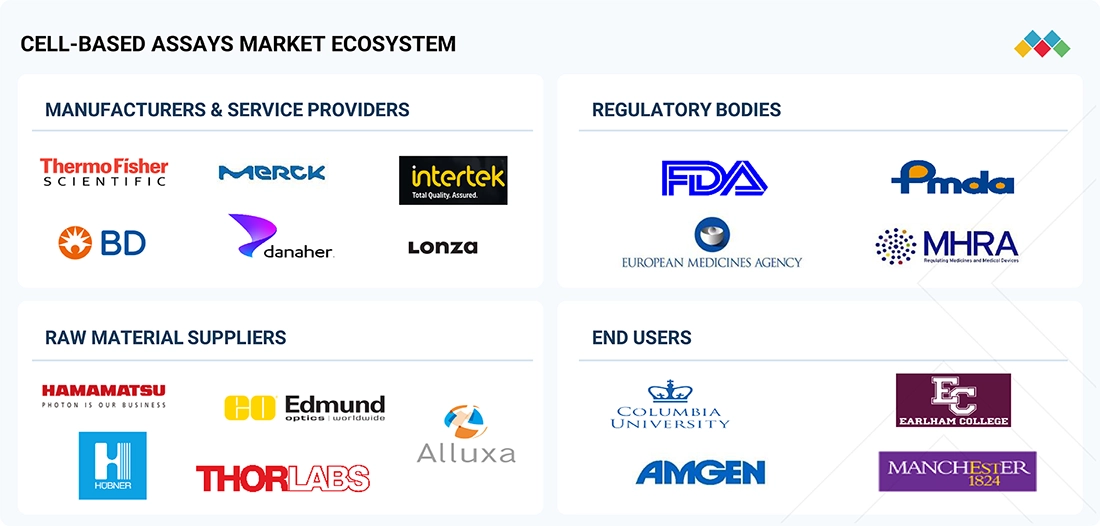
Market Ecosystem
cell-based-assays-market: COMMERCIAL USE CASES ACROSS INDUSTRIES
| COMPANY | USE CASE DESCRIPTION | BENEFITS |
|---|---|---|
 |
Whole-cell phenotypic high-throughput screening (HTS) across 1.8M compounds against kinetoplastid parasites using intracellular cell-based assays to triage anti-parasitic hits. | Regulator-accepted cell-based potency for lot release | Stability-indicating control that reduces batch failures and supports global supply. |
 |
Discovery program for DGKα/ζ inhibitor (BMS-986408) characterized with cell-based activation assays (T-cell signaling/phenotyping). | Validated activation/cytotoxicity assays ensure lot-to-lot functional consistency | Faster release decisions and scalable multi-site manufacturing. |
Logos and trademarks shown above are the property of their respective owners. Their use here is for informational and illustrative purposes only.
Related Ecosystem
Analytical And Scientific Instrumentation
- Environmental Testing
- Gas Chromatography
- Polymerase Chain Reaction (PCR)
- Automated Liquid Handling Systems
- Flow Cytometry
- Thermo Fisher Scientific Inc.
- Danaher Corporation
- Agilent Technologies, Inc.
- Shimadzu Corporation
- Merck KGaA
Biotechnology
- Reagents
- Polymerase Chain Reaction (PCR)
- Stem Cells
- Assay Kits
- Flow Cytometers
- Thermo Fisher Scientific Inc.
- Merck KGaA
- Danaher Corporation
- Agilent Technologies, Inc.
- Bio-Rad Laboratories, Inc.
Key Takeaways
- Japan's cell based assays market is valued at USD 596.9 million in 2025 and is forecast to reach USD 879.2 million by 2030, growing at 8.1% CAGR.
- Japan's advanced biotech infrastructure and government support for life sciences research drive strong adoption of cell-based assays across pharmaceutical and academic sectors.
- Japan's aging population and focus on personalized medicine create sustained demand for innovative drug discovery and cellular diagnostic solutions.
- Japan's pharmaceutical companies and CROs are increasingly leveraging cell-based assays to reduce development timelines and improve therapeutic efficacy between 2025 and 2030.
Cell Based Assays Market Report Scope
| Report Metric | Details |
|---|---|
| Base Year | 2025 |
| Fastest Growing Segment | SOFTWARE (Offering) |
| Forecast Period | 2025–2030 |
| Growth Rate | CAGR of 7.3% from 2025 to 2030 |
| Largest Segment | DRUG DISCOVERY (Application) |
| Market Size Base Year (Billions) | ~USD 18.12 (2025) |
| Revenue Forecast (Billions) | ~USD 25.77 (2030) |
| Segments Covered | Offering, Type, Technology, Application |
Japan Cell Based Assays Market Report Segmentation
4 segment dimensions are covered across the global market.
By Offering
- Consumables
- Instruments
- Services
- Software
By Type
- Assay Kits
- Cell Death Assays
- Cell Growth Assays
- Cell Lines
- Immortalized Cell Lines
- Microplates
- Other Assay Kits
- Other Consumables
- Pharmacodynamic Studies
- Pharmacokinetic Studies
- Primary Cell Lines
- Probes & Labels
- Reagents
- Reporter Gene Assays
- Second Messenger Assays
- Stem Cell Lines
- Toxicity Studies
By Technology
- Flow Cytometry
- High-Throughput Screening
- Label-Free Detection
- Other Technologies
By Application
- Basic Research
- Drug Discovery
- Genetic Studies
- Other Applications
JAPAN: CELL-BASED ASSAYS MARKET, BY END USER, 2023–2030
| Segment | 2023 | 2024 | 2025 | 2026 | 2027 | 2028 | 2029 | 2030 | CAGR (%) |
|---|---|---|---|---|---|---|---|---|---|
| ACADEMIC & RESEARCH INSTITUTES | 213.1 | 213.8 | 223 | 236.1 | 251.9 | 270.4 | 291.3 | 314.6 | 7.1 |
| CROS | 247.8 | 250.7 | 265.3 | 285.1 | 308.7 | 336.2 | 367.6 | 403 | 8.7 |
| PHARMACEUTICAL & BIOTECHNOLOGY COMPANIES | 619 | 620.7 | 655.3 | 702.3 | 758.5 | 824.1 | 898.8 | 982.9 | 8.4 |
| TOTAL | 1079.8 | 1085.2 | 1143.6 | 1223.5 | 1319.1 | 1430.8 | 1557.6 | 1700.5 | 8.3 |
Target Audience
- Pharmaceutical Companies : Japanese and international pharma firms need detailed market data to optimize cell-based assay adoption strategies, benchmark R&D spending, and identify collaboration opportunities with local biotech partners.
- Biotechnology Firms : Biotech companies require Japan-specific market insights to assess growth potential, understand competitive positioning, and develop targeted commercialization strategies for cell-based assay products and services.
- Contract Research Organizations (CROs) : CROs operating in Japan need market intelligence to expand service offerings, identify client demand trends, and optimize capacity planning for cell-based assay testing and drug development services.
- Investment & Venture Capital Firms : Investors evaluating opportunities in Japan's life sciences sector require comprehensive market data to assess portfolio companies, identify emerging trends, and make informed funding decisions in cell-based assay technologies.
- Government & Research Institutions : Japanese government agencies and academic institutions need market analysis to guide policy decisions, allocate research funding, and align life sciences initiatives with market demand and innovation trends.
Key Companies in the Japan Cell Based Assays Market
| Company | HQ | Ownership | Strongest segments |
|---|---|---|---|
| PATHEON INC | Netherlands | Private Company | Drug Product Services (finished dosage manufacturing, packaging, lifecycle),Pharmaceutical Development Services (formulation, clinical supply),Drug Substance Services (small-molecule and biologics APIs), |
| REPLIGEN CORPORATION | United States | Public Company | Filtration and cell retention (XCell ATF, KrosFlo, TangenX, TFDF, ProConnex),Chromatography and resins (OPUS, KRM, ligands, ELISA kits),Process analytics and PAT (PATsmart suite, SoloVPE/FlowVPE, ZipChip, REBEL), |
| THERMO FISHER SCIENTIFIC INC. | United States | Public Company | Life Sciences Solutions,Analytical Instruments,Specialty Diagnostics, |
| MERCK KGAA | Germany | Public Company | Life Science (tools, reagents, bioprocessing, CDMO),Healthcare (prescription drugs and biopharmaceuticals),Electronics (semiconductor and display materials), |
| BD | United States | Public Company | Medical Essentials (syringes, needles, vascular access, sharps, specimen collection),Connected Care (infusion systems, medication management, pharmacy automation, informatics),BioPharma Systems (prefillable drug delivery systems), |
| AGILENT TECHNOLOGIES, INC. | United States | Public Company | Life Sciences and Diagnostics Markets,Agilent CrossLab,Applied Markets, |
| LONZA | Switzerland | Public Company | Integrated Biologics (mammalian, biologics drug substance and drug product),Advanced Synthesis (small molecules, HPAPIs, ADCs and bioconjugates),Specialized Modalities (cell & gene, microbial, bioscience, mRNA), |
| EUROFINS SCIENTIFIC | Luxembourg | Public Company | Food & Feed Testing and Assurance,Environment Testing,Biopharma Testing and Related Services, |
| CHARLES RIVER LABORATORIES | United States | Public Company | Research Models and Services,Discovery and Safety Assessment,Manufacturing Solutions, |
| BIO-RAD LABORATORIES, INC. | United States | Public Company | Clinical Diagnostics,Life Science Research Instruments and Reagents, |
| REVVITY | United States | Public Company | Diagnostics instruments & reagents (prenatal, neonatal, infectious disease),Immunology and cell analysis tools (BioLegend, flow cytometry, imaging),Genomic and NGS workflow solutions, |
| SARTORIUS AG | Germany | Public Company | Bioprocess solutions (bioreactors, fermenters, cell culture, fluid management, process chromatography and filtration),Lab products and services (filtration, purification, water systems, weighing, pipettes, microbiological testing, OEM),Analytical and cell analysis solutions (BLI, cytometry screening, PAT and data analytics, live-cell imaging, SPR, cell selection), |
| CORNING INCORPORATED | United States | Public Company | Optical communications (fiber, cable, hardware, components),Display glass substrates (LCD and OLED),Specialty materials (mobile device glass, optics, ceramics), |
| ENZO BIOCHEM INC. | United States | Private Company | Labels, dyes, and genomic probes,Immunoassays and immunohistochemistry reagents,Biochemicals and proteins, |
| CARNA BIOSCIENCES, INC. | Japan | Public Company | Kinase proteins and related protein products,Biochemical and cell-based assay services,Internal and partnered drug development (CDC7, BTK programs), |
PATHEON INC
Patheon Inc. is a Netherlands-based pharmaceutical manufacturing and contract development organization with 9,100 employees. Operating as a private company, it provides comprehensive services to the life sciences industry.
REPLIGEN CORPORATION
Repligen Corporation is a United States-based public company founded in 1981 with 2,000 employees. The company specializes in bioprocess technologies and solutions for the biopharmaceutical industry.
THERMO FISHER SCIENTIFIC INC.
Thermo Fisher Scientific Inc. is a United States-based public company founded in 1956 with 125,000 employees. The company is a global leader in serving science with laboratory equipment, reagents, and analytical instruments.
MERCK KGAA
Merck KGaA is a Germany-based public company founded in 1668 with 59,077 employees. The company operates in pharmaceuticals, life sciences, and performance materials sectors.
BD
BD is a United States-based public company founded in 1897 with 72,000 employees. The company is a global medical technology company providing medical devices, instruments, and diagnostics.
AGILENT TECHNOLOGIES, INC.
Agilent Technologies, Inc. is a United States-based public company founded in 1999 with 18,000 employees. The company provides analytical instruments, software, and services for life sciences and diagnostics.
LONZA
Lonza is a Switzerland-based public company founded in 1897 with 20,000 employees. The company provides pharmaceutical, biotech, and specialty ingredients manufacturing and services.
EUROFINS SCIENTIFIC
Eurofins Scientific is a Luxembourg-based public company founded in 1987 with 65,694 employees. The company is a global leader in laboratory services including testing, analysis, and diagnostics.
CHARLES RIVER LABORATORIES
Charles River Laboratories is a United States-based public company founded in 1947 with 19,000 employees. The company provides preclinical and clinical laboratory services for drug development and safety testing.
BIO-RAD LABORATORIES, INC.
Bio-Rad Laboratories, Inc. is a United States-based public company founded in 1952 with 7,450 employees. The company manufactures and distributes life science research products and clinical diagnostics.
REVVITY
Revvity is a United States-based public company founded in 1937 with 11,000 employees. The company provides analytical instruments, software, and services for life sciences and diagnostics.
SARTORIUS AG
Sartorius AG is a Germany-based public company founded in 1870 with 14,242 employees. The company manufactures and supplies laboratory and bioprocess equipment for the life sciences industry.
CORNING INCORPORATED
Corning Incorporated is a United States-based public company founded in 1851 with 67,200 employees. The company manufactures specialty glass, ceramics, and related materials for multiple industries including life sciences.
ENZO BIOCHEM INC.
Enzo Biochem Inc. is a United States-based private company founded in 1976 with 131 employees. The company develops and provides molecular diagnostics and life science research products.
CARNA BIOSCIENCES, INC.
Carna Biosciences, Inc. is a Japan-based public company founded in 2003 with 61 employees. The company specializes in protein kinase research and drug discovery services.
Reasons to Buy this Report
- Market Size & Growth Projections : Access precise valuation data for Japan's cell-based assays market (USD 596.9M in 2025 to USD 879.2M in 2030) with detailed CAGR analysis to inform investment and expansion strategies in this high-growth market.
- Competitive Landscape Intelligence : Understand Japan's unique market dynamics, key players, and competitive positioning within the Asia-Pacific region to identify partnership opportunities and market entry strategies tailored to Japanese regulatory and business environments.
- Regulatory & Infrastructure Insights : Gain comprehensive understanding of Japan's advanced pharmaceutical infrastructure, government support mechanisms, and regulatory framework that drive cell-based assay adoption and innovation in the country.
- Application & Segment Analysis : Identify high-growth application areas in Japan including drug discovery, toxicology testing, and disease modeling to prioritize product development and marketing efforts for maximum market impact.
- Strategic Decision Support : Leverage Japan-specific market intelligence to make informed decisions on R&D investments, market entry timing, and resource allocation within one of Asia's most sophisticated life sciences markets.
Frequently asked questions
What is the current market size of cell based assays in Japan?
Japan's cell based assays market is valued at USD 596.9 million in 2025.
What is the projected market size for cell based assays in Japan by 2030?
Japan's cell based assays market is forecast to reach USD 879.2 million by 2030.
What is the growth rate (CAGR) of Japan's cell based assays market?
Japan's cell based assays market is expected to grow at a compound annual growth rate (CAGR) of 8.1% from 2025 to 2030.
What factors are driving growth in Japan's cell based assays market?
Growth in Japan's cell based assays market is driven by increased pharmaceutical R&D investment, rising demand for personalized medicine, Japan's aging population, and strong government support for life sciences innovation.
Which sectors in Japan are adopting cell based assays most rapidly?
Japan's pharmaceutical companies, contract research organizations (CROs), academic institutions, and clinical laboratories are rapidly adopting cell-based assays for drug discovery, development, and cellular diagnostics.
RESEARCH METHODOLOGY
This research study involved the extensive use of secondary sources, directories, and databases to identify and collect valuable information for the analysis of the global cell-based assays market. In-depth interviews were conducted with various primary respondents, including key industry participants, subject-matter experts (SMEs), C-level executives of key market players, and industry consultants, to obtain and verify critical qualitative and quantitative information and assess the growth prospects of the market. The global market size estimated through secondary research was then triangulated with inputs from primary research to arrive at the final market size.
Secondary Research
Secondary research was used mainly to identify and collect information for the extensive, technical, market-oriented, and commercial study of the cell-based assays market. The secondary sources used for this study include the American Society for Cell Biology (ASCB), Federal Ministry of Education and Research (BMBF), Center for Commercialization of Regenerative Medicine (CCRM), Centers for Disease Control and Prevention (CDC), European Federation of Pharmaceutical Industries and Associations (EFPIA), International Agency for Research on Cancer (IARC), International Society for Advancement of Cytometry (ISAC), International Society for Stem Cell Research (ISSCR), National Center for Biotechnology Information (NCBI), National Institutes of Health (NIH), World Cancer Research Fund International (WCRF), World Health Organization (WHO), and Eurostat; Statista; corporate filings such as annual reports, SEC filings, investor presentations, and financial statements; press releases; and trade, business, and professional associations; among others. These sources were also used to obtain key information about major players, market classification, and segmentation according to industry trends, regional/country-level markets, market developments, and technology perspectives.
Primary Research
After acquiring foundational knowledge about the global cell-based assays market through secondary research, extensive primary research was conducted. Multiple interviews were held with market experts from the demand side, including representatives from pharmaceutical & biotechnology companies, contract research organizations (CROs), and academic & research institutes. Additionally, experts from the supply side were interviewed, including C-level and D-level executives, product managers, and marketing and sales managers from key manufacturers, distributors, and channel partners.
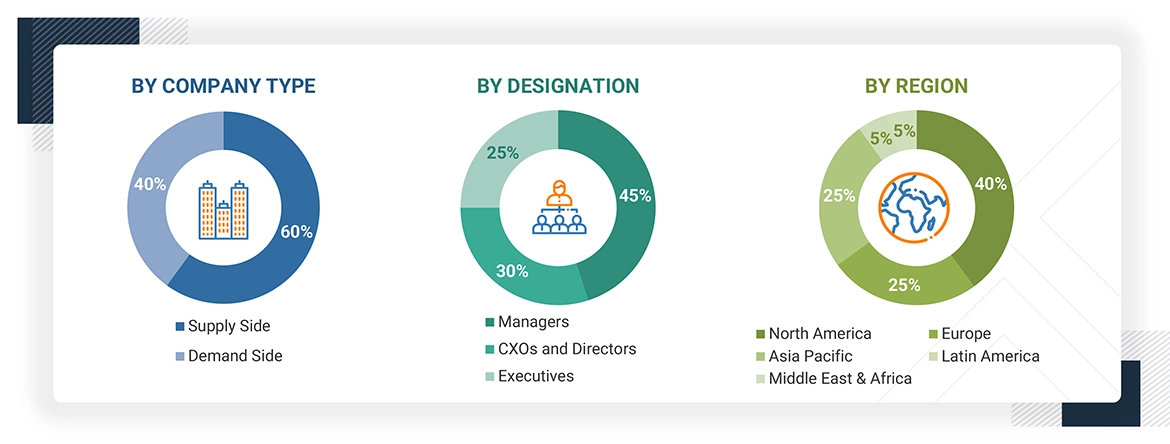
These interviews spanned five major regions: Asia Pacific, North America, Europe, Latin America, and the Middle East & Africa. Approximately 60% of the primary interviews were conducted with supply-side participants, while the remaining 40% were with demand-side participants. The primary data was collected through various methods, including questionnaires, emails, online surveys, personal interviews, and telephone interviews.
The following is a breakdown of the primary respondents:
To know about the assumptions considered for the study, download the pdf brochure
Market Size Estimation
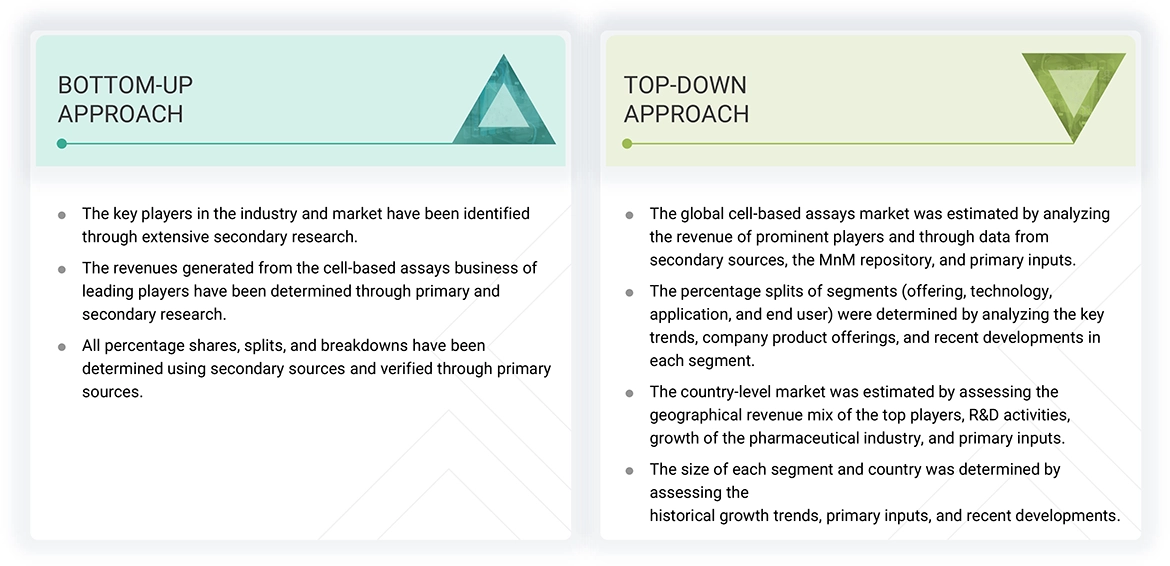
Both top-down and bottom-up approaches were used to estimate and validate the total size of the cell-based assays market. These methods were also used extensively to estimate the size of various subsegments in the market. The research methodology used to estimate the market size includes the following:
Data Triangulation
After arriving at the market size from the market size estimation process explained above, the total market was divided into several segments and subsegments. To complete the overall market engineering process and arrive at the exact statistics for all segments and subsegments, data triangulation and market breakdown procedures were employed, wherever applicable. The data was triangulated by studying various factors and trends from both the demand and supply sides.
Market Definition
Cell-based assays involve the use of cells to examine and assess different biochemical or cellular processes. These assays allow researchers to investigate the responses of cells under specific experimental conditions as well as to determine the effect of drugs on a particular cell line. These assays are also used to determine the potency of a drug by comparing the biological response related to its mode of action with that of a control preparation. Additionally, cell-based assays can be used in biomedical research and drug-discovery screening applications to quantify cytotoxicity, biological activity, biochemical mechanisms, and off-target interactions.
Stakeholders
- Cell-based assay, consumable, instrument, and software manufacturers
- Cell-based assay service providers
- Cell-based assay vendors and distributors
- Third-party suppliers, direct suppliers, distributors, and channel partners
- Venture capitalists
- Research & development (R&D) companies
- Pharmaceutical & biotechnology companies
- Research laboratories & academic institutes
- Clinical research organizations (CROs)
- Market research & consulting firms
- Government & independent regulatory authorities
Report Objectives
- To define, describe, and forecast the global cell-based assays market based on offering, technology, application, end user, and region
- To provide detailed information on the major factors influencing the market growth (such as drivers, restraints, opportunities, and challenges)
- To strategically analyze micromarkets in terms of individual growth trends, future prospects, and contributions to the overall cell-based assays market
- To analyze opportunities in the global market for major stakeholders and provide a detailed competitive landscape for market leaders
- To forecast the size of the market segments with respect to six major regions: North America, Europe, Asia Pacific, Latin America, the Middle East, and Africa
- To provide volume data for instruments used in cell-based assays
- To strategically profile the key players in the global cell-based assays market and comprehensively analyze their core competencies and market rankings
- To track and analyze competitive developments in the cell-based assays market, such as product launches, acquisitions, collaborations, expansions, and partnerships
- To benchmark players within the cell-based assays market using the ‘Company Evaluation Matrix’ framework, which analyzes market players based on various parameters within the broad categories of business and product strategy
Get the Full Cell Based Assays Market Report
Full forecast, segment splits, and company analysis for all Cell Based Assays Market.
- US Cell Based Assays Market
- Canada Cell Based Assays Market
- Germany Cell Based Assays Market
- UK Cell Based Assays Market
- France Cell Based Assays Market
- Italy Cell Based Assays Market
- Spain Cell Based Assays Market
- China Cell Based Assays Market
- India Cell Based Assays Market
- Australia Cell Based Assays Market
- South Korea Cell Based Assays Market
- Brazil Cell Based Assays Market
- Mexico Cell Based Assays Market
- Saudi Arabia Cell Based Assays Market
- UAE Cell Based Assays Market
Need a Tailored Report?
Customize this report to your needs
Get 10% FREE Customization
Customize This Report
