
China Commercial Vehicle Telematics Market (2023-2028)

The China Commercial Vehicle Telematics Market was valued at $578.8 Million in 2023 and projected to reach to $1195.5 Million by 2028, representing a compound annual growth rate of 15.6%. China's commercial vehicle telematics market is positioned for sustained growth through 2028, fueled by mandatory regulatory requirements and the government's digital economy initiatives.


| Market Size in | USD 26.32 MN |
| Market Forecast in | |
| CAGR | |
| Forecast Period | |
| Units Considered | Value (USD MN) |
China Commercial Vehicle Telematics Market Trends and Insights
- This growth trajectory reflects China's accelerating adoption of fleet management solutions, driven by regulatory compliance requirements and the nation's push toward digital logistics infrastructure.
- China's market is expanding faster than the global average, with a compound annual growth rate of 15.6%, underscoring the country's strategic focus on intelligent transportation systems. The commercial vehicle telematics sector in China is being propelled by increasing demand for real-time vehicle tracking, driver safety monitoring, and fuel efficiency optimization across China's vast logistics and transportation networks.
- China's regulatory environment, including mandatory vehicle safety standards and emissions monitoring, is compelling fleet operators to invest in advanced telematics solutions.
- By 2028, China is expected to solidify its position as a critical growth engine within the Asia Pacific region, with telematics adoption becoming standard practice among commercial vehicle operators throughout China..
Key Market Statistics
- CAGR (2023-2028) 15.6% CAGR
- Market Size, 2023 ~USD 578.8 Million
- Forecast, 2028 ~USD 1195.5 Million
- Country China
China Commercial Vehicle Telematics Market Overview
Market Valuation Growth :
China's commercial vehicle telematics market reached USD 578.8 million in 2023 and is projected to grow to USD 1,195.5 million by 2028, representing a robust 15.6% CAGR, outpacing the global average of 14.3%.
Regulatory Compliance Drivers :
Stringent government regulations on vehicle safety, emissions monitoring, and driver behavior tracking are compelling Chinese fleet operators to adopt telematics solutions for compliance and operational transparency.
Digital Logistics Infrastructure :
China's national push toward digital transformation in logistics and supply chain management is accelerating telematics adoption, with major e-commerce and logistics companies integrating real-time fleet tracking systems.
Fleet Management Modernization :
Rapid urbanization and increased logistics demand across China's tier-1 and tier-2 cities are driving fleet operators to invest in advanced telematics for cost optimization, fuel efficiency, and asset tracking.
China Commercial Vehicle Telematics Market Dynamics
- The market's expansion reflects increasing adoption among logistics providers, ride-sharing platforms, and delivery services seeking competitive advantages through data-driven fleet management.
- Integration with 5G infrastructure and AI-powered analytics is expected to enhance real-time monitoring capabilities. The competitive landscape in China is intensifying as both domestic technology firms and international players establish local operations.
- Investment in cloud-based telematics platforms and IoT connectivity solutions will be critical for market participants.
- Government incentives for green logistics and autonomous vehicle development will further accelerate telematics adoption, positioning China as a key growth engine for the global market..
Market Ecosystem
Related Ecosystem
Connected Car
- Light Commercial Vehicles (LCVs)
- Battery Electric Vehicle (BEV)
- Fuel Cell Electric Vehicle (FCEV)
- Cellular Network
- Sensors
- BOSCH LIMITED
- Visteon Corporation
- Jabil Inc.
- DENSO Corporation
- VALENS SEMICONDUCTOR LTD.
Telematics And Infotainment
- Battery Electric Vehicle (BEV)
- Light Commercial Vehicles (LCVs)
- Fuel Cell Electric Vehicle (FCEV)
- Hybrid Electric Vehicle (HEV)
- Acrylonitrile Butadiene Styrene (ABS)
- Visteon Corporation
- BOSCH LIMITED
- DENSO Corporation
- Jabil Inc.
- Audi ag
Insurance
- Cloud Security
- Security Analytics
- Battery Electric Vehicle (BEV)
- Big Data Analytics
- Black Box
- International Business Machines Corporation
- ROLAND BERGER
- MICROSOFT CORPORATION
- SAP SE
- Oracle Corporation
Key Takeaways
- China's commercial vehicle telematics market will nearly double from USD 578.8 million in 2023 to USD 1,195.5 million by 2028.
- China's market growth rate of 15.6% CAGR outpaces the global average of 14.3%, positioning China as a regional growth leader.
- Regulatory mandates and emissions standards in China are accelerating fleet operator adoption of telematics solutions.
- China's expanding e-commerce and logistics sectors are driving demand for advanced fleet management and real-time vehicle tracking capabilities.
Commercial Vehicle Telematics Market Report Scope
| Report Metric | Details |
|---|---|
| Base Year | 2023 |
| Fastest Growing Segment | ELECTRIC VEHICLES (Propulsion Type) |
| Forecast Period | 2023-2028 |
| Growth Rate | CAGR of 14.3% from 2023 to 2028 |
| Largest Segment | ROADWAY (Transportation Mode) |
| Market Size Base Year (Billions) | ~USD 5.28 (2023) |
| Revenue Forecast (Billions) | ~USD 10.3 (2028) |
| Segments Covered | Offering, Type, Vehicle Type, Propulsion Type, Sales Channel, End User, Component, Deployment Type, Fleet Type, Vertical, Transportation Mode |
China Commercial Vehicle Telematics Market Report Segmentation
11 segment dimensions are covered across the global market.
By Offering
- Services
- Software
By Type
- Fleet Management Software
- Managed Services
- Other Software
- Professional Services
- Safety Management Software
- Services
- Solutions
- Support & Maintenance Services
- System Integration & Deployment Services
- Telematics Compliance Software
- Telematics Productivity Software
- Training & Consulting Services
- V2X Security
- V2X Software
By Vehicle Type
- Light Commercial Vehicles
- Medium & Heavy Commercial Vehicles
By Propulsion Type
- Electric Vehicles
- Hybrid Vehicles
- Ic Engine Vehicles
By Sales Channel
- Aftermarket
- Oems
By End User
- Agri & Farm Operators
- Auto Financing & Insurance Providers
- Autonomous Vehicle Oems & Technology Providers
- Emergency Services & First Responders
- Fleet Operators
- Logistics & Cargo Operators
- Mine Developers & Operators
- Other End Users
- Public Transportation Authorities
By Component
- Services
- Solutions
By Deployment Type
- Cloud
- On-Premises
By Fleet Type
- Commercial Fleets
- Passenger Cars
By Vertical
- Construction
- Government
- Healthcare And Pharmaceuticals
- Oil, Gas, And Mining
- Other Verticals
- Retail
- Transportation And Logistics
- Utilities
By Transportation Mode
- Airway
- Maritime
- Railway
- Roadway
Target Audience
- Fleet Operators & Logistics Companies : Chinese logistics providers and fleet operators need market insights to evaluate telematics investments, understand competitive offerings, and align technology adoption with regulatory requirements and cost optimization goals.
- Telematics Solution Providers : Software vendors and technology companies require detailed China market data to assess market potential, identify customer segments, benchmark against competitors, and develop localized product strategies.
- Investment & Private Equity Firms : Investors evaluating opportunities in China's logistics and transportation tech sectors need comprehensive market sizing, growth projections, and trend analysis to make informed investment decisions.
- Government & Policy Makers : Chinese government agencies and policy bodies benefit from market intelligence to assess digital logistics initiatives' effectiveness, identify infrastructure gaps, and develop supportive regulatory frameworks.
- Vehicle Manufacturers & OEMs : Automotive manufacturers and commercial vehicle OEMs need market insights to integrate telematics capabilities into vehicles, understand customer demand, and develop competitive connected vehicle offerings for China.
Reasons to Buy this Report
- Market Size & Growth Validation : Obtain precise valuation data for China's telematics market with verified 15.6% CAGR projections through 2028, enabling accurate business planning and investment decisions in this high-growth segment.
- Regulatory Landscape Intelligence : Understand China-specific compliance requirements and government mandates driving telematics adoption, critical for developing solutions that meet local regulatory standards and capture market opportunities.
- Competitive Positioning Strategy : Identify market dynamics, key players, and growth drivers unique to China's logistics ecosystem, allowing you to benchmark performance and develop targeted go-to-market strategies for this critical market.
- Investment & Partnership Opportunities : Access detailed insights into China's digital logistics infrastructure investments and 5G integration trends, identifying strategic partnership and investment opportunities with local fleet operators and technology providers.
- Customer Segment Analysis : Gain deep understanding of China's diverse customer base including e-commerce logistics, ride-sharing platforms, and traditional fleet operators, enabling precise customer targeting and product customization.
Frequently asked questions
What is the current size of China's commercial vehicle telematics market?
China's commercial vehicle telematics market was valued at USD 578.8 million in 2023 and is projected to grow to USD 1,195.5 million by 2028.
What is the growth rate for China's commercial vehicle telematics market?
China's commercial vehicle telematics market is expected to grow at a compound annual growth rate (CAGR) of 15.6% from 2023 to 2028.
How does China's telematics market growth compare to global trends?
China's market growth rate of 15.6% CAGR exceeds the global average of 14.3%, reflecting stronger adoption momentum and regulatory drivers specific to China.
What factors are driving growth in China's commercial vehicle telematics market?
Key drivers include China's stringent regulatory requirements, rapid e-commerce expansion, logistics sector modernization, and fleet operators' focus on safety and fuel efficiency optimization.
What is the forecast market size for China's commercial vehicle telematics by 2028?
China's commercial vehicle telematics market is forecasted to reach USD 1,195.5 million by 2028, representing more than a doubling of the 2023 market value.
RESEARCH METHODOLOGY
The commercial vehicle telematics software market research study involved extensive secondary sources, directories, journals, and paid databases. Primary sources were mainly Interviews with experts from the core and related industries, preferred commercial vehicle telematics providers, third-party service providers, consulting service providers, end-users, and other commercial enterprises. In-depth interviews were conducted with various primary respondents, including key industry participants and subject matter experts, to obtain and verify critical qualitative and quantitative information and assess the market’s prospects.
Secondary Research
In the secondary research process, various sources were referred to for identifying and collecting information for this study. Secondary sources included annual reports, press releases, and investor presentations of companies; white papers, journals, and certified publications; and articles from recognized authors, directories, and databases. The data was also collected from other secondary sources, such as journals, government websites, blogs, and vendors’ websites. Additionally, commercial vehicle telematics spending of various countries was extracted from the respective sources. Secondary research was mainly used to obtain key information related to the industry’s value chain and supply chain to identify key players based on solutions, services, market classification, and segmentation according to offerings of major players, industry trends related to solutions, services, deployment modes, business functions, applications, verticals, and regions, and key developments from both market- and technology-oriented perspectives.
Primary Research
In the primary research process, various primary sources from both the supply and demand sides were interviewed to obtain qualitative and quantitative information on the market. The primary sources from the supply side included various Interviews with Experts, including Chief Experience Officers (CXOs); Vice Presidents (VPs); directors from business development, marketing, and commercial vehicle telematics expertise; related key executives from commercial vehicle telematics software vendors, SIs, professional service providers, and industry associations; and key opinion leaders.
Primary interviews were conducted to gather insights, such as market statistics, revenue data collected from solutions and services, market breakups, market size estimations, market forecasts, and data triangulation. Primary research also helped understand various trends related to technologies, applications, deployments, and regions. Stakeholders from the demand side, such as Chief Information Officers (CIOs), Chief Technology Officers (CTOs), Chief Strategy Officers (CSOs), and end users using Commercial vehicle telematics solutions, were interviewed to understand the buyer’s perspective on suppliers, products, service providers, and their current usage of Commercial vehicle telematics solutions and services, which would impact the overall commercial vehicle telematics software market.
The Breakup of Primary Research
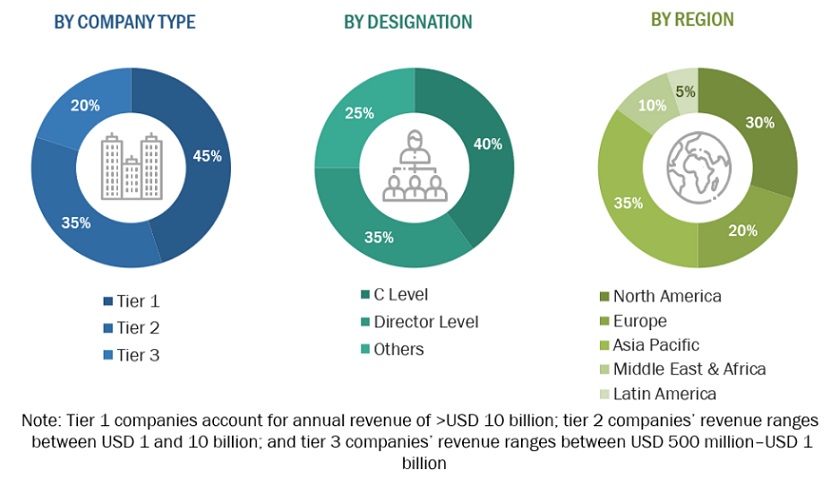
To know about the assumptions considered for the study, download the pdf brochure
|
COMPANY NAME |
DESIGNATION |
|
Robert Bosch |
|
|
Mercedes-Benz |
|
|
Verizon Labs |
|
|
Sierra Wireless |
|
|
JLG Industries |
|
|
Geotab |
|
|
Association of Equipment Manufacturers |
|
|
GearJoT |
|
|
TomTom |
|
|
Ford Motor Company |
|
|
Daimler Trucks |
|
Commercial Vehicle Telematics Software Market Size Estimation
In the bottom-up approach, the adoption rate of commercial vehicle telematics solutions and services among different end users in key countries with respect to their regions contributing the most to the market share was identified. For cross-validation, the adoption of Commercial vehicle telematics solutions and services among industries, along with different use cases with respect to their regions, was identified and extrapolated. Weightage was given to use cases identified in different regions for the market size calculation.
Based on the market numbers, the regional split was determined by primary and secondary sources. The procedure included the analysis of the commercial vehicle telematics software market’s regional penetration. Based on secondary research, the regional spending on Information and Communications Technology (ICT), socio-economic analysis of each country, strategic vendor analysis of major commercial vehicle telematics providers, and organic and inorganic business development activities of regional and global players were estimated. With the data triangulation procedure and data validation through primaries, the exact values of the overall commercial vehicle telematics software market size and segments’ size were determined and confirmed using the study.
Global Commercial Vehicle Telematics Software Market Size: Bottom-Up and Top-Down Approach:
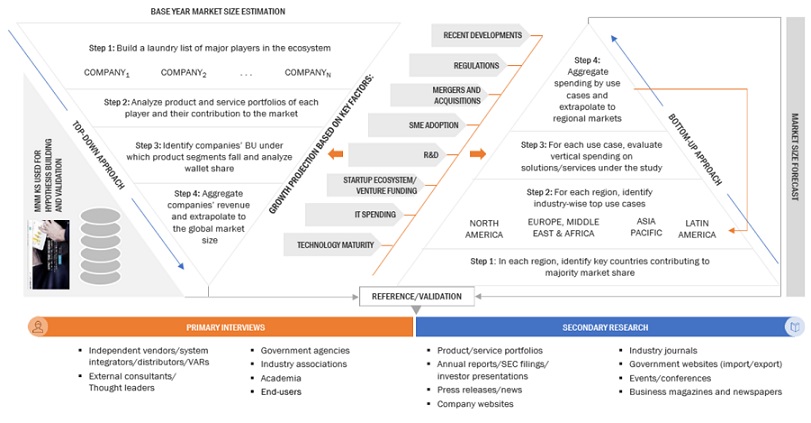
To know about the assumptions considered for the study, Request for Free Sample Report
Data Triangulation
Based on the market numbers, the regional split was determined by primary and secondary sources. The procedure included the analysis of the commercial vehicle telematics software market’s regional penetration. Based on secondary research, the regional spending on Information and Communications Technology (ICT), socio-economic analysis of each country, strategic vendor analysis of major commercial vehicle telematics providers, and organic and inorganic business development activities of regional and global players were estimated. With the data triangulation procedure and data validation through primaries, the exact values of the overall Commercial vehicle telematics software market size and segments’ size were determined and confirmed using the study.
Commercial Vehicle Telematics Software Market Definition
Commercial vehicle telematics software refers to software solutions that utilize GPS tracking, communication systems, and data analytics to monitor and manage fleets of commercial vehicles. These software enable real-time tracking of vehicle locations, performance metrics, and driver behavior, providing valuable insights to fleet managers. They facilitate efficient route planning, maintenance scheduling, and fuel management, ultimately optimizing overall fleet operations. Additionally, commercial vehicle telematics software often includes features such as remote diagnostics, driver safety monitoring, and vehicle maintenance alerts, contributing to improved safety, cost-effectiveness, and operational efficiency for businesses relying on a fleet of vehicles.
Stakeholders
- Application design and software developers
- Commercial vehicle telematics vendors
- Business analysts
- Cloud service providers
- Consulting service providers
- Fleet owners & operators
- Distributors and Value-added Resellers (VARs)
- Government agencies
- Independent Software Vendors (ISV)
- Managed service providers
- Market research and consulting firms
- Support and maintenance service providers
- System Integrators (SIs)/migration service providers
- Automotive OEMs
- Technology providers
Report Objectives
- To define, describe, and predict the commercial vehicle telematics software market by offering (software and services), propulsion type, vehicle type, sales channel, end-user, and region
- To provide detailed information related to major factors (drivers, restraints, opportunities, and industry-specific challenges) influencing the market growth
- To analyze the micro markets with respect to individual growth trends, prospects, and their contribution to the total market
- To analyze the opportunities in the market for stakeholders by identifying the high-growth segments of the market
- To analyze opportunities in the market and provide details of the competitive landscape for stakeholders and market leaders
- To forecast the market size of segments for five main regions: North America, Europe, Asia Pacific, Middle East & Africa, and Latin America
- To profile key players and comprehensively analyze their market rankings and core competencies.
- To analyze competitive developments, such as partnerships, new product launches, and mergers and acquisitions, in the market
- To analyze the impact of recession across all the regions across the market
Available Customizations
With the given market data, MarketsandMarkets offers customizations as per your company’s specific needs. The following customization options are available for the report:
Product Analysis
- Product quadrant, which gives a detailed comparison of the product portfolio of each company.
Geographic Analysis
- Further breakup of the North American commercial vehicle telematics software market
- Further breakup of the European market
- Further breakup of the Asia Pacific market
- Further breakup of the Middle Eastern & African market
- Further breakup of the Latin America market
Company Information
- Detailed analysis and profiling of additional market players (up to five)
Get the Full Commercial Vehicle Telematics Market Report
Full forecast, segment splits, and company analysis for all Commercial Vehicle Telematics Market.
- Canada Commercial Vehicle Telematics Market
- US Commercial Vehicle Telematics Market
- UK Commercial Vehicle Telematics Market
- Germany Commercial Vehicle Telematics Market
- France Commercial Vehicle Telematics Market
- Italy Commercial Vehicle Telematics Market
- Spain Commercial Vehicle Telematics Market
- India Commercial Vehicle Telematics Market
- Japan Commercial Vehicle Telematics Market
- South Korea Commercial Vehicle Telematics Market
- Singapore Commercial Vehicle Telematics Market
- Egypt Commercial Vehicle Telematics Market
- South Africa Commercial Vehicle Telematics Market
- Turkey Commercial Vehicle Telematics Market
- Brazil Commercial Vehicle Telematics Market
- Mexico Commercial Vehicle Telematics Market
- Argentina Commercial Vehicle Telematics Market
- Rest Of Europe Commercial Vehicle Telematics Market
- Rest Of Asia Pacific Commercial Vehicle Telematics Market
- Rest Of Latin America Commercial Vehicle Telematics Market
- GCC Commercial Vehicle Telematics Market
Need a Tailored Report?
Customize this report to your needs
Get 10% FREE Customization
Customize This Report
