
China Gluten-free Products Market (2024-2029)

The China Gluten-free Products Market was valued at $172.7 Million in 2024 and projected to reach to $262.7 Million by 2029, representing a compound annual growth rate of 8.8%. China's gluten-free products market is poised for sustained growth as consumer awareness of celiac disease and gluten sensitivity continues to rise.


| Market Size in | USD 26.32 MN |
| Market Forecast in | |
| CAGR | |
| Forecast Period | |
| Units Considered | Value (USD MN) |
China Gluten-free Products Market Trends and Insights
- This growth trajectory reflects China's rising health consciousness and increasing celiac disease awareness among consumers.
- China is witnessing accelerating demand driven by urbanization, premium food trends, and expanding retail distribution channels across major cities. The Chinese market benefits from growing middle-class purchasing power and shifting dietary preferences toward functional foods.
- China's gluten-free segment is expanding beyond traditional health-focused demographics to mainstream consumers seeking wellness products.
- Between 2024 and 2029, China is expected to sustain an 8.8% compound annual growth rate, outpacing global averages and positioning the country as a key growth engine in the Asia Pacific region. China's regulatory environment and e-commerce infrastructure are accelerating market penetration, enabling both domestic and international brands to reach health-conscious consumers.
- The forecast period demonstrates China's potential as a strategic market for gluten-free product innovation and distribution..
Key Market Statistics
- CAGR (2024-2029) 8.8% CAGR
- Market Size, 2024 ~USD 172.7 Million
- Forecast, 2029 ~USD 262.7 Million
- Country China
China Gluten-free Products Market Overview
Market Valuation Growth :
China's gluten-free products market is valued at USD 172.7 million in 2024, with a projected CAGR of 8.8% through 2029, reaching USD 262.7 million by forecast end.
Rising Health Consciousness :
Increasing celiac disease awareness and health-conscious consumer behavior in China are driving demand for gluten-free alternatives across urban and semi-urban populations.
Urbanization & Premium Trends :
Rapid urbanization in China is fueling premium food consumption patterns, with gluten-free products positioned as health-focused lifestyle choices among affluent consumers.
Retail Distribution Expansion :
Expanding retail channels including e-commerce platforms, specialty health stores, and modern supermarkets are accelerating gluten-free product accessibility across China's major cities.
China Gluten-free Products Market Dynamics
- The market benefits from China's expanding middle class, increasing disposable incomes, and growing preference for premium health-oriented food products.
- Urbanization trends and the influence of Western dietary patterns are normalizing gluten-free consumption among younger demographics. Looking ahead, the market will be shaped by improved product innovation, competitive pricing strategies, and enhanced distribution networks.
- E-commerce penetration and direct-to-consumer channels will play pivotal roles in market expansion.
- Strategic partnerships between international and domestic brands will further accelerate market maturation, positioning China as a significant growth engine within the Asia-Pacific gluten-free products sector..
Market Ecosystem
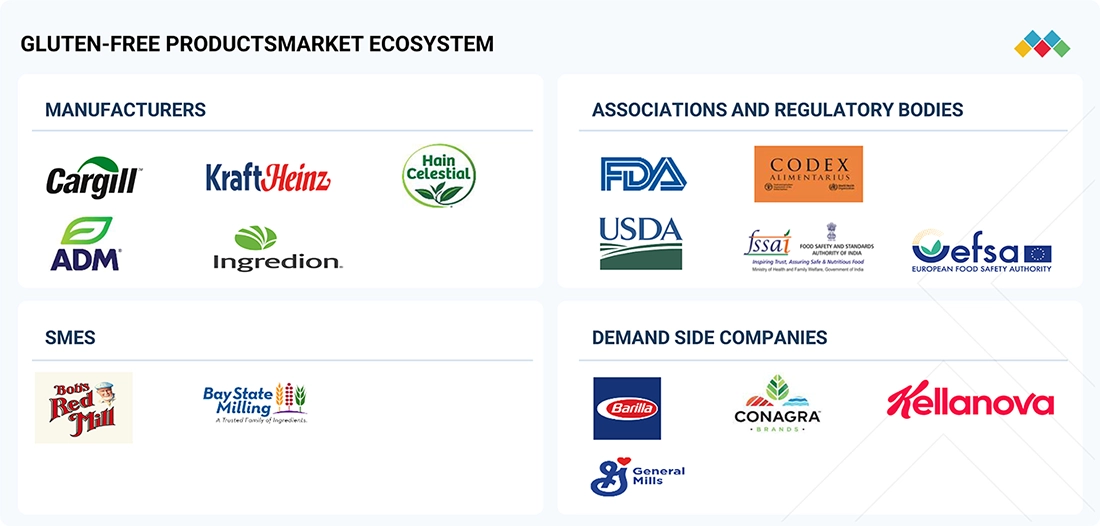
GLUTEN-FREE PRODUCTS MARKET SIZE, TRENDS & FORECAST TO 2029: COMMERCIAL USE CASES ACROSS INDUSTRIES
| COMPANY | USE CASE DESCRIPTION | BENEFITS |
|---|---|---|
 |
Expanded its gluten-free ingredient portfolio by offering rice- and corn-based flours, tapioca starches, texturizing systems, and clean-label binders for gluten-free bakery, snacks, and ready meals. Cargill also supports manufacturers with application labs focused on gluten-free dough rheology and texture optimization. | Enables food manufacturers to achieve better texture, volume, and shelf life in gluten-free bakery and snacks while improving cost efficiency and formulation consistency at industrial scale. |
 |
Introduced gluten-free flour blends, plant proteins, and functional fibers designed to enhance nutritional density and mouthfeel in gluten-free baked goods, cereals, and snack products. ADM supports gluten-free claims through traceable sourcing and allergen-controlled processing. | Strengthens manufacturers’ ability to launch nutrient-enhanced, clean-label gluten-free products, addressing consumer demand for protein, fiber, and better-for-you positioning. |
 |
Provides clean-label starches, rice flours, and pulse-based ingredients tailored for gluten-free bakery, sauces, and snacks. Ingredion works closely with brands on reformulation of mainstream SKUs into gluten-free variants. | Helps brands maintain label simplicity, stable texture, and scalable production, enabling faster gluten-free line extensions of existing products. |
Logos and trademarks shown above are the property of their respective owners. Their use here is for informational and illustrative purposes only.
Related Ecosystem
Consumer Fandb
- Bakery Products
- Dairy Products
- Actuators
- Animal-Based Sealants
- Azo Pigments
- AZELIS HOLDINGS SA
- VENTURA FOODS, LLC
- UNILEVER PLC
- Amway
- Nestle s.a
Fandb Ingredients
- Dairy Products
- Bakery Products
- Microorganism
- Polydextrose
- Carbohydrates
- AZELIS HOLDINGS SA
- Archer-Daniels-Midland Company
- Kerry Group plc
- Amway
- DSM FIRMMENICH
Key Takeaways
- China's gluten-free products market is valued at USD 172.7 million in 2024 and will grow to USD 262.7 million by 2029, representing a 52% increase over five years.
- China's 8.8% CAGR exceeds the global average of 8.3%, indicating accelerating market maturation and consumer adoption in the region.
- China's e-commerce platforms and urban retail expansion are primary drivers enabling rapid distribution and accessibility of gluten-free products.
- China's growing middle class and health-conscious consumer base are shifting dietary preferences toward premium functional foods and wellness products.
Gluten-free Products Market Report Scope
| Report Metric | Details |
|---|---|
| Base Year | 2024 |
| Fastest Growing Segment | SNACKS & RTE PRODUCTS (Type) |
| Forecast Period | 2024–2029 |
| Growth Rate | CAGR of 8.3% from 2024 to 2029 |
| Largest Segment | SOLID (Form) |
| Market Size Base Year (Billions) | ~USD 7.71 (2024) |
| Revenue Forecast (Billions) | ~USD 11.48 (2029) |
| Segments Covered | Distribution Channel, Form, Type, Subtype, Conventional Store |
China Gluten-free Products Market Report Segmentation
5 segment dimensions are covered across the global market.
By Distribution Channel
- Conventional Stores
- Drugstores & Pharmacies
- Specialty Stores
By Form
- Liquid
- Solid
By Type
- Bakery Products
- Condiments & Dressings
- Other Types
- Pizzas & Pastas
- Snacks & Rte Products
By Subtype
- Baking Mixes & Flours
- Bread Rolls, Buns, And Cakes
- Breads, Rolls, Buns, And Cakes
- Cookies, Crackers, Wafers, And Biscuits
By Conventional Store
- Grocery Stores
- Mass Merchandisers
- Online Retailers
- Warehouse Clubs
Target Audience
- Food & Beverage Manufacturers : Manufacturers need China-specific market data to develop localized gluten-free product portfolios, understand consumer preferences, and identify optimal distribution channels for market penetration.
- Retail & Distribution Companies : Retailers require detailed insights into China's gluten-free market growth, consumer demographics, and purchasing patterns to optimize shelf space allocation and inventory management decisions.
- Investment & Private Equity Firms : Investors need comprehensive China market analysis, growth projections, and competitive landscape data to evaluate investment opportunities and assess portfolio company performance in the sector.
- Market Entry & Strategy Consultants : Consultants advising clients on China expansion require localized market intelligence, consumer behavior analysis, and competitive positioning data to develop effective market entry strategies.
- E-commerce & Digital Platforms : Online retailers and digital marketplaces need China-specific demand forecasts and consumer trend data to optimize product listings, marketing campaigns, and inventory planning for gluten-free categories.
Reasons to Buy this Report
- Market Size & Growth Validation : Obtain precise market valuation data for China (USD 172.7M in 2024) with verified 8.8% CAGR projections through 2029, enabling accurate business planning and investment decisions.
- Consumer Behavior Insights : Understand China-specific drivers including rising celiac disease awareness, urbanization patterns, and premium food consumption trends that differentiate the Chinese market from global averages.
- Competitive Positioning Strategy : Identify market opportunities and competitive gaps specific to China's retail landscape, e-commerce penetration, and distribution channels to optimize market entry or expansion strategies.
- Demand Forecasting Accuracy : Leverage China-focused forecast data (USD 262.7M by 2029) to accurately project demand, allocate resources, and plan product development roadmaps for the Chinese market.
- Regional Risk Assessment : Evaluate China-specific market dynamics, regulatory environment, and consumer preferences to mitigate risks and identify growth opportunities in this high-potential Asian market.
Frequently asked questions
What is the current size of China's gluten-free products market?
China's gluten-free products market was valued at USD 172.7 million in 2024 and is projected to reach USD 262.7 million by 2029.
What is the expected growth rate for China's gluten-free market?
China's gluten-free products market is expected to grow at a compound annual growth rate (CAGR) of 8.8% from 2024 to 2029.
What factors are driving growth in China's gluten-free products market?
Key drivers include rising health consciousness, increasing celiac disease awareness, urbanization, growing middle-class purchasing power, and expanding e-commerce and retail distribution channels across China.
How does China's gluten-free market growth compare to global trends?
China's 8.8% CAGR outpaces the global average of 8.3%, positioning China as a faster-growing market within the gluten-free products industry.
Which distribution channels are most important for gluten-free products in China?
E-commerce platforms and modern retail chains in urban centers are the primary distribution channels driving accessibility and sales of gluten-free products in China.
RESEARCH METHODOLOGY
The study involved major segments in estimating the current size of the gluten-free products market. Exhaustive secondary research was done to collect information on the market, peer, and parent markets. The next step was to validate these findings, assumptions, and sizing with industry experts across the value chain through primary research. Both top-down and bottom-up approaches were employed to estimate the complete market size. After that, market breakdown and data triangulation were used to estimate the market size of segments and subsegments.
Secondary Research
This research study involved the extensive use of secondary sources—directories and databases such as Bloomberg Businessweek and Factiva—to identify and collect information useful for a technical, market-oriented, and commercial study of the gluten-free products market.
In the secondary research process, various sources such as annual reports, press releases & investor presentations of companies, white papers, food journals, certified publications, articles from recognized authors, directories, and databases were referred to identify and collect information.
Secondary research was mainly used to obtain key information about the industry’s supply chain, the total pool of key players, and market classification and segmentation as per the industry trends to the bottom-most level, regional markets, and key developments from both market- and technology-oriented perspectives.
Primary Research
Extensive primary research was conducted after obtaining information regarding the gluten-free products market scenario through secondary research. Several primary interviews were conducted with market experts from both the demand and supply sides across major countries of North America, Europe, Asia Pacific, South America, and the Rest of the World. Primary data was collected through questionnaires, emails, and telephonic interviews. The primary sources from the supply side included various industry experts, such as Chief X Officers (CXOs), Vice Presidents (VPs), Directors from business development, marketing, research, and development teams, and related key executives from distributors and key opinion leaders. Primary interviews were conducted to gather insights such as market statistics, data on revenue collected from the products, market breakdowns, market size estimations, market forecasting, and data triangulation. Primary research also helped in understanding the various trends related to gluten-free products type, form, distribution channel and region. Stakeholders from the demand side, who use gluten-free ingredients, were interviewed to understand the buyer’s perspective on the suppliers, products, and their current usage of gluten-free products and the outlook of their business, which will affect the overall market.
Breakdown of Primary Participants
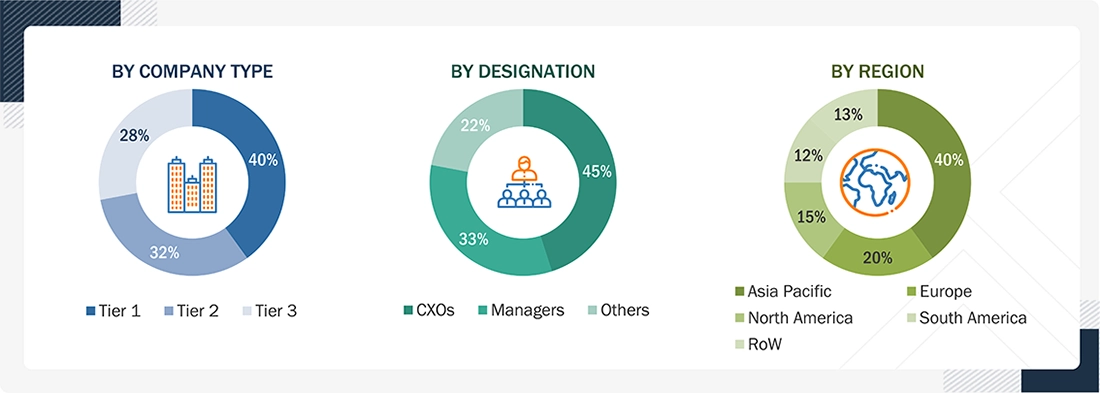
To know about the assumptions considered for the study, download the pdf brochure
|
COMPANY NAME |
DESIGNATION |
|
Kraft Heinz Company (US) |
Regional Sales Manager |
|
The Hain Celestial Group Inc (US) |
Marketing Manager |
|
General Mills (US) |
General Manager |
|
Conagra Brands Inc (US) |
Sales Manager |
Market Size Estimation
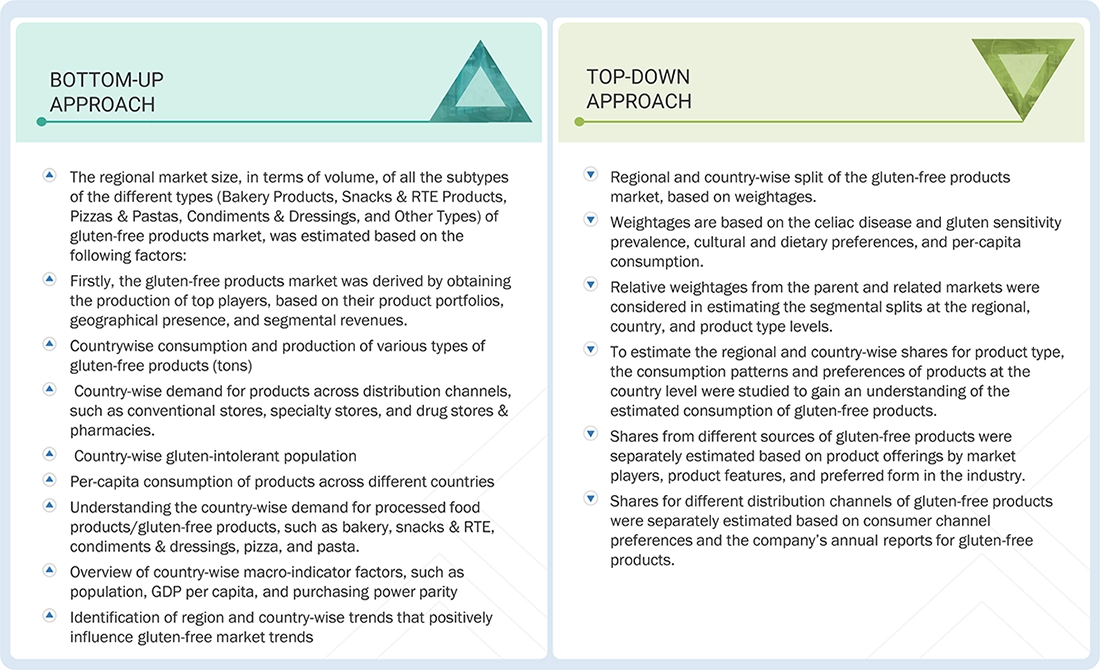
Both the top-down and bottom-up approaches were used to estimate and validate the total market size. These approaches were also used to estimate the size of various dependent submarkets. The research methodology used to estimate the market size includes the following:
- The key players in the industry and markets were identified through extensive secondary research.
- All shares, splits, and breakdowns were determined using secondary sources and verified through primary sources.
- All possible parameters that affect the markets covered in this research study were accounted for, viewed in extensive detail, verified through primary research, and analyzed to obtain the final quantitative and qualitative data.
- The research included the study of reports, reviews, and newsletters of top market players, along with extensive interviews for opinions from leaders, such as CEOs, directors, and marketing executives.
Global Gluten-free Products Market: Bottom-Up Approach and Top-Down Approach.
Data Triangulation
After arriving at the overall market size from the estimation process explained above, the total market was split into several segments and subsegments. To estimate the overall gluten-free products market and arrive at the exact statistics for all segments and subsegments, data triangulation and market breakdown procedures were employed, wherever applicable. The data was triangulated by studying various factors and trends from the demand and supply sides. Along with this, the market size was validated using both the top-down and bottom-up approaches.
Market Definition
- According to the Food and Drug Administration (FDA), gluten-free products are food products that do not contain any of the following:
- An ingredient that is any type of wheat, rye, barley, or crossbreeds of these grains
- An ingredient derived from these grains, and that has not been processed to remove gluten
- An ingredient derived from these grains that has been processed to remove gluten, if it results in the food containing 20 or more parts per million (ppm) gluten.
Key Stakeholders
-
- Supply-side: Gluten-free products manufacturers, suppliers, distributors, importers, and exporters
- Gluten-free products additive manufacturers and traders
- Demand-side: Gluten-free product manufacturers
- Regulatory side: Concerned government authorities, commercial research & development (R&D) institutions, and other regulatory bodies.
- Associations and industry bodies such as:
- Food and Drug Administration (FDA)
- European Food Safety Authority (EFSA)
- Food Standards Australia New Zealand (FSANZ)
- Gluten-Free Certification Organization (GFCO)
- National Foundation for Celiac Awareness (NFCA)
- Gluten-Free Standards Organization (GFSA)
- International Certification Services (ICS)
Report Objectives
- To define, segment, and forecast the global gluten-free products market based on type, form, source, distribution channel and region from 2021 to 2024 and a forecast period from 2025 to 2030
- To provide detailed information about the key factors, including drivers, restraints, opportunities, and challenges influencing the growth of the market
- To identify attractive opportunities in the market by determining the largest and fastest-growing segments across regions
-
To analyze the demand-side factors based on the following:
- Impact of macro and microeconomic factors on the market
- Shifts in demand patterns across different subsegments and regions
- Strategically profile the key players and comprehensively analyze their core competencies
- Competitive developments, such as partnerships, mergers & acquisitions, new product developments, and expansions & investments in the gluten-free products market
Available customizations:
With the given market data, MarketsandMarkets offers customizations according to company-specific scientific needs.
The following customization options are available for the report:
PRODUCT ANALYSIS
Product Matrix, which gives a detailed comparison of the product portfolio of each company.
GEOGRAPHIC ANALYSIS
With the given market data, MarketsandMarkets offers customizations according to company-specific scientific needs.
- Further breakdown of the Rest of the European Gluten-free products market into key countries
- Further breakdown of the Rest of Asia Pacific Gluten-free products market into key countries
- Further breakdown of the South American Gluten-free products market into key countries
COMPANY INFORMATION
- Detailed analyses and profiling of additional market players (up to five)
Get the Full Gluten-free Products Market Report
Full forecast, segment splits, and company analysis for all Gluten-free Products Market.
- US Gluten-free Products Market
- Canada Gluten-free Products Market
- Mexico Gluten-free Products Market
- France Gluten-free Products Market
- Germany Gluten-free Products Market
- UK Gluten-free Products Market
- Spain Gluten-free Products Market
- Italy Gluten-free Products Market
- Netherlands Gluten-free Products Market
- Finland Gluten-free Products Market
- Russia Gluten-free Products Market
- Japan Gluten-free Products Market
- India Gluten-free Products Market
- Australia Gluten-free Products Market
- New Zealand Gluten-free Products Market
- Brazil Gluten-free Products Market
- Argentina Gluten-free Products Market
Need a Tailored Report?
Customize this report to your needs
Get 10% FREE Customization
Customize This Report
