
Japan In Vitro Toxicology Testing Market (2026-2031)

The Japan In Vitro Toxicology Testing Market was valued at $135.7 Million in 2026 and projected to reach to $167.2 Million by 2031, representing a compound annual growth rate of 9.6%. Japan's in vitro toxicology testing market is poised for sustained growth, driven by regulatory pressures to reduce animal testing and the country's commitment to the 3Rs principle (Replace, Reduce, Refine).


| Market Size in | USD 26.32 MN |
| Market Forecast in | |
| CAGR | |
| Forecast Period | |
| Units Considered | Value (USD MN) |
Japan In Vitro Toxicology Testing Market Trends and Insights
- India is emerging as a key hub for contract research organizations (CROs) and pharmaceutical testing services, driven by cost-effective solutions and regulatory compliance requirements.
- The market in India benefits from increasing pharmaceutical R&D investments, rising demand for alternative testing methods, and stringent safety regulations mandating non-animal testing approaches. India's in vitro toxicology testing sector is supported by a growing biotechnology ecosystem and expanding pharmaceutical manufacturing capabilities.
- India's market growth at 9.6% CAGR reflects the country's strategic position in global drug development and the adoption of advanced testing technologies.
- By 2031, India is expected to strengthen its role as a preferred destination for toxicology testing services, driven by skilled workforce availability, cost advantages, and regulatory harmonization with international standards. India's market dynamics are shaped by increasing collaborations between domestic and international pharmaceutical companies, rising awareness of in vitro testing benefits, and government initiatives supporting biotech innovation.
- India continues to attract global pharmaceutical companies seeking reliable, cost-effective toxicology testing solutions, positioning the country as a critical player in the Asia Pacific region's in vitro toxicology testing landscape..
Key Market Statistics
- CAGR (2026-2031) 9.6% CAGR
- Market Size, 2026 ~USD 135.7 Million
- Forecast, 2031 ~USD 167.2 Million
- Country Japan
Japan In Vitro Toxicology Testing Market Overview
Market Size & Growth :
Japan's in vitro toxicology testing market is valued at USD 135.7 million in 2026, with a projected expansion to USD 167.2 million by 2031, representing a steady CAGR of 9.6%.
Regulatory Compliance Driver :
Japan's stringent pharmaceutical and chemical regulations, aligned with PMDA guidelines, are driving demand for advanced in vitro testing solutions to replace animal testing methods.
Advanced Technology Adoption :
Japanese pharmaceutical and cosmetics companies are increasingly adopting organ-on-chip, 3D cell culture, and high-throughput screening technologies for toxicology assessment.
CRO & Biotech Expansion :
Growth in Japan's contract research organization sector and biotech innovation hubs is accelerating investment in in vitro toxicology testing infrastructure and capabilities.
Japan In Vitro Toxicology Testing Market Dynamics
- The market benefits from Japan's advanced pharmaceutical and cosmetics industries, which require robust safety assessment protocols.
- Increasing collaborations between Japanese research institutions and global biotech firms are fostering innovation in alternative testing methodologies.
- The shift toward personalized medicine and precision toxicology is creating new opportunities for specialized testing services tailored to Japanese regulatory standards and industry needs..
Market Ecosystem
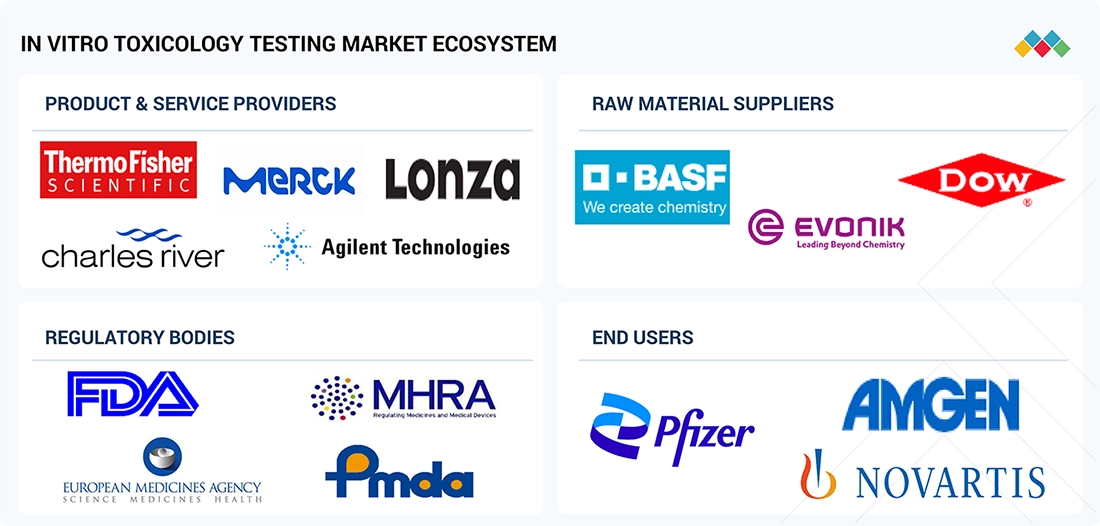
IN VITRO TOXICOLOGY TESTING MARKET: COMMERCIAL USE CASES ACROSS INDUSTRIES
| COMPANY | USE CASE DESCRIPTION | BENEFITS |
|---|---|---|
 |
Offers cytotoxicity and cell-viability products, such as LIVE/DEAD assays, LDH assays, alamarBlue, and ROS detection kits for compound toxicity screening | Supports rapid cell damage, viability, oxidative stress, and drug-discovery toxicity assessment |
 |
Provides CellTiter-Glo 3D assay for viability testing in 3D microtissue/spheroid toxicity models | Improves cytotoxicity readouts in 3D cultures and supports high-throughput screening |
Logos and trademarks shown above are the property of their respective owners. Their use here is for informational and illustrative purposes only.
Related Ecosystem
Biotechnology
- Reagents
- Polymerase Chain Reaction (PCR)
- Stem Cells
- Assay Kits
- Flow Cytometers
- Thermo Fisher Scientific Inc.
- Merck KGaA
- Danaher Corporation
- Agilent Technologies, Inc.
- Bio-Rad Laboratories, Inc.
Key Takeaways
- India's in vitro toxicology testing market is valued at USD 135.7 million in 2026, growing at a 9.6% CAGR through 2031.
- India is positioned as a cost-effective hub for CROs and pharmaceutical testing, attracting global pharmaceutical companies.
- India's market growth is driven by increasing R&D investments, regulatory compliance requirements, and adoption of alternative testing methods.
- By 2031, India's market is projected to reach USD 167.2 million, strengthening the country's role in Asia Pacific toxicology testing.
In Vitro Toxicology Testing Market Report Scope
| Report Metric | Details |
|---|---|
| Base Year | 2026 |
| Fastest Growing Segment | SOFTWARE (Method) |
| Forecast Period | 2026–2031 |
| Growth Rate | CAGR of 10.6% from 2026 to 2031 |
| Largest Segment | CONSUMABLES (Method) |
| Market Size Base Year (Billions) | ~USD 12.67 (2026) |
| Revenue Forecast (Billions) | ~USD 20.97 (2031) |
| Segments Covered | Type, Toxicity Endpoint & Test, Industry, Technology, Method |
Japan In Vitro Toxicology Testing Market Report Segmentation
5 segment dimensions are covered across the global market.
By Type
- Bacterial Toxicity Assays
- Cell-Based Elisa & Western Blotting Assays
- Enzyme Toxicity Assays
- Other Assays
- Receptor-Binding Assays
- Tissue Culture Assays
By Toxicity Endpoint & Test
- Adme
- Cytotoxicity
- Dermal Toxicity
- Genotoxicity
- Ocular Toxicity
- Organ Toxicity
- Other Toxicity Endpoints & Tests
- Phototoxicity
- Skin Irritation, Corrosion, & Sensitization
By Industry
- Consumer Care
- Food
- Other Industries
- Pharmaceutical & Biopharmaceutical
By Technology
- Cell Culture
- High-Throughput Screening
- Toxicogenomics
By Method
- Biochemical Assays
- Cellular Assays
- Ex Vivo Models
- In Silico Models
- Molecular Toxicology Assays
JAPAN: IN VITRO TOXICOLOGY TESTING PRODUCTS MARKET, BY END USER, 2024–2031
| Segment | 2024 | 2025 | 2026 | 2027 | 2028 | 2029 | 2030 | 2031 | CAGR (%) |
|---|---|---|---|---|---|---|---|---|---|
| ACADEMIC & RESEARCH INSTITUTES | 35.8 | 37.8 | 40.7 | 44.1 | 48.2 | 53 | 58.6 | 65.2 | 9.9 |
| CONSUMER CARE COMPANIES | 59.1 | 62.8 | 68 | 74.2 | 81.5 | 90.2 | 100.3 | 112.4 | 10.6 |
| CROS | 49.4 | 52.9 | 57.9 | 63.7 | 70.6 | 78.8 | 88.5 | 100 | 11.5 |
| FOOD & BEVERAGES COMPANIES | 26.4 | 28 | 30.2 | 32.7 | 35.8 | 39.4 | 43.7 | 48.7 | 10 |
| OTHER END USERS | 18.7 | 19.5 | 20.8 | 22.3 | 24 | 26.1 | 28.5 | 31.3 | 8.5 |
| PHARMACEUTICAL & BIOPHARMACEUTICAL COMPANIES | 141.5 | 150.7 | 163.8 | 179 | 197.2 | 218.8 | 244.1 | 274.1 | 10.8 |
| TOTAL | 331 | 351.8 | 381.4 | 415.9 | 457.2 | 506.3 | 563.7 | 631.6 | 10.6 |
JAPAN: IN VITRO TOXICOLOGY TESTING SERVICES MARKET, BY END USER, 2024–2031
| Segment | 2024 | 2025 | 2026 | 2027 | 2028 | 2029 | 2030 | 2031 | CAGR (%) |
|---|---|---|---|---|---|---|---|---|---|
| ACADEMIC & RESEARCH INSTITUTES | 14.7 | 15.6 | 17 | 18.6 | 20.5 | 22.7 | 25.3 | 28.4 | 10.8 |
| CONSUMER CARE COMPANIES | 39.6 | 42.6 | 47 | 52 | 58 | 65.3 | 73.8 | 83.9 | 12.3 |
| FOOD & BEVERAGES COMPANIES | 21.2 | 22.6 | 24.7 | 27.2 | 30.1 | 33.6 | 37.7 | 42.6 | 11.5 |
| OTHER END USERS | 32.6 | 35 | 38.4 | 42.4 | 47.1 | 52.8 | 59.5 | 67.5 | 12 |
| PHARMACEUTICAL & BIOTECHNOLOGY COMPANIES | 108.4 | 116.9 | 128.9 | 143.1 | 160 | 180.2 | 204.1 | 232.6 | 12.5 |
| TOTAL | 216.6 | 232.7 | 256 | 283.2 | 315.8 | 354.6 | 400.4 | 455 | 12.2 |
Target Audience
- Pharmaceutical Companies : Japanese and international pharma firms need Japan-specific toxicology testing market data to optimize safety assessment strategies, ensure PMDA compliance, and plan R&D investments.
- Contract Research Organizations (CROs) : CROs operating in Japan require detailed market insights to benchmark services, identify growth opportunities, and develop competitive offerings aligned with local regulatory and client demands.
- Cosmetics & Personal Care Manufacturers : Japanese cosmetics companies need market intelligence on in vitro testing alternatives to animal testing to meet regulatory requirements and consumer expectations for safe, ethically-tested products.
- Biotech & Research Institutions : Japanese biotech firms and research organizations use market data to guide technology development, secure funding, and establish partnerships in the growing in vitro toxicology sector.
- Investment & Strategy Consultants : Consultants advising clients on Japan market entry, M&A opportunities, or portfolio expansion require comprehensive market sizing and trend analysis specific to the toxicology testing industry.
Key Companies in the Japan In Vitro Toxicology Testing Market
| Company | HQ | Ownership | Strongest segments |
|---|---|---|---|
| MAXCYTE, INC | United States | Public Company | ExPERT instruments (ATx, STx, GTx, VLx),Disposable processing assemblies (PAs),Accessories, buffers, and software protocols, |
| GE HEALTHCARE | United States | Public Company | Imaging,Advanced Visualization Solutions (AVS),Patient Care Solutions (PCS), |
| THERMO FISHER SCIENTIFIC INC. | United States | Public Company | Life Sciences Solutions,Analytical Instruments,Specialty Diagnostics, |
| MEDICILON | China | Public Company | Drug Discovery and Pharmaceutical Research,Preclinical Research and IND-Enabling,Advanced Technology and Specialized Platforms, |
| ARAGEN LIFE SCIENCES LTD. | India | Private Company | Discovery and gene-to-protein services,Biologics development and manufacturing,Small-molecule development and manufacturing, |
| ENZO BIOCHEM INC. | United States | Private Company | Labels, dyes, and genomic probes,Antibodies and immunoassays,Biochemicals, proteins, and other reagents, |
| VIMTA LABS LTD. | India | Public Company | Pharma and Biopharma CRO (preclinical, clinical, analytical, biologics/biosimilars),Food, Nutraceuticals, Water and Beverages Testing,Agrochemicals and Specialty Chemicals Testing, |
MAXCYTE, INC
MaxCyte, Inc is a public biotechnology company founded in 1998 in the United States with 91 employees. The company develops cell engineering technologies and platforms.
GE HEALTHCARE
GE Healthcare is a public healthcare company founded in 2022 in the United States with 54,000 employees. The company provides medical imaging, diagnostics, and healthcare IT solutions.
THERMO FISHER SCIENTIFIC INC.
Thermo Fisher Scientific Inc. is a public life sciences company founded in 1956 in the United States with 125,000 employees. The company is a global leader in serving science with laboratory equipment, reagents, and analytical instruments.
MEDICILON
Medicilon is a public pharmaceutical research and development company founded in 2004 in China with 2,504 employees. The company provides drug discovery and development services.
ARAGEN LIFE SCIENCES LTD.
Aragen Life Sciences Ltd. is a private contract research organization founded in 2000 in India with 4,000 employees. The company provides drug discovery, development, and manufacturing services.
ENZO BIOCHEM INC.
Enzo Biochem Inc. is a private biotechnology company founded in 1976 in the United States with 131 employees. The company develops and manufactures molecular diagnostic and research products.
VIMTA LABS LTD.
Vimta Labs Ltd. is a public contract research organization founded in 1984 in India with 1,384 employees. The company provides preclinical and clinical research services.
Reasons to Buy this Report
- Japan-Specific Market Sizing : Accurate valuation data for Japan's in vitro toxicology market (USD 135.7M in 2026, USD 167.2M in 2031) enables precise budget allocation and investment planning for market entry or expansion.
- Regulatory Landscape Intelligence : Comprehensive insights into PMDA requirements, Japanese chemical regulations, and compliance standards help organizations align testing protocols with local regulatory expectations.
- Competitive Positioning in Japan : Detailed analysis of Japan's CRO landscape, biotech players, and technology adoption trends provides competitive intelligence for market differentiation and partnership opportunities.
- Growth Opportunity Identification : Understanding Japan's 9.6% CAGR and emerging segments (organ-on-chip, personalized toxicology) helps identify high-potential niches for product development and service expansion.
- Strategic Decision-Making : Japan-focused market data supports informed decisions on market entry timing, resource allocation, and go-to-market strategies specific to the Japanese pharmaceutical and cosmetics sectors.
Frequently asked questions
What is the current market size of in vitro toxicology testing in India?
India's in vitro toxicology testing market is valued at USD 135.7 million in 2026, with verified data confirming this market size.
What is the projected market size for India's in vitro toxicology testing by 2031?
India's in vitro toxicology testing market is projected to reach USD 167.2 million by 2031, representing significant growth over the forecast period.
What is the CAGR for India's in vitro toxicology testing market?
India's in vitro toxicology testing market is expected to grow at a compound annual growth rate (CAGR) of 9.6% from 2026 to 2031.
Why is India becoming a hub for in vitro toxicology testing?
India is emerging as a preferred destination due to cost-effective solutions, skilled workforce, regulatory compliance capabilities, and growing pharmaceutical R&D investments.
What factors are driving growth in India's in vitro toxicology testing market?
Key drivers include increasing pharmaceutical R&D, regulatory mandates for non-animal testing, rising awareness of in vitro methods, and government biotech initiatives in India.
RESEARCH METHODOLOGY
This research study involved the extensive use of secondary sources, directories, and databases to identify and collect valuable information for the analysis of the global in vitro toxicology testing market. In-depth interviews were conducted with various primary respondents, including key industry participants, subject-matter experts (SMEs), C-level executives of key market players, and industry consultants, to obtain and verify critical qualitative and quantitative information and assess the growth prospects of the market. The global market size estimated through secondary research was then triangulated with inputs from primary research to arrive at the final market size.
Secondary Research
Secondary research was used mainly to identify and collect information for the extensive, technical, market-oriented, and commercial study of the in vitro toxicology testing market. Secondary sources used for this study include World Health Organization (WHO), Organisation for Economic Co-operation and Development (OECD), The Lens, American Society for Testing and Materials (ASTM), Center for Alternatives to Animal Testing (CAAT), European Union Reference Laboratory for Alternatives to Animal Testing (EURL ECVAM), National Institute of Environmental Health Sciences (NIEHS), Scientific Group on Methodologies for the Safety Evaluation of Chemicals (SGOMSEC), United States Environmental Protection Agency (USEPA), US Food and Drug Administration (US FDA), US Census Bureau, Eurostat, Statista, and Factiva. The Scientist Magazine, ScienceDirect, research journals, corporate filings such as annual reports, SEC filings, investor presentations, and financial statements, press releases, trade, business, professional associations and others. These sources were also used to obtain key information about major players, market classification, and segmentation according to industry trends, regional/country-level markets, market developments, and technology perspectives.
Primary Research
In-depth interviews were conducted with primary respondents, including key industry participants, subject-matter experts (SMEs), C-level executives of key market players, and industry consultants, among others, to obtain and verify critical qualitative and quantitative information and assess market prospects. Various primary sources from both the supply and demand sides of the market were interviewed to obtain qualitative and quantitative information.
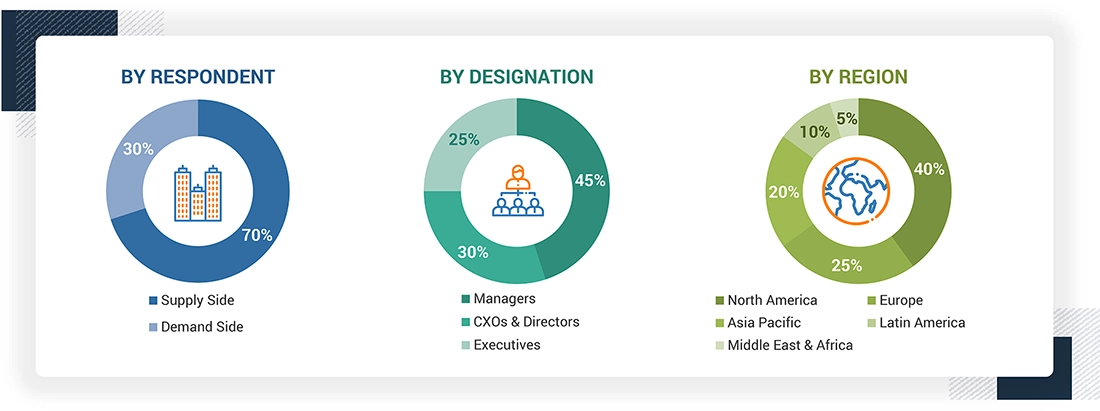
To know about the assumptions considered for the study, download the pdf brochure
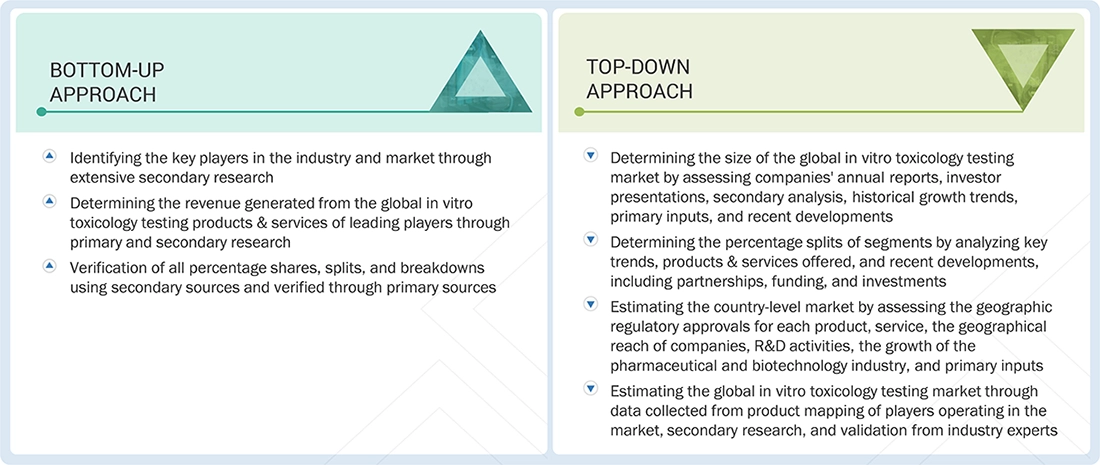
Market Size Estimation
The global size of the in vitro toxicology testing market was estimated through multiple approaches. A detailed market estimation approach was used to estimate and validate the market value and other dependent submarkets. These methods were also used extensively to estimate the size of various subsegments in the market.
Data Triangulation
After estimating the overall market size from the market size estimation process, the total market was split into several segments. To complete the overall market engineering process and arrive at the exact statistics for all segments, the data triangulation procedure was employed; it involved studying various factors and trends from both the demand and supply sides.
Market Definition
Toxicology/Toxicity testing is required to evaluate compounds to identify their potential adverse effects to assure safety for human and environmental use. In vitro toxicology testing is ideally suited for the investigation of molecular, cellular, and physiological mechanisms of chemically induced toxicity, which cannot readily be studied in vivo. In vitro toxicology testing is widely used by pharmaceutical and biopharmaceutical, consumer care, food, and other industries.
Key Stakeholders
- Academic Research Institutes
- Biotechnology Companies
- Pharmaceutical & Biopharmaceutical Companies
- Chemical Companies
- Medical Device Companies
- Food & Beverage Manufacturers
- Contract Research Organizations (CROs)
- Market Research & Consulting Firms
- Venture Capitalists & Investors
- Government Associations
Report Objectives
- To define, describe, and forecast the in vitro toxicology testing market by offering, product type, toxicity end point and test, technology, method, end user, service type, method, end user, and region
- To provide detailed information regarding the major factors (such as drivers, restraints, opportunities, and challenges) influencing the market growth
- To analyze the micromarkets with respect to individual growth trends, prospects, and contributions to the overall in vitro toxicology testing market
- To analyze the opportunities for stakeholders and provide details of the competitive landscape for market leaders
- To forecast the size of the market segments with respect to six regions: North America (US and Canada), Europe (Germany, France, the UK, Italy, Spain, and the Rest of Europe), Asia Pacific (China, Japan, India, South Korea, Australia, and the Rest of Asia Pacific), Latin America (Brazil, Mexico, Argentina, and the Rest of Latin America), Middle East [GCC (Saudi Arabia, United Arab Emirates, and the Rest of GCC) and the Rest of Middle East], and Africa
- To profile the key players and analyze their market shares and core competencies
- To track and analyze competitive developments, such as product/ service launches, partnerships, agreements, acquisitions, collaborations, and expansions
- To benchmark players within the market using the proprietary “Company Evaluation Matrix” framework, which analyzes market players on various parameters within the broad categories of business and product excellence strategy.
Available customizations:
With the given market data, MarketsandMarkets offers customizations as per the company’s specific needs. The following customization options are available for the report:
Geographical Analysis
- Further breakdown of the Rest of Europe in vitro toxicology testing market, by country
- Further breakdown of the Rest of Asia Pacific in vitro toxicology testing market, by country
Company Information
- Detailed analysis and profiling of additional market players (up to five)
Segment Analysis
- Cross-segment analysis
Get the Full In Vitro Toxicology Testing Market Report
Full forecast, segment splits, and company analysis for all In Vitro Toxicology Testing Market.
- US In Vitro Toxicology Testing Market
- Canada In Vitro Toxicology Testing Market
- UK In Vitro Toxicology Testing Market
- Germany In Vitro Toxicology Testing Market
- France In Vitro Toxicology Testing Market
- Italy In Vitro Toxicology Testing Market
- Spain In Vitro Toxicology Testing Market
- China In Vitro Toxicology Testing Market
- India In Vitro Toxicology Testing Market
- South Korea In Vitro Toxicology Testing Market
- Australia In Vitro Toxicology Testing Market
- Brazil In Vitro Toxicology Testing Market
- Mexico In Vitro Toxicology Testing Market
- Saudi Arabia In Vitro Toxicology Testing Market
Need a Tailored Report?
Customize this report to your needs
Get 10% FREE Customization
Customize This Report
