
US Metalworking Fluids Market (2025-2030)

The US Metalworking Fluids Market was valued at $1472.3 Million in 2025 and projected to reach to $1715.1 Million by 2030, representing a compound annual growth rate of 3.1%. The US metalworking fluids market is poised for steady growth through 2030, driven by continued demand from the automotive and aerospace sectors, which remain critical end-users.


| Market Size in | USD 26.32 MN |
| Market Forecast in | |
| CAGR | |
| Forecast Period | |
| Units Considered | Value (USD MN) |
US Metalworking Fluids Market Trends and Insights
- The US market benefits from a robust manufacturing base, particularly in automotive, aerospace, and precision engineering sectors that rely heavily on metalworking fluids for cutting, grinding, and forming operations.
- Demand in the US is driven by industrial production recovery, technological advancements in fluid formulations, and increasing adoption of environmentally compliant solutions across US manufacturing facilities. The US metalworking fluids market reflects steady growth momentum supported by capital investments in advanced manufacturing and reshoring initiatives within the country.
- US manufacturers are increasingly prioritizing high-performance fluids that enhance tool life, improve surface finish quality, and reduce waste-factors that directly impact operational efficiency.
- Between 2025 and 2030, the US market will experience incremental expansion as industries modernize production capabilities and adopt sustainable metalworking fluid alternatives to meet regulatory requirements and corporate sustainability goals..
Key Market Statistics
- CAGR (2025-2030) 3.1% CAGR
- Market Size, 2025 ~USD 1472.3 Million
- Forecast, 2030 ~USD 1715.1 Million
- Country US
US Metalworking Fluids Market Overview
Market Size & Growth :
The US metalworking fluids market is valued at $1,472.3 million in 2025 and is projected to reach $1,715.1 million by 2030, representing a steady CAGR of 3.1% over the forecast period.
Manufacturing Sector Strength :
The US market is driven by a robust manufacturing base, with significant demand from automotive, aerospace, and precision engineering industries that depend on metalworking fluids for cutting, grinding, and forming operations.
Regional Performance :
The US represents a mature and stable market within North America, characterized by established industrial infrastructure, stringent environmental regulations, and a focus on advanced fluid formulations and sustainability.
Industry Dynamics :
Growth is supported by increasing manufacturing output, technological advancements in fluid chemistry, rising demand for high-performance coolants, and compliance with EPA and OSHA environmental and safety standards.
US Metalworking Fluids Market Dynamics
- Manufacturing resurgence initiatives and nearshoring trends are expected to boost domestic production volumes, thereby increasing consumption of metalworking fluids.
- Additionally, the shift toward bio-based and environmentally sustainable fluid formulations aligns with stricter US environmental regulations, creating opportunities for premium product segments.
- However, market growth will be moderated by mature market saturation and competition from synthetic alternatives.
- Investment in R&D for advanced coolant technologies and compliance with evolving workplace safety standards will be key differentiators for market participants..
Market Ecosystem
Related Ecosystem
Bulk Chemicals And Inorganics
- Corrosion Inhibitors
- Glycol Ethers
- Acetic Acid
- Acetone
- Ammonium Nitrate
- Basf se
- DOW CHEMICAL COMPANY
- Exxon Mobil Corporation
- AZELIS HOLDINGS SA
- Sinopec limited
Key Takeaways
- The US metalworking fluids market is valued at $1,472.3 million in 2025 with a projected value of $1,715.1 million by 2030.
- The US market is growing at a 3.1% CAGR, driven by automotive, aerospace, and precision manufacturing demand.
- US manufacturers are increasingly adopting environmentally compliant and high-performance metalworking fluid solutions.
- Reshoring initiatives and advanced manufacturing investments are supporting steady growth in the US market through 2030.
Metalworking Fluids Market Report Scope
| Report Metric | Details |
|---|---|
| Base Year | 2025 |
| Fastest Growing Segment | PROTECTING FLUIDS (Product Type) |
| Forecast Period | 2025-2030 |
| Growth Rate | CAGR of 3.2% from 2025 to 2030 |
| Largest Segment | REMOVAL FLUID (Product Type) |
| Market Size Base Year (Billions) | ~USD 7.15 (2025) |
| Revenue Forecast (Billions) | ~USD 8.37 (2030) |
| Segments Covered | Type, Product Type, End Use |
US Metalworking Fluids Market Report Segmentation
3 segment dimensions are covered across the global market.
By Type
- Semi-Synthetic Fluids
- Soluble Oils
- Straight Oils
- Synthetic Fluids
By Product Type
- Forming Fluids
- Protecting Fluids
- Removal Fluid
- Removal Fluids
- Treating Fluids
By End Use
- Machinery
- Metal Fabrication
- Other End Uses
- Transport Equipment Manufacturing
Target Audience
- Metalworking Fluid Manufacturers : Manufacturers need detailed US market data to benchmark performance, identify growth opportunities, optimize product portfolios for American customers, and develop targeted marketing strategies for automotive and aerospace sectors.
- Automotive & Aerospace OEMs : Original equipment manufacturers require market intelligence to understand fluid supply dynamics, evaluate supplier performance, forecast demand, and ensure compliance with US environmental and safety standards.
- Industrial Distributors & Retailers : Distributors need US-specific market insights to optimize inventory management, identify emerging product trends, understand regional demand variations, and develop effective sales strategies for their customer base.
- Investment & Private Equity Firms : Investors require comprehensive US market analysis to evaluate acquisition targets, assess growth potential, understand competitive dynamics, and make informed decisions on capital allocation in the metalworking fluids sector.
- Chemical & Material Consultants : Consultants advising manufacturing clients need detailed US market data to provide strategic recommendations on fluid selection, cost optimization, sustainability initiatives, and supply chain management.
Reasons to Buy this Report
- Accurate US Market Sizing : Obtain precise valuation data for the US metalworking fluids market ($1,472.3M in 2025) with detailed forecasts through 2030, enabling accurate budgeting and investment planning specific to the American market.
- Sector-Specific Insights : Understand demand drivers across key US industries—automotive, aerospace, and precision engineering—with tailored analysis of how each sector influences metalworking fluid consumption and market trends.
- Competitive Landscape Analysis : Identify leading players, market consolidation patterns, and competitive strategies specific to the US market, helping you position your products and services effectively against domestic and international competitors.
- Regulatory & Sustainability Trends : Stay informed on US EPA and OSHA compliance requirements, environmental regulations, and the growing demand for bio-based and sustainable metalworking fluids shaping the American market.
- Growth Opportunity Identification : Discover high-potential segments, emerging applications, and geographic hotspots within the US market to prioritize expansion, product development, and sales strategies for maximum ROI.
Frequently asked questions
What is the current size of the US metalworking fluids market?
The US metalworking fluids market is valued at $1,472.3 million in 2025 and is expected to reach $1,715.1 million by 2030.
What is the growth rate of the US metalworking fluids market?
The US metalworking fluids market is growing at a compound annual growth rate (CAGR) of 3.1% from 2025 to 2030.
Which industries drive demand for metalworking fluids in the US?
The US automotive, aerospace, and precision engineering sectors are primary drivers of metalworking fluid demand due to their intensive machining and metal-forming operations.
What trends are shaping the US metalworking fluids market?
Key trends in the US market include adoption of environmentally compliant formulations, high-performance fluid technologies, and increased focus on sustainability and waste reduction.
How are US manufacturers responding to market changes?
US manufacturers are investing in advanced manufacturing capabilities, adopting sustainable metalworking fluid solutions, and leveraging reshoring initiatives to modernize production processes.
RESEARCH METHODOLOGY
The study involved four major activities in estimating the market size for metalworking fluids market. Exhaustive secondary research was done to collect information on the market, the peer market, and the parent market. The next step was to validate these findings, assumptions, and sizing with industry experts across the value chain through primary research. Both top-down and bottom-up approaches were employed to estimate the complete market size. After that, the market breakdown and data triangulation procedures were used to estimate the market size of the segments and subsegments.
Secondary Research
Secondary sources used in this study included annual reports, press releases, and investor presentations of companies; white papers; certified publications; articles from recognized authors; and gold standard & silver standard websites such as Factiva, ICIS, Bloomberg, and others. The findings of this study were verified through primary research by conducting extensive interviews with key officials such as CEOs, VPs, directors, and other executives. The breakdown of profiles of the primary interviewees is illustrated in the figure below:
Primary Research
The metalworking fluids market comprises several stakeholders, such as raw material suppliers, end-product manufacturers, and regulatory organizations in the supply chain. The demand side of this market is characterized by key opinion leaders in various applications for the metalworking fluids market. The supply side is characterized by advancements in technology and diverse application industries. Various primary sources from both the supply and demand sides of the market were interviewed to obtain qualitative and quantitative information.
Breakdown of Primary Participants
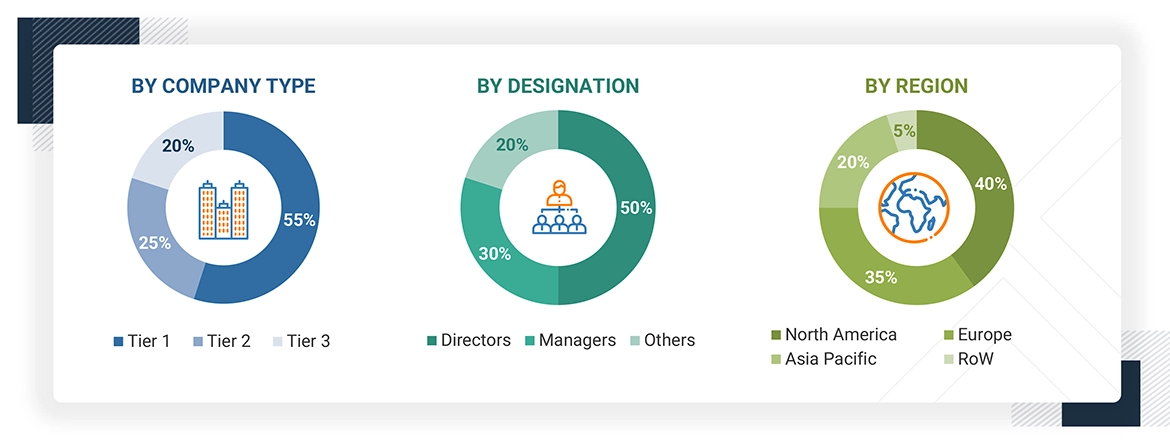
Note: Tier 1, Tier 2, and Tier 3 companies are classified based on their market revenue in 2024, available in the public domain, product portfolios, and geographical presence.
Other designations include consultants and sales, marketing, and procurement managers.
To know about the assumptions considered for the study, download the pdf brochure
| COMPANY NAME | DESIGNATION | |
|---|---|---|
| Quaker Chemical Corporation | Senior Manager | |
| BP p.l.c. | Innovation Manager | |
| TotalEnergies SE | Vice President | |
| FUCHS SE | Production Supervisor | |
| Idemitsu Kosan Co., Ltd. | Sales Manager | |
Market Size Estimation
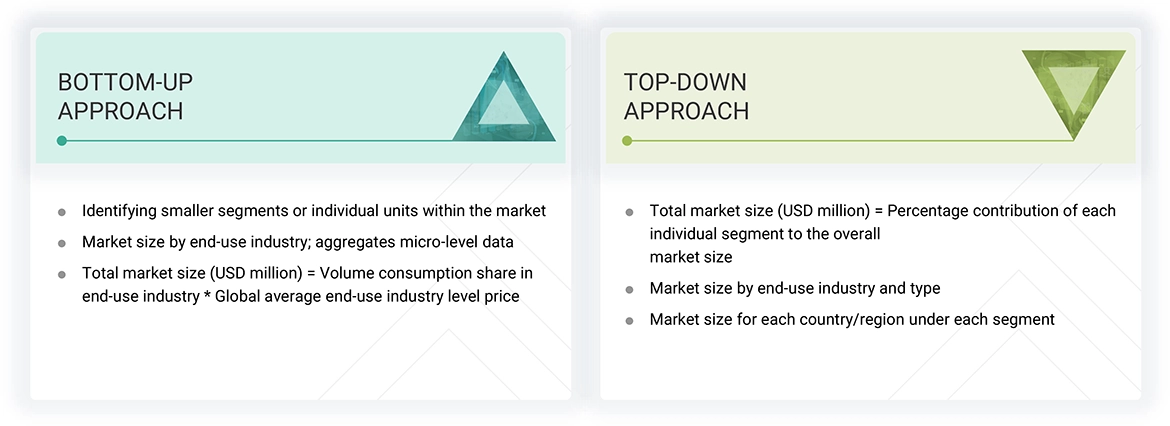
Both top-down and bottom-up approaches were used to estimate and validate the total size of the metalworking fluids market. These methods were also used extensively to estimate the size of various subsegments in the market. The research methodology used to estimate the market size includes the following:
- The key players in the industry have been identified through extensive secondary research.
- The supply chain of the industry has been determined through primary and secondary research.
- All percentage shares, splits, and breakdowns have been determined using secondary sources and verified through primary sources.
- All possible parameters that affect the markets covered in this research study have been accounted for, viewed in extensive detail, verified through primary research, and analyzed to obtain the final quantitative and qualitative data.
Data Triangulation
After arriving at the overall market size—using the market size estimation processes as explained above—the market was split into several segments and subsegments. To complete the overall market engineering process and arrive at the exact statistics of each market segment and subsegment, data triangulation and market breakdown procedures were employed, wherever applicable. The data was triangulated by studying various factors and trends from both the demand and supply sides in the metalworking fluids industry.
Market Definition
According to the United Kingdom Lubricants Association (UKLA), metalworking fluids are specialized liquids or gels used in metalworking processes to lubricate, cool, and protect metal surfaces and cutting tools during machining, shaping, and forming operations. They are often referred to as cutting fluids or coolant fluids. These fluids are essential for improving metalworking operations’ durability, quality, and efficiency in a variety of sectors. Metalworking fluids come in a variety of formulas designed for certain materials and machining techniques.
Stakeholders
- Metalworking Fluid Manufacturers
- Metalworking Fluid Suppliers
- Raw Material Suppliers
- Service Providers
- Government Bodies
- Metalworking Fluid Distributors
Report Objectives
- To define, describe, and forecast the metalworking fluids market in terms of value and volume
- To provide detailed information regarding the major factors (drivers, opportunities, restraints, and challenges) influencing the growth of the market
- To estimate and forecast the market size by type, product type, end-use industry, and region
- To forecast the size of the market with respect to five main regions (along with key countries of each region): Asia Pacific, North America, Europe, the Middle East & Africa, and South America
- To strategically analyze micromarkets with respect to individual growth trends, prospects, and their contribution to the overall market
- To analyze opportunities in the market for stakeholders and provide a competitive landscape of the market leaders
- To analyze competitive developments, such as product launches, acquisitions, partnerships, and expansions
- To strategically profile the key players and comprehensively analyze their core competencies
Get the Full Metalworking Fluids Market Report
Full forecast, segment splits, and company analysis for all Metalworking Fluids Market.
- China Metalworking Fluids Market
- Japan Metalworking Fluids Market
- India Metalworking Fluids Market
- South Korea Metalworking Fluids Market
- Germany Metalworking Fluids Market
- UK Metalworking Fluids Market
- France Metalworking Fluids Market
- Spain Metalworking Fluids Market
- Italy Metalworking Fluids Market
- Russia Metalworking Fluids Market
- Canada Metalworking Fluids Market
- Mexico Metalworking Fluids Market
- Brazil Metalworking Fluids Market
- Argentina Metalworking Fluids Market
- Egypt Metalworking Fluids Market
- South Africa Metalworking Fluids Market
- Rest Of Europe Metalworking Fluids Market
- Rest Of Asia Pacific Metalworking Fluids Market
- GCC Countries Metalworking Fluids Market
- -Rest Of The GCC Countries Metalworking Fluids Market
- Rest Of South America Metalworking Fluids Market
Need a Tailored Report?
Customize this report to your needs
Get 10% FREE Customization
Customize This Report
