
Rest Of Asia Pacific Cancer Biomarkers Market (2026-2031)

The Rest Of Asia Pacific Cancer Biomarkers Market was valued at $660.3 Million in 2026 and projected to reach to $1179.8 Million by 2031, representing a compound annual growth rate of 10.2%. The Rest Of Asia Pacific cancer biomarkers market is positioned for substantial growth through 2031, driven by escalating cancer burden and healthcare modernization across emerging economies.


| Market Size in | USD 26.32 MN |
| Market Forecast in | |
| CAGR | |
| Forecast Period | |
| Units Considered | Value (USD MN) |
Rest Of Asia Pacific Cancer Biomarkers Market Trends and Insights
- Rest Of Asia Pacific represents a critical growth region driven by increasing cancer prevalence, rising healthcare investments, and expanding diagnostic infrastructure across emerging economies.
- The region's market growth is supported by growing adoption of precision medicine and enhanced awareness of early cancer detection through biomarker testing. Rest Of Asia Pacific's 10.2% compound annual growth rate reflects strong demand for advanced diagnostic solutions and personalized treatment approaches.
- Throughout the forecast period from 2026 to 2031, Rest Of Asia Pacific is expected to benefit from improving healthcare accessibility, government initiatives supporting cancer screening programs, and increasing partnerships between regional healthcare providers and global biomarker developers.
- Rest Of Asia Pacific's market trajectory demonstrates the region's commitment to modernizing oncology care and integrating biomarker-driven diagnostics into clinical practice..
Key Market Statistics
- CAGR (2026-2031) 10.2% CAGR
- Market Size, 2026 ~USD 660.3 Million
- Forecast, 2031 ~USD 1179.8 Million
- Country Rest Of Asia Pacific
Rest Of Asia Pacific Cancer Biomarkers Market Overview
Rapid Market Expansion :
Rest Of Asia Pacific cancer biomarkers market is projected to grow from USD 660.3 million in 2026 to USD 1,179.8 million by 2031, representing a robust 10.2% CAGR, outpacing many developed markets.
Rising Cancer Prevalence :
Increasing cancer incidence across emerging economies in Asia Pacific is driving demand for advanced diagnostic biomarkers and early detection solutions in countries with growing healthcare awareness.
Healthcare Infrastructure Investment :
Expanding diagnostic infrastructure and rising healthcare expenditures across Rest Of Asia Pacific nations are creating opportunities for biomarker adoption in clinical laboratories and research institutions.
Emerging Market Potential :
Untapped markets in smaller Asia Pacific economies present significant growth opportunities as healthcare systems modernize and precision medicine adoption accelerates in the region.
Rest Of Asia Pacific Cancer Biomarkers Market Dynamics
- Increasing investments in diagnostic infrastructure, coupled with rising awareness of precision medicine benefits, are accelerating biomarker adoption in clinical settings.
- Government initiatives supporting cancer screening programs and improved healthcare accessibility are further propelling market expansion. Key growth catalysts include expanding middle-class populations with greater healthcare spending capacity, rising collaboration between international diagnostic companies and local healthcare providers, and growing emphasis on early cancer detection.
- The region's younger demographic profile and increasing prevalence of lifestyle-related cancers create sustained demand for innovative biomarker solutions, positioning Rest Of Asia Pacific as a critical growth engine for the global cancer biomarkers market..
Market Ecosystem
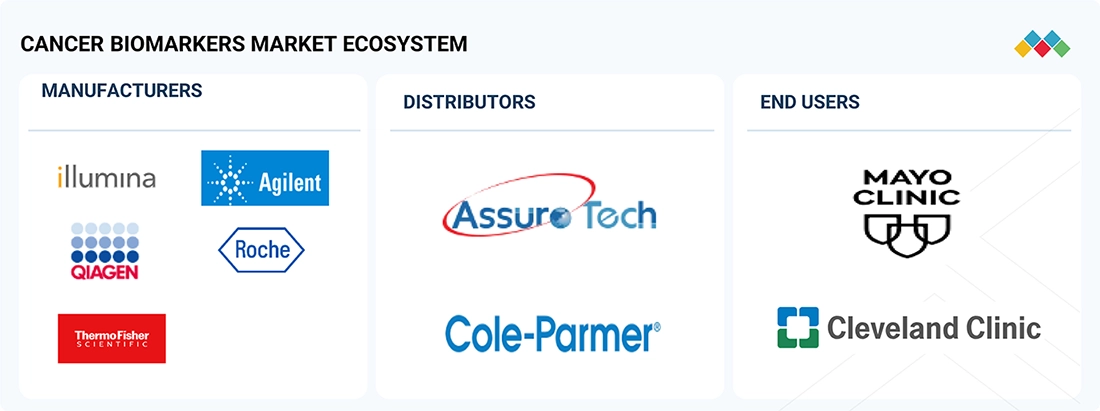
CANCER BIOMARKERS MARKET: COMMERCIAL USE CASES ACROSS INDUSTRIES
| COMPANY | USE CASE DESCRIPTION | BENEFITS |
|---|---|---|
 |
Offers comprehensive oncology diagnostic solutions across immunoassay, molecular diagnostics, sequencing, and tissue-based testing (IHC/ISH). Supports biomarker testing across the full patient journey from risk assessment and screening to therapy selection and monitoring. | Enables personalized treatment decisions | Improves diagnostic accuracy | Supports companion diagnostics | Enhances patient outcomes through precise and timely clinical insights |
 |
Provides advanced genomics and proteomics platforms, including NGS, PCR, and mass spectrometry, for biomarker discovery, validation, and clinical research applications. Supports multi-omics workflows in oncology research. | Accelerates biomarker discovery and translational research | Enables early detection and therapy monitoring | Improves efficiency in research-to-clinical pipeline development |
 |
Delivers next-generation sequencing (NGS) platforms and consumables for genomic profiling of tumors, enabling identification of mutations and molecular signatures in cancer. | Supports precision oncology | Enables comprehensive genomic profiling | Facilitates targeted therapy selection | Improves understanding of tumor biology |
 |
Offers solutions across pathology (IHC/ISH), genomics, and proteomics, including companion diagnostics and tissue-based biomarker analysis systems. Enables integration of molecular and histopathological data. | Enhances tissue-based biomarker analysis | Improves diagnostic accuracy in oncology | Supports drug development (CDx) | Enables standardized lab workflows |
 |
Provides end-to-end “sample-to-insight” solutions, including PCR assays, NGS workflows, and bioinformatics tools for detecting and analyzing cancer biomarkers such as gene mutations and circulating tumor cells. | Enables rapid and sensitive biomarker detection | Supports liquid biopsy and molecular diagnostics | Improves turnaround time | Facilitates precision medicine through integrated workflows |
Logos and trademarks shown above are the property of their respective owners. Their use here is for informational and illustrative purposes only.
Related Ecosystem
Advanced Genetic Sequencing
- Polymerase Chain Reaction (PCR)
- Reagents
- Assay Kits
- Bioinformatics
- Flow Cytometry
- Thermo Fisher Scientific Inc.
- Illumina, Inc.
- Agilent Technologies, Inc.
- Qiagen N.V.
- Danaher Corporation
In Vitro Diagnostics
- Polymerase Chain Reaction (PCR)
- Enzyme-Linked Immunosorbent Assay (ELISA)
- Dna Microarrays
- Assay Kits
- Microarrays
- ROCHE HOLDINGS AG
- Thermo Fisher Scientific Inc.
- Danaher Corporation
- Abbott Laboratories
- Biomerieux s.a.
Key Takeaways
- Rest Of Asia Pacific cancer biomarkers market valued at USD 660.3 million in 2026, expanding to USD 1,179.8 million by 2031
- Rest Of Asia Pacific demonstrates a 10.2% CAGR, driven by rising cancer incidence and precision medicine adoption
- Rest Of Asia Pacific benefits from expanding healthcare infrastructure and government-backed cancer screening initiatives
- Rest Of Asia Pacific's growth supported by increasing partnerships between regional providers and global biomarker technology leaders
Cancer Biomarkers Market Report Scope
| Report Metric | Details |
|---|---|
| Base Year | 2026 |
| Fastest Growing Segment | LUNG CANCER (Cancer Type) |
| Forecast Period | 2026–2031 |
| Growth Rate | CAGR of 11.6% from 2026 to 2031 |
| Largest Segment | OMICS TECHNOLOGIES (Profiling Technology) |
| Market Size Base Year (Billions) | ~USD 28.2 (2026) |
| Revenue Forecast (Billions) | ~USD 48.82 (2031) |
| Segments Covered | Profiling Technology, Type, Cancer Type, Products |
Rest Of Asia Pacific Cancer Biomarkers Market Report Segmentation
4 segment dimensions are covered across the global market.
By Profiling Technology
- Imaging Technologies
- Omics Technologies
By Type
- 2D Gel Electrophoresis
- Antibodies
- Biopsy Instruments
- Computed Tomography (Ct)
- Genomics
- Imaging Instruments
- Immunoassay
- In-Situ Hybridization (Ish)
- Kits And Reagents
- Magnetic Resonance Imaging (Mri)
- Mammography
- Mass Spectrometry
- Next Generation Sequencing
- Other Omics Technologies
- Other Proteomics Technologies
- Pathology-Based Instrument
- Polymerase Chain Reaction
- Positron Emission Tomography (Pet)
- Probes
- Protein Microarray
- Proteomics
- Ultrasound Imaging
By Cancer Type
- Bladder Cancer
- Breast Cancer
- Colorectal Cancer
- Kidney Cancer
- Leukemia
- Lung Cancer
- Melanoma
- Non-Hodgkin'S Lymphoma
- Other Cancer Types
- Prostate Cancer
- Thyroid Cancer
By Products
- Bioinformatics Software
- Consumables
- Instruments
Target Audience
- Diagnostic Company Executives : Need regional market sizing and growth forecasts for Rest Of Asia Pacific to guide product development, market entry strategies, and resource allocation decisions in this high-potential emerging market.
- Healthcare Investment Firms : Require detailed market analysis of Rest Of Asia Pacific cancer biomarkers sector to identify investment opportunities, assess portfolio company growth potential, and evaluate regional expansion viability.
- Pharmaceutical & Biotech Leaders : Seek comprehensive Rest Of Asia Pacific market intelligence to inform companion diagnostic development, clinical trial planning, and commercialization strategies for cancer biomarker solutions.
- Healthcare Policy Makers : Need market data on Rest Of Asia Pacific cancer diagnostics to develop evidence-based healthcare policies, allocate resources for cancer screening programs, and support diagnostic infrastructure development.
- Market Research & Strategy Teams : Require region-specific forecasts and insights for Rest Of Asia Pacific to support competitive analysis, market positioning, and strategic planning for biomarker-related business initiatives.
Key Companies in the Rest Of Asia Pacific Cancer Biomarkers Market
| Company | HQ | Ownership | Strongest segments |
|---|---|---|---|
| NANOSTRING TECHNOLOGIES, INC | United States | ||
| CELL SIGNALING TECHNOLOGY, INC. | United States | ||
| TRANSGENOMIC, INC. | United States | ||
| SANOFI | Spain | ||
| SIEMENS HEALTHINEERS AG | Germany | Public Company | Imaging-based biomarker systems and software,In-vitro diagnostics instruments and consumables,Varian oncology platforms and services, |
| BECTON, DICKINSON AND COMPANY | United States | Public Company | Instruments (flow cytometers, analyzers, automation),Consumables & reagents (antibodies, kits, collection products, media), |
| MYRIAD GENETICS | United States | Public Company | Hereditary cancer and germline oncology tests (e.g., MyRisk, BRACAnalysis CDx),Tumor-based prognostic and companion diagnostics (MyChoice CDx, Prolaris, EndoPredict, Precise Tumor),Other oncology-adjacent genomics and lab services within cancer workflows, |
| SYSMEX CORPORATION | Japan | Public Company | Instruments (hematology, coagulation, cell analysis platforms),Consumables (reagents, calibrators, controls, software-linked services), |
| HOLOGIC, INC. | United States | Private Company | Breast cancer imaging systems and software,Biopsy guidance systems and markers,Cytology and related consumables (ThinPrep), |
NANOSTRING TECHNOLOGIES, INC
NanoString Technologies develops and commercializes molecular analysis platforms for gene expression profiling and genomic research.
CELL SIGNALING TECHNOLOGY, INC.
Cell Signaling Technology Inc. produces research antibodies, proteins, and assay kits for cell biology and life sciences research.
TRANSGENOMIC, INC.
Transgenomic Inc. provides genetic testing and molecular diagnostics solutions for disease detection and management.
SANOFI
Sanofi is a multinational pharmaceutical company developing and marketing medicines, vaccines, and diagnostic products.
SIEMENS HEALTHINEERS AG
Siemens Healthineers AG is a global medical technology company providing diagnostic imaging, laboratory diagnostics, and healthcare IT solutions.
BECTON, DICKINSON AND COMPANY
Becton, Dickinson and Company manufactures and distributes medical devices, laboratory equipment, and diagnostic systems.
MYRIAD GENETICS
Myriad Genetics is a molecular diagnostics company providing genetic testing and precision medicine solutions for cancer and other diseases.
SYSMEX CORPORATION
Sysmex Corporation manufactures and sells hematology, hemostasis, and clinical chemistry diagnostic systems and reagents.
HOLOGIC, INC.
Hologic Inc. develops and markets diagnostic and medical imaging systems, particularly for women's health and cancer detection.
Reasons to Buy this Report
- Market Size & Growth Validation : Obtain precise market valuation for Rest Of Asia Pacific (USD 660.3M in 2026) with 10.2% CAGR projections through 2031, enabling accurate business planning and investment decisions specific to this high-growth region.
- Regional Opportunity Identification : Identify emerging market segments and untapped opportunities across Rest Of Asia Pacific economies where healthcare infrastructure expansion and cancer prevalence create favorable conditions for biomarker product launches.
- Competitive Landscape Intelligence : Understand regional competitive dynamics, market entry barriers, and strategic positioning requirements specific to Rest Of Asia Pacific to develop targeted go-to-market strategies and partnership approaches.
- Investment & Expansion Planning : Support capital allocation decisions and expansion strategies with data-driven insights on Rest Of Asia Pacific market potential, growth drivers, and regional healthcare investment trends through 2031.
- Stakeholder Communication : Leverage credible market data and forecasts for Rest Of Asia Pacific to communicate growth potential to investors, board members, and partners, strengthening business cases for regional initiatives.
Frequently asked questions
What is the current market size of cancer biomarkers in Rest Of Asia Pacific?
Rest Of Asia Pacific's cancer biomarkers market is valued at USD 660.3 million in 2026 and is projected to grow to USD 1,179.8 million by 2031.
What is the expected growth rate for Rest Of Asia Pacific cancer biomarkers market?
Rest Of Asia Pacific's cancer biomarkers market is expected to grow at a compound annual growth rate (CAGR) of 10.2% from 2026 to 2031.
What factors are driving growth in Rest Of Asia Pacific's cancer biomarkers market?
Rest Of Asia Pacific's market growth is driven by increasing cancer prevalence, rising healthcare investments, expanding diagnostic infrastructure, adoption of precision medicine, and government-supported cancer screening programs.
How does Rest Of Asia Pacific's growth compare to other regions?
Rest Of Asia Pacific's 10.2% CAGR reflects strong regional momentum, supported by emerging market dynamics and increasing healthcare modernization across the region's diverse economies.
What opportunities exist for biomarker companies in Rest Of Asia Pacific?
Rest Of Asia Pacific offers significant opportunities through partnerships with regional healthcare providers, expansion of diagnostic networks, and integration of biomarker testing into national cancer control programs.
RESEARCH METHODOLOGY
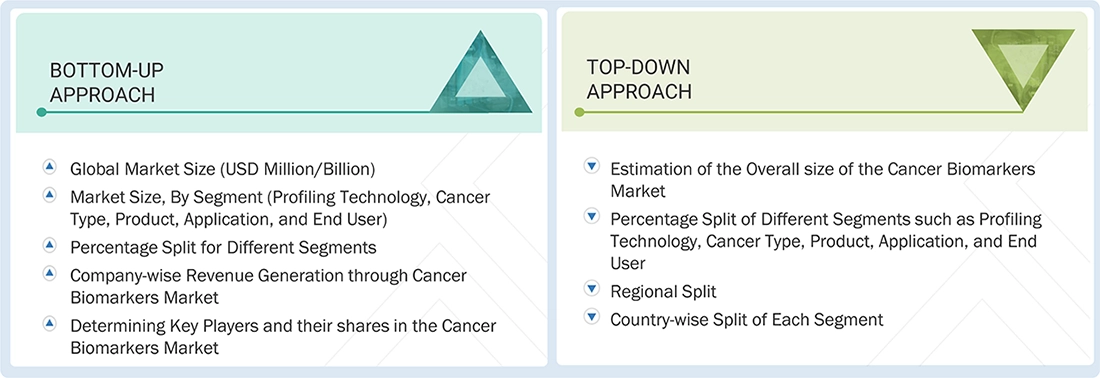
The objective of the study is to analyze key market dynamics, including drivers, opportunities, restraints, challenges, and key players' strategies. To track company developments such as acquisitions, product launches, expansions, agreements, and partnerships of the leading players, the competitive landscape of the cancer biomarkers market will be analyzed, and market players will be evaluated on various parameters within the broad categories of business and product strategy. Top-down and bottom-up approaches were used to estimate the market size. To estimate the market size of segments and subsegments, the market breakdown and data triangulation were used.
The four steps involved in estimating the market size are
Secondary Research
In the secondary research process, various secondary sources such as annual reports, press releases & investor presentations of companies, white papers, certified publications, articles by recognized authors, gold-standard & silver-standard websites, regulatory bodies, and databases (such as D&B Hoovers, Bloomberg Business, and Factiva) were referred to identify and collect information for this study.
Primary Research
In the primary research process, various sources from both the supply and demand sides were interviewed to obtain qualitative and quantitative information for this report. Primary sources were mainly industry experts from the core and related industries, as well as preferred suppliers, manufacturers, distributors, service providers, technology developers, researchers, and organizations across all segments of this industry’s value chain. In-depth interviews were conducted with primary respondents, including key industry participants, subject-matter experts, C-level executives of key market players, and industry consultants, to obtain and verify critical qualitative and quantitative information and to assess prospects.
The following is a breakdown of the primary respondents
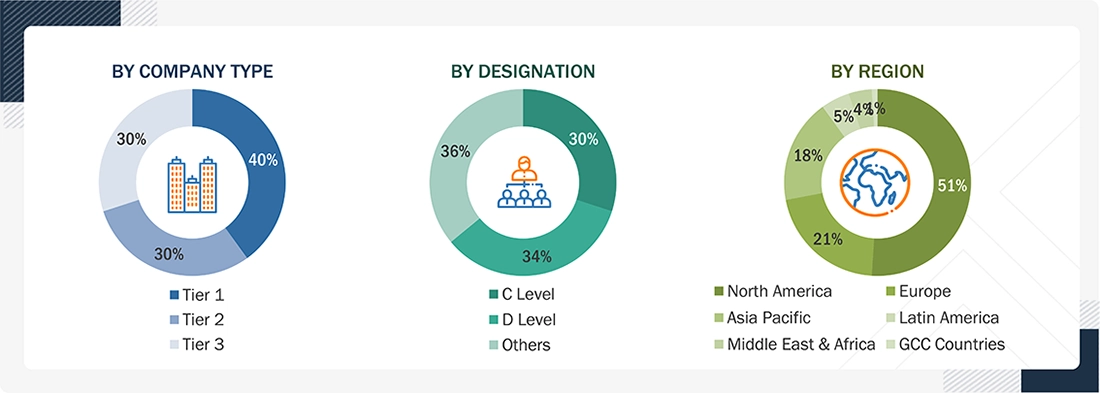
Note 1: Others include sales, marketing, and product managers.
Note 2: Companies are classified into tiers based on their total revenues. As of 2024, Tier 1 = >USD 100 million, Tier 2 = USD 10 million to USD 100 million, and Tier 3 = <USD 10 million.
|
COMPANY NAME |
DESIGNATION |
|
Thermo Fisher (US) |
Sales Manager |
|
F. Hoffmann-La Roche AG (Switzerland) |
Product Manager |
To know about the assumptions considered for the study, download the pdf brochure
Market Size Estimation
Both top-down and bottom-up approaches were used to estimate and validate the total market size of cancer biomarkers. These methods were also used extensively to estimate the size of various subsegments in the market. The research methodology used to estimate the market size includes the following:
- The key players in the industry have been identified through extensive secondary research
- The revenues generated by leading players operating in the cancer biomarkers market have been determined through primary and secondary research
- All percentage shares, splits, and breakdowns have been determined using secondary sources and verified through primary sources
Cancer Biomarkers Market : Top-Down and Bottom-Up Approach
Data Triangulation
After arriving at the overall market size using the process described above, the total market was segmented into several segments and subsegments. To complete the overall market engineering process and arrive at the exact statistics for all segments and subsegments, data triangulation and market breakdown procedures were employed, wherever applicable. The data was triangulated by studying various factors and trends from both the demand and supply sides.
Market Definition
Cancer biomarkers are biological molecules produced by the body or a tumor in a person with cancer. Cancer biomarker testing helps differentiate alterations in the tumor. Biomarkers may be produced by the cancer tissue itself or by other cells in the body in response to cancer. It can also be found in the blood, stool, urine, tumor tissue, or other tissues or bodily fluids. Biomarkers can be DNA, RNA, proteins, or metabolomic profiles specific to the tumor. They enhance cancer detection and facilitate high-speed, noninvasive diagnosis using profiling technologies such as omics, imaging, immunoassays, and cytogenetics.
Key Stakeholders
- Product Manufacturers, Distributors, and Suppliers
- Diagnostic Laboratories
- Research Laboratories and CROs
- Ambulatory Testing Centers
- Contract Testing Laboratories
- Academic Universities and Medical Research Centers
- Research and Development (R&D) Centers
Report Objectives
- To define, segment, and forecast the cancer biomarkers market by profiling technology, cancer type, product, application, end user, and region
- To provide detailed information regarding the major factors influencing market growth (such as drivers, restraints, opportunities, and challenges)
- To analyze micromarkets with respect to individual growth trends, prospects, and contributions to the overall market
- To analyze market opportunities for stakeholders and provide details of the competitive landscape for key players
- To forecast the size of the market segments with respect to six regions: North America, Europe, Asia Pacific, Latin America, the Middle East & Africa, and GCC Countries
- To profile key players and comprehensively analyze their product portfolios, market positions, and core competencies
- To benchmark players within the market using the proprietary company evaluation matrix framework, which analyzes market players on various parameters within the broad categories of business and product excellence
- To study the impact of AI on the market, along with the macroeconomic outlook for each region
Available customizations:
MarketsandMarkets offers the following customizations for this market report.
Product Analysis
- Product matrix, which provides a detailed comparison of the product portfolio of each company in the cancer biomarkers market
Country Information
- Additional country-level analysis of the cancer biomarkers market
Company Profiles
- Additional five company profiles of players operating in the cancer biomarkers market.
Get the Full Cancer Biomarkers Market Report
Full forecast, segment splits, and company analysis for all Cancer Biomarkers Market.
- US Cancer Biomarkers Market
- Canada Cancer Biomarkers Market
- Germany Cancer Biomarkers Market
- UK Cancer Biomarkers Market
- France Cancer Biomarkers Market
- Italy Cancer Biomarkers Market
- Spain Cancer Biomarkers Market
- China Cancer Biomarkers Market
- Japan Cancer Biomarkers Market
- India Cancer Biomarkers Market
- Australia Cancer Biomarkers Market
- Brazil Cancer Biomarkers Market
- Mexico Cancer Biomarkers Market
- Roe Cancer Biomarkers Market
- Rest Of Latin America Cancer Biomarkers Market
Need a Tailored Report?
Customize this report to your needs
Get 10% FREE Customization
Customize This Report
