
Japan Organ Preservation Market (2025-2030)

The Japan Organ Preservation Market was valued at $4.88 Million in 2025 and projected to reach to $6.11 Million by 2030, representing a compound annual growth rate of CAGR 4.6%. Japan's organ preservation market is positioned for moderate but consistent growth through 2030, driven by the nation's aging population and rising incidence of organ failure diseases.


| Market Size in | USD 26.32 MN |
| Market Forecast in | |
| CAGR | |
| Forecast Period | |
| Units Considered | Value (USD MN) |
Japan Organ Preservation Market Trends and Insights
- Japan's aging population and increasing prevalence of organ failure conditions are driving demand for advanced preservation technologies that extend organ viability and improve transplant outcomes.
- The market in Japan reflects the country's commitment to enhancing transplantation infrastructure and adopting innovative preservation solutions to address critical organ shortage challenges. In Japan, the organ preservation market is characterized by steady adoption of hypothermic and normothermic preservation systems among leading transplant centers.
- Japan's healthcare system prioritizes organ transplantation efficiency, and preservation technologies play a vital role in maximizing the utility of available donor organs.
- Between 2025 and 2030, Japan is expected to see increased investment in preservation equipment and solutions as hospitals modernize their transplant programs. Japan's regulatory environment and emphasis on clinical excellence support market expansion through 2030.
- The country's focus on reducing organ discard rates and improving transplant success rates positions Japan as a key market for organ preservation innovation in the Asia Pacific region..
Key Market Statistics
- CAGR (2025-2030) CAGR 4.6%
- Market Size, 2025 ~USD 4.88 Million
- Forecast, 2030 ~USD 6.11 Million
- Country Japan
Japan Organ Preservation Market Overview
Market Size & Growth :
Japan's organ preservation market is valued at $4.88 million in 2025 and is projected to reach $6.11 million by 2030, representing a steady CAGR of 4.6% over the forecast period.
Aging Population Driver :
Japan's rapidly aging demographic is significantly increasing the prevalence of organ failure conditions, creating sustained demand for advanced preservation technologies and transplant solutions.
Technology Adoption :
Japanese healthcare institutions are increasingly adopting innovative organ preservation solutions to extend organ viability windows and improve transplant success rates and patient outcomes.
Regulatory Environment :
Japan's stringent healthcare regulations and focus on transplant safety standards are driving investment in certified preservation technologies and standardized protocols across medical facilities.
Japan Organ Preservation Market Dynamics
- Healthcare providers are increasingly investing in advanced preservation technologies to address the critical shortage of viable organs and improve transplant outcomes.
- The market will benefit from continued technological innovation, regulatory support for transplant programs, and growing awareness among medical professionals regarding the benefits of extended organ preservation.
- However, growth may be tempered by high equipment costs and the need for specialized training in Japanese medical institutions..
Market Ecosystem
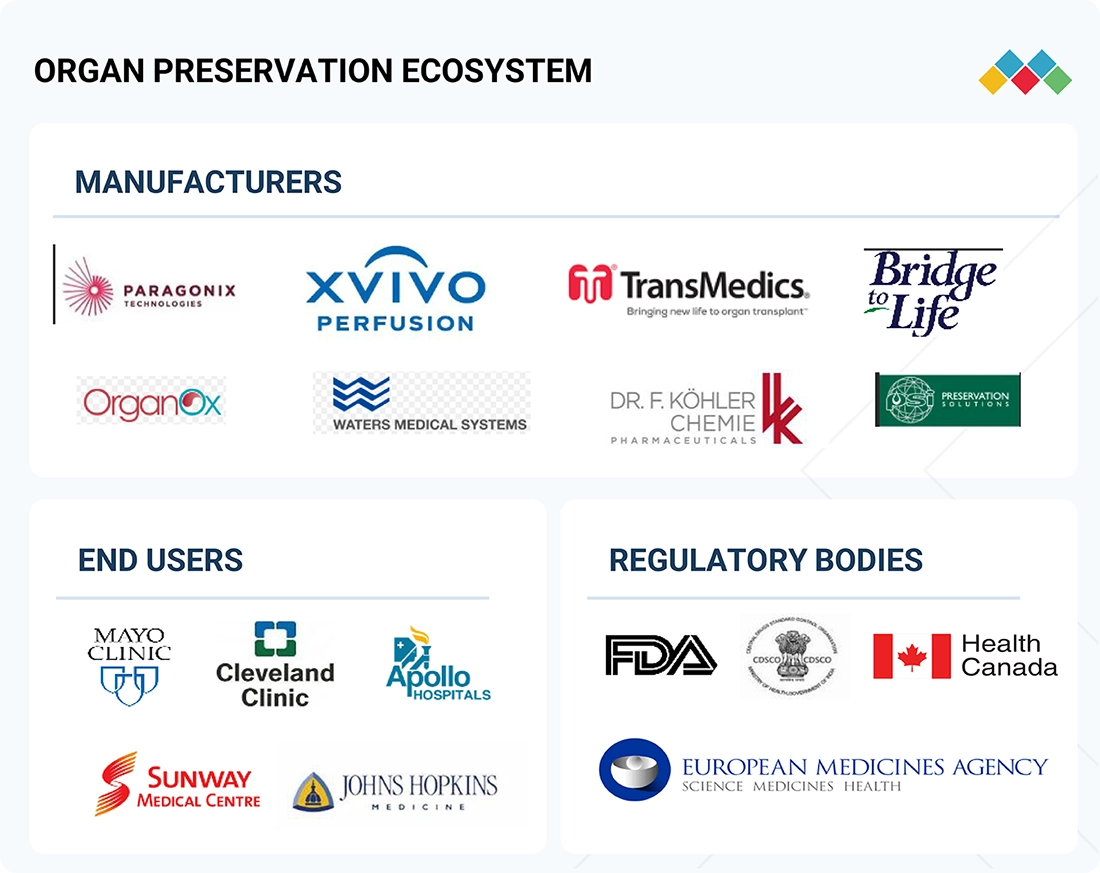
Organ Preservation Market: COMMERCIAL USE CASES ACROSS INDUSTRIES
| COMPANY | USE CASE DESCRIPTION | BENEFITS |
|---|---|---|
 |
Ex vivo lung perfusion (EVLP) systems for lung transplantation | Extends preservation time, allows assessment of marginal donor lungs, improves transplant outcomes |
 |
SherpaPak cardiac and lung transport systems using controlled hypothermic preservation | Stable temperature control, reduces ischemic injury, improves graft survival rates |
 |
Organ care system for heart, lung, and liver – portable normothermic perfusion | Maintains organs in near-physiologic state, increases viable donor pool, reduces post-transplant complications |
 |
Preservation solutions (Belzer UW, HTK) for liver, kidney, and pancreas | Proven clinical use, maintains cellular integrity, reduces cold ischemia injury |
 |
Composite materials in unmanned aerial vehicles | Lightweight design, higher endurance, improved stealth capabilities |
Logos and trademarks shown above are the property of their respective owners. Their use here is for informational and illustrative purposes only.
Related Ecosystem
Medical Devices
- Polymerase Chain Reaction (PCR)
- Magnetic Resonance Imaging (MRI)
- Disposable Autoinjectors
- Pulse Oximeters
- Blood Pressure Monitors
- Medtronic plc
- Abbott Laboratories
- Stryker Corporation
- Becton, Dickinson and Company
- JOHNSON & JOHNSON
Key Takeaways
- Japan's organ preservation market is valued at $4.88 million in 2025 and will reach $6.11 million by 2030 at a 4.6% CAGR.
- Japan's aging demographic and rising organ failure prevalence are key drivers of preservation technology adoption.
- Japan's transplant centers are increasingly investing in hypothermic and normothermic preservation systems to improve outcomes.
- Japan's regulatory focus on reducing organ discard rates supports sustained market growth through 2030.
Organ Preservation Market Report Scope
| Report Metric | Details |
|---|---|
| Base Year | 2025 |
| Fastest Growing Segment | PERFADEX (Solution) |
| Forecast Period | 2025–2030 |
| Growth Rate | CAGR of 6.8% from 2025 to 2030 |
| Largest Segment | ORGAN TRANSPLANT CENTERS (End User) |
| Market Size Base Year (Billions) | ~USD 0.22 (2025) |
| Revenue Forecast (Billions) | ~USD 0.3 (2030) |
| Segments Covered | Solution, Technique, Organ Type, End User |
Japan Organ Preservation Market Report Segmentation
4 segment dimensions are covered across the global market.
By Solution
- Custodiol Htk
- Other Solutions
- Perfadex
- University Of Wisconsin Solution
By Technique
- Hypothermic Machine Perfusion
- Normothermic Machine Perfusion
- Static Cold Storage
By Organ Type
- Heart
- Kidneys
- Liver
- Lungs
- Other Organs
By End User
- Hospitals
- Organ Transplant Centers
- Specialty Clinics
JAPAN: ORGAN PRESERVATION MARKET, BY END USER, 2023–2030
| Segment | 2023 | 2024 | 2025 | 2026 | 2027 | 2028 | 2029 | 2030 | CAGR (%) |
|---|---|---|---|---|---|---|---|---|---|
| HOSPITALS | 0.9 | 0.98 | 1.02 | 1.06 | 1.09 | 1.15 | 1.2 | 1.27 | 4.5 |
| ORGAN TRANSPLANT CENTERS | 3.82 | 4.19 | 4.36 | 4.53 | 4.69 | 4.96 | 5.21 | 5.53 | 4.8 |
| SPECIALTY CLINICS | 0.59 | 0.65 | 0.69 | 0.72 | 0.75 | 0.8 | 0.85 | 0.91 | 5.8 |
| TOTAL | 5.31 | 5.83 | 6.07 | 6.31 | 6.53 | 6.91 | 7.26 | 7.71 | 4.9 |
Target Audience
- Medical Device Manufacturers : Manufacturers need Japan-specific market data to assess market entry feasibility, competitive positioning, pricing strategies, and regulatory pathways for organ preservation technologies.
- Healthcare Investors : Investors require detailed Japan market analysis to evaluate investment opportunities, growth potential, and ROI projections in the organ preservation and transplant technology sectors.
- Hospital & Transplant Centers : Japanese medical institutions need market intelligence to benchmark procurement decisions, evaluate preservation technology options, and optimize transplant program investments.
- Pharmaceutical & Biotech Companies : Companies developing organ preservation solutions need Japan-specific market insights to guide R&D priorities, clinical trial planning, and commercialization strategies.
- Healthcare Consultants & Analysts : Consultants require comprehensive Japan market data to support client advisory services, strategic planning, competitive analysis, and market opportunity assessments.
Key Companies in the Japan Organ Preservation Market
| Company | HQ | Ownership | Strongest segments |
|---|---|---|---|
| KINDRED HEALTHCARE INC. | United States | Private Company | Static Cold Storage–linked care (all solutions),Hypothermic machine perfusion–linked care,Normothermic perfusion–linked care, |
| XVIVO PERFUSION AB | Sweden | Public Company | Perfadex Plus and lung preservation solutions (incl. STEEN Solution),XPS EVLP systems, lung kits, organ chambers, cannula sets,Kidney Assist (Transport and multi-mode) platforms and related solutions, |
| TRANSMEDICS, INC. | United States | Public Company | OCS Heart,OCS Lung,OCS Liver, |
| BIOLIFE SOLUTIONS, INC. | United States | Public Company | HypoThermosol FRS (hypothermic preservation media),CryoStor Freeze Media,evo Shipping Containers (cold-chain transport), |
| SHANGHAI GENEXT MEDICAL TECHNOLOGY CO., LTD. | China | Private Company | UW and Custodial HTK-equivalent preservation solutions,Perfadex-type and lung/heart-focused perfusion solutions,Preservation and transport devices (static cold storage, hypothermic, normothermic platforms), |
KINDRED HEALTHCARE INC.
Kindred Healthcare Inc. is a United States-based private company founded in 1985 that operates as a major healthcare services provider with 64,200 employees.
XVIVO PERFUSION AB
XVIVO Perfusion AB is a Swedish public company founded in 1998 with 199 employees operating in the medical device and perfusion technology sector.
TRANSMEDICS, INC.
TransMedics, Inc. is a United States-based public company founded in 1998 with 898 employees specializing in organ preservation and transplant technology.
BIOLIFE SOLUTIONS, INC.
BioLife Solutions, Inc. is a United States-based public company founded in 1987 with 155 employees providing biopreservation solutions for cell and tissue therapies.
SHANGHAI GENEXT MEDICAL TECHNOLOGY CO., LTD.
Shanghai Genext Medical Technology Co., Ltd. is a Chinese private company founded in 2004 with 62 employees specializing in medical technology development.
Reasons to Buy this Report
- Market-Specific Sizing : Access precise valuation data for Japan's organ preservation market with verified 2025 baseline ($4.88M) and 2030 forecast ($6.11M), enabling accurate budget allocation and investment planning.
- Demographic Insights : Understand how Japan's unique aging population dynamics and organ failure prevalence patterns create specific market opportunities and demand drivers distinct from global trends.
- Competitive Landscape : Identify key players, market share distribution, and competitive strategies specific to Japan's healthcare system, regulatory environment, and institutional procurement practices.
- Growth Trajectory Analysis : Leverage Japan-specific CAGR data (4.6%) to forecast revenue streams, market expansion timelines, and identify high-growth segments within the Japanese organ preservation sector.
- Strategic Market Entry : Develop informed go-to-market strategies for Japan with localized insights on regulatory requirements, hospital partnerships, reimbursement models, and technology adoption rates.
Frequently asked questions
What is the current size of Japan's organ preservation market?
Japan's organ preservation market is valued at $4.88 million in 2025.
What is the projected market size for Japan by 2030?
Japan's organ preservation market is projected to reach $6.11 million by 2030.
What is the growth rate of Japan's organ preservation market?
Japan's organ preservation market is expected to grow at a compound annual growth rate of 4.6% from 2025 to 2030.
What factors are driving growth in Japan's organ preservation market?
Japan's aging population, increasing organ failure prevalence, and healthcare system emphasis on transplant efficiency are primary growth drivers.
Which preservation technologies are most adopted in Japan?
Hypothermic and normothermic preservation systems are the primary technologies adopted by Japan's leading transplant centers.
RESEARCH METHODOLOGY
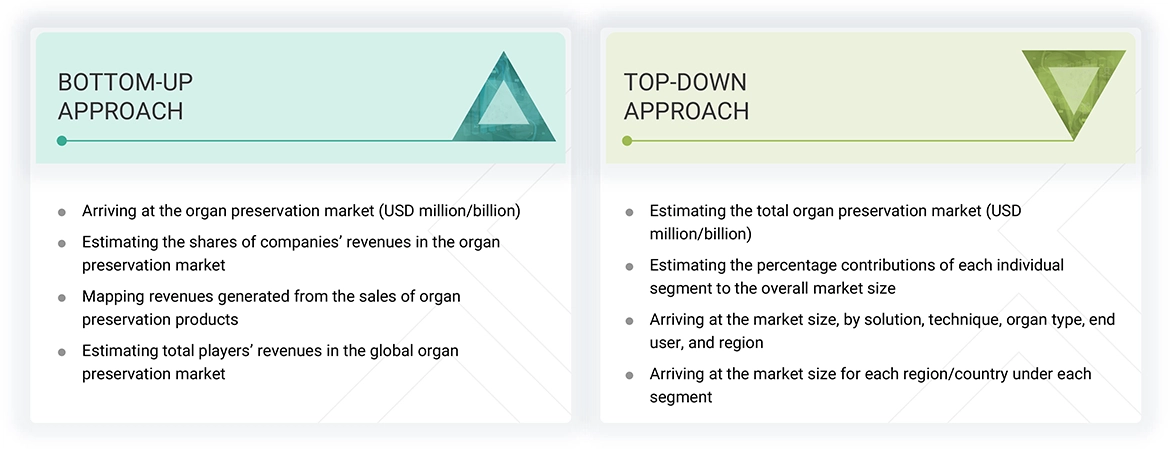
The study involved four major activities to estimate the current size of the organ preservation market—exhaustive secondary research collected information on the market and its different subsegments. The next step was to validate these findings, assumptions, and sizing with industry experts across the value chain through primary research. Both top-down and bottom-up approaches were employed to estimate the complete market size. Thereafter, market breakdown and data triangulation procedures were used to estimate the market size of the segments and subsegments.
Secondary Research
In the secondary research process, various sources were utilized to identify and gather information to study the organ preservation market. These sources included company annual reports, press releases, investor presentations, white papers, certified publications, and articles by recognized authors. We also consulted reputable websites, regulatory bodies, and databases such as D&B Hoovers, Bloomberg Business, and Factiva.
This research aimed to gather crucial information about the leading companies in the industry, market classification, and segmentation based on industry trends down to the most detailed levels, including geographic markets. Additionally, we focused on key developments related to the market. Through this secondary research, a database of key industry leaders was created.
Primary Research
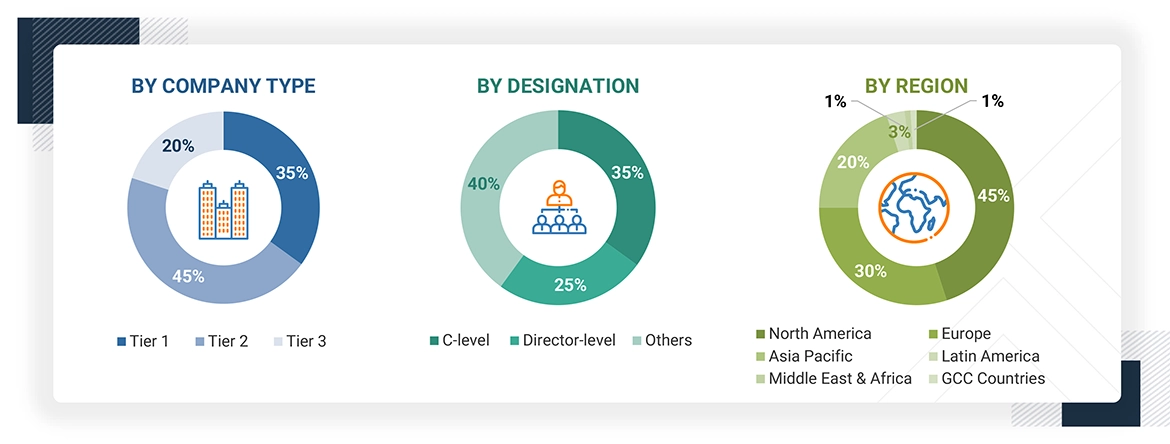
Extensive primary research was conducted after gathering information about the organ preservation market through secondary research. Several primary interviews were held with market experts from both the demand and supply sides across major regions, including North America, Europe, Asia Pacific, Latin America, and the Middle East & Africa. Data was collected through questionnaires, emails, and telephone interviews. The primary sources from the supply side included various industry experts, such as Chief Executive Officers (CEOs), Vice Presidents (VPs), Directors of business development, marketing, product development/innovation teams, and other key executives from manufacturers and distributors operating in the organ preservation market, as well as key opinion leaders.
The following is a breakdown of the primary respondents:
To know about the assumptions considered for the study, download the pdf brochure
Market Size Estimation
The research methodology used to estimate the size of the organ preservation market includes the following details.
The market sizing was undertaken from the global side.
Country-level Analysis: The size of the organ preservation market was obtained from the annual presentations of leading players and secondary data available in the public domain. Shares of products in the overall organ preservation market were obtained from secondary data and validated by primary participants to arrive at the total organ preservation market. Primary participants further validated the numbers.
Geographic Market Assessment (By Region & Country): The geographic assessment was done using the following approaches:
Approach 1: Geographic revenue contributions/splits of leading players in the market (wherever available) and respective growth trends
Approach 2: Geographic adoption trends for individual product segments by end users and growth prospects for each of the segments (assumptions and indicative estimates validated from primary interviews)
Industry experts contacted during primary research validated the assumptions and approaches at each point. Considering the limitations of data available from secondary research, revenue estimates for individual companies (for the overall organ preservation market and geographic market assessment) were ascertained based on a detailed analysis of their respective product offerings, geographic reach/strength (direct or through distributors or suppliers), and the shares of the leading players in a particular region or country.
Global Organ Preservation Market Size: Bottom-up Approach & Top-down Approach
Data Triangulation
The market was split into several segments and subsegments after arriving at the overall market size—using the market size estimation processes. Data triangulation and market breakdown procedures were employed to complete the overall market engineering process and determine each market segment's and subsegment's exact statistics. The data was triangulated by studying various factors and trends from both the demand and supply sides in the organ preservation market.
Market Definition
Organ preservation solutions are used to protect and preserve the viability of organs during organ transplantation. Utilizing distinct methodologies, organ preservation starts with the surgical removal of the donor organ and concludes with its placement in the recipient. Various solutions (such as the University of Wisconsin solution and Custodiol HTK) and techniques (such as static cold storage and hypothermic machine perfusion) are used to preserve organs.
Stakeholders
- Association of Organ Procurement Organizations (AOPO)
- American Transplant Congress (ATC)
- United Network for Organ Sharing (UNOS)
- Network & Alliance of Transplant Coordinators (NATCO)
- Consortium for Organ Preservation in Europe (COPE)
- European Society for Organ Transplantation (ESOT)
- Asian Society of Transplantation (AST)
- National Health Service (UK NHS)
- International Registry on Organ Donation and Transplantation (IRODaT)
- Global Observatory on Donation and Transplants (GODT)
- National Institutes of Health (NIH)
- World Health Organization (WHO)
- Organisation for Economic Co-operation and Development (OECD)
- Centers for Disease Control and Prevention (CDC)
- Annual Reports/SEC Filings, Investor Presentations, and Press Releases of Key Players
- White Papers, Journals/Magazines, and News Articles
Report Objectives
- To define, describe, and forecast the organ preservation market based on solution, technique, organ type, end user, and region
- To provide detailed information regarding the major factors influencing the growth of the market (drivers, restraints, opportunities, and challenges)
- To strategically analyze micromarkets1 with respect to individual growth trends, prospects, and contributions to the overall organ preservation market
- To analyze market opportunities for stakeholders and provide details of the competitive landscape for market players
- To estimate the market size and growth potential of the market segments with respect to six regions: North America, Europe, Asia Pacific, Latin America, the Middle East & Africa, and GCC Countries
- To profile the key players operating in the organ preservation market and comprehensively analyze their revenue shares and core competencies2
- To track and analyze competitive developments such as product launches & approvals, partnerships, agreements, collaborations, expansions, joint ventures, and acquisitions in the organ preservation market
- To benchmark players in the market using the proprietary Competitive Leadership Mapping framework, which analyzes market players on various parameters within the broad categories of business strategy and product offering
Get the Full Organ Preservation Market Report
Full forecast, segment splits, and company analysis for all Organ Preservation Market.
- US Organ Preservation Market
- Canada Organ Preservation Market
- Germany Organ Preservation Market
- France Organ Preservation Market
- UK Organ Preservation Market
- Spain Organ Preservation Market
- Italy Organ Preservation Market
- China Organ Preservation Market
- India Organ Preservation Market
- Australia Organ Preservation Market
- South Korea Organ Preservation Market
- Brazil Organ Preservation Market
- Mexico Organ Preservation Market
- GCC Countries Organ Preservation Market
- Roe Organ Preservation Market
- Rest Of Asia Pacific Organ Preservation Market
- Rest Of Europe Organ Preservation Market
- Rest Of Latin America Organ Preservation Market
Need a Tailored Report?
Customize this report to your needs
Get 10% FREE Customization
Customize This Report
