
Brazil Plant Growth Regulators Market (2024-2029)

The Brazil Plant Growth Regulators Market was valued at $221.4 Million in 2024 and projected to reach to $341.7 Million by 2029, representing a compound annual growth rate of 9.1%. Brazil's plant growth regulators market is poised for sustained expansion, driven by the country's dominant position in global agriculture and increasing adoption of precision farming technologies.


| Market Size in | USD 26.32 MN |
| Market Forecast in | |
| CAGR | |
| Forecast Period | |
| Units Considered | Value (USD MN) |
Brazil Plant Growth Regulators Market Trends and Insights
- This growth trajectory reflects Brazil's position as a global agricultural powerhouse, where advanced crop management practices are increasingly adopted across sugarcane, corn, and soybean production.
- Brazil's market is expanding faster than the global average of 7.2%, driven by rising demand for yield optimization and sustainable farming solutions. The 9.1% compound annual growth rate in Brazil underscores the country's commitment to modernizing agricultural productivity.
- Between 2024 and 2029, Brazil's plant growth regulators sector will benefit from increased mechanization, precision agriculture adoption, and regulatory support for crop enhancement technologies.
- Brazil's favorable climate, large arable land base, and export-oriented agricultural sector position the country as a critical growth engine for plant growth regulators in South America and globally..
Key Market Statistics
- CAGR (2024-2029) 9.1% CAGR
- Market Size, 2024 ~USD 221.4 Million
- Forecast, 2029 ~USD 341.7 Million
- Country Brazil
Brazil Plant Growth Regulators Market Overview
Market Valuation & Growth :
Brazil's plant growth regulators market is valued at USD 221.4 million in 2024, with a robust CAGR of 9.1% projected through 2029, outpacing the global growth rate of 7.2%.
Key Crop Applications :
Sugarcane, corn, and soybean production dominate PGR adoption in Brazil, driven by the need for enhanced yield optimization and advanced crop management practices across vast agricultural regions.
Agricultural Leadership :
As a global agricultural powerhouse, Brazil's adoption of advanced crop management technologies positions it as a critical market for plant growth regulator manufacturers and distributors.
Forecast Expansion :
The market is projected to reach USD 341.7 million by 2029, representing significant growth opportunities for stakeholders across the agricultural input supply chain in Brazil.
Brazil Plant Growth Regulators Market Dynamics
- The 9.1% CAGR reflects growing farmer awareness of PGR benefits in maximizing productivity across sugarcane, corn, and soybean operations.
- Investment in agricultural innovation and regulatory support for advanced crop management solutions further strengthen market dynamics. The forecast growth to USD 341.7 million by 2029 underscores Brazil's commitment to modernizing agricultural practices and improving crop efficiency.
- Rising commodity prices, coupled with competitive pressures to increase yields on existing farmland, will continue driving PGR adoption.
- Strategic partnerships between multinational agrochemical companies and local distributors are expected to accelerate market penetration across Brazil's diverse agricultural regions..
Market Ecosystem
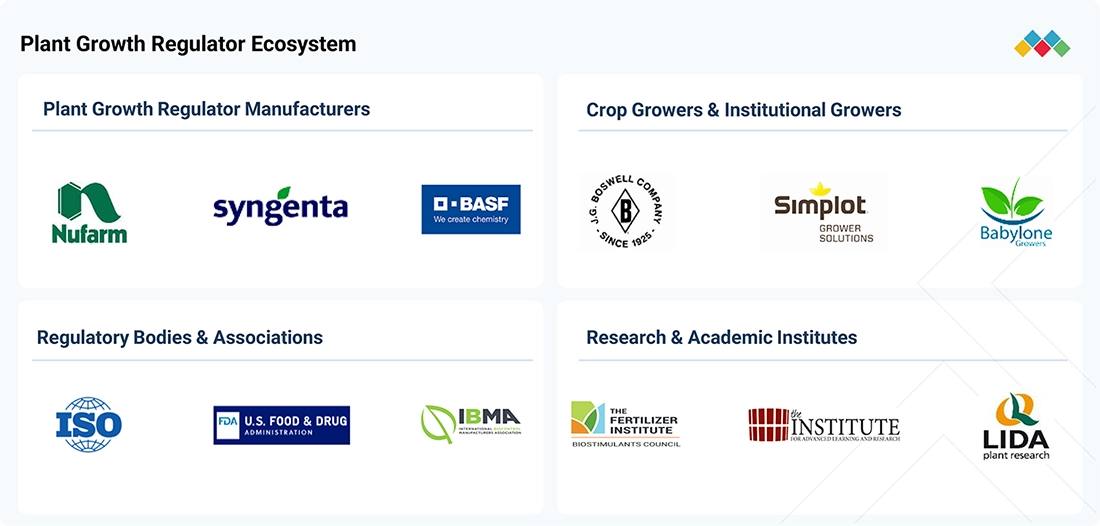
PLANT GROWTH REGULATORS MARKET : COMMERCIAL USE CASES ACROSS INDUSTRIES
| COMPANY | USE CASE DESCRIPTION | BENEFITS |
|---|---|---|
 |
Development and commercialization of chemical and bio-based PGRs for cereals and horticultural crops | Improved yield stability, enhanced stress tolerance, and regulatory-compliant solutions |
 |
PGRs and biological growth enhancers integrated with seed and crop protection programs | Optimized crop vigor, uniform growth, and improved productivity across cropping systems |
 |
Plant growth regulators and biostimulants for fruits, vegetables, and row crops | Enhanced crop quality, uniform ripening, and better resource-use efficiency |
 |
Growth regulators for crop and turf management applications | Controlled plant growth, reduced lodging, and improved crop performance |
Logos and trademarks shown above are the property of their respective owners. Their use here is for informational and illustrative purposes only.
Related Ecosystem
Agricultural Biologicals
- Bionematicides
- Auxins
- Cytokinins
- Ethylene
- Humic Substances
- NICHINO INDIA PVT LTD.
- Corteva, Inc.
- Basf se
- AZELIS HOLDINGS SA
- BAYER AG
Agrochemicals
- Phosphatic Fertilizers
- Potassic Fertilizers
- Fungicides
- Ammonium Nitrate
- Anticoagulant Rodenticides
- AZELIS HOLDINGS SA
- Basf se
- Origin Enterprises plc
- MITSUI AGRO BUSINESS SACO
- SNF HOLDING COMPANY INC.
Key Takeaways
- Brazil's plant growth regulators market will grow from USD 221.4 million in 2024 to USD 341.7 million by 2029, representing a 9.1% CAGR.
- Brazil's market growth rate outpaces the global average of 7.2%, reflecting strong agricultural modernization and export demand.
- Brazil's sugarcane, corn, and soybean sectors are primary drivers of plant growth regulator adoption and market expansion.
- Brazil's regulatory environment and precision agriculture investments position the country as South America's leading market for plant growth regulators.
Plant Growth Regulators Market Report Scope
| Report Metric | Details |
|---|---|
| Base Year | 2024 |
| Fastest Growing Segment | MICROBIALS (Source) |
| Forecast Period | 2024-2029 |
| Growth Rate | CAGR of 7.2% from 2024 to 2029 |
| Largest Segment | MICROBIALS (Source) |
| Market Size Base Year (Billions) | ~USD 3.25 (2024) |
| Revenue Forecast (Billions) | ~USD 4.6 (2029) |
| Segments Covered | Type, Crop Type, Formulation, Function, Source |
Brazil Plant Growth Regulators Market Report Segmentation
5 segment dimensions are covered across the global market.
By Type
- Auxins
- Corn
- Cotton
- Cytokinins
- Ethylene
- Fruits
- Gibberellins
- Other Cereals & Grains
- Other Oilseeds & Pulses
- Other Types
- Rice
- Soybean
- Sunflower
- Vegetables
- Wheat
By Crop Type
- Cereals & Grains
- Fruits & Vegetables
- Oilseeds & Pulses
- Turf & Ornamentals
By Formulation
- Solutions
- Water-Dispersible & Water-Soluble Granules
- Wettable Powder
- Wettable Powders
By Function
- Biocontrol
- Biofertilizers
- Plant Growth Inhibitors
- Plant Growth Promoters
- Plant Growth Regulators
By Source
- Beneficial Insects
- Biochemicals
- Microbials
Target Audience
- Agrochemical Manufacturers : Identify market entry opportunities and expansion strategies in Brazil's high-growth PGR segment, with insights on crop-specific demand and competitive positioning.
- Agricultural Distributors & Retailers : Understand Brazil's regional market dynamics, farmer preferences, and product adoption trends to optimize inventory, pricing, and sales strategies for PGR products.
- Crop Consultants & Agronomists : Access market data on PGR effectiveness across Brazil's major crops to provide evidence-based recommendations and stay current with industry growth trends and innovations.
- Investment & Private Equity Firms : Evaluate investment opportunities in Brazil's agricultural sector with detailed market sizing, growth forecasts, and competitive analysis for PGR-related businesses.
- Agricultural Technology Companies : Leverage Brazil market insights to develop targeted solutions for precision farming and crop optimization, aligned with regional adoption patterns and farmer needs.
Reasons to Buy this Report
- Market Size & Growth Data : Access precise valuation of Brazil's PGR market (USD 221.4M in 2024) with detailed CAGR projections through 2029, enabling accurate investment and expansion planning.
- Competitive Landscape Intelligence : Understand market dynamics specific to Brazil's agricultural sector, including key players, distribution channels, and regional adoption patterns for sugarcane, corn, and soybean crops.
- Crop-Specific Insights : Gain detailed analysis of PGR applications across Brazil's primary crops, identifying high-growth segments and opportunities for product positioning and market entry strategies.
- Regulatory & Market Trends : Stay informed on Brazil-specific regulatory developments, farmer adoption rates, and emerging trends in advanced crop management that influence market growth and product demand.
- Strategic Decision Support : Leverage comprehensive Brazil market data to support go-to-market strategies, partnership development, and resource allocation decisions in Latin America's largest agricultural economy.
Frequently asked questions
What is the current size of Brazil's plant growth regulators market?
Brazil's plant growth regulators market was valued at USD 221.4 million in 2024 and is expected to grow to USD 341.7 million by 2029.
What is the projected growth rate for Brazil's plant growth regulators market?
Brazil's plant growth regulators market is projected to grow at a compound annual growth rate (CAGR) of 9.1% from 2024 to 2029.
Which crops drive demand for plant growth regulators in Brazil?
Brazil's primary crops driving plant growth regulator demand include sugarcane, corn, and soybean, which are major export commodities and benefit significantly from yield-enhancing technologies.
How does Brazil's market growth compare to global trends?
Brazil's plant growth regulators market is growing at 9.1% CAGR, which exceeds the global average of 7.2%, reflecting Brazil's agricultural leadership and modernization efforts.
What factors are driving growth in Brazil's plant growth regulators market?
Key growth drivers in Brazil include precision agriculture adoption, regulatory support for crop enhancement, export demand, mechanization trends, and the need for sustainable yield optimization across major commodity crops.
RESEARCH METHODOLOGY
The study involved four major activities in estimating the current size of the plant growth regulator market. Exhaustive secondary research was done to collect information on the market, peer, and parent markets. The next step was to validate these findings, assumptions, and sizing with industry experts across the value chain through primary research. Both top-down and bottom-up approaches were employed to estimate the complete market size. After that, market breakdown and data triangulation were used to estimate the market size of segments and subsegments.
Secondary Research
This research study relied heavily on secondary sources—directories and databases such as Bloomberg Businessweek and Factiva—to identify and collect information useful for a technical, market-oriented, and commercial study of the plant growth regulator market.
In the secondary research process, various sources such as annual reports, press releases & investor presentations, white papers, certified publications, articles from recognized authors, gold- and silver-standard websites, directories, and databases were used to identify and collect information. This research study relied heavily on secondary sources—directories and databases such as Bloomberg Businessweek and Factiva—to identify and collect information useful for a technical, market-oriented, and commercial study of the plant growth regulator market.
Secondary research was mainly used to obtain key information on the industry’s supply chain, the total pool of key players, and market classification and segmentation aligned with industry trends, down to the regional market level, as well as key developments from both market- and technology-oriented perspectives.
Primary Research
Extensive primary research was conducted after obtaining information regarding the plant growth regulator market scenario through secondary research. Several primary interviews were conducted with market experts from both the demand and supply sides across major countries of North America, Europe, Asia Pacific, the Middle East & Africa, and South America. Primary data was collected through questionnaires, emails, and telephone interviews. Primary supply-side sources included industry experts such as Chief X Officers (CXOs), Vice Presidents (VPs), Directors from business development, marketing, research, and development teams, and key executives from distributors and key opinion leaders. Primary interviews were conducted to gather insights such as market statistics, revenue data from products and services, market breakdowns, market size estimates, market forecasts, and data triangulation. Primary research also helped understand trends related to crop type, type, formulation, function, and region.
Breakdown of Primary Participants
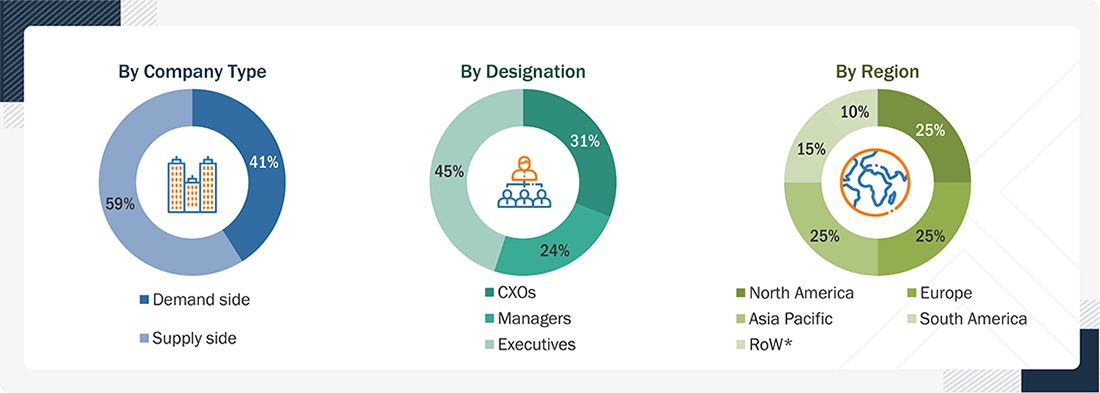
To know about the assumptions considered for the study, download the pdf brochure
Market Size Estimation
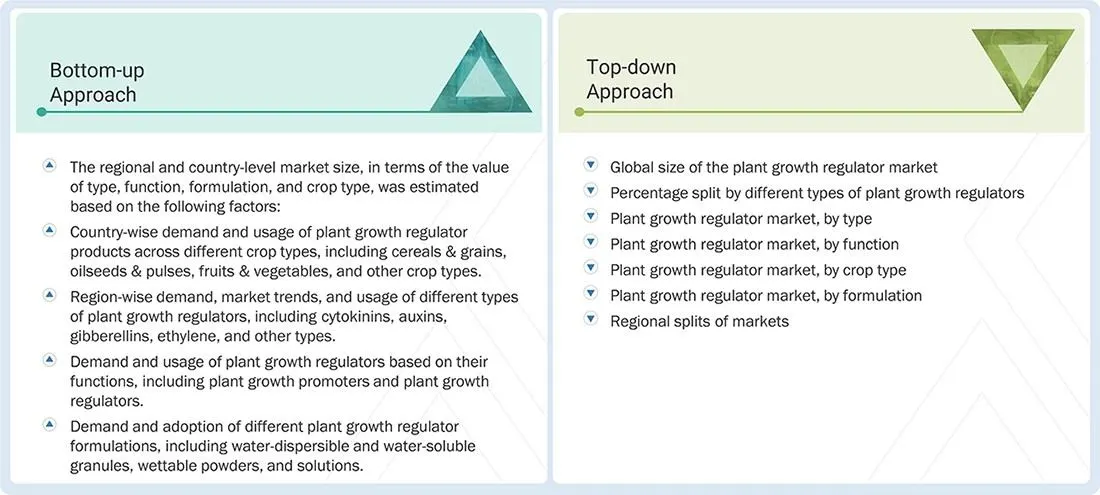
Both the top-down and bottom-up approaches were used to estimate and validate the total size of the plant growth regulator market. These approaches were also used extensively to estimate the size of various dependent submarkets. The research methodology used to estimate the market size includes the following:
- Key players were identified through extensive secondary research.
- Primary and secondary research determined the industry’s value chain and market size.
- All percentage share splits and breakdowns were determined using secondary sources and verified through primary sources.
- All possible parameters affecting the markets covered in this research study were accounted for, examined in detail, verified through primary research, and analyzed to obtain the final quantitative and qualitative data.
- The following figure illustrates the complete market size estimation process used in this research study, providing a consolidated estimate of the plant growth regulator market.
The following sections (bottom-up & top-down) depict the overall market size estimation process used in this study.
Global Plant Growth Regulator Market: Bottom-up Approach
Data Triangulation
After estimating the overall market size as explained above, the total market was split into several segments and subsegments. Data triangulation and market breakdown procedures were employed, wherever applicable, to estimate the overall plant growth regulators market and arrive at the exact statistics for all segments and subsegments. The data was triangulated by studying various factors and trends from the demand and supply sides. The market size was also validated using both the top-down and bottom-up approaches.
Market Definition
According to the Ministry of Agriculture, Food and Rural Affairs, Ontario:
Plant Growth Regulators are chemicals used to modify plant growth, such as increasing branching, suppressing shoot growth, increasing return bloom, removing excess fruit, or altering fruit maturity. Numerous factors affect plant growth regulator performance, including how well the plant absorbs the chemical, tree vigor and age, dose, timing, cultivar, and weather conditions before, during, and after application. Plant growth regulators fall into six classes: compounds related to auxins, gibberellins, gibberellin biosynthesis inhibitors, cytokinins, abscisic acid, and compounds affecting ethylene status.
Key Stakeholders
- Supply Side: Plant Growth Regulator Producers, Suppliers, Distributors, Importers, and Exporters
- Demand Side: Large-scale Crop Farmers, Large-scale Orchids, and Researchers
- Agricultural Co-operative Societies
- Government, Research Organizations, and Institutions
- Technology Providers to Plant Growth Regulator Manufacturing Companies
- Regulatory Bodies
- World Health Organization (WHO)
- European Crop Protection Agency (ECPA)
- Pesticides Manufacturers and Formulators Association (PMFAI)
- China Crop Protection Industry Association (CCPIA)
- Food and Agriculture Organization (FAO)
- US Department of Agriculture (USDA)
- Institute of Food and Agricultural Sciences (IFAS)
- US Environmental Protection Agency (US EPA)
- Organisation for Economic Co-operation and Development (OECD)
- Federal Office of Consumer Protection and Food Safety
- European Food Safety Authority
- Ministry of Agriculture & Farmers Welfare
- Department of Agriculture, Cooperation & Farmers Welfare
- Directorate of Plant Protection, Quarantine & Storage
- Commercial Research & Development (R&D) Institutions and Financial Institutions
Report Objectives
MARKET INTELLIGENCE
- To determine and project the size of the plant growth regulator market by function, type, formulation, crop type, and region over five years, from 2026 to 2031
- To identify the attractive opportunities in the market by determining the largest and fastest-growing segments across the key regions
- To analyze the demand-side factors based on the following:
- Impact of macro- and microeconomic factors on the market
- Shifts in demand patterns across different subsegments and regions
COMPETITIVE INTELLIGENCE
- Identifying and profiling the key players in the plant growth regulator market
- Providing a comparative analysis of market leaders based on the following:
- Product offerings
- Business strategies
- Strengths and weaknesses
- Key financials
- Understanding the competitive landscape and identifying the major growth strategies players across the country adopt
- Providing insights on key product innovations and investments in the plant growth regulator market.
Available customizations:
With the given market data, MarketsandMarkets offers customizations according to company-specific scientific needs.
The following customization options are available for the report:
PRODUCT ANALYSIS
- Product Matrix, which provides a detailed comparison of each company's product portfolio.
GEOGRAPHIC ANALYSIS
With the given market data, MarketsandMarkets offers customizations according to company-specific scientific needs.
- Further breakdown of the Rest of Europe into Spain, the Czech Republic, the Netherlands, Belgium, Hungary, Romania, Ireland, and other EU & non-EU countries.
- Further breakdown of the Rest of Asia Pacific into South Korea, Thailand, Kazakhstan, Vietnam, Indonesia, and Myanmar.
- Further breakdown of the Rest of South America into Chile, Colombia, Peru, Uruguay, and other South American countries.
COMPANY INFORMATION
- Detailed analyses and profiling of additional market players (up to five)
Get the Full Plant Growth Regulators Market Report
Full forecast, segment splits, and company analysis for all Plant Growth Regulators Market.
- Canada Plant Growth Regulators Market
- US Plant Growth Regulators Market
- Mexico Plant Growth Regulators Market
- Germany Plant Growth Regulators Market
- UK Plant Growth Regulators Market
- France Plant Growth Regulators Market
- Poland Plant Growth Regulators Market
- Spain Plant Growth Regulators Market
- China Plant Growth Regulators Market
- India Plant Growth Regulators Market
- Japan Plant Growth Regulators Market
- Argentina Plant Growth Regulators Market
- Rest Of Europe Plant Growth Regulators Market
- Rest Of Asia Pacific Plant Growth Regulators Market
- Africa Plant Growth Regulators Market
- Middle East Plant Growth Regulators Market
- Rest Of South America Plant Growth Regulators Market
Need a Tailored Report?
Customize this report to your needs
Get 10% FREE Customization
Customize This Report
