
GCC Countries Power Transformer Market (2025-2030)

The GCC Countries Power Transformer Market was valued at $454.8 Million in 2025 and projected to reach to $626.2 Million by 2030, representing a compound annual growth rate of 6.6%. The GCC Countries power transformer market is positioned for sustained growth driven by regional economic diversification initiatives and energy sector modernization.


| Market Size in | USD 26.32 MN |
| Market Forecast in | |
| CAGR | |
| Forecast Period | |
| Units Considered | Value (USD MN) |
GCC Countries Power Transformer Market Trends and Insights
- GCC Countries' strategic investments in electrical infrastructure modernization and renewable energy integration are driving demand for advanced transformer technologies.
- The region's rapid urbanization and industrial expansion create sustained demand for reliable power distribution solutions across GCC Countries. GCC Countries benefit from substantial capital expenditure in grid infrastructure and smart grid initiatives, positioning the market for consistent expansion through 2030.
- Energy diversification strategies across GCC Countries, including solar and wind integration, necessitate upgraded transformer capacity and efficiency standards.
- The 6.6% compound annual growth rate reflects GCC Countries' commitment to enhancing power transmission reliability and supporting economic diversification beyond hydrocarbon sectors..
Key Market Statistics
- CAGR (2025-2030) 6.6% CAGR
- Market Size, 2025 ~USD 454.8 Million
- Forecast, 2030 ~USD 626.2 Million
- Country GCC Countries
GCC Countries Power Transformer Market Overview
Market Valuation Growth :
GCC Countries' power transformer market is valued at USD 454.8 million in 2025, with a projected CAGR of 6.6% through 2030, reaching USD 626.2 million. This growth outpaces the global CAGR of 6.5%, indicating strong regional momentum.
Infrastructure Modernization :
Strategic investments in electrical grid modernization across GCC nations are driving demand for advanced transformer technologies. Aging infrastructure replacement and smart grid initiatives are key growth catalysts in the region.
Renewable Energy Integration :
GCC Countries' commitment to renewable energy targets, particularly solar and wind projects, necessitates upgraded transformer capacity and advanced power distribution systems to handle variable energy sources efficiently.
Rapid Urbanization & Industrial Expansion :
Accelerating urbanization and industrial diversification across GCC nations are creating substantial demand for reliable power infrastructure, directly boosting transformer market expansion and technology adoption.
GCC Countries Power Transformer Market Dynamics
- Government-backed infrastructure projects, particularly in the UAE, Saudi Arabia, and Qatar, are accelerating transformer deployment across transmission and distribution networks.
- The integration of renewable energy sources into existing grids requires advanced transformer solutions, creating significant opportunities for technology providers. Looking ahead to 2030, GCC Countries will continue leveraging transformer innovations to support smart city developments and industrial expansion.
- Rising electricity demand from population growth and economic development will sustain market momentum.
- Strategic partnerships between regional utilities and global manufacturers will facilitate technology transfer and localized production, further strengthening the market's growth trajectory through the forecast period..
Market Ecosystem
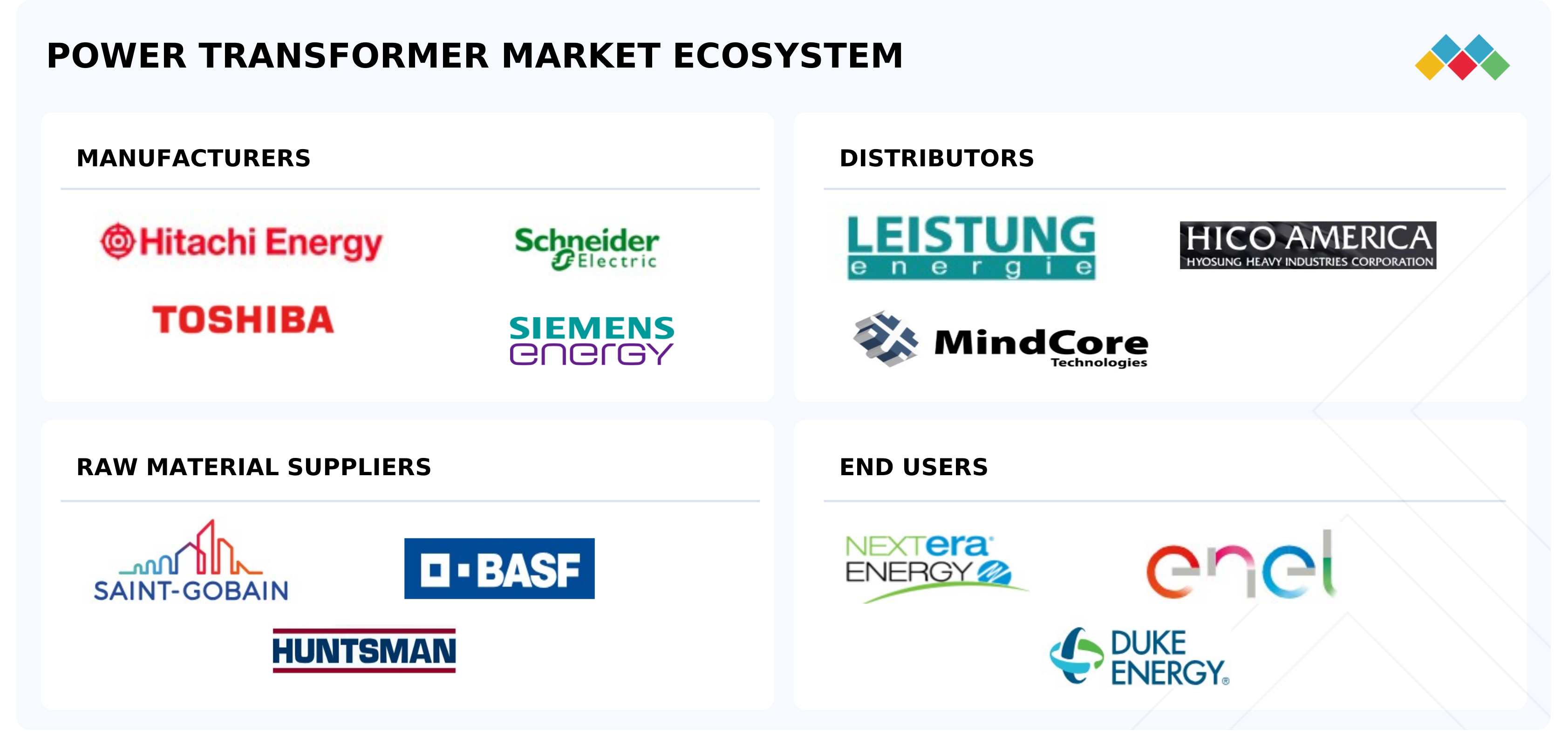
power transformer market: COMMERCIAL USE CASES ACROSS INDUSTRIES
| COMPANY | USE CASE DESCRIPTION | BENEFITS |
|---|---|---|
 |
ABB successfully launched its online oil reclamation service to tackle the declining condition of transformer oil at Deeside Power Station. The power station had been struggling with rising acidity and corrosive sulfur levels in the transformer oil, resulting in increased usage of passivator chemicals, such as Irgamet 39. | The benefits of this solution were significant. First, it provided a cost-effective alternative to traditional maintenance methods, saving the power station from expensive equipment replacement. Second, the online nature of the service meant that there was no need to shut down operations, ensuring an uninterrupted power supply. Third, the treatment helped preserve the Degree of Polymerization (DP) of the paper insulation inside the transformers, which is crucial for their long-term reliability and performance. Lastly, the approach was environmentally friendly, as it reduced the need to dispose of large volumes of contaminated oil. |
 |
Siemens Energy is tackling the critical shortage of large power transformers (LPTs) in the US by investing USD 150 million to establish its first domestic LPT manufacturing facility in Charlotte, North Carolina. This strategic initiative aims to expand Siemens Energy's presence in the market and enhance refurbishment capabilities to strengthen grid infrastructure. The facility is expected to produce 24 LPTs annually at launch, with plans to increase production to 57 units per year. Additionally, it will refurbish 12 to 24 units each year. Construction of the facility began in 2024, with the first transformers anticipated to be ready by early 2026. This project is expected to create approximately 559 new jobs in logistics, assembly, and mechanical roles. | This investment significantly reduces lead times—currently up to five years—by increasing the domestic supply of critical transformers, which are essential for transmission and distribution networks, renewable energy integration, and power-hungry AI/data center projects. By localizing production and refurbishment, Siemens Energy enhances grid reliability, supports decarbonization goals, and mitigates supply chain risks, leveraging its century-long expertise in transformer technology. |
Logos and trademarks shown above are the property of their respective owners. Their use here is for informational and illustrative purposes only.
Related Ecosystem
High Voltage Products And Systems
- Analytics Software
- Connected Healthcare
- Connected Logistics
- Geographical Information System (GIS)
- Network Bandwidth Management
- ABB India Limited
- Siemens ag
- SCHNEIDER ELECTRIC SE
- Eaton Corporation plc
- Fuji Electric Co., Ltd.
Power Infrastructure
- Geographical Information System (GIS)
- Cogeneration
- Battery Electric Vehicle (BEV)
- Cellular Network
- Fuel Cell
- Siemens ag
- ABB India Limited
- SCHNEIDER ELECTRIC SE
- General Electric Company
- Eaton Corporation plc
Key Takeaways
- GCC Countries power transformer market valued at USD 454.8 million in 2025, expanding to USD 626.2 million by 2030.
- GCC Countries demonstrates a 6.6% CAGR, driven by infrastructure modernization and renewable energy adoption.
- Smart grid initiatives and electrical grid upgrades are primary growth catalysts across GCC Countries.
- GCC Countries' energy diversification strategy creates sustained demand for high-efficiency transformer solutions.
Power Transformer Market Report Scope
| Report Metric | Details |
|---|---|
| Base Year | 2025 |
| Fastest Growing Segment | AIR-COOLED (Cooling Type) |
| Forecast Period | 2025-2030 |
| Growth Rate | CAGR of 6.5% from 2025 to 2030 |
| Largest Segment | OIL-COOLED (Cooling Type) |
| Market Size Base Year (Billions) | ~USD 30.38 (2025) |
| Revenue Forecast (Billions) | ~USD 41.62 (2030) |
| Segments Covered | Power Rating, Cooling Type, Phase, End User, Industry, Power Rating 2020-2024 |
GCC Countries Power Transformer Market Report Segmentation
6 segment dimensions are covered across the global market.
By Power Rating
- 61-600 Mva
- Above 600 Mva
- Up To 60 Mva
By Cooling Type
- Air-Cooled
- Oil-Cooled
By Phase
- Single-Phase
- Three-Phase
By End User
- Commercial & Residential
- Industrial
- Residential & Commercial
- Utilities
By Industry
- Automotive
- Data Centers
- Food & Beverages
- Metals & Mining
- Oil & Gas
- Other Industries
- Power Generation
By Power Rating 2020-2024
- 61-600 Mva
- Above 600 Mva
- Up To 60 Mva
Target Audience
- Power Equipment Manufacturers : Transformer OEMs and electrical equipment suppliers need GCC-specific market data to identify growth opportunities, assess regional demand patterns, and develop localized product strategies for the high-growth GCC market.
- Utility Companies & Grid Operators : Regional and national utility operators require market intelligence to plan infrastructure investments, forecast transformer procurement needs, and align capacity expansion with projected demand growth in GCC Countries.
- Investment & Private Equity Firms : Investors evaluating opportunities in GCC energy infrastructure need detailed market analysis to assess growth potential, identify acquisition targets, and make capital allocation decisions in the power transformer sector.
- Engineering & Consulting Firms : Consultants advising on GCC infrastructure projects require market data to support feasibility studies, technology recommendations, and investment business cases for power distribution and grid modernization initiatives.
- Government & Policy Makers : GCC government agencies and energy ministries use market intelligence to inform infrastructure planning, renewable energy integration strategies, and procurement policies for national grid modernization programs.
Reasons to Buy this Report
- Regional Market Sizing & Forecasts : Obtain precise market valuation data specific to GCC Countries with detailed 2025-2030 projections. Understand market size dynamics and growth trajectories tailored to regional economic conditions and infrastructure development plans.
- Growth Driver Analysis : Identify key market catalysts including infrastructure modernization initiatives, renewable energy integration targets, and urbanization trends specific to GCC nations. Understand which factors are accelerating transformer demand in each country.
- Competitive Landscape Intelligence : Gain insights into regional market competition, key players operating in GCC Countries, and market share distribution. Benchmark your position against competitors and identify partnership opportunities within the region.
- Investment & Expansion Strategy : Make informed decisions on market entry, capacity expansion, or product localization in GCC Countries. Leverage regional growth forecasts and opportunity assessments to prioritize resource allocation and strategic initiatives.
- Regulatory & Infrastructure Insights : Understand GCC-specific regulatory frameworks, grid modernization standards, and government initiatives driving transformer procurement. Align product offerings with regional technical requirements and sustainability mandates.
Frequently asked questions
What is the current market size of power transformers in GCC Countries?
The power transformer market in GCC Countries was valued at USD 454.8 million in 2025.
What is the projected market size for power transformers in GCC Countries by 2030?
GCC Countries' power transformer market is forecasted to reach USD 626.2 million by 2030.
What is the CAGR for the power transformer market in GCC Countries?
GCC Countries' power transformer market is expected to grow at a compound annual growth rate of 6.6% from 2025 to 2030.
What factors are driving growth in GCC Countries' power transformer market?
Key drivers include infrastructure modernization, renewable energy integration, smart grid deployment, and rapid urbanization across GCC Countries.
How does GCC Countries' market compare to global power transformer trends?
GCC Countries' 6.6% CAGR slightly exceeds the global average of 6.5%, reflecting the region's accelerated infrastructure investment and energy transition initiatives.
RESEARCH METHODOLOGY
This study undertook an extensive process to determine the current dimensions of the power transformer market, beginning with an in-depth secondary research phase focused on gathering data from the market, related markets, and the overall industry context. This initial data collection was followed by thorough validation using primary research, which included discussions with industry experts across the value chain. Market size evaluations were then conducted for each country through a tailored analysis, leading to a detailed breakdown of the market. Data from these analyses were cross-checked to estimate the sizes of different segments and sub-segments. By integrating secondary and primary research methods, the study ensures the findings are accurate and reliable.
Secondary Research
In this research study, a comprehensive range of secondary sources was utilized, including directories, databases, and trusted references such as Hoover’s, Bloomberg BusinessWeek, Factiva, the World Bank, the US Department of Energy (DOE), and the International Energy Agency (IEA). These sources were crucial in gathering essential data needed for a detailed analysis of the global power transformers market. Covering technical, market-oriented, and commercial facets, these secondary sources greatly enriched the study’s depth and scope. Additional resources included annual reports, press releases, investor presentations, white papers, authoritative publications, articles by respected experts, information from industry associations, trade directories, and various database resources. The extensive and varied secondary sources employed provide a solid and well-rounded basis for this research study.
Primary Research
The power transformers market includes a diverse array of stakeholders throughout its supply chain, ranging from component manufacturers and product assemblers to service providers, distributors, and end users. The primary demand drivers in this market are industrial end users, with the growing needs of transmission and distribution utilities playing a crucial role in market expansion. On the supply side, there is a clear trend toward increased demand for contracts within the industrial sector, complemented by a significant number of mergers and acquisitions among leading industry participants. The calculation and verification of the power transformer market size were carefully performed using a bottom-up approach. This technique was rigorously applied to determine the sizes of various subsegments within the market. The research process included several critical stages.
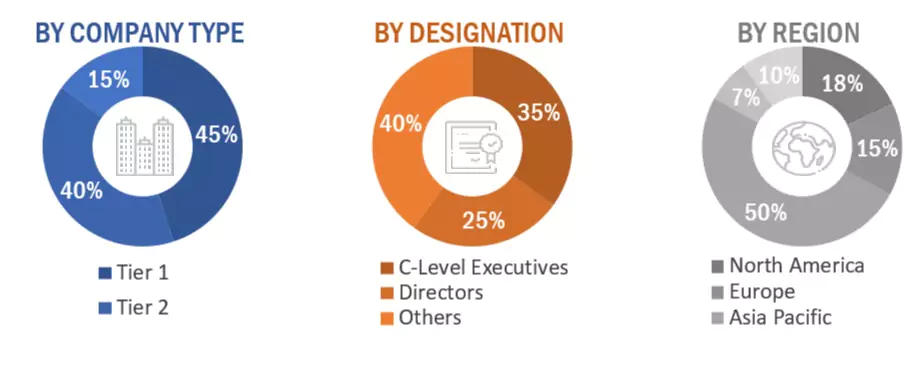
Note: “Others” include sales managers, engineers, and regional managers
The tiers of the companies are defined based on their total revenue as of 2021: Tier 1: >USD 1 billion, Tier 2: USD 500
million–1 billion, and Tier 3:
To know about the assumptions considered for the study, download the pdf brochure
Market Size Estimation
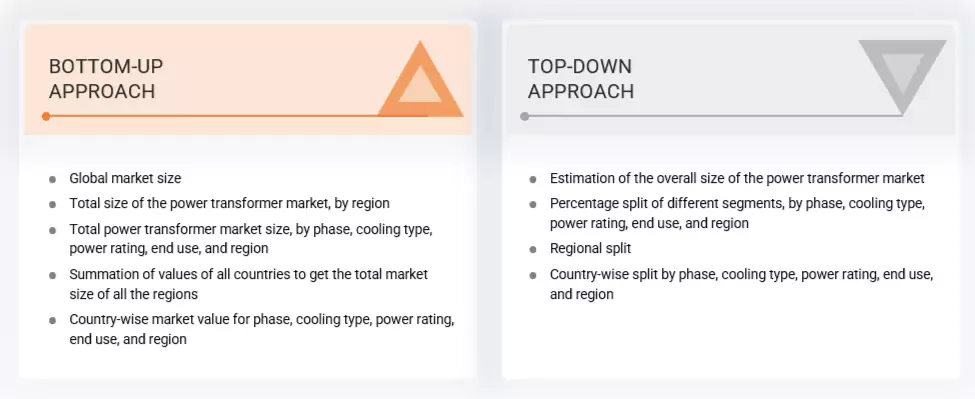
Both top-down and bottom-up approaches were used to estimate and validate the power transformer market size. These methods were also used extensively to estimate the size of various subsegments in the market. The research methodology used to estimate the market size includes the following:
Power Transformer Market : Top-Down and Bottom-Up Approach
Data Triangulation
The determination of the overall market size was conducted using the outlined methodologies, which involved dividing the market into various segments and subsegments. Techniques such as data triangulation and market segmentation were employed to finalize the comprehensive market analysis and obtain accurate statistics for each segment and subsegment. Data triangulation included a detailed analysis of different factors and trends from both demand and supply sides within the power transformers market ecosystem.
Market Definition
A power transformer is a vital component in the transmission and distribution of electrical energy, designed to adjust voltage levels between different segments of the power grid. Its core function is to either step up (increase) or step down (decrease) voltage, enabling electricity to be transmitted efficiently over long distances while minimizing energy losses. This capability is essential for linking generation facilities to distribution networks and ensuring a stable and reliable power supply to end users. Structurally, a power transformer consists of a magnetic core—typically made of silicon steel—and insulated copper or aluminum windings. These windings operate on the principle of electromagnetic induction: when alternating current flows through the primary winding, it generates a magnetic field in the core, which then induces a voltage in the secondary winding. The resulting output voltage is determined by the ratio of turns between the primary and secondary coils. For example, if the secondary coil has fewer turns than the primary, the transformer acts as a step-down unit, reducing the voltage for safe and efficient local distribution.
Stakeholders
- Government utility providers
- Independent power producers
- Transformer manufacturers
- Power equipment and garden tool manufacturers
- Consulting companies (energy & power sector)
- Distribution utilities
- Government and research organizations
- Organizations, forums, and associations
- Raw material suppliers
- State and national regulatory authorities
- Transformer manufacturers, distributors, and suppliers
- Transformer original equipment manufacturers (OEMs)
Report Objectives
- To define, categorize, segment, and project the power transformer market, by power rating, phase, cooling type, and end use, in terms of value
- To describe and forecast the power transformers market in terms of volume
- To project market sizes for the major countries in each of these five regions: North America, South America, Europe, Asia Pacific, the Middle East, and Africa, in terms of value
- To provide in-depth analyses of the drivers, restraints, opportunities, and challenges impacting the growth of the market
- To systematically assess the market share, growth trends, and prospects of each subsegment
- To evaluate the competitive landscape for leaders in the industry and the market prospects for interested parties
- To create strategic profiles of the top players by closely examining their market shares and essential strengths
- To monitor and assess competitive changes in the market, such as contracts, sales contracts, product launches, expansions, and investments
- To analyze the ecosystem, trends/disruptions impacting customers businesses, technology analysis, pricing analysis, Porter’s five force analysis, key stakeholders & buying criteria, case study analysis, trade analysis, patent analysis, key conferences & events, investment & funding scenario, tariff & regulatory landscape, the AI/Gen AI impact, and the impact of the 2025 US tariff impact related to the market
- To strategically analyze the micro markets with respect to individual growth trends, prospects, and contributions to the overall power transformers market
- To strategically profile the key players and comprehensively analyze their market shares and core competencies
Available Customizations
With the given market data, MarketsandMarkets offers customizations based on the company’s specific needs. The following customization options are available for the report:
Product Analysis
- Product Matrix, which provides a detailed comparison of the product portfolio of each company
Company Information
- Detailed analyses and profiling of additional market players (up to 5)
Get the Full Power Transformer Market Report
Full forecast, segment splits, and company analysis for all Power Transformer Market.
- US Power Transformer Market
- Canada Power Transformer Market
- Mexico Power Transformer Market
- Germany Power Transformer Market
- UK Power Transformer Market
- France Power Transformer Market
- Italy Power Transformer Market
- Spain Power Transformer Market
- China Power Transformer Market
- India Power Transformer Market
- Japan Power Transformer Market
- South Korea Power Transformer Market
- Australia Power Transformer Market
- Saudi Arabia Power Transformer Market
- UAE Power Transformer Market
- South Africa Power Transformer Market
- Brazil Power Transformer Market
- Argentina Power Transformer Market
- Rest Of Europe Power Transformer Market
- Rest Of Asia Pacific Power Transformer Market
- Rest Of GCC Countries Power Transformer Market
- Rest Of South America Power Transformer Market
Need a Tailored Report?
Customize this report to your needs
Get 10% FREE Customization
Customize This Report
