
US Silicon Carbide (SiC) Market (2025-2030)

The US Silicon Carbide (SiC) Market was valued at $199.9 Million in 2025 and projected to reach to $523.6 Million by 2030, representing a compound annual growth rate of 21.2%. The US Silicon Carbide market is positioned for substantial growth through 2030, driven by the nation's commitment to electrification and clean energy transition.


| Market Size in | USD 26.32 MN |
| Market Forecast in | |
| CAGR | |
| Forecast Period | |
| Units Considered | Value (USD MN) |
US Silicon Carbide (SiC) Market Trends and Insights
- This 21.2% compound annual growth rate reflects the US semiconductor industry's accelerating adoption of SiC technology across power electronics, electric vehicles, and renewable energy applications.
- The US market benefits from strong domestic demand, advanced manufacturing capabilities, and significant government support for semiconductor self-sufficiency and clean energy transitions. Driving this growth, the US is witnessing increased investment in EV charging infrastructure, grid modernization, and industrial power conversion systems—all critical SiC end-markets.
- US-based semiconductor manufacturers and automotive OEMs are prioritizing SiC adoption to improve efficiency and reduce thermal management costs.
- The competitive landscape in the US remains dynamic, with both established players and emerging innovators competing to capture market share in this high-growth segment..
Key Market Statistics
- CAGR (2025-2030) 21.2% CAGR
- Market Size, 2025 ~USD 199.9 Million
- Forecast, 2030 ~USD 523.6 Million
- Country US
US Silicon Carbide (SiC) Market Overview
US Market Valuation :
The US Silicon Carbide market is valued at $199.9 million in 2025, with strong momentum driven by domestic semiconductor manufacturing and EV adoption initiatives.
Aggressive Growth Trajectory :
At 21.2% CAGR through 2030, the US market is expanding faster than historical semiconductor trends, reflecting accelerated SiC technology integration across critical industries.
EV and Renewable Energy Drivers :
US electric vehicle production and renewable energy infrastructure investments are primary catalysts, with SiC enabling higher efficiency power conversion in charging systems and grid applications.
Domestic Supply Chain Development :
US government incentives and CHIPS Act funding are strengthening domestic SiC manufacturing capacity, reducing reliance on imports and supporting long-term market sustainability.
US Silicon Carbide (SiC) Market Dynamics
- Major automotive manufacturers are rapidly integrating SiC power devices into next-generation EV platforms, while renewable energy installations increasingly adopt SiC-based inverters for improved efficiency.
- Government support through the CHIPS and Science Act is catalyzing domestic production capacity expansion, creating a competitive advantage for US-based semiconductor companies.
- Industrial applications in power supplies and motor drives further amplify demand across manufacturing sectors. Looking ahead, the US market will benefit from maturing supply chains, declining SiC component costs, and expanding design wins in high-volume automotive platforms.
- Strategic partnerships between US semiconductor firms and automotive OEMs will accelerate technology adoption.
- However, competition from international manufacturers and the need for continued R&D investment remain key considerations.
- By 2030, the US is expected to capture significant share of the global SiC market, supported by technological leadership and favorable regulatory frameworks..
Market Ecosystem
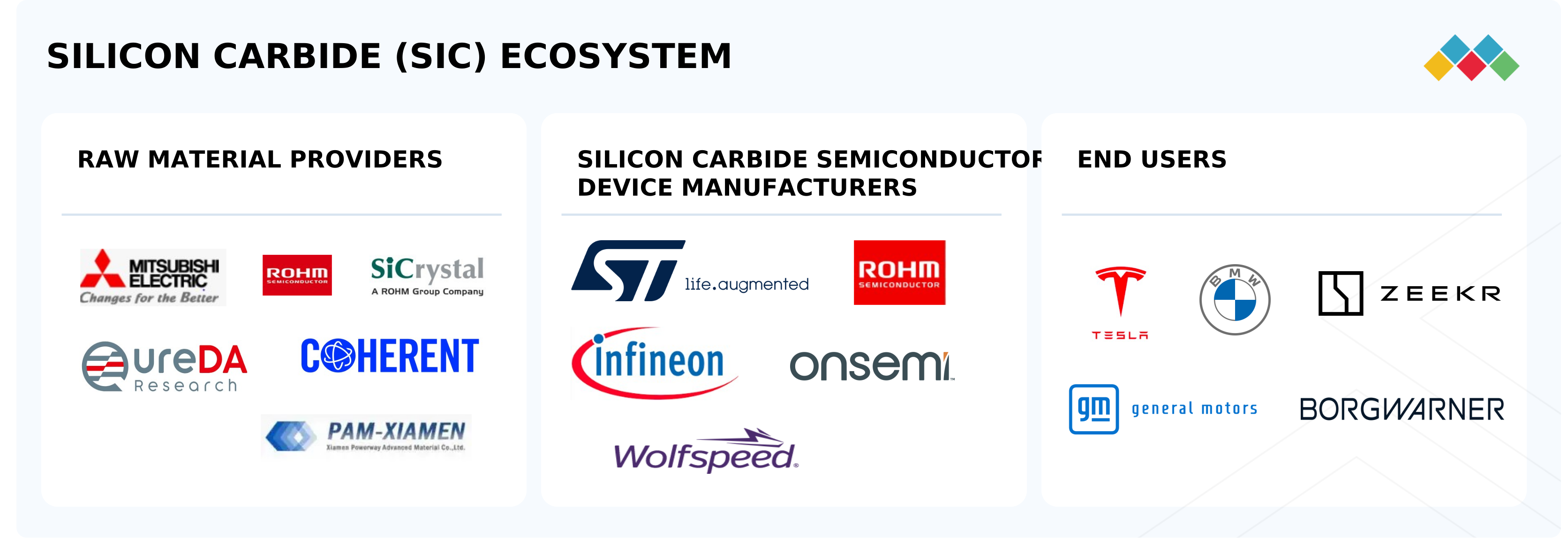
Silicon Carbide Market: COMMERCIAL USE CASES ACROSS INDUSTRIES
| COMPANY | USE CASE DESCRIPTION | BENEFITS |
|---|---|---|
 |
Integrates SiC MOSFETs and modules in EV traction inverters and onboard charging systems to improve inverter efficiency and reduce weight/volume | Higher vehicle range | Improved system efficiency | Smaller/heavier power dense inverters | Lower thermal management requirements |
 |
Deploys SiC-based power electronics in EV fast chargers and industrial drives to increase switching frequency and reduce losses | Faster charging | Smaller charger footprints | Higher power density | Improved energy efficiency for industrial applications |
 |
Uses SiC devices in power supplies, EV chargers, and data-center power conversion systems to improve overall system performance | Reduced power losses | Higher reliability | Compact designs | Lower operating costs across infrastructure and data center applications |
 |
Integrates SiC MOSFETs/modules in utility-scale and commercial solar inverters and string inverters to enhance conversion efficiency | Improved DC–AC conversion efficiency | Reduced cooling needs | Smaller inverter size | Higher energy yield from PV installations |
 |
Incorporates SiC-based converters and motor drives for industrial motors, UPS, and renewable-energy integration | Greater energy efficiency | Reduced heat generation | Smaller power systems | Lower total cost of ownership for industrial customers |
Logos and trademarks shown above are the property of their respective owners. Their use here is for informational and illustrative purposes only.
Related Ecosystem
Semiconductor Materials And Components
- Sensors
- Gallium Nitride (GaN)
- Digital Signal Processor (DSP)
- Natural Language Processing (NLP)
- Silicon Carbide
- Texas Instruments Incorporated
- Samsung
- APPLIED MATERIALS, INC.
- Stmicroelectronics
- Lenovo
Key Takeaways
- The US SiC market is valued at $199.9 million in 2025 and will grow to $523.6 million by 2030, representing a 21.2% CAGR.
- US electric vehicle and renewable energy sectors are primary growth drivers for SiC semiconductor adoption.
- The US benefits from domestic manufacturing expertise and government incentives supporting semiconductor supply chain resilience.
- US power electronics and industrial applications are expanding SiC demand across automotive, grid, and industrial segments.
Silicon Carbide (SiC) Market Report Scope
| Report Metric | Details |
|---|---|
| Base Year | 2025 |
| Fastest Growing Segment | SIC MODULES (Device) |
| Forecast Period | 2025–2030 |
| Growth Rate | CAGR of 25.7% from 2025 to 2030 |
| Largest Segment | SIC MODULES (Device) |
| Market Size Base Year (Billions) | ~USD 3.83 (2025) |
| Revenue Forecast (Billions) | ~USD 12.03 (2030) |
| Segments Covered | Device, Type, Vertical |
US Silicon Carbide (SiC) Market Report Segmentation
3 segment dimensions are covered across the global market.
By Device
- Sic Discrete Devices
- Sic Modules
By Type
- Sic Diode
- Sic Diodes
- Sic Mosfet
- Sic Mosfets
By Vertical
- Automotive
- Energy & Power
- Industrial
- Other Verticals
- Telecommunications
- Transportation
US: SILICON CARBIDE MARKET, BY VERTICAL, 2025–2030
| Segment | 2025 | 2026 | 2027 | 2028 | 2029 | 2030 | CAGR (%) |
|---|---|---|---|---|---|---|---|
| AUTOMOTIVE | 199.9 | 231.7 | 281.9 | 362 | 444 | 523.6 | 21.2 |
| ENERGY & POWER | 56.3 | 62.9 | 73.8 | 91.4 | 108 | 122.9 | 16.9 |
| INDUSTRIAL | 124.3 | 153.3 | 198.6 | 271.4 | 354.2 | 447.8 | 29.2 |
| OTHER VERTICALS | 7.5 | 8.6 | 10.2 | 12.2 | 13.3 | 13.6 | 12.7 |
| TELECOMMUNICATIONS | 13.1 | 15.5 | 19.1 | 24.7 | 30.5 | 36.6 | 22.9 |
| TRANSPORTATION | 25.7 | 29.6 | 35.9 | 46 | 56.2 | 66.6 | 21 |
| TOTAL | 426.8 | 501.7 | 619.4 | 807.7 | 1006.2 | 1210.9 | 23.2 |
Target Audience
- Semiconductor Manufacturers : US and international SiC chip producers need detailed market sizing and competitive positioning data to optimize production capacity, identify growth segments, and plan US market expansion strategies.
- Automotive OEMs and Suppliers : US-based vehicle manufacturers and tier-1 suppliers require SiC adoption forecasts and technology roadmaps to accelerate EV platform development and secure competitive advantages in electrification.
- Renewable Energy Companies : Solar, wind, and grid infrastructure operators need insights into SiC inverter adoption rates and efficiency gains to optimize capital investments in US renewable energy projects.
- Investment and Private Equity Firms : Investors evaluating US semiconductor and clean energy sectors require market forecasts, growth drivers, and competitive dynamics to identify high-potential SiC-related investment opportunities.
- Government and Policy Makers : US federal and state agencies need market intelligence on domestic SiC manufacturing capacity, supply chain resilience, and technology leadership to inform CHIPS Act implementation and industrial policy.
Key Companies in the US Silicon Carbide (SiC) Market
| Company | HQ | Ownership | Strongest segments |
|---|---|---|---|
| TOKYO OHKA KOGYO CO., LTD. | Japan | Public Company | Lithography materials for SiC (g/i-Line, KrF, ArF, EUV-adjacent),Etch, develop, strip, and wet process chemistries for SiC,Packaging and redistribution layer materials for SiC modules, |
| APPLIED MATERIALS, INC | United States | Public Company | SiC-capable deposition and etch tools,CMP, metrology, and inspection for SiC,Ion implantation and rapid thermal processing for SiC, |
| FAIRCHILD SEMICONDUCTOR INTERNATIONAL INC. | United States | Private Company | SiC MOSFET (Automotive-qualified),SiC Diode (Automotive-qualified),SiC Power Modules, |
| INTERSIL CORPORATION | United States | Private Company | SiC MOSFET-related (discretes and driver/control IC content),SiC module-related content,SiC diode-related content, |
| KLA-TENCOR CORPORATION | United States | Public Company | SiC wafer and device inspection systems,SiC metrology systems (thickness, stress, alignment),Process control software and analytics for SiC lines, |
| SAINT-GOBAIN | France | Public Company | SiC device-adjacent ceramics and refractories,Abrasives for SiC wafering and device fabrication,Thermal management and insulation materials for SiC modules, |
| TOWER SEMICONDUCTOR LTD | Israel | Public Company | SiC MOSFET (discrete, all voltages),SiC Diode (discrete),SiC Power Modules (automotive-focused), |
| FLUOR CORPORATION | United States | Public Company | SiC Discrete Device Infrastructure (Diode and MOSFET fabs and lines),SiC Module and Power Electronics Manufacturing Infrastructure,High-Voltage and Grid-Tied SiC Applications Infrastructure, |
| MERSEN | France | Public Company | DC protection for EV and batteries,Bus bars and power distribution blocks,Cooling and thermal management for SiC power stacks, |
| SOITEC | United States | Public Company | Power-SOI for automotive and industrial power electronics,Auto SmartSiC for EV and industrial cost-optimized platforms,Other automotive (AUTO FD-SOI, radar and processors), |
| X-FAB | Germany | Public Company | SiC MOSFET (discrete),SiC Diode (discrete),SiC Modules, |
| TEXAS INSTRUMENTS INC | United States | Public Company | SiC MOSFET Discretes (up to 1,700 V),SiC Diode Discretes,SiC Power Modules, |
| THE COOPER COMPANIES INC | United States | Public Company | Fluid transfer systems for EV/SiC thermal management,Fuel and brake delivery systems on SiC-enabled platforms,Sealing systems for e-powertrain and high-voltage enclosures, |
| STMICROELECTRONICS | Netherlands | Public Company | SiC MOSFET (discrete),SiC Modules,SiC Diodes, |
| SEMICONDUCTOR COMPONENTS INDUSTRIES, LLC | United States | Private Company | Automotive SiC MOSFET (discrete and module),Industrial and energy SiC MOSFET / modules,SiC diodes (all voltages), |
| INFINEON TECHNOLOGIES AG | Germany | Public Company | Automotive SiC MOSFETs (discrete and module),Industrial and traction SiC modules,SiC diodes (automotive and industrial), |
| WOLFSPEED, INC. | United States | Public Company | SiC MOSFET discrete devices,SiC power modules,SiC Schottky diodes, |
| ROHM CO., LTD. | Japan | Public Company | SiC MOSFET (discrete, automotive and industrial),SiC Diode (discrete, automotive and industrial),SiC Modules (half-bridge, full-bridge, automotive-focused), |
| FUJI ELECTRIC CO., LTD. | Japan | Public Company | SiC Discrete Devices – Diodes,SiC Discrete Devices – MOSFETs,SiC Power Modules – Industrial/Traction, |
| MICROCHIP TECHNOLOGY INC. | United States | Public Company | SiC MOSFET Discretes,SiC Diode Discretes,SiC Modules, |
| MITSUBISHI ELECTRIC CORPORATION | Japan | Public Company | Automotive SiC Power Modules (traction inverter, e-axle, DC-DC),Automotive SiC MOSFET Discretes,Automotive SiC Diode Discretes, |
| ROBERT BOSCH GMBH | Germany | Private Company | SiC MOSFET (discrete),SiC Diode (discrete),SiC Power Modules, |
| NAVITAS SEMICONDUCTOR | United States | Public Company | SiC MOSFET (discrete devices, all voltages),SiC Modules (automotive and industrial),SiC Diodes (discrete), |
| TT ELECTRONICS | United Kingdom | Public Company | SiC Modules (incl. custom power modules),SiC Discrete Devices (Diodes and MOSFETs),Automotive-qualified SiC Devices and Modules, |
| VISHAY INTERTECHNOLOGY, INC. | United States | Public Company | SiC Diodes,SiC MOSFETs,SiC Modules, |
TOKYO OHKA KOGYO CO., LTD.
Tokyo Ohka Kogyo Co., Ltd. is a Japanese public company founded in 1940 with 2,132 employees.
APPLIED MATERIALS, INC
Applied Materials, Inc. is a United States-based public company founded in 1967 with 36,500 employees.
FAIRCHILD SEMICONDUCTOR INTERNATIONAL INC.
Fairchild Semiconductor International Inc. is a United States-based private company founded in 1957 with 6,379 employees.
INTERSIL CORPORATION
Intersil Corporation is a United States-based private company founded in 1967 with 970 employees.
KLA-TENCOR CORPORATION
KLA-Tencor Corporation is a United States-based public company founded in 1975 with 15,100 employees.
SAINT-GOBAIN
Saint-Gobain is a French public company founded in 1665 with 158,616 employees.
TOWER SEMICONDUCTOR LTD
Tower Semiconductor Ltd. is an Israel-based public company founded in 1993 with 5,613 employees.
FLUOR CORPORATION
Fluor Corporation is a United States-based public company founded in 1912 with 22,995 employees.
MERSEN
Mersen is a French public company founded in 1889 with 7,153 employees.
SOITEC
Soitec is a United States-based public company founded in 1992 with 1,961 employees.
X-FAB
X-FAB is a Germany-based public company founded in 1992 with 4,300 employees.
TEXAS INSTRUMENTS INC
Texas Instruments Inc. is a United States-based public company founded in 1930 with 33,000 employees.
THE COOPER COMPANIES INC
The Cooper Companies Inc. is a United States-based public company founded in 1960 with 18,000 employees.
STMICROELECTRONICS
STMicroelectronics is a Netherlands-based public company founded in 1987 with 48,000 employees.
SEMICONDUCTOR COMPONENTS INDUSTRIES, LLC
Semiconductor Components Industries, LLC is a United States-based private company founded in 1999 with 9,570 employees.
INFINEON TECHNOLOGIES AG
Infineon Technologies AG is a Germany-based public company founded in 1952 with 56,500 employees.
WOLFSPEED, INC.
Wolfspeed, Inc. is a United States-based public company founded in 1987 with 3,434 employees.
ROHM CO., LTD.
Rohm Co., Ltd. is a Japanese public company founded in 1940 with 21,756 employees.
FUJI ELECTRIC CO., LTD.
Fuji Electric Co., Ltd. is a Japanese public company founded in 1923 with 26,955 employees.
MICROCHIP TECHNOLOGY INC.
Microchip Technology Inc. is a United States-based public company founded in 1989 with 17,900 employees.
MITSUBISHI ELECTRIC CORPORATION
Mitsubishi Electric Corporation is a Japanese public company founded in 1921 with 150,386 employees.
ROBERT BOSCH GMBH
Robert Bosch GmbH is a Germany-based private company founded in 1886 with 412,774 employees.
NAVITAS SEMICONDUCTOR
Navitas Semiconductor is a United States-based public company founded in 2014 with 190 employees.
TT ELECTRONICS
TT Electronics is a United Kingdom-based public company founded in 1906 with 3,516 employees.
VISHAY INTERTECHNOLOGY, INC.
Vishay Intertechnology, Inc. is a United States-based public company founded in 1962 with 22,600 employees.
Reasons to Buy this Report
- US-Specific Market Sizing : Obtain precise valuation data for the US market ($199.9M in 2025) with country-level forecasts through 2030, enabling accurate budgeting and market entry strategies tailored to American demand patterns.
- Competitive Landscape Intelligence : Identify leading US-based and international SiC manufacturers operating in the American market, understand their market positioning, and assess competitive threats specific to domestic operations.
- Regulatory and Policy Insights : Gain detailed analysis of US government incentives, CHIPS Act implications, and domestic manufacturing support programs that directly impact SiC market dynamics and investment opportunities.
- Application-Specific Demand Analysis : Understand US-driven adoption rates across electric vehicles, renewable energy systems, and industrial power electronics, with regional demand variations and growth acceleration timelines.
- Strategic Investment Guidance : Make informed decisions on US market entry, partnership development, and capital allocation with comprehensive forecasts, growth drivers, and risk assessments specific to the American SiC ecosystem.
Frequently asked questions
What is the current size of the US SiC market?
The US Silicon Carbide market is estimated at $199.9 million in 2025 and is projected to reach $523.6 million by 2030.
What is the growth rate of the US SiC market?
The US SiC market is expected to grow at a compound annual growth rate (CAGR) of 21.2% from 2025 to 2030.
Which industries drive SiC demand in the US?
The US SiC market is primarily driven by electric vehicles, renewable energy systems, power conversion, and industrial applications requiring high-efficiency semiconductors.
Why is the US SiC market growing faster than global average?
The US market benefits from strong EV adoption rates, government support for clean energy, domestic semiconductor manufacturing initiatives, and significant R&D investment in power electronics.
What are the main challenges for US SiC market growth?
Key challenges include manufacturing capacity constraints, high production costs, supply chain dependencies, and competition from alternative wide-bandgap semiconductor technologies.
RESEARCH METHODOLOGY
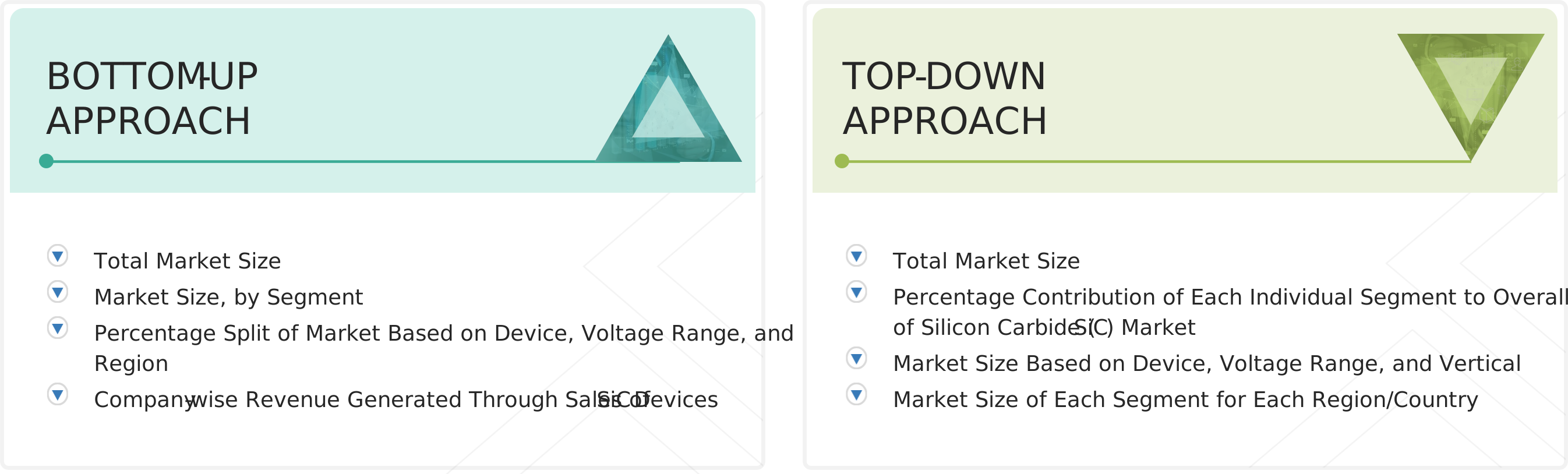
The research study involved four major activities in estimating the size of the silicon carbide (SiC) market. Exhaustive secondary research has been conducted to gather key information about the market and its peer markets. The validation of these findings, assumptions, and sizing, with the help of primary research involving industry experts across the value chain, has been the next step. Both top-down and bottom-up approaches have been used to estimate the market size. The market breakdown and data triangulation have been adopted to estimate the market sizes of segments and subsegments.
Secondary Research
During the secondary research process, various secondary sources have been referred to for identifying and collecting information required for this study. The secondary sources include annual reports, press releases, investor presentations of companies, white papers, and articles from recognized authors. Secondary research has primarily been conducted to gather key information about the market’s value chain, the pool of key market players, market segmentation based on industry trends, regional outlook, and developments from both market and technology perspectives.
In the silicon carbide (SiC) market report, the global market size has been estimated using both the top-down and bottom-up approaches, along with several other dependent submarkets. The major players in the market have been identified through extensive secondary research, and their presence in the market has been determined through a combination of secondary and primary research. All the percentage shares, splits, and breakdowns have been determined using secondary sources and verified through primary sources.
Primary Research
Extensive primary research has been conducted following an understanding of the silicon carbide (SiC) market scenario through secondary research. Several primary interviews have been conducted with key opinion leaders from demand- and supply-side vendors across four major regions: North America, Europe, Asia Pacific, and the Rest of the World. Approximately 25% of the primary interviews have been conducted with demand-side vendors, while 75% have been conducted with supply-side vendors. Primary data has been collected mainly through telephonic interviews, which consist of 80% of the total primary interviews; questionnaires and emails have also been used to collect the data.
After successful interaction with industry experts, brief sessions have been conducted with highly experienced independent consultants to reinforce the findings of our primary research. This, along with the opinions of our in-house subject matter experts, has led us to the findings described in the report.
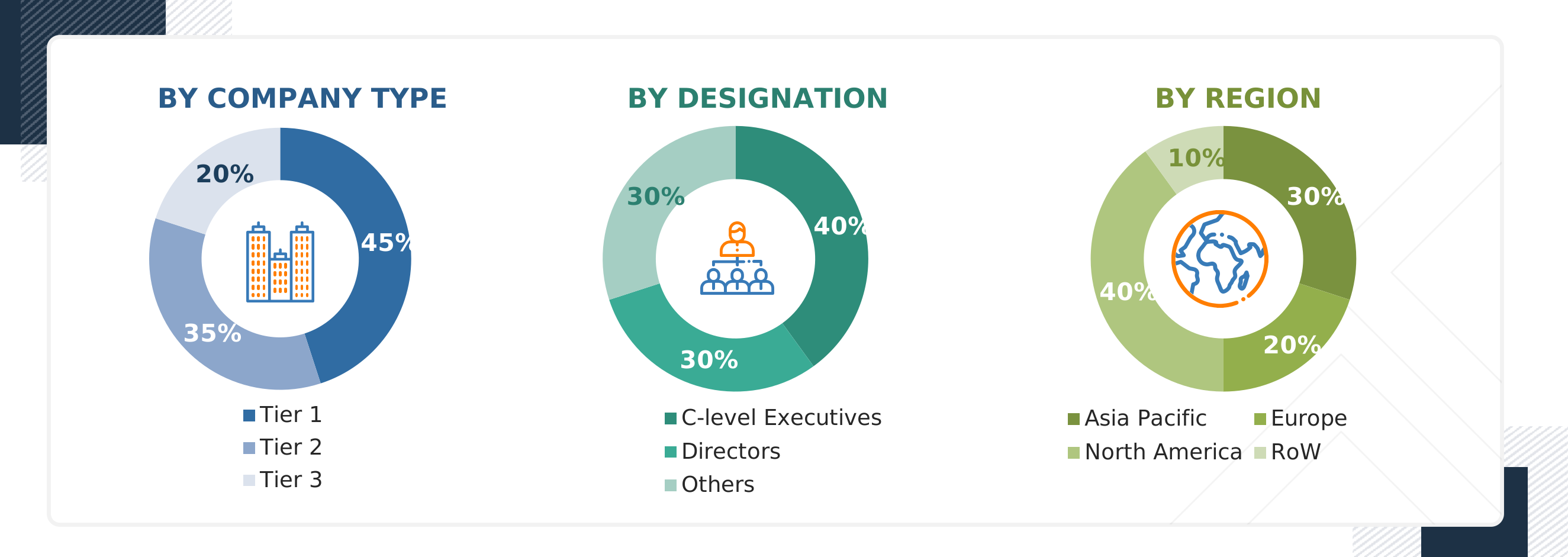
Note: “Others” includes sales, marketing, and product managers.
To know about the assumptions considered for the study, download the pdf brochure
Market Size Estimation
In the market engineering process, both top-down and bottom-up approaches, along with data triangulation methods, have been used to estimate and validate the size of the silicon carbide (SiC) market and other dependent submarkets. The research methodology used to estimate the market sizes includes the following:
- Identifying top-line investments and spending in the ecosystem and considering segment-level splits and significant market developments
- Identifying different stakeholders in the silicon carbide (SiC) market that influence the entire market, along with participants across the supply chain
- Analyzing major manufacturers in the silicon carbide (SiC) market and studying their product portfolio
- Analyzing trends related to the adoption of SiC devices
- Tracking recent and upcoming market developments, including investments, R&D activities, product launches, expansions, acquisitions, partnerships, collaborations, agreements, and investments, as well as forecasting the market size based on these developments and other critical parameters
- Carrying out multiple discussions with key opinion leaders to identify the adoption trends of silicon carbide (SiC)
- Segmenting the overall market into various other market segments
- Validating the estimates at every level through discussions with key opinion leaders, such as chief executives (CXOs), directors, and operations managers, and finally with the domain experts at MarketsandMarkets
Silicon Carbide (SiC) Market: Top-Down and Bottom-Up Approach
Data Triangulation
After determining the overall market size through the market size estimation process explained in the earlier section, the overall silicon carbide (SiC) market has been divided into several segments and subsegments. To complete the overall market engineering process and obtain the exact statistics for all segments, data triangulation and market breakdown procedures have been employed, where applicable. The data has been triangulated by studying various factors and trends from both the demand and supply sides. In addition to data triangulation and market breakdown, the market has been validated through both top-down and bottom-up approaches.
Market Definition
Silicon carbide (SiC) is known for its high thermal conductivity, electric field breakdown strength, and ability to withstand high currents. It significantly outperforms traditional silicon-based devices in high-temperature, high-power, and high-frequency applications. They play a crucial role in revolutionizing various industries by catering to sectors such as automotive, energy & power, industrial, transportation, and telecommunications, including space research and nuclear power applications. SiC is extensively used in EVs and hybrid systems, power supplies, motor drives, and UPS, and it is used to carry out harsh environment operations by offering higher efficiency, reliability, and thermal management. SiC technology enables high efficiency and durability. Additionally, it helps deliver compact systems in sectors ranging from renewable energy to aerospace.
The silicon carbide (SiC) market is broadly segmented by device type, voltage range, and vertical. By device type, the market encompasses SiC discrete devices and SiC modules, catering to a diverse range of applications that require high efficiency and thermal performance. By voltage range, SiC solutions are classified into four categories: up to 1,200 V, low (1,200 V to 1,700 V), medium (1,700 V to 3,300 V), and high (>3,300 V), enabling the selection of devices optimized for different power levels and system architectures. By vertical, the market spans automotive, energy & power, industrial, transportation, telecommunications, and other sectors. The automotive vertical is driving significant adoption due to the electrification of vehicles, while the energy and industrial sectors are increasingly utilizing SiC for renewable power systems, smart grids, and industrial automation. Telecommunications and transportation applications are leveraging SiC for high-efficiency power modules, charging infrastructure, and electric mobility systems, highlighting the technology’s versatility across multiple high-growth markets.
Key Stakeholders
- Raw material suppliers
- Original equipment manufacturers (OEMs)
- Original design manufacturers (ODMs)
- SiC semiconductor device manufacturers
- SiC wafer manufacturers
- Device integrators
- Distributors and resellers
- Research institutes and organizations
- Semiconductor manufacturing equipment forums, alliances, consortia, and associations
- Governments, financial institutions, and regulatory bodies
Report Objectives
- To define, analyze, and forecast the silicon carbide (SiC) market size by device, wafer size, vertical, and region, in terms of value
- To define, analyze, and forecast the silicon carbide (SiC) market size, by SiC discrete device type, in terms of volume
- To forecast the market size for various segments with respect to four main regions, namely, North America, Europe, Asia Pacific, and RoW
- To provide detailed information regarding the major drivers, restraints, opportunities, and challenges influencing the growth of the market
- To study the complete supply chain and related industry segments for the market
- To strategically study the micromarkets with respect to individual growth trends, prospects, and contributions to the total market
- To analyze the supply chain, market ecosystem, trends/disruptions impacting customers’ business, technology analysis, pricing analysis, Porter’s five forces model, key stakeholders and buying criteria, case study analysis, trade analysis, patent analysis, key conferences and events, regulations related to the silicon carbide (SiC) market, and investment and funding scenario.
- To understand opportunities in the market for various stakeholders by identifying the high-growth segments of the market.
- To strategically profile the key players and comprehensively analyze their market position in terms of ranking, core competencies, company valuation, and financial metrics, and product/brand comparison, along with detailing the competitive landscape for the market leaders
- To analyze competitive developments such as product launches, agreements, partnerships, collaborations, contracts, acquisitions, expansions, and research and development (R&D) activities carried out by players in the silicon carbide (SiC) market.
Available Customizations
With the given market data, MarketsandMarkets offers customizations according to the specific requirements of companies. The following customization options are available for the report:
Country-wise Information:
- Country-wise breakdown for North America, Europe, Asia Pacific, and Rest of the World
Company Information:
- Detailed analysis and profiling of additional market players (up to five)
Get the Full Silicon Carbide (SiC) Market Report
Full forecast, segment splits, and company analysis for all Silicon Carbide (SiC) Market.
- Canada Silicon Carbide (SiC) Market
- Mexico Silicon Carbide (SiC) Market
- UK Silicon Carbide (SiC) Market
- Germany Silicon Carbide (SiC) Market
- France Silicon Carbide (SiC) Market
- Italy Silicon Carbide (SiC) Market
- Spain Silicon Carbide (SiC) Market
- Poland Silicon Carbide (SiC) Market
- China Silicon Carbide (SiC) Market
- Japan Silicon Carbide (SiC) Market
- South Korea Silicon Carbide (SiC) Market
- India Silicon Carbide (SiC) Market
- Australia Silicon Carbide (SiC) Market
- Indonesia Silicon Carbide (SiC) Market
- Malaysia Silicon Carbide (SiC) Market
- Thailand Silicon Carbide (SiC) Market
- Vietnam Silicon Carbide (SiC) Market
- Nordic Countries Silicon Carbide (SiC) Market
- Rest Of Europe Silicon Carbide (SiC) Market
- Rest Of Asia Pacific Silicon Carbide (SiC) Market
Need a Tailored Report?
Customize this report to your needs
Get 10% FREE Customization
Customize This Report
