
Spain Slide Stainer Market (2022-2027)

The Spain Slide Stainer Market was valued at $86.9 Million in 2022 and projected to reach to $110.9 Million by 2027, representing a compound annual growth rate of CAGR 5.0%. Spain's slide stainer market is positioned for steady growth through 2027, with a 5.0% CAGR reflecting the country's commitment to advancing laboratory automation and diagnostic capabilities.


| Market Size in | USD 26.32 MN |
| Market Forecast in | |
| CAGR | |
| Forecast Period | |
| Units Considered | Value (USD MN) |
Spain Slide Stainer Market Trends and Insights
- This steady expansion reflects Spain's increasing investment in laboratory automation and diagnostic infrastructure across healthcare facilities.
- Spain's market growth is driven by rising demand for efficient histopathology workflows and modernization of clinical laboratories in both public and private sectors. The slide stainer market in Spain benefits from the country's robust healthcare system and growing emphasis on precision diagnostics.
- Between 2022 and 2027, Spain is expected to see accelerated adoption of automated staining solutions as laboratories seek to improve throughput and reduce manual processing errors.
- Spain's healthcare providers are increasingly recognizing the value of slide stainers in enhancing diagnostic accuracy and operational efficiency, positioning the market for sustained growth through the forecast period..
Key Market Statistics
- CAGR (2022-2027) CAGR 5.0%
- Market Size, 2022 ~USD 86.9 Million
- Forecast, 2027 ~USD 110.9 Million
- Country Spain
Spain Slide Stainer Market Overview
Market Valuation Growth :
Spain's slide stainer market reached 86.9 USD million in 2022 and is expected to expand to 110.9 USD million by 2027, demonstrating consistent market expansion driven by healthcare modernization initiatives.
Laboratory Automation Investment :
Spanish healthcare facilities are increasingly adopting automated slide staining solutions to enhance operational efficiency, reduce manual labor costs, and improve diagnostic accuracy across pathology departments.
Histopathology Demand Surge :
Rising demand for efficient histopathology workflows in Spain's diagnostic centers and hospitals is propelling adoption of advanced slide staining technologies for cancer screening and tissue analysis.
Healthcare Infrastructure Development :
Spain's ongoing investment in diagnostic infrastructure modernization and compliance with European healthcare standards is creating favorable conditions for slide stainer market penetration and technological upgrades.
Spain Slide Stainer Market Dynamics
- Healthcare facilities across Spain are prioritizing efficiency improvements and diagnostic accuracy, driving adoption of modern slide staining equipment.
- The market benefits from Spain's robust healthcare system and increasing focus on early disease detection through improved histopathology processes. Future growth will be supported by continued investments in healthcare infrastructure, rising prevalence of chronic diseases requiring pathological analysis, and the integration of digital pathology solutions.
- Spanish laboratories are increasingly recognizing the value of automated systems in reducing turnaround times and improving reproducibility, positioning the market for sustained expansion aligned with broader European healthcare modernization trends..
Market Ecosystem
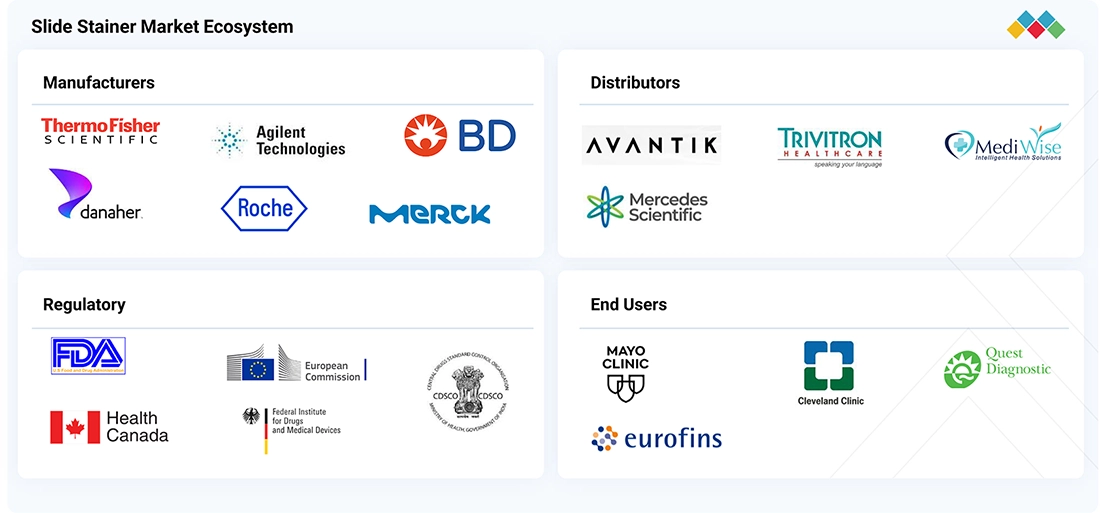
SLIDE STAINER MARKET GROWTH: COMMERCIAL USE CASES ACROSS INDUSTRIES
| COMPANY | USE CASE DESCRIPTION | BENEFITS |
|---|---|---|
 |
Automated H&E staining and histopathology slide preparation using Gemini AS and related staining solutions | Improves staining consistency, reduces manual intervention, and enhances laboratory productivity |
 |
Automated H&E, special staining, and IHC using HistoCore SPECTRA ST and BOND staining platforms | Enhances staining reproducibility, accelerates slide processing, and improves workflow efficiency |
 |
Automated IHC and ISH staining using Dako Omnis platforms for tissue biomarker analysis and cancer diagnostics | Improves biomarker detection, ensures consistent staining quality, and supports efficient diagnostic workflows |
 |
Automated H&E, IHC, and ISH staining using VENTANA HE 600 and BenchMark ULTRA PLUS systems | Supports high-throughput staining, improves diagnostic consistency, and reduces laboratory turnaround times |
Logos and trademarks shown above are the property of their respective owners. Their use here is for informational and illustrative purposes only.
Related Ecosystem
Analytical And Scientific Instrumentation
- Environmental Testing
- Gas Chromatography
- Polymerase Chain Reaction (PCR)
- Automated Liquid Handling Systems
- Flow Cytometry
- Thermo Fisher Scientific Inc.
- Danaher Corporation
- Agilent Technologies, Inc.
- Shimadzu Corporation
- Merck KGaA
Key Takeaways
- Spain's slide stainer market is valued at 86.9 USD million in 2022 with projected growth to 110.9 USD million by 2027.
- Spain demonstrates a 5.0% CAGR, reflecting steady demand for laboratory automation in the healthcare sector.
- Spain's market growth is supported by modernization initiatives in both public and private diagnostic laboratories.
- Spain's healthcare providers are increasingly adopting automated staining solutions to enhance diagnostic efficiency and accuracy.
Slide Stainer Market Report Scope
| Report Metric | Details |
|---|---|
| Base Year | 2022 |
| Fastest Growing Segment | MICROBIOLOGY (Technology) |
| Forecast Period | 2022-2030 |
| Growth Rate | CAGR of 6.8% from 2022 to 2030 |
| Largest Segment | DISEASE DIAGNOSTICS (Application) |
| Market Size Base Year (Billions) | ~USD 4.25 (2022) |
| Revenue Forecast (Billions) | ~USD 7.19 (2030) |
| Segments Covered | Product, Type, Application, Disease Type, Technology, End User |
Spain Slide Stainer Market Report Segmentation
6 segment dimensions are covered across the global market.
By Product
- Consumables And Accessories
- Equipment
- Reagents And Kits
By Type
- Antibodies
- Automated And Semi-Automated Slide Stainers
- Blocking Sera And Reagents
- Diluents And Buffers
- Manual Slide Staining Sets
- Mounting Media, Fixative Reagents, And Embedding Media
- Probes
- Stains
By Application
- Disease Diagnostics
- Medical Research
By Disease Type
- Breast Cancer
- Gastric Cancer
- Lymphoma
- Non-Small Cell Lung Cancer
- Other Diseases
- Prostate Cancer
By Technology
- Cytology
- Hematology
- Hematoxylin & Eosin
- Immunohistochemistry
- In Situ Hybridization
- Microbiology
- Special Staining
By End User
- Academic And Research Institutes
- Hospitals And Diagnostic Laboratories
- Other End Users
- Pharmaceutical And Biotechnology Companies
Target Audience
- Medical Device Manufacturers : Manufacturers of slide staining equipment need Spain-specific market data to assess market potential, identify distribution opportunities, and develop localized product strategies for Spanish healthcare facilities.
- Healthcare Facility Administrators : Hospital and laboratory managers in Spain require market insights to justify capital investments in automated slide staining systems, benchmark against industry standards, and plan procurement strategies.
- Diagnostic Laboratory Operators : Pathology lab owners and operators need Spain market forecasts to evaluate technology upgrades, assess ROI on automation investments, and stay competitive within the Spanish diagnostic market.
- Healthcare Investors & Consultants : Investment firms and management consultants focused on Spanish healthcare require detailed market analysis to identify growth opportunities, evaluate portfolio companies, and guide strategic acquisitions in the diagnostics sector.
- Regulatory & Policy Bodies : Spanish healthcare authorities and policy makers need market data to understand diagnostic infrastructure development, plan healthcare modernization initiatives, and allocate resources for laboratory automation programs.
Reasons to Buy this Report
- Precise Market Sizing for Spain : Access validated market data specific to Spain with exact valuations (86.9 USD million in 2022) and forecasts (110.9 USD million by 2027), enabling accurate business planning and investment decisions for the Spanish market.
- Growth Opportunity Identification : Understand Spain's 5.0% CAGR trajectory and identify high-potential segments within Spanish healthcare facilities, diagnostic centers, and pathology laboratories investing in automation technologies.
- Competitive Landscape Intelligence : Gain insights into Spain-specific market dynamics, local healthcare infrastructure investments, and regulatory environment to develop targeted strategies for market entry or expansion in the Spanish region.
- Strategic Investment Guidance : Leverage Spain market analysis to prioritize resource allocation, identify partnership opportunities with Spanish healthcare providers, and optimize product positioning for the local market.
- Benchmark Against Global Trends : Compare Spain's 5.0% CAGR against the global 6.8% CAGR to understand regional performance dynamics and adjust forecasting models for European market strategies.
Frequently asked questions
What is the current size of Spain's slide stainer market?
Spain's slide stainer market was valued at 86.9 USD million in 2022 and is expected to reach 110.9 USD million by 2027.
What is the growth rate of Spain's slide stainer market?
Spain's slide stainer market is growing at a compound annual growth rate (CAGR) of 5.0% from 2022 to 2027.
What factors are driving growth in Spain's slide stainer market?
Spain's market growth is driven by laboratory automation adoption, modernization of diagnostic facilities, and increased demand for efficient histopathology workflows in both public and private healthcare sectors.
How much will Spain's slide stainer market grow by 2027?
Spain's slide stainer market is projected to grow by 24.0 USD million, from 86.9 USD million in 2022 to 110.9 USD million in 2027.
Why is Spain's slide stainer market important for healthcare?
Spain's slide stainer market is important because automated staining solutions enhance diagnostic accuracy, improve laboratory throughput, and reduce manual processing errors in histopathology workflows across Spain's healthcare system.
RESEARCH METHODOLOGY
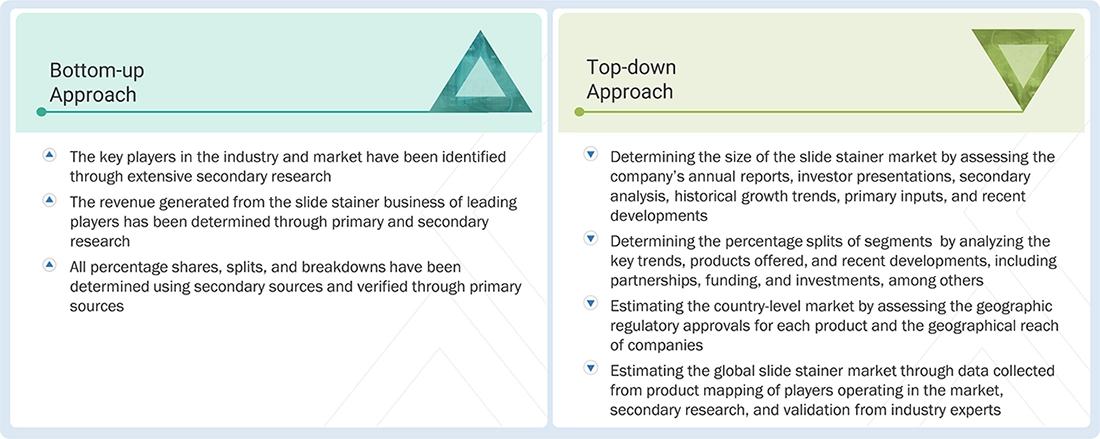
The study involved four major activities to estimate the current size of the global slide stainers market. Extensive secondary research was conducted to gather information on the slide stainers market, related histopathology and cytology equipment markets, and the broader clinical diagnostics and laboratory automation industries. The findings, assumptions, and market estimates were then validated through primary research with industry experts across the slide stainers value chain, including manufacturers, reagent and consumable suppliers, distributors, pathology laboratories, hospitals, diagnostic service providers, and end users. Both top-down and bottom-up approaches were used to estimate the overall slide stainers market size. This was followed by market segmentation and data triangulation to estimate the size of key segments and subsegments by product, staining technique, application, end user, and region.
Secondary Research
The secondary research process relied extensively on industry databases, company websites, annual reports, investor presentations, SEC filings, regulatory publications, scientific and technical papers, white papers, financial reports, trade publications, and commercial databases such as Bloomberg Businessweek, Factiva, and D&B Hoovers. The research gathered comprehensive technical, market-oriented, regulatory, and commercial information on slide stainers, including automated and manual staining systems, staining reagents and kits, consumables, and associated laboratory equipment. It covered major staining techniques, including hematoxylin and eosin (H&E), immunohistochemistry (IHC), in situ hybridization (ISH), and special staining, along with their applications in disease diagnostics, cancer detection, histopathology, cytology, and biomedical research.
Secondary research was also used to identify key market players, slide-staining equipment manufacturers, reagent and consumable suppliers, distributors, and other stakeholders; establish detailed market classification and segmentation; assess regulatory developments, product approvals, technological advancements, laboratory automation trends, and emerging staining technologies; and identify key market developments, demand drivers, challenges, and growth opportunities. A database of key industry participants and stakeholders in the global slide-stainers ecosystem was also developed through secondary research.
Primary Research
During the primary research process, supply- and demand-side stakeholders in the slide stainers market were interviewed to gather qualitative and quantitative insights for the study. Supply-side respondents included industry experts such as CEOs, vice presidents, marketing and sales directors, product managers, technology and innovation directors, business development managers, and other senior executives from leading slide-staining equipment manufacturers, staining reagent and kit suppliers, laboratory equipment providers, distributors, and diagnostic technology companies. Demand-side respondents included professionals from hospitals, diagnostic and pathology laboratories, academic and research institutes, pharmaceutical and biotechnology companies, and other organizations that use slide-staining systems for histopathology, cytology, disease diagnostics, and research applications.
Primary research was conducted to validate market segmentation and market size estimates, identify and assess key market participants, and gain insights into adoption of automated and manual slide staining systems, staining techniques, reagent and consumable requirements, regulatory and compliance standards, testing volumes, purchasing criteria, laboratory automation capabilities, competitive dynamics, and key market drivers and challenges shaping the global slide stainers market.
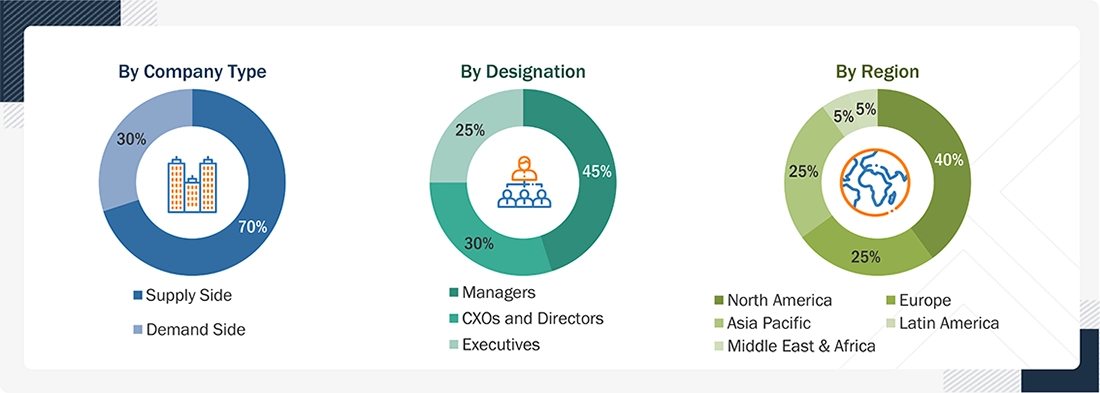
*Others include sales managers, marketing managers, business development managers, product managers, distributors, and suppliers.
Note: Companies are classified into tiers based on their total revenue. Tier 1 = >USD 1000 million, Tier 2 = USD 500 million, and Tier 3 = <USD 100 million.
To know about the assumptions considered for the study, download the pdf brochure
Market Size Estimation
In this report, the global slide stainers market size was determined using revenue share analysis of leading market players. To this end, key companies operating in the market were identified, and their revenues from slide staining instruments, reagents, kits, and related consumables were estimated based on insights gathered during the primary and secondary research phases. Secondary research included an extensive review of annual reports, financial statements, investor presentations, and product portfolios of leading market players. Primary research involved interviews with key opinion leaders, including CEOs, directors, product managers, marketing executives, and industry experts from slide staining equipment manufacturers, diagnostic laboratories, and hospital procurement departments.
Segmental revenues were calculated by mapping revenue from major slide-staining equipment manufacturers and reagent and kit suppliers to estimate the global slide-stainers market value. This process involved the following steps:
- Compiling a list of major global players in the slide stainers market, including F. Hoffmann-La Roche Ltd., Danaher Corporation, PHC Holdings Corporation, and other key manufacturers.
- Mapping annual revenues for major global players from slide-staining instruments, reagents & kits, and related consumables, based on reported financial information, product portfolios, and estimated business contributions.
- Mapping revenue for leading market players to determine their share of the global slide stainers market as of 2025.
- Extrapolating the global value of the slide stainers market, with specific attention to product segments, staining techniques, disease diagnostic applications, and major end users, including hospitals and diagnostic laboratories.
Data Triangulation
After determining the overall market size through the market estimation process described above, the global slide stainers market was segmented into segments and subsegments. Data triangulation and market breakdown procedures were used to complete the overall market engineering process and determine the market size for all segments and subsegments, including product, staining technique, application, end user, and region. Data triangulation involved analyzing various factors and trends from both demand- and supply-side perspectives, including diagnostic testing volumes, adoption of automated staining systems, reagent consumption, technological advancements, and laboratory infrastructure development. Additionally, slide stainers market estimates were validated using top-down and bottom-up approaches.
Market Definition
Slide stainers are laboratory instruments and associated staining solutions that apply dyes, reagents, and chemical stains to biological specimens mounted on microscope slides, enabling detailed examination of cellular structures, tissue morphology, and disease-specific biomarkers. These systems include automated and manual staining instruments, reagents, kits, and consumables used for hematoxylin and eosin (H&E), immunohistochemistry (IHC), in situ hybridization (ISH), and special staining procedures. Slide stainers are widely used in histopathology, cytology, hematology, and clinical research to support disease diagnosis, cancer detection, and pathological investigations. They are primarily used in hospitals, diagnostic laboratories, academic and research institutes, and pharmaceutical and biotechnology companies to ensure standardized staining procedures, improve diagnostic accuracy, and enhance laboratory efficiency.
Key Stakeholders
- Slide staining instrument manufacturers
- Suppliers & distributors of slide staining instruments and consumables
- Staining reagents & kits manufacturing companies
- Hospitals & diagnostic laboratories
- Histopathology & cytology laboratories
- Pharmaceutical & biotechnology companies
- Academic & research institutes
- Clinical research organizations (CROs)
- Pathology equipment and laboratory automation providers
- Market research and consulting firms
Report Objectives
- To define, describe, and forecast the size of the slide stainers market by product type, technology, application, end user, and region
- To provide detailed information on the major factors influencing the growth potential of the global slide stainers market—including drivers, restraints, opportunities, challenges, and trends—from a healthcare industry perspective
- To analyze the micro-markets in terms of individual growth trends, prospects, and contributions to the global slide stainers market, with an emphasis on the industry
- To identify key growth opportunities in the global slide stainers market for stakeholders and detail the competitive landscape for market leaders
- To forecast the size of market segments and subsegments across five major regions: North America (the US and Canada), Europe (Germany, France, the UK, Italy, Spain, and the rest of Europe), Asia Pacific (Japan, China, India, Australia, South Korea, and the rest of Asia Pacific), Latin America (Brazil, Mexico, and the rest of Latin America), and the Middle East and Africa
- To profile key players in the slide stainers market and comprehensively analyze their market shares and core competencies
- To analyze competitive developments in the global slide stainers market, including product launches, agreements, expansions, and mergers and acquisitions
Available customizations:
With the given market data, customizations are offered per the company's specific needs. The following customization options are available for the present global slide stainers market report:
Product Analysis
- Product matrix, which gives a detailed comparison of the product portfolios of the top five companies.
Company Information
- Detailed analysis and profiling of additional market players (up to five).
Geographic Analysis
- Further breakdown of the Rest of Europe slide stainers market into Russia, Belgium, the Netherlands, Switzerland, Austria, Finland, Sweden, Poland, and Portugal, among others.
- Further breakdown of the Rest of Asia Pacific Slide Stainers market into Singapore, Taiwan, New Zealand, Philippines, Malaysia, and other APAC countries.
- Further breakdown of the Latin American Slide Stainers market into Colombia, Chile, Argentina, and Peru, among others.
Get the Full Slide Stainer Market Report
Full forecast, segment splits, and company analysis for all Slide Stainer Market.
- US Slide Stainer Market
- Canada Slide Stainer Market
- Germany Slide Stainer Market
- France Slide Stainer Market
- UK Slide Stainer Market
- Italy Slide Stainer Market
- Japan Slide Stainer Market
- China Slide Stainer Market
- India Slide Stainer Market
- Rest Of Europe Slide Stainer Market
- Rest Of Apac Slide Stainer Market
Need a Tailored Report?
Customize this report to your needs
Get 10% FREE Customization
Customize This Report