
US Therapeutic Drug Monitoring Market (2024-2029)

The US Therapeutic Drug Monitoring Market was valued at $857.4 Million in 2024 and projected to reach to $1275.1 Million by 2029, representing a compound annual growth rate of 8.3%. The US Therapeutic Drug Monitoring market is poised for sustained expansion through 2029, driven by healthcare system modernization and increased focus on precision medicine.


| Market Size in | USD 26.32 MN |
| Market Forecast in | |
| CAGR | |
| Forecast Period | |
| Units Considered | Value (USD MN) |
US Therapeutic Drug Monitoring Market Trends and Insights
- The US market is driven by increasing adoption of personalized medicine, rising prevalence of chronic diseases requiring drug level optimization, and advancing laboratory automation technologies.
- In the US, healthcare providers are increasingly implementing TDM protocols to improve patient outcomes and reduce adverse drug events across immunosuppressants, anticonvulsants, and cardiovascular medications. The US market benefits from strong regulatory support, sophisticated healthcare infrastructure, and high reimbursement rates for TDM services.
- US laboratories are investing in high-throughput testing platforms and point-of-care devices to enhance efficiency and turnaround times.
- The US pharmaceutical and clinical laboratory sectors are collaborating to integrate TDM into standard care pathways, particularly in transplantation, oncology, and psychiatry.
- With an 8.3% compound annual growth rate through 2029, the US market reflects sustained demand for precision dosing solutions and improved therapeutic outcomes..
Key Market Statistics
- CAGR (2024-2029) 8.3% CAGR
- Market Size, 2024 ~USD 857.4 Million
- Forecast, 2029 ~USD 1275.1 Million
- Country US
US Therapeutic Drug Monitoring Market Overview
Market Valuation :
The US Therapeutic Drug Monitoring market is valued at $857.4 million in 2024, with strong growth trajectory reaching $1,275.1 million by 2029, representing an 8.3% CAGR.
Personalized Medicine Adoption :
US healthcare providers are increasingly implementing personalized medicine approaches, driving demand for TDM services to optimize drug dosing and improve patient outcomes across diverse populations.
Chronic Disease Management :
Rising prevalence of chronic diseases in the US population necessitates continuous drug level monitoring, particularly for immunosuppressants, anticonvulsants, and cardiac medications requiring therapeutic optimization.
Laboratory Automation Growth :
US clinical laboratories are investing in advanced automation technologies and integrated testing platforms, enhancing TDM efficiency, reducing turnaround times, and improving diagnostic accuracy.
US Therapeutic Drug Monitoring Market Dynamics
- US hospitals and diagnostic laboratories are prioritizing TDM integration to enhance clinical outcomes and reduce adverse drug events.
- Regulatory support for personalized healthcare and reimbursement improvements are accelerating market adoption.
- The competitive landscape is intensifying as major diagnostic companies expand TDM portfolios and invest in point-of-care testing technologies.
- Emerging biomarker discoveries and expanded drug monitoring panels will further propel market growth, particularly in oncology and transplantation specialties..
Market Ecosystem
Related Ecosystem
In Vitro Diagnostics
- Polymerase Chain Reaction (PCR)
- Enzyme-Linked Immunosorbent Assay (ELISA)
- Dna Microarrays
- Assay Kits
- Microarrays
- ROCHE HOLDINGS AG
- Thermo Fisher Scientific Inc.
- Danaher Corporation
- Abbott Laboratories
- Biomerieux s.a.
Medical Devices
- Polymerase Chain Reaction (PCR)
- Magnetic Resonance Imaging (MRI)
- Disposable Autoinjectors
- Pulse Oximeters
- Blood Pressure Monitors
- Medtronic plc
- Abbott Laboratories
- Stryker Corporation
- Becton, Dickinson and Company
- CONMED Corporation
Key Takeaways
- The US TDM market is valued at $857.4 million in 2024 and will reach $1,275.1 million by 2029, representing an 8.3% CAGR.
- US healthcare providers are increasingly adopting TDM to optimize drug dosing and reduce adverse events in chronic disease management.
- The US market is supported by advanced laboratory infrastructure, favorable reimbursement policies, and strong regulatory frameworks.
- US clinical laboratories are investing in automation and point-of-care technologies to improve TDM service delivery and patient outcomes.
Therapeutic Drug Monitoring Market Report Scope
| Report Metric | Details |
|---|---|
| Base Year | 2024 |
| Fastest Growing Segment | ONCOLOGY (Therapeutic Area) |
| Forecast Period | 2024-2029 |
| Growth Rate | CAGR of 8.4% from 2024 to 2029 |
| Largest Segment | CONSUMABLES (Product) |
| Market Size Base Year (Billions) | ~USD 2.3 (2024) |
| Revenue Forecast (Billions) | ~USD 3.44 (2029) |
| Segments Covered | Product, Type, Technology, Drug Class, Therapeutic Area, Specimen, End User |
US Therapeutic Drug Monitoring Market Report Segmentation
7 segment dimensions are covered across the global market.
By Product
- Consumables
- Equipment
By Type
- Chemiluminescence Immunoassays
- Chromatography & Ms Detectors
- Clinical Chemistry Analyzers
- Colorimetric Immunoassays
- Enzyme-Linked Immunosorbent Assays
- Fluorescence Immunoassays
- Gas Chromatography-Mass Spectrometry
- Immunoassay Analyzers
- Liquid Chromatography- Mass Spectrometry
- Other Immunoassays
By Technology
- Chromatography-Ms
- Immunoassays
- Other Technologies
By Drug Class
- Antiarrhythmic Drugs
- Antibiotic Drugs
- Antiepileptic Drugs
- Bronchodilator Drugs
- Immunosuppressant Drugs
- Other Drugs
- Psychoactive Drugs
By Therapeutic Area
- Cardiology
- Infectious Diseases
- Neurological Disorders
- Oncology
- Other Therapeutic Areas
By Specimen
- Blood
- Other Specimens
- Saliva
By End User
- Commercial & Private Laboratories
- Hospital Laboratories
- Other End Users
US: THERAPEUTIC DRUG MONITORING MARKET, BY END USER, 2022–2029
| Segment | 2022 | 2023 | 2024 | 2025 | 2026 | 2027 | 2028 | 2029 | CAGR (%) |
|---|---|---|---|---|---|---|---|---|---|
| COMMERCIAL & PRIVATE LABORATORIES | 299.4 | 317.6 | 338.1 | 361.1 | 386.4 | 414.5 | 445.7 | 480.6 | 7.3 |
| HOSPITAL LABORATORIES | 490.9 | 527 | 567.7 | 613.6 | 664.3 | 720.9 | 784.3 | 855.3 | 8.5 |
| OTHER END USERS | 132 | 138.6 | 146.1 | 154.5 | 163.6 | 173.8 | 185 | 197.5 | 6.2 |
| TOTAL | 922.4 | 983.3 | 1051.9 | 1129.2 | 1214.3 | 1309.1 | 1415 | 1533.3 | 7.8 |
Target Audience
- Diagnostic Laboratory Companies : US clinical laboratories need market intelligence to expand TDM service offerings, optimize testing menus, and compete effectively in the growing personalized medicine segment.
- Hospital Healthcare Systems : US hospital networks require data-driven insights to justify TDM program investments, improve patient outcomes, and optimize medication management across their facilities.
- In Vitro Diagnostic (IVD) Manufacturers : IVD companies targeting the US market need comprehensive analysis to develop competitive TDM assays, identify unmet clinical needs, and plan product launches and commercialization strategies.
- Pharmaceutical Companies : US pharma firms need TDM market data to support precision medicine initiatives, develop companion diagnostics, and understand drug monitoring requirements for regulatory approval.
- Healthcare Investors & Consultants : Investment firms and management consultants require US-specific market intelligence to evaluate acquisition targets, assess growth potential, and guide strategic decisions in the diagnostic sector.
Reasons to Buy this Report
- US-Specific Market Sizing : Obtain precise valuation data for the US market ($857.4M in 2024) with detailed forecasts through 2029, enabling accurate budget allocation and investment planning for US operations.
- Regulatory & Reimbursement Insights : Understand US-specific regulatory landscape, CMS reimbursement policies, and payer coverage decisions affecting TDM adoption and profitability in the American healthcare system.
- Competitive Landscape Analysis : Identify leading US diagnostic companies, emerging players, and market consolidation trends specific to the American TDM sector to inform competitive strategy and partnership opportunities.
- Clinical Adoption Drivers : Analyze US-specific factors driving TDM adoption including chronic disease prevalence, hospital laboratory capabilities, and physician adoption rates across different healthcare settings.
- Growth Opportunity Assessment : Evaluate high-growth segments within the US market, including emerging therapeutic areas, geographic expansion potential, and technology adoption opportunities for strategic market entry.
Frequently asked questions
What is the current size of the US Therapeutic Drug Monitoring market?
The US Therapeutic Drug Monitoring market was valued at $857.4 million in 2024 and is expected to grow to $1,275.1 million by 2029.
What is the projected growth rate for the US TDM market?
The US TDM market is projected to grow at a compound annual growth rate (CAGR) of 8.3% from 2024 to 2029.
Which therapeutic areas drive TDM adoption in the US?
In the US, TDM is primarily driven by immunosuppressant monitoring in transplant patients, anticonvulsant therapy optimization, and cardiovascular drug level management.
What factors are accelerating TDM market growth in the US?
Key growth drivers in the US include personalized medicine adoption, increasing chronic disease prevalence, laboratory automation advancements, and strong reimbursement support.
How are US laboratories enhancing TDM service delivery?
US laboratories are investing in high-throughput testing platforms, point-of-care devices, and integrated digital solutions to improve turnaround times and clinical outcomes.
RESEARCH METHODOLOGY
The study involved major activities in estimating the current market size for the therapeutic drug monitoring market. Exhaustive secondary research was done to collect information on the therapeutic drug monitoring industry. The next step was to validate these findings, assumptions, and sizing with industry experts across the value chain using primary research. Different approaches, such as top-down and bottom-up, were employed to estimate the total market size. After that, the market breakup and data triangulation procedures were used to estimate the market size of the segments and subsegments of the therapeutic drug monitoring market.
Secondary Research
The market for the companies offering therapeutic drug monitoring solutions is arrived at by secondary data available through paid and unpaid sources, analyzing the product portfolios of the major companies in the ecosystem, and rating the companies by their performance and quality. Various sources were referred to in the secondary research process to identify and collect information for this study. The secondary sources include annual reports, press releases, investor presentations of companies, white papers, journals, certified publications, and articles from recognized authors, directories, and databases.
In the secondary research process, various secondary sources were referred to for identifying and collecting information related to the study. Secondary sources included annual reports, press releases, and investor presentations of blockchain vendors, forums, certified publications, and whitepapers. The secondary research was used to obtain critical information on the industry’s value chain, the total pool of key players, market classification, and segmentation from the market and technology-oriented perspectives.
Primary Research
In the primary research process, various primary sources from both the supply and demand sides were interviewed to obtain qualitative and quantitative information for this report. The primary sources from the supply side included industry experts, such as Chief Executive Officers (CEOs), Vice Presidents (VPs), marketing directors, technology and innovation directors, and related key executives from various key companies and organizations operating in the blockchain market. After the complete market engineering (calculations for market statistics, market breakdown, market size estimations, market forecasting, and data triangulation), extensive primary research was conducted to gather information and verify and validate the critical numbers arrived at. Primary research was also conducted to identify the segmentation types, industry trends, competitive landscape of therapeutic drug monitoring solutions offered by various market players, and key market dynamics, such as drivers, restraints, opportunities, challenges, industry trends, and key player strategies.
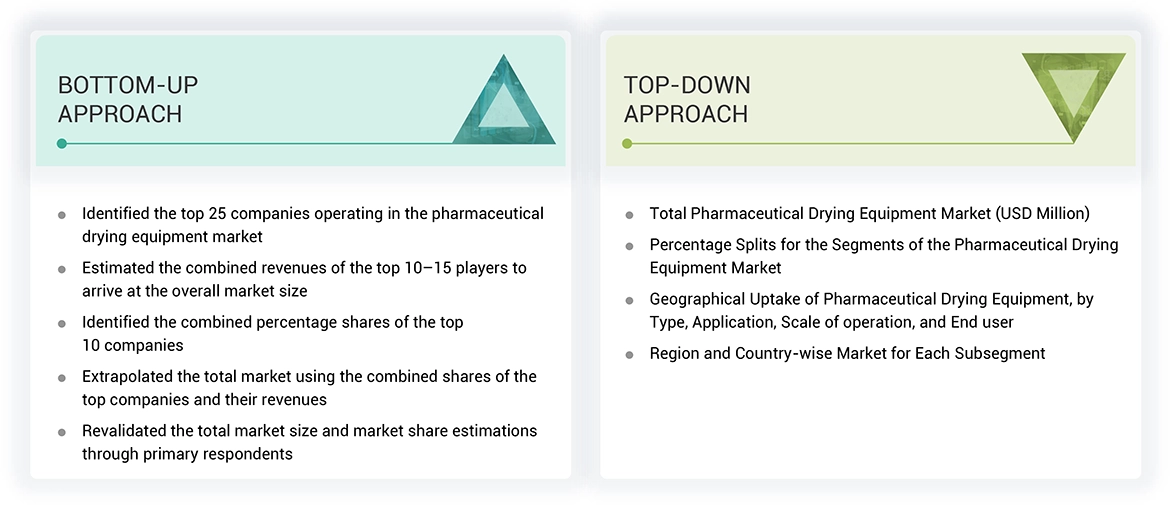
In the complete market engineering process, the top-down and bottom-up approaches were extensively used, along with several data triangulation methods, to perform the market estimation and market forecasting for the overall market segments and subsegments listed in this report. Extensive qualitative and quantitative analysis was performed on the complete market engineering process to list the key information/insights throughout the report.
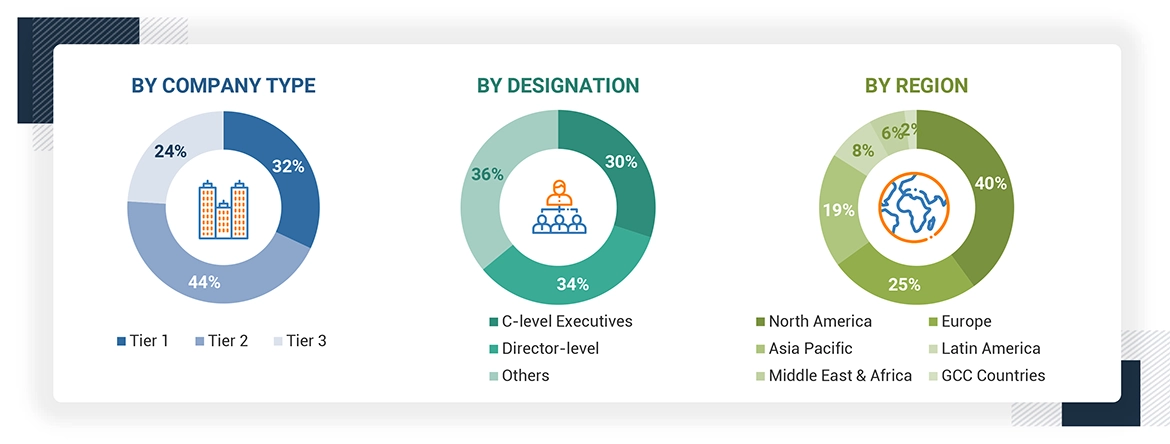
*C-level primaries include CEOs, CFOs, COOs, and VPs.
*Others include sales managers, marketing managers, business development managers, product managers, distributors, and suppliers.
Note: Companies are classified into tiers based on their total revenue. As of 2023, Tier 1 = >USD 10.00 billion, Tier 2 = USD 1.00 billion to USD 10.00 billion, and Tier 3 = < USD 1.00 billion.
Source: MarketsandMarkets Analysis
To know about the assumptions considered for the study, download the pdf brochure
Market Size Estimation
Both top-down and bottom-up approaches were used to estimate and validate the total size of the cell culture market. These methods were also used extensively to estimate the size of various subsegments in the market. The research methodology used to estimate the market size includes the following:
Data Triangulation
After arriving at the overall market size using the market size estimation processes explained above, the market was split into several segments and subsegments. The data triangulation and market breakup procedures were employed, wherever applicable, to complete the overall market engineering process and arrive at the exact statistics of each market segment and subsegment. The data was triangulated by studying various factors and trends from both the demand and supply sides.
Market Definition
Therapeutic drug monitoring (TDM) measures the concentration of specific drugs in body fluids, which helps manage drug therapy to cure, alleviate, or prevent diseases. TDM is used mainly for monitoring drugs with narrow therapeutic ranges, drugs with marked pharmacokinetic variability, medications for which target concentrations are difficult to monitor, and drugs known to cause therapeutic and adverse effects.
Stakeholders
- Therapeutic Drug Monitoring Product Manufacturers
- Healthcare Service Providers
- Research Associations
- Research Institutes
- Venture Capitalists and Investors
- Various Research and Consulting Companies
- Pharmaceutical and Biopharmaceutical Companies
- Diagnostic Associations
- Clinical Laboratories
- Suppliers/Distributors of Therapeutic Drug Monitoring Products and Consumables
- Hospitals
- Government and Non-governmental Regulatory Authorities
Report Objectives
- To define, describe, and forecast the therapeutic drug monitoring market based on – product, technology, drug class, therapeutic area, specimen, end user, and region.
- To provide detailed information about the major factors (drivers, opportunities, restraints, and challenges) influencing the growth of the market.
- To analyze opportunities for stakeholders by identifying the high-growth segments of the market
- To forecast the size of the market segments with respect to six main regions: North America, Europe, Asia Pacific, Latin America, the Middle East & Africa, and GCC Countries.
- To analyze subsegments of the market with respect to individual growth trends, prospects, and contributions to the overall market.
- To profile the key players and comprehensively analyze their market sizes and core competencies
- To track and analyze competitive developments such as product enhancements and new product launches, acquisitions, and partnerships & collaborations in the market globally.
Get the Full Therapeutic Drug Monitoring Market Report
Full forecast, segment splits, and company analysis for all Therapeutic Drug Monitoring Market.
- India Therapeutic Drug Monitoring Market
- Australia Therapeutic Drug Monitoring Market
- Rest Of Europe Therapeutic Drug Monitoring Market
- Rest Of Asia Pacific Therapeutic Drug Monitoring Market
- Canada Therapeutic Drug Monitoring Market
- Germany Therapeutic Drug Monitoring Market
- UK Therapeutic Drug Monitoring Market
- France Therapeutic Drug Monitoring Market
- Italy Therapeutic Drug Monitoring Market
- Spain Therapeutic Drug Monitoring Market
- Japan Therapeutic Drug Monitoring Market
- China Therapeutic Drug Monitoring Market
Need a Tailored Report?
Customize this report to your needs
Get 10% FREE Customization
Customize This Report
