
US Urology Devices Market (2025-2030)

The US Urology Devices Market was valued at $9637.3 Million in 2025 and projected to reach to $12796.5 Million by 2030, representing a compound annual growth rate of 5.8%. The US urology devices market is positioned for steady growth through 2030, driven by an aging population with increasing prevalence of urological conditions, rising healthcare expenditure, and strong adoption of advanced treatment technologies.


| Market Size in | USD 26.32 MN |
| Market Forecast in | |
| CAGR | |
| Forecast Period | |
| Units Considered | Value (USD MN) |
US Urology Devices Market Trends and Insights
- The US market benefits from advanced healthcare infrastructure, high adoption of minimally invasive procedures, and strong reimbursement frameworks that support innovation in urological treatments.
- Key drivers in the US include an aging population with rising incidence of benign prostatic hyperplasia, urinary incontinence, and kidney stone disease, alongside increasing demand for robotic-assisted surgical systems and diagnostic imaging technologies. The US urology devices sector is characterized by significant investment in research and development, with major manufacturers competing to introduce next-generation products that enhance patient outcomes and reduce procedural costs.
- The US market's growth trajectory reflects expanding clinical applications, improved access to advanced treatment options, and growing awareness of urological health conditions among healthcare providers and patients.
- By 2030, the US is expected to maintain its position as a leading market for urology devices, driven by continuous technological advancement and favorable demographic trends..
Key Market Statistics
- CAGR (2025-2030) 5.8% CAGR
- Market Size, 2025 ~USD 9637.3 Million
- Forecast, 2030 ~USD 12796.5 Million
- Country US
US Urology Devices Market Overview
Market Size & Growth :
The US urology devices market is valued at $9,637.3 million in 2025 and is projected to reach $12,796.5 million by 2030, representing a robust CAGR of 5.8% over the forecast period.
Advanced Healthcare Infrastructure :
The US benefits from world-class healthcare facilities, cutting-edge medical technology adoption, and a highly skilled workforce that drives innovation and accelerates the deployment of advanced urological devices.
Minimally Invasive Procedure Adoption :
Strong preference for minimally invasive urological procedures across US hospitals and clinics is driving demand for specialized devices, reducing patient recovery times and improving clinical outcomes.
Robust Reimbursement Framework :
Comprehensive insurance coverage and favorable Medicare/Medicaid reimbursement policies in the US create a supportive environment for device manufacturers and encourage continued investment in urological innovations.
US Urology Devices Market Dynamics
- The market benefits from established regulatory pathways, high patient awareness, and continuous innovation in minimally invasive solutions.
- Healthcare providers' commitment to improving patient outcomes and reducing hospital stays further supports market expansion.
- Additionally, strategic partnerships between device manufacturers and healthcare institutions are accelerating product development and market penetration across the US..
Market Ecosystem
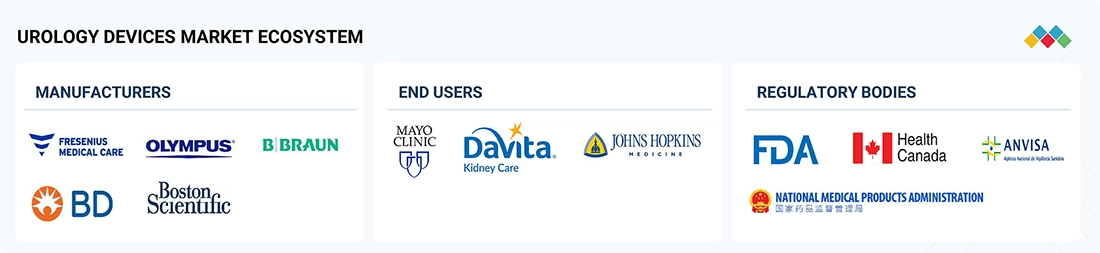
urology-devices-market: COMMERCIAL USE CASES ACROSS INDUSTRIES
| COMPANY | USE CASE DESCRIPTION | BENEFITS |
|---|---|---|
 |
Provides advanced dialysis systems, urological disposables, and minimally invasive solutions for the treatment of chronic kidney disease and urinary disorders in hospitals, clinics, and dialysis centers worldwide. | Enables reliable kidney disease devices, improves patient outcomes in acute and chronic kidney failure cases, supports safety standards, and optimizes workflow efficiency for healthcare providers and patients. |
 |
Offers a comprehensive portfolio of urology and pelvic health solutions, including stone management devices, endourology systems, BPH therapies, and minimally invasive technologies used in both diagnostic and therapeutic urology procedures. | Enhances precision during diagnosis and treatment, reduces procedure times with innovative tools, improves patient safety and comfort, and supports versatility across a wide range of urological interventions. |
 |
Manufactures catheters, dilators, retrieval baskets, guidewires, and diagnostic solutions utilized throughout the urinary tract for minimally invasive interventions in kidney stones, strictures, and urinary retention, providing critical support for clinicians. | Ensures accurate device placement, lowers risk of complications, supports repeatable outcomes, complies with international safety guidelines, and improves overall throughput in endoscopic and catheter-based urologic procedures. |
 |
Supplies a broad selection of urological catheters, nephrostomy sets, irrigation systems, and surgical urology instruments, with a focus on single-use and sterile solutions to minimize infection risks across both hospital and outpatient environments. | Improves sterility and patient safety, reduces healthcare-acquired infections, meets strict regulatory requirements, simplifies post-procedural care, and enhances workflow in busy hospital and home care settings. |
 |
Specializes in high-definition endoscopy equipment, resectoscopes, laser lithotripsy devices, and visualization systems for urological diagnostics and minimally invasive surgeries, trusted globally in clinical and operating environments. | Delivers clear visualization and precise surgical access, assists in rapid and accurate diagnosis, enables more minimally invasive urologic surgery, lowers recovery times, and sets benchmarks for innovation in urology imaging and care. |
Logos and trademarks shown above are the property of their respective owners. Their use here is for informational and illustrative purposes only.
Related Ecosystem
Medical Devices
- Polymerase Chain Reaction (PCR)
- Magnetic Resonance Imaging (MRI)
- Disposable Autoinjectors
- Pulse Oximeters
- Blood Pressure Monitors
- Medtronic plc
- Abbott Laboratories
- Stryker Corporation
- Becton, Dickinson and Company
- CONMED Corporation
Key Takeaways
- The US urology devices market will grow from $9.6B in 2025 to $12.8B in 2030 at a 5.8% CAGR.
- The US market is driven by an aging population and rising prevalence of urological conditions requiring advanced treatment.
- Minimally invasive procedures and robotic-assisted surgery are key growth segments in the US market.
- Strong reimbursement policies and healthcare infrastructure position the US as a mature, high-value market for urology devices.
Urology Devices Market Report Scope
| Report Metric | Details |
|---|---|
| Base Year | 2025 |
| Fastest Growing Segment | URINARY INCONTINENCE (UI) (Application) |
| Forecast Period | 2025–2030 |
| Growth Rate | CAGR of 6% from 2025 to 2030 |
| Largest Segment | HOSPITALS (End User) |
| Market Size Base Year (Billions) | ~USD 34.57 (2025) |
| Revenue Forecast (Billions) | ~USD 46.26 (2030) |
| Segments Covered | Product, Type, Application, End User |
US Urology Devices Market Report Segmentation
4 segment dimensions are covered across the global market.
By Product
- Consumables & Accessories
- Instruments
By Type
- Biopsy Devices
- Catheters
- Cystoscopes
- Dialysis Consumables
- Dialysis Devices
- Dilator Sets & Urethral Access Sheaths
- Drainage Bags
- Endoscopes
- Endoscopy Fluid Management Systems
- Endovision & Imaging Systems
- External Catheters
- Guidewires
- Hemodialysis Devices
- Indwelling/ Foley Catheters
- Insufflators
- Intermittent Catheters
- Laparoscopes
- Laser & Lithotripsy Devices
- Nephroscopes
- Other Consumables & Accessories
- Other Instruments
- Peritoneal Dialysis Devices
- Resectoscopes
- Retrieval Devices & Extractors
- Robotic Systems
- Stents And Implants
- Surgical Dissectors, Forceps & Needle Holders
- Tubes & Distal Attachments
- Ureteroscopes
- Urodynamic Systems
By Application
- Benign Prostatic Hyperplasia (Bph)
- Erectile Dysfunction
- Kidney Diseases
- Other Applications
- Pelvic Organ Prolapse
- Urinary Incontinence (Ui)
- Urinary Stones
- Urological Cancer
By End User
- Ambulatory Surgery Centers
- Clinics
- Dialysis Centers
- Home Care Settings
- Hospitals
US: UROLOGY DEVICES MARKET, BY END USER, 2023–2030
| Segment | 2023 | 2024 | 2025 | 2026 | 2027 | 2028 | 2029 | 2030 | CAGR (%) |
|---|---|---|---|---|---|---|---|---|---|
| AMBULATORY SURGERY CENTERS | 1122.3 | 1134.4 | 1147.2 | 1183.6 | 1230.2 | 1289 | 1361.6 | 1463.3 | 5 |
| CLINICS | 188.2 | 189.1 | 190 | 194.9 | 201.3 | 209.7 | 220.1 | 235.2 | 4.4 |
| DIALYSIS CENTERS | 2254.2 | 2319.8 | 2388.6 | 2509.2 | 2655.1 | 2832.6 | 3046.4 | 3333.4 | 6.9 |
| HOME CARE SETTINGS | 841 | 861.2 | 882.3 | 922.3 | 971.1 | 1030.9 | 1103.2 | 1201.2 | 6.4 |
| HOSPITALS | 4872.1 | 4948.5 | 5029.2 | 5213.4 | 5443.6 | 5730.1 | 6080.1 | 6563.4 | 5.5 |
| TOTAL | 9277.8 | 9453 | 9637.3 | 10023.4 | 10501.3 | 11092.3 | 11811.4 | 12796.5 | 5.8 |
Target Audience
- Medical Device Manufacturers : Manufacturers need US-specific market data to benchmark performance, identify growth opportunities, optimize product portfolios, and develop targeted go-to-market strategies for the American urology market.
- Healthcare Investors & PE Firms : Investment professionals require detailed US market analysis to evaluate acquisition targets, assess portfolio company growth potential, and make informed capital allocation decisions in the urology device sector.
- Hospital & Healthcare Systems : Healthcare administrators need market intelligence to optimize device procurement strategies, evaluate emerging technologies, negotiate supplier contracts, and improve patient care delivery in urology departments.
- Market Research & Consulting Firms : Research professionals utilize comprehensive US market data to support client advisory projects, validate market assumptions, develop competitive strategies, and provide evidence-based recommendations.
- Regulatory & Compliance Officers : Compliance professionals need US-specific regulatory and reimbursement insights to navigate FDA requirements, ensure market compliance, and understand coverage policies affecting device commercialization.
Key Companies in the US Urology Devices Market
| Company | HQ | Ownership | Strongest segments |
|---|---|---|---|
| SIEMENS HEALTHINEERS | Germany | Public Company | Imaging,Diagnostics,Varian (Oncology), |
| NOVANTA, INC | United States | Public Company | Precision Medicine and Manufacturing (lasers, beam steering, robotic motion, end-of-arm tooling, spindles),Medical Solutions (insufflators, pumps, disposables, imaging, RFID, light engines, OR integration), |
| LUMENIS LTD | Israel | Private Company | Surgical,Ophthalmic,Aesthetic, |
| MERIT MEDICAL | United States | Public Company | Cardiovascular (cardiac and peripheral intervention, access, hemostasis, fluid and hemodynamic management),Oncology and Spine (soft tissue biopsy, vertebral augmentation, RFA, bone biopsy),Endoscopy (gastroenterology and pulmonary, including stents, cryoballoon, dilators, kits), |
| FRESENIUS MEDICAL CARE AG & CO. KGAA | Germany | Public Company | Care Delivery (dialysis clinics and services),Dialysis equipment and disposables,Renal pharmaceuticals and ancillary services, |
| BOSTON SCIENTIFIC CORPORATION | United States | Public Company | Cardiovascular (structural heart, CRM, electrophysiology, peripheral interventions),MedSurg – Endoscopy (GI, pancreaticobiliary, infection prevention, single-use scopes),MedSurg – Urology and Pelvic Health, |
| B. BRAUN MELSUNGEN AG | Germany | Private Company | Infusion therapy and smart infusion management,Sterile processing, OR supply, and surgical asset management,Standard and customized procedure kits, |
| BECTON, DICKINSON AND COMPANY | United States | Public Company | Medical Essentials (med-surg disposables, injection, vascular access, sharps),Connected Care (infusion, medication management, pharmacy automation, informatics),BioPharma Systems (prefillable drug delivery systems), |
| OLYMPUS CORPORATION | Japan | Public Company | Gastrointestinal Solutions,Surgical Endoscopes & Integrated OR,Urology Solutions, |
| CARDINAL HEALTH | United States | Public Company | Branded Pharmaceutical Distribution,Generic and OTC Pharmaceutical Distribution,Specialty Pharmaceutical and Manufacturer Services, |
| INTUITIVE SURGICAL | United States | Public Company | da Vinci systems (capital),da Vinci instruments, accessories, and stapling/energy,Ion endoluminal system and accessories, |
| COLOPLAST A/S | Denmark | Public Company | Ostomy Care (SenSura Mio, SenSura, Brava),Continence Care (SpeediCath, Conveen, Peristeen),Advanced Wound Dressings and Biologics (Biatain, Comfeel), |
| STRYKER | United States | Public Company | Orthopaedics (hips, knees, shoulders, ankle, trauma and extremities, Mako Shoulder-linked implants),MedSurg equipment and patient handling (surgical equipment, patient and caregiver safety, emergency and ICU disposables),Neurotechnology and stroke care (navigation, endoscopy, stroke and venous thromboembolism treatment, brain and skull procedures), |
| TELEFLEX INCORPORATED | United States | Public Company | Vascular and Emergency Medicine (Arrow, EZ-IO, FAST1, QuikClot),Interventional (coronary, structural heart, peripheral, closure, OnControl),Surgical (Weck, MiniLap, Pleur-Evac, Deknatel, KMedic, Pilling, Titan SGS), |
| CONVATEC GROUP PLC | United Kingdom | Public Company | Advanced Wound Care,Ostomy Care,Continence Care, |
| MEDTRONIC PLC | Ireland | Public Company | Cardiovascular Portfolio,Neuroscience Portfolio,Medical Surgical Portfolio (incl. Diabetes), |
SIEMENS HEALTHINEERS
Siemens Healthineers is a German public company founded in 1896 with 72,369 employees, operating in the healthcare technology sector.
NOVANTA, INC
Novanta, Inc. is a United States-based public company founded in 1968 with 3,000 employees.
LUMENIS LTD
Lumenis Ltd. is an Israeli private company founded in 1991 with 954 employees.
MERIT MEDICAL
Merit Medical is a United States-based public company founded in 1987 with 7,500 employees.
FRESENIUS MEDICAL CARE AG & CO. KGAA
Fresenius Medical Care AG & Co. KGaA is a German public company founded in 1996 with 108,165 employees, operating as a major healthcare provider.
BOSTON SCIENTIFIC CORPORATION
Boston Scientific Corporation is a United States-based public company founded in 1979 with 59,000 employees, specializing in medical devices.
B. BRAUN MELSUNGEN AG
B. Braun Melsungen AG is a German private company founded in 1839 with 61,583 employees, operating in the medical and pharmaceutical sectors.
BECTON, DICKINSON AND COMPANY
Becton, Dickinson and Company is a United States-based public company founded in 1897 with 72,000 employees, specializing in medical technology and diagnostics.
OLYMPUS CORPORATION
Olympus Corporation is a Japanese public company founded in 1919 with 28,138 employees, operating in imaging and medical technology.
CARDINAL HEALTH
Cardinal Health is a United States-based public company founded in 1979 with 55,392 employees, operating as a healthcare services and products distributor.
INTUITIVE SURGICAL
Intuitive Surgical is a United States-based public company founded in 1995 with 17,021 employees, specializing in robotic surgical systems.
COLOPLAST A/S
Coloplast A/S is a Danish public company founded in 1954 with 17,083 employees, specializing in medical devices and healthcare products.
STRYKER
Stryker is a United States-based public company founded in 1941 with 56,000 employees, operating in medical technology and surgical equipment.
TELEFLEX INCORPORATED
Teleflex Incorporated is a United States-based public company founded in 1943 with 15,500 employees, specializing in medical devices.
CONVATEC GROUP PLC
ConvaTec Group PLC is a United Kingdom-based public company founded in 1978 with 10,910 employees, operating in medical technology and healthcare products.
MEDTRONIC PLC
Medtronic PLC is an Ireland-based public company founded in 1949 with 95,000 employees, operating as a global leader in medical technology.
Reasons to Buy this Report
- Market Size & Valuation Data : Access precise US market valuation ($9.6B in 2025) and 5-year forecasts with detailed breakdowns by device segments, enabling accurate financial planning and investment decisions.
- Competitive Landscape Analysis : Understand the competitive positioning of major US urology device manufacturers, market share distribution, and strategic initiatives to identify partnership and acquisition opportunities.
- Regulatory & Reimbursement Insights : Gain comprehensive knowledge of FDA approval pathways, Medicare/Medicaid reimbursement codes, and insurance coverage policies specific to the US market for informed product development strategies.
- Growth Driver Identification : Identify key market drivers including aging demographics, disease prevalence trends, healthcare spending patterns, and technology adoption rates specific to the US healthcare system.
- Strategic Market Entry Planning : Develop data-driven market entry strategies with insights on regional demand variations, hospital procurement patterns, and distribution channel preferences across the United States.
Frequently asked questions
What is the current size of the US urology devices market?
The US urology devices market is estimated at $9,637.3 million in 2025.
What is the projected size of the US urology devices market by 2030?
The US urology devices market is forecast to reach $12,796.5 million by 2030.
What is the growth rate of the US urology devices market?
The US urology devices market is expected to grow at a compound annual growth rate of 5.8% from 2025 to 2030.
What are the main drivers of growth in the US urology devices market?
Key growth drivers in the US include an aging population, rising incidence of urological conditions, adoption of minimally invasive procedures, robotic-assisted surgery, and favorable reimbursement policies.
Which product segments are leading the US urology devices market?
The US market is led by robotic-assisted surgical systems, diagnostic imaging devices, stone management systems, and urinary incontinence treatment devices.
RESEARCH METHODOLOGY
This research study extensively used secondary sources, directories, and databases to identify and collect valuable information to analyze the global urology devices market. In-depth interviews were conducted with various primary respondents, including key industry participants, subject-matter experts (SMEs), C-level executives of key market players, and industry consultants, to obtain and verify critical qualitative & quantitative information and assess the growth prospects in the market. The global market size estimated through secondary research was then triangulated with inputs from primary research to arrive at the final market size.
Secondary Research
Secondary research was used primarily to identify & collect information for the extensive, technical, market-oriented, and commercial study. The secondary sources used for this study include annual reports, SEC filings, investor presentations, World Health Organization (WHO), US Food and Drug Administration (US FDA), National Center for Biotechnology Information (NCBI), Health Canada, European Medicines Agency (EMA), and Centers for Disease Control and Prevention (CDC). These sources also obtained key information about major players, market classification, and segmentation according to industry trends, regional/country-level markets, market developments, and technology perspectives.
Primary Research
In-depth interviews were conducted with various primary respondents, including key industry participants, subject-matter experts (SMEs), C-level executives of key market players, and industry consultants, to obtain and verify the critical qualitative & quantitative information and assess the prospects of the market. Various primary sources from both the supply & demand sides of the market were interviewed to obtain qualitative and quantitative information. The following is a breakdown of the primary respondents:
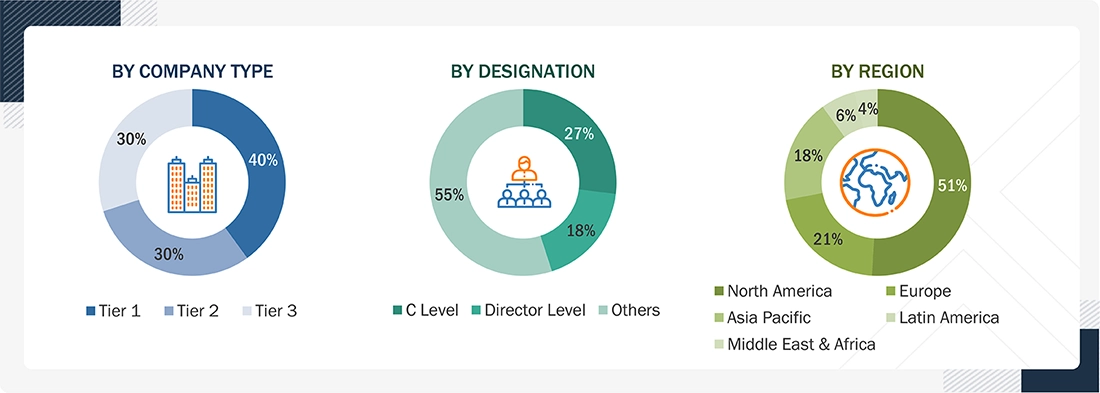
To know about the assumptions considered for the study, download the pdf brochure
Market Size Estimation
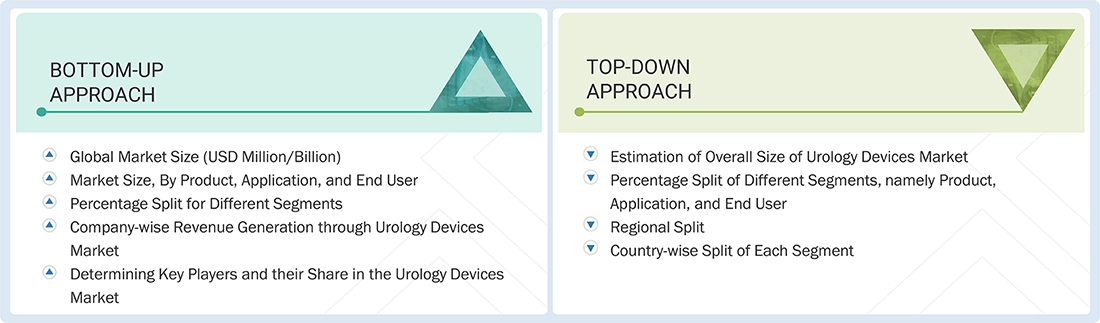
Both top-down and bottom-up approaches were used to estimate and validate the total size of the urology devices market. These methods were also used extensively to estimate the size of various subsegments in the market. The research methodology used to estimate the market size includes the following:
Urology Devices Market : Top-Down and Bottom-Up Approach
Data Triangulation
The total market was split into several segments and subsegments after arriving at the overall market size from the estimation process. Where applicable, data triangulation and market breakdown procedures were employed to complete the overall market engineering process and arrive at the exact statistics for all segments and subsegments. The data was triangulated by studying various factors and trends from both the demand and supply sides.
Market Definition
Urology is a medical specialty that deals with the physiology, diseases, and disorders of the human urinary tract and male reproductive organs. Urology devices comprise various types of equipment used during the diagnosis, surgery, and treatment of urological diseases, such as chronic kidney diseases, renal failure, urinary stones, benign prostate hyperplasia (BPH), pelvic organ prolapse (POP), prostate cancer, kidney cancer, bladder cancer, and erectile dysfunction.
Key Stakeholders
- Manufacturers and Distributors of Urology Devices
- Hospitals and ASCs
- Academic Research Institutes
- Urology Clinics
- Urology Device Service Providers
- Venture Capitalists and Investors
- Clinical Research Organizations (CROs)
Report Objectives
- To define, describe, and forecast the urology devices market by product, application, end user, and region
- To forecast the size of the urology devices market with respect to five regional segments, namely, North America, Europe, the Asia Pacific, Latin America, and the Middle East & Africa
- To provide detailed information regarding the major factors influencing market growth (drivers, restraints, opportunities, and challenges)
- To analyze the micromarkets with respect to individual growth trends, prospects, and contributions to the overall urology devices market
- To analyze the opportunities in the market for stakeholders and provide details of the competitive landscape for market leaders
- To profile the key players in the urology devices market and comprehensively analyze their market shares and core competencies in terms of market developments and growth strategies
- To track and analyze competitive developments such as product launches, product approvals, mergers, agreements, collaborations, partnerships, expansions, and acquisitions in the urology devices market
- To benchmark players within the urology devices market using the Company Evaluation Matrix framework, which analyzes market players on various parameters within the broad categories of business strategy, market share, and product offerings
To track and analyze competitive developments such as acquisitions, product launches, expansions, agreements, collaborations, and partnerships in the urology devices market
Customization Options
With the given market data, MarketsandMarkets offers customizations per the company’s specific needs. The following customization options are available for this report:
Portfolio Assessment
- Product Matrix gives a detailed comparison of the product portfolios of the top five companies.
Company Information
- Detailed analysis and profiling of additional market players (up to five)
Geographical Analysis
- A further breakdown of the Rest of Europe’s urology devices market into countries
- A further breakdown of the Rest of Asia Pacific’s urology devices market into countries
- A further breakdown of Latin America’s urology devices market into countries
Get the Full Urology Devices Market Report
Full forecast, segment splits, and company analysis for all Urology Devices Market.
- Canada Urology Devices Market
- Germany Urology Devices Market
- UK Urology Devices Market
- France Urology Devices Market
- Italy Urology Devices Market
- Spain Urology Devices Market
- China Urology Devices Market
- Japan Urology Devices Market
- India Urology Devices Market
- Brazil Urology Devices Market
- Mexico Urology Devices Market
- Rest Of Europe Urology Devices Market
- Rest Of Asia Pacific Urology Devices Market
- Rest Of Latin America Urology Devices Market
Need a Tailored Report?
Customize this report to your needs
Get 10% FREE Customization
Customize This Report
