Plant-based Protein Market by Source (Soy, Wheat, Pea, Canola, Rice, Oats, Potato, Faba Bean), Type (Concentrates, Isolates, Textured, Milled Protein Flours, Starch-rich Protein Flours), Application, Nature, Form, Function, and Region - Global Forecast to 2030

icon1
USD 34.97 BN
MARKET SIZE, 2030
icon2
CAGR 7.9%
(2025-2030)
icon3
320
REPORT PAGES
icon4
309
MARKET TABLES

OVERVIEW

Source: Secondary Research, Interviews with Experts, MarketsandMarkets Analysis

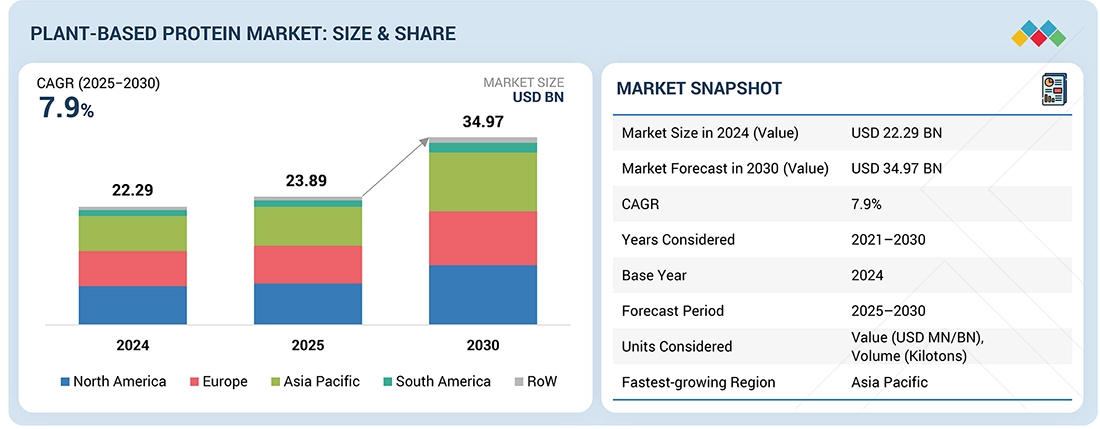
The plant-based protein market is projected to reach USD 34.97 billion by 2030 from USD 23.89 billion in 2025, at a CAGR of 7.9% from 2025 to 2030. The plant-based protein market has experienced significant growth as consumers seek alternatives to traditional animal-derived protein sources. Concerns about health, ethics, environmental awareness, and personal dietary preferences drive this trend.

KEY TAKEAWAYS

  • North America is expected to account for a 32.5% share of the plant-based protein market in 2025.
  • By source, the faba beans segment is expected to register the highest CAGR of 11.5%.
  • By type, the starch-rich protein flours segment is projected to grow at the fastest rate from 2025 to 2030.
  • By nature, the conventional segment is expected to dominate the market.
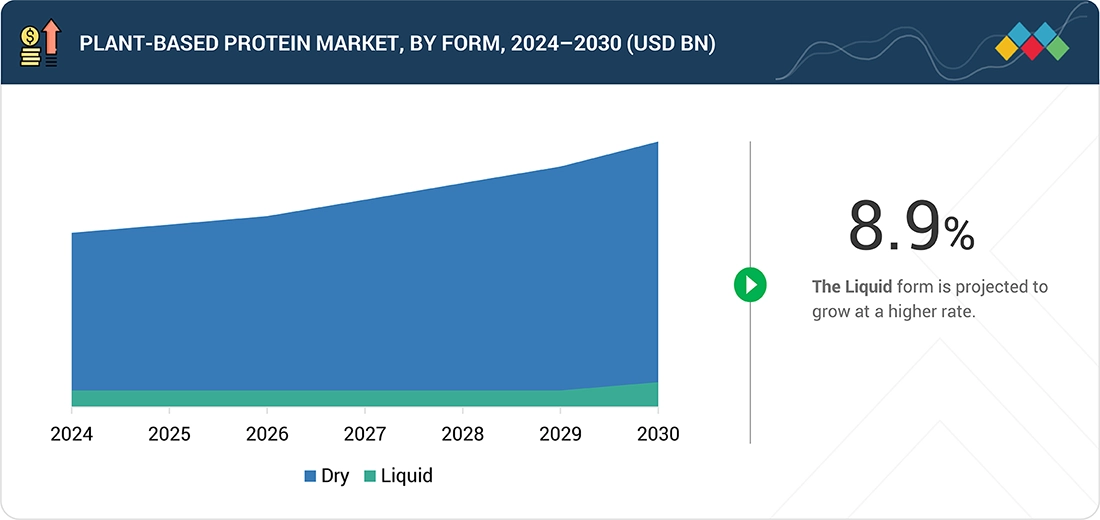
  • By form, the dry segment is expected to dominate the market, growing at a CAGR of 7.8%.
  • By application, the feed segment will grow at the fastest rate during the forecast period.
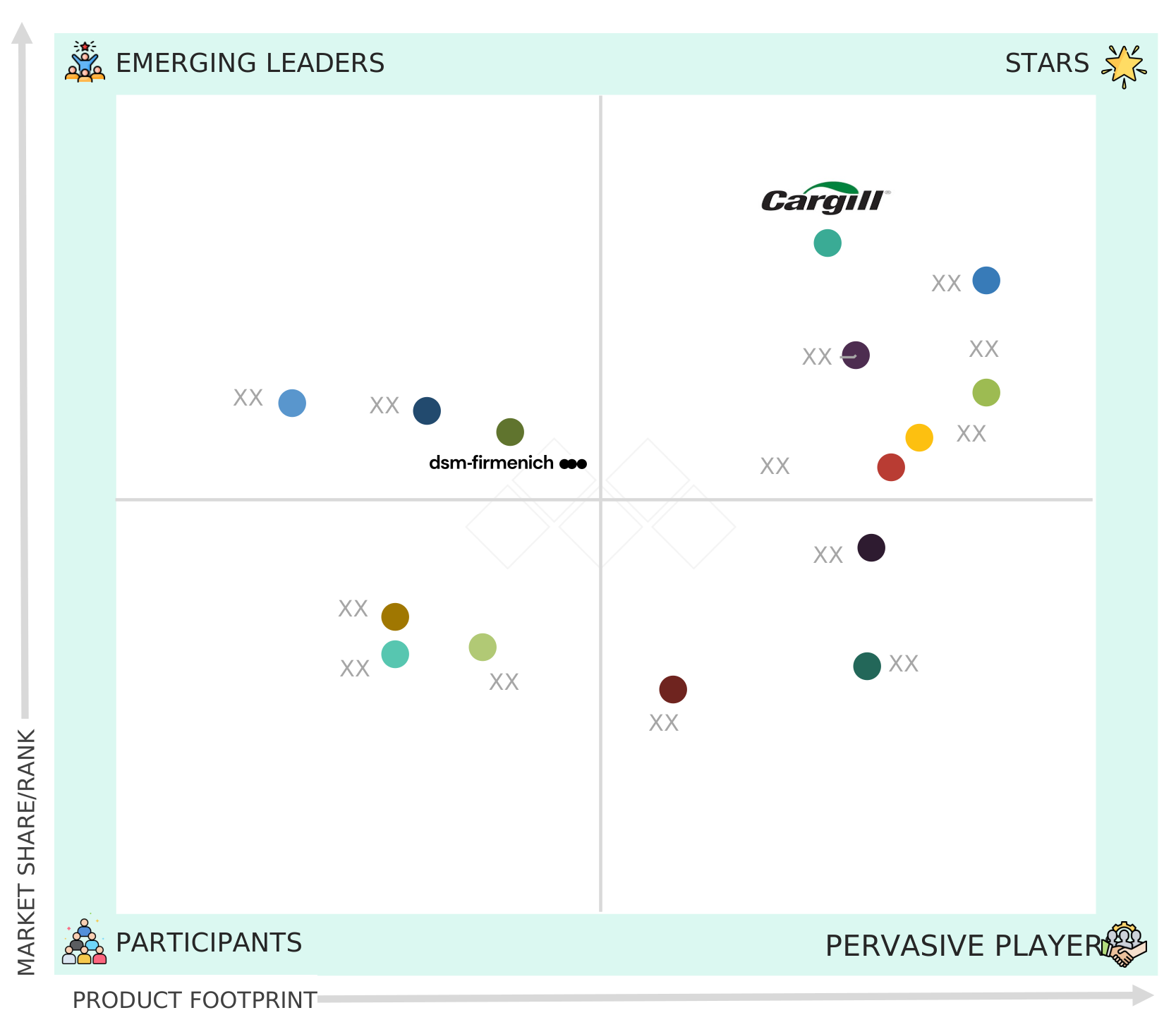
  • ADM, Cargill Incorporated, and IFF were identified as star players in the plant-based protein market, given their strong market share and extensive product footprint.
  • BENEO GmbH, SOTEXPRO, and Axiom Foods, Inc., among others, have distinguished themselves among startups and SMEs by securing strong footholds in specialized niche areas, underscoring their potential as emerging market leaders.

The plant-based protein market has experienced a surge in popularity. This growing popularity and interest can be attributed to rising health concerns, ethical considerations, environmental consciousness, and dietary preferences. Many individuals opt for plant-based protein products due to allergies, dietary restrictions, or a desire for a healthier lifestyle. Additionally, the demand for low-calorie and low-fat options has led to the prominence of plain and unsweetened formulations within the plant-based protein sector.

TRENDS & DISRUPTIONS IMPACTING CUSTOMERS' CUSTOMERS

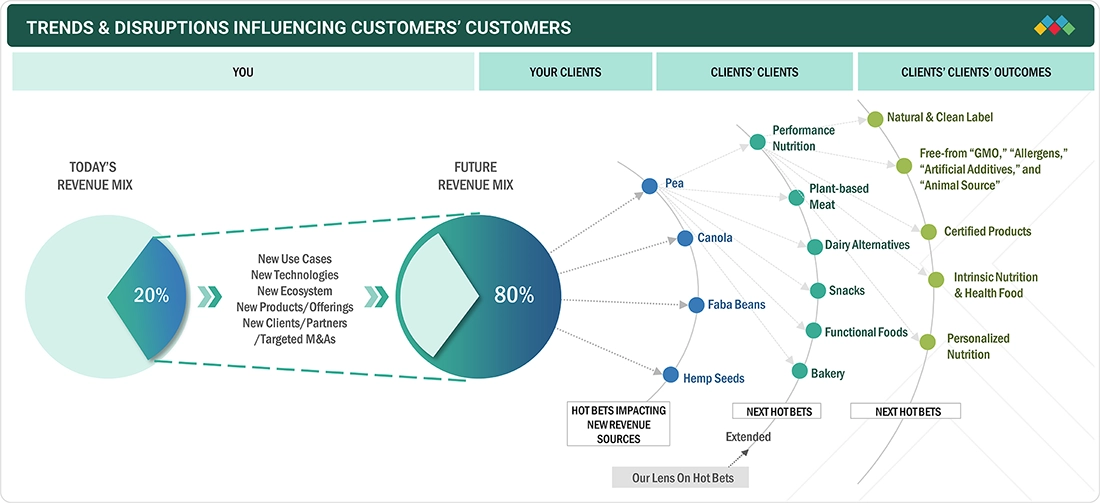
The impact on consumer business emerges from customer trends or disruptions. Hotbets are new sources of plant-based protein ingredients, and plant-based product suppliers are clients of plant-based protein ingredient manufacturers. Shifts, which are changing trends or disruptions, will impact the revenues of end users. The revenue impact on end users will affect the revenue of hotbets, which will further affect the revenues of plant-based protein ingredient manufacturers.

Source: Secondary Research, Interviews with Experts, MarketsandMarkets Analysis

MARKET DYNAMICS

Drivers
Impact
Level
  • Growing interest in health-centric food and beverages
  • Increased preference for meat alternatives
RESTRAINTS
Impact
Level
  • Allergies associated with plant-based protein sources
  • Nutritional and vitamin deficiencies among vegans
OPPORTUNITIES
Impact
Level
  • Effective marketing strategies and correct positioning of plant-based proteins
  • Focus on aquatic plants as new and emerging sources of protein
CHALLENGES
Impact
Level
  • Concerns related to taste and texture offered by plant-based protein
  • Economic constraints

Source: Secondary Research, Interviews with Experts, MarketsandMarkets Analysis

Driver: Growing interest in health-centric food and beverages

Changing consumer preferences are driving the growth of the plant-based protein market, with a significant portion of the millennial population in Western countries shifting toward healthier dietary choices. The trend toward organic and plant-based food products is on the rise, driven by their perceived health benefits, particularly for digestive health and preventing obesity and chronic diseases.

Restraint: Allergies associated with plant-based protein sources

Plant-based foods and beverages have functional health benefits, contain essential minerals, and trigger various allergies. For instance, soybeans are rich in nutrient content, such as vitamins, minerals, and proteins; however, the anti-nutritional components present in soy could cause allergies.

Opportunity: Effective marketing strategies and correct positioning of plant-based proteins

Effective marketing strategies and precise positioning are pivotal for driving the sales and growth of plant-based protein products. By utilizing diversified and targeted marketing strategies, businesses can generate demand among various consumer groups, including health-focused individuals, athletes, fitness enthusiasts, vegetarians, vegans, and those pursuing sustainable and eco-friendly dietary choices.

Challenge: Concerns related to taste and texture offered by plant-based protein

Consumers demand high-quality products offering consistent taste and texture, driven by a growing awareness of health and environmental concerns. As a result, they seek more nutritious, clean-label, and sustainable options. While plant-based protein presents numerous advantages, one of the primary hurdles in its adoption is achieving a satisfying taste and texture in the final product.

Plant-based Protein Market: COMMERCIAL USE CASES ACROSS INDUSTRIES

COMPANY USE CASE DESCRIPTION BENEFITS
In June 2025, Roquette expanded its NUTRALYS plant protein portfolio with the launch of two new textured protein solutions: NUTRALYS T WHEAT 600L (textured wheat protein) and NUTRALYS T PEA 700XC (textured pea protein). These innovations mark Roquette’s entry into textured wheat and strengthen its position in the plant-based space.
In November 2024, Burcon partnered with Puratos to develop innovative canola protein applications for the bakery and patisserie sectors. The collaboration aims to deliver healthier, sustainable, and cost-effective alternatives to traditional ingredients such as eggs.

Logos and trademarks shown above are the property of their respective owners. Their use here is for informational and illustrative purposes only.

MARKET ECOSYSTEM

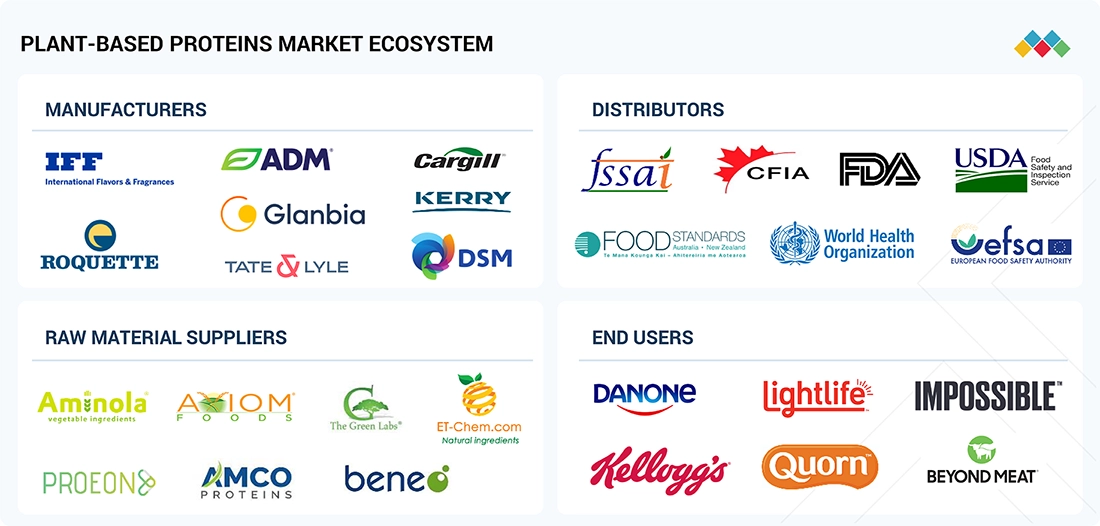
The market map of the ecosystem is categorized into demand-side and supply-side companies. The plant-based protein market is a dynamic and rapidly expanding ecosystem characterized by diverse stakeholders and innovative products. Established companies and agile startups are central to this market, developing alternatives to meat, dairy, and eggs using plant-derived proteins such as soy, peas, rice, faba beans, and hemp.

Logos and trademarks shown above are the property of their respective owners. Their use here is for informational and illustrative purposes only.

MARKET SEGMENTS

Source: Secondary Research, Interviews with Experts, MarketsandMarkets Analysis

Plant-based Protein Market, By Source

Pea protein is highly valued in the plant-based protein market for its balanced nutrient profile and growing demand for allergen-free products. It is rich in essential amino acids, particularly branched-chain amino acids (BCAAs), which support muscle growth and repair, providing a significant demand in the performance nutrition application.

Plant-based Protein Market, By Type

Plant protein isolates are favored for their excellent digestibility and versatility in various food products. They are typically produced from the de-oiled cake of legumes such as soy and peas and are considered one of the safest protein sources, suitable even for infant foods. Due to their high protein concentration, plant-based proteins show promising growth potential for isolates.

Plant-based Protein Market, By Form

The dry form of plant-based protein is experiencing a surge in market demand due to several key factors. Dry plant-based proteins have a longer shelf life than their liquid counterparts. They reduce waste and improve convenience for retailers and consumers. Additionally, they are easier to transport and store, which reduces logistical costs.

REGION

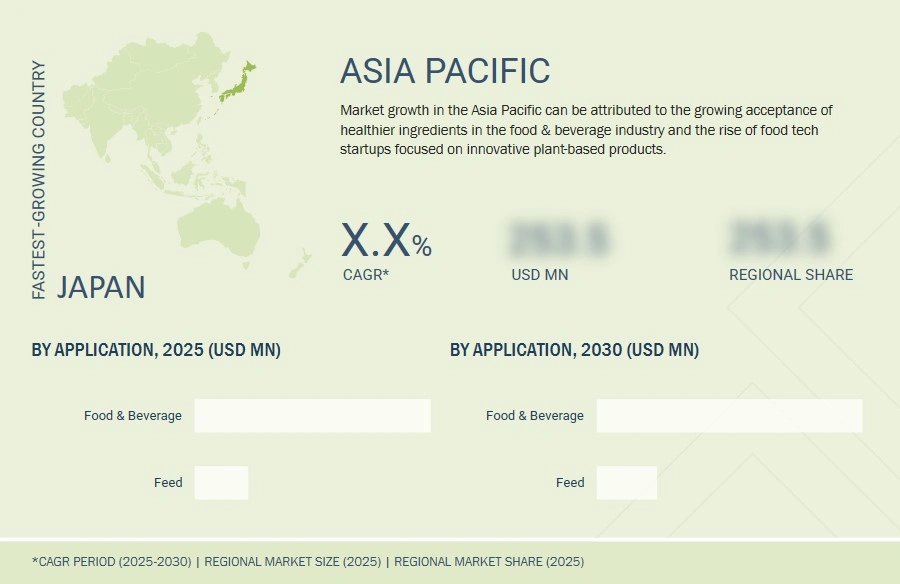
Asia Pacific market is projected to grow at a competitive rate during the forecast period

The Asia Pacific plant-based protein market is growing rapidly due to increased health awareness, a rising vegetarian and vegan population, and consumer spending on premium products. Dominated by China, India, Japan, and Australia, consumers opt for clean-label, nature-based ingredients in their healthy diets. Additionally, the perceived benefits of the health environment and religious considerations significantly contribute to adopting vegan and vegetarian diets in these regions. The rising health concerns in Asia have also led people to reduce their meat intake and add plant-based foods and proteins.

Plant-based Protein Market: COMPANY EVALUATION MATRIX

In the plant-based protein market matrix, Cargill, Incorporated (Star) leads with a strong market share and extensive product offerings. The company offers a diverse range of plant-based protein products, including pea protein, soy protein, and wheat protein. Its portfolio caters to various applications, such as meat substitutes, dairy alternatives, and nutritional products. DSM-Firmenich (Emerging Leader) is gaining visibility with its plant-based protein offerings, strengthening its position through innovation and niche portfolio.

Source: Secondary Research, Interviews with Experts, MarketsandMarkets Analysis

MARKET SCOPE

REPORT METRIC DETAILS
Market Size in 2024 (Value) USD 22.29 Billion
Market Forecast in 2030 (Value) USD 34.97 Billion
Growth Rate CAGR of 7.9% from 2025-2030
Years Considered 2021-2030
Base Year 2024
Forecast Period 2025-2030
Units Considered Value (USD MN/BN), Volume (Kilotons)
Report Coverage Revenue forecast, market share, competitive landscape, growth factors, and trends
Segments Covered
  • By Source:
    • Soy
    • Wheat
    • Pea
    • Canola
    • Rice
    • Oats
    • & Potato
    • Faba Beans
    • Other Sources
  • By Type:
    • Isolates
    • Concentrates
    • Textured
    • Milled Protein Flours
    • Starch-Rich Protein Flours
  • By Nature:
    • Conventional
    • Organic
  • By Form:
    • Dry
    • Liquid
  • By Application:
    • Food & Beverages
    • Feed
  • By Function (Qualitative):
    • Nutrition Enrichment
    • Binders
    • Thickening & Viscosity Enhancement
    • Other Functions
Regions Covered North America, Europe, Asia Pacific, South America, Rest of the World (Middle East & Africa)

WHAT IS IN IT FOR YOU: Plant-based Protein Market REPORT CONTENT GUIDE

DELIVERED CUSTOMIZATIONS

We have successfully delivered the following deep-dive customizations:

CLIENT REQUEST CUSTOMIZATION DELIVERED VALUE ADDS
Asia Pacific-based Plant-based Protein Manufacturers
  • Detailed plant-based protein type analysis, such as Isolates, Concentrates, Textured, Milled Protein Flours, and Starch-Rich Protein Flours
  • Competitive landscape, and competitors (financials, product portfolio) analysis
  • Application mapping by food & beverage vs feed
  • Assessment of market share and pricing analysis
  • Identified & profiled 20+ plant-based protein companies
  • Track adoption trends in high-growth Asia Pacific sales by Type (Isolates, Concentrates, Textured, Milled Protein Flours, and Starch-Rich Protein Flours)
  • Highlight key plant-based protein types that open new opportunities
Plant-based Application Segment Assessment
  • Segmentation of plant-based protein demand across food & beverage applications such as Meat Alternatives, Dairy Alternatives, Bakery Products, Performance Nutrition, Convenience Food, and Other Food & Beverage Applications
  • Benchmarking the adoption of various applications of plant-based protein across the regions
  • Switching barrier analysis (quality certification, performance consistency, local regulations)
  • Revenue share for various applications
  • Pinpoint substitution risks & opportunities in cost-sensitive APAC markets
  • Regulatory structure across the regions

RECENT DEVELOPMENTS

  • November 2024 : Ingredion Incorporated (US) and Lantmännen formed a strategic partnership to advance plant-based proteins, focusing on sustainably sourced yellow pea protein isolates. Lantmännen will invest over USD 108.2 million (€100 million) in a new Swedish facility, while Ingredion brings expertise in product development and market access, targeting Europe’s fast-growing alternative protein sector
  • November 2024 : Burcon (Canada) partnered with Puratos to develop innovative canola protein applications for the bakery and patisserie sectors. Leveraging Burcon’s Puratein canola protein and Puratos’s global R&D expertise, the collaboration aims to deliver healthier, sustainable, and cost-effective alternatives to traditional ingredients such as eggs
  • November 2024 : BENEO (Germany) showcased scalable plant-based and hybrid solutions using texturates from meatless and faba bean protein concentrates at Fi Europe to accelerate product development. By covering ingredient formulation to final products, BENEO helps manufacturers reduce costs and time-to-market while maintaining quality, taste, and texture for evolving consumer preferences
  • February 2024 : Roquette Frères (France) expanded its NURRALYS plant protein portfolio by introducing four new pea protein ingredients, including isolates, hydrolysates, and textured variants. These multi-functional pea proteins are designed to address formulation challenges in plant-based foods and high-protein nutritional products, offering opportunities for innovation in applications such as nutritional bars, protein drinks, and plant-based meat and dairy alternatives


Table of Contents

Exclusive indicates content/data unique to MarketsandMarkets and not available with any competitors.

TITLE
PAGE NO
1
INTRODUCTION


29
2
RESEARCH METHODOLOGY


35
3
EXECUTIVE SUMMARY


45
4
PREMIUM INSIGHTS


50
5
MARKET OVERVIEW
Generative AI revolutionizes plant-based protein market with innovative production and personalized nutrition solutions.


56
 
5.1
INTRODUCTION


5.2
MACROECONOMIC INDICATORS


5.2.1
GLOBAL PRODUCTION OF CHICKPEAS AND GREEN PEAS AND BOOST IN INNOVATION


5.2.2
INCREASE IN SOYBEAN PRODUCTION


5.2.3
CONSUMER SHIFT TOWARD PLANT-BASED NUTRITION


5.3
MARKET DYNAMICS


5.3.1
DRIVERS


5.3.1.1
GROWING INTEREST IN HEALTH-CENTRIC FOOD AND BEVERAGES


5.3.1.2
GROWTH IN CONSUMER PREFERENCES TOWARD VEGANISM


5.3.1.3
RISE IN CASES OF LACTOSE INTOLERANCE


5.3.1.4
INCREASED PREFERENCE FOR MEAT ALTERNATIVES


5.3.1.5
INNOVATION AND DEVELOPMENTS RELATED TO PLANT-BASED PROTEIN TO AUGMENT VEGAN TREND


5.3.2
RESTRAINTS


5.3.2.1
ALLERGIES ASSOCIATED WITH PLANT-BASED PROTEIN SOURCES


5.3.2.2
NUTRITIONAL AND VITAMIN DEFICIENCIES AMONG VEGANS


5.3.3
OPPORTUNITIES


5.3.3.1
FOCUS ON AQUATIC PLANTS AS NEW AND EMERGING SOURCES OF PROTEIN


5.3.3.2
EFFECTIVE MARKETING STRATEGIES AND CORRECT POSITIONING OF PLANT-BASED PROTEINS


5.3.3.3
LIFESTYLE CHANGES


5.3.4
CHALLENGES


5.3.4.1
CONCERNS OVER QUALITY OF FOOD AND BEVERAGES DUE TO ADULTERATION OF GM INGREDIENTS


5.3.4.2
ECONOMIC CONSTRAINTS


5.3.4.3
CONCERNS RELATED TO TASTE AND TEXTURE OFFERED BY PLANT-BASED PROTEIN
 
 
5.4
IMPACT OF GEN AI ON FOOD & BEVERAGE INGREDIENTS/ ADDITIVES


5.4.1
USE OF GEN AI IN FOOD & BEVERAGE INGREDIENTS/ADDITIVES


5.4.2
CASE STUDIES FOR GENERATIVE AI IN FOOD & BEVERAGE INGREDIENTS/ADDITIVES


5.4.2.1
KERRY TRENDSPOTTER LEVERAGED AI AND ML TO ANALYZE CONSUMER-GENERATED SOCIAL MEDIA CONTENT, IDENTIFYING AND PREDICTING FOOD TRENDS


5.4.2.2
IFF PARTNERS WITH SALUS OPTIMA TO CREATE PERSONALIZED NUTRITION PLATFORM USING AI TO OFFER CUSTOMIZED DIETARY RECOMMENDATIONS BASED ON METABOLIC HEALTH


5.4.2.3
INGREDION UTILIZED CLOUD-BASED DATA ANALYTICS, AI, AND CLOUD TECHNOLOGY TO ADDRESS CHALLENGES IN F&B INDUSTRY


5.4.3
IMPACT OF GENERATIVE AI/AI ON PLANT-BASED PROTEIN MARKET


5.4.4
ADJACENT ECOSYSTEM WORKING ON GENERATIVE AI
 
 
6
INDUSTRY TRENDS
US tariffs reshape global plant-based protein market, impacting pricing, supply chains, and regional economies.


72
 
6.1
INTRODUCTION


6.2
IMPACT OF 2025 US TARIFF: PLANT-BASED PROTEIN MARKET


6.2.1
INTRODUCTION


6.2.2
KEY TARIFF RATES


6.2.3
DISRUPTION IN PLANT-BASED PROTEIN PRODUCTS


6.2.4
PRICE IMPACT ANALYSIS


6.2.5
IMPACT ON COUNTRY/REGION


6.2.5.1
US


6.2.5.2
EUROPE


6.2.5.3
CHINA


6.2.6
IMPACT ON END-USE INDUSTRY


6.3
VALUE CHAIN ANALYSIS


6.3.1
RESEARCH & PRODUCT DEVELOPMENT


6.3.2
RAW MATERIAL SOURCING


6.3.3
PRODUCTION & PROCESSING


6.3.4
DISTRIBUTION


6.3.5
MARKETING & SALES


6.3.6
END USERS


6.4
TRADE ANALYSIS


6.4.1
IMPORT SCENARIO OF SOYBEANS


6.4.2
EXPORT SCENARIO OF SOYBEANS


6.4.3
IMPORT SCENARIO OF PEAS


6.4.4
EXPORT SCENARIO OF PEAS


6.4.5
IMPORT SCENARIO OF WHEAT & MESLIN


6.4.6
EXPORT SCENARIO OF WHEAT & MESLIN


6.4.7
IMPORT SCENARIO OF RICE


6.4.8
EXPORT SCENARIO OF RICE


6.4.9
IMPORT SCENARIO OF OATS


6.4.10
EXPORT SCENARIO OF OATS


6.5
TECHNOLOGY ANALYSIS


6.5.1
KEY TECHNOLOGY


6.5.1.1
EXTRUSION


6.5.2
COMPLIMENTARY TECHNOLOGY


6.5.2.1
HIGH-PRESSURE PROCESSING (HPP)


6.5.3
ADJACENT TECHNOLOGY


6.5.3.1
WET PROCESSING METHOD FOR PRODUCING DAIRY MILK ALTERNATIVE
 
 
6.6
PRICING ANALYSIS


6.6.1
AVERAGE SELLING PRICE, BY KEY PLAYER


6.6.2
AVERAGE SELLING PRICE TREND, BY REGION


6.7
ECOSYSTEM


6.7.1
DEMAND SIDE


6.7.2
SUPPLY SIDE


6.8
TRENDS/DISRUPTIONS IMPACTING CUSTOMER BUSINESS


6.9
PATENT ANALYSIS


6.10
KEY CONFERENCES & EVENTS, 2025–2026


6.11
REGULATORY LANDSCAPE


6.11.1
REGULATORY BODIES, GOVERNMENT AGENCIES, AND OTHER ORGANIZATIONS


6.11.2
REGULATORY FRAMEWORK


6.11.2.1
NORTH AMERICA


6.11.2.2
EUROPE


6.11.2.3
ASIA PACIFIC
 
 
6.12
PORTER’S FIVE FORCES ANALYSIS


6.12.1
THREAT OF NEW ENTRANTS


6.12.2
THREAT OF SUBSTITUTES


6.12.3
BARGAINING POWER OF SUPPLIERS


6.12.4
BARGAINING POWER OF BUYERS


6.12.5
INTENSITY OF COMPETITIVE RIVALRY


6.13
KEY STAKEHOLDERS & BUYING CRITERIA


6.13.1
KEY STAKEHOLDERS IN BUYING PROCESS


6.13.2
BUYING CRITERIA


6.14
CASE STUDY ANALYSIS


6.14.1
BLUE DIAMOND GROWERS PARTNERED WITH GROUP LALA TO ESTABLISH NETWORK IN MEXICO


6.14.2
KERRY GROUP PLC REVOLUTIONIZED PLANT-BASED PRODUCTS IN ASIA PACIFIC MARKET


6.14.3
ADM OFFERED NEW PLANT-BASED PROTEINS TO MEET GROWING CONSUMER DEMAND


6.14.4
GLANBIA LAUNCHED GRAIN PORTFOLIO TO ADDRESS CONSUMERS’ RISING HEALTH CONCERNS


6.15
INVESTMENT & FUNDING SCENARIO


6.16
EMERGING PROTEIN SOURCE – SESAME PROTEIN


7
PLANT-BASED PROTEIN MARKET, BY APPLICATION
Market Size & Growth Rate Forecast Analysis to 2030 in USD Million | 20 Data Tables


115
 
7.1
INTRODUCTION


7.2
FOOD & BEVERAGES


7.2.1
INCREASED CONSUMPTION OF PLANT-BASED MEAT AND DAIRY ALTERNATIVES TO DRIVE DEMAND


7.2.2
MEAT ALTERNATIVES


7.2.3
DAIRY ALTERNATIVES


7.2.4
BAKERY PRODUCTS


7.2.5
PERFORMANCE NUTRITION


7.2.6
CONVENIENCE FOOD


7.2.7
OTHER FOOD & BEVERAGE APPLICATIONS


7.3
FEED


7.3.1
GROWING DEMAND FOR CLEAN-LABEL AND SUSTAINABLE FEED PRODUCTS TO DRIVE MARKET
 
 
8
PLANT-BASED PROTEIN MARKET, BY NATURE
Market Size & Growth Rate Forecast Analysis to 2030 in USD Million | 6 Data Tables


127
 
8.1
INTRODUCTION


8.2
CONVENTIONAL


8.2.1
GROWING UTILIZATION IN FOOD AND FEED INDUSTRIES TO STIMULATE MARKET EXPANSION


8.3
ORGANIC


8.3.1
CONSUMER INCLINATION TOWARD TRANSPARENCY AND PRODUCT CLAIMS TO DRIVE GROWTH
 
 
9
PLANT-BASED PROTEIN MARKET, BY FORM
Market Size & Growth Rate Forecast Analysis to 2030 in USD Million | 6 Data Tables


132
 
9.1
INTRODUCTION


9.2
DRY


9.2.1
APPLICATION OF DRY PLANT-BASED PROTEIN IN FOOD & BEVERAGE PRODUCTS TO DRIVE MARKET


9.3
LIQUID


9.3.1
HIGH PROTEIN REQUIREMENTS IN NUTRITIONAL SUPPLEMENTS TO DRIVE DEMAND
 
 
10
PLANT-BASED PROTEIN MARKET, BY FUNCTION
Market Size & Growth Rate Forecast Analysis


137
 
10.1
INTRODUCTION


10.2
NUTRITION ENRICHMENT


10.3
BINDERS


10.4
THICKENING & VISCOSITY ENHANCEMENT


10.5
OTHER FUNCTIONS


11
PLANT-BASED PROTEIN MARKET, BY SOURCE
Market Size & Growth Rate Forecast Analysis to 2030 in USD Million and Kilotons | 28 Data Tables


140
 
11.1
INTRODUCTION


11.2
SOY


11.2.1
SURGE IN DEMAND FOR PLANT-BASED PROTEIN ALTERNATIVES AND INCREASING SOY EXPORTS TO LEAD TO MARKET GROWTH


11.3
WHEAT


11.3.1
EXCELLENT BINDING CHARACTERISTICS, COUPLED WITH INCREASED USAGE IN ALTERNATIVE MEAT PRODUCTS, TO DRIVE GROWTH


11.4
PEA


11.4.1
RAPID SHIFT IN PREFERENCES OF CONSUMERS TO PLANT-BASED PROTEIN TO DRIVE DEMAND


11.5
CANOLA, RICE, OATS, AND POTATOES


11.5.1
GROWING CONSUMER INTEREST IN TRADITIONAL PLANT-BASED PROTEIN PRODUCTS TO DRIVE DEMAND


11.6
FABA BEANS


11.6.1
VEGAN POPULATION AND HEALTH-CONSCIOUS CONSUMERS SEEKING SUSTAINABLE PROTEIN SOURCES TO DRIVE DEMAND


11.7
OTHER SOURCES


12
PLANT-BASED PROTEIN MARKET, BY TYPE
Market Size & Growth Rate Forecast Analysis to 2030 in USD Million | 12 Data Tables


155
 
12.1
INTRODUCTION


12.2
ISOLATES


12.2.1
APPLICATION OF PLANT-PROTEIN ISOLATES IN INFANT FOOD PRODUCTS TO DRIVE GROWTH


12.3
CONCENTRATES


12.3.1
APPLICATION OF CONCENTRATES ACROSS FOOD AND NUTRITION SUPPLEMENTS TO DRIVE DEMAND


12.4
TEXTURED


12.4.1
INCREASE IN CONSUMER PREFERENCE FOR PLANT-BASED MEAT PRODUCTS TO DRIVE DEMAND


12.5
MILLED PROTEIN FLOURS


12.5.1
ADAPTABILITY IN GLUTEN-FREE AND VEGAN PRODUCTS TO BOOST MARKET


12.6
STARCH-RICH PROTEIN FLOURS


12.6.1
VERSATILITY IN IMPROVING PRODUCT TEXTURE AND SHELF LIFE TO DRIVE MARKET GROWTH
 
 
13
PLANT-BASED PROTEIN MARKET, BY REGION
Comprehensive coverage of 9 Regions with country-level deep-dive of 15 Countries | 124 Data Tables.


163
 
13.1
INTRODUCTION


13.2
NORTH AMERICA


13.2.1
US


13.2.1.1
RISE IN AWARENESS REGARDING ENVIRONMENTAL AND PERSONAL HEALTH BENEFITS TO DRIVE PREFERENCE FOR PLANT-BASED INGREDIENTS


13.2.2
CANADA


13.2.2.1
CAPITALIZATION ON LARGE-SCALE SHIFT TOWARD FLEXITARIAN DIETS BY PROMINENT PLAYERS TO DRIVE PRODUCTION


13.2.3
MEXICO


13.2.3.1
EVOLVING CONSUMER PREFERENCES AND INCREASING DEMAND FOR NUTRITIOUS PET FOOD TO STIMULATE MARKET GROWTH
 
 
13.3
EUROPE


13.3.1
GERMANY


13.3.1.1
INCREASING DEPENDENCE ON PLANT-BASED FOODS AND HIGH ADOPTION RATE OF FLEXITARIAN DIETS TO DRIVE GROWTH


13.3.2
UK


13.3.2.1
INCREASING VEGAN POPULATION TO DRIVE PLANT-BASED PROTEIN MARKET


13.3.3
FRANCE


13.3.3.1
GOVERNMENT SUPPORT TO DEVELOP DOMESTIC PLANT-BASED PROTEIN PRODUCTION AND REDUCE IMPORTS TO DRIVE GROWTH


13.3.4
ITALY


13.3.4.1
RAPID SHIFT IN CONSUMER PREFERENCES FROM CONVENTIONAL TO PLANT-BASED PROTEIN TO DRIVE MARKET


13.3.5
SPAIN


13.3.5.1
PRODUCT INNOVATION AND INCREASED CONSUMPTION OF PLANT-BASED CONVENIENCE FOOD PRODUCTS TO DRIVE MARKET


13.3.6
NETHERLANDS


13.3.6.1
INCREASING POPULARITY OF PLANT-BASED FOOD PRODUCTS DUE TO THEIR HEALTH AND ENVIRONMENTAL BENEFITS TO DRIVE DEMAND


13.3.7
REST OF EUROPE


13.4
ASIA PACIFIC


13.4.1
CHINA


13.4.1.1
DEMAND FOR PRODUCTS WITH HEALTH BENEFITS TO DRIVE MARKET


13.4.2
JAPAN


13.4.2.1
AGING POPULATION AND RISING CONSUMPTION OF PLANT-BASED CONVENIENCE FOODS TO DRIVE MARKET


13.4.3
AUSTRALIA & NEW ZEALAND


13.4.3.1
INVESTMENTS FROM KEY PLAYERS AND RISING VEGAN POPULATION TO DRIVE GROWTH


13.4.4
INDIA


13.4.4.1
EVOLVING DIETARY PREFERENCES AND INCREASING CASES OF CORONARY HEART DISEASE TO DRIVE DEMAND


13.4.5
REST OF ASIA PACIFIC


13.5
SOUTH AMERICA


13.5.1
BRAZIL


13.5.1.1
RISE IN DEMAND FOR PERFORMANCE NUTRITION PRODUCTS TO DRIVE GROWTH


13.5.2
ARGENTINA


13.5.2.1
ENVIRONMENTAL, NUTRITIONAL, AND ANIMAL WELFARE CONCERNS AMONG YOUTH TO DRIVE DEMAND


13.5.3
REST OF SOUTH AMERICA


13.5.3.1
INCREASE IN WILLINGNESS TO INVEST EXTRA IN NUTRITIONALLY ADVANTAGEOUS FOODS TO DRIVE DEMAND
 
 
13.6
REST OF THE WORLD (ROW)


13.6.1
AFRICA


13.6.1.1
FAVORABLE PROCESSING CONDITIONS, COUPLED WITH RISING CONSUMER AWARENESS REGARDING HEALTH ISSUES, TO DRIVE GROWTH


13.6.2
MIDDLE EAST


13.6.2.1
DEMAND FOR PLANT-BASED CONVENIENCE FOOD TO DRIVE GROWTH
 
14
COMPETITIVE LANDSCAPE
Uncover key strategies and market positions of top players shaping competitive dynamics in 2024.


219
 
14.1
OVERVIEW


14.2
KEY PLAYER STRATEGIES/RIGHT TO WIN


14.3
REVENUE ANALYSIS


14.4
MARKET SHARE ANALYSIS


14.5
COMPANY VALUATION AND FINANCIAL METRICS


14.6
BRAND/PRODUCT COMPARISON


14.7
COMPANY EVALUATION MATRIX: KEY PLAYERS, 2024


14.7.1
STARS


14.7.2
EMERGING LEADERS


14.7.3
PERVASIVE PLAYERS


14.7.4
PARTICIPANTS


14.7.5
COMPANY FOOTPRINT: KEY PLAYERS, 2024


14.7.5.1
COMPANY FOOTPRINT


14.7.5.2
REGIONAL FOOTPRINT


14.7.5.3
SOURCE FOOTPRINT


14.7.5.4
TYPE FOOTPRINT
 
 
14.8
COMPANY EVALUATION MATRIX: STARTUPS/SMES, 2024


14.8.1
PROGRESSIVE COMPANIES


14.8.2
RESPONSIVE COMPANIES


14.8.3
DYNAMIC COMPANIES


14.8.4
STARTING BLOCKS


14.8.5
COMPETITIVE BENCHMARKING: STARTUPS/SMES, 2024


14.9
COMPETITIVE SCENARIO AND TRENDS


14.9.1
PRODUCT LAUNCHES


14.9.2
DEALS


14.9.3
EXPANSIONS
 
 
15
COMPANY PROFILES
In-depth Company Profiles of Leading Market Players with detailed Business Overview, Product and Service Portfolio, Recent Developments, and Unique Analyst Perspective (MnM View)


241
 
15.1
KEY PLAYERS


15.1.1
CARGILL, INCORPORATED


15.1.1.1
BUSINESS OVERVIEW


15.1.1.2
PRODUCTS/SERVICES/SOLUTIONS OFFERED


15.1.1.3
RECENT DEVELOPMENTS


15.1.1.4
MNM VIEW


15.1.2
ARCHER DANIELS MIDLAND (ADM)COMPANY


15.1.3
KERRY GROUP PLC


15.1.4
INTERNATIONAL FLAVORS & FRAGRANCES INC.


15.1.5
INGREDION INCORPORATED


15.1.6
WILMAR INTERNATIONAL LIMITED


15.1.7
ROQUETTE FRÈRES


15.1.8
GLANBIA PLC


15.1.9
DSM-FIRMENICH


15.1.10
AGT FOOD AND INGREDIENTS


15.1.11
TATE & LYLE


15.1.12
BURCON


15.1.13
EMSLAND GROUP


15.1.14
PURIS


15.1.15
COSUCRA


15.2
OTHER PLAYERS


15.2.1
BENEO


15.2.2
SOTEXPRO


15.2.3
SHANDONG JIANYUAN GROUP


15.2.4
AMCO PROTEINS


15.2.5
AMINOLA


15.2.6
THE GREEN LABS LLC


15.2.7
AXIOM FOODS, INC.


15.2.8
NUTRI-PEA


15.2.9
FENCHEM


15.2.10
SUN NUTRAFOODS
 
 
16
ADJACENT & RELATED MARKETS


303
 
16.1
INTRODUCTION


16.2
STUDY LIMITATIONS


16.3
PEA PROTEIN MARKET


16.3.1
MARKET DEFINITION


16.3.2
MARKET OVERVIEW


16.4
SOY PROTEIN INGREDIENTS MARKET


16.4.1
MARKET DEFINITION


16.4.2
MARKET OVERVIEW


16.5
PROTEIN INGREDIENTS MARKET


16.5.1
MARKET DEFINITION


16.5.2
MARKET OVERVIEW
 
 
17
APPENDIX


307
 
17.1
DISCUSSION GUIDE


17.2
KNOWLEDGESTORE: MARKETSANDMARKETS’ SUBSCRIPTION PORTAL


17.3
CUSTOMIZATION OPTIONS


17.4
RELATED REPORTS


17.5
AUTHOR DETAILS


LIST OF TABLES


TABLE 1
USD EXCHANGE RATES, 2020–2024


TABLE 2
PLANT-BASED PROTEIN MARKET SNAPSHOT, 2025 VS. 2030 (USD MILLION)


TABLE 3
PERCENTAGE OF LACTOSE-INTOLERANT PEOPLE, BY ETHNICITY


TABLE 4
US ADJUSTED RECIPROCAL TARIFF RATES


TABLE 5
EXPECTED IMPACT LEVEL ON TARGET INGREDIENTS WITH RELEVANT HS CODES DUE TO TRUMP TARIFF IMPACT


TABLE 6
EXPECTED TARIFF IMPACT ON END-USE INDUSTRIES: PLANT-BASED FOOD PRODUCTS


TABLE 7
IMPORT SCENARIO FOR HS CODE: 1201, BY COUNTRY, 2020–2024 (USD MILLION)


TABLE 8
EXPORT SCENARIO FOR HS CODE: 1201, BY COUNTRY, 2020–2024 (USD MILLION)


TABLE 9
IMPORT SCENARIO FOR HS CODE: 071310, BY COUNTRY, 2020–2024 (USD MILLION)


TABLE 10
EXPORT SCENARIO FOR HS CODE: 071310, BY COUNTRY, 2020–2024 (USD MILLION)


TABLE 11
IMPORT SCENARIO FOR HS CODE: 1001, BY COUNTRY, 2020–2024 (USD MILLION)


TABLE 12
EXPORT SCENARIO FOR HS CODE: 1001, BY COUNTRY, 2020–2024 (USD MILLION)


TABLE 13
IMPORT SCENARIO FOR HS CODE: 1006, BY COUNTRY, 2020–2024 (USD MILLION)


TABLE 14
EXPORT SCENARIO FOR HS CODE: 1006, BY COUNTRY, 2020–2024 (USD MILLION)


TABLE 15
IMPORT SCENARIO FOR HS CODE: 1004, BY COUNTRY, 2020–2024 (USD MILLION)


TABLE 16
EXPORT SCENARIO FOR HS CODE: 1004, BY COUNTRY, 2020–2024 (USD MILLION)


TABLE 17
AVERAGE SELLING PRICE OF PLANT-BASED PROTEIN, BY KEY PLAYERS, 2024 (USD/KG)


TABLE 18
AVERAGE SELLING PRICE OF PLANT-BASED PROTEIN, BY REGION, 2021–2024 (USD/TON)


TABLE 19
PLANT-BASED PROTEIN MARKET: ECOSYSTEM


TABLE 20
LIST OF MAJOR PATENTS PERTAINING TO PLANT-BASED PROTEIN MARKET, 2014–2024


TABLE 21
PLANT-BASED PROTEIN MARKET: LIST OF KEY CONFERENCES & EVENTS, 2025–2026


TABLE 22
NORTH AMERICA: REGULATORY BODIES, GOVERNMENT AGENCIES, AND OTHER ORGANIZATIONS


TABLE 23
EUROPE: REGULATORY BODIES, GOVERNMENT AGENCIES, AND OTHER ORGANIZATIONS


TABLE 24
ASIA PACIFIC: REGULATORY BODIES, GOVERNMENT AGENCIES, AND OTHER ORGANIZATIONS


TABLE 25
SOUTH AMERICA: REGULATORY BODIES, GOVERNMENT AGENCIES, AND OTHER ORGANIZATIONS


TABLE 26
REST OF THE WORLD: REGULATORY BODIES, GOVERNMENT AGENCIES, AND OTHER ORGANIZATIONS


TABLE 27
PORTER’S FIVE FORCES ANALYSIS


TABLE 28
INFLUENCE OF STAKEHOLDERS ON BUYING PROCESS FOR TOP THREE SOURCES


TABLE 29
KEY CRITERIA FOR SELECTING SUPPLIERS/VENDORS


TABLE 30
PLANT-BASED PROTEIN MARKET, BY APPLICATION, 2021–2024 (USD MILLION)


TABLE 31
PLANT-BASED PROTEIN MARKET, BY APPLICATION, 2025–2030 (USD MILLION)


TABLE 32
FOOD & BEVERAGE: PLANT-BASED PROTEIN MARKET, BY REGION, 2021–2024 (USD MILLION)


TABLE 33
FOOD & BEVERAGE: PLANT-BASED PROTEIN MARKET, BY REGION, 2025–2030 (USD MILLION)


TABLE 34
FOOD & BEVERAGE: PLANT-BASED PROTEIN MARKET, BY APPLICATION, 2021–2024 (USD MILLION)


TABLE 35
FOOD & BEVERAGE: PLANT-BASED PROTEIN MARKET, BY APPLICATION, 2025–2030 (USD MILLION)


TABLE 36
MEAT ALTERNATIVES: PLANT-BASED PROTEIN MARKET, BY REGION, 2021–2024 (USD MILLION)


TABLE 37
MEAT ALTERNATIVES: PLANT-BASED PROTEIN MARKET, BY REGION, 2025–2030 (USD MILLION)


TABLE 38
DAIRY ALTERNATIVES: PLANT-BASED PROTEIN MARKET, BY REGION, 2021–2024 (USD MILLION)


TABLE 39
DAIRY ALTERNATIVES: PLANT-BASED PROTEIN MARKET, BY REGION, 2025–2030 (USD MILLION)


TABLE 40
BAKERY PRODUCTS: PLANT-BASED PROTEIN MARKET, BY REGION, 2021–2024 (USD MILLION)


TABLE 41
BAKERY PRODUCTS: PLANT-BASED PROTEIN MARKET, BY REGION, 2025–2030 (USD MILLION)


TABLE 42
PERFORMANCE NUTRITION: PLANT-BASED PROTEIN MARKET, BY REGION, 2021–2024 (USD MILLION)


TABLE 43
PERFORMANCE NUTRITION: PLANT-BASED PROTEIN MARKET, BY REGION, 2025–2030 (USD MILLION)


TABLE 44
CONVENIENCE FOOD: PLANT-BASED PROTEIN MARKET, BY REGION, 2021–2024 (USD MILLION)


TABLE 45
CONVENIENCE FOOD: PLANT-BASED PROTEIN MARKET, BY REGION, 2025–2030 (USD MILLION)


TABLE 46
OTHER FOOD & BEVERAGE APPLICATIONS: PLANT-BASED PROTEIN MARKET, BY REGION, 2021–2024 (USD MILLION)


TABLE 47
OTHER FOOD & BEVERAGE APPLICATIONS: PLANT-BASED PROTEIN MARKET, BY REGION, 2025–2030 (USD MILLION)


TABLE 48
FEED: PLANT-BASED PROTEIN MARKET, BY REGION, 2021–2024 (USD MILLION)


TABLE 49
FEED: PLANT-BASED PROTEIN MARKET, BY REGION, 2025–2030 (USD MILLION)


TABLE 50
PLANT-BASED PROTEIN MARKET, BY NATURE, 2021–2024 (USD MILLION)


TABLE 51
PLANT-BASED PROTEIN MARKET, BY NATURE, 2025–2030 (USD MILLION)


TABLE 52
CONVENTIONAL: PLANT-BASED PROTEIN MARKET, BY REGION, 2021–2024 (USD MILLION)


TABLE 53
CONVENTIONAL: PLANT-BASED PROTEIN MARKET, BY REGION, 2025–2030 (USD MILLION)


TABLE 54
ORGANIC: PLANT-BASED PROTEIN MARKET, BY REGION, 2021–2024 (USD MILLION)


TABLE 55
ORGANIC: PLANT-BASED PROTEIN MARKET, BY REGION, 2025–2030 (USD MILLION)


TABLE 56
PLANT-BASED PROTEIN MARKET, BY FORM, 2021–2024 (USD MILLION)


TABLE 57
PLANT-BASED PROTEIN MARKET, BY FORM, 2025–2030 (USD MILLION)


TABLE 58
DRY: PLANT-BASED PROTEIN MARKET, BY REGION, 2021–2024 (USD MILLION)


TABLE 59
DRY: PLANT-BASED PROTEIN MARKET, BY REGION, 2025–2030 (USD MILLION)


TABLE 60
LIQUID: PLANT-BASED PROTEIN MARKET, BY REGION, 2021–2024 (USD MILLION)


TABLE 61
LIQUID: PLANT-BASED PROTEIN MARKET, BY REGION, 2025–2030 (USD MILLION)


TABLE 62
PLANT-BASED PROTEIN MARKET, BY SOURCE, 2021–2024 (USD MILLION)


TABLE 63
PLANT-BASED PROTEIN MARKET, BY SOURCE, 2025–2030 (USD MILLION)


TABLE 64
PLANT-BASED PROTEIN MARKET, BY SOURCE, 2021–2024 (KT)


TABLE 65
PLANT-BASED PROTEIN MARKET, BY SOURCE, 2025–2030 (KT)


TABLE 66
SOY: PLANT-BASED PROTEIN MARKET, BY REGION, 2021–2024 (USD MILLION)


TABLE 67
SOY: PLANT-BASED PROTEIN MARKET, BY REGION, 2025–2030 (USD MILLION)


TABLE 68
SOY: PLANT-BASED PROTEIN MARKET, BY REGION, 2021–2024 (KT)


TABLE 69
SOY: PLANT-BASED PROTEIN MARKET, BY REGION, 2025–2030 (KT)


TABLE 70
WHEAT: PLANT-BASED PROTEIN MARKET, BY REGION, 2021–2024 (USD MILLION)


TABLE 71
WHEAT: PLANT-BASED PROTEIN MARKET, BY REGION, 2025–2030 (USD MILLION)


TABLE 72
WHEAT: PLANT-BASED PROTEIN MARKET, BY REGION, 2021–2024 (KT)


TABLE 73
WHEAT: PLANT-BASED PROTEIN MARKET, BY REGION, 2025–2030 (KT)


TABLE 74
PEA: PLANT-BASED PROTEIN MARKET, BY REGION, 2021–2024 (USD MILLION)


TABLE 75
PEA: PLANT-BASED PROTEIN MARKET, BY REGION, 2025–2030 (USD MILLION)


TABLE 76
PEA: PLANT-BASED PROTEIN MARKET, BY REGION, 2021–2024 (KT)


TABLE 77
PEA: PLANT-BASED PROTEIN MARKET, BY REGION, 2025–2030 (KT)


TABLE 78
CANOLA, RICE, OATS, AND POTATOES: PLANT-BASED PROTEIN MARKET, BY REGION, 2021–2024 (USD MILLION)


TABLE 79
CANOLA, RICE, OATS, AND POTATOES: PLANT-BASED PROTEIN MARKET, BY REGION, 2025–2030 (USD MILLION)


TABLE 80
CANOLA, RICE, OATS, AND POTATOES: PLANT-BASED PROTEIN MARKET, BY REGION, 2021–2024 (KT)


TABLE 81
CANOLA, RICE, OATS, AND POTATOES: PLANT-BASED PROTEIN MARKET, BY REGION, 2025–2030 (KT)


TABLE 82
FABA BEANS: PLANT-BASED PROTEIN MARKET, BY REGION, 2021–2024 (USD MILLION)


TABLE 83
FABA BEANS: PLANT-BASED PROTEIN MARKET, BY REGION, 2025–2030 (USD MILLION)


TABLE 84
FABA BEANS: PLANT-BASED PROTEIN MARKET, BY REGION, 2021–2024 (KT)


TABLE 85
FABA BEANS: PLANT-BASED PROTEIN MARKET, BY REGION, 2025–2030 (KT)


TABLE 86
OTHER SOURCES: PLANT-BASED PROTEIN MARKET, BY REGION, 2021–2024 (USD MILLION)


TABLE 87
OTHER SOURCES: PLANT-BASED PROTEIN MARKET, BY REGION, 2025–2030 (USD MILLION)


TABLE 88
OTHER SOURCES: PLANT-BASED PROTEIN MARKET, BY REGION, 2021–2024 (KT)


TABLE 89
OTHER SOURCES: PLANT-BASED PROTEIN MARKET, BY REGION, 2025–2030 (KT)


TABLE 90
PLANT-BASED PROTEIN MARKET, BY TYPE, 2021–2024 (USD MILLION)


TABLE 91
PLANT-BASED PROTEIN MARKET, BY TYPE, 2025–2030 (USD MILLION)


TABLE 92
ISOLATES: PLANT-BASED PROTEIN MARKET, BY REGION, 2021–2024 (USD MILLION)


TABLE 93
ISOLATES: PLANT-BASED PROTEIN MARKET, BY REGION, 2025–2030 (USD MILLION)


TABLE 94
CONCENTRATES: PLANT-BASED PROTEIN MARKET, BY REGION, 2021–2024 (USD MILLION)


TABLE 95
CONCENTRATES: PLANT-BASED PROTEIN MARKET, BY REGION, 2025–2030 (USD MILLION)


TABLE 96
TEXTURED: PLANT-BASED PROTEIN MARKET, BY REGION, 2021–2024 (USD MILLION)


TABLE 97
TEXTURED: PLANT-BASED PROTEIN MARKET, BY REGION, 2025–2030 (USD MILLION)


TABLE 98
MILLED PROTEIN FLOURS: PLANT-BASED PROTEIN MARKET, BY REGION, 2021–2024 (USD MILLION)


TABLE 99
MILLED PROTEIN FLOURS: PLANT-BASED PROTEIN MARKET, BY REGION, 2025–2030 (USD MILLION)


TABLE 100
STARCH-RICH PROTEIN FLOURS: PLANT-BASED PROTEIN MARKET, BY REGION, 2021–2024 (USD MILLION)


TABLE 101
STARCH-RICH PROTEIN FLOURS: PLANT-BASED PROTEIN MARKET, BY REGION, 2025–2030 (USD MILLION)


TABLE 102
PLANT-BASED PROTEIN MARKET, BY REGION, 2021–2024 (USD MILLION)


TABLE 103
PLANT-BASED PROTEIN MARKET, BY REGION, 2025–2030 (USD MILLION)


TABLE 104
PLANT-BASED PROTEIN MARKET, BY REGION, 2021–2024 (KT)


TABLE 105
PLANT-BASED PROTEIN MARKET, BY REGION, 2025–2030 (KT)


TABLE 106
NORTH AMERICA: PLANT-BASED PROTEIN MARKET, BY COUNTRY, 2021–2024 (USD MILLION)


TABLE 107
NORTH AMERICA: PLANT-BASED PROTEIN MARKET, BY COUNTRY, 2025–2030 (USD MILLION)


TABLE 108
NORTH AMERICA: PLANT-BASED PROTEIN MARKET, BY SOURCE, 2021–2024 (USD MILLION)


TABLE 109
NORTH AMERICA: PLANT-BASED PROTEIN MARKET, BY SOURCE, 2025–2030 (USD MILLION)


TABLE 110
NORTH AMERICA: PLANT-BASED PROTEIN MARKET, BY SOURCE, 2021–2024 (KT)


TABLE 111
NORTH AMERICA: PLANT-BASED PROTEIN MARKET, BY SOURCE, 2025–2030 (KT)


TABLE 112
NORTH AMERICA: PLANT-BASED PROTEIN MARKET, BY TYPE, 2021–2024 (USD MILLION)


TABLE 113
NORTH AMERICA: PLANT-BASED PROTEIN MARKET, BY TYPE, 2025–2030 (USD MILLION)


TABLE 114
NORTH AMERICA: PLANT-BASED PROTEIN MARKET, BY APPLICATION, 2021–2024 (USD MILLION)


TABLE 115
NORTH AMERICA: PLANT-BASED PROTEIN MARKET, BY APPLICATION, 2025–2030 (USD MILLION)


TABLE 116
NORTH AMERICA: PLANT-BASED PROTEIN MARKET, BY FOOD & BEVERAGE APPLICATION, 2021–2024 (USD MILLION)


TABLE 117
NORTH AMERICA: PLANT-BASED PROTEIN MARKET, BY FOOD & BEVERAGE APPLICATION, 2025–2030 (USD MILLION)


TABLE 118
NORTH AMERICA: PLANT-BASED PROTEIN MARKET, BY NATURE, 2021–2024 (USD MILLION)


TABLE 119
NORTH AMERICA: PLANT-BASED PROTEIN MARKET, BY NATURE, 2025–2030 (USD MILLION)


TABLE 120
NORTH AMERICA: PLANT-BASED PROTEIN MARKET, BY FORM, 2021–2024 (USD MILLION)


TABLE 121
NORTH AMERICA: PLANT-BASED PROTEIN MARKET, BY FORM, 2025–2030 (USD MILLION)


TABLE 122
US: PLANT-BASED PROTEIN MARKET, BY SOURCE, 2021–2024 (USD MILLION)


TABLE 123
US: PLANT-BASED PROTEIN MARKET, BY SOURCE, 2025–2030 (USD MILLION)


TABLE 124
CANADA: PLANT-BASED PROTEIN MARKET, BY SOURCE, 2021–2024 (USD MILLION)


TABLE 125
CANADA: PLANT-BASED PROTEIN MARKET, BY SOURCE, 2025–2030 (USD MILLION)


TABLE 126
MEXICO: PLANT-BASED PROTEIN MARKET, BY SOURCE, 2021–2024 (USD MILLION)


TABLE 127
MEXICO: PLANT-BASED PROTEIN MARKET, BY SOURCE, 2025–2030 (USD MILLION)


TABLE 128
EUROPE: PLANT-BASED PROTEIN MARKET, BY COUNTRY, 2021–2024 (USD MILLION)


TABLE 129
EUROPE: PLANT-BASED PROTEIN MARKET, BY COUNTRY, 2025–2030 (USD MILLION)


TABLE 130
EUROPE: PLANT-BASED PROTEIN MARKET, BY SOURCE, 2021–2024 (USD MILLION)


TABLE 131
EUROPE: PLANT-BASED PROTEIN MARKET, BY SOURCE, 2025–2030 (USD MILLION)


TABLE 132
EUROPE: PLANT-BASED PROTEIN MARKET, BY SOURCE, 2021–2024 (KT)


TABLE 133
EUROPE: PLANT-BASED PROTEIN MARKET, BY SOURCE, 2025–2030 (KT)


TABLE 134
EUROPE: PLANT-BASED PROTEIN MARKET, BY TYPE, 2021–2024 (USD MILLION)


TABLE 135
EUROPE: PLANT-BASED PROTEIN MARKET, BY TYPE, 2025–2030 (USD MILLION)


TABLE 136
EUROPE: PLANT-BASED PROTEIN MARKET, BY APPLICATION, 2021–2024 (USD MILLION)


TABLE 137
EUROPE: PLANT-BASED PROTEIN MARKET, BY APPLICATION, 2025–2030 (USD MILLION)


TABLE 138
EUROPE: PLANT-BASED PROTEIN MARKET, BY FOOD & BEVERAGE APPLICATION, 2021–2024 (USD MILLION)


TABLE 139
EUROPE: PLANT-BASED PROTEIN MARKET, BY FOOD & BEVERAGE APPLICATION, 2025–2030 (USD MILLION)


TABLE 140
EUROPE: PLANT-BASED PROTEIN MARKET, BY NATURE, 2021–2024 (USD MILLION)


TABLE 141
EUROPE: PLANT-BASED PROTEIN MARKET, BY NATURE, 2025–2030 (USD MILLION)


TABLE 142
EUROPE: PLANT-BASED PROTEIN MARKET, BY FORM, 2021–2024 (USD MILLION)


TABLE 143
EUROPE: PLANT-BASED PROTEIN MARKET, BY FORM, 2025–2030 (USD MILLION)


TABLE 144
GERMANY: PLANT-BASED PROTEIN MARKET, BY SOURCE, 2021–2024 (USD MILLION)


TABLE 145
GERMANY: PLANT-BASED PROTEIN MARKET, BY SOURCE, 2025–2030 (USD MILLION)


TABLE 146
UK: PLANT-BASED PROTEIN MARKET, BY SOURCE, 2021–2024 (USD MILLION)


TABLE 147
UK: PLANT-BASED PROTEIN MARKET, BY SOURCE, 2025–2030 (USD MILLION)


TABLE 148
FRANCE: PLANT-BASED PROTEIN MARKET, BY SOURCE, 2021–2024 (USD MILLION)


TABLE 149
FRANCE: PLANT-BASED PROTEIN MARKET, BY SOURCE, 2025–2030 (USD MILLION)


TABLE 150
ITALY: PLANT-BASED PROTEIN MARKET, BY SOURCE, 2021–2024 (USD MILLION)


TABLE 151
ITALY: PLANT-BASED PROTEIN MARKET, BY SOURCE, 2025–2030 (USD MILLION)


TABLE 152
SPAIN: PLANT-BASED PROTEIN MARKET, BY SOURCE, 2021–2024 (USD MILLION)


TABLE 153
SPAIN: PLANT-BASED PROTEIN MARKET, BY SOURCE, 2025–2030 (USD MILLION)


TABLE 154
NETHERLANDS: PLANT-BASED PROTEIN MARKET, BY SOURCE, 2021–2024 (USD MILLION)


TABLE 155
NETHERLANDS: PLANT-BASED PROTEIN MARKET, BY SOURCE, 2025–2030 (USD MILLION)


TABLE 156
REST OF EUROPE: PLANT-BASED PROTEIN MARKET, BY SOURCE, 2021–2024 (USD MILLION)


TABLE 157
REST OF EUROPE: PLANT-BASED PROTEIN MARKET, BY SOURCE, 2025–2030 (USD MILLION)


TABLE 158
ASIA PACIFIC: PLANT-BASED PROTEIN MARKET, BY COUNTRY, 2021–2024 (USD MILLION)


TABLE 159
ASIA PACIFIC: PLANT-BASED PROTEIN MARKET, BY COUNTRY, 2025–2030 (USD MILLION)


TABLE 160
ASIA PACIFIC: PLANT-BASED PROTEIN MARKET, BY SOURCE, 2021–2024 (USD MILLION)


TABLE 161
ASIA PACIFIC: PLANT-BASED PROTEIN MARKET, BY SOURCE, 2025–2030 (USD MILLION)


TABLE 162
ASIA PACIFIC: PLANT-BASED PROTEIN MARKET, BY SOURCE, 2021–2024 (KT)


TABLE 163
ASIA PACIFIC: PLANT-BASED PROTEIN MARKET, BY SOURCE, 2025–2030 (KT)


TABLE 164
ASIA PACIFIC: PLANT-BASED PROTEIN MARKET, BY TYPE, 2021–2024 (USD MILLION)


TABLE 165
ASIA PACIFIC: PLANT-BASED PROTEIN MARKET, BY TYPE, 2025–2030 (USD MILLION)


TABLE 166
ASIA PACIFIC: PLANT-BASED PROTEIN MARKET, BY APPLICATION, 2021–2024 (USD MILLION)


TABLE 167
ASIA PACIFIC: PLANT-BASED PROTEIN MARKET, BY APPLICATION, 2025–2030 (USD MILLION)


TABLE 168
ASIA PACIFIC: PLANT-BASED PROTEIN MARKET, BY FOOD & BEVERAGE APPLICATION, 2021–2024 (USD MILLION)


TABLE 169
ASIA PACIFIC: PLANT-BASED PROTEIN MARKET, BY FOOD & BEVERAGE APPLICATION, 2025–2030 (USD MILLION)


TABLE 170
ASIA PACIFIC: PLANT-BASED PROTEIN MARKET, BY NATURE, 2021–2024 (USD MILLION)


TABLE 171
ASIA PACIFIC: PLANT-BASED PROTEIN MARKET, BY NATURE, 2025–2030 (USD MILLION)


TABLE 172
ASIA PACIFIC: PLANT-BASED PROTEIN MARKET, BY FORM, 2021–2024 (USD MILLION)


TABLE 173
ASIA PACIFIC: PLANT-BASED PROTEIN MARKET, BY FORM, 2025–2030 (USD MILLION)


TABLE 174
CHINA: PLANT-BASED PROTEIN MARKET, BY SOURCE, 2021–2024 (USD MILLION)


TABLE 175
CHINA: PLANT-BASED PROTEIN MARKET, BY SOURCE, 2025–2030 (USD MILLION)


TABLE 176
JAPAN: PLANT-BASED PROTEIN MARKET, BY SOURCE, 2021–2024 (USD MILLION)


TABLE 177
JAPAN: PLANT-BASED PROTEIN MARKET, BY SOURCE, 2025–2030 (USD MILLION)


TABLE 178
AUSTRALIA & NZ: PLANT-BASED PROTEIN MARKET, BY SOURCE, 2021–2024 (USD MILLION)


TABLE 179
AUSTRALIA & NZ: PLANT-BASED PROTEIN MARKET, BY SOURCE, 2025–2030 (USD MILLION)


TABLE 180
INDIA: PLANT-BASED PROTEIN MARKET, BY SOURCE, 2021–2024 (USD MILLION)


TABLE 181
INDIA: PLANT-BASED PROTEIN MARKET, BY SOURCE, 2025–2030 (USD MILLION)


TABLE 182
REST OF ASIA PACIFIC: PLANT-BASED PROTEIN MARKET, BY SOURCE, 2021–2024 (USD MILLION)


TABLE 183
REST OF ASIA PACIFIC: PLANT-BASED PROTEIN MARKET, BY SOURCE, 2025–2030 (USD MILLION)


TABLE 184
SOUTH AMERICA: PLANT-BASED PROTEIN MARKET, BY COUNTRY, 2021–2024 (USD MILLION)


TABLE 185
SOUTH AMERICA: PLANT-BASED PROTEIN MARKET, BY COUNTRY, 2025–2030 (USD MILLION)


TABLE 186
SOUTH AMERICA: PLANT-BASED PROTEIN MARKET, BY SOURCE, 2021–2024 (USD MILLION)


TABLE 187
SOUTH AMERICA: PLANT-BASED PROTEIN MARKET, BY SOURCE, 2025–2030 (USD MILLION)


TABLE 188
SOUTH AMERICA: PLANT-BASED PROTEIN MARKET, BY SOURCE, 2021–2024 (KT)


TABLE 189
SOUTH AMERICA: PLANT-BASED PROTEIN MARKET, BY SOURCE, 2025–2030 (KT)


TABLE 190
SOUTH AMERICA: PLANT-BASED PROTEIN MARKET, BY TYPE, 2021–2024 (USD MILLION)


TABLE 191
SOUTH AMERICA: PLANT-BASED PROTEIN MARKET, BY TYPE, 2025–2030 (USD MILLION)


TABLE 192
SOUTH AMERICA: PLANT-BASED PROTEIN MARKET, BY APPLICATION, 2021–2024 (USD MILLION)


TABLE 193
SOUTH AMERICA: PLANT-BASED PROTEIN MARKET, BY APPLICATION, 2025–2030 (USD MILLION)


TABLE 194
SOUTH AMERICA: PLANT-BASED PROTEIN MARKET, BY FOOD & BEVERAGE APPLICATION, 2021–2024 (USD MILLION)


TABLE 195
SOUTH AMERICA: PLANT-BASED PROTEIN MARKET, BY FOOD & BEVERAGE APPLICATION, 2025–2030 (USD MILLION)


TABLE 196
SOUTH AMERICA: PLANT-BASED PROTEIN MARKET, BY NATURE, 2021–2024 (USD MILLION)


TABLE 197
SOUTH AMERICA: PLANT-BASED PROTEIN MARKET, BY NATURE, 2025–2030 (USD MILLION)


TABLE 198
SOUTH AMERICA: PLANT-BASED PROTEIN MARKET, BY FORM, 2021–2024 (USD MILLION)


TABLE 199
SOUTH AMERICA: PLANT-BASED PROTEIN MARKET, BY FORM, 2025–2030 (USD MILLION)


TABLE 200
BRAZIL: PLANT-BASED PROTEIN MARKET, BY SOURCE, 2021–2024 (USD MILLION)


TABLE 201
BRAZIL: PLANT-BASED PROTEIN MARKET, BY SOURCE, 2025–2030 (USD MILLION)


TABLE 202
ARGENTINA: PLANT-BASED PROTEIN MARKET, BY SOURCE, 2021–2024 (USD MILLION)


TABLE 203
ARGENTINA: PLANT-BASED PROTEIN MARKET, BY SOURCE, 2025–2030 (USD MILLION)


TABLE 204
REST OF SOUTH AMERICA: PLANT-BASED PROTEIN MARKET, BY SOURCE, 2021–2024 (USD MILLION)


TABLE 205
REST OF SOUTH AMERICA: PLANT-BASED PROTEIN MARKET, BY SOURCE, 2025–2030 (USD MILLION)


TABLE 206
ROW: PLANT-BASED PROTEIN MARKET, BY REGION, 2021–2024 (USD MILLION)


TABLE 207
ROW: PLANT-BASED PROTEIN MARKET, BY REGION, 2025–2030 (USD MILLION)


TABLE 208
ROW: PLANT-BASED PROTEIN MARKET, BY SOURCE, 2021–2024 (USD MILLION)


TABLE 209
ROW: PLANT-BASED PROTEIN MARKET, BY SOURCE, 2025–2030 (USD MILLION)


TABLE 210
ROW: PLANT-BASED PROTEIN MARKET, BY SOURCE, 2021–2024 (KT)


TABLE 211
ROW: PLANT-BASED PROTEIN MARKET, BY SOURCE, 2025–2030 (KT)


TABLE 212
ROW: PLANT-BASED PROTEIN MARKET, BY TYPE, 2021–2024 (USD MILLION)


TABLE 213
ROW: PLANT-BASED PROTEIN MARKET, BY TYPE, 2025–2030 (USD MILLION)


TABLE 214
ROW: PLANT-BASED PROTEIN MARKET, BY APPLICATION, 2021–2024 (USD MILLION)


TABLE 215
ROW: PLANT-BASED PROTEIN MARKET, BY APPLICATION, 2025–2030 (USD MILLION)


TABLE 216
ROW: PLANT-BASED PROTEIN MARKET, BY FOOD & BEVERAGE APPLICATION, 2021–2024 (USD MILLION)


TABLE 217
ROW: PLANT-BASED PROTEIN MARKET, BY FOOD & BEVERAGE APPLICATION, 2025–2030 (USD MILLION)


TABLE 218
ROW: PLANT-BASED PROTEIN MARKET, BY NATURE, 2021–2024 (USD MILLION)


TABLE 219
ROW: PLANT-BASED PROTEIN MARKET, BY NATURE, 2025–2030 (USD MILLION)


TABLE 220
ROW: PLANT-BASED PROTEIN MARKET, BY FORM, 2021–2024 (USD MILLION)


TABLE 221
ROW: PLANT-BASED PROTEIN MARKET, BY FORM, 2025–2030 (USD MILLION)


TABLE 222
AFRICA: PLANT-BASED PROTEIN MARKET, BY SOURCE, 2021–2024 (USD MILLION)


TABLE 223
AFRICA: PLANT-BASED PROTEIN MARKET, BY SOURCE, 2025–2030 (USD MILLION)


TABLE 224
MIDDLE EAST: PLANT-BASED PROTEIN MARKET, BY SOURCE, 2021–2024 (USD MILLION)


TABLE 225
MIDDLE EAST: PLANT-BASED PROTEIN MARKET, BY SOURCE, 2025–2030 (USD MILLION)


TABLE 226
OVERVIEW OF STRATEGIES ADOPTED BY KEY PLANT-BASED PROTEIN MARKET PLAYERS


TABLE 227
PLANT-BASED PROTEIN: MARKET SHARE ANALYSIS, 2024


TABLE 228
REGIONAL FOOTPRINT


TABLE 229
SOURCE FOOTPRINT


TABLE 230
TYPE FOOTPRINT


TABLE 231
PLANT-BASED PROTEIN MARKET: DETAILED LIST OF KEY STARTUPS/SMES


TABLE 232
PLANT-BASED PROTEIN MARKET: COMPETITIVE BENCHMARKING OF STARTUPS/SMES


TABLE 233
PLANT-BASED PROTEIN MARKET: PRODUCT LAUNCHES, AUGUST 2020–JUNE 2025


TABLE 234
PLANT-BASED PROTEIN MARKET: DEALS, JANUARY 2020–JUNE 2025


TABLE 235
PLANT-BASED PROTEIN MARKET: EXPANSIONS, JUNE 2020–APRIL 2022


TABLE 236
CARGILL, INCORPORATED: COMPANY OVERVIEW


TABLE 237
CARGILL, INCORPORATED: PRODUCTS/SERVICES/SOLUTIONS OFFERED


TABLE 238
CARGILL, INCORPORATED: DEALS


TABLE 239
CARGILL, INCORPORATED: OTHERS


TABLE 240
ADM: COMPANY OVERVIEW


TABLE 241
ADM: PRODUCTS/SERVICES/SOLUTIONS OFFERED


TABLE 242
ADM: PRODUCT LAUNCHES


TABLE 243
ADM: DEALS


TABLE 244
ADM: OTHERS


TABLE 245
KERRY GROUP PLC: COMPANY OVERVIEW


TABLE 246
KERRY GROUP PLC: PRODUCTS/SERVICES/SOLUTIONS OFFERED


TABLE 247
KERRY GROUP PLC: DEALS


TABLE 248
KERRY GROUP PLC: OTHERS


TABLE 249
INTERNATIONAL FLAVORS & FRAGRANCES INC.: COMPANY OVERVIEW


TABLE 250
INTERNATIONAL FLAVORS & FRAGRANCES INC: PRODUCTS/SERVICES/ SOLUTIONS OFFERED


TABLE 251
INTERNATIONAL FLAVORS & FRAGRANCES INC: DEALS


TABLE 252
INGREDION INCORPORATED: COMPANY OVERVIEW


TABLE 253
INGREDION INCORPORATED: PRODUCTS/SERVICES/SOLUTIONS OFFERED


TABLE 254
INGREDION INCORPORATED: PRODUCT LAUNCHES


TABLE 255
INGREDION INCORPORATED: DEALS


TABLE 256
INGREDION INCORPORATED: OTHERS


TABLE 257
WILMAR INTERNATIONAL LIMITED: COMPANY OVERVIEW


TABLE 258
WILMAR INTERNATIONAL LIMITED: PRODUCTS/SERVICES/SOLUTIONS OFFERED


TABLE 259
ROQUETTE FRÈRES: COMPANY OVERVIEW


TABLE 260
ROQUETTE FRÈRES: PRODUCTS/SERVICES/SOLUTIONS OFFERED


TABLE 261
ROQUETTE FRÈRES: PRODUCT LAUNCHES


TABLE 262
ROQUETTE FRÈRES: DEALS


TABLE 263
ROQUETTE FRÈRES: OTHERS


TABLE 264
GLANBIA PLC: COMPANY OVERVIEW


TABLE 265
GLANBIA PLC: PRODUCTS/SERVICES/SOLUTIONS OFFERED


TABLE 266
GLANBIA PLC: PRODUCT LAUNCHES


TABLE 267
DSM-FIRMENICH: COMPANY OVERVIEW


TABLE 268
DSM-FIRMENICH: PRODUCTS/SERVICES/SOLUTIONS OFFERED


TABLE 269
DSM-FIRMENICH: DEALS


TABLE 270
AGT FOOD AND INGREDIENTS: COMPANY OVERVIEW


TABLE 271
AGT FOOD AND INGREDIENTS: PRODUCTS/SERVICES/SOLUTIONS OFFERED


TABLE 272
AGT FOOD AND INGREDIENTS: DEALS


TABLE 273
TATE & LYLE: COMPANY OVERVIEW


TABLE 274
TATE & LYLE: PRODUCTS/SERVICES/SOLUTIONS OFFERED


TABLE 275
TATE & LYLE: DEALS


TABLE 276
BURCON: COMPANY OVERVIEW


TABLE 277
BURCON: PRODUCTS/SERVICES/SOLUTIONS OFFERED


TABLE 278
BURCON: DEALS


TABLE 279
BURCON: OTHERS


TABLE 280
EMSLAND GROUP: COMPANY OVERVIEW


TABLE 281
EMSLAND GROUP: PRODUCTS/SERVICES/SOLUTIONS OFFERED


TABLE 282
EMSLAND GROUP: DEALS


TABLE 283
PURIS: COMPANY OVERVIEW


TABLE 284
PURIS: PRODUCTS/SERVICES/SOLUTIONS OFFERED


TABLE 285
PURIS: OTHERS


TABLE 286
COSUCRA: COMPANY OVERVIEW


TABLE 287
COSUCRA: PRODUCTS/SERVICES/SOLUTIONS OFFERED


TABLE 288
COSUCRA: PRODUCT LAUNCHES


TABLE 289
COSUCRA: OTHERS


TABLE 290
BENEO: COMPANY OVERVIEW


TABLE 291
BENEO: PRODUCTS/SERVICES/SOLUTIONS OFFERED


TABLE 292
BENEO: DEALS


TABLE 293
BENEO: OTHERS


TABLE 294
SOTEXPRO: COMPANY OVERVIEW


TABLE 295
SOTEXPRO: PRODUCTS/SERVICES/SOLUTIONS OFFERED


TABLE 296
SHANDONG JIANYUAN GROUP: COMPANY OVERVIEW


TABLE 297
SHANDONG JIANYUAN GROUP: PRODUCTS/SERVICES/SOLUTIONS OFFERED


TABLE 298
AMCO PROTEINS: COMPANY OVERVIEW


TABLE 299
AMCO PROTEINS: PRODUCTS/SERVICES/SOLUTIONS OFFERED


TABLE 300
AMCO PROTEINS: OTHERS


TABLE 301
AMINOLA: COMPANY OVERVIEW


TABLE 302
AMINOLA: PRODUCTS/SERVICES/SOLUTIONS OFFERED


TABLE 303
MARKETS ADJACENT TO PLANT-BASED PROTEIN MARKET


TABLE 304
PEA PROTEIN MARKET, BY FORM, 2020–2023 (USD MILLION)


TABLE 305
PEA PROTEIN MARKET, BY FORM, 2024–2029 (USD MILLION)


TABLE 306
SOY PROTEIN INGREDIENTS MARKET, BY NATURE, 2018–2021 (USD MILLION)


TABLE 307
SOY PROTEIN INGREDIENTS MARKET, BY NATURE, 2022–2027 (USD MILLION)


TABLE 308
PROTEIN INGREDIENTS MARKET, BY FORM, 2019–2022 (USD MILLION)


TABLE 309
PROTEIN INGREDIENTS MARKET, BY FORM, 2023–2028 (USD MILLION)


LIST OF FIGURES


FIGURE 1
PLANT-BASED PROTEIN MARKET: RESEARCH DESIGN


FIGURE 2
BREAKDOWN OF PRIMARY INTERVIEWS: BY COMPANY TYPE, DESIGNATION, AND REGION


FIGURE 3
MARKET SIZE ESTIMATION METHODOLOGY: TOP-DOWN APPROACH


FIGURE 4
SUPPLY-SIDE ANALYSIS: SOURCES OF INFORMATION AT EVERY STEP


FIGURE 5
PLANT-BASED PROTEIN MARKET SIZE ESTIMATION: BOTTOM-UP APPROACH


FIGURE 6
DATA TRIANGULATION


FIGURE 7
PLANT-BASED PROTEIN MARKET, BY SOURCE, 2025 VS. 2030


FIGURE 8
PLANT-BASED PROTEIN MARKET, BY TYPE, 2025 VS. 2030


FIGURE 9
PLANT-BASED PROTEIN MARKET, BY NATURE, 2025 VS. 2030


FIGURE 10
PLANT-BASED PROTEIN MARKET, BY APPLICATION, 2025 VS. 2030


FIGURE 11
PLANT-BASED PROTEIN MARKET, BY FORM, 2025 VS. 2030


FIGURE 12
PLANT-BASED PROTEIN MARKET SHARE AND GROWTH RATE, BY REGION, 2024 (BY VALUE)


FIGURE 13
CONSUMER PREFERENCES FOR HEALTHY AND NUTRITIONAL PROTEIN SOURCES TO DRIVE PLANT-BASED PROTEIN MARKET


FIGURE 14
US AND FOOD & BEVERAGE SEGMENT TO ACCOUNT FOR SIGNIFICANT SHARES IN 2025


FIGURE 15
ISOLATES SEGMENT TO LEAD MARKET DURING FORECAST PERIOD


FIGURE 16
SOY SEGMENT TO DOMINATE MARKET DURING FORECAST PERIOD


FIGURE 17
DRY SEGMENT TO LEAD MARKET DURING FORECAST PERIOD


FIGURE 18
CONVENTIONAL SEGMENT TO ACCOUNT FOR LARGER SHARE DURING FORECAST PERIOD


FIGURE 19
FOOD & BEVERAGES SEGMENT TO LEAD MARKET DURING FORECAST PERIOD


FIGURE 20
US TO RECORD HIGHEST MARKET SHARE IN PLANT-BASED PROTEIN MARKET IN 2025


FIGURE 21
GLOBAL PRODUCTION OF CHICKPEAS AND GREEN PEAS, 2019–2023 (MILLION TONNES)


FIGURE 22
GLOBAL PEA PRODUCTION, BY COUNTRY, 2023 (MILLION TONNES)


FIGURE 23
SOYBEAN PRODUCTION, BY COUNTRY, 2021–2024 (MILLION METRIC TONS)


FIGURE 24
PLANT-BASED PROTEIN MARKET: DRIVERS, RESTRAINTS, OPPORTUNITIES, AND CHALLENGES


FIGURE 25
ADOPTION OF GEN AI IN FOOD & BEVERAGE PRODUCTION PROCESS


FIGURE 26
PLANT-BASED PROTEIN MARKET: VALUE CHAIN ANALYSIS


FIGURE 27
IMPORT OF SOYBEANS, BY KEY COUNTRY, 2020–2024 (USD MILLION)


FIGURE 28
EXPORT OF SOYBEANS, BY KEY COUNTRY, 2020–2024 (USD MILLION)


FIGURE 29
IMPORT OF PEAS, BY KEY COUNTRY, 2020–2024 (USD MILLION)


FIGURE 30
EXPORT OF PEAS, BY KEY COUNTRY, 2020–2024 (USD MILLION)


FIGURE 31
IMPORT OF WHEAT & MESLIN, BY KEY COUNTRY, 2020–2024 (USD MILLION)


FIGURE 32
EXPORT OF WHEAT & MESLIN, BY KEY COUNTRY, 2020–2024 (USD MILLION)


FIGURE 33
IMPORT OF RICE, BY KEY COUNTRY, 2020–2024 (USD MILLION)


FIGURE 34
EXPORT OF RICE, BY KEY COUNTRY, 2020–2024 (USD MILLION)


FIGURE 35
IMPORT OF OATS, BY KEY COUNTRY, 2020–2024 (USD MILLION)


FIGURE 36
EXPORT OF OATS, BY KEY COUNTRY, 2020–2024 (USD MILLION)


FIGURE 37
AVERAGE SELLING PRICE OF PLANT-BASED PROTEIN, BY KEY PLAYER, 2024 (USD/KG)


FIGURE 38
AVERAGE SELLING PRICE OF PLANT-BASED PROTEIN, BY REGION, 2021–2024 (USD/TON)


FIGURE 39
KEY PLAYERS IN PLANT-BASED PROTEIN MARKET


FIGURE 40
TRENDS/DISRUPTIONS IMPACTING CUSTOMER BUSINESS


FIGURE 41
NUMBER OF PATENTS GRANTED FOR PLANT-BASED PROTEIN, 2014–2024


FIGURE 42
REGIONAL ANALYSIS OF PATENTS GRANTED FOR PLANT-BASED PROTEIN


FIGURE 43
PORTER’S FIVE FORCES ANALYSIS


FIGURE 44
INFLUENCE OF STAKEHOLDERS ON BUYING PROCESS FOR TOP THREE SOURCES


FIGURE 45
KEY CRITERIA FOR SELECTING SUPPLIERS/VENDORS


FIGURE 46
PLANT-BASED PROTEIN MARKET: INVESTMENT & FUNDING SCENARIO


FIGURE 47
PLANT-BASED PROTEIN MARKET, BY APPLICATION, 2025 VS. 2030 (USD MILLION)


FIGURE 48
PLANT-BASED PROTEIN MARKET, BY NATURE, 2025 VS. 2030 (USD MILLION)


FIGURE 49
PLANT-BASED PROTEIN MARKET, BY FORM, 2025 VS. 2030 (USD MILLION)


FIGURE 50
PLANT-BASED PROTEIN MARKET, BY SOURCE, 2025 VS. 2030 (USD MILLION)


FIGURE 51
PLANT-BASED PROTEIN MARKET, BY TYPE, 2025 VS. 2030 (USD MILLION)


FIGURE 52
JAPAN TO RECORD HIGHEST GROWTH DURING FORECAST PERIOD


FIGURE 53
NORTH AMERICAN PLANT-BASED PROTEIN MARKET SNAPSHOT


FIGURE 54
ASIA PACIFIC PLANT-BASED PROTEIN MARKET SNAPSHOT


FIGURE 55
JAPAN: AGE GROUP DISTRIBUTION (2010–2060)


FIGURE 56
INDIA: CONSUMER MOTIVATION FOR TURNING TO PLANT-BASED DIET


FIGURE 57
REVENUE ANALYSIS OF KEY PLAYERS, 2022–2024 (USD BILLION)


FIGURE 58
MARKET SHARE ANALYSIS, 2024


FIGURE 59
COMPANY VALUATION FOR SEVEN MAJOR PLAYERS IN PLANT-BASED PROTEIN & FLOUR MARKET


FIGURE 60
EV/EBITDA OF MAJOR PLAYERS


FIGURE 61
PLANT-BASED PROTEIN MARKET: BRAND/PRODUCT COMPARISON


FIGURE 62
PLANT-BASED PROTEIN MARKET: COMPANY EVALUATION MATRIX (KEY PLAYERS), 2024


FIGURE 63
PLANT-BASED PROTEIN MARKET: COMPANY FOOTPRINT


FIGURE 64
PLANT-BASED PROTEIN MARKET: COMPANY EVALUATION MATRIX (STARTUPS/SMES), 2024


FIGURE 65
CARGILL, INCORPORATED: COMPANY SNAPSHOT


FIGURE 66
ADM: COMPANY SNAPSHOT


FIGURE 67
KERRY GROUP PLC: COMPANY SNAPSHOT


FIGURE 68
INTERNATIONAL FLAVORS & FRAGRANCES INC.: COMPANY SNAPSHOT


FIGURE 69
INGREDION INCORPORATED: COMPANY SNAPSHOT


FIGURE 70
WILMAR INTERNATIONAL LIMITED: COMPANY SNAPSHOT


FIGURE 71
GLANBIA PLC: COMPANY SNAPSHOT


FIGURE 72
DSM-FIRMENICH: COMPANY SNAPSHOT


FIGURE 73
TATE & LYLE: COMPANY SNAPSHOT


FIGURE 74
BURCON: COMPANY SNAPSHOT


Methodology

The study involved two major approaches in estimating the current size of the plant-based protein market. Exhaustive secondary research collected information on the market, source, type, application, nature, and form segments. The next step was to validate these findings, assumptions, and sizing with industry experts across the value chain through primary research. Both top-down and bottom-up approaches were employed to estimate the complete market size. Data triangulation was used to estimate the market size of segments and subsegments.

Secondary Research

This research study involved extensive secondary sources—directories and databases such as Bloomberg Businessweek and Factiva—to identify and collect valuable information for a technical, market-oriented, and commercial market study. In the secondary research process, sources such as annual reports, press releases & investor presentations of companies, white papers, food journals, certified publications, articles from recognized authors, directories, and databases were referred to identify and collect information. Secondary research was mainly used to obtain key information about the industry’s supply chain, the pool of key players, and market classification and segmentation as per the industry trends to the bottom-most level, regional markets, and key developments from market- and technology-oriented perspectives.

Primary Research

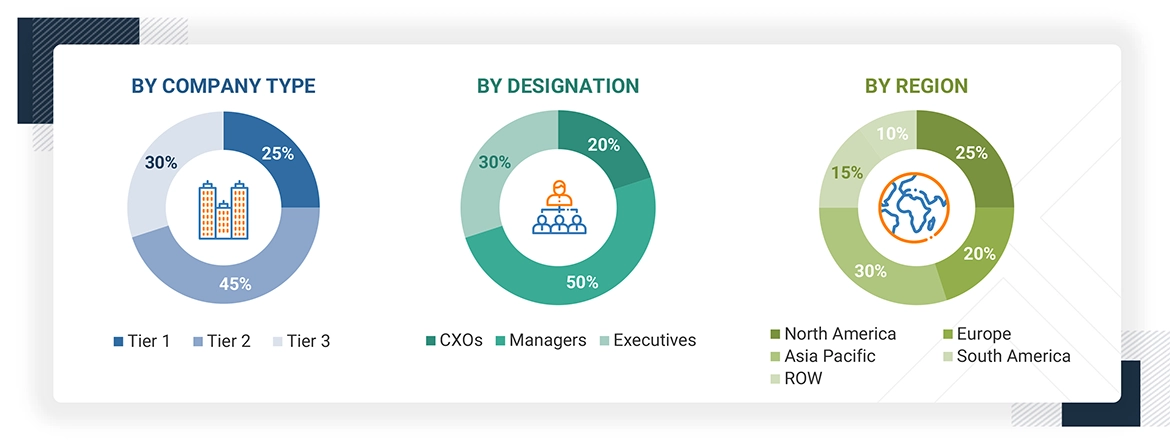
Extensive primary research was conducted after obtaining information regarding the plant-based protein market scenario through secondary research. Several primary interviews were conducted with market experts from the demand and supply sides across major countries of North America, Europe, Asia Pacific, South America, and the Rest of the World. Primary data was collected through questionnaires, emails, and telephonic interviews. The primary sources from the supply side included various industry experts, such as chief officers (CXOs), vice presidents (VPs), directors from business development, marketing, research, and development teams, and related key executives from distributors and key opinion leaders.

Primary interviews were conducted to gather insights such as market statistics, data on revenue collected from the products and services, market breakdowns, market size estimations, market forecasting, and data triangulation. Primary research also helped understand the source, type, application, nature, form, and region trend. Stakeholders from the demand side, such as plant-based food manufacturers and feed & pet-food manufacturers, were interviewed to understand the buyers’ perspective on the suppliers, products, and their business outlook, which will affect the overall market.

Plant-based Protein Market Size, and Share

Note: The three tiers of the companies are defined based on their total revenues in 2023 or 2024,
as per the availability of financial data: Tier 1: Revenue > USD 1 billion; Tier 2: USD 100
million = revenue = USD 1 billion; Tier 3: Revenue < USD 100 million

To know about the assumptions considered for the study, download the pdf brochure

COMPANY NAME

DESIGNATION

ADM (US)

Product Development Manager

Wilmar International Ltd (Singapore)

Senior R&D Scientist

Roquette Frères (France)

Marketing Director

Kerry Group PLC (Ireland)

Sales Head

International Flavors & Fragrances Inc. (US)

Senior Research Executive

Tate & Lyle (UK)

Business Development Manager

Market Size Estimation

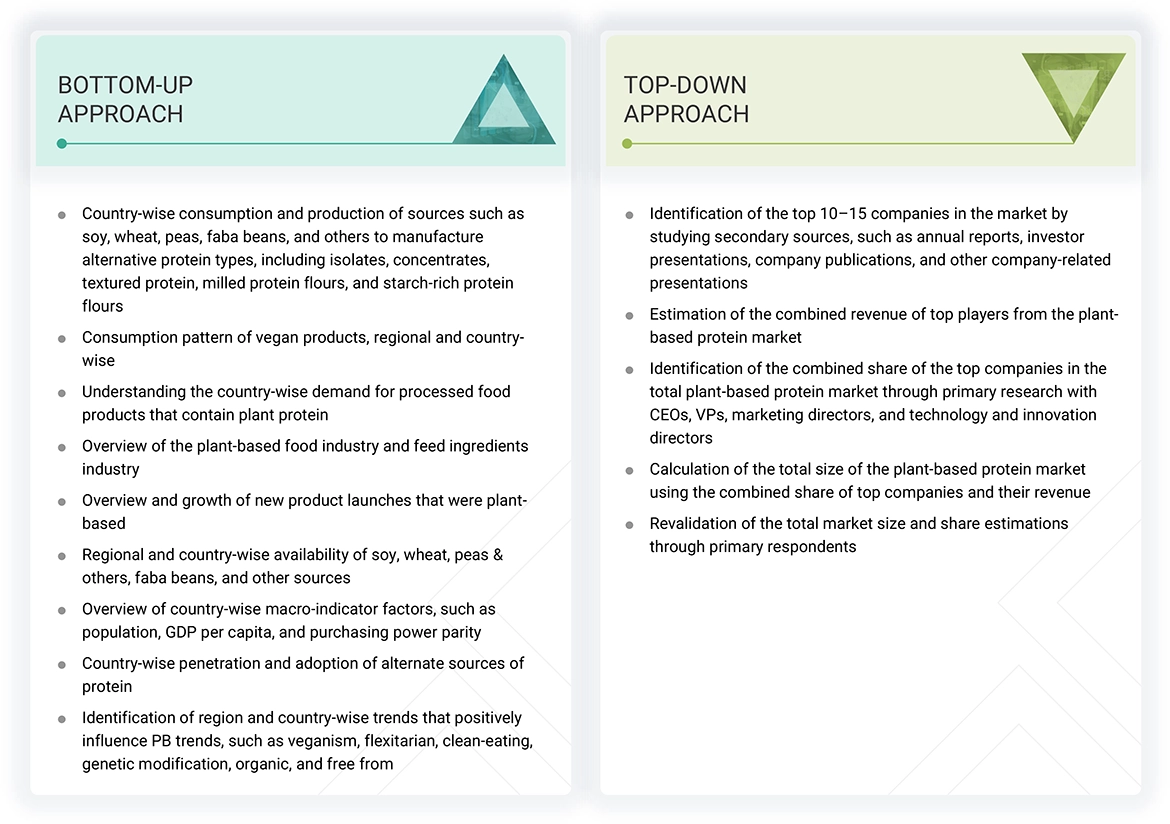
The top-down and bottom-up approaches were used to estimate and validate the total size of the plant-based protein market. These approaches were also used extensively to determine the size of various subsegments in the market. The research methodology used to estimate the market size includes the following details:

  • The key players in the industry and the overall markets were identified through extensive secondary research.
  • All shares, splits, and breakdowns were determined using secondary sources and verified through primary sources.
  • All possible parameters that affect the market covered in this research study were accounted for, viewed in extensive detail, verified through primary research, and analyzed to obtain final quantitative and qualitative data.
  • The research included the study of reports, reviews, and newsletters of top market players, along with extensive interviews for opinions from leaders, such as CEOs, directors, and marketing executives.

Plant-based Protein Market : Top-Down and Bottom-Up Approach

Plant-based Protein Market Top Down and Bottom Up Approach

Data Triangulation

After determining the overall market size from the estimation process explained above, the total market was split into several segments and subsegments. The data triangulation procedure was employed, wherever applicable, to estimate the overall plant-based protein market and arrive at the exact statistics for all segments and subsegments. The data was triangulated by studying various factors and trends from the demand and supply sides. The market size was also validated using both the top-down and bottom-up approaches.

Market Definition

Plant-based protein is derived from plant-based sources, such as pulses, grains, and seeds. Plant-based protein sources include soy, wheat, peas, faba beans, canola, rice, and potatoes. Proteins are polymers of amino acids used in various applications for their nutritional and functional properties. Their potential to increase the nutritional level in a healthy diet makes them one of the key ingredients in the food and feed industries.

Milled protein flours are plant protein products with enhanced protein content (20–80%) and reduced starch levels (10–40%), produced through conventional milling combined with protein concentration techniques to achieve specific functional and nutritional profiles.

Starch-rich protein flours are plant-based flour products characterized by moderate protein content (15–35%) with substantial starch retention (35–55%), produced through mild processing techniques that preserve the natural macronutrient balance of the source material.

Stakeholders

  • Raw material suppliers of plant-based protein
  • Intermediate stakeholders, including distributors, retailers, associations, regulatory bodies, and others
  • Manufacturers and traders of plant-based protein ingredients, such as soy, wheat, peas, canola, oats, rice, and potatoes
  • Manufacturers and traders of food products, including dairy alternatives, meat alternatives, bakery products, nutritional products, convenience foods, and other food applications
  • Manufacturers and traders of non-food applications, such as feed and pet food
  • Government organizations, institutes, and research organizations
  • Associations and Industry Bodies:
    • Food and Agriculture Organization (FAO)
    • United States Department of Agriculture (USDA)
    • U.S. Food and Drug Administration (FDA)
    • European Food Safety Authority (EFSA)
    • European Association of Specialty Feed Ingredients and their Mixtures (FEFANA)
    • Organization for Economic Co-operation and Development (OECD)
    • Plant-based Food Associations (PBFA)
    • United Soybean Board (USB)
    • European Plant-based Foods Association (ENSA)
    • European Vegetable Protein Association (EUVEPRO)
    • Food Standards Australia New Zealand (FSANZ)

Report Objectives

  • To determine and project the size of the plant-based protein market based on source, type, application, nature, form, function (qualitative), and region over five years, ranging from 2025 to 2030
  • To identify the attractive opportunities in the market by determining the largest and fastest-growing segments across regions
  • To provide detailed information about the key factors influencing market growth (drivers, restraints, opportunities, and challenges)
  • To analyze the opportunities in the market for stakeholders and provide details of the competitive landscape for market leaders
  • To analyze the micromarkets concerning individual growth trends, prospects, and their contribution to the total market
  • To identify and profile the key players in the plant-based protein market
  • To understand the competitive landscape and identify the major growth strategies adopted by players across the key regions

Available Customizations

With the given market data, MarketsandMarkets offers customizations according to company-specific scientific needs.

The following customization options are available for the report:

Product Analysis

  • Product matrix, which gives a detailed comparison of the product portfolio of each company.

Geographic Analysis as per Feasibility

With the given market data, MarketsandMarkets offers customizations according to company-specific scientific needs.

  • Further breakdown of the Rest of European plant-based protein market into key countries
  • Further breakdown of the Rest of Asia Pacific plant-based protein market into key countries
  • Further breakdown of the Rest of South American plant-based protein market into key countries

Company Information

  • Detailed analyses and profiling of additional market players (up to five)


Key Questions Addressed by the Report

What is the projected size of the plant-based protein market?

The plant-based protein market was valued at USD 22.29 billion in 2024 and is projected to reach USD 34.97 billion by 2030, at a CAGR of 7.9% from 2025 to 2030.

Which are the key players in the plant-based protein market, and how intense is the competition?

Key players include Cargill, Incorporated (US), ADM (US), Kerry Group PLC (Ireland), International Flavors & Fragrances Inc. (US), Ingredion Incorporated (US), Wilmar International Ltd. (Singapore), Roquette Frères (France), Glanbia PLC (Ireland), DSM-Firmenich (Switzerland), AGT Food and Ingredients (Canada), Tate & Lyle (UK), Burcon (Canada), Emsland Group (Germany), PURIS (US), and COSUCRA (Belgium). The market competition is intense, with continuous R&D investments, mergers, acquisitions, and innovations in encapsulation technologies.

What are the growth prospects for the plant-based protein market in the next five years?

The plant-based protein market is expected to grow robustly over the next five years, driven by the global shift toward healthier lifestyles and the rising vegan and vegetarian populations.

What kind of information is provided in the company profiles section?

The company profiles offer valuable information, such as a comprehensive business overview, including details on the company’s various business segments, financial performance, geographical reach, revenue composition, and the breakdown of their business revenue. Additionally, these profiles offer insights into the company’s product offerings, significant milestones, and expert analyst perspectives to further explain the company’s potential.

How is the Asia Pacific region contributing to market growth?

The Asia Pacific region is becoming a key growth driver for the plant-based protein market, driven by rising health awareness, urbanization, and increasing disposable incomes. Consumers in China, India, Japan, and Southeast Asian countries are adopting plant-based diets for cultural, environmental, and health reasons, particularly among younger urban populations. Government initiatives promoting wellness and a rise in lifestyle-related health issues are boosting demand. Moreover, the growth of e-commerce and mobile health platforms improves product accessibility, allowing more consumers to explore plant-based options.

Personalize This Research

  • Triangulate with your Own Data
  • Get Data as per your Format and Definition
  • Gain a Deeper Dive on a Specific Application, Geography, Customer or Competitor
  • Any level of Personalization
Request A Free Customisation

Let Us Help You

  • What are the Known and Unknown Adjacencies Impacting the Plant-based Protein Market

  • What will your New Revenue Sources be?
  • Who will be your Top Customer; what will make them switch?
  • Defend your Market Share or Win Competitors
  • Get a Scorecard for Target Partners
Customized Workshop Request

Custom Market Research Services

We Will Customise The Research For You, In Case The Report Listed Above Does Not Meet With Your Requirements

Get 10% Free Customisation

Growth opportunities and latent adjacency in Plant-based Protein Market

DMCA.com Protection Status