Protein Microarrays Market Size, Growth, Share & Trends Analysis

Protein Microarrays Market by Offering (Products, Services), Type (Biochips, Microarray Instruments), Application (Clinical, Drug Discovery) - Global Forecast to 2030




OVERVIEW
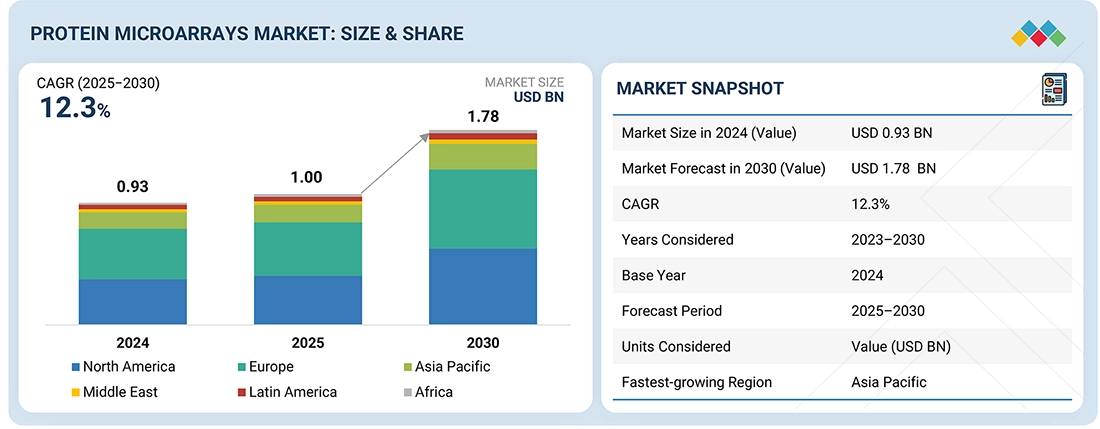
Source: Secondary Research, Interviews with Experts, MarketsandMarkets Analysis
The protein microarrays market is projected to reach USD 1.78 billion by 2030 from USD 1.00 billion in 2025, at a CAGR of 12.3% from 2025 to 2030, supported by advances in multiplexing, automation, and bioinformatics. These advancements enable parallel analysis of protein interactions, biomarkers, and functional assays, providing deeper insights into disease biology and therapeutic response for oncology, neurology, and immunology applications.
KEY TAKEAWAYS
-
By RegionBy region, the microarrays market in North America is projected to register the highest CAGR of 12.4% from 2025 to 2030.
-
By OfferingBy offering, the products segment is expected to dominate the market during the forecast period.
-
By TypeBy type, the biochips segment is projected to grow at a faster rate than the microarray instruments segment during the forecast period.
-
By End UserBy end user, biopharmaceutical companies are estimated to dominate the protein microarrays market.
-
COMPETITIVE LANDSCAPEThermofisher Scientific Inc (US), Danaher Corporation (US), and Agilent Technologies (US) were identified as some of the star players in the protein microarrays market, given their strong market share and product footprint.
-
COMPETITIVE LANDSCAPEPixelgen Technologies AB (Sweden) and MSAID GmbH (Germany), among others, have distinguished themselves among startups and SMEs by securing strong footholds in specialized niche areas, underscoring their potential as emerging market leaders.
The protein microarrays market is expanding steadily, supported by surging biopharma investments, expanding academic-clinical collaborations, and rising adoption of protein microarrays for biomarker validation. Advanced protein microarray platforms empower researchers and clinicians to decode protein signaling networks, accelerate companion diagnostic development, and optimize immunotherapy response prediction.
TRENDS & DISRUPTIONS IMPACTING CUSTOMERS' CUSTOMERS
The protein microarrays market is being reshaped by fast-moving scientific, regulatory, and clinical trends, set to intensify over the forecast period. Expanding applications in precision oncology, immunology, and neurodegenerative diseases, alongside surging clinical trial integration, are driving demand for multiplexed, reproducible platforms in diagnostics and biopharma R&D labs.
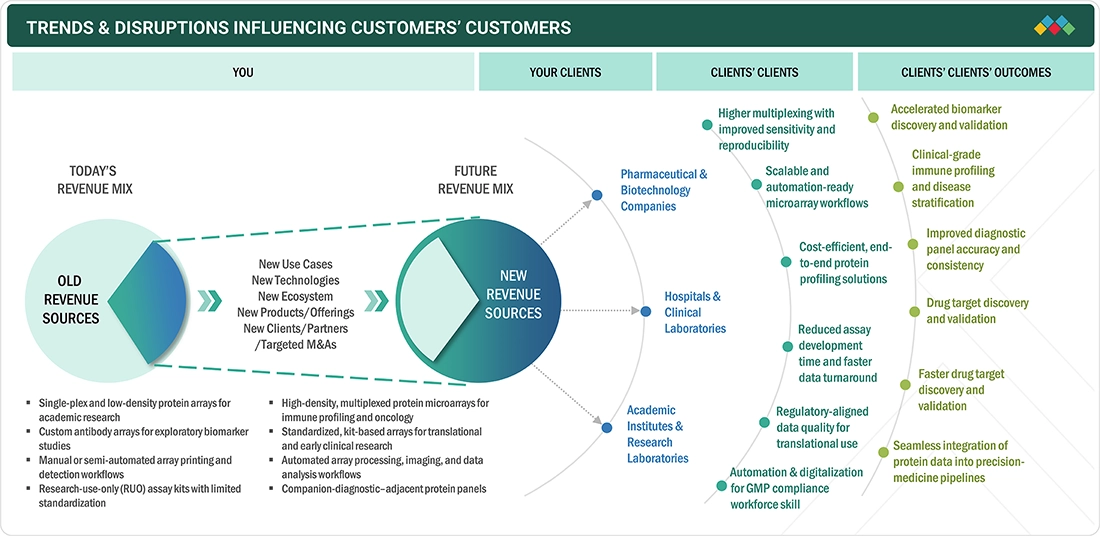
Source: Secondary Research, Interviews with Experts, MarketsandMarkets Analysis
MARKET DYNAMICS

Level
-
High-throughput biomarker discovery needs

-
Integration with multi-omics workflows


Level
-
Technical complexity and requirement for expertise


Level
-
Growing clinical diagnostics and prognostics adoption


Level
-
Data interpretation complexity

Source: Secondary Research, Interviews with Experts, MarketsandMarkets Analysis
Driver: High-throughput biomarker discovery needs
Protein microarrays enable simultaneous analysis of thousands of proteins, making them highly valuable for biomarker identification in disease research, drug development, and immunoprofiling.
Restraint: Technical complexity and requirement for expertise
Successful execution and interpretation of protein microarrays require trained personnel and rigorous quality control, which can be barriers for widespread deployment.
Opportunity:Growing clinical diagnostics and prognostics adoption
Increasing clinical interest in protein signatures for early disease diagnosis refers to how there is a rising level of detection, therapeutic monitoring, and immunoprofiling support.
Challenge: Data interpretation complexity
The protein microarray data is huge and of higher dimensionality, requiring sophisticated bioinformatic analysis and statistical capabilities.
PROTEIN MICROARRAYS MARKET: COMMERCIAL USE CASES ACROSS INDUSTRIES
| COMPANY | USE CASE DESCRIPTION | BENEFITS |
|---|---|---|
 |
Provides protein and antibody microarray platforms, functional protein arrays, detection reagents, and imaging systems used for high-throughput biomarker discovery, immune profiling, and pathway analysis in academic, CRO, and biopharma research settings. | Enables simultaneous profiling of hundreds to thousands of proteins, accelerates biomarker discovery, reduces sample volume requirements, and supports translational and early clinical research programs. |
 |
Offers microarray fabrication technologies, array scanners, and surface chemistries that support custom and commercial protein and antibody microarrays for discovery and translational research applications. | Delivers high sensitivity, flexible array design, and robust data quality, allowing laboratories to tailor protein panels to specific disease or pathway-focused studies. |
Logos and trademarks shown above are the property of their respective owners. Their use here is for informational and illustrative purposes only.
MARKET ECOSYSTEM
The protein microarrays market involves the array platform vendors, reagents, bioinformatics tools, contract research organizations, biopharma firms, and clinical labs. There are vendors offering multiplexed protein, antibody array platforms, as well as sophisticated data analysis tools, whereas contract research organizations, core centers, or institutions perform HT, HP protein profiling analyses. This way, biopharma firms, hospitals, or healthcare centers can effectively isolate and validate protein biomarkers, which is further accompanied by high degrees of reproducibility and sensitivity, so protein-based findings can be translated into precision diagnostics, drugs, etc.
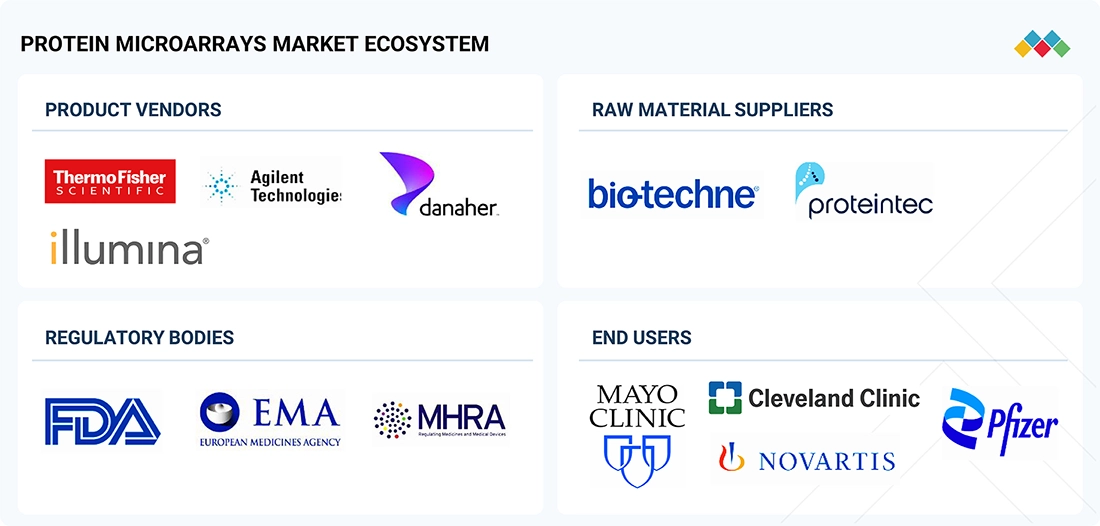
Logos and trademarks shown above are the property of their respective owners. Their use here is for informational and illustrative purposes only.
MARKET SEGMENTS
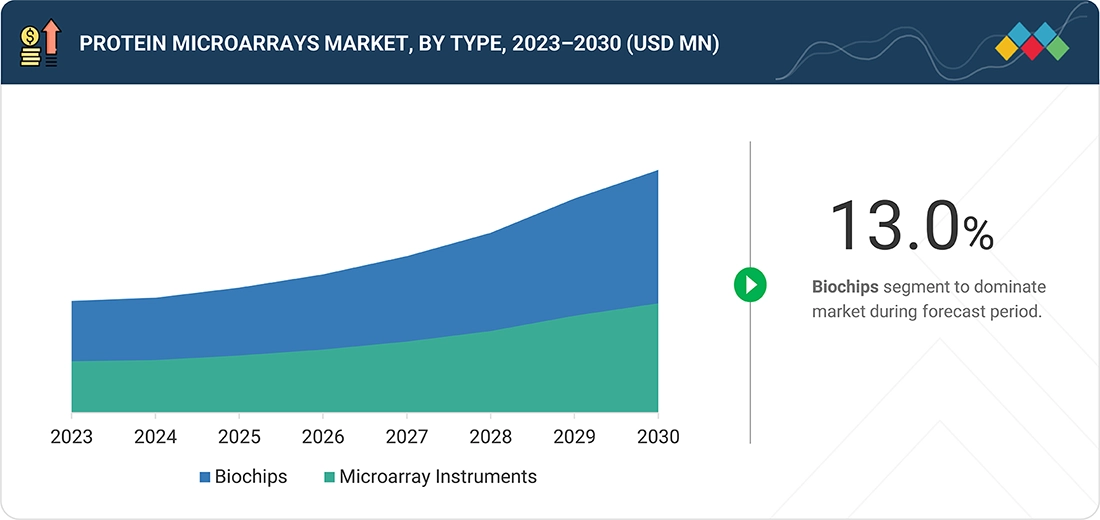
Source: Secondary Research, Interviews with Experts, MarketsandMarkets Analysis
Protein Microarrays Market, By Offering
By offering, the products segment accounted for the largest market share in 2024, fueled by widespread demand for standardized kits, array slides, and integrated scanners that streamline high-plex protein profiling over bespoke services.
Protein Microarrays Market, By Type
By type, the biochips segment held the major market share in 2025, leveraging their superior multiplexing capabilities, miniaturized high-density arrays, and compatibility with automated scanners to enable simultaneous detection of thousands of protein interactions for biomarker discovery and diagnostics.
Protein Microarrays Market, By Application
By application, the clinical diagnostics segment commanded the largest market share in 2024, powered by demand for multiplexed biomarker panels enabling rapid disease profiling, therapy monitoring, and personalized treatment selection in oncology, autoimmune disorders, and infectious diseases.
Protein Microarrays Market, By End User
Among end users, biopharmaceutical companies held the largest market share in 2024, leveraging multiplexed arrays for accelerated drug target validation, antibody screening, and biomarker discovery to streamline personalized medicine pipelines and reduce R&D timelines.
REGION
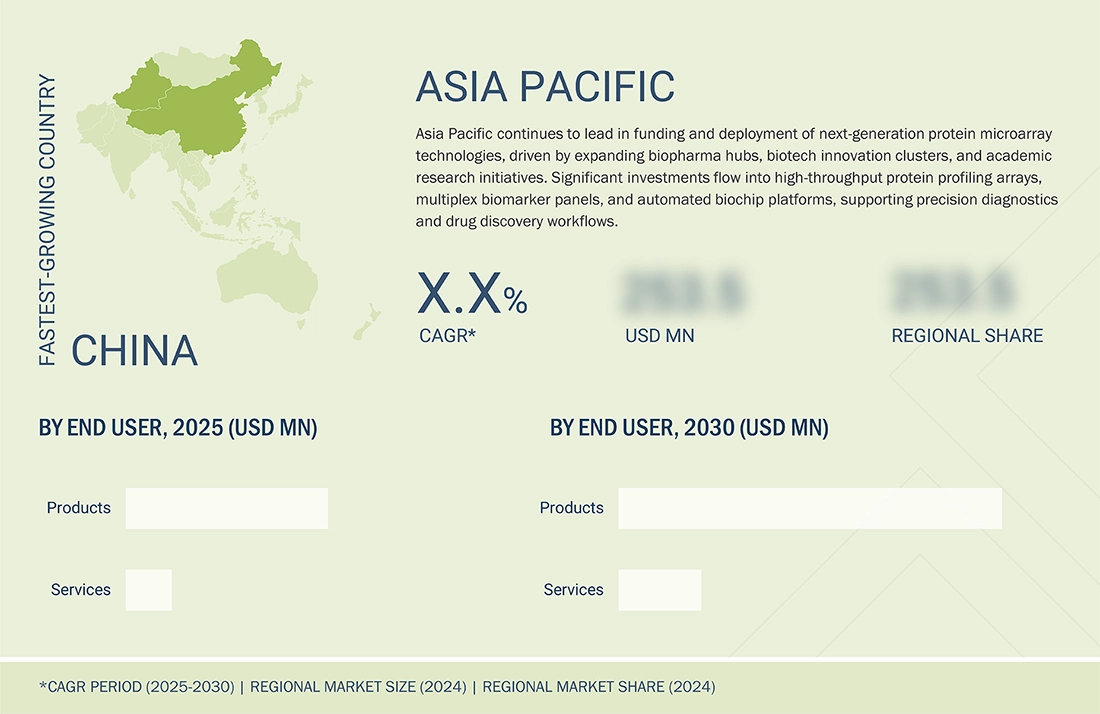
Asia Pacific to be fastest-growing region in protein microarrays market during forecast period
By region, the Asia Pacific protein microarrays market is projected to witness the highest growth rate due to rising biomarker demand, microarray technology advancements, biotech research investments, expanding pharma sectors, healthcare needs amid chronic diseases, and supportive government policies in China and India.
PROTEIN MICROARRAYS MARKET: COMPANY EVALUATION MATRIX
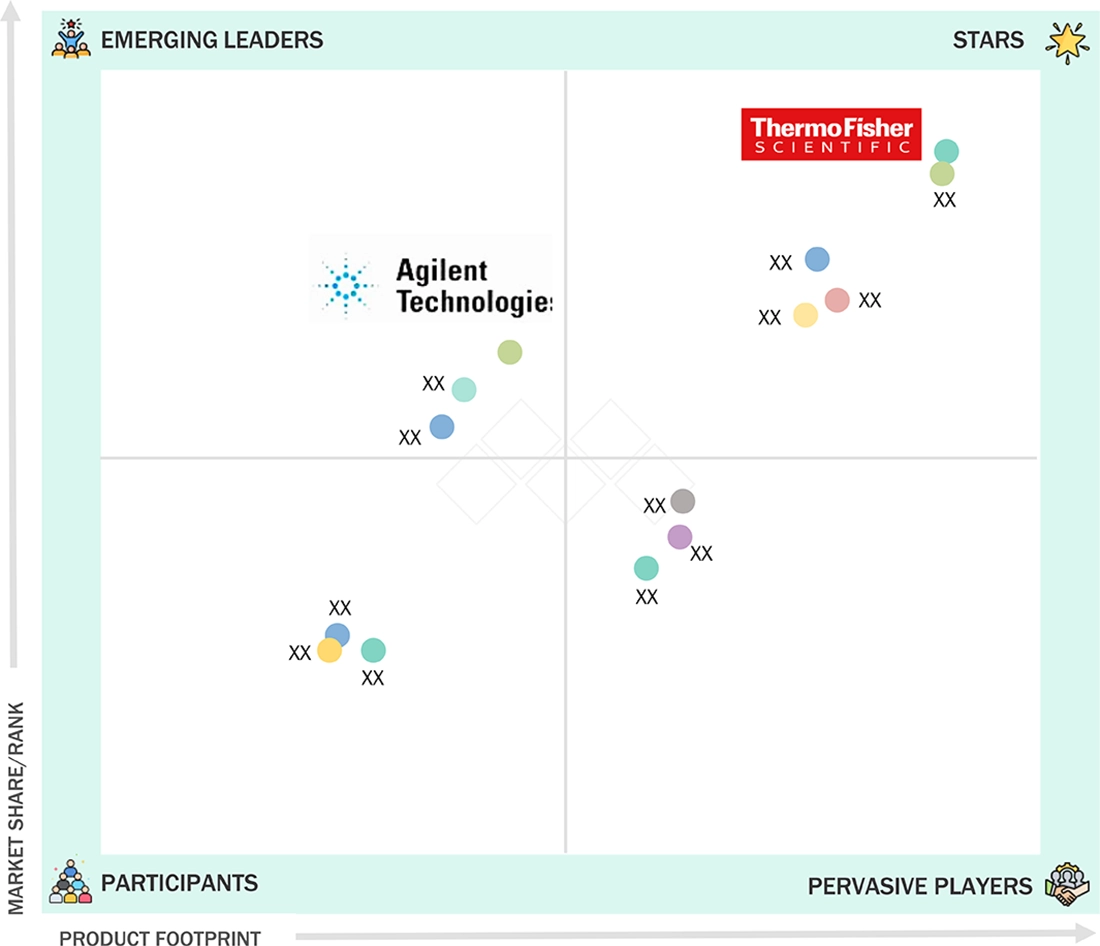
In the protein microarrays market matrix, Thermo Fisher Scientific(Star Player) dominates the widely adopted multiplex array platforms, high-density biochips, and integrated analysis software, anchoring major biopharma, CRO, and academic workflows. Agilent Technologies is an emerging leader. It gains in share through advanced protein profiling arrays and automation solutions that support biomarker discovery and translational applications. Niche protein interaction and multi-omics arrays from smaller specialist firms add competitive momentum and are well-placed for entry into the leaders' quadrant over time.
Source: Secondary Research, Interviews with Experts, MarketsandMarkets Analysis
KEY MARKET PLAYERS
- Thermo Fisher Scientific Inc. (US)
- Danaher Corporation (US)
- Agilent Technologies (US)
- Illumina Inc. (US)
- Merck KGaA (Germany)
- Qiagen (Netherlands)
- PerkinElmer, Inc. (US)
- Waters Corporation (US)
MARKET SCOPE
| REPORT METRIC | DETAILS |
|---|---|
| Market Size in 2024 (Value) | USD 0.93 Billion |
| Market Forecast in 2030 (Value) | USD 1.78 Billion |
| Growth Rate | CAGR of 12.3% from 2025 to 2030 |
| Years Considered | 2023-2030 |
| Base Year | 2024 |
| Forecast Period | 2025-2030 |
| Units Considered | Value (USD Million) |
| Report Coverage | Revenue forecast, company ranking, competitive landscape, growth factors, and trends |
| Segments Covered |
|
| Regions Covered | North America, Europe, Asia Pacific, Latin America, Middle East & Africa |
| Parent & Related Segment Reports |
Proteomics Market North America Proteomics Market Asia Pacific Proteomics Market Proteomics Services Market Europe Proteomics Market |
WHAT IS IN IT FOR YOU: PROTEIN MICROARRAYS MARKET REPORT CONTENT GUIDE
DELIVERED CUSTOMIZATIONS
We have successfully delivered the following deep-dive customizations:
| CLIENT REQUEST | CUSTOMIZATION DELIVERED | VALUE ADDS |
|---|---|---|
| Workflow standardization & scalability | Benchmarked sample preparation protocols, assay reproducibility, inter-lot consistency, and scalability across academic, CRO, and biopharma environments. | Supports development of standardized, scalable offerings suitable for multi-site studies and translational research programs. |
| Data analytics & interpretation readiness | Evaluated availability and maturity of array data-processing software, normalization pipelines, and integration with bioinformatics and multi-omics platforms. | Enables vendors and service providers to strengthen analytics capabilities and reduce barriers to customer adoption. |
RECENT DEVELOPMENTS
- October 2025 : Merck (Sigma-Aldrich) launched the Panorama Human Cancer Version 1 Protein Functional Microarray, enhancing high-throughput cancer biomarker screening and protein interaction studies with improved sensitivity for clinical research.
Table of Contents
 Exclusive indicates content/data unique to MarketsandMarkets and not available with any competitors.
Methodology
This research involves the extensive use of secondary sources; directories; and databases (Bloomberg and Factiva) to identify and collect information useful for a technical, market-oriented, and commercial study of protein microarrays market. In-depth interviews were conducted with various primary respondents, such as key industry participants, Subject Matter Experts (SMEs), C-level executives of key market players, and industry consultants, to obtain and verify critical qualitative and quantitative information and to assess prospects.
Secondary Research
In the secondary research process, various sources, such as the Food and Agricultural Organization (FAO), International Society for Horticulture Sciences (ISHS), Portuguese Association for Horticulture, Confederation of Horticulture Association of India, National Institute of Post-Harvest Technology, American Horticulture Society, Indian Academy of Horticulture Science (IAHS), International Association of Horticultural Producers (AIPH), Union Fleurs-International Flower Trade association, Floriculture International, European Association for Flower Growers, European Botanical and Horticultural Libraries Group (EBHL), were referred to identify and collect information for this study. The secondary sources also include journals, press releases, investor presentations of companies, whitepapers, certified publications, articles by recognized authors and regulatory bodies, trade directories, and paid databases.
Secondary research was conducted to obtain critical information about the industry’s supply chain, the total pool of key players, and market classification and segmentation according to the industry trends to the bottom-most level and geographical markets. It was also used to obtain information about the key developments from a market-oriented perspective.
Primary Research
The protein microarrays market comprises several stakeholders, including protein microarrays solution manufacturers and suppliers, agrochemical manufacturers, floriculture and horticulture organizations, and regulatory organizations in the supply chain. Various primary sources from both the supply and demand sides of the market were interviewed to obtain qualitative and quantitative information. Primary interviewees from the supply side include research institutions involved in R&D to introduce technology, protein microarrays solution distributors and wholesalers, importers & exporters of protein microarrays solution, protein microarrays solution manufacturers, and technology providers. Primary sources from the demand-side include key opinion leaders, executives, vice presidents, and CEOs of horticulture and floriculture companies through questionnaires, emails, and telephonic interviews.
To know about the assumptions considered for the study, download the pdf brochure
Protein Microarrays Market Size Estimation
Both the top-down and bottom-up approaches have been used to estimate and validate the total size of the protein microarrays market. These approaches were extensively used to determine the size of the subsegments in the market. The research methodology used to estimate the market size includes the following details:
Top-down approach:
- The key industry and market players were identified through extensive secondary research.
- The industry's supply chain and market size were determined through primary and secondary research.
- All percentage share splits and breakdowns were determined using secondary sources and verified through primary sources.
- The adjacent market—the crop protection market—was considered to validate further the market details of protein microarrays.
Bottom-up approach:
- The market size was analyzed based on the share of each type of protein microarrays and its penetration within the crop type at regional and country levels. Thus, the global market was estimated with a bottom-up approach of the type at the country level.
- Other factors include demand within the supply chain including floriculture and horticulture industry; and function trends; pricing trends; the adoption rate and price factors; patents registered; and organic and inorganic growth attempts.
- All macroeconomic and microeconomic factors affecting protein microarrays market were considered while estimating the market size.
- All possible parameters that affect the market covered in this research study were accounted for, viewed in extensive detail, verified through primary research, and analyzed to obtain final quantitative and qualitative data.
Data Triangulation
After arriving at the overall market size from the estimation process explained above, the total market was split into several segments and subsegments. The data triangulation and market breakdown procedures were employed, wherever applicable, to estimate the overall market and arrive at the exact statistics for all segments and subsegments. The data was triangulated by studying various factors and trends from the demand and supply sides. Along with this, the market size was validated using both the top-down and bottom-up approaches.
Protein Microarrays Market Report Objectives
- To define, segment, and project the global market for protein microarrays on the basis of type, nature, application and region
- To provide detailed information regarding the key factors influencing the growth of the market (drivers, restraints, opportunities, and industry-specific challenges)
- To strategically analyze the micro markets with respect to individual growth trends, future prospects, and their contribution to the total market
- To analyze the opportunities in the market for stakeholders and provide a competitive landscape of the market leaders.
- To project the size of the market and its submarkets, in terms of value with respect to the regions (along with the key countries)
- To strategically profile the key players and comprehensively analyze their market position and core competencies.
- To analyze the competitive developments such as joint ventures, mergers & acquisitions, new product developments, and research & developments in the protein microarrays market
Available Customizations:
With the given market data, MarketsandMarkets offers customizations according to company-specific scientific needs.
The following customization options are available for the report:
Product Analysis
- Product Matrix, which gives a detailed comparison of the product portfolio of each company.
Geographic Analysis
With the given market data, MarketsandMarkets offers customizations according to the company-specific scientific needs.
- Further breakdown of the Rest of European protein microarrays market, by key country
- Further breakdown of the Rest of South America market, by key country
Company Information
- Detailed analyses and profiling of additional market players


Personalize This Research
- Triangulate with your Own Data
- Get Data as per your Format and Definition
- Gain a Deeper Dive on a Specific Application, Geography, Customer or Competitor
- Any level of Personalization
Let Us Help You
- What are the Known and Unknown Adjacencies Impacting the Protein Microarrays Market
- What will your New Revenue Sources be?
- Who will be your Top Customer; what will make them switch?
- Defend your Market Share or Win Competitors
- Get a Scorecard for Target Partners

Custom Market Research Services
We Will Customise The Research For You, In Case The Report Listed Above Does Not Meet With Your Requirements
Get 10% Free CustomisationTESTIMONIALS

JAYANT RAJPUROHIT
Director of Market Insights, Data and Analytics
SFI Health,
Leading Pharmaceutical Companywww.sfihealth.com/

We at SFI Health approached MarketsandMarkets for an Opportunity Assessment on "Incidence and Prevalence of Focus Indications" as we wanted to know the most attractive HCPs like Physician, Functional MD, Naturopath and Pharmacist. The project was critical for us to ensure our focus on the right target which would enable sustainable growth and profitability for SFI Health. The business insights provided exceeded our expectations and we were extremely impressed. The team at MarketsandMarkets is highly professional and detail oriented and very well understood our business needs. MarketsandMarkets offers a unique combination of expertise and dedicated engagement model. We identified 2 new products to be launched in coming months, based on the research findings provided by MarketsandMarkets. We are happy with the services and would strongly recommend MarketsandMarkets to my peers in the industry.

BEATRIZ DE LA CALLE
Head of Commercial Analytics
Qualicaps,
Leading Pharmaceutical Companywww.qualicaps.com/

We partnered with MarketsandMarkets for an assessment study on hard empty capsules. The team was extremely professional in understanding our business requirements and we received timely responses to all our queries. The market intelligence and the recommendations has met our business requirements. We were extremely impressed to see the final study results; it really exceeded our expectations. The market intelligence offered by MarketsandMarkets, and clarity on next steps will help us achieve our business objective for the Year 2021. We are happy with the services and would strongly recommend MarketsandMarkets to my peers in the industry.

Bob Williams,
Senior Director Business Development & Innovation
Bracco Diagnostics Inc.,
Italian Multinational in life sciences sector and a World Leader in imaging diagnosticsimaging.bracco.com/us-en
We were pleased with targeted insights that MarketsandMarkets identified from a custom study on the 'Radiation Dose Management Solutions Market'. Your team identified and characterized the market participants as well as underlying trends accurately. This study was useful to Bracco in formulating business strategies for our dose monitoring product lines and we thank MarketsandMarkets for the job well done.
Cody Coonradt,
Market Development and Strategy Manager
3M Health Information Systems,
Leader in Health care Coding, Payment & Analytics Solutions.www.3m.com/3M/en_US/health-information-systems-us
The value for our organization comes from three things: depth of research, specificity of segments and being easy to work with. As important as the first two are, the third can't be underestimated. MarketsandMarkets, maybe more than any other research vendor, wants to know what is top of mind for our team and what big questions we are grappling to answer.
Their customer first approach and high value engagement model, have given us great analysis and excellent value for money






Growth opportunities and latent adjacency in Protein Microarrays Market