Space Sensors and Actuators Market Size, Share, & Forecast

Space Sensors and Actuators Market By Product Type (Sensors, Actuators), Platform (Satellites, Capsules/Cargo, Interplanetary Spacecraft and Probes, Launch Vehicles), Application, End User, Region - Global Forecast to 2031




SPACE SENSORS AND ACTUATORS MARKET OVERVIEW
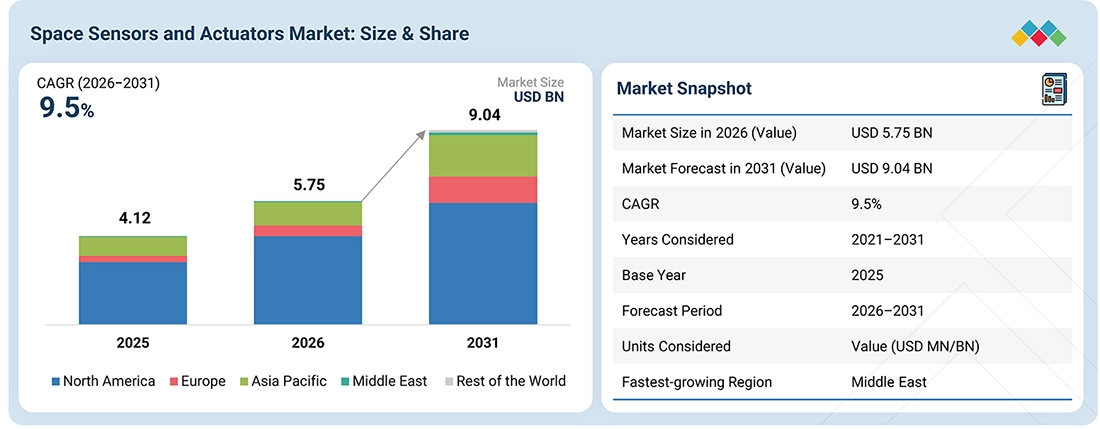
According to Marketsandmarkets, the Global Space Sensors and Actuators Market Size was valued at USD 5.75 billion in 2026 and is projected to reach USD 9.04 billion by 2031 growing at a CAGR of 9.5% from 2026-2031 The growth of the market is primarily driven by the surge in satellite launches, rising demand for Earth observation and communication constellations, and increasing investments in space exploration and defense modernization.
REPORT SCOPE
| REPORT METRIC | DETAILS |
|---|---|
| Market Size in 2025 (Value) | USD 4.12 Billion |
| Market Size in 2026 (Value) | USD 5.75 Billion |
| Market Forecast in 2031 (Value) | USD 9.04 Billion |
| CAGR | 9.5% |
| Years Considered | 2021–2031 |
| Base Year | 2025 |
| Forecast Period | 2026–2031 |
| Units Considered | Value (USD Million/Billion), Volume (Units) |
| Report Coverage | Revenue Forecast, Company Ranking, Competitive Landscape, Growth Factors, and Trends |
| Top Companies |
|
| Growth Drivers |
|
| Segments Covered |
|
| Regions Covered | North America, Europe, Asia Pacific, Middle East, Rest of the World |
SPACE SENSORS AND ACTUATORS MARKET KEY TAKEAWAYS
-
BY PRODUCT TYPEBy product type, the sensors segment is estimated to lead the market due to the critical role of sensors in satellite positioning, propulsion control, and robotic operations. Continuous innovation in compact, radiation-hardened, and electromechanical sensors is driving demand across deep space and commercial missions.
-
BY PLATFORMBy platform, the interplanetary spacecraft & probes segment is estimated to hold the largest market share. Rising investment in planetary exploration missions is driving demand for advanced sensors and actuators in interplanetary spacecraft and probes.
-
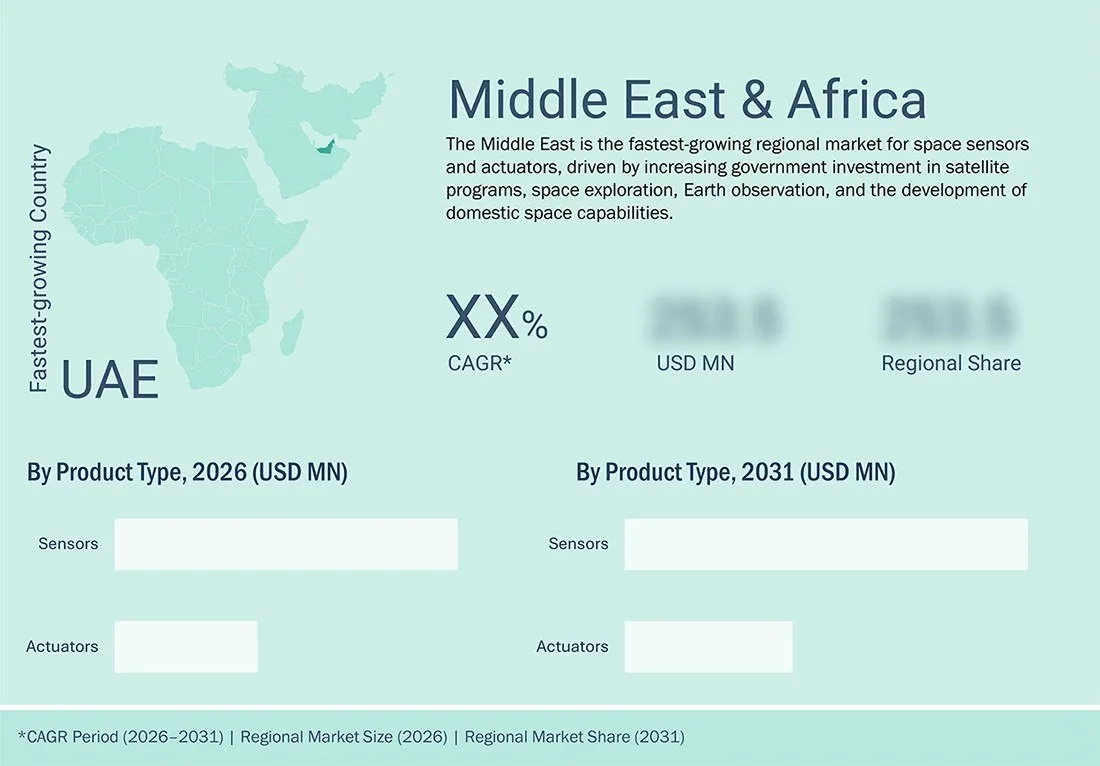
BY REGIONThe Middle East is projected to be the fastest-growing regional market, driven by rising government investment in space programs, satellite capabilities, and regional space infrastructure. Increasing government investment in space programs, satellite capabilities, and regional space infrastructure is driving the Middle East market.
-
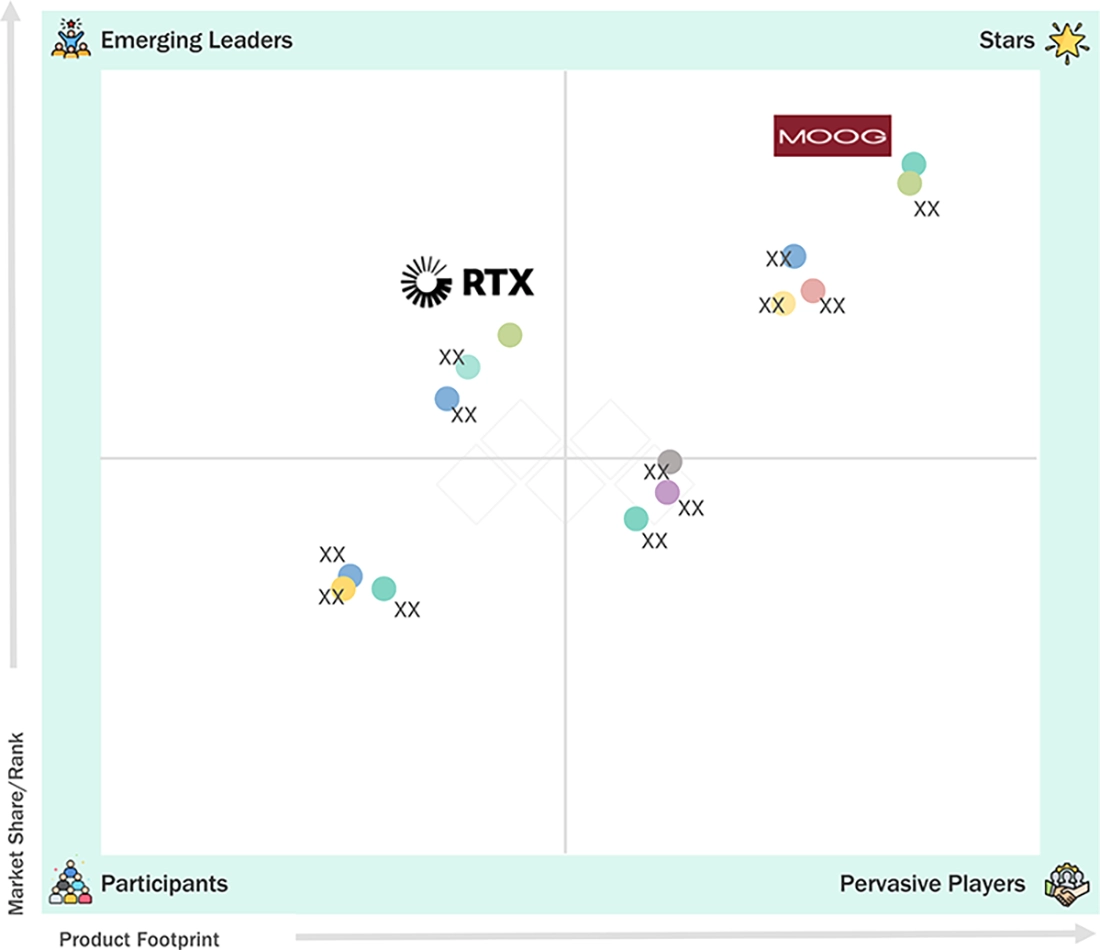
Competitive Landscape - Key Players:Honeywell International Inc. (US), Teledyne Technologies Incorporated (US), and Moog Inc.(US) were identified as some of the star players in the space sensors and actuators market, given their strong market share and product footprint.
-
Competitive Landscape - Startups/SMEs:Comat (France) and Space-Lock GmbH (Austria) have established themselves among SMEs by securing strong footholds in specialized niche areas, underscoring their potential as emerging leaders in the command and control market.
The Space Sensors and Actuators Industry is witnessing growth driven by advancements in miniaturization, AI-driven control systems, and radiation-hardened materials. The emergence of private space ventures and public–private partnerships is also accelerating technology adoption and manufacturing scale.
Source: Secondary Research, Interviews with Experts, MarketsandMarkets Analysis
TRENDS & DISRUPTIONS IMPACTING CUSTOMERS' CUSTOMERS
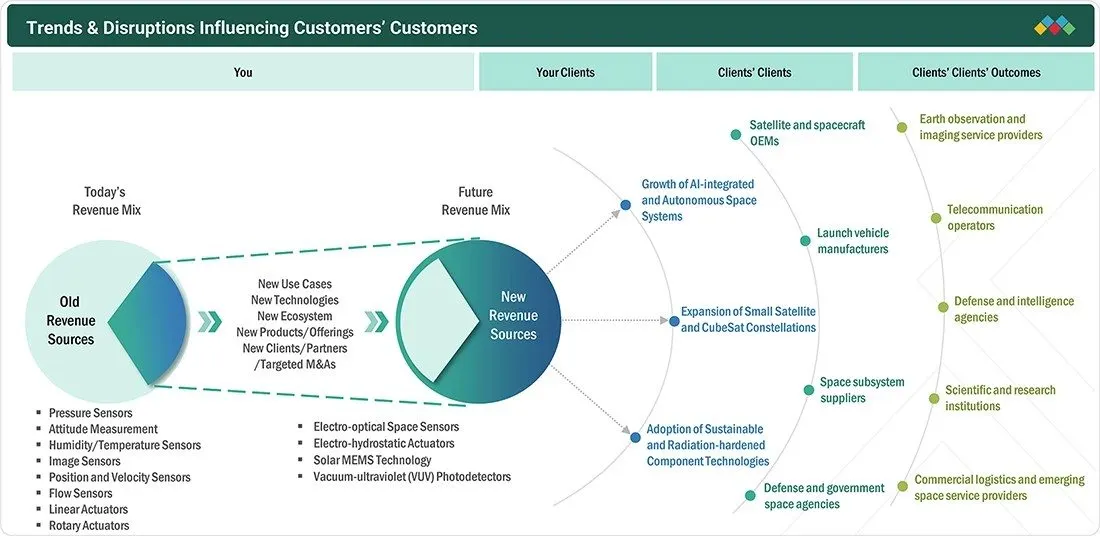
The impact on consumers’ businesses emerges from customer trends or disruptions. The market is undergoing significant transformations, driven by trends and disruptions reshaping customer businesses. The space sensors and actuators market is witnessing major trends such as a shift toward miniaturized, AI-enabled, and radiation-hardened sensor and actuator systems to support autonomous operations, multi-orbit satellite constellations, and deep space exploration missions.
Source: Secondary Research, Interviews with Experts, MarketsandMarkets Analysis
SPACE SENSORS AND ACTUATORS MARKET DYNAMICS

Level
-
Rising demand for Earth observation, defense, and scientific sensing payloads

-
Growth in satellite launches, constellation deployments, and overall space mission activity


Level
-
High development, testing, certification, and space-qualification costs

-
Long procurement, qualification, and spacecraft development cycles


Level
-
Adoption of standardized and modular architectures for high-volume satellite production

-
Emerging demand from lunar, planetary, rendezvous, docking, servicing, and robotic missions


Level
-
Maintaining sensor and actuator accuracy, reliability, and performance under radiation, vacuum, vibration, and extreme temperatures

-
Balancing size, weight, power, precision, torque, reliability, and mission-life requirements

Source: Secondary Research, Interviews with Experts, MarketsandMarkets Analysis
Driver: Rising demand for Earth observation, defense, and scientific sensing payloads
Growth in Earth observation, defense surveillance, weather monitoring, and scientific missions is increasing demand for advanced space-based sensors. These missions require electro-optical, thermal, radar, environmental, and scientific sensors for accurate data collection and mission operations.
Restraint: High development, testing, certification, and space-qualification costs
Space sensors and actuators require extensive testing for radiation, vibration, vacuum, temperature, and long mission life. These requirements increase development costs and can limit the participation of smaller suppliers.
Opportunity: Adoption of standardized and modular architectures for high-volume satellite production
The shift toward standardized and modular satellite designs is creating demand for compact, scalable, and easily integrated sensors and actuators. This can reduce integration time and support higher production volumes for small satellites and large constellations.
Challenge: Maintaining sensor and actuator accuracy, reliability, and performance under radiation, vacuum, vibration, and extreme temperatures
Sensors and actuators must maintain precision and reliability throughout long-duration space missions. Radiation, vacuum, launch vibration, and extreme temperature changes can affect component performance and increase the risk of system failure.
SPACE SENSORS AND ACTUATORS MARKET SIZE, SHARE, & FORECAST: COMMERCIAL USE CASES ACROSS INDUSTRIES
| COMPANY | USE CASE DESCRIPTION | BENEFITS |
|---|---|---|
 |
Development of high-reliability radiation-hardened image sensors and precision actuator systems for spaceborne scientific instruments and deep space observation missions; Teledyne’s CMOS and infrared sensor arrays are integrated into NASA and ESA payloads to deliver ultra-high-resolution imaging with low power consumption and extended operational life in extreme radiation environments. | Component Manufacturing & System Integration – Design, fabrication, and qualification of advanced space-grade imaging sensors and electromechanical actuators for optical payloads, planetary probes, and astrophysics missions. |
 |
Implementation of AI-based health monitoring for actuator assemblies to predict component wear, optimize torque distribution, and prevent mission-critical failures in spacecraft systems. | Integration & Operations – Real-time actuator diagnostics and predictive maintenance across propulsion and control subsystems. |
 |
Use of sensor fusion and AI algorithms for autonomous spacecraft guidance and adaptive mission planning in GNSS-denied deep-space missions. | Systems Integration – Combining multi-sensor data streams for intelligent navigation and in-orbit decision-making. |
Logos and trademarks shown above are the property of their respective owners. Their use here is for informational and illustrative purposes only.
SPACE SENSORS AND ACTUATORS MARKET ECOSYSTEM
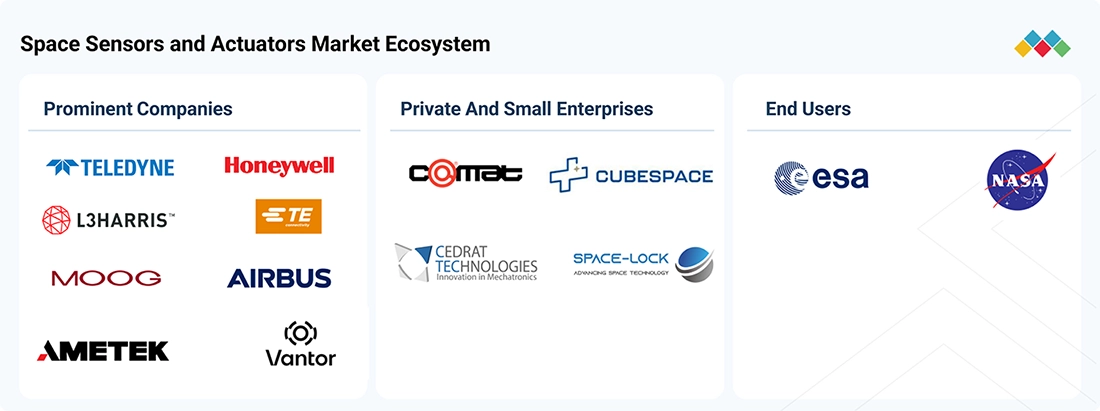
The key stakeholders in the market ecosystem are prominent companies, private and small enterprises, and end users. The collaborative network of component manufacturers, subsystem integrators, space agencies, and commercial operators is driving innovation in space sensor and actuator technologies.
Logos and trademarks shown above are the property of their respective owners. Their use here is for informational and illustrative purposes only.
SPACE SENSORS AND ACTUATORS MARKET SEGMENTS
Source: Secondary Research, Interviews with Experts, MarketsandMarkets Analysis
Space Sensors and Actuators Market, By Product Type
Sensors are expected to capture the dominant market share owing to their critical role in propulsion, robotic control, and structural deployment mechanisms. Technological advancements in electromechanical and piezoelectric sensors are enabling higher precision and durability under harsh space conditions.
Space Sensors and Actuators Market, By Platform
Interplanetary spacecraft and probes are estimated to hold the largest market share. Rising investment in planetary exploration missions is driving demand for advanced sensors and actuators in interplanetary spacecraft and probes.
Space Sensors and Actuators Market, By End User
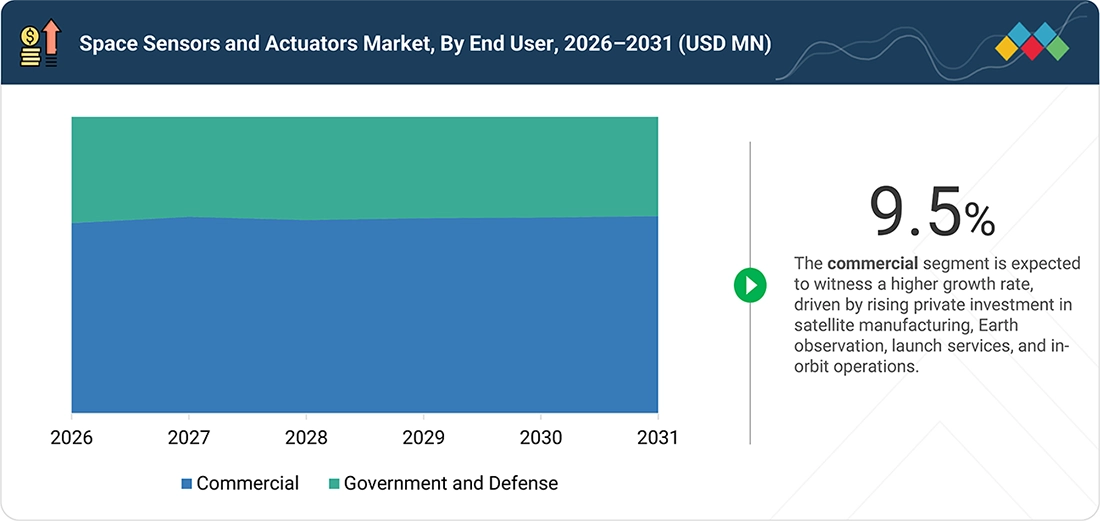
The commercial segment is estimated to dominate the market in 2026, driven by the surge in private satellite constellations and new-space ventures focused on communication, imaging, and navigation services. Increasing commercialization of LEO missions and partnerships with government agencies are expanding the demand for advanced sensors and actuators.
Space Sensors and Actuators Market, By Application
The communication pointing & RF switching segment is estimated to lead the market due to the growing requirement for precise antenna alignment and high-frequency signal control in communication satellites. The adoption of smart electromechanical actuators and precision sensors enhances link stability and data throughput for commercial and defense communication networks.
SPACE SENSORS AND ACTUATORS MARKET REGION
Middle East to be fastest-growing region in space sensors and actuators market during forecast period
The Middle East is projected to register the highest CAGR during the forecast period, supported by robust national space strategies and growing government investments in satellite and exploration programs. Countries such as the UAE and Saudi Arabia are driving regional momentum through initiatives like the UAE Space Agency’s Mars Mission and new national satellite development programs focused on Earth observation, communication, and scientific research.
SPACE SENSORS AND ACTUATORS MARKET SIZE, SHARE, & FORECAST: COMPANY EVALUATION MATRIX
The company evaluation matrix for the space sensors and actuators market evaluates players based on product footprint and market share. It highlights their competitive positioning and ranks them according to market strength and growth strategies. Moog Inc. leads the market with a strong product portfolio, manufacturing technologies, and a broad customer base, while RTX is recognized as an emerging leader in this market.
Source: Secondary Research, Interviews with Experts, MarketsandMarkets Analysis
KEY SPACE SENSORS AND ACTUATORS MARKET PLAYERS
List of Top Space Sensors and Actuators Market Companies
- Moog Inc. (US)
- Teledyne Technologies Incorporated (US)
- Honeywell International Inc. (US)
- Airbus (France)
- Safran (France)
- RTX (US)
- VANTOR (US)
- RUAG (Switzerland)
- Analog Devices (ADI) (US)
- Texas Instruments Incorporated (US)
- AMETEK (US)
- BAE Systems (UK)
- Blue Origin Company (US)
- Aemetis, Inc. (US)
- TE Connectivity (Switzerland)
- L3Harris Technologies Inc. (US)
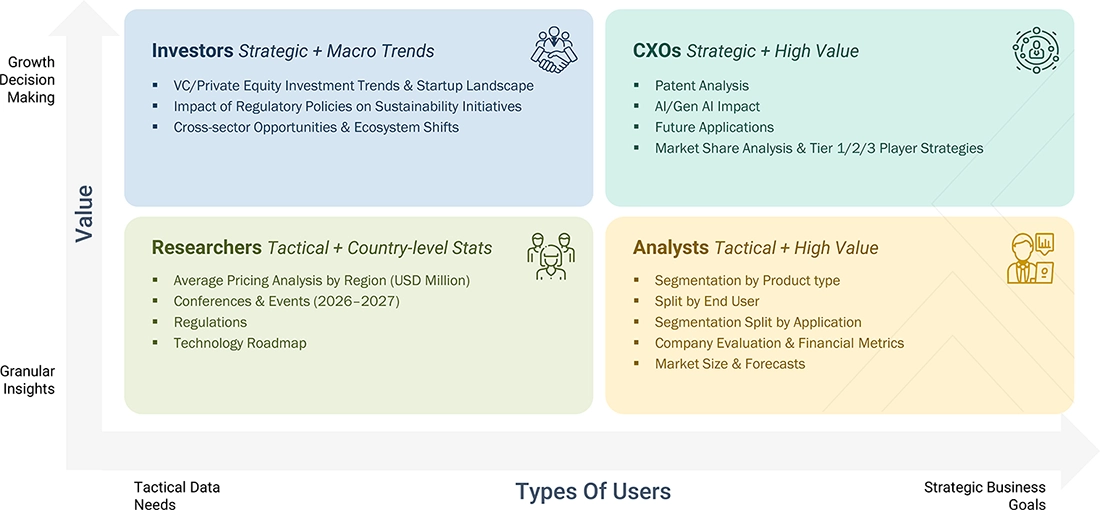
WHAT IS IN IT FOR YOU: SPACE SENSORS AND ACTUATORS MARKET SIZE, SHARE, & FORECAST REPORT CONTENT GUIDE
DELIVERED CUSTOMIZATIONS
We have successfully delivered the following deep-dive customizations:
| CLIENT REQUEST | CUSTOMIZATION DELIVERED | VALUE ADDS |
|---|---|---|
| Leading Manufacturer | Additional segment breakdown for countries | Additional country-level market sizing tables for segments/subsegments covered at the regional/global level to gain an understanding of market potential by each country |
| Emerging Leader | Additional company profiles | Competitive information on targeted players to gain granular insights on direct competition |
| Regional Market Leader | Additional country market estimates | Additional country-level deep dive for a more targeted understanding of the total addressable market |
RECENT DEVELOPMENTS
- May 2026 : Myonex expanded its highly potent and cytotoxic primary-packaging capabilities at its facility in France, tripling capacity to support the safe handling and packaging of specialized investigational products for clinical trials.
- November 2025 : Almac Group announced a multi-million-pound investment in its Singapore clinical supply facility to expand warehouse capacity and regional supply-management expertise. The investment included quadrupling dedicated –20°C storage capacity and expanding secondary cold-chain packaging and temperature-controlled supply services.
- July 2024 : Catalent completed a USD 25 million expansion of its clinical supply facility in Schorndorf, Germany. The project added 32,000 square feet of controlled-temperature storage and handling capacity and dedicated space for its FastChain demand-led clinical supply service.
Table of Contents
 Exclusive indicates content/data unique to MarketsandMarkets and not available with any competitors.
Methodology
The space sensors and actuators market is estimated to be USD 5.75 billion in 2026 and is projected to reach USD 9.04 billion by 2031 at a CAGR of 9.5%. This research study involved the use of extensive secondary sources, directories, and databases (e.g., Hoovers, Bloomberg Business, Factiva, and OneSource) to identify and collect information useful for this technical, market-oriented, and commercial study of the space sensors and actuators market. Primary sources included several industry experts from the core and related industries and preferred suppliers, manufacturers, distributors, technology developers, IP vendors, standards, and organizations related to all the segments of this industry’s value chain. In-depth interviews were conducted with various primary respondents, including key industry participants, subject matter experts (SMEs), C-level executives of key market players, and industry consultants to obtain and verify critical qualitative and quantitative information, as well as to assess the prospects.
Secondary Research
In the secondary research process, various secondary sources were referred to for identifying and collecting information for this study. The secondary sources included annual reports, press releases, and investor presentations of companies; white papers, journals, and certified publications; articles from recognized authors; and websites, directories, and databases. Secondary research was mainly used to obtain key information about the industry’s supply chain, the market’s value chain, major players, market classification, and segmentation according to industry trends to the bottommost level, geographic markets, and key developments from both market- and technology-oriented perspectives. The secondary data was collected and analyzed to arrive at the overall market size, which was further validated by primary research.
Primary Research
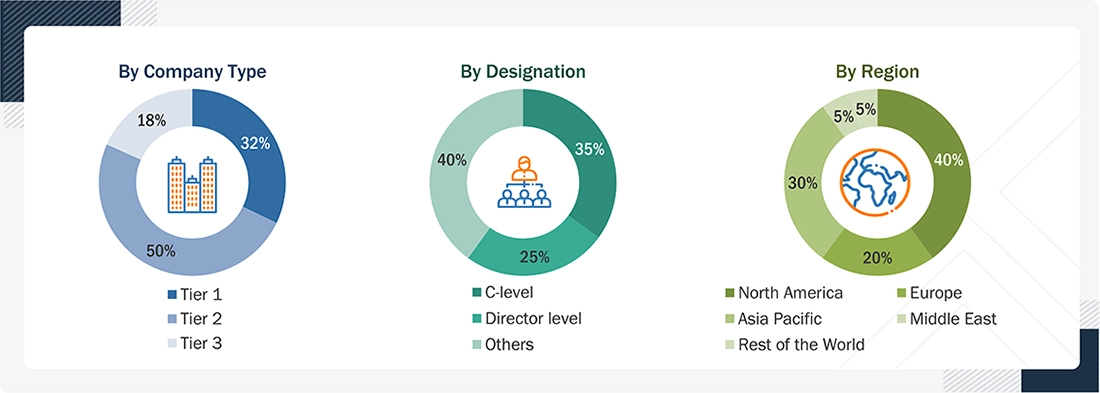
Extensive primary research was conducted after acquiring information on the space sensors and actuators market through secondary research. Several primary interviews were conducted with market experts from the demand and supply sides across major countries of North America, Europe, Asia Pacific, the Middle East, and the Rest of the World. Primary data were collected through questionnaires, emails, and telephonic interviews.
To know about the assumptions considered for the study, download the pdf brochure
Market Size Estimation
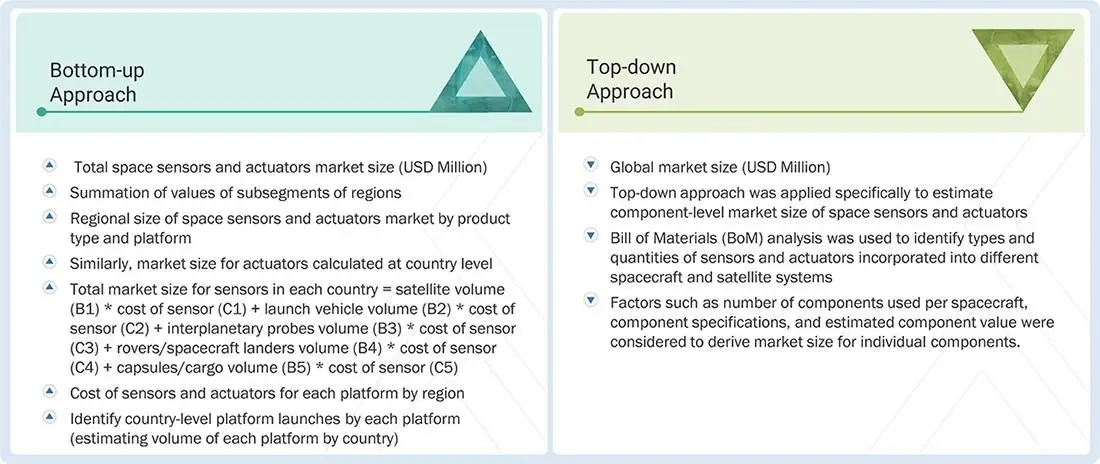
Top-down and bottom-up approaches were used to estimate and validate the size of the space sensors and actuators market. The research methodology used to estimate the size of the market included the following details:
- Key players in the space sensors and actuators market were identified through secondary research, and their market shares were determined through a combination of primary and secondary research. This included a study of the annual and financial reports of the top market players, as well as extensive interviews with leaders, including directors, engineers, marketing executives, and other key stakeholders of leading companies operating in the market.
- All percentage shares, splits, and breakdowns were determined using secondary sources and verified through primary sources.
- All possible parameters that affect the markets covered in this research study were accounted for, viewed in extensive detail, verified through primary research, and analyzed to obtain the final quantitative and qualitative data on the space sensors and actuators market. This data was consolidated, enhanced with detailed input, analyzed by MarketsandMarkets, and presented in this report.
Space Sensors and Actuators Market : Top-Down and Bottom-Up Approach
Data Triangulation
After determining the overall market size, the total market was classified into several segments and subsegments. The data triangulation and market breakdown procedures explained below were implemented, wherever applicable, to complete the overall market engineering process and arrive at the estimated market numbers for the market segments and subsegments. The data were triangulated by examining various factors and trends on both the demand and supply sides. Additionally, the market size was validated using top-down and bottom-up approaches.
Market Definition
Space sensors and actuators are the fundamental components that enable spacecraft, satellites, and planetary systems to perceive their environment and interact with it effectively. Sensors detect parameters such as temperature, radiation, position, pressure, or light, converting them into electrical signals for onboard processing. Actuators respond to these signals by generating physical movement or control actions such as adjusting orientation, deploying solar panels, or steering thrusters. Together, they form the core of spacecraft control, navigation, and mission execution systems. This domain covers technologies used in attitude control, propulsion, thermal regulation, robotics, and payload operation, making sensors and actuators essential for the safe, accurate, and autonomous functioning of all modern space missions.
Key Stakeholders
- Satellite Manufacturers
- Satellite Integrators
- Space Agencies and Government Bodies
- Sensor and Actuator Component Manufacturers
- Launch Vehicle and Propulsion Companies
- Research Institutions
- Component and Subsystem Suppliers
Report Objectives
- To define, describe, segment, and forecast the size of the space sensors and actuators market based on product type, platform, application, end user, and region
- To forecast the sizes of various segments of the market with respect to four major regions: North America, Europe, Asia Pacific, the Middle East, and the Rest of the World, along with major countries in each of these regions
- To identify and analyze the drivers, restraints, opportunities, and challenges influencing the growth of the market
- To identify industry trends, market trends, and technology trends currently prevailing in the market
- To analyze micromarkets with respect to growth trends, prospects, and their contribution to the overall market
- To analyze opportunities in the market for stakeholders by identifying key market trends
- To profile key market players and comprehensively analyze their market share and core competencies
- To evaluate the degree of competition in the market by analyzing recent developments, such as contracts, agreements, and acquisitions adopted by leading market players
- To identify detailed financial positions, key products, and unique selling points of leading companies in the market
- To provide a detailed competitive landscape of the market, along with market share analysis and revenue analysis of key players
Customization Options
MarketsandMarkets offers the following customizations for this market report:
- Additional country-level analysis of the space sensors and actuators market
- Profiling of other market players (up to five)
Product Analysis
- Product matrix, which gives a detailed comparison of the product portfolio of each company
Product Analysis
- Product matrix, which provides a detailed comparison of the product portfolios of each company in the space sensors and actuators market
Key Questions Addressed by the Report
What is the projected size of the global Space Sensors and Actuators Market by 2031?
The global Space Sensors and Actuators Market was valued at USD 5.75 billion in 2026 and is projected to reach USD 9.04 billion by 2031, growing at a CAGR of 9.5% from 2026 to 2031. Growth is driven by satellite launches, Earth observation and communication constellations, space exploration, and defense modernization.
What are the major factors driving the Space Sensors and Actuators Market?
Rising demand for Earth observation, defense, and scientific sensing payloads is a key market driver. Growth in satellite launches, constellation deployments, Earth observation, defense surveillance, weather monitoring, and scientific missions is increasing demand for advanced space based sensors.
Which region is expected to grow the fastest in the Space Sensors and Actuators Market?
The Middle East is projected to register the highest CAGR during the forecast period. Growth is supported by national space strategies and government investments in satellite and exploration programs, particularly in the UAE and Saudi Arabia.
Which product type is expected to dominate the Space Sensors and Actuators Market?
The sensors segment is estimated to capture the dominant market share. Sensors play a critical role in propulsion, robotic control, and structural deployment mechanisms, while advances in electromechanical and piezoelectric sensors are supporting higher precision and durability.
Which platform segment is expected to hold the largest market share?
The interplanetary spacecraft and probes segment is estimated to hold the largest market share. Rising investment in planetary exploration missions is driving demand for advanced sensors and actuators for interplanetary spacecraft and probes.
Which end user segment is expected to dominate the market?
The commercial segment is estimated to dominate the market in 2026. Growth is supported by private satellite constellations, new space ventures focused on communication, imaging, and navigation, commercialization of LEO missions, and government partnerships.
Which application segment leads the Space Sensors and Actuators Market?
Communication pointing and RF switching is estimated to lead the market. The segment benefits from requirements for precise antenna alignment and high frequency signal control in communication satellites, improving link stability and data throughput.
What are the major technology trends in the Space Sensors and Actuators Market?
Major trends include miniaturization, AI driven control systems, radiation hardened materials, and AI enabled sensor and actuator systems. These technologies are supporting autonomous operations, multi orbit satellite constellations, and deep space exploration missions.
What are the major opportunities in the Space Sensors and Actuators Market?
Adoption of standardized and modular architectures for high volume satellite production represents a major opportunity. Such architectures can support compact, scalable, and easily integrated sensors and actuators while reducing integration time for small satellites and large constellations.
Which companies are the key players in the Space Sensors and Actuators Market?
Key players include Moog Inc., Teledyne Technologies Incorporated, Honeywell International Inc., Airbus, Safran, RTX, VANTOR, RUAG, Analog Devices, Texas Instruments, AMETEK, BAE Systems, Blue Origin Company, Aemetis, TE Connectivity, and L3Harris Technologies. Honeywell, Teledyne Technologies, and Moog are identified as star players, while Moog leads the company evaluation matrix and RTX is recognized as an emerging leader.


Personalize This Research
- Triangulate with your Own Data
- Get Data as per your Format and Definition
- Gain a Deeper Dive on a Specific Application, Geography, Customer or Competitor
- Any level of Personalization
Let Us Help You
- What are the Known and Unknown Adjacencies Impacting the Space Sensors and Actuators Market
- What will your New Revenue Sources be?
- Who will be your Top Customer; what will make them switch?
- Defend your Market Share or Win Competitors
- Get a Scorecard for Target Partners

Custom Market Research Services
We Will Customise The Research For You, In Case The Report Listed Above Does Not Meet With Your Requirements
Get 10% Free CustomisationTESTIMONIALS
- Canada Space Sensors and Actuators Market
- US Space Sensors and Actuators Market
- France Space Sensors and Actuators Market
- Germany Space Sensors and Actuators Market
- Italy Space Sensors and Actuators Market
- Russia Space Sensors and Actuators Market
- UK Space Sensors and Actuators Market
- China Space Sensors and Actuators Market
- India Space Sensors and Actuators Market
- Japan Space Sensors and Actuators Market
- South Korea Space Sensors and Actuators Market
- Australia Space Sensors and Actuators Market
- Saudi Arabia Space Sensors and Actuators Market
- UAE Space Sensors and Actuators Market






Growth opportunities and latent adjacency in Space Sensors and Actuators Market