
Behavioral/Mental Health Software Market

Behavioral/Mental Health Software Market by Component (Software), Application (Clinical (EHR, CDS, Medication), Admin, Patient Engagement (Telepsychiatry), RCM), Indication (Mood Disorders, Anxiety, Substance Use), End User - Global Forecast to 2031



BEHAVIORAL/MENTAL HEALTH SOFTWARE MARKET SIZE, SHARE & GROWTH SNAPSHOT
Source: Secondary Research, Interviews with Experts, MarketsandMarkets Analysis
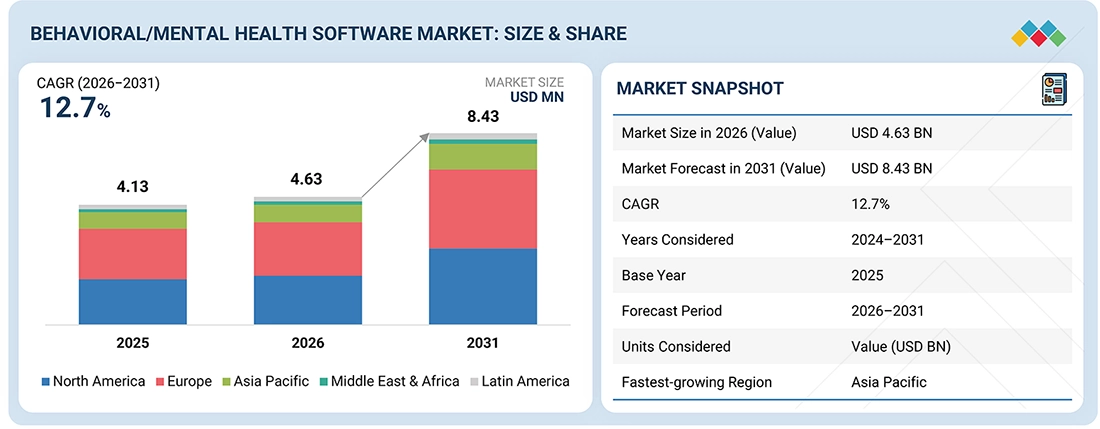
The global behavioral/mental health software market is projected to grow from USD 4.63 billion in 2026 to USD 8.43 billion by 2031, at a CAGR of 12.7% during the forecast period. The market was valued at USD 4.13 billion in 2025. The increasing integration of behavioral health services into primary care and the growing adoption of value-based care models are contributing significantly to the growth of the behavioral/mental health software market. Healthcare providers are increasingly adopting integrated care models to improve the coordination of physical and mental health services, enhance patient outcomes, and address the growing burden of mental health conditions.
KEY TAKEAWAYS
-
MARKET SNAPSHOT:
Base Year Market Size (2025): USD 4.13 Billion
Current Market Size (2026): USD 4.63 Billion
Forecast Market Size (2031): USD 8.43 Billion
CAGR (2026–2031): 12.7% -
SEGMENT LEADERSHIP:
Regional Leader: North America accounted for the largest share of 43.5% of the behavioral/mental health software market in 2025.
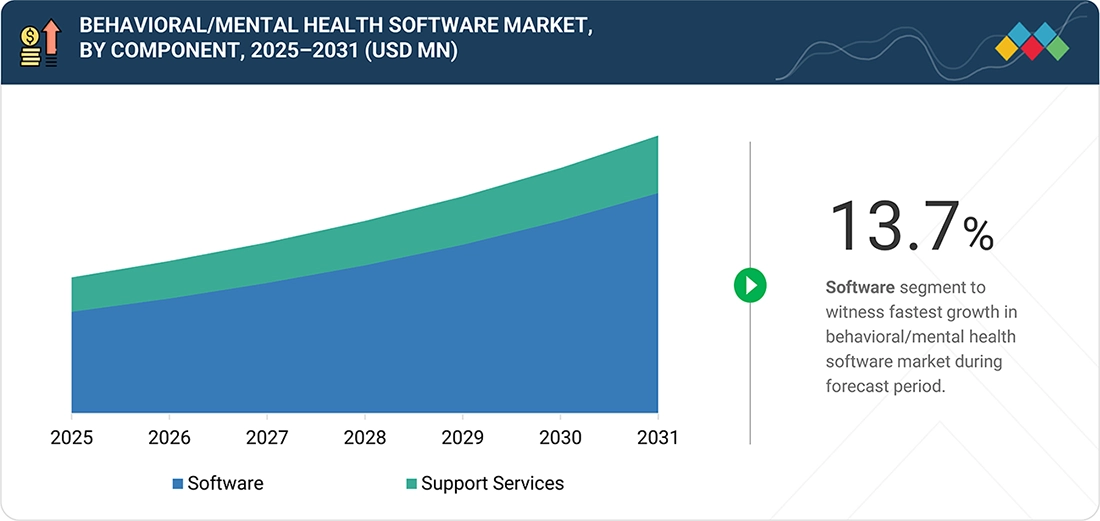
Component Leader: Software segment is expected to register the highest CAGR of 13.0% during the forecast period.
Deployment Leader: Cloud-based segment is projected to grow at a CAGR of 14.0% from 2026 to 2031.
Application Leader: Clinical applications segment held the largest market share in 2025.
Indication Leader: Mood disorders segment held a significant share of the market in 2025.
End User Leader: Healthcare providers accounted for the largest share of the behavioral/mental health software market in 2025. -
MARKET OUTLOOK & COMPETITIVE LANDSCAPE:
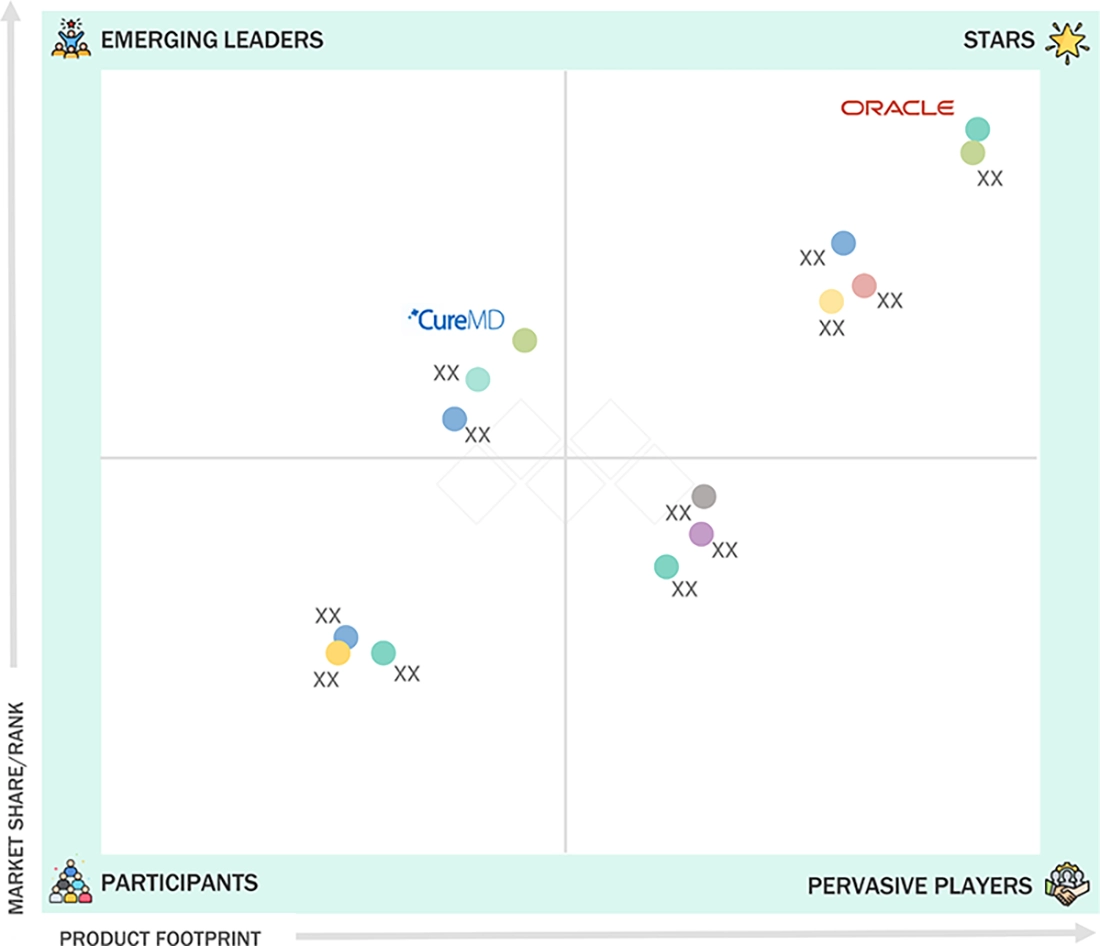
Oracle, Netsmart, and Qualisoft were identified as some of the star players in the behavioral/mental health software market, given their strong market share and product footprint.
Sessions, Accumedic, and Valant, among others, have distinguished themselves among startups and SMEs by securing strong footholds in specialized niche areas, underscoring their potential as emerging market leaders.
The increasing focus of governments and healthcare authorities on strengthening mental healthcare systems and advancing digital health transformation is driving the growth of the behavioral/mental health software market. Ongoing initiatives, such as the European Commission's Comprehensive Approach to Mental Health, the expansion of Tele-MANAS in India, and the extension of Medicare telehealth flexibilities in the US, are improving access to mental healthcare while promoting the adoption of digital health technologies.
TRENDS & DISRUPTIONS IMPACTING CUSTOMERS' CUSTOMERS
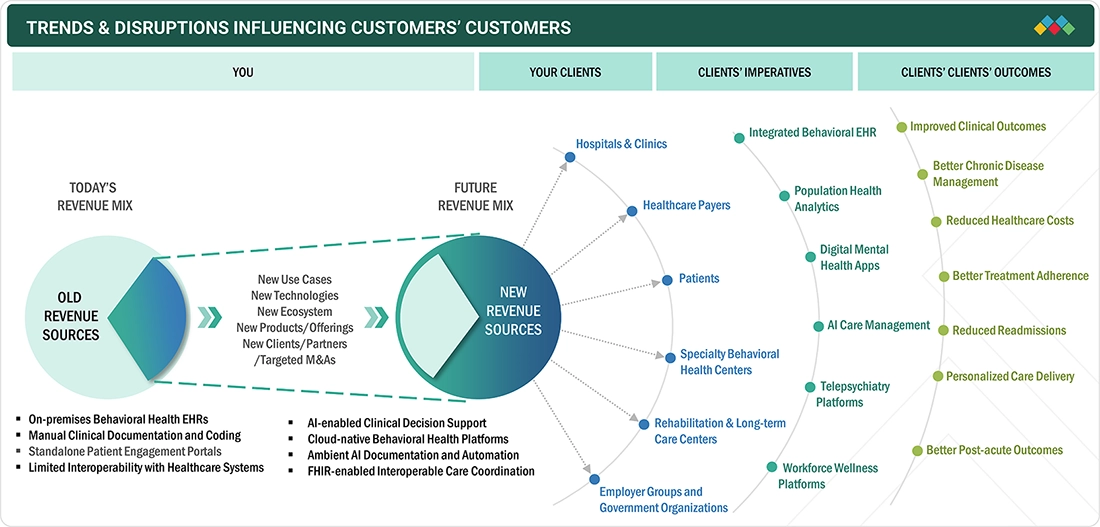
The behavioral/mental health software market is being reshaped by the rapid adoption of AI-powered clinical decision support, ambient AI documentation, and measurement-based care to improve clinical efficiency and patient outcomes. The increasing shift toward cloud-native, interoperable platforms integrated with EHRs, expansion of telepsychiatry and hybrid care models, and growing adoption of digital therapeutics (DTx) are transforming behavioral healthcare delivery. In addition, the transition toward value-based care, enhanced interoperability through HL7 FHIR, and the use of predictive analytics for early intervention are accelerating innovation and redefining the competitive landscape.
Source: Secondary Research, Interviews with Experts, MarketsandMarkets Analysis
MARKET DYNAMICS

Level
-
Increasing adoption of behavioral health software

-
Availability of government funding


Level
-
Regulatory complexity

-
Shortage of HCIT professionals


Level
-
Growing adoption across emerging markets

-
Increasing use of telebehavioral platforms


Level
-
Concerns associated with data security

-
Data accessibility issues

Source: Secondary Research, Interviews with Experts, MarketsandMarkets Analysis
Driver: Increasing adoption of behavioral health software
The increasing adoption of behavioral and mental health software is a significant factor driving market growth. Healthcare providers are beginning to implement various systems, including behavioral health electronic health records (EHRs), telepsychiatry platforms, clinical decision support systems, and patient engagement solutions. These technologies aim to streamline clinical workflows, enhance care coordination, and improve patient outcomes. The rising prevalence of mental health disorders, combined with the increasing demand for virtual and integrated behavioral healthcare services, is accelerating the digital transformation of mental health care. For instance, in May 2025, Qualifacts partnered with Greenspace Health to incorporate Measurement-Based Care (MBC) capabilities into its behavioral health EHR platforms. This integration allows providers to track patient progress more effectively, enhance clinical decision-making, and improve treatment outcomes within existing workflows. This collaboration underscores the growing demand for advanced behavioral health software that facilitates data-driven, outcomes-focused care.
Restraint: Regulatory complexity
The evolving regulatory landscape surrounding behavioral/mental health software is a significant restraint on market growth. Software vendors and healthcare providers must comply with stringent regulations related to patient data privacy, interoperability, electronic prescribing, cybersecurity, and clinical safety. Compliance with frameworks such as the Health Insurance Portability and Accountability Act (HIPAA), 42 CFR Part 2 for substance use disorder records, the 21st Century Cures Act, and interoperability requirements under ONC Health IT Certification increases development costs, implementation timelines, and administrative burden. These regulatory complexities can delay product deployment, increase compliance costs, and hinder the adoption of behavioral/mental health software, particularly among smaller providers and software developers.
Opportunity: Growing adoption across emerging markets
The increasing adoption of behavioral/mental health software across emerging markets presents a significant opportunity for market growth. Rising awareness of mental health, expanding healthcare infrastructure, improving internet and smartphone penetration, and growing government investments in digital health are accelerating the adoption of technology-enabled behavioral healthcare solutions in countries across Asia Pacific, Latin America, the Middle East, and Africa. In 2025, China's National Health Commission launched the Pediatrics and Mental Health Service Year initiative, which will run from 2025 to 2027. This initiative requires every prefecture-level city to establish hospitals with psychological services and clinics. It also aims to expand the nationwide 12356 mental health hotline and enhance digital mental health services. These efforts are expected to accelerate the adoption of behavioral and mental health software, including telepsychiatry platforms, behavioral health electronic health records (EHRs), and care coordination solutions across China's healthcare system.
Challenge: Concerns associated with data security
The increasing digitization of behavioral healthcare has heightened concerns regarding the security and privacy of sensitive mental health data, posing a significant challenge to the adoption of behavioral/mental health software. These platforms store highly confidential information, including psychiatric evaluations, therapy notes, substance use disorder records, and treatment histories, making them attractive targets for cyberattacks and data breaches. Healthcare organizations and software vendors must comply with stringent regulations such as the Health Insurance Portability and Accountability Act (HIPAA), 42 CFR Part 2, the General Data Protection Regulation (GDPR), and other regional privacy frameworks, which require robust encryption, access controls, continuous monitoring, and secure data exchange.
BEHAVIORAL/MENTAL HEALTH SOFTWARE MARKET: COMMERCIAL USE CASES ACROSS INDUSTRIES
| COMPANY | USE CASE DESCRIPTION | BENEFITS |
|---|---|---|
 |
AI-enabled behavioral health EHR with clinical documentation, treatment planning, telehealth, and interoperable care management | Improved care coordination, streamlined workflows, and enhanced clinical efficiency. |
 |
Integrated behavioral health EHR supporting psychiatry workflows, collaborative care, patient engagement, and telepsychiatry | Better care continuity, standardized documentation, and improved patient outcomes |
 |
Behavioral health EHR with AI-powered documentation, care coordination, telehealth, and population health management | Enhanced care coordination, reduced clinician burden, optimized operational efficiency |
 |
Behavioral health EHR integrating measurement-based care, telehealth, analytics, and practice management | Improved treatment outcomes, data-driven decisions, and increased provider productivity |
 |
Cloud-based behavioral health EHR with AI documentation, telehealth, patient engagement, and ePrescribing | Faster documentation, improved workflow efficiency, and enhanced patient access |
Logos and trademarks shown above are the property of their respective owners. Their use here is for informational and illustrative purposes only.
MARKET ECOSYSTEM
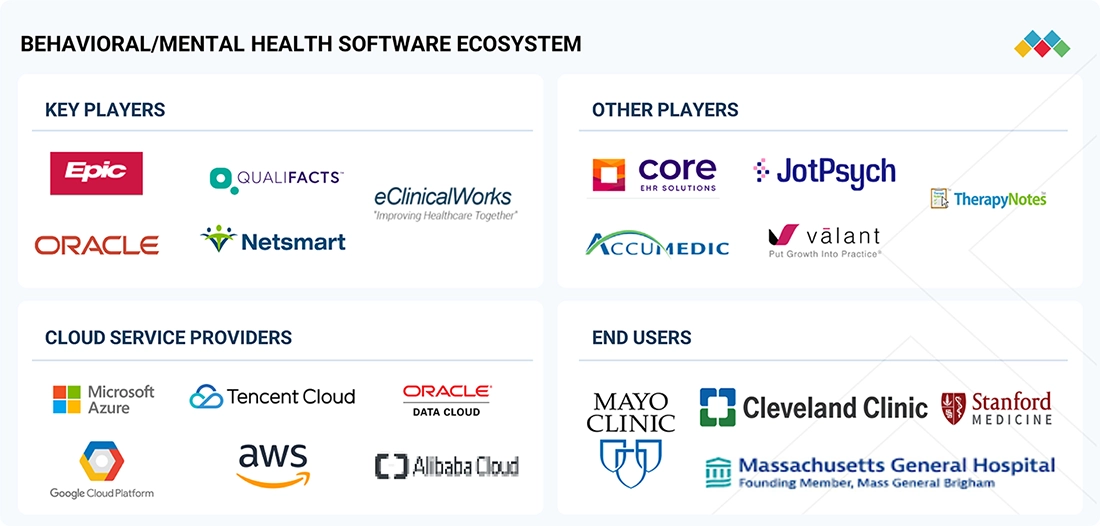
The behavioral/mental health software market ecosystem comprises software providers, cloud infrastructure vendors, and healthcare organizations working together to support digital mental healthcare delivery. Leading companies such as Oracle, Epic Systems, Netsmart, Qualifacts, and eClinicalWorks offer behavioral health EHRs, telepsychiatry, practice management, and AI-enabled clinical solutions. These platforms are supported by cloud providers, including AWS, Microsoft Azure, Google Cloud, Oracle Cloud Infrastructure (OCI), Alibaba Cloud, and Tencent Cloud, and are adopted by hospitals, behavioral health centers, and integrated healthcare systems to improve clinical efficiency, care coordination, and patient outcomes.
Logos and trademarks shown above are the property of their respective owners. Their use here is for informational and illustrative purposes only.
MARKET SEGMENTS
Source: Secondary Research, Interviews with Experts, MarketsandMarkets Analysis
Behavioral/Mental Health Software Market, by Component
Based on component, the market is segmented into software and support services. In 2025, the software segment accounted for the largest share of the behavioral/mental health software market, driven by the growing adoption of digital platforms that support clinical, administrative, and operational workflows across behavioral healthcare settings. Healthcare providers are increasingly implementing software solutions to streamline electronic health records (EHRs), clinical documentation, practice management, telebehavioral health, patient engagement, ePrescribing, billing, and care coordination while improving operational efficiency and clinical outcomes. For instance, in September 2025, Valant launched AI Notes Assist, a secure AI-powered clinical documentation feature designed to automate note generation and reduce administrative burden for behavioral health providers.
Behavioral/Mental Health Software Market, by Deployment
Based on deployment, the market is segmented into cloud-based, hybrid, and on-premises. In 2025, the cloud-based segment held the largest share of the behavioral/mental health software market, driven by rising demand for scalable, cost-effective, and remotely accessible solutions. Cloud-based platforms enable behavioral healthcare providers to securely access patient records, support telebehavioral health services, streamline clinical documentation, and improve care coordination across multiple locations while minimizing infrastructure and maintenance costs. For instance, in June 2024, Qualifacts announced the general availability of Qualifacts iQ, a cloud-based behavioral health artificial intelligence (AI) solution integrated with its Credible and CareLogic electronic health record (EHR) platforms.
Behavioral/Mental Health Software Market, by Application
Based on application, the market is segmented into clinical applications, administrative applications, patient engagement solutions, and financial applications. The clinical applications segment accounted for the largest share of the behavioral/mental health software market, driven by the growing need for digital solutions that enable accurate diagnosis, personalized treatment planning, and continuous patient care. These applications enable behavioral health providers to efficiently document clinical encounters, maintain comprehensive patient records, support evidence-based clinical decision-making, manage medications, and develop individualized care plans while ensuring continuity of care across multidisciplinary teams. Furthermore, the growing adoption of measurement-based care and integrated behavioral healthcare models has increased the demand for advanced clinical applications that improve care coordination and treatment outcomes.
Behavioral/Mental Health Software Market, by Indication
Based on indication, the market is segmented into mood disorders, anxiety & trauma-related disorders, neurodevelopmental disorders, substance use & addictive disorders, schizophrenia spectrum & other psychotic disorders, and other indications. The mood disorders segment accounted for a significant share of the behavioral/mental health software market due to the high global prevalence of conditions such as major depressive disorder (MDD) and bipolar disorder, coupled with the growing demand for long-term disease management. Additionally, rising awareness of mental health, expanding access to digital mental healthcare services, and increasing adoption of evidence-based treatment approaches have further driven the demand for software solutions designed to improve patient engagement, care coordination, and clinical outcomes in mood disorder management.
Behavioral/Mental Health Software Market, by End User
Based on end users, the market is segmented into healthcare providers, healthcare payers, and other end users. In 2025, healthcare providers held the largest share, driven by the increasing adoption of digital solutions to enhance clinical, administrative, and operational efficiency across behavioral healthcare settings. Hospitals, psychiatric facilities, community mental health centers, rehabilitation centers, and private behavioral health practices are increasingly implementing behavioral health software to improve clinical documentation, electronic health record (EHR) management, care coordination, medication management, and patient engagement while supporting high-quality, integrated care delivery. In October 2024, the Ohio Department of Mental Health and Addiction Services successfully implemented the Epic Systems electronic health record system in all six of its regional psychiatric hospitals across the US. This deployment marks the expansion of Epic across its entire network.
REGION
Asia Pacific is the fastest-growing region in the behavioral/mental health software market
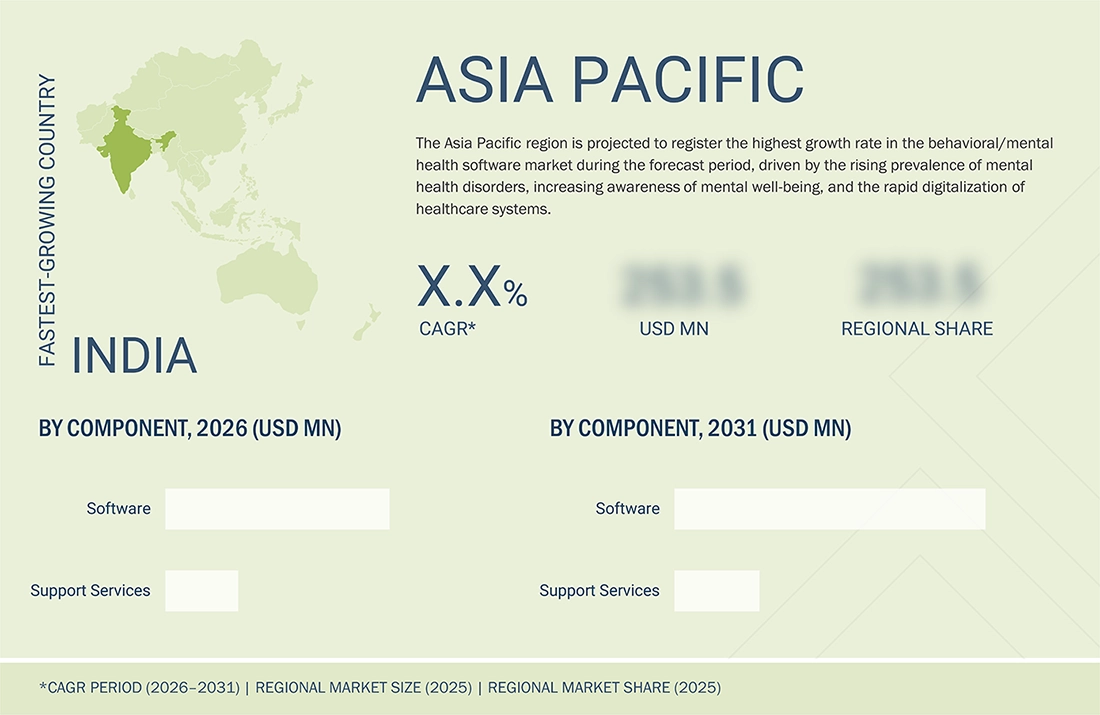
The Asia Pacific region is projected to register the highest growth rate in the behavioral/mental health software market during the forecast period, driven by the rising prevalence of mental health disorders, increasing awareness of mental well-being, rapid healthcare digitalization, and expanding telehealth adoption. Supportive government initiatives are further accelerating market growth. For instance, India continues to expand the National Tele Mental Health Programme (Tele-MANAS) to improve nationwide access to tele-mental healthcare, while Australia is strengthening digital mental healthcare through the National Digital Mental Health Framework and the National Safety and Quality Digital Mental Health Standards. These initiatives are expected to accelerate the adoption of behavioral health software across the region.
BEHAVIORAL/MENTAL HEALTH SOFTWARE MARKET: COMPANY EVALUATION MATRIX
Oracle is recognized as a leading player in this market, offering a comprehensive product portfolio that includes Oracle Health Behavioral Health, a cloud-based electronic health record (EHR) system; AI-powered clinical documentation; telehealth solutions; interoperability features; and analytics. On the other hand, CureMD is emerging as a notable competitor by providing specialized EHR systems for behavioral and mental health professionals, including psychiatrists, therapists, counselors, behavioral health clinics, inpatient psychiatric facilities, and public-sector behavioral health organizations.
Source: Secondary Research, Interviews with Experts, MarketsandMarkets Analysis
KEY MARKET PLAYERS
- Oracle (US)
- Epic Systems Corporation (US)
- Netsmart Technologies, Inc. (US)
- Qualifacts (US)
- eClinicalWorks (US)
- AdvancedMD, Inc (US)
- NXGN Management, LLC (US)
- Advanced Data Systems (US)
- Compulink Advantage (US)
- Kipu Health (US)
- CareCloud (US)
- CureMD Healthcare (US)
- Streamline Healthcare Solutions (US)
- Meditab (US)
- Ensora Health (US)
- Tebra Technologies, Inc. (US)
- Core Solutions, Inc. (US)
MARKET SCOPE
| REPORT METRIC | DETAILS |
|---|---|
| Market Size in 2025 (Value) (Base Year) | USD 4.13 Billion |
| Market Size in 2026 (Value) (Estimated Year) | USD 4.63 Billion |
| Market Forecast in 2031 (Value) (Forecast Year) | USD 8.43 Billion |
| CAGR | 12.7% |
| Years Considered | 2024–2031 |
| Base Year | 2025 |
| Forecast Period | 2026–2031 |
| Units Considered | USD Billion |
| Report Coverage | Revenue Forecast, Company Ranking, Competitive Landscape, Growth Factors, and Trends |
| Segments Covered |
|
| Regions Covered | North America, Asia Pacific, Europe, Latin America, Middle East & Africa |
WHAT IS IN IT FOR YOU: BEHAVIORAL/MENTAL HEALTH SOFTWARE MARKET REPORT CONTENT GUIDE
DELIVERED CUSTOMIZATIONS
We have successfully delivered the following deep-dive customizations:
| CLIENT REQUEST | CUSTOMIZATION DELIVERED | VALUE ADDS |
|---|---|---|
| Map the behavioral/mental health software ecosystem | Ecosystem mapping across software vendors, providers, payers, digital health companies, and regulators | Improves market visibility and identifies strategic partnership opportunities |
| Understand AI integration with healthcare infrastructure | Assessment of behavioral health EHRs, telepsychiatry, AI capabilities, cloud deployment, and interoperability standards | Supports technology roadmap and reduces integration risks |
| Identify high-ROI use cases for providers and payers | Analysis of clinical, operational, patient engagement, and care coordination applications | Enables focused product development and go-to-market strategies |
| Assess policy, reimbursement, and regulatory impacts on behavioral health software adoption | Evaluation of CMS policies, telebehavioral health reimbursement, HIPAA, and behavioral health regulations | Strengthens compliance strategy and supports successful commercialization |
RECENT DEVELOPMENTS
- March 2026 : Netsmart expanded its collaboration with Pyramid Healthcare to modernize behavioral health EHRs, AI-enabled clinical workflows, and care coordination across Pyramid's multistate behavioral health and addiction treatment network.
- September 2025 : Qualifacts partnered with the Oregon Council for Behavioral Health (OCBH) to provide its member organizations with AI-powered behavioral health EHR, revenue cycle management, interoperability, and client engagement solutions.
- April 2025 : Qualifacts launched three AI-powered solutions within its Qualifacts iQ suite to automate clinical documentation and provide AI-assisted EHR support.
Table of Contents
 Exclusive indicates content/data unique to MarketsandMarkets and not available with any competitors.
Methodology
The study involved significant activities in estimating the current size of the behavioral/mental health software market. Exhaustive secondary research was done to collect information on the behavioral/mental health software market. The next step was to validate these findings, assumptions, and sizing with industry experts across the value chain using primary research. Different approaches, such as top-down and bottom-up, were employed to estimate the total market size. After that, the market breakup and data triangulation procedures were used to estimate the market size of the segments and subsegments of the behavioral/mental health software market.
Secondary Research
This research study involved the wide use of secondary sources, directories, and databases such as Dun & Bradstreet, Bloomberg Businessweek, and Factiva; white papers, annual reports, and companies’ house documents; investor presentations; and the SEC filings of companies. The market for companies offering behavioral/mental health software solutions is derived from secondary data available through paid and unpaid sources, by analyzing the product portfolios of major companies in the ecosystem, and by rating the companies based on their performance and quality. Various sources were referred to in the secondary research process to identify and collect information for this study. The secondary sources include annual reports, press releases, companies' investor presentations, white papers, journals, certified publications, articles by recognized authors, directories, and databases.
Various secondary sources were referred to in the secondary research process to identify and collect information related to the study. These sources included annual reports, press releases, investor presentations from behavioral/mental health software vendors, forums, certified publications, and white papers. Secondary research was used to obtain critical information on the industry’s value chain, the pool of key players, market classification, and segmentation from market- and technology-oriented perspectives.
Primary Research
In the primary research process, various sources from both the supply and demand sides were interviewed to obtain qualitative and quantitative information for this report. Primary sources are mainly industry experts from the core and related industries and preferred suppliers, manufacturers, distributors, technology developers, researchers, and organizations related to all segments of this industry’s value chain. In-depth interviews were conducted with various primary respondents, including key industry participants, subject-matter experts (SMEs), C-level executives of key market players, and industry consultants, among other experts, to obtain and verify the critical qualitative and quantitative information as well as assess prospects.
Primary research was conducted to identify segmentation types; industry trends; key players; and key market dynamics such as drivers, restraints, opportunities, challenges, industry trends, and strategies adopted by key players.
After the complete market engineering (calculations for market statistics, market breakdown, market size estimations, market forecasting, and data triangulation), extensive primary research was conducted to gather information and verify and validate the critical numbers arrived at.
In the complete market engineering process, the top-down and bottom-up approaches and several data triangulation methods were extensively used to perform the market estimation and market forecasting for the overall market segments and subsegments listed in this report. Extensive qualitative and quantitative analysis was performed on the complete market engineering process to list the key information/insights throughout the report.
Breakdown of the Primary Respondents:
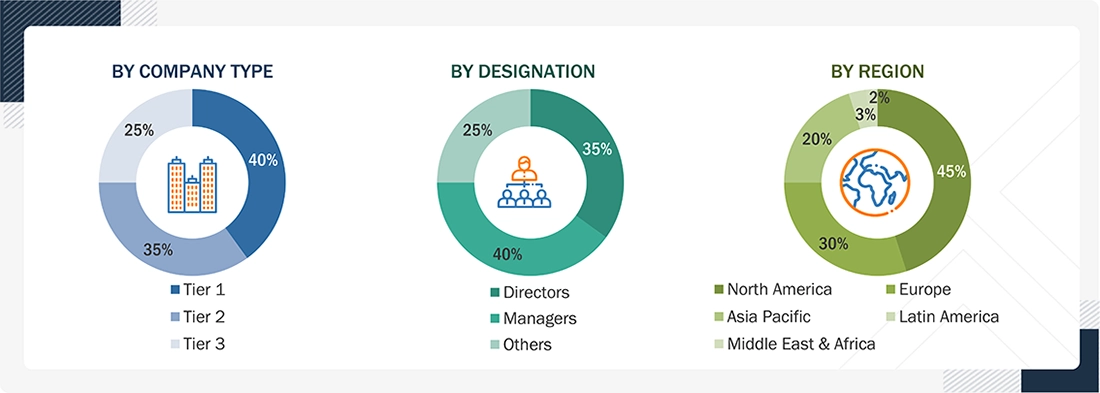
Note: Other designations include sales managers, marketing managers, and product managers.
Note: Tiers are defined based on a company’s total revenue as of 2025: Tier 1 = >USD 1 billion, Tier 2 = USD 500 million to USD 1 billion, and Tier 3 = <USD 500 million.
To know about the assumptions considered for the study, download the pdf brochure
Market Size Estimation
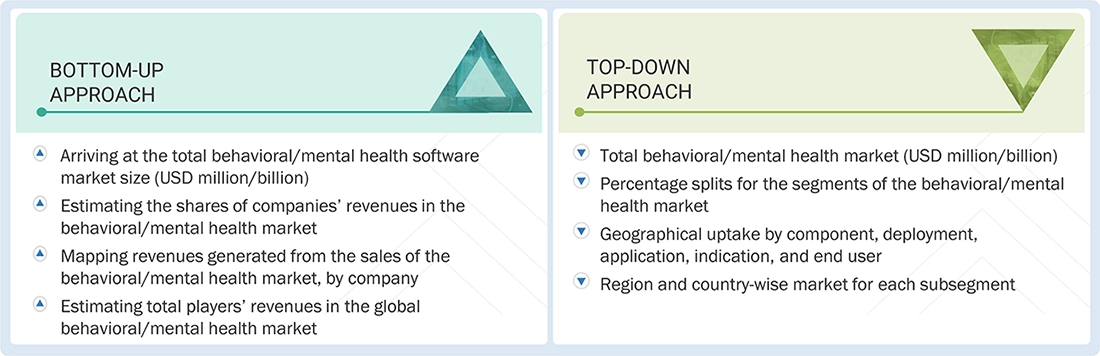
The market size estimates and forecasts provided in this study are derived through a mix of the bottom-up approach (revenue share analysis of leading players) and top-down approach (assessment of utilization/adoption/penetration trends by component, deployment, application, indication, end user, and region.
Behavioral/Mental Health Software Market : Top-Down and Bottom-Up Approach
Data Triangulation
After arriving at the overall market size—using the market size estimation processes—the market was split into several segments and subsegments. To complete the overall market engineering process and arrive at the exact statistics of each market segment and subsegment, the data triangulation and market breakdown procedures were employed, wherever applicable. The data was triangulated by studying various factors and trends from both the demand and supply sides in the behavioral/mental health software market.
Market Definition
After arriving at the overall market size—using the market size estimation processes—the market was split into several segments and subsegments. To complete the overall market engineering process and arrive at the exact statistics of each market segment and subsegment, the data triangulation and market breakdown procedures were employed, wherever applicable. The data was triangulated by studying various factors and trends from both the demand and supply sides in the behavioral/mental health software market.
Key Stakeholders
- Behavioral/mental health software vendors
- Independent software vendors (ISVs)
- Platform providers
- Technology providers
- System integrators
- Cloud service providers
- Healthcare IT service providers
- Hospitals & clinics
- Certified community behavioral health clinics
- Academic institutes and research centers
- Forums, alliances, and associations
- Government organizations
- Institutional investors and investment banks
- Investors/Shareholders
- Venture capitalists
Report Objectives
- To define, describe, and forecast the global behavioral/mental health software market based on component, deployment, application, indication, and region
- To provide detailed information regarding the factors influencing the growth of the market (such as the drivers, restraints, opportunities, and challenges)
- To strategically analyze micromarkets with respect to individual growth trends, prospects, and contributions to the overall behavioral/mental health software market
- To analyze market opportunities for stakeholders and provide details of the competitive landscape for market leaders
- To forecast the size of the behavioral/mental health software market in five main regions (along with their respective key countries): North America, Europe, the Asia Pacific, Latin America, and the Middle East & Africa
- To profile key players and comprehensively analyze their product portfolios, market positions, and core competencies in the market
- To track and analyze competitive developments such as product & service launches, expansions, partnerships, agreements, collaborations, and acquisitions in the behavioral/mental health software market
- To benchmark players within the behavioral/mental health software market using the Company Evaluation Matrix framework, which analyzes market players on various parameters within the broad categories of business strategy, market share, and product offering
Available customizations:
With the given market data, MarketsandMarkets offers customizations as per your company’s specific needs. The following customization options are available for the report:
Regional Analysis
- Further breakdown of the Rest of Europe behavioral/mental health software market into Denmark and Norway, among others
- Further breakdown of the Rest of Asia Pacific behavioral/mental health software market into Vietnam, New Zealand, Australia, and South Korea, among others
Company Information
- Detailed analysis and profiling of additional market players (up to 5)
Need a Tailored Report?
Customize this report to your needs
Get 10% FREE Customization
Customize This ReportPersonalize This Research
- Triangulate with your Own Data
- Get Data as per your Format and Definition
- Gain a Deeper Dive on a Specific Application, Geography, Customer or Competitor
- Any level of Personalization
Let Us Help You
- What are the Known and Unknown Adjacencies Impacting the Behavioral/Mental Health Software Market
- What will your New Revenue Sources be?
- Who will be your Top Customer; what will make them switch?
- Defend your Market Share or Win Competitors
- Get a Scorecard for Target Partners

Custom Market Research Services
We Will Customise The Research For You, In Case The Report Listed Above Does Not Meet With Your Requirements
Get 10% Free CustomisationTESTIMONIALS

JAYANT RAJPUROHIT
Director of Market Insights, Data and Analytics
SFI Health,
Leading Pharmaceutical Companywww.sfihealth.com/

We at SFI Health approached MarketsandMarkets for an Opportunity Assessment on "Incidence and Prevalence of Focus Indications" as we wanted to know the most attractive HCPs like Physician, Functional MD, Naturopath and Pharmacist. The project was critical for us to ensure our focus on the right target which would enable sustainable growth and profitability for SFI Health. The business insights provided exceeded our expectations and we were extremely impressed. The team at MarketsandMarkets is highly professional and detail oriented and very well understood our business needs. MarketsandMarkets offers a unique combination of expertise and dedicated engagement model. We identified 2 new products to be launched in coming months, based on the research findings provided by MarketsandMarkets. We are happy with the services and would strongly recommend MarketsandMarkets to my peers in the industry.

BEATRIZ DE LA CALLE
Head of Commercial Analytics
Qualicaps,
Leading Pharmaceutical Companywww.qualicaps.com/

We partnered with MarketsandMarkets for an assessment study on hard empty capsules. The team was extremely professional in understanding our business requirements and we received timely responses to all our queries. The market intelligence and the recommendations has met our business requirements. We were extremely impressed to see the final study results; it really exceeded our expectations. The market intelligence offered by MarketsandMarkets, and clarity on next steps will help us achieve our business objective for the Year 2021. We are happy with the services and would strongly recommend MarketsandMarkets to my peers in the industry.

Bob Williams,
Senior Director Business Development & Innovation
Bracco Diagnostics Inc.,
Italian Multinational in life sciences sector and a World Leader in imaging diagnosticsimaging.bracco.com/us-en
We were pleased with targeted insights that MarketsandMarkets identified from a custom study on the 'Radiation Dose Management Solutions Market'. Your team identified and characterized the market participants as well as underlying trends accurately. This study was useful to Bracco in formulating business strategies for our dose monitoring product lines and we thank MarketsandMarkets for the job well done.
Cody Coonradt,
Market Development and Strategy Manager
3M Health Information Systems,
Leader in Health care Coding, Payment & Analytics Solutions.www.3m.com/3M/en_US/health-information-systems-us
The value for our organization comes from three things: depth of research, specificity of segments and being easy to work with. As important as the first two are, the third can't be underestimated. MarketsandMarkets, maybe more than any other research vendor, wants to know what is top of mind for our team and what big questions we are grappling to answer.
Their customer first approach and high value engagement model, have given us great analysis and excellent value for money
Growth opportunities and latent adjacency in Behavioral/Mental Health Software Market






Charles
Mar, 2022
Which is the fastest growing market of Single use Behavioral Health Software Market?.
Christopher
Mar, 2022
Can you enlighten us with your market intelligence to grow and sustain in Behavioral Health Software Market?.
Daniel
Mar, 2022
What are the growth estimates for Behavioral Health Software Market till 2026?.