Asia-Pacific Mass Spectrometry Market Size, Growth, Share & Trends Analysis

Asia Pacific Mass Spectrometry Market by Component (Detector, Mass analyzer, Ion source, vacuum system), Product [Triple Quad, Q-TOF, Quad, TOF], Application (Omics, Clinical, Environment, Pharma), Installed Base & Replacement Rate - Forecast to 2031




OVERVIEW
Source: Secondary Research, Interviews with Experts, MarketsandMarkets Analysis
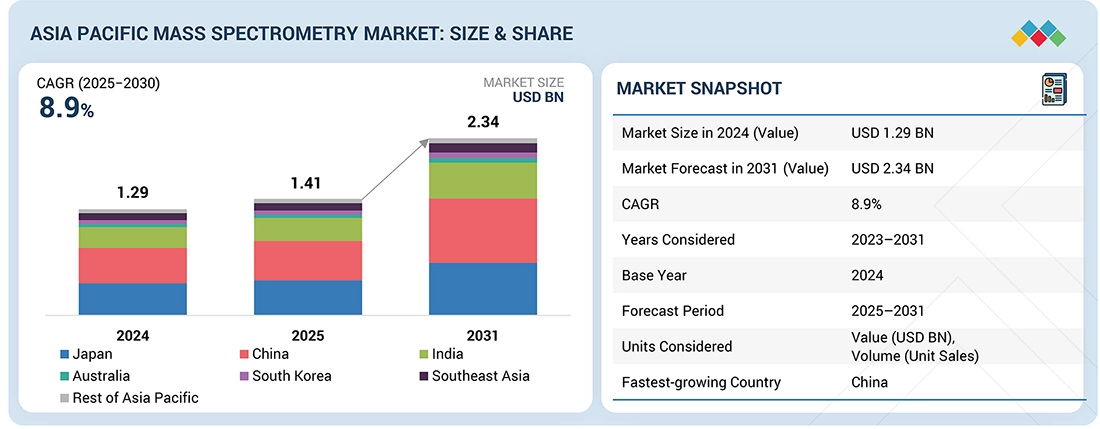
The Asia Pacific mass spectrometry market, valued at USD 1.29 billion in 2024, stood at USD 1.41 billion in 2025 and is projected to advance at a resilient CAGR of 8.9% from 2025 to 2031, culminating in a forecasted valuation of USD 2.34 billion by the end of the period. Sustained policy support by the Chinese & Indian governments to boost drug development, genomics, and industrial manufacturing base, along with expanding pharmaceutical and biotechnology R&D outsourcing, is propelling the Asia Pacific mass spectrometry market growth. The increasing focus on biopharma manufacturing, biosimilars, and advanced therapies is further driving the adoption of high-resolution MS systems for protein profiling, impurity analysis, and molecular characterization. In addition, the region’s growing network of CROs and CDMOs, coupled with the emergence of multi-omics research centers and university spin-offs, is reshaping analytical workflows toward data-driven, automated mass spectrometry platforms. Countries such as China, India, Japan, and South Korea are at the forefront of this transformation, emphasizing local instrument manufacturing, workforce training, and collaborative R&D programs with global OEMs
KEY TAKEAWAYS
-
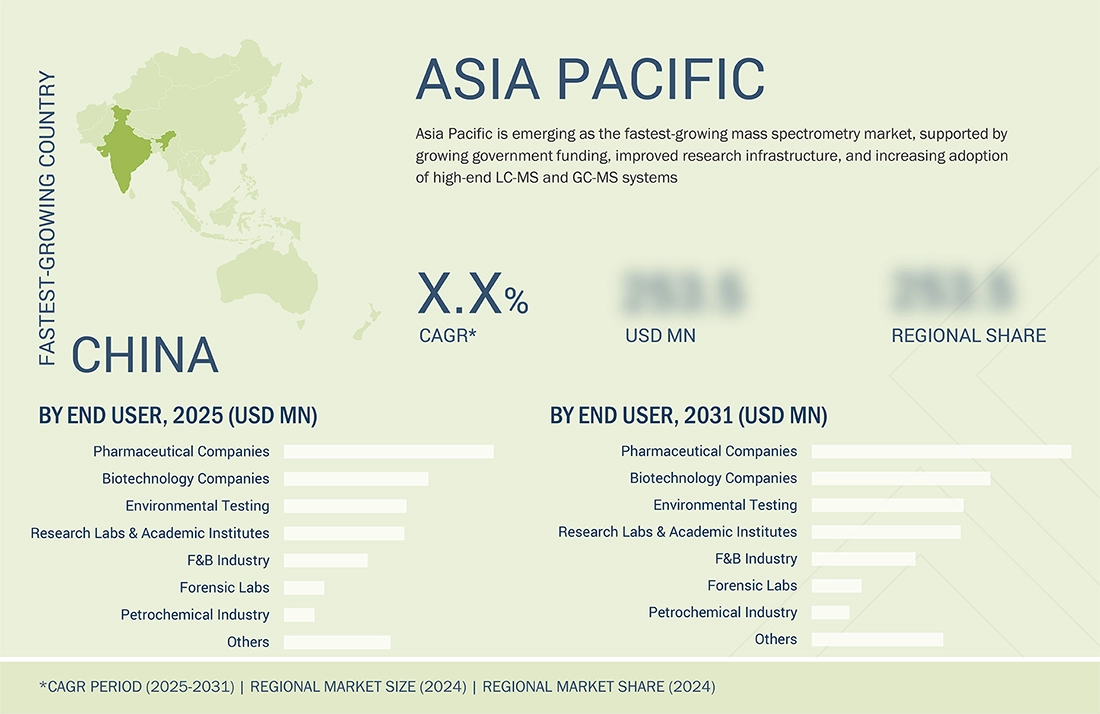
By CountryChina is estimated to account for a 33.8% share of the Asia Pacific mass spectrometry market in 2025.
-
By Component typeBy component type, the detectors segment is expected to register the highest CAGR of 12.5%.
-
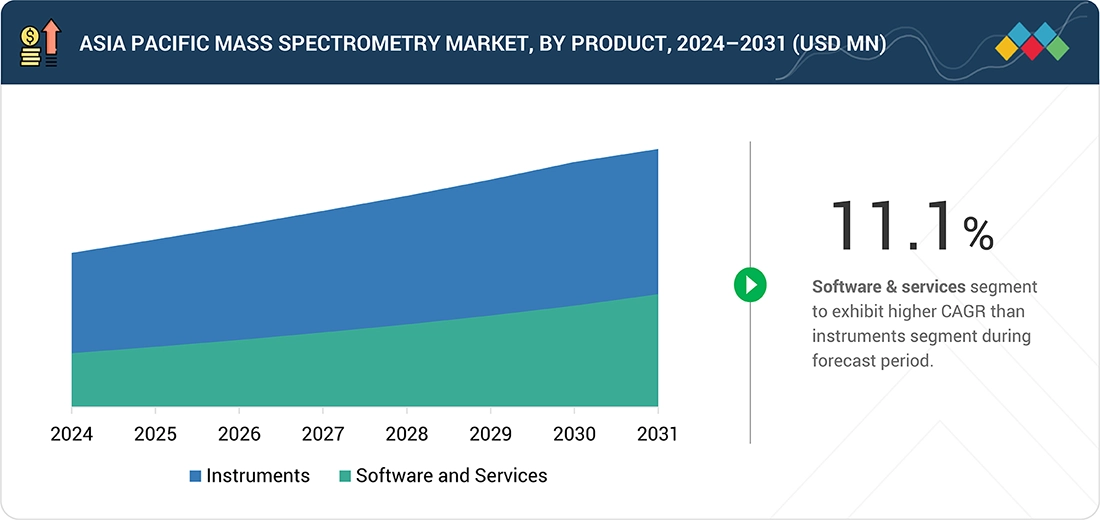
By ProductBy product, the software & services segment is expected to register a higher CAGR (11.1%) than the instruments segment.
-
By Inlet TypeBy Inlet type, the LC-MS segment is estimated to account for a 59.4% market share in 2025.
-
By ApplicationBy application, the pharma/biopharma manufacturing segment is projected to register the highest CAGR of 10.6%.
-
By End UserBy end user, the pharmaceutical companies segment is estimated to account for the largest market share of 24.2% in 2025.
-
Competitive LandscapeThermo Fisher Scientific, Agilent Technologies Inc., and Waters Corporation were identified as some of the star players in the Asia Pacific mass spectrometry market, based on their large installed base, local investments, and product footprint.
-
Competitive LandscapeAnalytik Jena GmbH+Co. KG, Microsaic, and LECO Corporation, among others, have distinguished themselves among startups and SMEs backed by strong distributor networks, cost-efficient systems, and suitability for food safety, environmental testing.
The Asia Pacific mass spectrometry market is witnessing steady growth, driven by a rapid rise in pharmaceutical, biotechnology, and life science research supported by strong government and private-sector investments. Rising regulatory demands for food safety, environmental monitoring, and product quality are further driving the adoption of advanced MS technologies. Additionally, increasing biologics manufacturing, multi-omics research, and clinical diagnostics needs are accelerating the use of high-resolution and high-throughput MS systems across the region.
TRENDS & DISRUPTIONS IMPACTING CUSTOMERS' CUSTOMERS
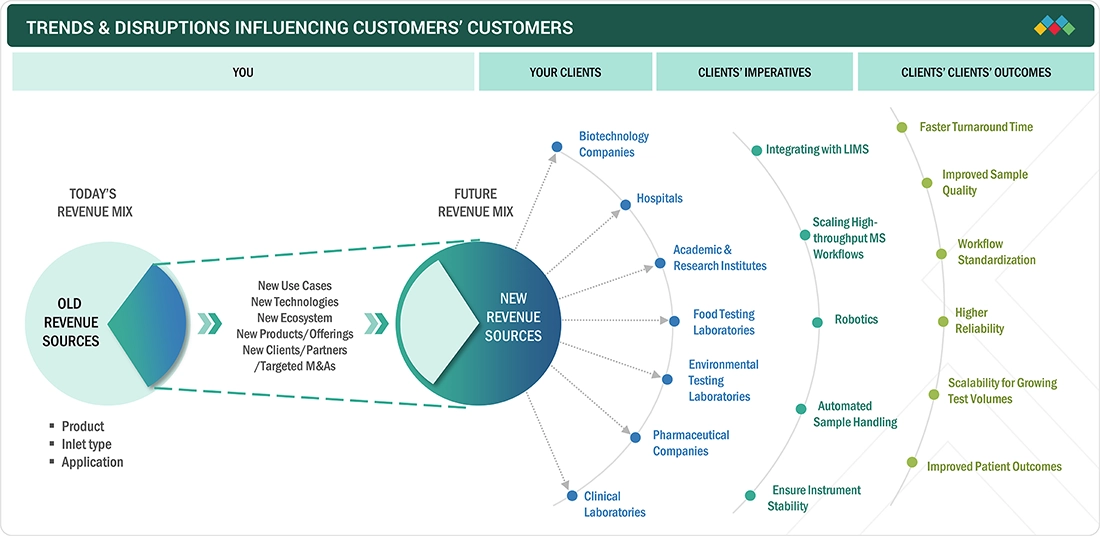
The Asia Pacific (APAC) mass spectrometry market is undergoing rapid transformation driven by advancements in high-resolution and hybrid MS technologies that enable faster, more accurate detection across applications. AI-assisted data analysis and automation are emerging as major disruptors, improving workflow efficiency and accelerating sample-to-result timelines in APAC labs. Growing adoption of clinical mass spectrometry, especially in diagnostics, toxicology, and therapeutic drug monitoring, is reshaping demand patterns. The region is also witnessing increased investment in proteomics, metabolomics, and multi-omics research, fueling the need for advanced MS platforms. Miniaturized and portable MS systems are gaining traction, supporting on-site testing in environmental monitoring and food safety. Strong government funding in China, India, Japan, and South Korea is accelerating innovation while strengthening domestic manufacturing capabilities. Additionally, the rise of cloud-based MS data platforms is streamlining collaboration and enhancing analysis scalability across APAC research ecosystems.
Source: Secondary Research, Interviews with Experts, MarketsandMarkets Analysis
MARKET DYNAMICS

Level
-
Growth in Proteomics, Personalized Medicine, and Biomarker Research

-
Rising Environmental, Food, and Industrial Testing Needs


Level
-
Capital-expenditure Constraints in Academia

-
Dearth of Skilled Professionals


Level
-
Accelerating Adoption of Point-of-Need MS Across Emerging APAC Testing Networks

-
Leveraging Growth in Proteomics, Metabolomics, and Glycomics


Level
-
Regulatory and Import/Export Complexities

-
Long Replacement Cycles & Slow Upgrade Cycles

Source: Secondary Research, Interviews with Experts, MarketsandMarkets Analysis
Driver: Growth in Proteomics, Personalized Medicine, and Biomarker Research
Asia Pacific (APAC) is experiencing rapid expansion in proteomics and multi-omics research, driven by rising investments in academic labs, national research programs, and hospital-based molecular diagnostics. Countries such as China, Japan, South Korea, Singapore, and India are prioritizing personalized medicine, accelerating the adoption of mass spectrometry for protein identification, biomarker discovery, and clinical validation studies. The region’s growing burden of cancer, metabolic disorders, and infectious diseases is pushing healthcare systems to shift toward targeted therapies and molecular profiling, where MS plays a central role in quantifying proteins, metabolites, and therapeutic drug levels. Additionally, large public and private R&D ecosystems are increasingly integrating genomics, transcriptomics, and proteomics, creating strong demand for high-resolution MS systems that support integrated biomarker workflows. This multi-omics momentum positions mass spectrometry as a critical analytical backbone for APAC’s evolving precision-healthcare and clinical-research landscape.
Restraint: Capital-expenditure Constraints in Academia
Capital-expenditure constraints in academia are a significant limiting factor for the Asia Pacific (APAC) mass spectrometry market, particularly in developing economies. This restraint stems from the limited and often inconsistent government funding allocated to public universities, research institutes, and core testing facilities for the procurement of high-cost analytical equipment. Advanced mass spectrometers, such as High-Resolution and Triple Quadrupole systems, require substantial initial capital investment, which often exceeds the annual budget capabilities of many APAC academic centers. Consequently, this leads to prolonged replacement cycles, forcing researchers to rely on outdated instruments with reduced sensitivity and throughput, thereby impeding their participation in cutting-edge global research like advanced proteomics and metabolomics. Furthermore, the constraint is compounded by insufficient budget provisions for expensive service contracts, specialized spare parts, and continuous consumables, increasing the total cost of ownership and resulting in operational downtime, ultimately slowing the market's overall adoption rate for high-end mass spectrometry technology in the region.
Opportunity: Accelerating Adoption of Point-of-Need MS Across Emerging APAC Testing Networks
The rising demand for rapid, on-site testing across food safety, environmental monitoring, and industrial process control is creating a strong opportunity for portable and benchtop mass spectrometry in the Asia Pacific (APAC) region. Countries such as India, China, Vietnam, Indonesia, and Thailand rely heavily on decentralized testing networks, including regional food-testing labs, pollution-monitoring stations, and quality-control labs within manufacturing clusters. Portable MS systems offer faster decision-making by enabling real-time detection of contaminants, pesticide residues, adulterants, and chemical pollutants without sending samples to central laboratories. Their smaller footprint, lower operating cost, and minimal infrastructure needs make them highly suitable for resource-limited or high-throughput field environments, while government-led programs on food-quality enforcement and ambient-air monitoring further accelerate adoption potential. As industries across APAC shift toward online and in-process quality assurance, compact MS technologies unlock new deployment models, positioning them as a high-growth opportunity in the region’s expanding analytical-testing ecosystem.
Challenge: Regulatory and Import/Export Complexities
Regulatory and Import/Export Complexities for global mass spectrometry companies in the Asia Pacific (APAC) market are a substantial barrier to scaling operations. This hurdle arises from the region's diverse and often opaque regulatory landscape, forcing manufacturers to navigate non-uniform, evolving approval cycles and specific national standards across multiple jurisdictions for instrument certification and clinical application approvals. Compounding this are varying import tariffs, customs regulations, and non-tariff barriers, which escalate product costs, complicate supply chain logistics, and cause unpredictable delivery delays. Ultimately, this lack of regulatory harmonization creates an immense administrative burden and operational friction, compelling global players to invest significantly in localized compliance efforts and thus slowing overall market entry and expansion.
ASIA-PACIFIC MASS SPECTROMETRY MARKET: COMMERCIAL USE CASES ACROSS INDUSTRIES
| COMPANY | USE CASE DESCRIPTION | BENEFITS |
|---|---|---|
 |
Deployment of high-resolution MS systems (e.g. Orbitrap Exploris 480 / Orbitrap Exploris 240 / Orbitrap Exploris 120) for proteomics, metabolomics, lipidomics, biopharma, clinical research, small-molecule analysis, environmental and food safety testing. | Ultra-high resolution & accurate mass data provide high confidence in compound identification and quantitation, even in complex matrices | High throughput, robustness, and ease-of-use increase lab productivity and uptime. |
 |
Use of Xevo TQ-XS and Synapt systems for pharmaceutical impurity profiling, regulated bioanalysis, and metabolite identification. | Enhanced sensitivity | reproducibility | compliance-ready workflows that reduce development time and strengthen regulatory submissions. |
 |
Deployment of LCMS-8060/8050 systems for clinical toxicology, food safety testing, and environmental analysis with ultra-fast MRM quantitation. | Excellent sensitivity | long-term instrument stability | increased throughput | reduced downtime in routine testing workflows. |
 |
Deployment of triple-quadrupole and QTRAP MS systems, as well as QTOF high-resolution MS, for targeted quantitative analysis, broad-spectrum compound screening, high-throughput workflows in pharma, environmental, food safety, clinical, and research labs | High scan speeds | wide dynamic range | strong sensitivity — allowing rapid quantitative analysis of many compounds in complex mixtures, while maintaining high specificity and reproducibility. |
 |
Use of triple-quadrupole LC/MS systems (e.g. 6495D Triple Quadrupole LC/MS) in labs handling environmental testing, food safety, clinical small-molecule panels, and high-throughput sample quantitation. | Robust performance | high throughput for large sample batches | increased lab productivity | reliability for routine testing. |
Logos and trademarks shown above are the property of their respective owners. Their use here is for informational and illustrative purposes only.
MARKET ECOSYSTEM
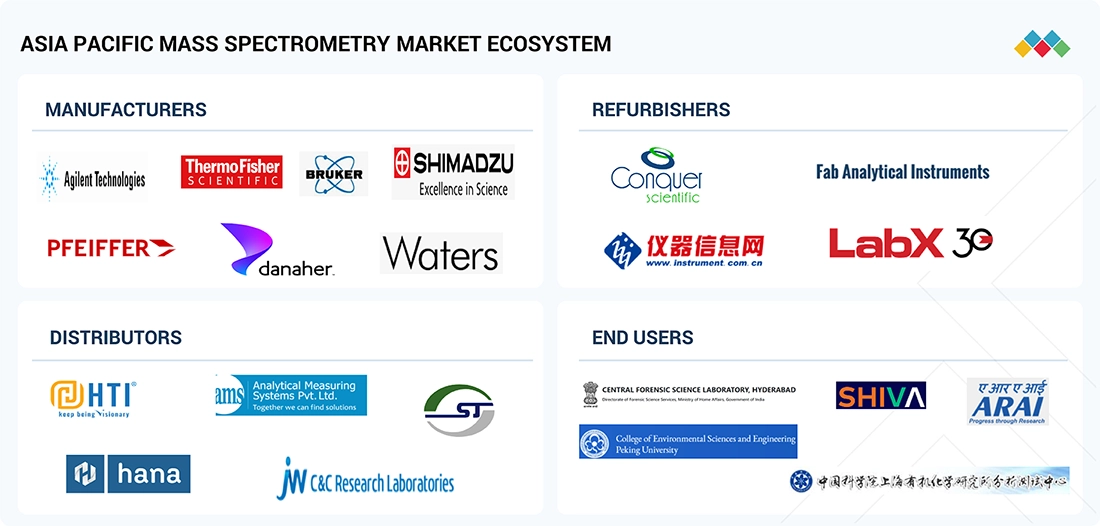
The mass spectrometry landscape in Asia Pacific (APAC) operates through a highly interconnected network of component makers, instrument manufacturers, suppliers, and end-user industries. The ecosystem begins with providers of critical components—such as ion optics, vacuum pumps, RF electronics, and detectors—that support both global OEMs (Agilent, Thermo Fisher, Bruker, Shimadzu) and the expanding pool of regional manufacturers across China and India. Additional layers include chromatography partners, reagent and consumable providers, automation technology companies, and software vendors who enable complete workflow integration across laboratories. On the demand side, the region is driven by pharmaceutical and biopharmaceutical producers, biotech organizations, CROs, food and beverage testing labs, environmental monitoring agencies, petrochemical facilities, forensic science units, and academic institutions. A strong secondary market, which is led by refurbishers and value-focused suppliers in China, India, and Southeast Asia, broadens system accessibility through cost-efficient refurbished MS platforms. Regional distributors and integrators act as the connective link between OEMs and the fast-growing laboratory base in APAC, while cloud-based data processing, digital platforms, and AI-enabled analytics are increasingly forming the technological backbone of the ecosystem.
Logos and trademarks shown above are the property of their respective owners. Their use here is for informational and illustrative purposes only.
MARKET SEGMENTS
Source: Secondary Research, Interviews with Experts, MarketsandMarkets Analysis
Asia Pacific Mass Spectrometry Market, By Product
By product, the instruments segment is estimated to hold the major share of the Asia Pacific (APAC) mass spectrometry market in 2025 since pharma, biotech, and research labs are investing heavily in advanced analytical systems to support expanding drug discovery, biologics development, and multi-omics research. Due to the region's growing need for high-resolution platforms for metabolomics, impurity profiling, and regulatory compliance, complete MS instruments are more in demand than consumables or services. Increased government funding for scientific infrastructure and the expansion of CROs and CDMOs accelerate instrument installations. Furthermore, because of technological advancements like automation, high-throughput capabilities, and hybrid MS systems, full instruments are required for modern APAC analytical workflows.
Asia Pacific Mass Spectrometry Market, By Inlet Type
In 2025, the liquid chromatography-mass spectrometry (LC-MS) segment is estimated to dominate the Asia Pacific (APAC) market due to its high sensitivity and versatility in analyzing a variety of compounds, including complex biological molecules and non-volatile substances. The region's rapidly expanding pharmaceutical, biotechnology, and clinical diagnostics sectors depend on this capability to precisely test new medications as well as identify biomarkers. Furthermore, highly reliable techniques like LC-MS for identifying trace contaminants and residues are required due to increasingly stringent government regulations regarding food safety and environmental monitoring throughout APAC nations like China and India. Lastly, the increasing use of LC-MS-compatible automated sample preparation systems simplifies laboratory procedures, increasing the method's overall effectiveness and demand for large-scale testing.
Asia Pacific Mass Spectrometry Market, By Application
By application, the OMICS research segment is estimated to account for a major share of the Asia Pacific mass spectrometry market due to rapid growth in genomics, proteomics, and metabolomics studies. Increasing government funding and supportive initiatives for life sciences research in countries like China, Japan, and India drive high adoption of advanced MS technologies. The presence of leading research institutes and a growing number of academic and pharmaceutical collaborations further fuels demand. Rising pharmaceutical and biotechnology activities in the region also contribute to higher usage. Additionally, lower operational costs and the availability of skilled researchers make the region attractive for OMICS research. Overall, these factors collectively strengthen the dominance of Asia Pacific in the mass spectrometry market for OMICS applications.
REGION
China to be fastest-growing country in Asia Pacific mass spectrometry market during forecast period
In the Asia Pacific region, the mass spectrometry market is expected to grow at the highest rate in China during the forecast period, driven by government support for industrialization and research and development activities. The country has been putting massive investments in life sciences, pharmaceuticals, and environmental monitoring, thereby increasing the demand for advanced analytical instruments such as LC-MS and GC-MS. The proliferation of academic and research institutions alongside the growing presence of biotechnology and pharmaceutical companies has further fueled the adoption of mass spectrometry. The requirements of environmental legislation and food safety standards have also caused an increase in the application of MS technology for quality control and compliance testing. Both improved availability and after-sales support for instruments due to joint collaborations between local distributors and global MS manufacturers have also contributed to accelerated market development.
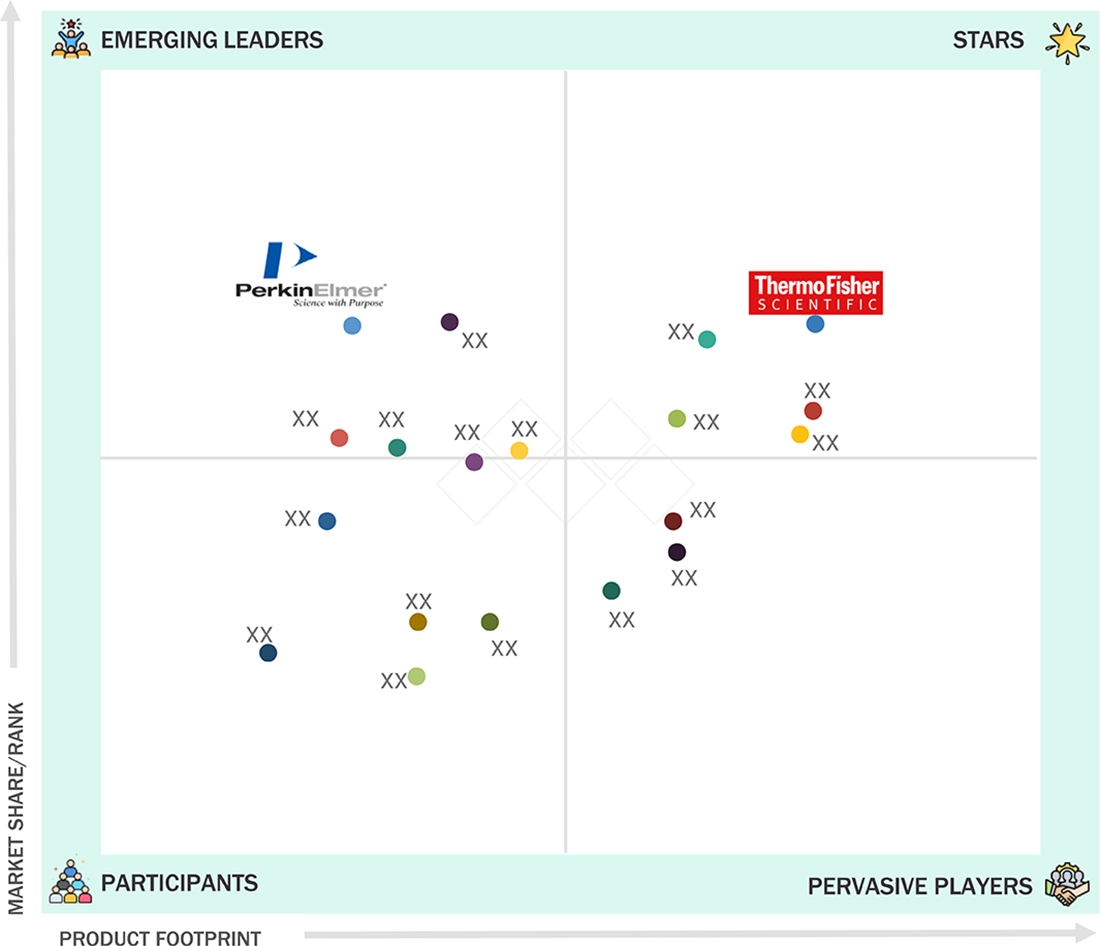
ASIA-PACIFIC MASS SPECTROMETRY MARKET: COMPANY EVALUATION MATRIX
In the Asia Pacific mass spectrometry market matrix, Thermo Fisher Scientific (Star) leads with strong market share and a broad product footprint, supported by its advanced LC-MS/MS, GC-MS, Orbitrap, and proteomics workflows that are widely adopted across clinical diagnostics, food safety, and biopharmaceutical research. PerkinElmer (Emerging Leader) is steadily strengthening its presence through specialized mass spectrometry systems focused on environmental analysis, clinical toxicology, and applied markets, gaining visibility through workflow-driven solutions and expanding service capabilities.
Source: Secondary Research, Interviews with Experts, MarketsandMarkets Analysis
KEY MARKET PLAYERS
- Thermo Fisher Scientific (US)
- Agilent Technologies (US)
- SCIEX (US)
- Waters Corporation (US)
- Bruker (US)
- Shimadzu Corporation (Japan)
- PerkinElmer (US)
- Danaher (US)
- MKS Instruments (US)
- Roche (Switzerland)
- Joel Ltd (Japan)
- Hitachi Ltd (Japan)
MARKET SCOPE
| REPORT METRIC | DETAILS |
|---|---|
| Market Size in 2025 (Value) | USD 1.41 BN |
| Market Forecast in 2031 (Value) | USD 2.34 BN |
| Growth Rate | CAGR of 8.9% from 2025 to 2031 |
| Years Considered | 2023-2031 |
| Base Year | 2024 |
| Forecast Period | 2025-2031 |
| Units Considered | Value (USD Million/Billion), Volume (Unit Sales) |
| Report Coverage | Revenue forecast, company ranking, competitive landscape, growth factors, and trends |
| Segments Covered |
|
| Countries Covered | China, Japan, South Korea, India, Australia, Southeast Asia, Rest of Asia Pacific |
| Parent & Related Segment Reports |
Mass Spectrometry Market Pharma mass spectrometry market Environmental mass spectrometry market Drug discovery mass spectrometry market Clinical mass spectrometry market US mass spectrometry market European mass spectrometry market |
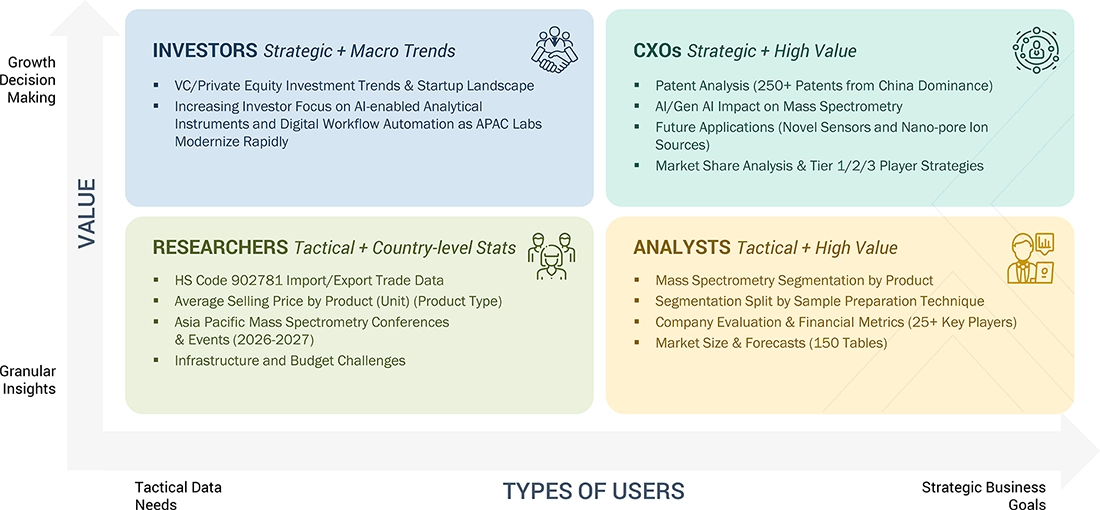
WHAT IS IN IT FOR YOU: ASIA-PACIFIC MASS SPECTROMETRY MARKET REPORT CONTENT GUIDE
DELIVERED CUSTOMIZATIONS
We have successfully delivered the following deep-dive customizations:
| CLIENT REQUEST | CUSTOMIZATION DELIVERED | VALUE ADDS |
|---|---|---|
| Competitive Positioning Study for Leading Mass Spectrometry Vendors in APAC | Detailed mapping of market shares, technology differentiation, regional strengths, and product benchmarking across Japan, China, India, South Korea, and ASEAN. |
|
| Pricing & Total Cost of Ownership Benchmarking Across APAC | Comparative pricing of LC-MS, GC-MS, ICP-MS, HRMS instruments, and service contracts across APAC distributors. |
|
RECENT DEVELOPMENTS
- June 2024 : Thermo Fisher Scientific launched the Stellar Mass Spectrometer, which performs fast throughput, high-sensitivity quantification that is crucial in translational omics research.
- June 2023 : Agilent Technologies launched Revident Quadrupole Time-of-Flight LC/MS, which is specifically designed to handle environmental and food safety workflows to deliver accurate results with high sensitivity and speed.
- October 2024 : Waters Corporation launched Waters Connect software that simplifies RNA LC-MS oligo mapping workflows and accelerates analysis and data processing.
- COLUMN 'A' SHOULD BE IN TEXT FORMAT AND NOT DATE FORMAT :
Table of Contents
 Exclusive indicates content/data unique to MarketsandMarkets and not available with any competitors.
Methodology
To make a balance between primary and secondary research for the global Asia-Pacific Mass Spectrometry market, different market variables for small and medium-sized businesses and major businesses were analyzed as part of this study. The next step involved primary research with industry experts along the value chain to validate these findings, assumptions, and market sizing. Many different methodologies were used for estimating the overall market size, involving the top-down and bottom-up approaches. The study consists of significant market segments, evolving patterns, regulatory frameworks, and competitive environments. This study also considers leading market players and the strategies they deploy in this market. In conclusion, the total market size was estimated through top-down and bottom-up approaches along with data triangulation to reach the number for the final market size. Primary research was conducted throughout the study to validate and test each hypothesis.
Secondary Research
During the study, secondary research employed a variety of sources, including directories and databases such as Bloomberg Businessweek, D&B Hoovers, and Factiva. Additional materials included white papers, annual reports, SEC filings, and investor presentations. This research approach was used to collect and generate data that offers comprehensive, technical, and market-focused insights into the asia-pacific mass spectrometry market. The data provides insights into key players and market segmentation based on recent industry trends, as well as significant developments in the market. A database comprising leading industry figures was also created through this secondary research.
Primary Research
Primary research involved activities aimed at obtaining qualitative and quantitative data. A range of personalities from both supply and demand sides were questioned during this phase. For the supply side, folks from key designations like CEOs, vice presidents, directors of marketing and sales, directors of technology and innovation, and other important leaders were interviewed by key players. Among the demand-side primary sources were academic institutions, and research organizations. To validate market segmentation, identify prominent market participants, and gain insights into significant industry trends and market dynamics of the real-world primary study was carried out.
*Others include distributors, suppliers, product managers, business development managers, marketing managers and sales managers.
Note: Companies are categorized into tiers based on their total revenue. As of 2023, Tier 1 = >USD 1,000 million, Tier 2 = USD 500–1,000 million, and Tier 3 = < USD 500 million.
Market Size Estimation
As per the review of prominent companies and their revenue shares, market size of the global asia-pacific mass spectrometry market was calculated in this report. Key players with significant share in the market were identified as part of secondary research and their asia-pacific mass spectrometry business revenue was calculated, the same was validated by primaries. Analyzing the annual and financial reports of the leading market participants was one aspect of secondary research. On the other hand, in-depth interviews with important thought leaders, including directors, CEOs, and marketing executives, were a part of the primary study.
For calculation of global market value, segmental revenue was calculated in the basis of revenue mapping of service/product providers. Process involved below mentioned steps:
- List of key players that operate in the asia-pacific mass spectrometry market on regional or on country level.
- Formation of product mapping of manufacturers of asia-pacific mass spectrometry and related product lines at regional and country level
- Revenue mapping for listed players from asia-pacific mass spectrometry and related product and services.
- Revenue mapping of major players to cover at least ~70% of the global market share as of 2023. Revenue mapping for major players that cover nearly 70% of the global market share for year 2023.
- Revenue mapping extrapolation for players will drive the global market value for the respective segment.
- Summation for market value for all segments and subsegments to achieve the actual value of the global value of the asia-pacific mass spectrometry market.
Data Triangulation
After getting the overall market size from the market size estimation process mentioned above, the Mass spectrometry market was split into segments and subsegments. Data triangulation and market segmentation procedures were used to complete the overall market engineering process and arrive at the exact statistics for all segments and subsegments. The data was triangulated by studying and analyzing various factors and trends from both the demand and supply sides. Additionally, the Mass spectrometry market was verified and validated using both top-down and bottom-up approaches.
Market Definition
Mass spectrometry is an analytical technique used to measure specific compounds and evaluate molecular structure & chemical properties. This technique ionizes chemical species and sorts the ions based on the mass-to-charge ratio. Mass spectroscopy has become a powerful analytical tool for testing in various industries due to its high sensitivity.
Stakeholders
- Pharmaceutical Industry
- Biotechnology Industry
- Manufacturers and suppliers of mass spectrometers.
- Product suppliers, distributors, and channel partners
- Food & beverage industry
- Academic & research institutes
- Regulatory authorities and industry associations
- Venture capitalists and investment firms
Report Objectives
- To define, describe, and forecast the global asia-pacific mass spectrometry market on the basis of product, sample preparation technique, application, end user, and region.
- To provide detailed information regarding the major factors influencing the growth potential of the global asia-pacific mass spectrometry market (drivers, restraints, opportunities, challenges, and trends).
- To analyze the micro markets with respect to individual growth trends, future prospects, and contributions to the global asia-pacific mass spectrometry market.
- To analyze key growth opportunities in the global asia-pacific mass spectrometry market for key stakeholders and provide details of the competitive landscape for market leaders.
- To forecast the size of market segments and/or subsegments with respect to five major regions, namely, North America (US and Canada), Europe (Germany, France, the UK, Italy, Spain, and the RoE), Asia Pacific (Japan, China, India, Australia, South Korea, ASEAN region and the RoAPAC), and rest of the world.
- To profile the key players in the global asia-pacific mass spectrometry market and comprehensively analyze their market shares and core competencies.
- To track and analyze the competitive developments undertaken in the global asia-pacific mass spectrometry market, such as product launches, agreements, expansions, and & acquisitions.


Personalize This Research
- Triangulate with your Own Data
- Get Data as per your Format and Definition
- Gain a Deeper Dive on a Specific Application, Geography, Customer or Competitor
- Any level of Personalization
Let Us Help You
- What are the Known and Unknown Adjacencies Impacting the Asia Pacific Mass Spectrometry Market
- What will your New Revenue Sources be?
- Who will be your Top Customer; what will make them switch?
- Defend your Market Share or Win Competitors
- Get a Scorecard for Target Partners

Custom Market Research Services
We Will Customise The Research For You, In Case The Report Listed Above Does Not Meet With Your Requirements
Get 10% Free CustomisationTESTIMONIALS

JAYANT RAJPUROHIT
Director of Market Insights, Data and Analytics
SFI Health,
Leading Pharmaceutical Companywww.sfihealth.com/

We at SFI Health approached MarketsandMarkets for an Opportunity Assessment on "Incidence and Prevalence of Focus Indications" as we wanted to know the most attractive HCPs like Physician, Functional MD, Naturopath and Pharmacist. The project was critical for us to ensure our focus on the right target which would enable sustainable growth and profitability for SFI Health. The business insights provided exceeded our expectations and we were extremely impressed. The team at MarketsandMarkets is highly professional and detail oriented and very well understood our business needs. MarketsandMarkets offers a unique combination of expertise and dedicated engagement model. We identified 2 new products to be launched in coming months, based on the research findings provided by MarketsandMarkets. We are happy with the services and would strongly recommend MarketsandMarkets to my peers in the industry.

BEATRIZ DE LA CALLE
Head of Commercial Analytics
Qualicaps,
Leading Pharmaceutical Companywww.qualicaps.com/

We partnered with MarketsandMarkets for an assessment study on hard empty capsules. The team was extremely professional in understanding our business requirements and we received timely responses to all our queries. The market intelligence and the recommendations has met our business requirements. We were extremely impressed to see the final study results; it really exceeded our expectations. The market intelligence offered by MarketsandMarkets, and clarity on next steps will help us achieve our business objective for the Year 2021. We are happy with the services and would strongly recommend MarketsandMarkets to my peers in the industry.

Bob Williams,
Senior Director Business Development & Innovation
Bracco Diagnostics Inc.,
Italian Multinational in life sciences sector and a World Leader in imaging diagnosticsimaging.bracco.com/us-en
We were pleased with targeted insights that MarketsandMarkets identified from a custom study on the 'Radiation Dose Management Solutions Market'. Your team identified and characterized the market participants as well as underlying trends accurately. This study was useful to Bracco in formulating business strategies for our dose monitoring product lines and we thank MarketsandMarkets for the job well done.
Cody Coonradt,
Market Development and Strategy Manager
3M Health Information Systems,
Leader in Health care Coding, Payment & Analytics Solutions.www.3m.com/3M/en_US/health-information-systems-us
The value for our organization comes from three things: depth of research, specificity of segments and being easy to work with. As important as the first two are, the third can't be underestimated. MarketsandMarkets, maybe more than any other research vendor, wants to know what is top of mind for our team and what big questions we are grappling to answer.
Their customer first approach and high value engagement model, have given us great analysis and excellent value for money






Growth opportunities and latent adjacency in Asia Pacific Mass Spectrometry Market