Pharma Mass Spectrometry Market Size, Growth, Share & Trends Analysis

Pharma Mass Spectrometry Market by Component (Detector, Mass analyzer, vacuum system), Product (Triple Quad, Q-ToF, FTMS, Quad), Application (Target ID, Bioanalysis, Mfg QA/QC, impurity testing), and Installed Base & Replacement Rate - Global Forecasts to 2031




OVERVIEW
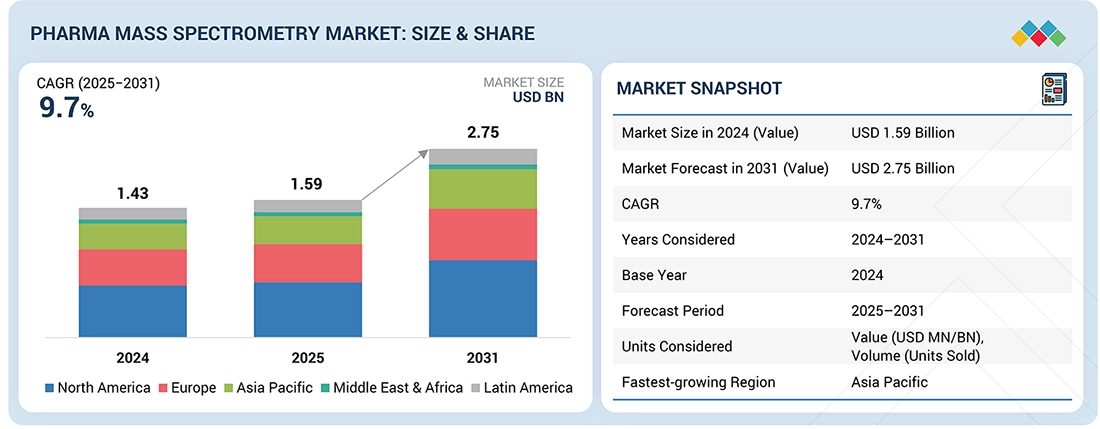
Source: Secondary Research, Interviews with Experts, MarketsandMarkets Analysis
The global Pharma Mass Spectrometry market, valued at US$1.43 billion in 2024, stood at US$1.59 billion in 2025 and is projected to advance at a resilient CAGR of 9.7% from 2025 to 2031, culminating in a forecasted valuation of US$2.75 billion by the end of the period. The pharmaceutical mass spectrometry market is undergoing a fundamental shift owing to the patent cliff faced by branded pharma products, the rapid expansion of the manufacturing base of generics & APIs, and increased MS test volume among industrial & research pharma labs, which require advanced MS platforms with high-resolution capabilities, creating incremental demand for specialized MS infrastructure.
KEY TAKEAWAYS
-
BY REGIONBy region, the Asia Pacific is projected to register the highest CAGR of 11.5% during the forecast period.
-
BY PRODUCTBy product, the software & services segment is expected to register the highest CAGR of 12.2%.
-
BY INLET TYPEBy inlet type, the LC-MS segment held the largest share of 45% in the pharma mass spectrometry market in 2025.
-
BY COMPONENTBy component, the mass analyzers segment held the largest share of 40% in the pharma mass spectrometry market.
-
BY END USERBy end user, the CROS and CDMOS are expected to register the highest CAGR during the forecast period.
-
BY APPLICATIONBy application, the preclinical, clinical development & pharmacokinetics segment accounted for the largest market share in 2025.
-
COMPETITIVE LANDSCAPE- KEY PLAYERSCompanies such as Thermo Fisher Scientific (US), Agilent Technologies (US), and Waters Corporation (US) were identified as prominent players in the pharma mass spectrometry market
-
COMPETITIVE LANDSCAPE- STARTUPSCompanies such as Advion Interchim Scientific (US) and Analytic-Jena GmbH (Germany), among others, have established a presence in the US mass spectrometry space by supplying niche LC-MS platforms, front-end systems, or regionally focused solutions for hospital and diagnostic laboratories, indicating their potential as emerging participants for further competitive assessment.
The pharma mass spectrometry market is undergoing a fundamental structural shift as pharmaceutical companies increasingly outsource bioanalytical testing services—including LC-MS/MS analysis, impurity identification & quantification, method development, and batch release testing—to specialized Contract Research Organizations (CROs). This transition is fundamentally reshaping demand patterns and creating a multiplier effect that expands the total addressable market for MS instrumentation and services. The shift of pipelines toward these complex molecules, therefore, structurally increases demand for advanced LC-MS/HRMS in both R&D and GMP environments.
TRENDS & DISRUPTIONS IMPACTING CUSTOMERS' CUSTOMERS
The pharma mass spectrometry market is shifting from a niche tool for specialized drug labs to a core technology shaping pharmaceutical analytical strategies. API manufacturers prioritize reliable impurity and elemental control in bulk drug production, requiring rugged LC-MS and ICP-MS platforms for in-process monitoring, trace impurity detection, and ICH Q3D-compliant elemental testing to ensure consistent quality, reduce batch failures, and secure a global supply. Innovator pharma invests in MS for comprehensive bioanalysis and characterization, using triple-quadrupole LC-MS/MS for PK/TK and safety, and high-resolution analyzers for mass, PTM, and impurity analysis. Generic and specialty firms focus on cost-effective bioequivalence and high-throughput QC, employing robust LC-MS methods for rapid testing and demonstrating therapeutic equivalence. CROs and CDMOs operate flexible, large-capacity MS systems to attract outsourced work, quickly develop methods, operate under GxP, and transfer assays across sites.
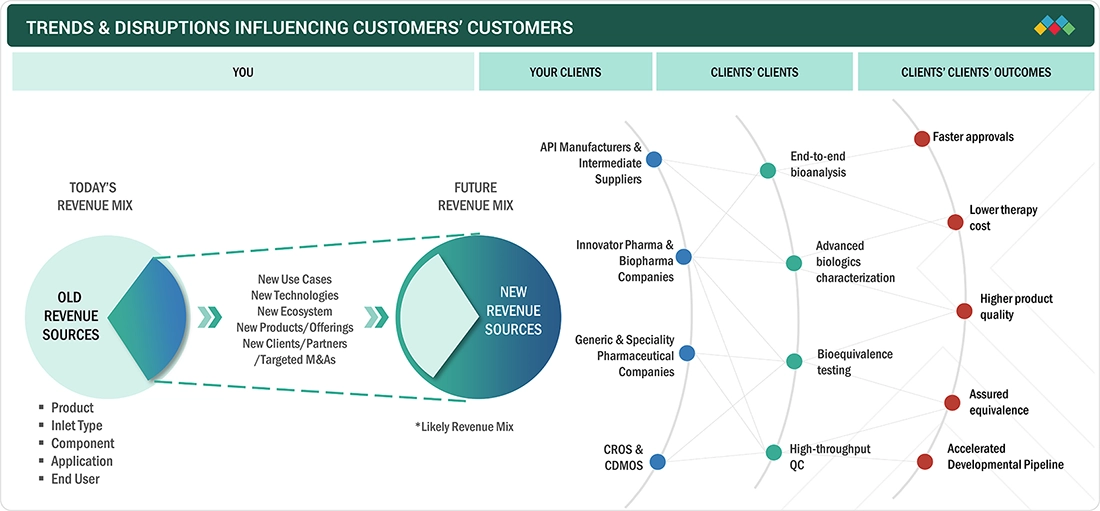
Source: Secondary Research, Interviews with Experts, MarketsandMarkets Analysis
MARKET DYNAMICS

Level
-
Surging API pipelines fueling pharma mass spectrometry demand

-
Increased outsourcing to CROs & CDMOs


Level
-
High capital and ownership costs

-
Skilled workforce shortage and analytical expertise gap


Level
-
Multi-attribute LC-MS methods transforming quality control workflows

-
Advanced MS-driven services emerging as a differentiator for CROs and CDMOs


Level
-
Regulatory complexity and method validation burden

-
Software interoperability and data management fragmentation

Source: Secondary Research, Interviews with Experts, MarketsandMarkets Analysis
Driver: Surging API pipelines fueling pharma mass spectrometry demand
Global drug pipelines are rapidly shifting towards novel APIs owing to the patent cliff faced by branded drugs and focus on new combinational therapies, wherein advanced analytical modalities are used for quality checks. These modalities are structurally complex and highly heterogeneous; they have multiple charge states, diverse post-translational modifications, conjugated payloads, and numerous potential degradation pathways. Traditional chromatographic and spectroscopic methods cannot fully resolve this complexity, so regulators and internal quality groups increasingly expect LC–MS and high-resolution MS data at every stage of development and manufacturing. This shift drives growth in several concrete ways. CMC and GMP QC functions are adopting MS-based multi-attribute methods to monitor multiple critical quality attributes in a single run, replacing or augmenting large panels of conventional assays.
Restraint: High capital and ownership costs
High capital and ownership costs restrain the pharma mass spectrometry market because they directly limit how many systems different end-users can justify buying and how often they can refresh them. A pharma-grade triple-quadrupole LC-MS/MS already sits at the upper end of analytical instrument pricing, and high-resolution hybrid platforms (Q-TOF, Orbitrap) are substantially more expensive again, especially once you add front-end LC, sample-prep automation, and qualification work. On top of purchase price, owners must budget for annual service contracts, preventive maintenance, replacement of critical components such as vacuum pumps and detectors, and periodic requalification to remain GxP compliant, all of which raise the total cost of ownership over the instrument’s life. For large innovator companies, this cost is manageable but still scrutinized, leading to centralized platforms and slower replacement cycles rather than aggressive fleet expansion. For generics, API manufacturers and smaller biotechs, the combination of high capex and recurring opex can push them toward sharing capacity with CROs or relying on simpler HPLC or ligand-binding methods where regulators accept them. As a result, some potential users postpone or avoid MS investments
Opportunity: Advanced MS-driven services emerging as a differentiator for CROs and CDMOs
Advanced MS-driven services are an opportunity because they allow CROs and CDMOs to move from being interchangeable capacity providers to strategic partners that sponsors actively seek out and are willing to pay a premium for. When a service provider can offer advanced LC-MS/MS and high-resolution MS workflows—such as intact mass and peptide mapping for biologics, high-sensitivity peptide PK for GLP-1s, or detailed impurity and degradation profiling—it can support modalities and study designs that many sponsors cannot handle in-house. This lets the provider win more complex, higher-value projects and longer multi-year framework agreements rather than only routine, price-sensitive work. Building these MS-centric capabilities also deepens switching costs: once a sponsor has validated critical bioanalytical and CMC methods on a provider’s specific MS platforms and software stack, moving those methods elsewhere is time-consuming and risky. That “stickiness” translates into recurring sample volumes and a stable revenue base that justifies continuous investment in new instruments, upgrades, and specialized staff. As more sponsors outsource development and manufacturing for biologics, peptides, and other complex modalities, CROs and CDMOs that differentiate on advanced MS will expand their fleets.
Challenge: Software interoperability and data management fragmentation
The mass spectrometry ecosystem suffers from a persistent lack of software integration and data interoperability across platforms. LC-MS/MS instruments generate proprietary data formats that often do not seamlessly integrate with laboratory information systems (LIS), electronic health records (EHR), or enterprise data management platforms. Clinical laboratories frequently must develop custom interfaces or deploy third-party data management solutions to connect MS instrumentation to their LIS, incurring significant IT costs and requiring specialized programming expertise. This fragmentation creates several downstream problems: manual data transcription errors, workflow inefficiencies, delayed result reporting, and compliance risks. The lack of standardized, vendor-agnostic data interchange standards forces organizations into "software lock-in" relationships with equipment manufacturers, reducing flexibility and increasing total cost of ownership. Furthermore, the absence of robust, easy-to-use data analysis and interpretation tools has been explicitly identified as the primary bottleneck in clinical proteomics, limiting the ability of laboratories to extract actionable insights from complex MS datasets. These interoperability challenges reduce return on investment for MS systems and slow clinical adoption.
PHARMA MASS SPECTROMETRY MARKET: COMMERCIAL USE CASES ACROSS INDUSTRIES
| COMPANY | USE CASE DESCRIPTION | BENEFITS |
|---|---|---|
 |
Deployment of Orbitrap Exploris/Orbitrap Astral platforms for high-throughput biomarker discovery and verification in pharma and food safety — e.g., Nestlé’s wide-scope pesticide & natural toxin workflows developed on Orbitrap Exploris instruments. | Ultra-high resolution for confident compound ID, improved mass accuracy for non-target screening, and high throughput that accelerates R&D → faster biomarker discovery to clinical research translation |
 |
Implementation of the 6495D Triple Quadrupole LC/MS in food, environmental, and clinical testing labs for trace-level quantitation (PFAS, pesticides, clinical small molecule panels). Labs use the 6495D for PPQ–PPT sensitivity workflows and high sample throughput. | Sub-ppt detection limits in difficult matrices, fast dwell times for large panels (higher sample throughput), and robustness for routine regulatory testing → reliable compliance testing and improved lab productivity |
 |
Clinical and regulated-testing labs deploying SCIEX Triple Quadrupole and TripleTOF platforms for routine clinical LC-MS/MS assays (therapeutic drug monitoring, endocrinology, toxicology) and targeted quantitation in biopharma QA/QC. SCIEX also provides implementation guides to support lab adoption. | High sensitivity and selectivity for clinical assays, validated workflows and implementation support reduce time-to-operational readiness, enabling labs to bring complex LC-MS tests into routine diagnostics |
 |
Use of Xevo MRT and UNIFI software for large-cohort metabolomics, lipidomics, and non-targeted environmental screens (including PFAS). Waters positions the Xevo MRT for studies requiring high mass resolution and sub-ppm accuracy across hundreds of injections. | High-resolution, stable mass accuracy for confident non-target identification, scalable throughput for cohort studies, and integrated software for pattern analysis → more reliable discovery datasets and faster time from data to decision |
Logos and trademarks shown above are the property of their respective owners. Their use here is for informational and illustrative purposes only.
MARKET ECOSYSTEM
The pharma mass spectrometry ecosystem spans instrument manufacturers (Thermo Fisher Scientific, SCIEX, Agilent Technologies, Bruker, Waters Corporation), raw material & subsystem suppliers (MKS Instruments, Matsusada Precision, Labnics, EquipNet, detector and ion-source vendors), distributors, and end users such as pharma-biotech companies that are heavily involved in the development of new drugs such as BMS and Novartis. Manufacturers differentiate through clinically validated LC-MS/MS platforms, automation, and assay menus, while component suppliers provide detectors, ion sources, power supplies, and precision modules that underpin instrument performance and reliability. Distributors and channel partners (for example, Labcompare, Avantor, Thomas Scientific, and regional Fisher Scientific entities) extend, manage installations and services, and support localized regulatory and procurement needs in the US.
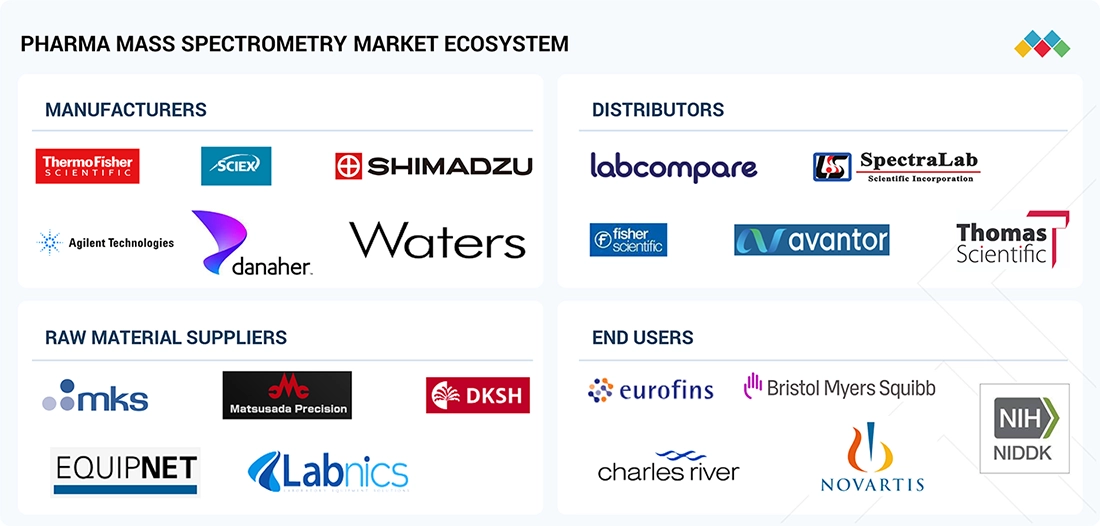
Logos and trademarks shown above are the property of their respective owners. Their use here is for informational and illustrative purposes only.
MARKET SEGMENTS
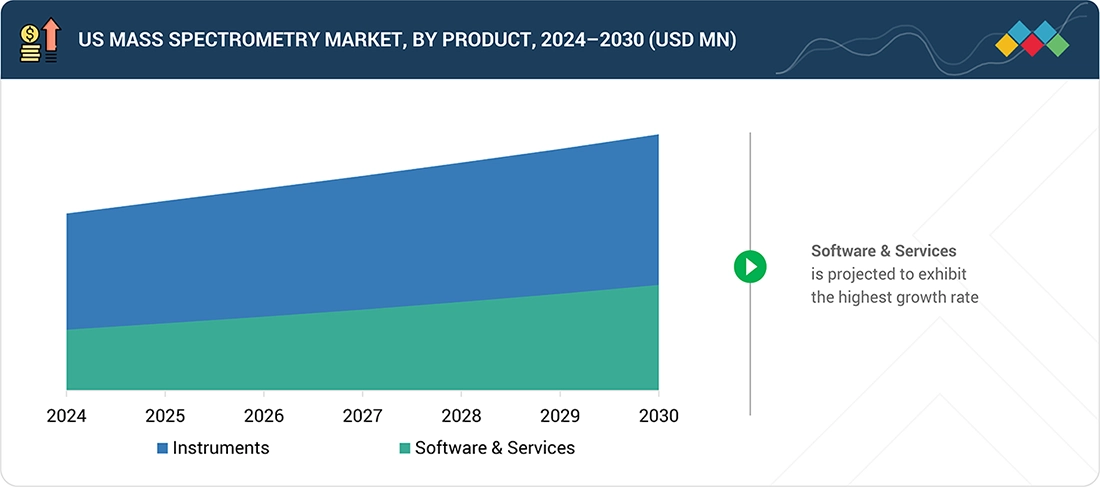
Source: Secondary Research, Interviews with Experts, MarketsandMarkets Analysis
Pharma Mass Spectrometry Market, By Product
By product, the pharma mass spectrometry market is categorized into instruments, software, and services. Mass spectrometry instruments represent substantial capital expenditures, with prices starting at USD 90,000 (for the basic configuration). The advanced are capital-intensive investments in the US pharma & biopharma landscape. The upfront hardware investment masks recurring software/service spending, naturally skewing revenue toward instruments. As drug development becomes more complex—requiring high-resolution MS for biologics, ADCs, and multi-omics—companies prioritize instrument acquisition to stay competitive. This creates a direct correlation between the increase in R&D spending and the procurement of mass spectrometry instruments.
Pharma Mass Spectrometry Market, By Inlet Type
LC-MS is expected to dominate the pharma mass spectrometry market. LC-MS is one of the most commonly used analytical techniques in various sectors for the quantitation and identification of unknowns from a variety of complex samples. Most drug substances and metabolites are non-volatile, polar, or thermally labile, so they cannot be handled efficiently by GC without derivatization; reviews of pharmaceutical analysis explicitly state that LC is the primary separation technique for such compounds. LC-MS can directly analyze intact peptides, oligonucleotides, PROTACs, and many biologic-related species, whereas GC-MS is restricted to volatile/semi-volatile organics and ICP-MS to elements only, which limits their addressable share of pharma assays.
Pharma Mass Spectrometry Market, By End User
Innovator pharma and biopharma companies collectively generate the majority of worldwide branded drug revenue and are also the top R&D spenders that acquire a major share in the pharma mass spectrometry market as end users. The capital in the pharma industry broadly funds product pipelines of small molecules, biologics, and advanced modalities, which require extensive LC-MS and high-resolution mass spectrometry for hit confirmation, lead optimization, DMPK, biomarker work, clinical bioanalysis, and late-stage characterization, creating dense fleets of triple-quad demand from pharma-related workflows. The innovator pharma & biopharma companies industry has facilitated the advancement of diagnostics & biomarker identification in the R&D sector, leading to its significant growth and dominance in the pharma industry in the upcoming years. All these factors have helped the innovator pharma & biopharma companies to acquire a dominant position in the market.
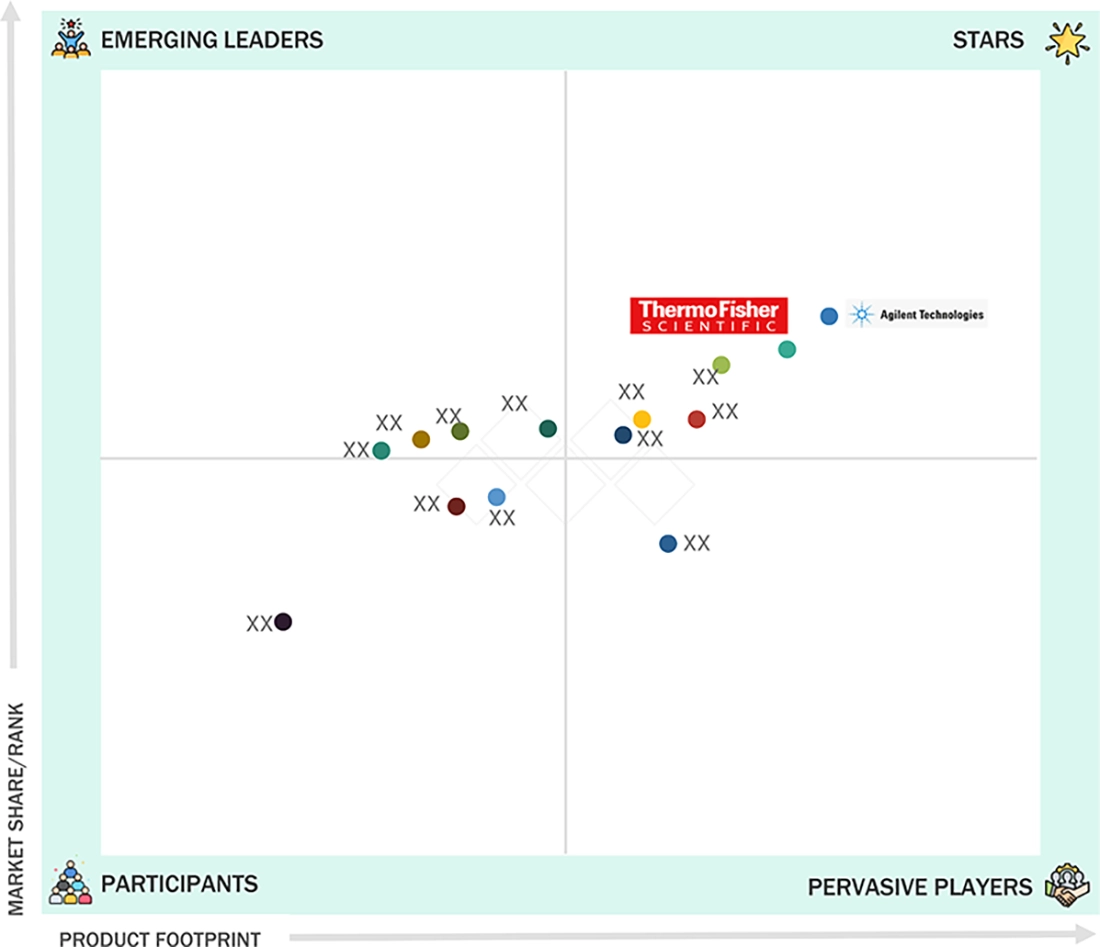
PHARMA MASS SPECTROMETRY MARKET: COMPANY EVALUATION MATRIX
In the pharma mass spectrometry market matrix, Thermo Fisher Scientific and Agilent Technologies dominate the "stars" cluster, anchored by comprehensive clinical LC-MS/MS portfolios, strong regulatory positioning, and deep integration with pharma and biotech manufacturing workflows. A second tier of pervasive players, including SCIEX, Waters, and Shimadzu, maintains extensive installed bases in pharma/biopharma manufacturing and API characterization, combining robust instrument performance with mature application libraries and established service networks. The competitive landscape is intensifying as multinational leaders expand multi-site standardization projects and long-term service contracts, while emerging suppliers focus on workflow automation, cost optimization, and regional penetration to challenge the incumbent market share.
Source: Secondary Research, Interviews with Experts, MarketsandMarkets Analysis
KEY MARKET PLAYERS
- Agilent Technologies, Inc (US)
- Thermo Fisher Scientific, Inc (US)
- Danaher Corporation (US)
- Waters Corporation (US)
- Bruker Corporation (US)
- Shimadzu Corporation (Japan)
- PerkinElmer, Inc (US)
- Jeol, Ltd (Japan)
- Jasco (Japan)
- Analytik Jena GmbH+Co. KG (Germany)
MARKET SCOPE
| REPORT METRIC | DETAILS |
|---|---|
| Market Size in 2025 (Value) | USD 1.59 Billion |
| Market Forecast in 2031 (value) | USD 2.75 Billion |
| Growth Rate | CAGR of 9.7% from 2025–2031 |
| Years Considered | 2023–2031 |
| Base Year | 2024 |
| Forecast Period | 2025–2031 |
| Units Considered | Value (USD Million/Billion), Volume (Units Sold) |
| Report Coverage | Revenue forecast, company ranking, competitive landscape, growth factors, and trends |
| Segments Covered |
|
| Parent & Related Segment Reports |
Mass Spectrometry Market Environmental mass spectrometry market Drug discovery mass spectrometry market Clinical mass spectrometry market Asia-Pacific mass spectrometry market US mass spectrometry market European mass spectrometry market |
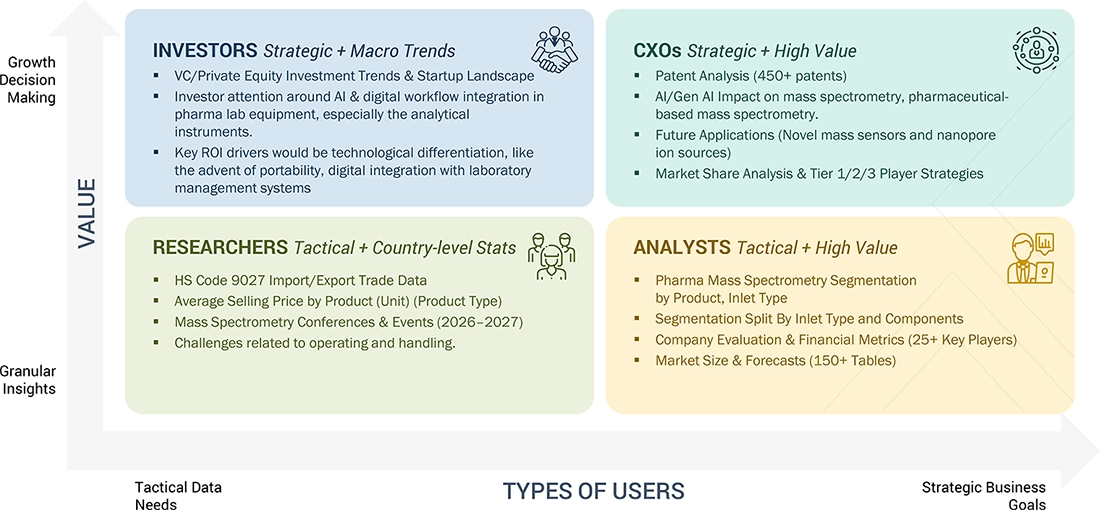
WHAT IS IN IT FOR YOU: PHARMA MASS SPECTROMETRY MARKET REPORT CONTENT GUIDE
DELIVERED CUSTOMIZATIONS
We have successfully delivered the following deep-dive customizations:
| CLIENT REQUEST | CUSTOMIZATION DELIVERED | VALUE ADDS |
|---|---|---|
| Biopharmaceutical Companies |
|
|
RECENT DEVELOPMENTS
- June 2024 : Thermo Fisher Scientific, Inc (US) opened a new facility aiming to increase production capability for analytical services and clinical research, the facility has dedicated space for LC-MS.
- October 2024 : Danaher Corporation (US) entered into a partnership with IonOpticks (Australia) to co-market IonOpticks's chromatography system with SCIEX’s Zeno TOF product line.
- August 2024 : Agilent Technologies, Inc. (US) entered into a partnership agreement with Newomics Inc. (US) to develop an LC-MS platform, specifically for identifying druggable targets in drug discovery.
Table of Contents
 Exclusive indicates content/data unique to MarketsandMarkets and not available with any competitors.
Methodology
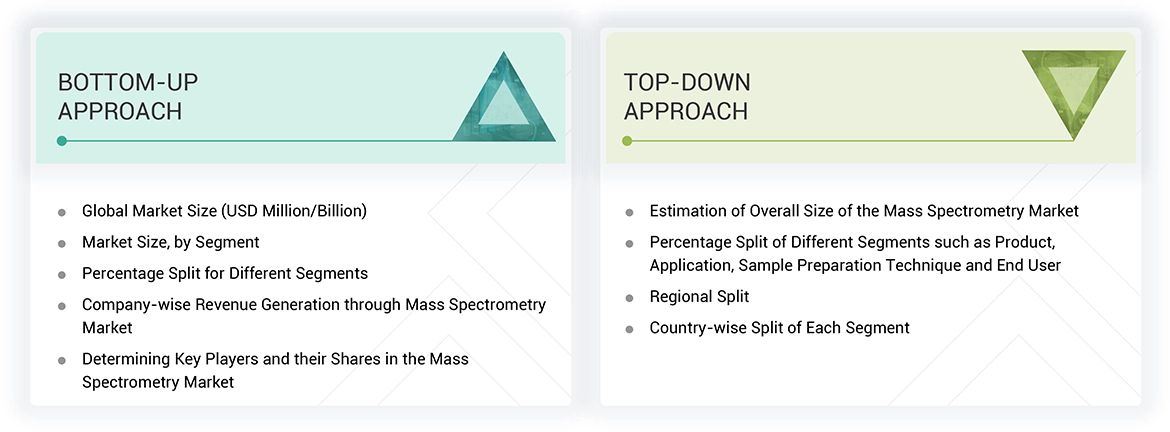
To make a balance between primary and secondary research for the pharma mass spectrometry market, different market variables for small and medium-sized businesses and major businesses were analyzed as part of this study. The next step involved primary research with industry experts along the value chain to validate these findings, assumptions, and market sizing. Many different methodologies were used for estimating the overall market size, involving the top-down and bottom-up approaches. The study consists of significant market segments, evolving patterns, regulatory frameworks, and competitive environments. This study also considers leading market players and the strategies they deploy in this market. In conclusion, the total market size was estimated through top-down and bottom-up approaches along with data triangulation to reach the number for the final market size. Primary research was conducted throughout the study to validate and test each hypothesis.
Secondary Research
During the study, secondary research employed a variety of sources, including directories and databases such as Bloomberg Businessweek, D&B Hoovers, and Factiva. Additional materials included white papers, annual reports, SEC filings, and investor presentations. This research approach was used to collect and generate data that offers comprehensive, technical, and market-focused insights into the pharma mass spectrometry market. The data provides insights into key players and market segmentation based on recent industry trends, as well as significant developments in the market. A database comprising leading industry figures was also created through this secondary research.
Primary Research
Primary research involved activities aimed at obtaining qualitative and quantitative data. A range of personalities from both supply and demand sides were questioned during this phase. For the supply side, folks from key designations like CEOs, vice presidents, directors of marketing and sales, directors of technology and innovation, and other important leaders were interviewed by key players. Among the demand-side primary sources were academic institutions, and research organizations. To validate market segmentation, identify prominent market participants, and gain insights into significant industry trends and market dynamics of the real-world primary study was carried out.
To know about the assumptions considered for the study, download the pdf brochure
Market Size Estimation
As per the review of prominent companies and their revenue shares, market size of the global pharma mass spectrometry market was calculated in this report. Key players with significant share in the market were identified as part of secondary research and their pharma mass spectrometry business revenue was calculated, the same was validated by primaries. Analyzing the annual and financial reports of the leading market participants was one aspect of secondary research. On the other hand, in-depth interviews with important thought leaders, including directors, CEOs, and marketing executives, were a part of the primary study.
For calculation of global market value, segmental revenue was calculated in the basis of revenue mapping of service/product providers. Process involved below mentioned steps:
- List of key players that operate in the pharma mass spectrometry market on regional or on country level.
- Formation of product mapping of manufacturers of pharma mass spectrometry and related product lines at regional and country level
- Revenue mapping for listed players from pharma mass spectrometry and related product and services.
- Revenue mapping of major players to cover at least ~70% of the global market share as of 2023. Revenue mapping for major players that cover nearly 70% of the global market share for year 2023.
- Revenue mapping extrapolation for players will drive the global market value for the respective segment.
- Summation for market value for all segments and subsegments to achieve the actual value of the global value of the pharma mass spectrometry market.
Data Triangulation
After getting the overall market size from the market size estimation process mentioned above, the Pharma mass spectrometry market was split into segments and subsegments. Data triangulation and market segmentation procedures were used to complete the overall market engineering process and arrive at the exact statistics for all segments and subsegments. The data was triangulated by studying and analyzing various factors and trends from both the demand and supply sides. Additionally, the Pharma mass spectrometry market was verified and validated using both top-down and bottom-up approaches.
Market Definition
Pharma mass spectrometry is an analytical technique used to measure specific compounds and evaluate molecular structure & chemical properties. This technique ionizes chemical species and sorts the ions based on the mass-to-charge ratio. Mass spectroscopy has become a powerful analytical tool for testing in various industries due to its high sensitivity.
Stakeholders
- Pharmaceutical Industry
- Biotechnology Industry
- Manufacturers and suppliers of mass spectrometers.
- Product suppliers, distributors, and channel partners
- Food & beverage industry
- Academic & research institutes
- Regulatory authorities and industry associations
- Venture capitalists and investment firms
Report Objectives
- To define, describe, and forecast the pharma mass spectrometry market on the basis of product, sample preparation technique, application, end user, and region.
- To provide detailed information regarding the major factors influencing the growth potential of the global pharma mass spectrometry market (drivers, restraints, opportunities, challenges, and trends).
- To analyze the micro markets with respect to individual growth trends, future prospects, and contributions to the global pharma mass spectrometry market.
- To analyze key growth opportunities in the global pharma mass spectrometry market for key stakeholders and provide details of the competitive landscape for market leaders.
- To forecast the size of market segments and/or subsegments with respect to five major regions, namely, North America (US and Canada), Europe (Germany, France, the UK, Italy, Spain, and the RoE), Asia Pacific (Japan, China, India, Australia, South Korea, ASEAN region and the RoAPAC), and rest of the world.
- To profile the key players in the global pharma mass spectrometry market and comprehensively analyze their market shares and core competencies.
- To track and analyze the competitive developments undertaken in the global pharma mass spectrometry market, such as product launches, agreements, expansions, and & acquisitions.


Personalize This Research
- Triangulate with your Own Data
- Get Data as per your Format and Definition
- Gain a Deeper Dive on a Specific Application, Geography, Customer or Competitor
- Any level of Personalization
Let Us Help You
- What are the Known and Unknown Adjacencies Impacting the Pharma Mass Spectrometry Market
- What will your New Revenue Sources be?
- Who will be your Top Customer; what will make them switch?
- Defend your Market Share or Win Competitors
- Get a Scorecard for Target Partners

Custom Market Research Services
We Will Customise The Research For You, In Case The Report Listed Above Does Not Meet With Your Requirements
Get 10% Free CustomisationTESTIMONIALS

JAYANT RAJPUROHIT
Director of Market Insights, Data and Analytics
SFI Health,
Leading Pharmaceutical Companywww.sfihealth.com/

We at SFI Health approached MarketsandMarkets for an Opportunity Assessment on "Incidence and Prevalence of Focus Indications" as we wanted to know the most attractive HCPs like Physician, Functional MD, Naturopath and Pharmacist. The project was critical for us to ensure our focus on the right target which would enable sustainable growth and profitability for SFI Health. The business insights provided exceeded our expectations and we were extremely impressed. The team at MarketsandMarkets is highly professional and detail oriented and very well understood our business needs. MarketsandMarkets offers a unique combination of expertise and dedicated engagement model. We identified 2 new products to be launched in coming months, based on the research findings provided by MarketsandMarkets. We are happy with the services and would strongly recommend MarketsandMarkets to my peers in the industry.

BEATRIZ DE LA CALLE
Head of Commercial Analytics
Qualicaps,
Leading Pharmaceutical Companywww.qualicaps.com/

We partnered with MarketsandMarkets for an assessment study on hard empty capsules. The team was extremely professional in understanding our business requirements and we received timely responses to all our queries. The market intelligence and the recommendations has met our business requirements. We were extremely impressed to see the final study results; it really exceeded our expectations. The market intelligence offered by MarketsandMarkets, and clarity on next steps will help us achieve our business objective for the Year 2021. We are happy with the services and would strongly recommend MarketsandMarkets to my peers in the industry.

Bob Williams,
Senior Director Business Development & Innovation
Bracco Diagnostics Inc.,
Italian Multinational in life sciences sector and a World Leader in imaging diagnosticsimaging.bracco.com/us-en
We were pleased with targeted insights that MarketsandMarkets identified from a custom study on the 'Radiation Dose Management Solutions Market'. Your team identified and characterized the market participants as well as underlying trends accurately. This study was useful to Bracco in formulating business strategies for our dose monitoring product lines and we thank MarketsandMarkets for the job well done.
Cody Coonradt,
Market Development and Strategy Manager
3M Health Information Systems,
Leader in Health care Coding, Payment & Analytics Solutions.www.3m.com/3M/en_US/health-information-systems-us
The value for our organization comes from three things: depth of research, specificity of segments and being easy to work with. As important as the first two are, the third can't be underestimated. MarketsandMarkets, maybe more than any other research vendor, wants to know what is top of mind for our team and what big questions we are grappling to answer.
Their customer first approach and high value engagement model, have given us great analysis and excellent value for money






Growth opportunities and latent adjacency in Pharma Mass Spectrometry Market