Cancer Tumor Profiling Market

Cancer Tumor Profiling Market by Product & Service Offering (Instruments/Systems, Assays/Kits, Services), Technology (NGS, PCR, IHC, ISH/FISH), Sample Type (Tissue, Blood, Bone Marrow), Application, Cancer Type, End User & Region – Global Forecast to 2031



CANCER TUMOR PROFILING MARKET SIZE, SHARE & GROWTH SNAPSHOT
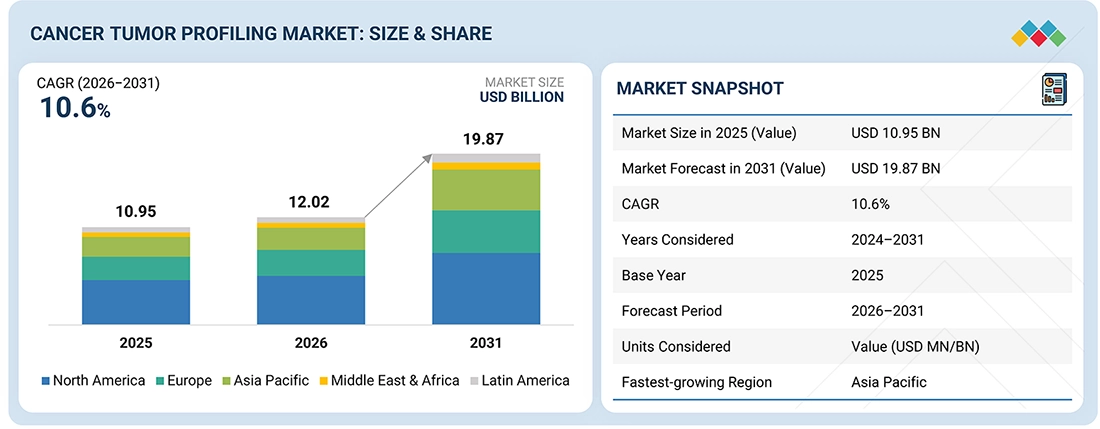
Source: Secondary Research, Interviews with Experts, MarketsandMarkets Analysis
The global cancer tumor profiling market is projected to grow from USD 12.02 billion in 2026 to USD 19.87 billion by 2031, at a CAGR of 10.6% during the forecast period. The market was valued at USD 10.95 billion in 2025. The market is expanding through the growing adoption of precision oncology, biomarker-guided treatment selection, comprehensive genomic profiling, and liquid biopsy. The scope includes instruments & systems; assays, kits, reagents, and consumables; clinical tumor profiling testing services; and biopharmaceutical, clinical-trial, and companion diagnostic services. Technologies covered include next-generation sequencing, PCR-based methods, immunohistochemistry, in situ hybridization, and other emerging profiling technologies. Growth is supported by rising cancer incidence, targeted therapy and immunotherapy pipelines, pharmaceutical–diagnostic partnerships, and increasing use of molecular profiling across diagnosis, prognosis, treatment selection, response monitoring, residual disease assessment, recurrence detection, biomarker discovery, and clinical trials.
KEY TAKEAWAYS
-
MARKET SNAPSHOT:
Base Year Market Size (2025): USD 10.95 Billion
Current Market Size (2026): USD 12.02 Billion
Forecast Market Size (2031): USD 19.87 Billion
CAGR (2026–2031): 10.6% -
SEGMENT LEADERSHIP:
Regional Leader: North America accounted for the largest market share in 2025, supported by advanced molecular testing infrastructure, broad adoption of targeted therapies, strong reimbursement for selected tests, and the presence of major precision-oncology companies.
Fastest-Growing Region: Asia Pacific is expected to register the fastest growth of 12.8% during 2026–2031.
Offering Leader: Products accounted for the largest share of 61.0% in 2025.
Technology Leader: Next-generation sequencing accounted for the largest share of 42.3% in 2025 and is expected to grow at about 12.5% during 2026–2031. -
MARKET OUTLOOK & COMPETITIVE LANDSCAPE:
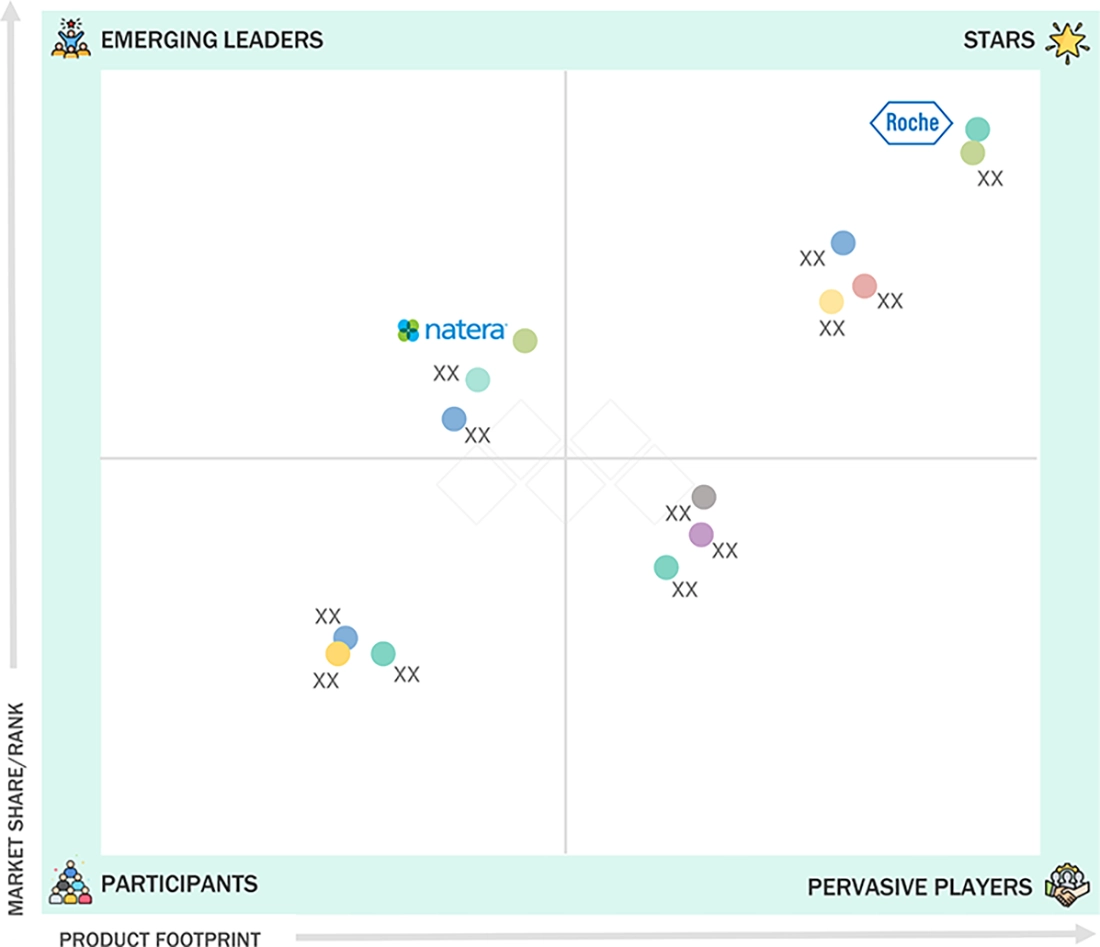
F. Hoffmann-La Roche AG (Switzerland), Illumina, Inc. (US), Guardant Health, Inc. (US), Tempus AI, Inc. (US), and Thermo Fisher Scientific Inc. (US) were identified as some of the star players in the global cancer tumor profiling market, given their strong market share and product and service footprint.
OncoDNA (Belgium) and Invivoscribe, Inc. (US) have distinguished themselves among startups and SMEs by securing strong footholds in specialized niche areas, underscoring their potential as emerging market leaders.
The global cancer tumor profiling market is expanding rapidly as precision oncology becomes more integrated into routine cancer care and drug development. NGS-based comprehensive genomic profiling, liquid biopsy, companion diagnostics, MRD monitoring, and AI-enabled interpretation are shifting the market from isolated single-marker testing toward integrated, longitudinal tumor characterization.
TRENDS & DISRUPTIONS IMPACTING CUSTOMERS' CUSTOMERS
Cancer tumor profiling is shifting from tissue-dominant, single-marker, and centralized testing toward integrated precision-oncology workflows based on NGS comprehensive genomic profiling, liquid biopsy, longitudinal monitoring, AI-enabled interpretation, digital pathology, and multi-omics. The direct customers of tumor profiling companies—hospitals and cancer centers, reference laboratories and CROs, and pharmaceutical and biotechnology companies—are seeking faster actionable results, standardized high-throughput workflows, broader patient stratification, and scalable companion diagnostic development. These changes ultimately affect their customers, including oncologists, trial sponsors, payers, and patients, by improving treatment selection, accelerating clinical trials, reducing ineffective therapy, enabling resistance and recurrence monitoring, and supporting more efficient cancer care.
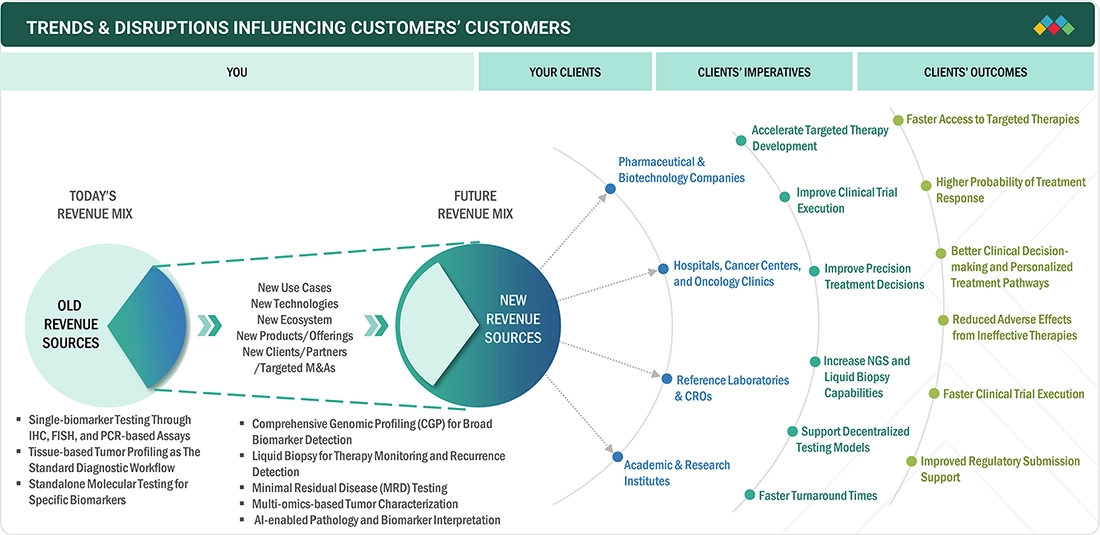
Source: Secondary Research, Interviews with Experts, MarketsandMarkets Analysis
MARKET DYNAMICS

Level
-
Increasing adoption of precision oncology and targeted therapies

-
Rising adoption of NGS-based comprehensive genomic profiling


Level
-
High development, clinical validation, and regulatory approval costs


Level
-
Expansion of liquid biopsy and minimally invasive profiling

-
AI-driven biomarker interpretation and digital pathology integration


Level
-
Regulatory complexity for multi-analyte tumor profiling tests

Source: Secondary Research, Interviews with Experts, MarketsandMarkets Analysis
Driver: Increasing adoption of precision oncology and targeted therapies
The growing use of biomarker-defined targeted therapies and immunotherapies is making tumor profiling an increasingly important part of routine oncology treatment planning. Physicians require molecular and protein-level information to identify eligible patients, select appropriate therapies, and avoid ineffective treatment. This is increasing demand for NGS, PCR, IHC, and ISH-based profiling across major solid tumors and hematologic malignancies. Expansion of biomarker-linked drug approvals also increases testing volumes at diagnosis, disease progression, and treatment resistance. As precision oncology becomes more widely adopted, tumor profiling is shifting from optional testing to a core clinical decision-support tool.
Restraint: High development, clinical validation, and regulatory approval costs
Cancer tumor profiling assays require extensive analytical validation to demonstrate accuracy, sensitivity, specificity, reproducibility, and performance across different sample types and biomarkers. Clinical validation becomes more complex for broad NGS panels because multiple genes, variant classes, and therapeutic claims may be included in a single test. Companies must also invest in quality-management systems, bioinformatics validation, regulatory documentation, and post-market compliance. These requirements increase development expenditure and extend commercialization timelines, particularly for companion diagnostics and multi-analyte tests. The resulting capital burden can restrict innovation among smaller companies and slow the introduction of new profiling solutions.
Opportunity: Expansion of liquid biopsy and minimally invasive profiling
Liquid biopsy enables tumor profiling through circulating tumor DNA and other blood-based biomarkers, reducing dependence on invasive tissue biopsies. It is particularly valuable when tumor tissue is insufficient, inaccessible, or unsuitable for repeated sampling. Blood-based testing also supports serial monitoring of treatment response, resistance mutations, residual disease, and recurrence. Expansion into earlier-stage cancers and longitudinal patient management can create recurring testing revenue beyond initial diagnosis. As assay sensitivity improves and clinical evidence expands, liquid biopsy is expected to broaden access to tumor profiling across hospitals, oncology clinics, and decentralized care pathways.
Challenge: Regulatory complexity for multi-analyte tumor profiling tests
Broad tumor profiling tests may assess hundreds of genes, multiple variant classes, genomic signatures, and several therapy-linked biomarkers within a single workflow. Regulators must evaluate analytical performance, clinical validity, interpretation algorithms, software updates, and companion diagnostic claims across numerous indications. Adding new biomarkers or modifying bioinformatics pipelines may require additional validation and regulatory submissions. Requirements also differ across the US, Europe, China, Japan, and other markets, complicating global commercialization. This regulatory complexity increases development timelines and makes it difficult to maintain harmonized products across regions.
CANCER TUMOR PROFILING MARKET: COMMERCIAL USE CASES ACROSS INDUSTRIES
| COMPANY | USE CASE DESCRIPTION | BENEFITS |
|---|---|---|
 |
Through Foundation Medicine and Roche Diagnostics, the company provides comprehensive genomic profiling (CGP) solutions using tissue and liquid biopsy-based testing to identify actionable biomarkers and support companion diagnostic applications for targeted therapies and immunotherapies. | Enables accurate patient stratification, improves therapy selection, supports biomarker-driven treatment decisions, and accelerates adoption of precision oncology workflows. |
 |
Provides next-generation sequencing (NGS) platforms and oncology-focused assays, including TruSight Oncology Comprehensive, to enable multi-gene tumor profiling and detection of clinically relevant biomarkers across solid tumors. | Supports comprehensive biomarker identification, improves laboratory testing scalability, enables decentralized genomic testing, and supports pharmaceutical companion diagnostic development. |
 |
Provides liquid biopsy-based tumor profiling solutions, including Guardant360 CDx and related genomic testing platforms, for detecting actionable genomic alterations, monitoring treatment response, and supporting therapy selection in advanced cancers. | Enables minimally invasive testing, facilitates repeat monitoring, identifies resistance mechanisms, and expands access to precision oncology testing for patients with limited tissue availability. |
Logos and trademarks shown above are the property of their respective owners. Their use here is for informational and illustrative purposes only.
MARKET ECOSYSTEM
The global cancer tumor profiling market is a highly interconnected precision-oncology ecosystem involving diagnostic product manufacturers, clinical testing laboratories, hospitals and cancer centers, pharmaceutical and biotechnology companies, CROs, academic institutions, technology suppliers, and regulatory authorities. Product and service vendors provide sequencing systems, PCR platforms, IHC and ISH instruments, assays, reagents, bioinformatics tools, and clinical tumor profiling services used to identify genomic and protein biomarkers. Hospitals, oncology clinics, and reference laboratories use these solutions for cancer diagnosis, molecular characterization, treatment selection, resistance monitoring, and recurrence assessment. Pharmaceutical and biotechnology companies collaborate with profiling providers for biomarker discovery, patient stratification, clinical-trial enrollment, and companion diagnostic development. Raw-material and workflow suppliers provide sequencing chemistry, enzymes, antibodies, probes, sample-preparation products, and laboratory automation components. Regulatory and reimbursement bodies shape adoption through test approvals, laboratory requirements, clinical-utility standards, reimbursement policies, and data-governance frameworks. The ecosystem is increasingly driven by NGS-based comprehensive genomic profiling, liquid biopsy, AI-enabled interpretation, digital pathology, and growing demand for longitudinal tumor monitoring.
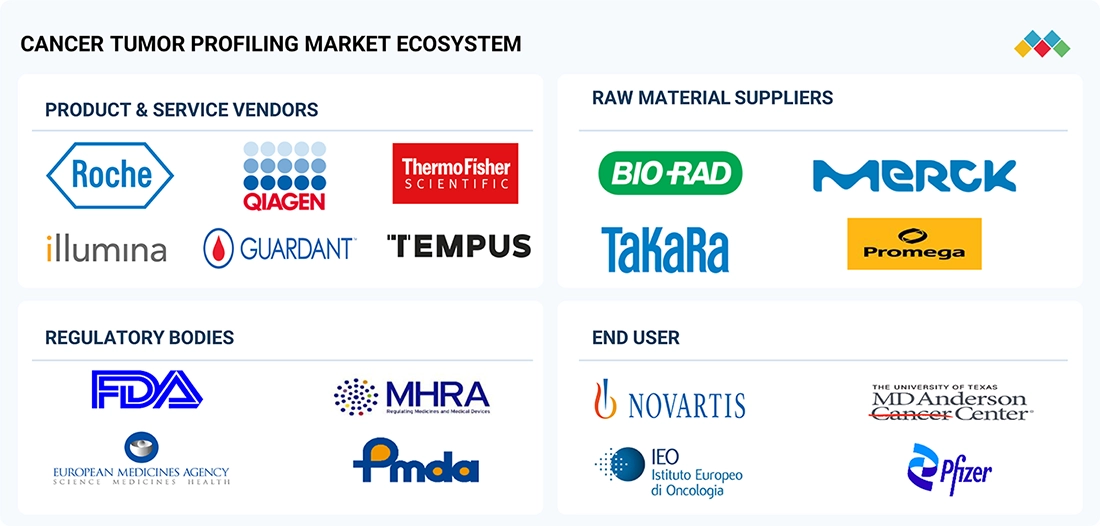
Logos and trademarks shown above are the property of their respective owners. Their use here is for informational and illustrative purposes only.
MARKET SEGMENTS
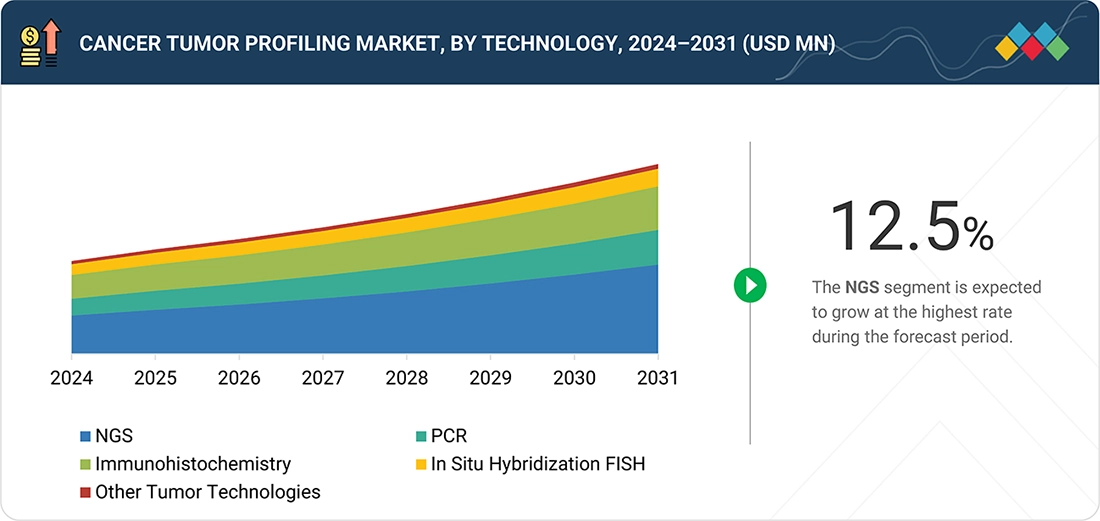
Source: Secondary Research, Interviews with Experts, MarketsandMarkets Analysis
Global Cancer Tumor Profiling Market, by Offering
In 2025, products are expected to account for the larger share of the cancer tumor profiling market, supported by the recurring use of assays, kits, reagents, antibodies, probes, and sequencing consumables across patient-testing workflows. Within products, assays, kits, reagents, and consumables represent the largest revenue contribution because they are required for every NGS, PCR, IHC, and ISH test, unlike instruments that have longer replacement cycles. Increasing cancer-testing volumes and growing adoption of broad molecular panels support recurring consumable demand. Instruments and systems remain important as laboratories expand sequencing, digital pathology, and automated molecular testing capabilities. Services are expected to grow strongly as hospitals and biopharmaceutical companies increasingly outsource complex tumor profiling, clinical-trial testing, biomarker validation, and companion diagnostic development.
Global Cancer Tumor Profiling Market, by Technology
In 2025, next-generation sequencing is estimated to account for the largest technology share of the cancer tumor profiling market. NGS enables simultaneous assessment of multiple genes, variant classes, and genomic signatures, making it suitable for comprehensive genomic profiling and complex treatment-selection decisions. Growing adoption of tissue- and blood-based multi-gene panels is reducing dependence on sequential single-marker testing. NGS also supports liquid biopsy, clinical-trial patient stratification, resistance monitoring, and companion diagnostic development.
Global Cancer Tumor Profiling Market, by Application
In 2025, cancer diagnosis, molecular characterization, and prognostic or risk assessment are expected to account for the largest application share. Tumor profiling is increasingly incorporated into the initial evaluation of cancer to determine tumor subtype, molecular drivers, disease aggressiveness, and potential prognosis. Treatment selection and companion diagnostics represent another major application as targeted therapies and immunotherapies increasingly require biomarker-defined patient identification. Treatment-response and resistance monitoring are expanding as profiling is repeated during disease progression to identify emerging molecular alterations. Residual disease, surveillance, and recurrence detection are expected to grow rapidly as sensitive molecular testing extends tumor profiling beyond initial diagnosis into longitudinal patient management.
Cancer Tumor Profiling Market, by Cancer Type
In 2025, solid tumors are expected to account for the largest share of the cancer tumor profiling market, supported by high testing volumes across lung, breast, colorectal, prostate, gynecologic, melanoma, brain, head and neck, and gastrointestinal cancers. Solid tumors have a broad range of actionable genomic and protein biomarkers used for targeted therapy and immunotherapy selection. Lung cancer represents one of the most intensively profiled cancer types due to the large number of clinically actionable biomarkers and therapy-linked testing requirements. Profiling of liquid tumors and hematologic malignancies is also significant because molecular testing supports disease classification, risk stratification, therapy selection, and measurable residual disease assessment. Growth is expected across both segments as broad NGS panels and longitudinal monitoring applications expand.
Global Cancer Tumor Profiling Market, by End User
In 2025, hospitals, dedicated cancer centers, and oncology clinics are expected to account for the largest end-user share because these institutions manage cancer diagnosis, pathology assessment, treatment planning, and longitudinal patient care. Major cancer centers increasingly maintain in-house molecular pathology and sequencing capabilities, while smaller institutions frequently send complex tests to reference laboratories. Independent and specialty reference laboratories represent an important segment because they provide high-throughput and high-complexity profiling services across multiple healthcare facilities. Pharmaceutical and biotechnology companies generate demand through biomarker discovery, companion diagnostic development, and clinical-trial patient stratification. CROs and central laboratories support global trial testing, while academic medical centers and research institutes contribute to translational oncology and technology validation.
REGION
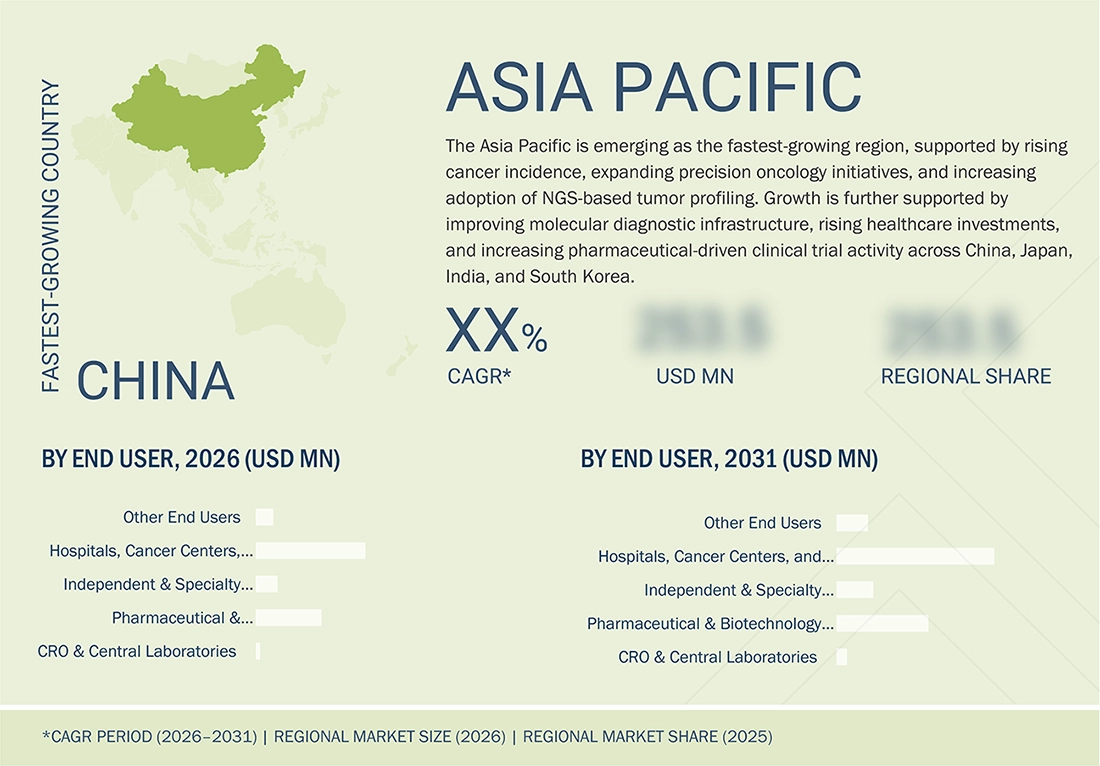
Asia Pacific to be fastest-growing region in market during forecast period
During the forecast period, Asia Pacific is expected to register the highest CAGR in the cancer tumor profiling market, driven by rising cancer incidence, expansion of precision-oncology programs, improving molecular diagnostic infrastructure, and increasing adoption of NGS-based comprehensive genomic profiling. China is expanding hospital and independent laboratory sequencing capacity, while Japan and South Korea benefit from relatively advanced oncology infrastructure, biomarker-linked therapy adoption, and growing clinical use of molecular testing. India is witnessing increasing investment from private cancer hospitals, genomic laboratories, and pharmaceutical clinical-trial sponsors, although adoption remains concentrated in major urban centers. Regional growth is further supported by expanding targeted therapy and immunotherapy availability, growing liquid-biopsy adoption, and greater participation in oncology clinical trials. North America is expected to retain the largest market share in 2025 because of its established testing infrastructure, reimbursement availability for selected profiling tests, high clinical adoption, and concentration of leading precision-oncology companies.
CANCER TUMOR PROFILING MARKET: COMPANY EVALUATION MATRIX
F. Hoffmann-La Roche AG is positioned as a Star in the cancer tumor profiling market, supported by the largest market share and one of the broadest offering footprints. Through Foundation Medicine and Roche Diagnostics, the company participates across tissue- and blood-based comprehensive genomic profiling, IHC, ISH, PCR-based testing, clinical interpretation, and companion diagnostic development. Its integrated pharmaceutical and diagnostics ecosystem, strong regulatory capabilities, global pathology installed base, and extensive biopharmaceutical partnerships strengthen its market leadership. Guardant Health, Inc has a strong position in liquid-biopsy-based tumor profiling, treatment selection, resistance monitoring, MRD-related applications, and biopharmaceutical services.
Source: Secondary Research, Interviews with Experts, MarketsandMarkets Analysis
KEY MARKET PLAYERS
MARKET SCOPE
| REPORT METRIC | DETAILS |
|---|---|
| Market Size in 2025 (Value) | USD 10.95 Billion |
| Market Forecast in 2026 (Value) | USD 12.02 Billion |
| Market Forecast in 2031 (Value) | USD 19.87 Billion |
| Growth Rate | CAGR of 10.6% from 2026–2031 |
| Years Considered | 2024–2031 |
| Base Year | 2025 |
| Forecast Period | 2026–2031 |
| Units Considered | Value (USD Million/Billion) |
| Report Coverage | Revenue Forecast, Company Ranking, Competitive Landscape, Growth Factors, Trends |
| Segments Covered |
|
| Regions Covered | North America, Europe, Asia Pacific, Latin America, Middle East, Africa |
WHAT IS IN IT FOR YOU: CANCER TUMOR PROFILING MARKET REPORT CONTENT GUIDE
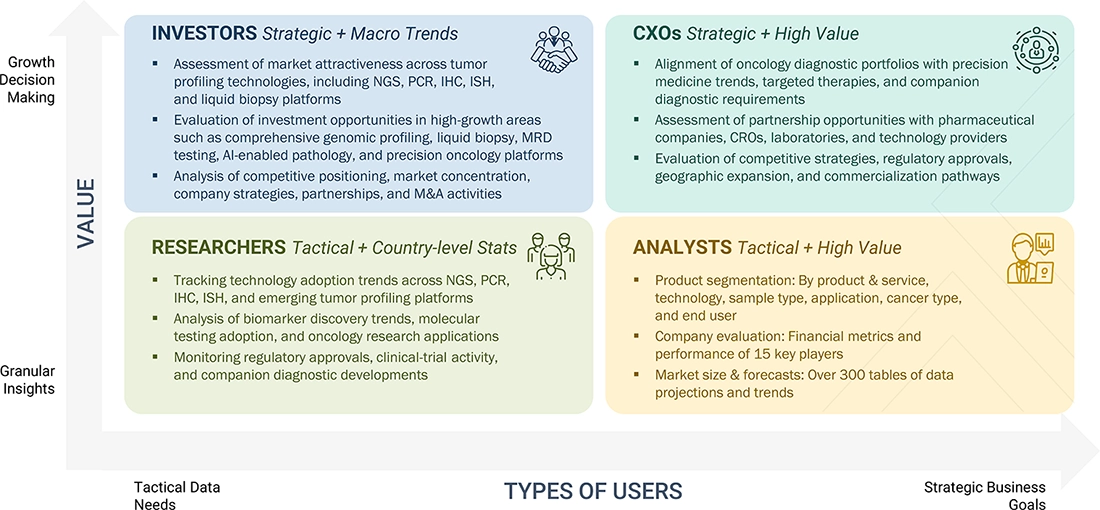
DELIVERED CUSTOMIZATIONS
We have successfully delivered the following deep-dive customizations:
| CLIENT REQUEST | CUSTOMIZATION DELIVERED | VALUE ADDS |
|---|---|---|
| Evaluate the competitive positioning of key players in the cancer tumor profiling market |
|
Identifies competitive gaps, partnership and acquisition opportunities, portfolio differentiation strategies, and potential right-to-win areas across clinical oncology and pharmaceutical drug-development workflows. |
| Assess high-growth technologies and segment opportunities in cancer tumor profiling |
|
Supports investment prioritization, product-development planning, technology-roadmap decisions, and resource allocation, particularly across NGS-based CGP, liquid biopsy, AI-enabled interpretation, and longitudinal cancer monitoring. |
RECENT DEVELOPMENTS
- June 2026 : Guardant Health, Inc. received FDA approval for Guardant360 CDx as a companion diagnostic for Boehringer Ingelheim’s HERNEXEOS. The liquid-biopsy test detects multiple genomic alterations across solid tumors and further expands Guardant’s role in biomarker-guided treatment selection across lung, breast, and colorectal cancers.
- May 2026 : Tempus AI, Inc. received FDA approval for a tumor-only indication for its xT CDx NGS platform. The expanded label enables Tempus to offer FDA-approved companion diagnostic comprehensive genomic profiling through both tumor-only and matched tumor-normal workflows, supporting broader migration of its solid-tumor testing portfolio to xT CDx.
- May 2026 : F. Hoffmann-La Roche AG entered into a definitive agreement to acquire PathAI. The transaction is intended to add PathAI’s AI-powered pathology and image-management capabilities to Roche’s diagnostics portfolio and build on the companies’ earlier work in AI-enabled companion diagnostic algorithm development.
Table of Contents
 Exclusive indicates content/data unique to MarketsandMarkets and not available with any competitors.
Methodology
This study involved four major activities in estimating the current size of the cancer tumor profiling market. Exhaustive secondary research was conducted to collect information on the market, its peer markets, and the broader precision-oncology ecosystem. The findings, assumptions, and market sizing estimates were then validated through primary research with participants across the value chain. Both top-down and bottom-up approaches were used to estimate the complete market. Following this, data triangulation was applied to finalize the market size and the values of individual segments and subsegments.
Secondary Research
Secondary research was used to identify and gather information for this extensive technical, market-oriented, and commercial study. Public-sector sources included the US Food and Drug Administration (FDA), National Institutes of Health (NIH), National Cancer Institute (NCI), National Center for Biotechnology Information (NCBI), Centers for Disease Control and Prevention (CDC), World Health Organization (WHO), International Agency for Research on Cancer (IARC), Global Cancer Observatory (GLOBOCAN), European Medicines Agency (EMA), European Commission, and relevant national health ministries and cancer registries.
Company and industry sources included annual reports, SEC and other regulatory filings, investor presentations, earnings releases, product catalogs, regulatory databases, company websites, scientific publications, clinical trial registries, peer-reviewed journals, and publications from pathology, genomics, oncology, and laboratory medicine associations. These sources were used to identify major participants, product and service portfolios, regulatory approvals, installed sequencing and pathology capabilities, test volumes, oncology revenue exposure, partnerships, clinical-trial activity, regional presence, technology adoption, and market developments.
Secondary data were analyzed to estimate the overall cancer tumor profiling market and to construct preliminary splits by product and service, technology, sample type, application, cancer type, end user, and region. The resulting estimates were subsequently validated and refined through primary research.
Primary Research
In-depth interviews were conducted with primary respondents, including executives of diagnostics and life-science companies, laboratory directors, molecular pathologists, oncologists, sequencing specialists, product managers, business-development leaders, clinical-trial professionals, and subject-matter experts. Interviews were conducted across both the supply and demand sides to validate market definitions, adoption levels, average selling prices, test volumes, technology mix, regional variation, end-user behavior, growth assumptions, and competitive positioning:
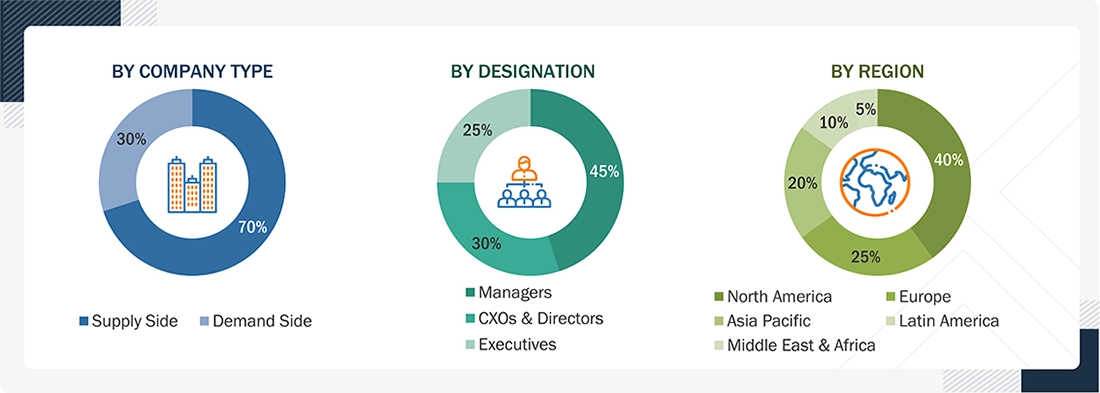
To know about the assumptions considered for the study, download the pdf brochure
Market Size Estimation
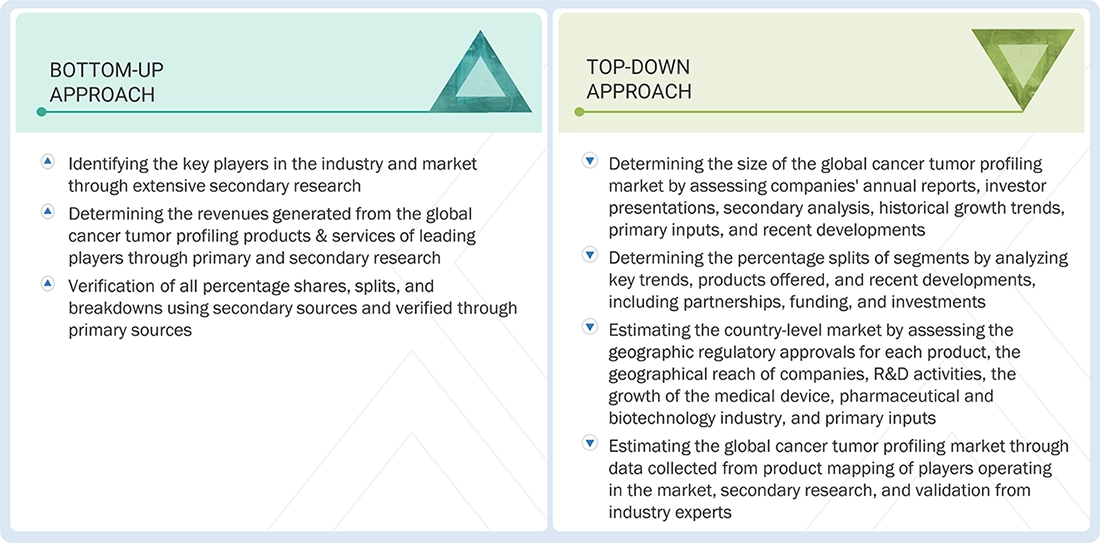
The global cancer tumor profiling market was estimated through multiple complementary approaches. A detailed market-engineering model was used to estimate and validate the overall market and each segment. The process combined company-level revenue analysis, product and service mapping, test-volume assessment, installed-base evaluation, average selling price analysis, end-user demand estimation, and regional adoption patterns. The research methodology used to estimate the market size includes the following:
Cancer Tumor Profiling Market : Top-Down and Bottom-Up Approach
Data Triangulation
After estimating the overall market through the market-size estimation process, the total market was split into the defined segments and subsegments. To complete the market-engineering process and arrive at the final statistics, data triangulation was employed. The process examined factors and trends from both the demand and supply sides and reconciled company revenues, test volumes, installed systems, consumable pull-through, service revenue, technology adoption, cancer incidence, biomarker-testing patterns, and regional market conditions.
The final estimates were checked for consistency across all dimensions. For example, the product and service totals were reconciled with technology, sample type, application, cancer type, end user, and regional totals. Company-share estimates were also compared with the independently derived global market size to ensure that no major revenue pools were omitted or double-counted.
Market Definition
Cancer tumor profiling refers to the analysis of molecular, genomic, proteomic, and histopathologic characteristics of tumor material to support cancer diagnosis and molecular characterization, prognostic or risk assessment, treatment selection, companion diagnostic use, treatment-response and resistance monitoring, residual disease assessment, post-treatment surveillance, recurrence detection, biomarker discovery, and oncology drug development.
The market includes instruments and systems; assays, kits, reagents, and consumables; clinical tumor profiling testing services; and biopharmaceutical, clinical-trial, and companion diagnostic services. It covers next-generation sequencing, PCR-based technologies, immunohistochemistry, in situ hybridization, and other tumor profiling technologies applied to tissue, whole blood and plasma, bone marrow, and other relevant samples across solid tumors and hematologic malignancies.
The market excludes unrelated general laboratory testing, non-oncology molecular diagnostics, routine pathology procedures that do not contribute to tumor characterization, and hereditary or germline testing performed outside a cancer tumor profiling workflow.
Key Stakeholders
- Manufacturers and distributors of cancer tumor profiling instruments and systems
- Assay, kit, reagent, antibody, probe, and consumable suppliers
- Next-generation sequencing, PCR, IHC, and ISH technology providers
- Clinical tumor profiling and liquid-biopsy testing laboratories
- Hospitals, dedicated cancer centers, and oncology clinics
- Independent and specialty reference laboratories
- Pharmaceutical and biotechnology companies
- Contract research organizations and central laboratories
- Companion diagnostic developers and service providers
- Research institutes and academic medical center laboratories
- Regulatory agencies, reimbursement bodies, and cancer registries
- Market research and consulting firms
- Private equity firms, venture capitalists, and other investors.
Report Objectives
- To define, describe, segment, and forecast the global cancer tumor profiling market by offering, technology, sample type, application, cancer type, end user, and region
- To provide detailed information regarding the major factors influencing market growth, including drivers, restraints, opportunities, and challenges
- To analyze micromarkets with respect to individual growth trends, prospects, and contributions to the overall cancer tumor profiling market
- To analyze market opportunities for stakeholders and provide details of the competitive landscape for key players
- To forecast the size of the market segments with respect to six regions: North America(US and Canada), Europe (Germany, France, the UK, Italy, Spain, and the Rest of Europe), Asia Pacific (China, Japan, India, South Korea, Australia, and the Rest of Asia Pacific), Latin America (Brazil, Mexico, Argentina, and the Rest of Latin America), the Middle East [GCC and the Rest of Middle East], and Africa
- To profile the key players and comprehensively analyze their product portfolios, market positions, and core competencies
- To track and analyze company developments such as product launches & approvals, partnerships, acquisitions, agreements, collaborations, expansions, and other developments
- To benchmark players within the market using the proprietary “Company Evaluation Matrix” framework, which analyzes market players on various parameters within the broad categories of business and product excellence strategy
Available customizations:
With the given market data, MarketsandMarkets offers customizations as per the company’s specific needs. The following customization options are available for the report:
Geographic Analysis
-
Further breakdown of the Rest of Europe cancer/tumor profiling market, by country
-
Further breakdown of the Rest of Asia Pacific cancer/tumor profiling market, by country
Company Information
-
Detailed analysis and profiling of additional market players (up to five)
-
Further breakup of additional Asia Pacific countries by offering, deployment mode, enterprise size, application, and vertical
-
Further breakup of additional Middle Eastern & African countries by offering, deployment mode, enterprise size, application, and vertical
Segment Analysis
- Cross-segment analysis


Personalize This Research
- Triangulate with your Own Data
- Get Data as per your Format and Definition
- Gain a Deeper Dive on a Specific Application, Geography, Customer or Competitor
- Any level of Personalization
Let Us Help You
- What are the Known and Unknown Adjacencies Impacting the Cancer Tumor Profiling Market
- What will your New Revenue Sources be?
- Who will be your Top Customer; what will make them switch?
- Defend your Market Share or Win Competitors
- Get a Scorecard for Target Partners

Custom Market Research Services
We Will Customise The Research For You, In Case The Report Listed Above Does Not Meet With Your Requirements
Get 10% Free CustomisationTESTIMONIALS

JAYANT RAJPUROHIT
Director of Market Insights, Data and Analytics
SFI Health,
Leading Pharmaceutical Companywww.sfihealth.com/
We at SFI Health approached MarketsandMarkets for an Opportunity Assessment on "Incidence and Prevalence of Focus Indications" as we wanted to know the most attractive HCPs like Physician, Functional MD, Naturopath and Pharmacist. The project was critical for us to ensure our focus on the right target which would enable sustainable growth and profitability for SFI Health. The business insights provided exceeded our expectations and we were extremely impressed. The team at MarketsandMarkets is highly professional and detail oriented and very well understood our business needs. MarketsandMarkets offers a unique combination of expertise and dedicated engagement model. We identified 2 new products to be launched in coming months, based on the research findings provided by MarketsandMarkets. We are happy with the services and would strongly recommend MarketsandMarkets to my peers in the industry.

BEATRIZ DE LA CALLE
Head of Commercial Analytics
Qualicaps,
Leading Pharmaceutical Companywww.qualicaps.com/

We partnered with MarketsandMarkets for an assessment study on hard empty capsules. The team was extremely professional in understanding our business requirements and we received timely responses to all our queries. The market intelligence and the recommendations has met our business requirements. We were extremely impressed to see the final study results; it really exceeded our expectations. The market intelligence offered by MarketsandMarkets, and clarity on next steps will help us achieve our business objective for the Year 2021. We are happy with the services and would strongly recommend MarketsandMarkets to my peers in the industry.

Bob Williams,
Senior Director Business Development & Innovation
Bracco Diagnostics Inc.,
Italian Multinational in life sciences sector and a World Leader in imaging diagnosticsimaging.bracco.com/us-en
We were pleased with targeted insights that MarketsandMarkets identified from a custom study on the 'Radiation Dose Management Solutions Market'. Your team identified and characterized the market participants as well as underlying trends accurately. This study was useful to Bracco in formulating business strategies for our dose monitoring product lines and we thank MarketsandMarkets for the job well done.
Cody Coonradt,
Market Development and Strategy Manager
3M Health Information Systems,
Leader in Health care Coding, Payment & Analytics Solutions.www.3m.com/3M/en_US/health-information-systems-us
The value for our organization comes from three things: depth of research, specificity of segments and being easy to work with. As important as the first two are, the third can't be underestimated. MarketsandMarkets, maybe more than any other research vendor, wants to know what is top of mind for our team and what big questions we are grappling to answer.
Their customer first approach and high value engagement model, have given us great analysis and excellent value for money
- Canada Cancer/Tumor Profiling Market
- US Cancer/Tumor Profiling Market
- France Cancer/Tumor Profiling Market
- Germany Cancer/Tumor Profiling Market
- Italy Cancer/Tumor Profiling Market
- Spain Cancer/Tumor Profiling Market
- UK Cancer/Tumor Profiling Market
- China Cancer/Tumor Profiling Market
- India Cancer/Tumor Profiling Market
- Japan Cancer/Tumor Profiling Market
- Rest Of Europe Cancer/Tumor Profiling Market
- Roapac Cancer/Tumor Profiling Market






Growth opportunities and latent adjacency in Cancer Tumor Profiling Market