
Rest Of Asia Pacific Antimicrobial Susceptibility Testing Market (2024-2029)

The Rest Of Asia Pacific Antimicrobial Susceptibility Testing Market was valued at $94.1 Million in 2024 and projected to reach to $118 Million by 2029, representing a compound annual growth rate of 4.6%. The Rest Of Asia Pacific antimicrobial susceptibility testing market is positioned for sustained expansion as healthcare systems prioritize infectious disease diagnostics.


| Market Size in | USD 26.32 MN |
| Market Forecast in | |
| CAGR | |
| Forecast Period | |
| Units Considered | Value (USD MN) |
Rest Of Asia Pacific Antimicrobial Susceptibility Testing Market Trends and Insights
- Rest Of Asia Pacific represents a critical region for diagnostic advancement, driven by increasing antibiotic resistance concerns and rising healthcare infrastructure investments across emerging economies.
- The region's market growth reflects growing adoption of automated testing platforms and heightened awareness of infection control protocols in Rest Of Asia Pacific healthcare systems. Rest Of Asia Pacific's antimicrobial susceptibility testing sector is characterized by expanding laboratory capabilities and regulatory improvements that support market penetration.
- Between 2024 and 2029, Rest Of Asia Pacific is expected to witness accelerated demand from both public and private healthcare institutions seeking rapid and accurate pathogen identification.
- The 4.6% compound annual growth rate underscores Rest Of Asia Pacific's position as a developing market with significant untapped potential, supported by rising patient populations and increasing prevalence of multidrug-resistant infections across the region..
Key Market Statistics
- CAGR (2024-2029) 4.6% CAGR
- Market Size, 2024 ~USD 94.1 Million
- Forecast, 2029 ~USD 118 Million
- Country Rest Of Asia Pacific
Rest Of Asia Pacific Antimicrobial Susceptibility Testing Market Overview
Market Valuation & Growth :
Rest Of Asia Pacific antimicrobial susceptibility testing market valued at $94.1 million in 2024, with projected growth to $118.0 million by 2029, representing a steady 4.6% CAGR.
Antibiotic Resistance Crisis :
Rising antimicrobial resistance across emerging economies in Rest Of Asia Pacific is driving urgent demand for accurate susceptibility testing to guide appropriate antibiotic therapy and infection control strategies.
Healthcare Infrastructure Expansion :
Significant investments in diagnostic infrastructure and laboratory capabilities across Rest Of Asia Pacific countries are enabling wider adoption of advanced susceptibility testing technologies and methodologies.
Regional Market Dynamics :
Rest Of Asia Pacific demonstrates unique growth patterns distinct from developed markets, with emerging economies prioritizing cost-effective testing solutions and capacity building in clinical microbiology.
Rest Of Asia Pacific Antimicrobial Susceptibility Testing Market Dynamics
- Emerging economies in the region are increasingly recognizing the critical need for rapid and accurate susceptibility testing to combat rising antibiotic resistance rates.
- Government initiatives and international health organizations are supporting laboratory modernization and standardization of testing protocols across the region. Key growth drivers include expanding hospital networks, rising awareness of antimicrobial stewardship programs, and improving access to diagnostic technologies in previously underserved areas.
- The market will benefit from partnerships between regional laboratories and global diagnostic manufacturers, alongside capacity-building programs.
- By 2029, Rest Of Asia Pacific is expected to establish itself as a significant contributor to global antimicrobial susceptibility testing adoption, with increasing emphasis on point-of-care testing and automated solutions tailored to regional healthcare needs..
Market Ecosystem
Related Ecosystem
Healthcare It
- Computed Tomography (CT)
- Machine Learning
- Magnetic Resonance Imaging (MRI)
- Natural Language Processing (NLP)
- Predictive Analytics
- CERNER CORPORATION
- PHILIPS HEALTHCARE
- Oracle Corporation
- GE HealthCare Technologies Inc.
- Siemens healthineers
Medical Devices
- Polymerase Chain Reaction (PCR)
- Magnetic Resonance Imaging (MRI)
- Disposable Autoinjectors
- Pulse Oximeters
- Blood Pressure Monitors
- Medtronic plc
- Abbott Laboratories
- Stryker Corporation
- Becton, Dickinson and Company
- CONMED Corporation
Key Takeaways
- Rest Of Asia Pacific's antimicrobial susceptibility testing market is valued at $94.1 million in 2024 and will grow to $118.0 million by 2029, representing a 4.6% CAGR.
- Rest Of Asia Pacific is experiencing increased adoption of automated and rapid testing methodologies driven by rising antibiotic resistance awareness.
- Healthcare infrastructure expansion and regulatory improvements in Rest Of Asia Pacific are accelerating market penetration across public and private laboratories.
- Rest Of Asia Pacific's growing patient populations and prevalence of multidrug-resistant infections present significant untapped growth opportunities through 2029.
Antimicrobial Susceptibility Testing Market Report Scope
| Report Metric | Details |
|---|---|
| Base Year | 2024 |
| Fastest Growing Segment | LAB INSTRUMENTS (Product) |
| Forecast Period | 2024-2029 |
| Growth Rate | CAGR of 5% from 2024 to 2029 |
| Largest Segment | QUALITATIVE METHODS (Method) |
| Market Size Base Year (Billions) | ~USD 4.45 (2024) |
| Revenue Forecast (Billions) | ~USD 5.68 (2029) |
| Segments Covered | Product, Type, Method, Application, End User |
Rest Of Asia Pacific Antimicrobial Susceptibility Testing Market Report Segmentation
5 segment dimensions are covered across the global market.
By Product
- Consumables
- Lab Disposables
- Lab Instruments
By Type
- Agar Dilution
- Antibacterial Susceptibility Testing
- Antifungal Susceptibility Testing
- Antiparasitic Susceptibility Testing
- Antiviral Susceptibility Testing
- Automated Ast
- Automated Laboratory Instruments
- Broth Macrodilution
- Culture & Growth Media
- Culture And Growth Media
- Disk Diffusion
- Etest Method
- Genotypic Method
- Mic Strips
- Molecular Diagnostics Systems
- Susceptibility Plates
- Susceptibility Testing Disks
By Method
- Qualitative Methods
- Quantitative Methods
By Application
- Clinical Diagnostics
- Drug Discovery & Development
- Epidemiology
- Other Applications
By End User
- Academic & Research Institutes
- Cros
- Hospitals & Diagnostic Centers
- Pharmaceutical & Biotechnology Companies
Target Audience
- Diagnostic Equipment Manufacturers : Need regional market data to develop localized product strategies, identify distribution partnerships, and prioritize market entry across emerging economies in Rest Of Asia Pacific.
- Clinical Laboratory Operators : Require insights on market growth, technology adoption trends, and competitive positioning to optimize testing capabilities and service offerings in Rest Of Asia Pacific healthcare systems.
- Healthcare Investment Firms : Seek detailed market analysis to evaluate investment opportunities in diagnostic infrastructure, laboratory networks, and healthcare technology companies operating in Rest Of Asia Pacific.
- Government & Health Policy Makers : Need market intelligence to inform antimicrobial stewardship programs, diagnostic infrastructure planning, and healthcare policy development across Rest Of Asia Pacific regions.
- Pharmaceutical & Biotech Companies : Require regional susceptibility testing data to guide antibiotic development strategies, clinical trial planning, and market access initiatives specific to Rest Of Asia Pacific.
Reasons to Buy this Report
- Regional Market Segmentation : Gain detailed insights specific to Rest Of Asia Pacific's unique market dynamics, distinct from global trends and developed market patterns, enabling targeted business strategy development.
- Growth Opportunity Identification : Identify high-potential segments and emerging economies within Rest Of Asia Pacific experiencing accelerated adoption of antimicrobial susceptibility testing technologies and infrastructure investments.
- Competitive Landscape Analysis : Understand regional competitive positioning, local player strategies, and market entry opportunities specific to Rest Of Asia Pacific's healthcare diagnostic sector.
- Healthcare Infrastructure Insights : Access data on laboratory capacity, diagnostic adoption rates, and healthcare investment trends across Rest Of Asia Pacific to inform market expansion and partnership decisions.
- Regulatory & Reimbursement Context : Understand region-specific regulatory frameworks, reimbursement models, and healthcare policies affecting antimicrobial susceptibility testing adoption across Rest Of Asia Pacific markets.
Frequently asked questions
What is the current market size of antimicrobial susceptibility testing in Rest Of Asia Pacific?
Rest Of Asia Pacific's antimicrobial susceptibility testing market was valued at $94.1 million in 2024.
What is the projected market size for Rest Of Asia Pacific by 2029?
Rest Of Asia Pacific's antimicrobial susceptibility testing market is forecast to reach $118.0 million by 2029.
What is the CAGR for antimicrobial susceptibility testing in Rest Of Asia Pacific?
Rest Of Asia Pacific's antimicrobial susceptibility testing market is expected to grow at a compound annual growth rate of 4.6% from 2024 to 2029.
What factors are driving growth in Rest Of Asia Pacific's antimicrobial susceptibility testing market?
Rest Of Asia Pacific's market growth is driven by increasing antibiotic resistance awareness, expanding healthcare infrastructure, regulatory improvements, and rising prevalence of multidrug-resistant infections.
Which testing methodologies are gaining adoption in Rest Of Asia Pacific?
Rest Of Asia Pacific is experiencing increased adoption of automated and rapid antimicrobial susceptibility testing platforms that enable faster and more accurate pathogen identification.
RESEARCH METHODOLOGY
In that respect, the research has heavily employed both primary and secondary sources in order to comprehensively study the forces influential in the industry. This methodology comprised market segmentation analysis, industry trends, major players, competitive landscape, key market dynamics, and strategies of key companies.
Secondary Research
The secondary research involves D&B Hoovers, Bloomberg Businessweek, Factiva, white papers, annual reports, company filings, investor presentations, and SEC filings for conducting secondary research in developing a database on major industry participants. Key data with regard to leading players, market segmentation, at a various level, industry trends by segments, significant mergers and acquisitions, and the impact of trends and technological perspectives related to the antimicrobial susceptibility testing market.
Primary Research
Primary research in the report included interviewing a cross-section, both from the demand and supply sides, to capture information qualitatively and quantitatively. Supply side: High-level executives' interviews, such as CEOs, VPs, marketing and sales directors, regional sales managers, and technology and innovation directors were contacted from leading companies and organizations in product therapy markets. On the demand side, research was carried out by discussing with professionals like clinicians, procurement managers, purchase managers, department heads, and experts from hospitals, diagnostic centers, pharmaceutical and biotechnological firms, and research and academic institutes. This was necessary to gain a proper view of the market segmentation, significant players in the market, and key trends and dynamics related to the growth of the market.
A breakdown of the primary respondents is provided below:
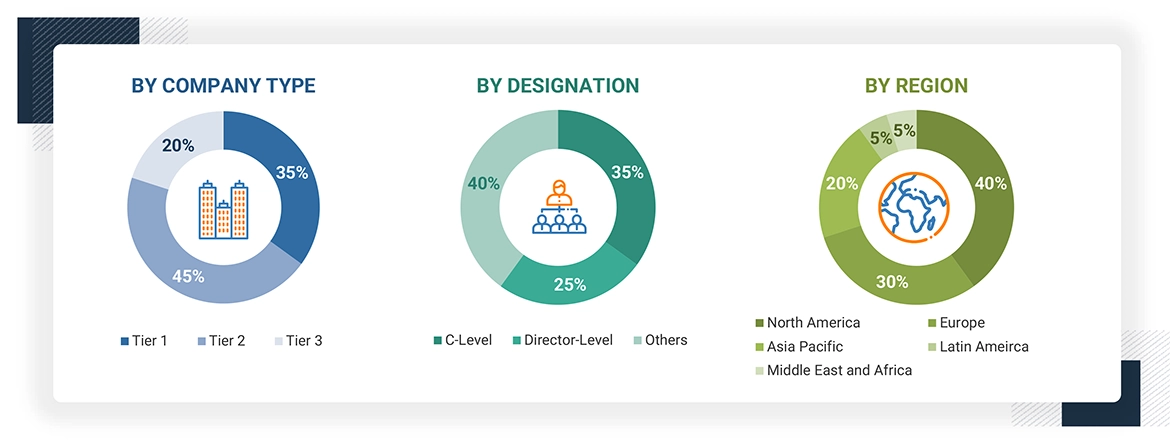
*Others include sales managers, marketing managers, business development managers, product managers, distributors, and suppliers.
Note: Companies are classified into tiers based on their total revenue. As of 2023, Tier 1 = >USD 1 billion, Tier 2 = < USD 500 million, and Tier 3 = < USD 100 million.
To know about the assumptions considered for the study, download the pdf brochure
Market Size Estimation
This research examines the Antimicrobial Susceptibility testing market and revenue share among the market leaders. It made use of a combination of primary and secondary research methods to do so. Primary research involved in-depth interviews with CEOs, directors, and senior marketing executives. Secondary research formed annual and financial reports by major industry players. The market value was determined while following a segment-based strategy, and it used revenue details of leading solution providers for differentiating between sources and services.
Covered segments:
Identify the major companies involved in the world Antimicrobial Susceptibility testing market and document their annual revenues or revenues from their particular product category/business division.
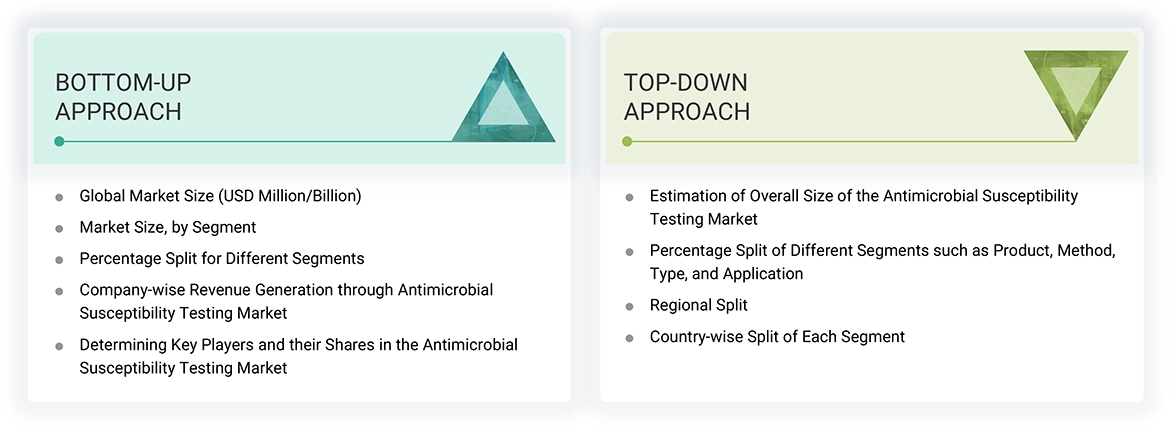
The revenue mapping of these leading competitors, based on 2024 data, captures a good share of the market and is thus extrapolated to estimate the total global value of the Antimicrobial Susceptibility testing market:
Data Triangulation
Based on the methodology, categorical and sub-categories segmentation of the global antimicrobial susceptibility testing market was performed. Further, data triangulation and the segmentation process were undertaken to arrive at an accurate data of different segments for the market. Various analyses involved factors and trends of the demand and supply sides. The integration of detailed top-down and bottom-up approaches offered a holistic overview of the antimicrobial susceptibility testing market
Market Definition
The Antimicrobial Susceptibility Testing market involves the diagnosis and determination of effectiveness against pathogens such as bacteria, fungi, and viruses using antimicrobial agents. It consists of several technologies and methodologies employed for the diagnosis of the susceptibility of microorganisms to a variety of antimicrobial agents through automated systems, molecular diagnostics, and traditional culture-based methods. The main aim of AST is to be able to choose appropriate therapy, enhance patient outcomes, and take against the threat of emerging antimicrobial resistance. The market includes products and services used by clinical laboratories, hospitals, research institutions, and other healthcare facilities.
Stakeholders
- Healthcare institutions (hospitals and clinics)
- Healthcare institutions (hospitals and diagnostic centers)
- Research institutions
- Clinical research organizations
- Academic medical centers and universities
- Reference laboratories
- Accountable Care Organizations (ACOs)
- Research and consulting firms
- Contract research organizations (CROs) and contract manufacturing organizations (CMOs)
- Academic medical centers and universities
- Market research and consulting firms
- Group Purchasing Organizations (GPOs)
- Medical Research Laboratories
- Academic Medical Centers and Universities
Report Objectives
- Define, describe, and project the antimicrobial susceptibility testing (AST) market across various dimensions, including product, type, methods, applications, end users, and regional areas.
- Explore opportunities for stakeholders and provide a detailed analysis of the competitive landscape, highlighting the key players in the market.
- Offer comprehensive insights into the principal factors influencing market growth.
- Analyze micro markets by evaluating individual growth trends, potential, and their contributions to the overall market.
- Monitor and review competitive developments such as new product launches, approvals, agreements, partnerships, expansions, acquisitions, and collaborations in the AST sector.
Get the Full Antimicrobial Susceptibility Testing Market Report
Full forecast, segment splits, and company analysis for all Antimicrobial Susceptibility Testing Market.
- Canada Antimicrobial Susceptibility Testing Market
- US Antimicrobial Susceptibility Testing Market
- Germany Antimicrobial Susceptibility Testing Market
- France Antimicrobial Susceptibility Testing Market
- UK Antimicrobial Susceptibility Testing Market
- Italy Antimicrobial Susceptibility Testing Market
- Spain Antimicrobial Susceptibility Testing Market
- Japan Antimicrobial Susceptibility Testing Market
- China Antimicrobial Susceptibility Testing Market
- India Antimicrobial Susceptibility Testing Market
- Australia Antimicrobial Susceptibility Testing Market
- South Korea Antimicrobial Susceptibility Testing Market
- Brazil Antimicrobial Susceptibility Testing Market
- Mexico Antimicrobial Susceptibility Testing Market
- Rest Of Europe Antimicrobial Susceptibility Testing Market
- Rest Of Latin America Antimicrobial Susceptibility Testing Market
Need a Tailored Report?
Customize this report to your needs
Get 10% FREE Customization
Customize This Report
