
South Africa Dry Type Transformer Market (2025-2030)

The South Africa Dry Type Transformer Market was valued at $125.2 Million in 2025 and projected to reach to $161.4 Million by 2030, representing a compound annual growth rate of 5.2%. South Africa's dry type transformer market is positioned for sustained growth as the nation addresses critical infrastructure challenges and energy security concerns.


| Market Size in | USD 26.32 MN |
| Market Forecast in | |
| CAGR | |
| Forecast Period | |
| Units Considered | Value (USD MN) |
South Africa Dry Type Transformer Market Trends and Insights
- This growth trajectory reflects South Africa's increasing demand for reliable power distribution infrastructure and the shift toward energy-efficient transformer solutions across industrial, commercial, and utility sectors.
- South Africa's investment in renewable energy integration and grid modernization initiatives is driving adoption of dry type transformers, which offer superior safety, environmental benefits, and reduced maintenance requirements compared to oil-immersed alternatives. The South African market is characterized by rising electrification needs, particularly in emerging urban and industrial zones, coupled with stringent environmental regulations that favor dry type technology.
- South Africa's focus on reducing carbon emissions and enhancing power system resilience supports sustained market expansion through 2030.
- Key end-use sectors in South Africa include manufacturing, mining, renewable energy facilities, and municipal utilities, all of which are increasingly specifying dry type transformers for their operational and sustainability advantages..
Key Market Statistics
- CAGR (2025-2030) 5.2% CAGR
- Market Size, 2025 ~USD 125.2 Million
- Forecast, 2030 ~USD 161.4 Million
- Country South Africa
South Africa Dry Type Transformer Market Overview
Market Valuation :
South Africa's dry type transformer market is valued at USD 125.2 million in 2025, with steady growth driven by infrastructure modernization and industrial expansion across the country.
Growth Trajectory :
The market is projected to reach USD 161.4 million by 2030, representing a CAGR of 5.2%, outpacing many emerging markets due to South Africa's focus on grid reliability and energy efficiency.
Industrial Demand :
South Africa's mining, manufacturing, and renewable energy sectors are primary drivers of dry type transformer adoption, requiring robust power distribution solutions for operational continuity.
Energy Transition :
The shift toward renewable energy integration and load-shedding mitigation strategies is accelerating demand for efficient, maintenance-free dry type transformers in South African utilities and industrial facilities.
South Africa Dry Type Transformer Market Dynamics
- Industrial sectors, particularly mining and manufacturing, continue to invest in reliable power distribution systems to minimize downtime and operational costs.
- The growing adoption of renewable energy sources, coupled with government initiatives to modernize the electrical grid, creates significant opportunities for dry type transformer deployment across utility and commercial segments. Looking ahead to 2030, South Africa's market will benefit from increased capital expenditure in power infrastructure, rising electricity demand from emerging industries, and the transition toward more efficient transformer technologies.
- The country's focus on reducing energy losses and improving grid stability will further accelerate market penetration, particularly in industrial zones and commercial hubs across major metropolitan areas..
Market Ecosystem
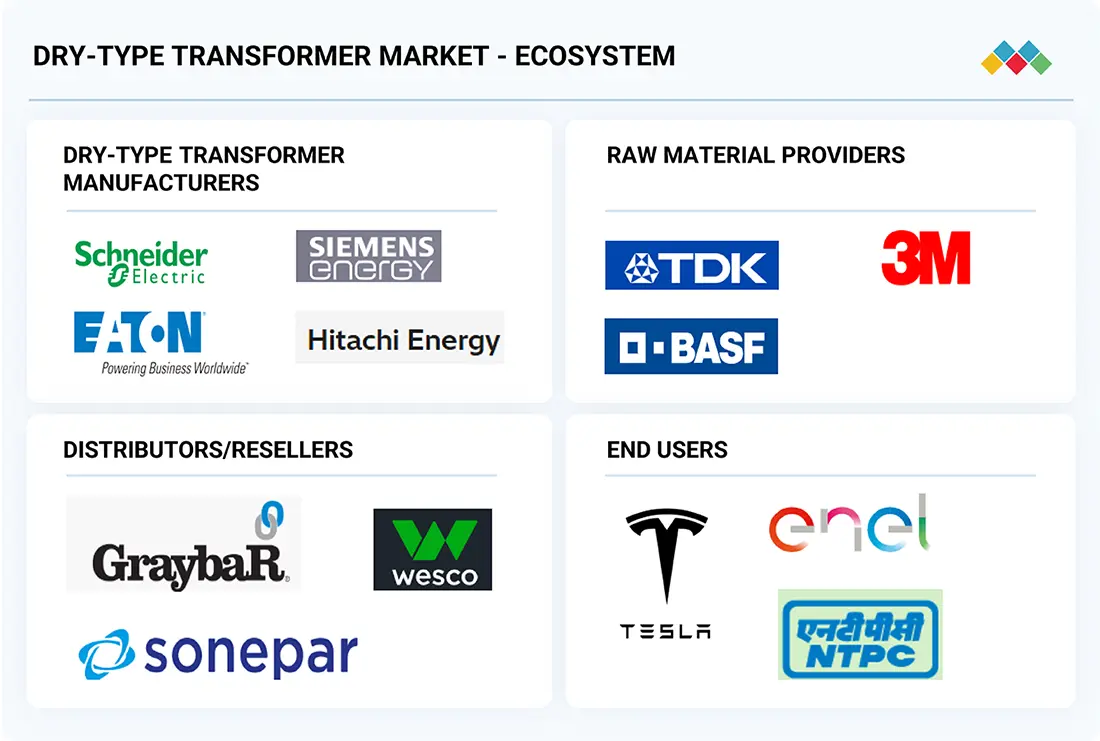
Dry Type Transformer Market: COMMERCIAL USE CASES ACROSS INDUSTRIES
| COMPANY | USE CASE DESCRIPTION | BENEFITS |
|---|---|---|
 |
Addressing failure analysis of distribution transformers at Ughelli Business Unit; solution targeted overloads and improper copper wiring | Improved transformer reliability, technical guidelines for wire dimensioning, safer electrical distribution without dependency on HRC fuses |
 |
Wind Power Projects (Iran Grid Operators) | Tackling grid integration for wind power in the Abhar and Kahak regions through policy-oriented collaboration and stakeholder engagement |
 |
Long Island Power Authority (LIPA), New York | Expansion of smart energy corridor with enhanced cybersecurity; advanced metering and control systems supplemented by dry type transformers |
Logos and trademarks shown above are the property of their respective owners. Their use here is for informational and illustrative purposes only.
Related Ecosystem
High Voltage Products And Systems
- Analytics Software
- Connected Healthcare
- Connected Logistics
- Geographical Information System (GIS)
- Network Bandwidth Management
- ABB India Limited
- Siemens ag
- SCHNEIDER ELECTRIC SE
- Eaton Corporation plc
- Fuji Electric Co., Ltd.
Power Infrastructure
- Geographical Information System (GIS)
- Cogeneration
- Battery Electric Vehicle (BEV)
- Cellular Network
- Fuel Cell
- Siemens ag
- ABB India Limited
- SCHNEIDER ELECTRIC SE
- General Electric Company
- Eaton Corporation plc
Key Takeaways
- South Africa's dry type transformer market is valued at USD 125.2 million in 2025 and will reach USD 161.4 million by 2030.
- South Africa is experiencing a 5.2% CAGR, driven by renewable energy integration and grid modernization initiatives.
- South Africa's environmental regulations and sustainability focus are accelerating adoption of dry type transformers over oil-immersed alternatives.
- South Africa's key growth sectors include mining, manufacturing, renewable energy, and municipal utilities requiring reliable power distribution.
Dry Type Transformer Market Report Scope
| Report Metric | Details |
|---|---|
| Base Year | 2025 |
| Fastest Growing Segment | SINGLE PHASE (Phase) |
| Forecast Period | 2025-2030 |
| Growth Rate | CAGR of 6.9% from 2025 to 2030 |
| Largest Segment | THREE PHASE (Phase) |
| Market Size Base Year (Billions) | ~USD 11.7 (2025) |
| Revenue Forecast (Billions) | ~USD 16.33 (2030) |
| Segments Covered | Technology, Voltage, Phase, Application |
South Africa Dry Type Transformer Market Report Segmentation
4 segment dimensions are covered across the global market.
By Technology
- Cast Resin
- Vacuum Pressure Impregnated
By Voltage
- High Voltage
- Low Voltage
- Medium Voltage
By Phase
- Single Phase
- Three Phase
By Application
- Commercial
- Industrial
- Utilities
Target Audience
- Transformer Manufacturers : Manufacturers need South Africa market data to assess market entry feasibility, competitive positioning, and production capacity requirements for the region's growing industrial and utility segments.
- Utility Companies & Grid Operators : South African utilities require market intelligence to plan infrastructure investments, evaluate technology adoption rates, and benchmark performance against regional peers in power distribution modernization.
- Industrial & Mining Operators : Mining and manufacturing facilities need market insights to understand transformer technology trends, cost-benefit analyses, and supply chain availability for operational reliability and efficiency improvements.
- Investment & Private Equity Firms : Investors targeting South Africa's energy sector need comprehensive market data to evaluate investment opportunities, growth potential, and risk factors in the dry type transformer supply chain.
- Renewable Energy Developers : Solar and wind energy project developers require market forecasts to plan transformer procurement strategies, understand grid integration requirements, and optimize project economics in South Africa.
Reasons to Buy this Report
- Market-Specific Sizing : Access precise valuation data for South Africa's dry type transformer market with verified 2025 baseline (USD 125.2M) and 2030 forecasts, enabling accurate budget allocation and investment planning.
- Regional Growth Insights : Understand South Africa's unique 5.2% CAGR trajectory and identify sector-specific growth drivers including mining, manufacturing, and renewable energy integration opportunities.
- Competitive Landscape Analysis : Gain intelligence on South African market dynamics, key players, and competitive positioning to develop targeted go-to-market strategies and partnership opportunities.
- Infrastructure Investment Trends : Identify capital expenditure patterns in South African utilities and industrial sectors to anticipate demand cycles and optimize sales and distribution strategies.
- Risk & Opportunity Assessment : Evaluate South Africa-specific market risks including load-shedding impacts, regulatory changes, and currency fluctuations alongside emerging opportunities in grid modernization and energy transition.
Frequently asked questions
What is the current market size of dry type transformers in South Africa?
South Africa's dry type transformer market is valued at USD 125.2 million in 2025 and is expected to grow to USD 161.4 million by 2030.
What is the projected growth rate for South Africa's dry type transformer market?
South Africa's dry type transformer market is projected to grow at a CAGR of 5.2% from 2025 to 2030.
Which industries are driving demand for dry type transformers in South Africa?
South Africa's primary demand drivers include mining operations, manufacturing facilities, renewable energy projects, and municipal utility providers seeking reliable and environmentally compliant power distribution solutions.
Why are dry type transformers preferred in South Africa?
South Africa favors dry type transformers due to their superior safety profile, environmental compliance, reduced maintenance requirements, and suitability for renewable energy integration and grid modernization projects.
What factors are supporting market growth in South Africa through 2030?
South Africa's market growth is supported by renewable energy expansion, grid modernization investments, stringent environmental regulations, rising electrification demands, and the country's commitment to reducing carbon emissions.
RESEARCH METHODOLOGY
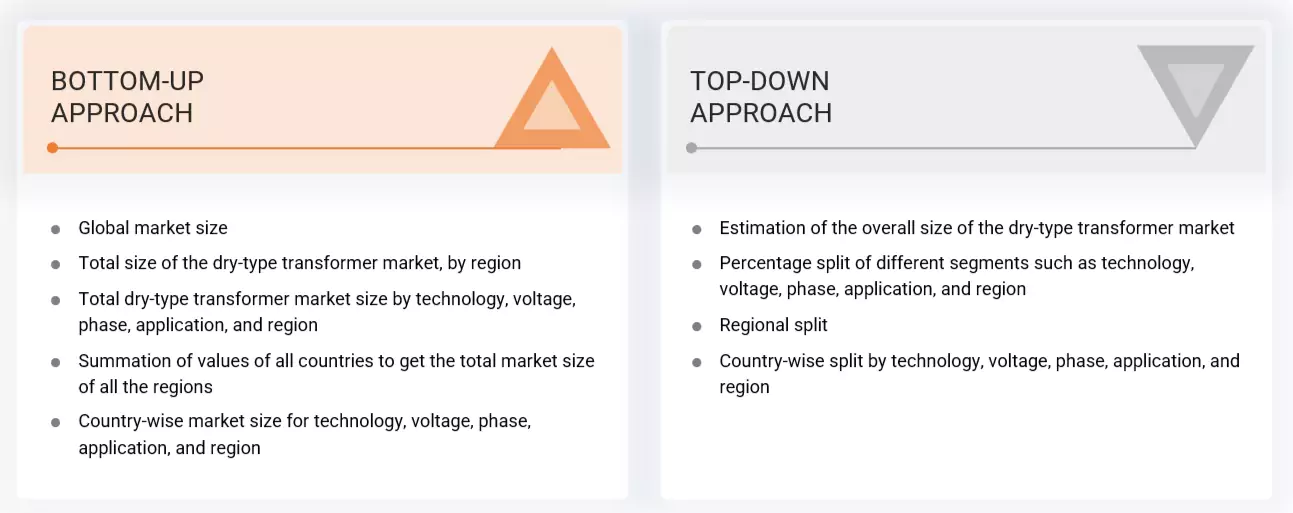
The study involved major activities in estimating the current size of the dry-type transformer market. Exhaustive secondary research was done to collect information on the peer markets. The next step was to validate these findings, assumptions, and sizing with industry experts across the value chain through primary research. Both top-down and bottom-up approaches were employed to estimate the total market size. Thereafter, market breakdown and data triangulation were used to estimate the market size of the segments and subsegments.
Secondary Research
Secondary sources referred to for this research study include annual reports, press releases, and investor presentations of companies; white papers; certified publications; articles by recognized authors; and databases of various companies and associations. Secondary research was mainly used to obtain key information about the industry’s supply chain, the total pool of key players, market classification, and segmentation according to industry trends to the bottom-most level, regional markets, and key developments from both market- and technology-oriented perspectives.
Primary Research
The primary research for this report involved interviews with sources from both the supply and demand sides to gather qualitative and quantitative insights. Supply-side sources included industry experts such as CEOs, VPs, and marketing directors from companies in the dry-type transformer market.
In the complete market engineering process, the top-down and bottom-up approaches, along with several data triangulation methods, were extensively used to perform the market size estimations and forecasts for all segments and subsegments listed in this report. Extensive qualitative and quantitative analyses were conducted to complete the market engineering process and list key information/insights throughout the report. The following is the breakdown of primary respondents:
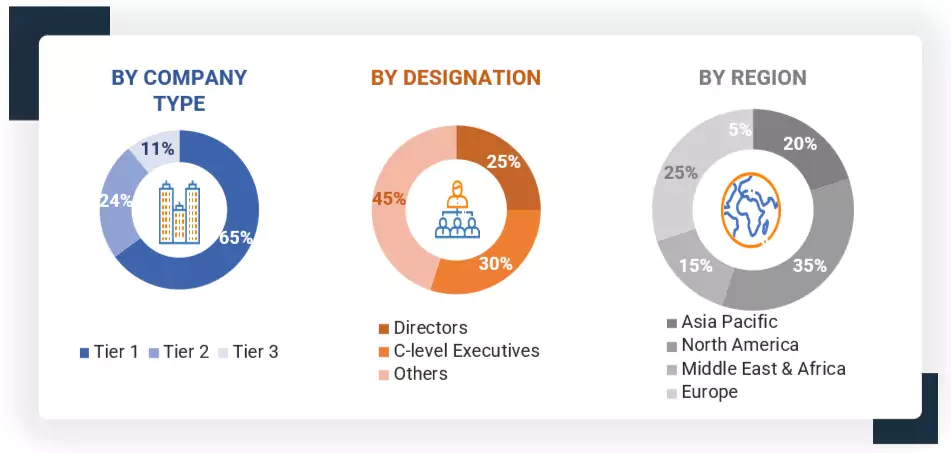
Note: Other designations include sales managers, engineers, and regional managers.
The tier of the companies is defined based on their total revenue; as of 2024: Tier
1 = >USD 1 billion, Tier 2 = From USD 500 million to USD 1 billion, and Tier 3 =
To know about the assumptions considered for the study, download the pdf brochure
Market Size Estimation
Both top-down and bottom-up approaches were used to estimate and validate the size of the dry-type transformer market. These methods were also used extensively to estimate the size of various subsegments in the market.
Dry Type Transformer Market : Top-Down and Bottom-Up Approach
Data Triangulation
After arriving at the overall market size from the estimation process explained below, the total market was split into several segments and subsegments. The data triangulation and market breakdown procedures were employed, wherever applicable, to complete the overall market engineering process and arrive at the exact statistics for all segments and subsegments. The data was triangulated by studying various factors and trends from both the demand and supply sides. The market size was validated using the top-down and bottom-up approaches.
Market Definition
A dry-type transformer is an electrical device that transfers power between two or more circuits without using liquid for cooling or insulation. Unlike oil-immersed transformers, dry-type transformers rely on air or other solid insulation materials, such as epoxy resin or varnish, to cool and insulate the windings. These transformers are typically self-extinguishing, non-flammable, and environmentally safe, making them well-suited for indoor installations or locations with fire risk, environmental restrictions, or ventilation limitations. Their design ensures safety, reliability, and minimal maintenance, which has led to widespread use in commercial buildings, hospitals, metro and railway systems, data centers, industrial facilities, and renewable energy infrastructure. Key technologies within this market include cast resin transformers (CRT) and vacuum pressure-impregnated (VPI) transformers. These are engineered to meet the demands of modern electrical systems, which are increasingly moving toward decentralized, automated, and digitalized grid environments. As global energy consumption grows and infrastructure becomes more urbanized and electrified, the dry-type transformer market is witnessing strong demand due to its alignment with sustainability goals, safety standards, and operational efficiency requirements.
Stakeholders
- Energy regulators
- Consulting companies in the energy & power industry
- Distributors of dry-type transformers
- Governments and research organizations
- Power equipment and garden tool manufacturers
- Dry-type transformer manufacturers
- Spare parts and component suppliers
Report Objectives
- To describe and forecast the dry-type transformer market, in terms of value, based on technology, voltage, phase, application, and region, in terms of value
- To forecast the dry-type transformer market, by region, in terms of volume
- To provide detailed information about the key factors, such as drivers, restraints, opportunities, and challenges influencing the growth of the dry-type transformer market
- To strategically analyze the subsegments with respect to individual growth trends, prospects, and contributions of each segment to the overall market size
- To forecast the market size for five key regions: North America, South America, Europe, Asia Pacific, and the Middle East & Africa, along with their key countries
- To strategically analyze micromarkets with respect to individual growth trends, prospects, and contributions to the total market
- To study the complete value chain and allied industry segments, and perform a value chain analysis of the dry-type transformer market
- To analyze the opportunities for various stakeholders by identifying the high-growth segments of the dry-type transformer market
- To profile the key players and comprehensively analyze their market positions in terms of ranking and core competencies, along with detailing the competitive landscape for the market leaders
- To analyze competitive developments, such as contracts, agreements, expansions, product launches, investments, and acquisitions, in the dry-type transformer market
Available Customizations
With the given market data, MarketsandMarkets offers customizations according to the specific requirements of companies. The following customization options are available for the report:
Product Analysis
- Product Matrix, which provides a detailed comparison of the product portfolio of each company
Company Information
- Detailed analyses and profiling of additional market players
Get the Full Dry Type Transformer Market Report
Full forecast, segment splits, and company analysis for all Dry Type Transformer Market.
- China Dry Type Transformer Market
- Japan Dry Type Transformer Market
- India Dry Type Transformer Market
- South Korea Dry Type Transformer Market
- Germany Dry Type Transformer Market
- France Dry Type Transformer Market
- UK Dry Type Transformer Market
- Italy Dry Type Transformer Market
- Spain Dry Type Transformer Market
- Canada Dry Type Transformer Market
- Mexico Dry Type Transformer Market
- US Dry Type Transformer Market
- Saudi Arabia Dry Type Transformer Market
- Brazil Dry Type Transformer Market
- Argentina Dry Type Transformer Market
- Rest Of Europe Dry Type Transformer Market
- Rest Of Asia Pacific Dry Type Transformer Market
- GCC Dry Type Transformer Market
- Rest Of GCC Dry Type Transformer Market
- Rest Of South America Dry Type Transformer Market
Need a Tailored Report?
Customize this report to your needs
Get 10% FREE Customization
Customize This Report
