
Europe Electroceuticals Market (2024-2029)

The Europe Electroceuticals Market was valued at $6692.7 Million in 2024 and projected to reach to $9468.2 Million by 2029, representing a compound annual growth rate of 7.2%. Europe's electroceuticals market is positioned for sustained expansion through 2029, driven by increasing prevalence of chronic neurological conditions, growing patient awareness, and healthcare providers' confidence in bioelectronic medicine efficacy.


| Market Size in | USD 26.32 MN |
| Market Forecast in | |
| CAGR | |
| Forecast Period | |
| Units Considered | Value (USD MN) |
Europe Electroceuticals Market Trends and Insights
- This expansion reflects Europe's strong healthcare infrastructure, regulatory support for bioelectronic medicine, and increasing adoption of neuromodulation therapies across the region.
- Europe leads in innovation and clinical adoption of electroceutical devices, driven by aging populations and rising prevalence of chronic neurological and pain management conditions. The European market benefits from established reimbursement frameworks and favorable regulatory pathways through the CE marking system, which accelerates device approvals.
- Europe's commitment to precision medicine and digital health integration further supports electroceutical adoption.
- Key markets including Germany, France, and the United Kingdom are driving regional growth through advanced healthcare systems and substantial R&D investments in bioelectronic medicine. During the 2024-2029 forecast period, Europe is expected to maintain its position as a leading electroceuticals market, supported by increasing clinical evidence, expanding therapeutic applications, and growing patient awareness of non-pharmacological treatment options..
Key Market Statistics
- CAGR (2024-2029) 7.2% CAGR
- Market Size, 2024 ~USD 6692.7 Million
- Forecast, 2029 ~USD 9468.2 Million
- Geography Europe
Europe Electroceuticals Market Overview
Market Valuation & Growth :
Europe's electroceuticals market is valued at $6,692.7 million in 2024, with a robust 7.2% CAGR projected to reach $9,468.2 million by 2029, outpacing the global growth rate of 7%.
Healthcare Infrastructure Leadership :
Europe benefits from advanced healthcare systems, strong regulatory frameworks, and established reimbursement pathways that accelerate the adoption of bioelectronic medicine and neuromodulation therapies across the region.
Germany's Market Dominance :
Germany leads European electroceuticals adoption with a market size of $3,232.2 million, representing nearly 48% of Europe's total market and driving innovation in bioelectronic medical devices.
Clinical Innovation Hub :
Europe is at the forefront of electroceuticals innovation and clinical adoption, with strong investment in research, development, and commercialization of advanced neuromodulation and bioelectronic therapies.
Europe Electroceuticals Market Dynamics
- The region's mature healthcare infrastructure and favorable regulatory environment create ideal conditions for market penetration and product innovation.
- Germany, the UK, and France are key growth drivers, with expanding clinical applications in pain management, neurological disorders, and cardiovascular conditions.
- Continued investment in R&D and strategic partnerships between medical device manufacturers and healthcare institutions will further accelerate market growth across Europe..
Market Ecosystem
Related Ecosystem
Medical Devices
- Polymerase Chain Reaction (PCR)
- Magnetic Resonance Imaging (MRI)
- Disposable Autoinjectors
- Pulse Oximeters
- Blood Pressure Monitors
- Medtronic plc
- Abbott Laboratories
- Stryker Corporation
- Becton, Dickinson and Company
- CONMED Corporation
Key Takeaways
- Europe's electroceuticals market is valued at $6,692.7 million in 2024 and will reach $9,468.2 million by 2029, growing at a 7.2% CAGR.
- Europe's advanced healthcare infrastructure and CE marking regulatory pathway accelerate electroceutical device adoption and market expansion.
- Aging populations and rising chronic disease prevalence in Europe drive demand for innovative neuromodulation and bioelectronic medicine solutions.
- Germany, France, and the United Kingdom are key growth drivers in Europe, supported by strong R&D investments and favorable reimbursement policies.
Electroceuticals Market Report Scope
| Report Metric | Details |
|---|---|
| Base Year | 2024 |
| Fastest Growing Segment | RETINAL IMPLANTS (Product) |
| Forecast Period | 2024-2029 |
| Growth Rate | CAGR of 7% from 2024 to 2029 |
| Largest Segment | IMPLANTABLE ELECTROCEUTICAL DEVICES (Type) |
| Market Size Base Year (Billions) | ~USD 23.96 (2024) |
| Revenue Forecast (Billions) | ~USD 33.6 (2029) |
| Segments Covered | Product, Type, Application |
Europe Electroceuticals Market Report Segmentation
3 segment dimensions are covered across the global market.
By Product
- Cardiac Pacemakers & Implantable Cardioverter Defibrillators
- Cochlear Implants
- Neuromodulators
- Retinal Implants
By Type
- Deep Brain Stimulators
- Gastric Electrical Stimulators
- Implantable Electroceutical Devices
- Noninvasive Electroceutical Devices
- Respiratory Electrical Stimulators
- Responsive Neurostimulators
- Sacral Nerve Stimulators
- Spinal Cord Stimulators
- Transcranial Magnetic Stimulators
- Transcutaneous Electrical Nerve Stimulator
- Transcutaneous Electrical Nerve Stimulators
- Trigeminal Nerve Stimulators
- Vagus Nerve Stimulators
By Application
- Arrhythmia
- Attention-Deficit/Hyperactivity Disorder
- Chronic Pain
- Depression
- Epilepsy
- Failed Back Surgery Syndrome
- Fecal Incontinence
- Gastroparesis
- Heart Failure
- Ischemia
- Migraine
- Obesity
- Other Cardiac Pacemaker & Icd Applications
- Other Dbs Applications
- Other Tens Applications
- Other Vns Applications
- Parkinson'S Disease
- Treatment-Resistant Depression
- Tremors
- Urine Incontinence
Target Audience
- Medical Device Manufacturers : Manufacturers need Europe-specific market data to develop localized product strategies, navigate regulatory requirements, and identify high-growth country markets for electroceutical device launches.
- Healthcare Investors & PE Firms : Investors require detailed European market analysis to evaluate investment opportunities, assess regional growth potential, and identify acquisition targets in the expanding electroceuticals sector.
- Healthcare Providers & Hospitals : Hospital networks and healthcare systems need market insights to understand adoption trends, evaluate new electroceutical therapies, and plan procurement strategies for neuromodulation devices.
- Pharmaceutical & Biotech Companies : Companies exploring bioelectronic medicine need Europe-specific data to assess market viability, identify partnership opportunities, and develop go-to-market strategies for electroceutical products.
- Regulatory & Policy Consultants : Consultants advising on healthcare policy and medical device regulation need comprehensive European market data to inform regulatory strategies and reimbursement discussions across different markets.
Countries within Europe - compare and drill down
| Country | 2025 size (native) |
|---|---|
| Germany | USD 3232.2 Million |
| UK | USD 1754.7 Million |
| France | USD 862 Million |
| Italy | USD 388.6 Million |
| Spain | USD 313 Million |
| Rest Of Europe | USD 1018.5 Million |
Country market size visualization
Reasons to Buy this Report
- Regional Market Segmentation : Gain detailed insights into Europe's electroceuticals market with country-level breakdowns including Germany ($3.2B), UK ($1.8B), and France ($862M), enabling precise market targeting and investment decisions.
- Growth Trajectory Analysis : Understand the 7.2% CAGR growth dynamics specific to Europe, outperforming global averages, with comprehensive forecasts through 2029 to support strategic planning and resource allocation.
- Regulatory & Reimbursement Landscape : Access Europe-specific regulatory frameworks, reimbursement policies, and healthcare infrastructure insights that directly impact market adoption and commercialization strategies for electroceutical products.
- Competitive Intelligence : Identify key market players, innovation leaders, and emerging competitors across European markets to benchmark performance, assess market positioning, and identify partnership opportunities.
- Clinical Adoption Trends : Discover Europe's leadership in bioelectronic medicine adoption, clinical trial activities, and therapeutic applications driving market expansion in neuromodulation and electroceutical treatments.
Frequently asked questions
What is the current size of Europe's electroceuticals market?
Europe's electroceuticals market was valued at $6,692.7 million in 2024 and is projected to grow to $9,468.2 million by 2029.
What is the expected growth rate for Europe's electroceuticals market?
Europe's electroceuticals market is expected to grow at a compound annual growth rate (CAGR) of 7.2% from 2024 to 2029.
Which countries are driving growth in Europe's electroceuticals market?
Germany, France, and the United Kingdom are leading markets in Europe, driven by advanced healthcare systems, strong regulatory frameworks, and significant R&D investments in bioelectronic medicine.
What regulatory advantages does Europe have for electroceutical devices?
Europe benefits from the CE marking regulatory pathway, which provides a streamlined approval process for electroceutical devices, facilitating faster market entry and adoption across the region.
What factors are driving electroceutical adoption in Europe?
Key drivers include Europe's aging population, rising prevalence of chronic neurological and pain conditions, established reimbursement frameworks, and growing clinical evidence supporting bioelectronic medicine efficacy.
RESEARCH METHODOLOGY
This study involved four major activities in estimating the current size of the electroceuticals market. Exhaustive secondary research was carried out to collect information on the market, its peer markets, and its parent market. The next step was to validate these findings, assumptions, and sizing with industry experts across the value chain through primary research. Both top-down and bottom-up approaches were employed to estimate the complete market size. After that, market breakdown and data triangulation procedures were used to estimate segments and subsegments' market size.
The objective of the study is to analyze the key market dynamics, such as drivers, opportunities, challenges, restraints, and key player strategies. To track company developments such as acquisitions, product launches, expansions, collaborations, agreements, and partnerships of the leading players, the competitive landscape of the electroceuticals market to analyze market players on various parameters within the broad categories of business and product strategy. Top-down and bottom-up approaches were used to estimate the market size. To estimate the market size of segments and subsegments, market breakdown and data triangulation were used.
The four steps involved in estimating the market size are:
Collecting Secondary Data
The secondary research data collection process involves the usage of secondary sources, directories, databases (such as Bloomberg Businessweek, Factiva, and D&B), annual reports, investor presentations, and SEC filings of companies. Secondary research was used to identify and collect information useful for the extensive, technical, market-oriented, and commercial study of the electroceuticals market. A database of the key industry leaders was also prepared using secondary research.
Collecting Primary Data
The primary research data was conducted after acquiring knowledge about the electroceuticals market scenario through secondary research. A significant number of primary interviews were conducted with stakeholders from both the demand side (such as hospitals, clinics and ambulatory surgery centers (ASCs)) and supply side (such as included various industry experts, such as Directors, Chief X Officers (CXOs), Vice Presidents (VPs) from business development, marketing and product development teams, product manufacturers, wholesalers, channel partners, and distributors) across major countries of North America, Europe, Asia Pacific, the Middle East & Africa, and Latin America. Approximately 40% of the primary interviews were conducted with stakeholders from the demand side, while those from the supply side accounted for the remaining 60%. Primary data for this report was collected through questionnaires, emails, and telephonic interviews.
A breakdown of the primary respondents is provided below:
The following is a breakdown of the primary respondents
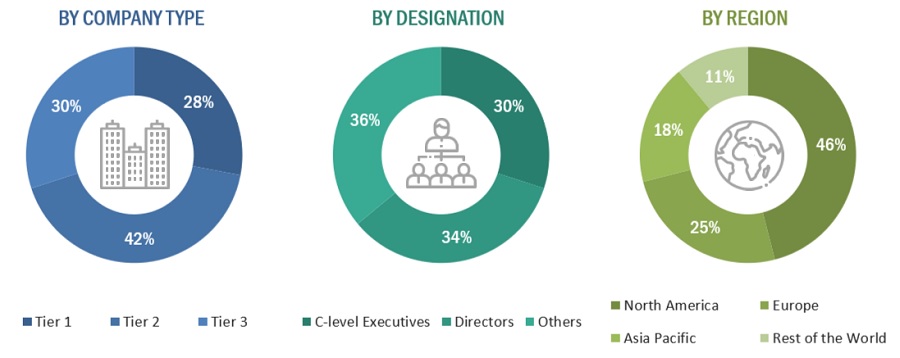
Note 1: *Others include sales managers, marketing managers, and product managers.
Note 2: Tiers are defined based on a company’s total revenue as of 2023: Tier 1=> USD 1 billion, Tier 2 = USD 500 million to USD 1 billion, and Tier 3=< USD 500 million.
To know about the assumptions considered for the study, download the pdf brochure
Market Size Estimation
All major product manufacturers offering various electroceuticals products were identified at the global/regional level. Revenue mapping was done for the major players and was extrapolated to arrive at the global market value of each type of segment. The market value electroceuticals market was also split into various segments and subsegments at the region and country level based on:
- Product mapping of various manufacturers for each type of electroceuticals market at the regional and country-level
- Relative adoption pattern of each electroceuticals market among key application segments at the regional and/or country-level
- Detailed primary research to gather qualitative and quantitative information related to segments and subsegments at the regional and/or country-level.
- Detailed secondary research to gauge the prevailing market trends at the regional and/or country-level
Global Electroceuticals Market Size: Top-Down Approach
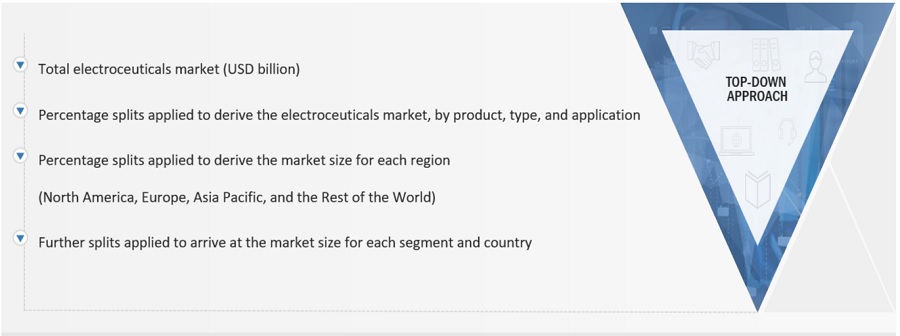
To know about the assumptions considered for the study, Request for Free Sample Report
Data Triangulation
After arriving at the overall market size applying the process mentioned above, the total market was split into several segments and subsegments. To complete the overall market engineering process and arrive at the exact statistics for all segments and subsegments, data triangulation and market breakdown procedures were employed, wherever applicable. The data was triangulated by studying various factors and trends from both the demand and supply sides in the electroceuticals device industry.
Market Definition
Electroceuticals are medical devices that use electrical impulses to modulate the body’s neural circuits as an alternative to drug-based intervention. Electroceuticals, also known as bioelectric medicine, combines molecular medicine, bioengineering, and neuroscience to discover and develop nerve stimulating & sensing technologies to regulate biological processes and treat diseases.
Key Stakeholders
- Manufacturing Companies of Electroceuticals and Related Devices
- Original Equipment Manufacturers
- Suppliers and Distributors of Electroceutical Devices
- Healthcare Service Providers
- Teaching Hospitals and Academic Medical Centers (AMCs)
- Health Insurance Payers
- Research and Consulting Firms
- Medical Research Institutes
- Healthcare Institutes/Providers (Hospitals, Medical Groups, Physicians’ Practices, Diagnostic Centers, and Outpatient Clinics)
- Venture Capitalists
- Community Centers
Report Objectives
- To define, describe, segment, and forecast the global electroceuticals market by product, type, application, and region
- To forecast the size of the global electroceuticals market with respect to five regional segments, namely, North America, Europe, Asia Pacific, Latin America, and the Middle East & Africa
- To provide detailed information regarding the major factors influencing the market growth (such as drivers, restraints, opportunities, and challenges)
- To strategically analyze micromarkets1 with respect to individual growth trends, prospects, and contributions to the overall electroceuticals market
- To analyze market opportunities for stakeholders and provide details of the competitive landscape for key players
- To profile the key players in the electroceuticals market and comprehensively analyze their market shares and core competencies2 in terms of market developments and growth strategies
- To track and analyze competitive developments such as product launches, agreements, collaborations, partnerships, expansions, and acquisitions in the electroceuticals market
- To benchmark players within the electroceuticals market using the Company Evaluation Matrix framework, which analyzes market players on various parameters within the broad categories of business strategy, market share, and product offerings
Available Customizations
With the given market data, MarketsandMarkets offers customizations as per the company’s specific needs. The following customization options are available for this report:
Country Information
- Electroceuticals market size and growth rate estimates for countries in the Rest of Europe, the Rest of Asia Pacific, Latin America, and Middle East & Africa.
Company profiles
- Product portfolio matrix for leading market players.
Get the Full Electroceuticals Market Report
Full forecast, segment splits, and company analysis for all Electroceuticals Market.
- Canada Electroceuticals Market
- US Electroceuticals Market
- Germany Electroceuticals Market
- UK Electroceuticals Market
- France Electroceuticals Market
- Italy Electroceuticals Market
- Spain Electroceuticals Market
- Japan Electroceuticals Market
- China Electroceuticals Market
- India Electroceuticals Market
- Rest Of Europe Electroceuticals Market
- Rest Of Asia Pacific Electroceuticals Market
Need a Tailored Report?
Customize this report to your needs
Get 10% FREE Customization
Customize This Report
