
Australia Gastrointestinal Stent Market (2026-2031)

The Australia Gastrointestinal Stent Market was valued at $9.39 Million in 2026 and projected to reach to $12.92 Million by 2031, representing a compound annual growth rate of 6.6%. Australia's gastrointestinal stent market is positioned for sustained growth through 2031, driven by an aging population increasingly susceptible to GI disorders and a healthcare system investing in advanced interventional technologies.


| Market Size in | USD 26.32 MN |
| Market Forecast in | |
| CAGR | |
| Forecast Period | |
| Units Considered | Value (USD MN) |
Australia Gastrointestinal Stent Market Trends and Insights
- Australia's market growth outpaces the global average of 5.7%, driven by increasing prevalence of gastrointestinal disorders, aging demographics, and rising healthcare expenditure across the region.
- The Australian healthcare system's emphasis on minimally invasive procedures and advanced endoscopic interventions continues to support adoption of gastrointestinal stents. Australia benefits from a well-developed medical device infrastructure and strong regulatory frameworks that facilitate rapid adoption of innovative stent technologies.
- Between 2026 and 2031, Australia is expected to see heightened demand for both metallic and plastic stents, particularly for esophageal, biliary, and colorectal applications.
- The country's focus on improving patient outcomes and reducing hospital readmission rates further accelerates market penetration in Australia..
Key Market Statistics
- CAGR (2026-2031) 6.6% CAGR
- Market Size, 2026 ~USD 9.39 Million
- Forecast, 2031 ~USD 12.92 Million
- Country Australia
Australia Gastrointestinal Stent Market Overview
Market Valuation Growth :
Australia's gastrointestinal stent market is valued at USD 9.39 million in 2026 and is projected to reach USD 12.92 million by 2031, demonstrating strong expansion potential in the Asia-Pacific region.
Above-Global Growth Rate :
Australia's market CAGR of 6.6% significantly outpaces the global average of 5.7%, indicating robust demand and favorable market conditions specific to the Australian healthcare landscape.
Aging Population Dynamics :
Australia's aging demographic profile is driving increased prevalence of gastrointestinal disorders, creating sustained demand for advanced stent technologies and interventional gastroenterology procedures.
Healthcare Investment Surge :
Rising healthcare expenditure across Australia, coupled with improved access to advanced medical devices and procedural capabilities, is accelerating adoption of gastrointestinal stent solutions.
Australia Gastrointestinal Stent Market Dynamics
- The market's 6.6% CAGR reflects strong clinical adoption and patient demand for minimally invasive treatment options.
- Healthcare providers across major Australian cities are expanding endoscopic capabilities, supporting market expansion. Key growth catalysts include rising awareness of gastrointestinal conditions, improved reimbursement pathways, and technological innovations in stent design.
- Australia's robust regulatory environment and high healthcare standards ensure rapid adoption of new products.
- Strategic partnerships between international manufacturers and local distributors are expected to enhance market penetration, particularly in regional healthcare facilities..
Market Ecosystem
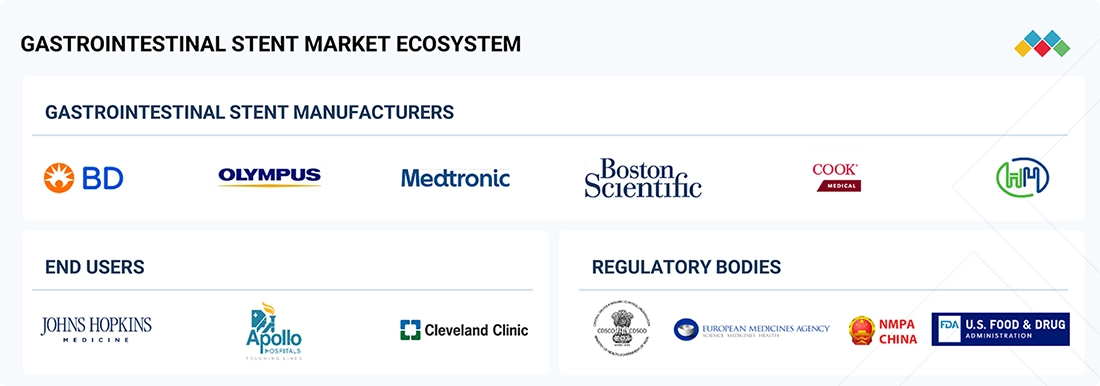
GASTROINTESTINAL STENT MARKET: COMMERCIAL USE CASES ACROSS INDUSTRIES
| COMPANY | USE CASE DESCRIPTION | BENEFITS |
|---|---|---|
 |
Provides a comprehensive portfolio of gastrointestinal stents, including AXIOS lumen-apposing metal stents, WallFlex biliary, esophageal, colonic, and duodenal stents, and Agile esophageal stents. These are used for drainage of pancreatic fluid collections, treatment of malignant strictures, and maintenance of luminal patency in GI obstructions. | Enables minimally invasive management of complex GI conditions; supports effective drainage and obstruction relief; reduces need for surgical interventions; improves patient recovery and clinical outcomes. |
 |
Offers a wide range of GI stents, including Evolution esophageal and biliary stents and Zilver metal stents used for managing malignant and benign strictures across the gastrointestinal tract. Strong focus on endoscopic delivery systems. | Provides reliable and flexible stenting solutions; enhances physician control during placement; supports palliative care and improves patient quality of life. |
 |
Provides GI stenting solutions through its endoscopy portfolio, including self-expanding metal stents for esophageal and biliary applications, used in minimally invasive treatment of GI obstructions and cancers. | Improves procedural efficiency and treatment accessibility; supports large-scale hospital adoption; enhances patient outcomes through minimally invasive approaches. |
 |
Offers endoscopic stent solutions integrated with advanced imaging and endoscopy systems, supporting placement of GI stents for esophageal, biliary, and pancreatic conditions. | Enhances precision and visualization during procedures; improves procedural safety and physician efficiency; strengthens end-to-end GI treatment ecosystem. |
 |
Provides GI and biliary stenting solutions through its interventional portfolio , focusing on minimally invasive management of obstructions and strictures. | Supports effective obstruction management; leverages strong global distribution; improves treatment access and clinical outcomes. |
Logos and trademarks shown above are the property of their respective owners. Their use here is for informational and illustrative purposes only.
Related Ecosystem
Medical Devices
- Polymerase Chain Reaction (PCR)
- Magnetic Resonance Imaging (MRI)
- Disposable Autoinjectors
- Pulse Oximeters
- Blood Pressure Monitors
- Medtronic plc
- Abbott Laboratories
- Stryker Corporation
- Becton, Dickinson and Company
- CONMED Corporation
Key Takeaways
- Australia's gastrointestinal stent market is valued at USD 9.39 million in 2026 and will reach USD 12.92 million by 2031.
- Australia's market CAGR of 6.6% exceeds the global growth rate of 5.7%, reflecting strong regional demand.
- Australia's advanced healthcare infrastructure and regulatory environment support rapid adoption of minimally invasive stent technologies.
- Australia's aging population and rising gastrointestinal disease prevalence are key drivers of market expansion through 2031.
Gastrointestinal Stent Market Report Scope
| Report Metric | Details |
|---|---|
| Base Year | 2026 |
| Fastest Growing Segment | BIODEGRADABLE STENTS (Type) |
| Forecast Period | 2026–2031 |
| Growth Rate | CAGR of 5.7% from 2026 to 2031 |
| Largest Segment | HOSPITALS & CLINICS (End User) |
| Market Size Base Year (Billions) | ~USD 0.62 (2026) |
| Revenue Forecast (Billions) | ~USD 0.82 (2031) |
| Segments Covered | Product, Type, Mechanism, Coverage, Application, End User |
Australia Gastrointestinal Stent Market Report Segmentation
6 segment dimensions are covered across the global market.
By Product
- Biliary Stents
- Biodegradable Stents
- Colonic Stents
- Duodenal Stents
- Esophageal Stents
- Metal Stents
- Pancreatic Stents
- Plastic Stents
By Type
- Biliary Stents
- Biodegradable Stents
- Colonic Stents
- Colorectal Cancer
- Duodenal Stents
- Esophageal Cancer
- Esophageal Stents
- Magnesium-Based Stents
- Metal Stents
- Nitinol Stents
- Other Biodegradable Stents
- Other Metal Stents
- Pancreatic Cancer
- Pancreatic Stents
- Plastic Stents
- Polymer-Based Stents
- Stainless Steel Stents
- Stomach Cancer
By Mechanism
- Balloon-Expandable Metal Stents (Bems)
- Self-Expanding Metal Stents (Sems)
By Coverage
- Fully Covered Stents
- Partially Covered Stents
- Uncovered Stents
By Application
- Benign Strictures & Leaks
- Biliary Disease
- Biliary Diseases
- Gastrointestinal Cancer
- Other Applications
By End User
- Ambulatory Surgical Centers
- Hospitals & Clinics
- Specialty Endoscopy Centers/Gi Clinics
AUSTRALIA: GASTROINTESTINAL STENTS MARKET, BY END USER, 2024–2031
| Segment | 2024 | 2025 | 2026 | 2027 | 2028 | 2029 | 2030 | 2031 | CAGR (%) |
|---|---|---|---|---|---|---|---|---|---|
| AMBULATORY SURGICAL CENTERS | 1.07 | 1.14 | 1.22 | 1.31 | 1.4 | 1.5 | 1.61 | 1.73 | 7.2 |
| HOSPITALS & CLINICS | 5.47 | 5.79 | 6.14 | 6.51 | 6.91 | 7.34 | 7.81 | 8.31 | 6.3 |
| SPECIALTY ENDOSCOPY CENTERS/GI CLINICS | 1.77 | 1.9 | 2.03 | 2.17 | 2.33 | 2.5 | 2.68 | 2.88 | 7.3 |
| TOTAL | 8.31 | 8.83 | 9.39 | 9.99 | 10.64 | 11.34 | 12.1 | 12.92 | 6.6 |
Target Audience
- Medical Device Manufacturers : Manufacturers need Australia-specific market data to develop localized go-to-market strategies, assess competitive positioning, and identify opportunities for product launches and market expansion in this high-growth region.
- Healthcare Investors & PE Firms : Investment professionals require detailed Australian market analysis to evaluate acquisition targets, assess portfolio company growth potential, and make informed capital allocation decisions in the medical device sector.
- Hospital & Healthcare Providers : Australian healthcare facilities need market insights to optimize procurement strategies, understand clinical adoption trends, and plan capital investments in gastrointestinal intervention capabilities.
- Distributors & Importers : Local and regional distributors require Australia-specific demand forecasts and market dynamics to optimize inventory management, negotiate supplier agreements, and identify growth opportunities in underserved regions.
- Healthcare Consultants & Analysts : Consulting firms and research analysts need comprehensive Australia market data to support client advisory services, competitive benchmarking, and strategic planning in the gastrointestinal medical device sector.
Key Companies in the Australia Gastrointestinal Stent Market
| Company | HQ | Ownership | Strongest segments |
|---|---|---|---|
| ATS AUTOMATION TOOLING SYSTEMS INC | Canada | Public Company | Custom automated manufacturing and assembly systems,Pre- and post-automation services and lifecycle support,Contract manufacturing and integration services, |
| BOSTON SCIENTIFIC CORPORATION | United States | Public Company | Cardiovascular (coronary, structural heart, CRM, peripheral),MedSurg – Endoscopy (GI, pancreaticobiliary, infection prevention),MedSurg – Urology and Pelvic Health, |
| OLYMPUS CORPORATION | Japan | Public Company | Gastrointestinal Solutions (endoscopes, devices, services),Surgical Endoscopes & Integrated OR Solutions,Advanced Energy Devices, |
| M.I. TECH | Malaysia | Public Company | Die sorting and smart binning equipment,Test handling and vision inspection equipment,Laser bonding and precision bonding equipment, |
| MICRO-TECH (NANJING) CO., LTD. | China | Public Company | Digestive endoscopy – ESD and ERCP (therapeutic devices and accessories),Stents and dilation/biopsy systems (biliary, intestinal, esophageal),Hemostasis, EUS, and diagnostic accessories, |
| MERIT MEDICAL SYSTEMS | United States | Public Company | Cardiovascular access and intervention (micropuncture, sheaths, guidewires, angiography, hemostasis),Peripheral intervention and embolotherapy (angiography, drainage, delivery, embolic solutions),Oncology and spine (soft tissue biopsy, vertebral augmentation, RF ablation, bone biopsy), |
| MEDTRONIC | Ireland | Public Company | Cardiovascular Portfolio,Neuroscience Portfolio,Medical Surgical Portfolio, |
| STERIS | Ireland | Public Company | Healthcare sterilization, decontamination, and OR infrastructure,Applied Sterilization Technologies (outsourced sterilization services),Life sciences contamination control and processing, |
| BD | United States | Public Company | Medical Essentials (IV access, syringes, needles, sharps, vascular care),Connected Care (infusion systems, medication management, pharmacy automation, informatics),BioPharma Systems (prefillable drug delivery systems), |
| Q3 MEDICAL GROUP | Ireland | Private Company | Specialty procedures and interventions,Outpatient and ambulatory services,Diagnostics and imaging, |
| BVM | Tunisia | Public Company | Fire, miscellaneous accidents, and engineering,Marine, energy, and aviation (including pools),Agricultural and emerging risks, |
ATS AUTOMATION TOOLING SYSTEMS INC
ATS Automation Tooling Systems Inc is a Canadian public company founded in 1978 that employs 7,000 people. The company specializes in automation and tooling systems.
BOSTON SCIENTIFIC CORPORATION
Boston Scientific Corporation is a United States-based public company founded in 1979 with 59,000 employees. The company operates in the medical device and healthcare sectors.
OLYMPUS CORPORATION
Olympus Corporation is a Japanese public company founded in 1919 with 28,138 employees. The company operates across imaging, medical, and industrial technology sectors.
M.I. TECH
M.I. Tech is a Malaysian public company founded in 2007 with 594 employees. The company operates in the technology sector.
MICRO-TECH (NANJING) CO., LTD.
Micro-Tech (Nanjing) Co., Ltd. is a Chinese public company founded in 2000 with 2,433 employees. The company operates in the medical device industry.
MERIT MEDICAL SYSTEMS
Merit Medical Systems is a United States-based public company founded in 1987 with 7,500 employees. The company manufactures and distributes medical devices and supplies.
MEDTRONIC
Medtronic is an Ireland-based public company founded in 1949 with 95,000 employees. The company is a global leader in medical technology, services, and solutions.
STERIS
STERIS is an Ireland-based public company founded in 1985. The company provides sterilization and contamination control solutions for healthcare and industrial markets.
BD
BD is a United States-based public company founded in 1897 with 72,000 employees. The company is a global medical technology company specializing in medical devices, diagnostics, and biosciences.
Q3 MEDICAL GROUP
Q3 Medical Group is an Ireland-based private company founded in 2013. The company operates in the medical device or healthcare sector.
BVM
BVM is a Tunisia-based public company founded in 1981 with 99 employees. The company operates in the medical or industrial sector.
Reasons to Buy this Report
- Country-Specific Market Sizing : Obtain precise valuation data for Australia's gastrointestinal stent market with detailed 2026-2031 projections, enabling accurate financial planning and investment decisions tailored to the Australian healthcare sector.
- Competitive Landscape Intelligence : Understand market dynamics specific to Australia, including key players, distribution channels, and competitive positioning within the region's healthcare infrastructure and regulatory environment.
- Growth Driver Analysis : Identify Australia-specific factors driving 6.6% CAGR growth, including demographic trends, healthcare policy changes, and clinical adoption patterns to inform market entry and expansion strategies.
- Regional Healthcare Insights : Access detailed analysis of Australia's aging population, healthcare expenditure trends, and procedural volumes to benchmark market opportunities against global benchmarks and regional competitors.
- Strategic Investment Guidance : Leverage Australia-focused market intelligence to identify high-potential segments, geographic hotspots, and partnership opportunities within the country's growing gastrointestinal stent market.
Frequently asked questions
What is the current size of Australia's gastrointestinal stent market?
Australia's gastrointestinal stent market is valued at USD 9.39 million in 2026 and is expected to grow to USD 12.92 million by 2031.
What is the projected growth rate for Australia's gastrointestinal stent market?
Australia's gastrointestinal stent market is projected to grow at a CAGR of 6.6% from 2026 to 2031, outpacing the global average.
What factors are driving growth in Australia's gastrointestinal stent market?
Key drivers in Australia include an aging population, increasing prevalence of gastrointestinal disorders, advanced healthcare infrastructure, and growing adoption of minimally invasive procedures.
Which stent types are most in demand in Australia?
Australia shows strong demand for both metallic and plastic stents, particularly for esophageal, biliary, and colorectal applications.
How does Australia's market growth compare to global trends?
Australia's CAGR of 6.6% exceeds the global CAGR of 5.7%, indicating stronger regional market momentum and adoption rates.
RESEARCH METHODOLOGY
This research study extensively utilized both primary and secondary sources. It involved analyzing various factors influencing the industry to identify segmentation types, industry trends, key players, the competitive landscape, key market dynamics, and strategies employed by key players.
Secondary Research
This research study utilized a variety of comprehensive secondary sources, including directories; databases such as Bloomberg Business, Factiva, and Dun & Bradstreet; white papers; annual reports; company house documents; investor presentations; and SEC filings from various companies. Secondary research was employed to gather information crucial for an in-depth, technical, market-oriented, and commercial analysis of the gastrointestinal stent market. This approach also helped identify key players in the industry and allowed for classification and segmentation based on emerging trends at the most detailed level. Furthermore, significant developments pertaining to both market and technological perspectives were documented. A database of primary industry leaders was created as part of this secondary research.
Primary Research
In the primary research process, we interviewed a range of sources from both the supply and demand sides to gather qualitative and quantitative information for this report. Primary sources from the supply side include project/sales/marketing/business development managers, presidents, CEOs, vice presidents, chairpersons, chief operating officers, chief strategy officers, directors, chief information officers, and chief medical information officers related to the gastrointestinal stent market. Primary sources from the demand side include gastroenterologists, interventional endoscopists, and surgeons from hospitals and ambulatory surgical centers, as well as directors of endoscopy units and gastrointestinal clinics.
A breakdown of the primary respondents is provided below:
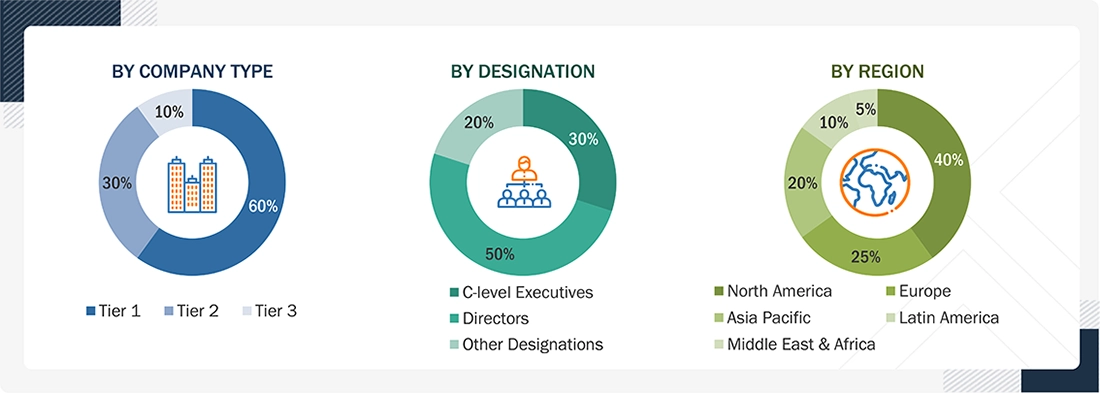
Note 1: C-level executives include CEOs, COOs, CTOs, and VPs.
Note 2: Other designations include sales, marketing, and product managers.
Note 3: Tiers are defined based on a company’s total revenue. As of 2025: Tier 1 = >USD 1 billion, Tier 2 = USD 500 million to USD 1 billion, and Tier 3 = USD 500 million.
To know about the assumptions considered for the study, download the pdf brochure
Market Size Estimation
The total size of the gastrointestinal stent market was determined through data triangulation using three approaches, as outlined below. After each approach, the weighted average of the three approaches was calculated based on the level of assumptions used in each.
Gastrointestinal Stent Market : Top-Down and Bottom-Up Approach
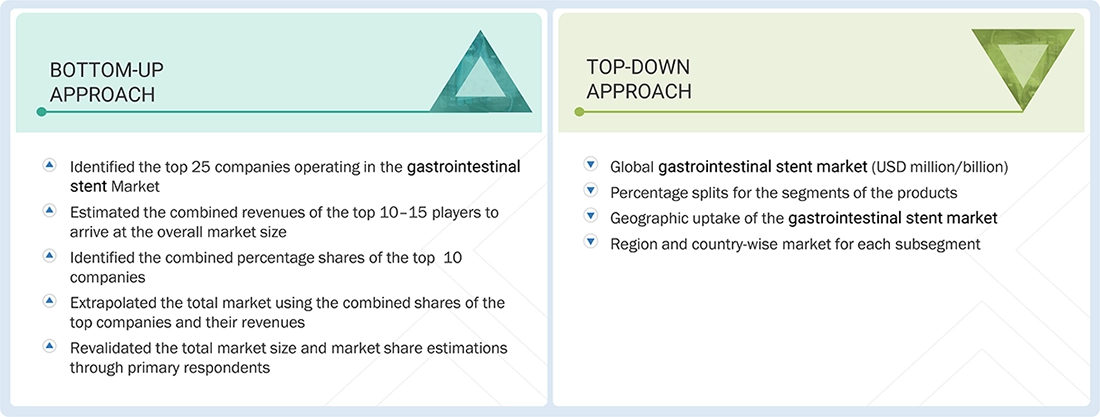
Data Triangulation
After arriving at the market size, the total market was divided into several segments and subsegments. Data triangulation and market breakdown procedures were employed where applicable to complete the overall market engineering process and derive the exact statistics for all segments and subsegments.
Market Definition
The gastrointestinal stent market comprises medical devices designed for the minimally invasive management of obstructions, strictures, leaks, and fistulas within the gastrointestinal tract, including the esophagus, stomach, intestines, and biliary system. These stents, primarily self-expanding metal, plastic, and biodegradable variants, are deployed endoscopically or fluoroscopically to restore luminal patency, enable fluid drainage, and support tissue healing in both malignant and benign conditions. The market includes products, delivery systems, and associated technologies used across hospitals, ambulatory surgical centers, and specialty clinics, with applications spanning oncology, post-surgical complications, and chronic gastrointestinal disorders, driven by the growing preference for minimally invasive treatment approaches and improved patient outcomes.
Key Stakeholders
- GI stent manufacturers (metal, plastic, biodegradable stents)
- Endoscopy device & delivery system manufacturers
- Raw material & component suppliers (metals, polymers, coatings)
- Hospitals & ambulatory surgical centers (public & private)
- Gastroenterology clinics & endoscopy centers
- Gastroenterologists, interventional endoscopists & GI surgeons
- Contract manufacturers & OEM partners
- Distributors & regional channel partners
- Academic & clinical research institutions
- Regulatory authorities & healthcare agencies
- Market research & consulting firms
- Investors & private equity firms
Report Objectives
- To define, describe, segment, and forecast the gastrointestinal stent market by product, type, application, end user, and region
- To provide detailed information about the factors influencing market growth (such as drivers, restraints, opportunities, and challenges)
- To analyze micromarkets with respect to individual growth trends, prospects, and contributions to the overall gastrointestinal stent market
- To analyze market opportunities for stakeholders and provide details of the competitive landscape for key players
- To forecast the size of the gastrointestinal stent market in five main regions (along with their respective key countries): North America, Europe, the Asia Pacific, Latin America, and the Middle East & Africa
- To profile the key players in the gastrointestinal stent market and comprehensively analyze their core competencies and market shares
- To track and analyze competitive developments such as acquisitions, product launches, expansions, collaborations, agreements, and partnerships
Customization Options:
With the market data provided, MarketsandMarkets offers customizations to meet your company’s specific needs. The following customization options are available for the report:
Company Information
- Detailed analysis and profiling of additional market players (up to 5)
Geographic Analysis
- Further breakdown of the Rest of Europe gastrointestinal stent market into Austria, Finland, Switzerland, and other countries
- Further breakdown of the Rest of Latin America gastrointestinal stent market into Colombia, Chile, and other countries
Competitive Landscape Assessment
- Market share analysis for North America and Europe, which provides market shares of the top 3–5 key players in the gastrointestinal stent market
- Competitive leadership mapping for established players in the US
Get the Full Gastrointestinal Stent Market Report
Full forecast, segment splits, and company analysis for all Gastrointestinal Stent Market.
- Canada Gastrointestinal Stent Market
- US Gastrointestinal Stent Market
- Germany Gastrointestinal Stent Market
- UK Gastrointestinal Stent Market
- France Gastrointestinal Stent Market
- Italy Gastrointestinal Stent Market
- Spain Gastrointestinal Stent Market
- Netherlands Gastrointestinal Stent Market
- Sweden Gastrointestinal Stent Market
- Poland Gastrointestinal Stent Market
- China Gastrointestinal Stent Market
- Japan Gastrointestinal Stent Market
- India Gastrointestinal Stent Market
- South Korea Gastrointestinal Stent Market
- Thailand Gastrointestinal Stent Market
- New Zealand Gastrointestinal Stent Market
- Brazil Gastrointestinal Stent Market
- Mexico Gastrointestinal Stent Market
- Argentina Gastrointestinal Stent Market
- Rest Of Europe Gastrointestinal Stent Market
- Rest Of Asia Pacific Gastrointestinal Stent Market
Need a Tailored Report?
Customize this report to your needs
Get 10% FREE Customization
Customize This Report
