
Rest Of Asia Pacific Personal Protective Equipment Market (2024-2029)

The Rest Of Asia Pacific Personal Protective Equipment Market was valued at $153.3 Million in 2024 and projected to reach to $171.8 Million by 2029, representing a compound annual growth rate of 5.57%. Rest Of Asia Pacific's PPE market is positioned for steady expansion as manufacturing sectors mature and regulatory frameworks strengthen across the region.


| Market Size in | USD 26.32 MN |
| Market Forecast in | |
| CAGR | |
| Forecast Period | |
| Units Considered | Value (USD MN) |
Rest Of Asia Pacific Personal Protective Equipment Market Trends and Insights
- Rest Of Asia Pacific represents a significant segment within the broader Asia Pacific region, driven by increasing workplace safety regulations, industrial expansion, and heightened awareness of occupational health standards.
- The region's manufacturing and construction sectors are primary contributors to PPE demand, with Rest Of Asia Pacific benefiting from rising labor force participation and stricter compliance requirements across multiple industries. Rest Of Asia Pacific's market trajectory reflects a compound annual growth rate of 5.57%, indicating consistent expansion over the forecast period.
- This growth is supported by emerging economies within Rest Of Asia Pacific that are investing in industrial infrastructure and worker protection frameworks.
- Rest Of Asia Pacific's PPE market encompasses respiratory protection, hand protection, body protection, and specialized equipment tailored to regional industrial needs.
- The competitive landscape in Rest Of Asia Pacific continues to evolve as both multinational and local manufacturers enhance their product portfolios to meet diverse customer requirements and regulatory standards..
Key Market Statistics
- CAGR (2024-2029) 5.57% CAGR
- Market Size, 2024 ~USD 153.3 Million
- Forecast, 2029 ~USD 171.8 Million
- Country Rest Of Asia Pacific
Rest Of Asia Pacific Personal Protective Equipment Market Overview
Market Valuation :
Rest Of Asia Pacific PPE market valued at USD 153.3 million in 2024, demonstrating robust regional demand for occupational safety equipment across emerging economies.
Growth Trajectory :
5.57% CAGR through 2029 reflects accelerating adoption driven by stringent workplace safety regulations and industrial modernization across Rest Of Asia Pacific nations.
Forecast Expansion :
Market projected to reach USD 171.8 million by 2029, indicating sustained investment in worker protection and compliance infrastructure throughout the region.
Regional Drivers :
Industrial expansion, manufacturing growth, and heightened occupational health awareness are key catalysts propelling Rest Of Asia Pacific PPE market development.
Rest Of Asia Pacific Personal Protective Equipment Market Dynamics
- Emerging economies within this cutout are increasingly prioritizing worker safety standards, creating sustained demand for protective equipment across construction, chemical, healthcare, and industrial sectors.
- Government initiatives promoting occupational health compliance and corporate responsibility are accelerating market penetration. The forecast period through 2029 will witness growing investment in advanced PPE technologies and localized production capabilities.
- Rising labor costs and worker awareness in Rest Of Asia Pacific nations are driving adoption of higher-quality protective equipment.
- Supply chain development and distribution network expansion will further support market growth, positioning the region as an increasingly important segment within the broader Asia Pacific PPE landscape..
Market Ecosystem
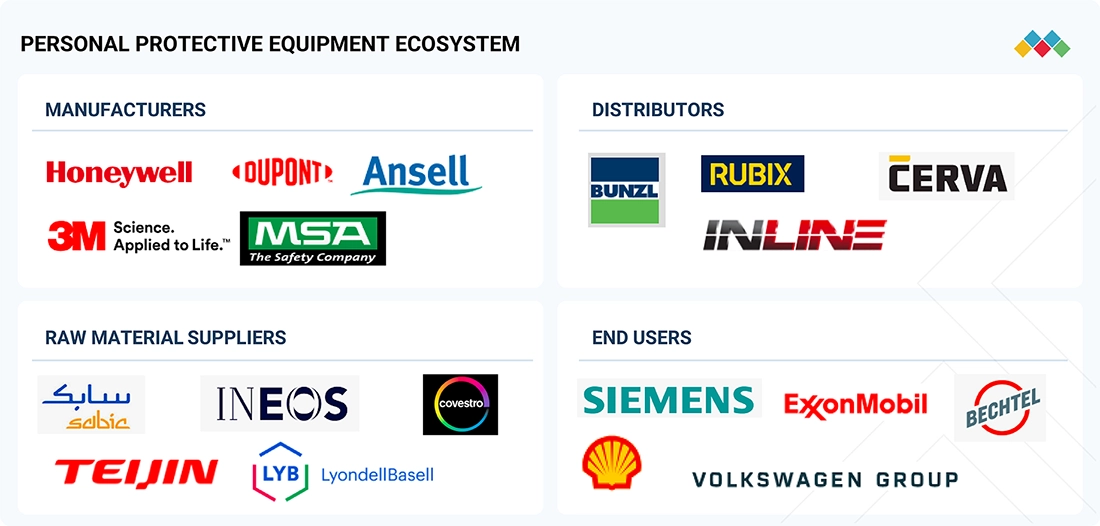
Personal Protective Equipment Market: COMMERCIAL USE CASES ACROSS INDUSTRIES
| COMPANY | USE CASE DESCRIPTION | BENEFITS |
|---|---|---|
 |
Respiratory protection spanning disposable, reusable, and powered air-purifying respirators for pharma manufacturing, painting/metalwork, and high particulate or vapor exposure tasks | PAPR and Versaflo systems can integrate respiratory with head, eye, and face protection for comfort and compatibility, with reusable respirators offering up to APF 50 where configured appropriately |
 |
Full-line PPE across eyewear, hearing, fall protection, respiratory, head, hand, footwear, first aid, and more for construction, manufacturing, and utilities | Portfolio covers hearing conservation (Howard Leight), fall arrest systems and services (Miller), and integrated safety programs from a single supplier for standardization and training efficiency |
 |
Protective apparel for industrial and controlled environments needing breathable particle barriers without fiber shedding, including pharma and clean-manufacturing | Tyvek provides an inherent breathable barrier that does not rely on fragile films, delivering durability and comfort versus SMS or microporous film alternatives to reduce heat stress risk |
 |
Chemical-resistant gloves and clothing for handling solvents, acids, and oils in chemical processing, pharma, maintenance, and food contact applications | ANSELL GRIP technology, cut-resistant liners, and specialized polymers deliver secure wet/oily handling with comfort and dexterity while maintaining chemical protection |
Logos and trademarks shown above are the property of their respective owners. Their use here is for informational and illustrative purposes only.
Related Ecosystem
Electronic Warfare
- Antennas
- Automated Test Equipment
- Military Helicopters
- Signal Generators
- Special Mission Aircraft
- Northrop Grumman Corporation
- Thales group
- L3Harris Technologies, Inc.
- BAE Systems plc
- LOCKHEED MARTIN CORPORATION
Equipment Machine And Tooling
- Wastewater Treatment
- Air Cooled Heat Exchangers
- Diaphragm Pumps
- Fiberglass
- HVAC System
- Alfa Laval Corporate AB
- Veolia
- Johnson Controls International plc
- Daikin Industries,Ltd.
- Parker-Hannifin Corporation
Industrial Equipment
- HVAC System
- Fiberglass
- Actuators
- Cartridge Filters
- Electrostatic Precipitators
- Siemens ag
- ABB India Limited
- GRUNDFOS GROUP
- SCHNEIDER ELECTRIC SE
- Emerson Electric Co.
Key Takeaways
- Rest Of Asia Pacific PPE market valued at USD 153.3 million in 2024, expanding to USD 171.8 million by 2029 at 5.57% CAGR
- Rest Of Asia Pacific's growth driven by industrial expansion, stricter workplace safety regulations, and increased occupational health awareness
- Manufacturing and construction sectors are primary demand drivers in Rest Of Asia Pacific, supported by rising labor force participation
- Rest Of Asia Pacific's competitive landscape features both multinational and local manufacturers adapting products to regional regulatory and customer needs
Personal Protective Equipment Market Report Scope
| Report Metric | Details |
|---|---|
| Base Year | 2024 |
| Fastest Growing Segment | –DISPOSABLE FACE MASK (Type) |
| Forecast Period | 2024–2029 |
| Growth Rate | CAGR of 5.49% from 2024 to 2029 |
| Largest Segment | HAND & ARM PROTECTION (Type) |
| Market Size Base Year (Billions) | ~USD 56.35 (2024) |
| Revenue Forecast (Billions) | ~USD 77.66 (2029) |
| Segments Covered | Type, End-Use Industry |
Rest Of Asia Pacific Personal Protective Equipment Market Report Segmentation
2 segment dimensions are covered across the global market.
By Type
- Eye & Face Protection
- Foot & Leg Protection
- Hand & Arm Protection
- Head Protection
- Other Types
- Protective Clothing
- Respiratory Protection
- –Disposable Face Mask
- –Disposable Gloves
- –Disposable Protective Clothing
- –Other Hand & Arm Protection
- –Other Respiratory Protection
- –Reusable Face Mask
- –Reusable Gloves
- –Reusable Protective Clothing
By End-Use Industry
- Construction
- Firefighting
- Food
- Healthcare
- Manufacturing
- Oil & Gas
- Other End-Use Industries
- Transportation
Target Audience
- PPE Manufacturers : Require Rest Of Asia Pacific-specific market sizing and growth forecasts to guide production capacity planning, distribution network development, and regional expansion strategies.
- Industrial Distributors : Need detailed market insights for Rest Of Asia Pacific to identify high-growth segments, optimize inventory management, and develop targeted sales strategies for emerging markets.
- Corporate Safety Officers : Seek regional market intelligence to benchmark occupational health spending, identify emerging safety equipment trends, and justify PPE budget allocations in Rest Of Asia Pacific operations.
- Investment & Private Equity : Require Rest Of Asia Pacific market data to evaluate acquisition targets, assess growth potential, and make informed investment decisions in the regional PPE sector.
- Government & Regulatory Bodies : Use market analysis to understand PPE adoption rates, identify compliance gaps, and develop evidence-based occupational health policies for Rest Of Asia Pacific nations.
Key Companies in the Rest Of Asia Pacific Personal Protective Equipment Market
| Company | HQ | Ownership | Strongest segments |
|---|---|---|---|
| HONEYWELL INTERNATIONAL INC. | United States | Public Company | Hand & Arm Protection,Protective Clothing,Foot & Leg Protection, |
| DUPONT DE NEMOURS, INC. | United States | ||
| 3M COMPANY | United States | Public Company | Hand & Arm Protection,Protective Clothing,Foot & Leg Protection, |
| ANSELL LIMITED | Australia | ||
| MSA SAFETY INCORPORATED | United States | Public Company | Protective Clothing (including firefighter apparel and turnout gear),Hand & Arm Protection,Foot & Leg Protection, |
| LAKELAND INDUSTRIES, INC. | United States | Public Company | Protective Clothing,Hand & Arm Protection,Foot & Leg Protection, |
| ALPHA PRO TECH, LTD. | Canada | Public Company | Protective Clothing (coveralls, gowns, lab coats, frocks, hoods),Hand & Arm Protection (via associated disposable apparel and limited gloves),Foot & Leg Protection (shoe covers and related disposables), |
| SIOEN INDUSTRIES NV | Belgium | Private Company | Protective Clothing,Hand & Arm Protection,Foot & Leg Protection, |
| DELTA PLUS GROUP | France | Public Company | Hand & Arm Protection,Protective Clothing,Foot & Leg Protection, |
| MALLCOM INDIA LIMITED | India | Public Company | Hand & Arm Protection (gloves and leather accessories),Protective Clothing (workwear, disposable, FR, hi-vis, rainwear, women’s workwear),Foot & Leg Protection (safety shoes), |
HONEYWELL INTERNATIONAL INC.
Honeywell International Inc. is a public company founded in 1885 in the United States with 101,000 employees.
DUPONT DE NEMOURS, INC.
DuPont de Nemours, Inc. is a company based in the United States.
3M COMPANY
3M Company is a public company founded in 1902 in the United States with 60,500 employees.
ANSELL LIMITED
Ansell Limited is a company based in Australia.
MSA SAFETY INCORPORATED
MSA Safety Incorporated is a public company founded in 1914 in the United States with 5,300 employees.
LAKELAND INDUSTRIES, INC.
Lakeland Industries, Inc. is a public company founded in 1982 in the United States with 2,585 employees.
ALPHA PRO TECH, LTD.
Alpha Pro Tech, Ltd. is a public company founded in 1983 in Canada with 123 employees.
SIOEN INDUSTRIES NV
SIOEN Industries NV is a private company founded in 1960 in Belgium with 4,541 employees.
DELTA PLUS GROUP
Delta Plus Group is a public company founded in 1977 in France with 3,748 employees.
MALLCOM INDIA LIMITED
Mallcom India Limited is a public company founded in 1983 in India with 282 employees.
Reasons to Buy this Report
- Regional Market Sizing : Accurate valuation data specific to Rest Of Asia Pacific enables precise market assessment and investment decision-making for this distinct regional segment.
- Growth Forecasting : 5.57% CAGR projection through 2029 provides reliable expansion outlook for strategic planning and resource allocation in Rest Of Asia Pacific operations.
- Competitive Positioning : Understand Rest Of Asia Pacific's unique market dynamics, regulatory drivers, and growth catalysts to identify competitive advantages and market entry opportunities.
- Regulatory Insights : Detailed analysis of workplace safety regulations and compliance requirements driving PPE adoption across Rest Of Asia Pacific nations informs product development strategies.
- Investment Justification : Comprehensive market data supports business case development for expansion, partnerships, and capital allocation decisions targeting Rest Of Asia Pacific growth potential.
Frequently asked questions
What is the market size of PPE in Rest Of Asia Pacific?
Rest Of Asia Pacific's Personal Protective Equipment market was valued at USD 153.3 million in 2024 and is forecast to reach USD 171.8 million by 2029.
What is the growth rate for PPE in Rest Of Asia Pacific?
Rest Of Asia Pacific's PPE market is projected to grow at a compound annual growth rate of 5.57% from 2024 to 2029.
Which industries drive PPE demand in Rest Of Asia Pacific?
Manufacturing, construction, healthcare, and industrial sectors are the primary drivers of PPE demand in Rest Of Asia Pacific, supported by regulatory compliance requirements.
What types of PPE are most demanded in Rest Of Asia Pacific?
Rest Of Asia Pacific's PPE market includes respiratory protection, hand protection, body protection, eye protection, and specialized equipment tailored to regional industrial applications.
Who are the key competitors in Rest Of Asia Pacific's PPE market?
Rest Of Asia Pacific's PPE market includes both multinational manufacturers and regional players who compete by offering compliant, cost-effective solutions adapted to local market needs.
RESEARCH METHODOLOGY
The study involved four major activities in estimating the market size for the personal protective equipment market. Exhaustive secondary research was done to collect information on the market, the peer market, and the parent market. The next step was to validate these findings, assumptions, and sizing with industry experts across the value chain through primary research. Both top-down and bottom-up approaches were employed to estimate the complete market size. After that, the market breakdown and data triangulation procedures were used to estimate the market size of the segments and subsegments.
Secondary Research
Secondary sources used in this study included annual reports, press releases, and investor presentations of companies; white papers; certified publications; articles from recognized authors; and gold standard & silver standard websites such as Factiva, ICIS, Bloomberg, and others. The findings of this study were verified through primary research by conducting extensive interviews with key officials such as CEOs, VPs, directors, and other executives. The breakdown of profiles of the primary interviewees is illustrated in the figure below:
Primary Research
The personal protective equipment market comprises several stakeholders, such as raw material suppliers, end-product manufacturers, and regulatory organizations in the supply chain. The demand side of this market is characterized by key opinion leaders in various applications for the personal protective equipment market. The supply side is characterized by advancements in technology and diverse application industries. Various primary sources from both the supply and demand sides of the market were interviewed to obtain qualitative and quantitative information.
Breakdown of Primary Participants
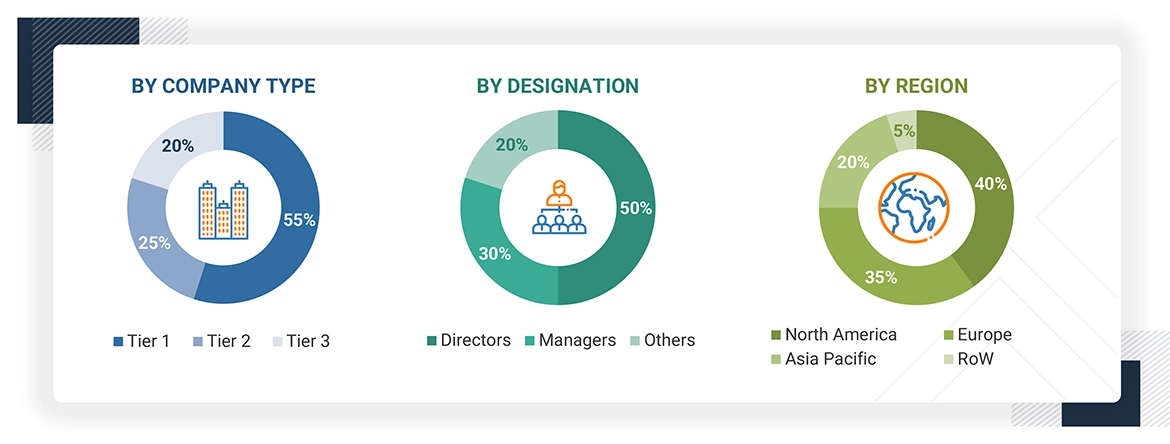
Note: Tier 1, Tier 2, and Tier 3 companies are classified based on their market revenue in 2023/2024, available in the public domain, product portfolios, and geographical presence.
Other designations include consultants and sales, marketing, and procurement managers.
To know about the assumptions considered for the study, download the pdf brochure
| COMPANY NAME | DESIGNATION | |
|---|---|---|
| Honeywell International Inc. | Senior Manager | |
| 3M Company | Innovation Manager | |
| DuPont de Nemours, Inc. | Vice-President | |
| Ansell Limited | Production Supervisor | |
| MSA Safety Incorporated | Sales Manager | |
Market Size Estimation
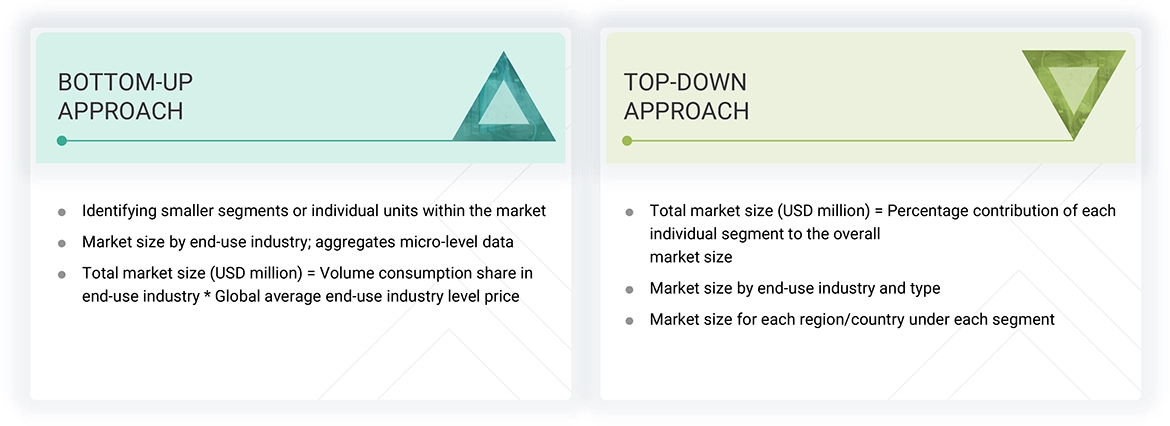
Both top-down and bottom-up approaches were used to estimate and validate the total size of the personal protective equipment market. These methods were also used extensively to estimate the size of various subsegments in the market. The research methodology used to estimate the market size includes the following:
- The key players in the industry have been identified through extensive secondary research.
- The supply chain of the industry has been determined through primary and secondary research.
- All percentage shares, splits, and breakdowns have been determined using secondary sources and verified through primary sources.
- All possible parameters that affect the markets covered in this research study have been accounted for, viewed in extensive detail, verified through primary research, and analyzed to obtain the final quantitative and qualitative data.
Personal Protective Equipment Market: Bottom-up and Top-down Approach
Data Triangulation
After arriving at the overall market size—using the market size estimation processes as explained above—the market was split into several segments and subsegments. To complete the overall market engineering process and arrive at the exact statistics of each market segment and subsegment, data triangulation, and market breakdown procedures were employed, wherever applicable. The data was triangulated by studying various factors and trends from both the demand and supply sides in the personal protective equipment industry.
Market Definition
According to the International Safety Equipment Association, personal protective equipment (PPE) is worn to minimize exposure to hazards that can cause serious injuries. PPE protects workers from life-threatening hazards such as chemical burns, explosions, contamination, and falls from heights. It includes gloves, safety glasses and shoes, respirators, earplugs, hard hats, coveralls, and full-body suits. PPE is mainly used in healthcare, manufacturing, construction, oil & gas, mining, transportation, food, and firefighting sectors.
Stakeholders
- Personal protective equipment manufacturers
- Personal protective equipment distributors
- Raw material suppliers
- Service providers
- Government and research organizations
Report Objectives
- To define, describe, and forecast the market size for personal protective equipment in terms of value
- To provide detailed information about drivers, restraints, opportunities, and challenges influencing the market growth
- To analyze and forecast the personal protective equipment market by type and end-use industry
- To forecast the market based on key regions, namely, North America, Europe, Asia Pacific, the Middle East & Africa, and South America
- To strategically analyze the micromarkets with respect to individual growth trends, prospects, and their contribution to the overall market
- To track and analyze recent developments, such as product launches, deals, and other developments, in the market
- To analyze the opportunities for stakeholders in the market and provide a competitive landscape for market leaders
- To strategically profile the key players and comprehensively analyze their market shares and core competencies
Get the Full Personal Protective Equipment Market Report
Full forecast, segment splits, and company analysis for all Personal Protective Equipment Market.
- China Personal Protective Equipment Market
- Japan Personal Protective Equipment Market
- India Personal Protective Equipment Market
- South Korea Personal Protective Equipment Market
- Indonesia Personal Protective Equipment Market
- Australia Personal Protective Equipment Market
- Thailand Personal Protective Equipment Market
- Malaysia Personal Protective Equipment Market
- Canada Personal Protective Equipment Market
- Mexico Personal Protective Equipment Market
- US Personal Protective Equipment Market
- Germany Personal Protective Equipment Market
- UK Personal Protective Equipment Market
- France Personal Protective Equipment Market
- Italy Personal Protective Equipment Market
- Spain Personal Protective Equipment Market
- Iran Personal Protective Equipment Market
- Egypt Personal Protective Equipment Market
- South Africa Personal Protective Equipment Market
- Brazil Personal Protective Equipment Market
- Argentina Personal Protective Equipment Market
- Rest Of Europe Personal Protective Equipment Market
- GCC Countries Personal Protective Equipment Market
- –Rest Of GCC Countries Personal Protective Equipment Market
- Rest Of South America Personal Protective Equipment Market
Need a Tailored Report?
Customize this report to your needs
Get 10% FREE Customization
Customize This Report
