
South Korea Personalized Nutrition Market (2025-2030)

The South Korea Personalized Nutrition Market was valued at $406.1 Million in 2025 and projected to reach to $552.3 Million by 2030, representing a compound annual growth rate of 16.4%. South Korea's personalized nutrition market is poised for sustained growth through 2030, supported by the nation's advanced healthcare ecosystem and consumer preference for preventive wellness solutions.


| Market Size in | USD 26.32 MN |
| Market Forecast in | |
| CAGR | |
| Forecast Period | |
| Units Considered | Value (USD MN) |
South Korea Personalized Nutrition Market Trends and Insights
- This 16.4% compound annual growth rate reflects South Korea's strong consumer demand for tailored dietary solutions driven by rising health consciousness and digital health adoption.
- South Korea's tech-savvy population and advanced healthcare infrastructure position the country as a regional leader in precision nutrition innovation. The South Korea personalized nutrition sector is characterized by increasing integration of AI-powered dietary assessment tools, genomic testing, and mobile health platforms.
- South Korea's regulatory environment and consumer willingness to invest in preventive health solutions accelerate market penetration across both direct-to-consumer and clinical channels.
- By 2030, South Korea is expected to solidify its position as a key Asia Pacific hub for personalized nutrition services and products..
Key Market Statistics
- CAGR (2025-2030) 16.4% CAGR
- Market Size, 2025 ~USD 406.1 Million
- Forecast, 2030 ~USD 552.3 Million
- Country South Korea
South Korea Personalized Nutrition Market Overview
Strong CAGR Growth :
South Korea's personalized nutrition market is expanding at 16.4% CAGR, outpacing the global average of 14.4%, driven by tech-savvy consumers and advanced healthcare infrastructure.
Digital Health Integration :
South Korea's high digital adoption rate enables seamless integration of AI-powered nutrition apps, genetic testing, and wearable devices for personalized dietary recommendations.
Health-Conscious Demographics :
Rising health consciousness among South Korean consumers, particularly millennials and Gen Z, fuels demand for customized supplements, functional foods, and tailored meal plans.
Market Valuation Trajectory :
The market is valued at USD 406.1 million in 2025 and projected to reach USD 552.3 million by 2030, representing significant investment opportunities in the personalized nutrition sector.
South Korea Personalized Nutrition Market Dynamics
- The convergence of biotechnology innovation, mobile health platforms, and increasing disposable incomes creates a favorable environment for personalized nutrition providers.
- South Korean consumers increasingly seek data-driven dietary solutions tailored to their genetic profiles, lifestyle, and health conditions, positioning the country as a regional leader in personalized nutrition adoption.
- Government initiatives promoting digital health and wellness further accelerate market expansion, while partnerships between tech companies and nutrition brands enhance product accessibility and consumer engagement across the peninsula..
Market Ecosystem
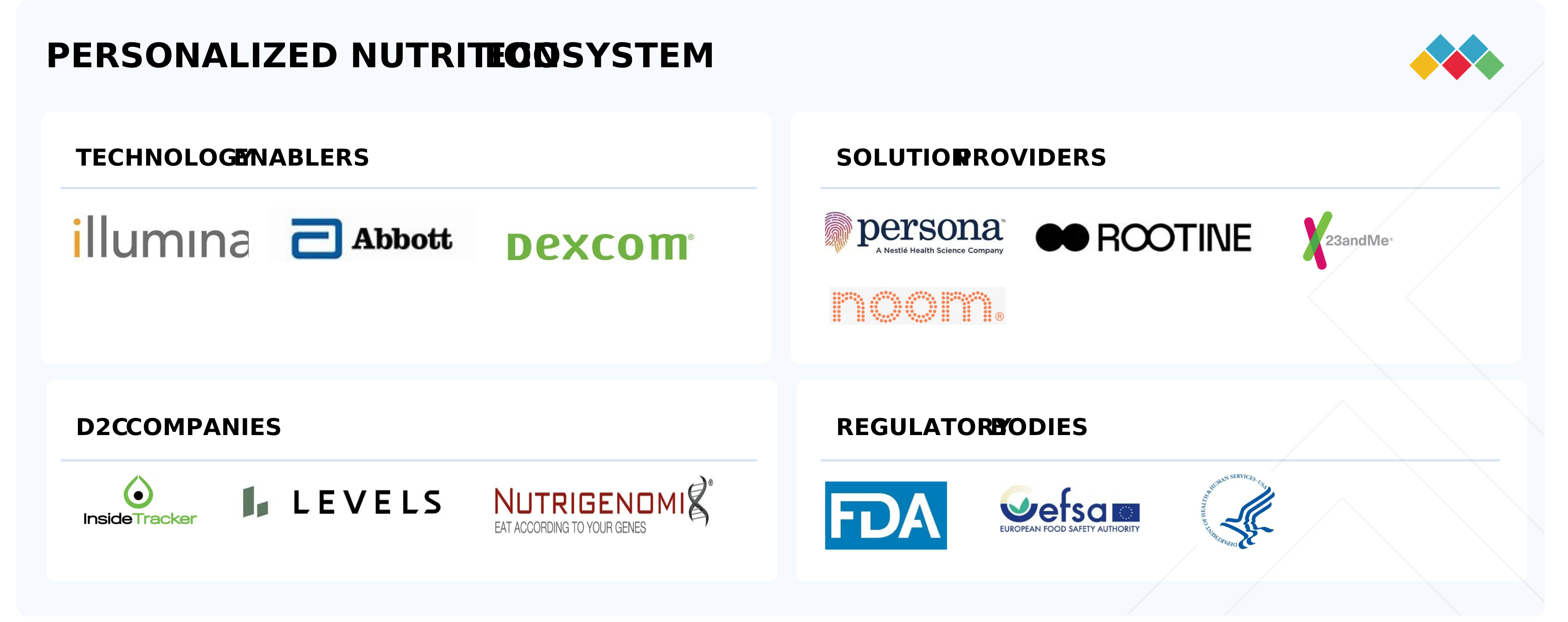
personalized nutrition market: COMMERCIAL USE CASES ACROSS INDUSTRIES
| COMPANY | USE CASE DESCRIPTION | BENEFITS |
|---|---|---|
 |
Continuous glucose monitoring (CGM) devices integrated with lifestyle apps (Libre, Lingo) for real-time nutrition feedback. | Enables personalized diet adjustments, improves metabolic health management, supports diabetes prevention, and broadens access to clinical-grade personalization. |
 |
Personalized supplement programs (Persona Nutrition) with digital profiling and subscription packs tailored to lifestyle and health needs. | Delivers convenient nutrition personalization, builds long-term customer loyalty, ensures science-backed formulations, and integrates into corporate wellness. |
 |
Microbiome, blood, and wearable data combined with AI-driven app for individualized diet guidance. | Provides evidence-based dietary personalization, enhances weight management outcomes, builds consumer trust via clinical trials, and scales engagement through subscriptions. |
 |
At-home microbiome and RNA sequencing tests linked to personalized supplement formulations and diet recommendations. | At-home microbiome and RNA sequencing tests linked to personalized supplement formulations and diet recommendations. |
Logos and trademarks shown above are the property of their respective owners. Their use here is for informational and illustrative purposes only.
Related Ecosystem
Fandb Ingredients
- Dairy Products
- Bakery Products
- Microorganism
- Polydextrose
- Carbohydrates
- AZELIS HOLDINGS SA
- Archer-Daniels-Midland Company
- Kerry Group plc
- Amway
- DSM FIRMMENICH
Key Takeaways
- South Korea's personalized nutrition market will grow from USD 406.1M (2025) to USD 552.3M (2030) at a 16.4% CAGR, outpacing global growth.
- South Korea's digital health infrastructure and consumer tech adoption drive rapid integration of AI and genomic-based nutrition solutions.
- South Korea's preventive health mindset and high disposable income support premium personalized nutrition service adoption.
- South Korea is positioned as a regional Asia Pacific leader in personalized nutrition innovation and market development by 2030.
Personalized Nutrition Market Report Scope
| Report Metric | Details |
|---|---|
| Base Year | 2025 |
| Fastest Growing Segment | TESTING KITS (Subtype) |
| Forecast Period | 2025–2030 |
| Growth Rate | CAGR of 14.4% from 2025 to 2030 |
| Largest Segment | ACTIVE MEASUREMENT (Product Type) |
| Market Size Base Year (Billions) | ~USD 15.79 (2025) |
| Revenue Forecast (Billions) | ~USD 30.94 (2030) |
| Segments Covered | Product Type, Subtype, Application, End Use, Form |
South Korea Personalized Nutrition Market Report Segmentation
5 segment dimensions are covered across the global market.
By Product Type
- Active Measurement
- Standard Measurement
By Subtype
- Apps
- Health Nutrition
- Inherited
- Lifestyle
- Programs
- Sports Nutrition
- Testing Kits
By Application
- Disease-Based
- Standard Supplements
By End Use
- Direct-To-Consumer
- Hospitals & Clinics
- Institutions
- Wellness & Fitness Centers
By Form
- Capsules
- Liquid
- Other Forms
- Powder
- Tablets
Target Audience
- Nutrition & Supplement Companies : South Korea-focused nutrition brands need market sizing, competitive benchmarking, and consumer insights to optimize product development, pricing strategies, and market penetration in this high-growth region.
- Digital Health & Tech Platforms : Health tech companies and app developers require South Korea market data to understand integration opportunities with personalized nutrition services and identify partnership potential with local healthcare providers.
- Investment & Private Equity Firms : Investors evaluating South Korea's wellness sector need validated market forecasts, growth trajectories, and opportunity assessment to make informed funding decisions in personalized nutrition startups and established players.
- Retail & Distribution Partners : Retailers, e-commerce platforms, and distributors in South Korea require market intelligence on consumer demand, product trends, and channel preferences to optimize inventory and shelf allocation decisions.
- Healthcare & Wellness Providers : Hospitals, clinics, and wellness centers in South Korea need market insights to develop personalized nutrition service offerings, understand patient demand, and identify collaboration opportunities with nutrition brands.
Key Companies in the South Korea Personalized Nutrition Market
| Company | HQ | Ownership | Strongest segments |
|---|---|---|---|
| BACTOLAC PHARMACEUTICAL INC | United States | Private Company | Vitamins & Multivitamins,Probiotics & Digestive Health,Sports Nutrition & Creatine Products, |
| PERSONA COMPANY | United States | Public Company | Oncology MRD and monitoring (NeXT Personal / NeXT Personal Dx),Comprehensive tissue profiling (ImmunoID NeXT / NeXT Dx),Pharma and diagnostics WES/WGS services, |
| AZELIS HOLDINGS SA | Belgium | Private Company | Life Sciences (food, nutrition, pharma, personal and home care),Industrial Specialties (coatings, plastics, lubricants, advanced materials), |
BACTOLAC PHARMACEUTICAL INC
Bactolac Pharmaceutical Inc is a United States-based private pharmaceutical company founded in 1995 with 126 employees.
PERSONA COMPANY
Persona Company is a United States-based public company founded in 2011 with 260 employees.
AZELIS HOLDINGS SA
Azelis Holdings SA is a Belgium-based private company founded in 2001 with 1,325 employees operating in the specialty chemicals sector.
Reasons to Buy this Report
- Market Size & Growth Validation : Obtain precise valuation data for South Korea's personalized nutrition market (USD 406.1M in 2025) with verified 16.4% CAGR projections through 2030 for strategic planning and investment decisions.
- Competitive Landscape Intelligence : Identify key players, market share distribution, and competitive positioning specific to South Korea's personalized nutrition ecosystem to inform market entry or expansion strategies.
- Consumer Behavior & Segmentation : Access detailed insights into South Korean consumer preferences, demographic segments, purchasing patterns, and digital health adoption rates driving personalized nutrition demand.
- Regional Growth Drivers : Understand South Korea-specific growth catalysts including tech infrastructure, healthcare policies, regulatory environment, and cultural factors influencing market expansion.
- Forecast & Opportunity Analysis : Leverage 2030 market projections and emerging opportunity areas in South Korea to identify high-growth segments, partnership potential, and revenue expansion pathways.
Frequently asked questions
What is the current size of South Korea's personalized nutrition market?
South Korea's personalized nutrition market is valued at USD 406.1 million in 2025 and is expected to grow to USD 552.3 million by 2030.
What is the projected growth rate for South Korea's personalized nutrition market?
South Korea's personalized nutrition market is projected to grow at a compound annual growth rate (CAGR) of 16.4% from 2025 to 2030.
What factors are driving growth in South Korea's personalized nutrition sector?
South Korea's market growth is driven by rising health consciousness, advanced digital health infrastructure, AI integration, genomic testing adoption, and high consumer spending on preventive health solutions.
How does South Korea's personalized nutrition market compare to global trends?
South Korea's 16.4% CAGR exceeds the global average of 14.4%, reflecting stronger regional demand and faster technology adoption in the personalized nutrition space.
What role does technology play in South Korea's personalized nutrition market?
South Korea's tech-savvy consumers and advanced infrastructure enable rapid adoption of AI-powered dietary tools, mobile health platforms, and genomic testing services within the personalized nutrition market.
RESEARCH METHODOLOGY
The study involved two major approaches in estimating the current size of the personalized-nutrition-market. Exhaustive secondary research was done to collect information on the market, peer, and parent markets. The next step was to validate these findings, assumptions, and sizing with industry experts across the value chain through primary research. Both top-down and bottom-up approaches were employed to estimate the complete market size. After that, market breakdown and data triangulation were used to estimate the market size of segments and subsegments.
Secondary Research
This research study involved the extensive use of secondary sources—directories and databases such as Bloomberg Businessweek and Factiva—to identify and collect information useful for a technical, market-oriented, and commercial study of the market.
In the secondary research process, various sources such as annual reports, press releases & investor presentations of companies, white papers, food journals, certified publications, articles from recognized authors, directories, and databases were referred to to identify and collect information.
Secondary research was mainly used to obtain key information about the industry’s supply chain, the total pool of key players, and market classification and segmentation as per the industry trends to the bottom-most level, regional markets, and key developments from both market- and technology-oriented perspectives.
Primary Research
Extensive primary research was conducted after obtaining information regarding the personalized-nutrition-market scenario through secondary research. Several primary interviews were conducted with market experts from both the demand and supply sides across major countries of North America, Europe, Asia Pacific, South America, and the Rest of the World. Primary data was collected through questionnaires, emails, and telephonic interviews. The primary sources from the supply side included various industry experts, such as Chief X Officers (CXOs), Vice Presidents (VPs), Directors from business development, marketing, research, and development teams, and related key executives from distributors and key opinion leaders. Primary interviews were conducted to gather insights, including market statistics, revenue data from products and services, market breakdowns, market size estimations, market forecasting, and data triangulation. Primary research also helped in understanding the various trends related to personalized nutrition products, end-use, type, personalization basis, application, and region. Stakeholders from the demand side, such as end-users, were interviewed to understand the buyer’s perspective on the suppliers, products, their current usage of personalized nutrition products & services, and the outlook of their business, which will affect the overall market.
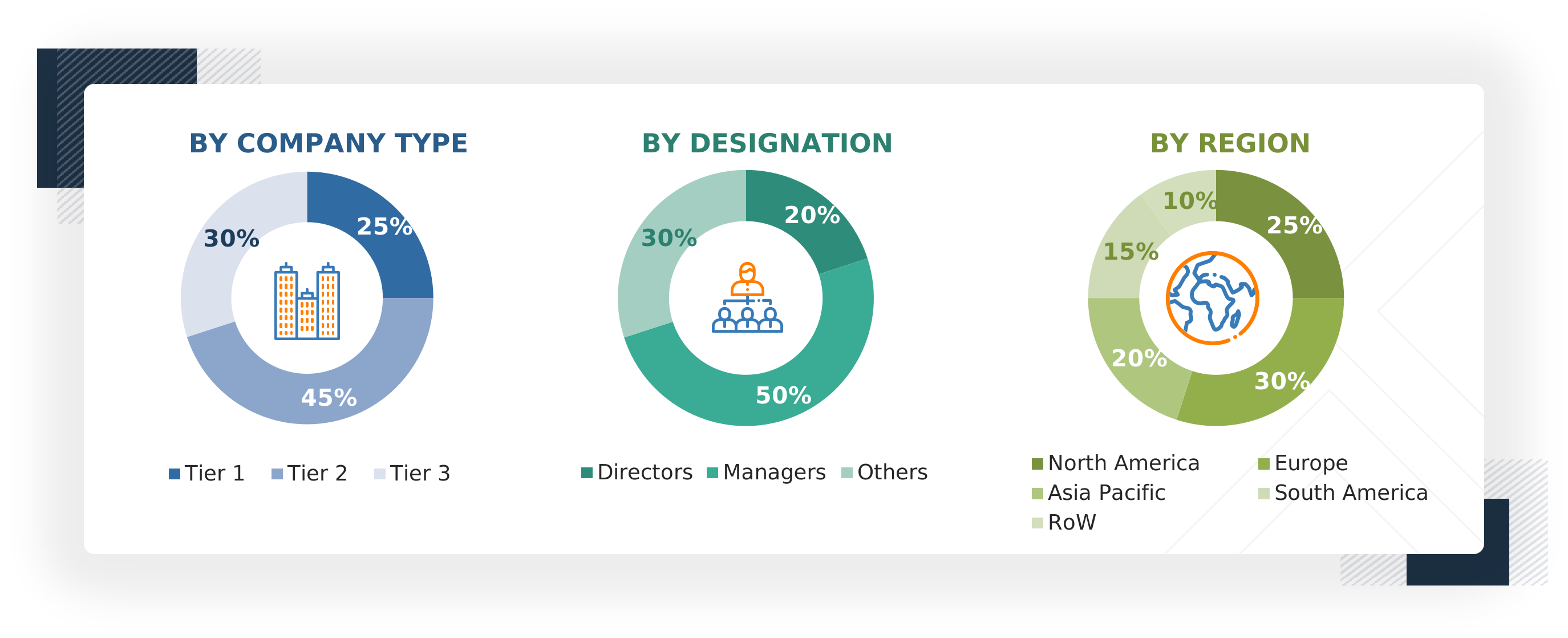
Note: The three tiers of the companies are defined based on their total revenues in 2023 or 2024,
as per the availability of financial data: Tier 1: Revenue >USD 1 billion; Tier 2: USD 100 million = Revenue = USD 1 billion;
Tier 3: Revenue
To know about the assumptions considered for the study, download the pdf brochure
|
COMPANY |
DESIGNATION |
|
Zoe (UK) |
General Manager |
|
Nestle Health Science (New Zealand) |
Sales Manager |
|
Abott (US) |
Manager |
|
Seed Health(US) |
Head of Processing Department |
|
Suggestic (US) |
Marketing Manager |
|
Viome (US) |
Sales Executive |
Market Size Estimation
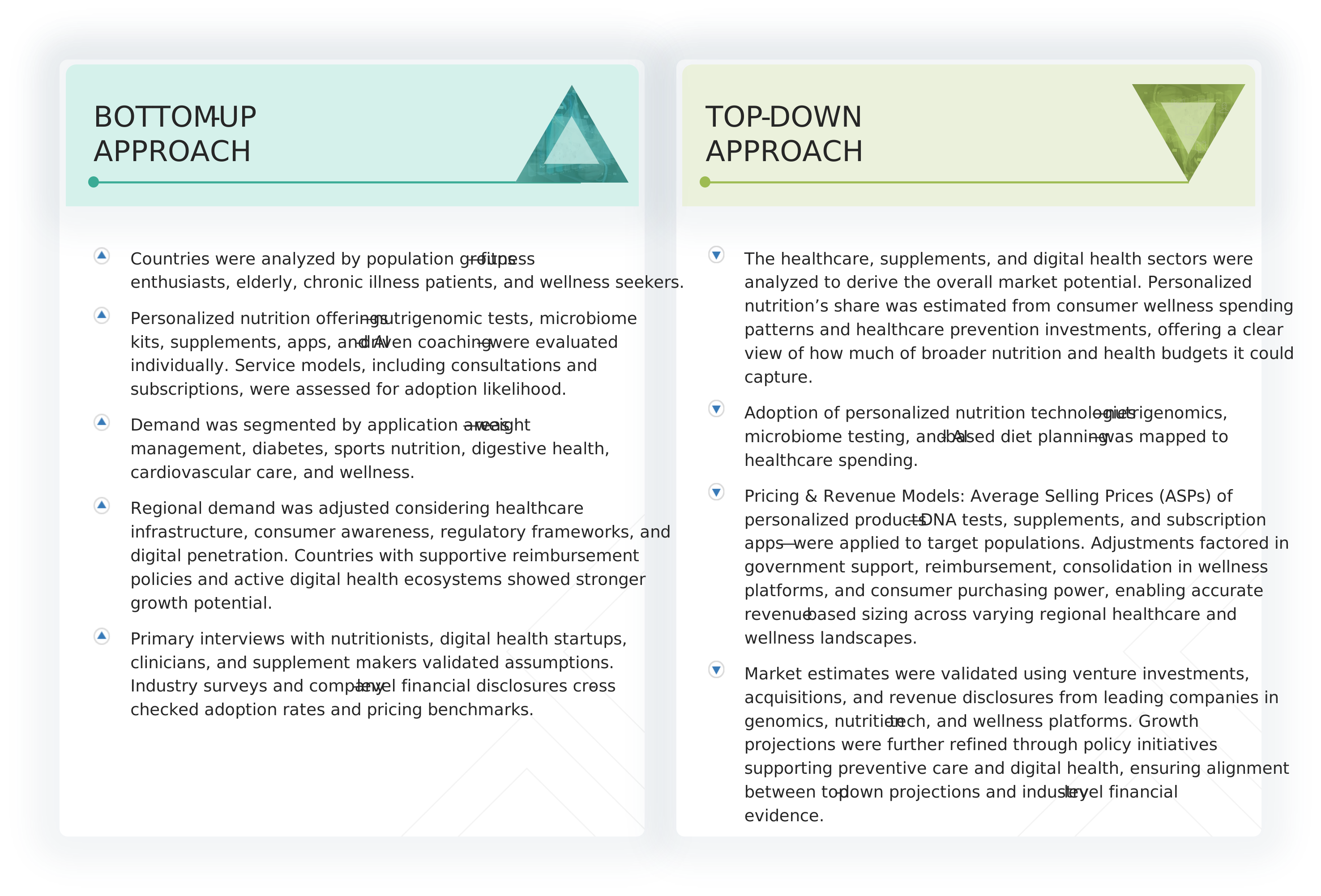
Both the top-down and bottom-up approaches were used to estimate and validate the total size of the personalized nutrition market. These approaches were also used extensively to determine the size of various subsegments in the market. The research methodology used to estimate the market size includes the following details:
- The key players in the industry and the overall markets were identified through extensive secondary research.
- All shares, splits, and breakdowns were determined using secondary sources and verified through primary sources.
- All possible parameters that affect the market covered in this research study were accounted for, viewed in extensive detail, verified through primary research, and analyzed to obtain final quantitative and qualitative data.
- The research included the study of reports, reviews, and newsletters of top market players, along with extensive interviews for opinions from leaders, such as CEOs, directors, and marketing executives.
personalized-nutrition-market : Top-Down and Bottom-Up Approach
Data Triangulation
After arriving at the overall market size from the estimation process explained above, the total market was split into several segments and subsegments. The data triangulation and market breakdown procedures were employed, wherever applicable, to estimate the overall personalized nutrition market and arrive at the exact statistics for all segments and subsegments. The data was triangulated by studying various factors and trends from the demand and supply sides. The market size was also validated using both the top-down and bottom-up approaches.
Market Definition
Personalized nutrition (PN) represents an approach aimed at delivering tailored dietary recommendations, products, or services to support both prevention and treatment of nutrition-related conditions and to improve individual health using genetic, phenotypic, medical, nutritional, and other pertinent information. Technically, personalized nutrition associates with an individual’s genetic, medical, nutritional, phenotypic, metabolic, biochemistry, and other information to produce healthy eating options as per his/her needs. Personalized nutrition is beneficial for both patients and healthy individuals.
Stakeholders
- Technology & Diagnostics Providers
- Personalized supplement manufacturers
- Functional food & beverage companies
- Digital Platforms & Service Providers
- Healthcare & Wellness Ecosystem
- Market research and consulting firms
- Intellectual property vendors
- Pharmaceutical & biotech companies
- Research institutions & universities
- Government & regulatory bodies (FDA, EFSA, regional health agencies setting safety and labeling standards)
Report Objectives
- To determine and project the size of the personalized nutrition market based on product, end-use, type, personalization basis, application, and region in terms of value over five years, ranging from 2025 to 2030
- To identify the attractive opportunities in the market by determining the largest and fastest-growing segments across regions
- To provide detailed information about the key factors influencing market growth (drivers, restraints, opportunities, and challenges)
- To analyze the opportunities in the market for stakeholders and provide details of the competitive landscape for market leaders
- To analyze the micro-markets with respect to individual growth trends, prospects, and their contribution to the total market
- To identify and profile the key players in the personalized nutrition market
- To understand the competitive landscape and identify the major growth strategies adopted by players across the key regions
Available Customizations
With the given market data, MarketsandMarkets offers customizations according to company-specific scientific needs. The following customization options are available for the report:
Product Analysis
- Product Matrix, which gives a detailed comparison of the product portfolio of each company.
Geographic Analysis as per Feasibility
With the given market data, MarketsandMarkets offers customizations according to company-specific scientific needs.
- Further breakdown of the Rest of Europe personalized nutrition market into key countries.
- Further breakdown of the Rest of Asia Pacific personalized nutrition market into key countries.
- Further breakdown of the Rest of South America personalized nutrition market into key countries.
Company Information
- Detailed analyses and profiling of additional market players (up to five)
Get the Full Personalized Nutrition Market Report
Full forecast, segment splits, and company analysis for all Personalized Nutrition Market.
- US Personalized Nutrition Market
- Canada Personalized Nutrition Market
- Mexico Personalized Nutrition Market
- Germany Personalized Nutrition Market
- France Personalized Nutrition Market
- UK Personalized Nutrition Market
- Italy Personalized Nutrition Market
- Spain Personalized Nutrition Market
- China Personalized Nutrition Market
- Japan Personalized Nutrition Market
- Australia Personalized Nutrition Market
- India Personalized Nutrition Market
- Rest Of Europe Personalized Nutrition Market
- Rest Of Apac Personalized Nutrition Market
Need a Tailored Report?
Customize this report to your needs
Get 10% FREE Customization
Customize This Report
