
Japan Medical Robots Market (2024-2029)

The Japan Medical Robots Market was valued at $560.8 Million in 2024 and projected to reach to $1276.1 Million by 2029, representing a compound annual growth rate of CAGR 17.9%. Japan's medical robots market is positioned for exceptional growth driven by demographic pressures and technological advancement.


| Market Size in | USD 26.32 MN |
| Market Forecast in | |
| CAGR | |
| Forecast Period | |
| Units Considered | Value (USD MN) |
Japan Medical Robots Market Trends and Insights
- Japan's aging population and advanced healthcare infrastructure are driving significant adoption of surgical, rehabilitation, and diagnostic robotic systems across hospitals and clinics.
- The country's strong emphasis on technological innovation and government support for healthcare automation positions Japan as a key growth market in the Asia Pacific region. Japan's 17.9% compound annual growth rate substantially outpaces global trends, reflecting the nation's commitment to addressing labor shortages in healthcare through robotic solutions.
- Japan's investment in research and development, coupled with favorable reimbursement policies, accelerates the deployment of medical robots in clinical settings.
- By 2029, Japan is expected to solidify its position as a leading adopter of medical robotics technology in Asia, driven by continuous innovation and increasing clinical evidence supporting robotic-assisted procedures..
Key Market Statistics
- CAGR (2024-2029) CAGR 17.9%
- Market Size, 2024 ~USD 560.8 Million
- Forecast, 2029 ~USD 1276.1 Million
- Country Japan
Japan Medical Robots Market Overview
Aging Population Catalyst :
Japan's rapidly aging demographic, with over 29% of the population aged 65+, is driving unprecedented demand for surgical robots, rehabilitation systems, and diagnostic automation to address healthcare workforce shortages.
Advanced Healthcare Infrastructure :
Japan's world-class medical facilities and high healthcare spending per capita create an ideal environment for adoption of cutting-edge robotic technologies in hospitals and specialized clinics nationwide.
Strong Innovation Ecosystem :
Japanese manufacturers and tech companies are leading robotic innovation, with significant R&D investments in minimally invasive surgical systems and AI-integrated diagnostic robots tailored to local healthcare needs.
Rapid Market Expansion :
The market is projected to grow from USD 560.8 million in 2024 to USD 1,276.1 million by 2029, representing a 17.9% CAGR, outpacing the global growth rate of 16.1%.
Japan Medical Robots Market Dynamics
- The country's aging society necessitates automation in surgical procedures, patient rehabilitation, and diagnostic imaging, creating sustained demand across hospital networks.
- Government initiatives supporting healthcare digitalization and robotics integration further accelerate market penetration.
- Japan's domestic robotics manufacturers, combined with international partnerships, ensure continuous innovation in specialized applications.
- By 2029, the market will likely see expanded adoption in smaller regional hospitals and outpatient clinics, democratizing access to robotic-assisted care beyond major urban centers and establishing Japan as a regional hub for medical robotics technology..
Market Ecosystem
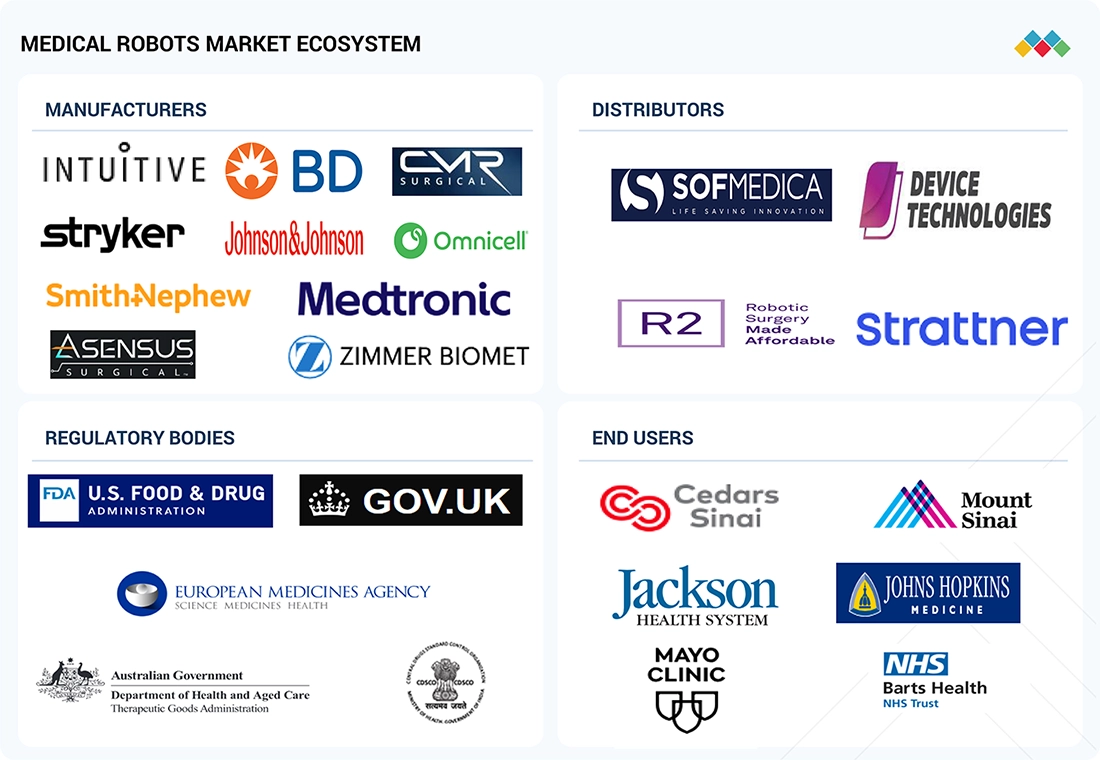
MEDICAL ROBOTS MARKET: COMMERCIAL USE CASES ACROSS INDUSTRIES
| COMPANY | USE CASE DESCRIPTION | BENEFITS |
|---|---|---|
 |
Surgical robotic systems and precision instruments designed for minimally invasive procedures across urology, gynecology, thoracic, and general surgery | Equipped with 3D visualization, multi-jointed instruments, and enhanced ergonomics to support highly controlled surgical maneuvers | Enhance surgical precision and dexterity, reduce tissue trauma and complications, support faster patient recovery, and improve consistency and reproducibility in complex minimally invasive procedures |
 |
Orthopedic robotic platform that combines CT-based planning with robotic arm guidance for knee and hip arthroplasty | Enables surgeons to execute personalized implant alignment and bone preparation based on patient-specific anatomy | Improve accuracy of implant positioning, enhance joint stability and alignment, reduce post-operative variability, and support long-term functional outcomes in joint replacement surgeries |
 |
Robotic guidance, navigation, and planning system used primarily in spine surgery | Integrates 3D planning, AI-enhanced imaging, and precise robotic guidance to support accurate screw placement and complex spinal corrections | Increase accuracy in spinal instrumentation, reduce intraoperative deviations, improve surgeon control in high-risk procedures, and enhance overall safety and predictability in spine surgeries |
 |
Compact, handheld robotic-assisted platform designed for partial and total knee arthroplasty | Uses real-time intraoperative mapping to help surgeons achieve precise ligament balancing and bone reshaping without requiring preoperative CT scans | Support personalized knee reconstruction, improve precision in bone preparation, reduce variability in soft-tissue balancing, and enhance workflow efficiency for outpatient and ASC environments |
 |
Multi-specialty robotic platforms that combine data analytics, navigation, and robotic guidance to optimize knee and hip arthroplasty as well as brain surgeries | Provide real-time anatomical data for personalized surgical execution | Increase accuracy of implant alignment, enhance surgical decision-making through real-time data, reduce complication risks, and standardize outcomes across orthopedic and neurosurgical procedures |
Logos and trademarks shown above are the property of their respective owners. Their use here is for informational and illustrative purposes only.
Related Ecosystem
Medical Devices
- Polymerase Chain Reaction (PCR)
- Magnetic Resonance Imaging (MRI)
- Disposable Autoinjectors
- Pulse Oximeters
- Blood Pressure Monitors
- Medtronic plc
- Abbott Laboratories
- Stryker Corporation
- Becton, Dickinson and Company
- JOHNSON & JOHNSON
Cardiovascular Devices
- External Defibrillators
- Implantable Cardioverter Defibrillators
- Pulse Oximeters
- Robotic Systems
- 3-Lead ECG Leadwires
- Medtronic plc
- Boston Scientific Corporation
- Abbott Laboratories
- Terumo Corporation
- KONINKLIJKE PHILIPS N.V.
Key Takeaways
- Japan's medical robots market will more than double from USD 560.8M (2024) to USD 1,276.1M (2029), driven by aging demographics and healthcare labor shortages.
- Japan's 17.9% CAGR significantly exceeds the global average of 16.1%, positioning Japan as a high-growth market within Asia Pacific.
- Japan's advanced healthcare infrastructure and government support for automation create favorable conditions for rapid medical robot adoption across surgical and rehabilitation applications.
- Japan's strong R&D ecosystem and reimbursement policies accelerate clinical deployment and market penetration of robotic-assisted medical technologies through 2029.
Medical Robots Market Report Scope
| Report Metric | Details |
|---|---|
| Base Year | 2024 |
| Fastest Growing Segment | INSTRUMENTS & ACCESSORIES (Product & Service) |
| Forecast Period | 2024–2029 |
| Growth Rate | CAGR of 16.1% from 2024 to 2029 |
| Largest Segment | HOSPITALS & CLINICS (End User) |
| Market Size Base Year (Billions) | ~USD 16.02 (2024) |
| Revenue Forecast (Billions) | ~USD 33.8 (2029) |
| Segments Covered | Product & Service, Type, Application, End User |
Japan Medical Robots Market Report Segmentation
4 segment dimensions are covered across the global market.
By Product & Service
- Instruments & Accessories
- Robotic Systems
- Services
By Type
- Assistive Robotic Systems
- Compounding Robotic Systems
- Delivery Robotic Systems
- Diagnostic Robotic Systems
- Exoskeleton Robotic Systems
- General Surgery
- Gynecological Surgery
- Hospital & Pharmacy Robotic Systems
- Hospital Robotic Systems
- Knee & Hip Surgery
- Other Hard Tissue Surgeries
- Other Hospital Robotic Systems
- Other Pharmacy Robotic Systems
- Other Rehabilitation Robotic Systems
- Other Soft Tissue Surgeries
- Other Surgery
- Pharmacy Robotic Systems
- Radiosurgery Robotic Systems
- Rehabilitation Robotic Systems
- Robotic Dispensing Systems
- Spine Surgery
- Surgical Robotic Systems
- Telepresence Robotic Systems
- Therapeutic Robotic Systems
- Urological Surgery
By Application
- Hard Tissue Surgery
- Soft Tissue Surgery
By End User
- Ambulatory Surgery Centers
- Hospitals & Clinics
- Other End Users
- Pharmacies
- Rehabilitation Centers
JAPAN: MEDICAL ROBOTS MARKET, BY END USER, 2023–2029
| Segment | 2023 | 2024 | 2025 | 2026 | 2027 | 2028 | 2029 | CAGR (%) |
|---|---|---|---|---|---|---|---|---|
| AMBULATORY SURGERY CENTERS | 108.5 | 126.8 | 148.2 | 173.2 | 202.5 | 236.5 | 276.3 | 16.9 |
| HOSPITALS & CLINICS | 809.1 | 937.1 | 1085.4 | 1257.3 | 1456.5 | 1687.4 | 1955.1 | 15.8 |
| OTHER END USERS | 20.7 | 23.5 | 26.5 | 30 | 34 | 38.4 | 43.5 | 13.1 |
| PHARMACIES | 46.2 | 52.9 | 60.5 | 69.1 | 79 | 90.4 | 103.3 | 14.3 |
| REHABILITATION CENTERS | 21.8 | 25.2 | 29.2 | 33.8 | 39.1 | 45.3 | 52.3 | 15.7 |
| TOTAL | 1006.3 | 1165.5 | 1349.9 | 1563.5 | 1811.1 | 2098 | 2430.5 | 15.8 |
Target Audience
- Medical Device Manufacturers : Surgical and diagnostic robot manufacturers need Japan-specific market data to assess expansion opportunities, localize product offerings, and compete effectively against established Japanese robotics companies in this high-growth market.
- Healthcare Providers & Hospital Networks : Hospital administrators and procurement teams require market insights to justify robotic system investments, benchmark adoption rates against peers, and plan capital expenditure budgets aligned with market growth trends.
- Investment & Private Equity Firms : Investors targeting Japan's healthcare technology sector need validated market sizing and growth forecasts to evaluate portfolio companies, identify acquisition targets, and assess return potential in medical robotics.
- Government & Healthcare Policy Makers : Japanese health ministry officials and policy advisors use market data to inform healthcare digitalization strategies, robotics adoption incentives, and workforce planning initiatives addressing demographic challenges.
- Technology Consultants & System Integrators : Consulting firms advising healthcare organizations on digital transformation need Japan market intelligence to recommend appropriate robotic solutions, estimate implementation costs, and project operational efficiency gains.
Key Companies in the Japan Medical Robots Market
| Company | HQ | Ownership | Strongest segments |
|---|---|---|---|
| CARL ZEISS AG | Germany | Public Company | Ophthalmology diagnostics (slit lamps, OCT, fundus, perimetry, tonometers),Surgical ophthalmology (microscopes, phaco, vitrectomy, biometers, IOLs),Refractive and laser vision correction (VISUMAX and related systems/consumables), |
| KINDRED HEALTHCARE INC. | United States | Private Company | Long-term acute care hospitals (LTACH) drug-related revenue,Inpatient rehabilitation facilities (IRF) drug-related revenue,Contract rehabilitation and ancillary services drug-related revenue, |
| IROBOT CORPORATION | United States | Private Company | Roomba robot vacuums,Roomba vacuum and mop combos,Robot mop accessories and consumables, |
| APPLE INC | United States | Public Company | iPhone,Mac,iPad, |
| GOOGLE INC | United States | Public Company | Search and other ads (including Maps and core Google Services ads),YouTube ads and consumer subscriptions,Google Cloud (infrastructure, Vertex AI, Gemini enterprise, data, cybersecurity, Workspace), |
| IBM CORPORATION | United States | Public Company | Software (Hybrid Cloud and AI Platforms, Data and Automation),Consulting (Strategy, Technology Services, Intelligent Operations),Infrastructure (Servers, Storage, Hybrid Cloud Infrastructure Services), |
| MICROSOFT CORPORATION | United States | Public Company | Intelligent Cloud (Azure, server products, GitHub, Nuance, enterprise services),Productivity and Business Processes (Microsoft 365, LinkedIn, Dynamics),Personal Computing (Windows, devices, gaming, search and news advertising), |
| THE TIMKEN | United States | Public Company | Engineered Bearings,Industrial Motion Products,Services and Repair, |
| CONMED CORPORATION | United States | Public Company | Orthopedic sports medicine and power tools (BioBrace, Y-Knot, TruShot, Hall),General surgery (AirSeal, Buffalo Filter, endomechanical, electrosurgery),Endoscopic technologies (GI therapeutic and diagnostic portfolio), |
| LENOVO | China | Public Company | Small form factor PCs and embedded signage controllers,Thin clients and dedicated media players,Tablets and smart devices for kiosks/POS displays, |
| INTUITIVE SURGICAL, INC. | United States | Public Company | da Vinci capital systems,da Vinci instruments, stapling, energy, and accessories,Service, training, and digital programs, |
| STRYKER | United States | Public Company | Orthopaedic Implants (Hip, Knee, Shoulder, Ankle, Trauma & Extremities),MedSurg Equipment & Patient Handling,Neurotechnology & Stroke/VTE Intervention, |
| BECTON, DICKINSON AND COMPANY | United States | Public Company | Medical Essentials (syringes, needles, catheters, sharps, specimen collection),Connected Care (infusion, medication management, pharmacy automation, informatics),BioPharma Systems (prefillable drug delivery systems), |
| MEDTRONIC | Ireland | Public Company | Cardiovascular Portfolio,Neuroscience Portfolio,Medical Surgical Portfolio (incl. Diabetes), |
| OMNICELL, INC. | United States | Public Company | Automated Dispensing Systems (Titan XT, XT/XTExtend, point-of-care cabinets),Central Pharmacy Automation & IV Compounding Services,Specialty Pharmacy Services & EnlivenHealth Retail Solutions, |
| ZIMMER BIOMET | United States | Public Company | Knee and Hip Reconstructive Implants,S.E.T. (Sports Medicine, Extremities, Trauma, CMFT),Digital, Robotics, Bone Cement and Surgical Products, |
| SMITH+NEPHEW | United Kingdom | Public Company | Orthopaedics (Knee, Hip, Trauma & Other Reconstruction),Sports Medicine & ENT (Joint Repair and Arthroscopic Enabling Technologies),Advanced Wound Management (Care, Bioactives, Devices), |
| EKSO BIONICS HOLDINGS, INC. | United States | Public Company | EksoNR (clinical neurorehab exoskeleton),Ekso Indego Therapy (clinic-focused powered exoskeleton),Ekso Indego Personal (home/personal orthosis), |
| ASENSUS SURGICAL, INC. | United States | Private Company | Robotic-assisted surgical systems (Senhance, Luna capital),Reusable instruments and accessories,Digital surgery, augmented intelligence, data and cloud services, |
| RENISHAW PLC. | United Kingdom | Public Company | Manufacturing technologies (metrology, process control, encoders, AM),Analytical instruments and medical devices, |
| BIONIK LABORATORIES CORP. | United States | Public Company | InMotion ARM systems,InMotion ARM/HAND systems,InMotion Connect subscriptions and services, |
| KUKA AG | Germany | Private Company | Industrial robots and controllers,Systems integration and turnkey production cells,Mobile robots, AGVs, and logistics automation, |
CARL ZEISS AG
Carl Zeiss AG is a German optical systems and optoelectronics company founded in 1846 with 5,798 employees. Operating as a public company, it specializes in precision optics and imaging technology across industrial, medical, and consumer markets.
KINDRED HEALTHCARE INC.
Kindred Healthcare Inc. is a United States-based healthcare services company founded in 1985 with 64,200 employees. As a private company, it provides post-acute care services including nursing, rehabilitation, and hospice care.
IROBOT CORPORATION
iRobot Corporation is a United States robotics company founded in 1990 with 541 employees. Operating as a private company, it designs and manufactures robotic devices for both consumer and commercial applications.
APPLE INC
Apple Inc. is a United States technology company founded in 1976 with 166,000 employees. As a public company, it designs, manufactures, and sells consumer electronics, software, and digital services including iPhones, computers, and cloud platforms.
GOOGLE INC
Google Inc. is a United States technology company founded in 1998 with 194,668 employees. As a public company, it operates a dominant search engine and provides digital advertising, cloud computing, and software services.
IBM CORPORATION
IBM Corporation is a United States information technology company founded in 1911 with 264,300 employees. As a public company, it provides enterprise hardware, software, cloud services, and IT consulting solutions.
MICROSOFT CORPORATION
Microsoft Corporation is a United States software and technology company founded in 1975 with 228,000 employees. As a public company, it develops and sells operating systems, productivity software, cloud services, and gaming platforms.
THE TIMKEN
The Timken Company is a United States industrial manufacturer founded in 1899 with 19,000 employees. As a public company, it specializes in engineered bearings and power transmission products for diverse industrial applications.
CONMED CORPORATION
CONMED Corporation is a United States medical technology company founded in 1970 with 3,900 employees. As a public company, it develops and manufactures surgical instruments and patient monitoring equipment.
LENOVO
Lenovo is a Chinese technology company founded in 1984. As a public company, it manufactures and sells personal computers, servers, and other computing devices globally.
INTUITIVE SURGICAL, INC.
Intuitive Surgical, Inc. is a United States medical robotics company founded in 1995 with 17,021 employees. As a public company, it designs and manufactures robotic surgical systems and related instruments.
STRYKER
Stryker is a United States medical technology company founded in 1941 with 56,000 employees. As a public company, it manufactures orthopedic implants, surgical equipment, and patient care products.
BECTON, DICKINSON AND COMPANY
Becton, Dickinson and Company is a United States medical technology company founded in 1897 with 72,000 employees. As a public company, it produces medical devices, laboratory equipment, and diagnostic systems.
MEDTRONIC
Medtronic is an Ireland-based medical technology company founded in 1949 with 95,000 employees. As a public company, it develops and manufactures medical devices and therapies for various healthcare conditions.
OMNICELL, INC.
Omnicell, Inc. is a United States healthcare technology company founded in 1992 with 3,525 employees. As a public company, it provides medication and supply management automation solutions for healthcare facilities.
ZIMMER BIOMET
Zimmer Biomet is a United States orthopedic medical device company founded in 1927 with 17,000 employees. As a public company, it manufactures joint replacement implants, surgical instruments, and orthopedic products.
SMITH+NEPHEW
Smith+Nephew is a United Kingdom medical technology company founded in 1856 with 16,988 employees. As a public company, it develops and manufactures orthopedic implants, wound care products, and surgical equipment.
EKSO BIONICS HOLDINGS, INC.
Ekso Bionics Holdings, Inc. is a United States robotics company founded in 2005 with 53 employees. As a public company, it designs and manufactures exoskeleton technology for medical rehabilitation and industrial applications.
ASENSUS SURGICAL, INC.
Asensus Surgical, Inc. is a United States surgical robotics company with 208 employees. Operating as a private company, it develops robotic-assisted surgical systems and digital surgery platforms.
RENISHAW PLC.
Renishaw PLC is a United Kingdom precision engineering company founded in 1973 with 4,975 employees. As a public company, it manufactures metrology, healthcare, and industrial automation products.
BIONIK LABORATORIES CORP.
Bionik Laboratories Corp. is a United States medical robotics company founded in 2010 with 12 employees. As a public company, it develops robotic rehabilitation and mobility assistance devices.
KUKA AG
KUKA AG is a German robotics and automation company founded in 1898 with 14,985 employees. Operating as a private company, it manufactures industrial robots and automation systems.
Reasons to Buy this Report
- Market Size & Growth Validation : Obtain precise market valuation (USD 560.8M in 2024) and verified forecast data (USD 1,276.1M by 2029) to support investment decisions, business planning, and competitive positioning in Japan's high-growth medical robotics sector.
- Demographic-Driven Opportunity Analysis : Understand how Japan's aging population structure creates specific demand patterns for surgical, rehabilitation, and diagnostic robots, enabling targeted product development and market entry strategies aligned with local healthcare needs.
- Competitive Landscape Intelligence : Identify key Japanese and international players, their market share, technology differentiation, and partnership strategies to benchmark performance and identify white-space opportunities in underserved segments.
- Regulatory & Reimbursement Insights : Access Japan-specific regulatory pathways, healthcare reimbursement models, and government incentives for medical robotics adoption to navigate market entry and accelerate commercialization timelines.
- Strategic Growth Roadmap : Leverage detailed market segmentation by robot type, application, and end-user to develop data-driven expansion strategies and identify high-potential niches within Japan's rapidly evolving medical robotics ecosystem.
Frequently asked questions
What is the current size of Japan's medical robots market in 2024?
Japan's medical robots market is valued at USD 560.8 million in 2024, reflecting strong adoption of robotic technologies across surgical, rehabilitation, and diagnostic applications.
What is the projected market size for Japan's medical robots by 2029?
Japan's medical robots market is forecast to reach USD 1,276.1 million by 2029, representing more than a doubling of market value over the five-year period.
What is Japan's medical robots market CAGR?
Japan's medical robots market is growing at a compound annual growth rate of 17.9%, outpacing the global CAGR of 16.1% and indicating accelerating market momentum.
Why is Japan's medical robots market growing faster than the global average?
Japan's rapid growth is driven by an aging population, healthcare labor shortages, advanced medical infrastructure, strong government support for automation, and favorable reimbursement policies that encourage robotic adoption.
Which applications are driving growth in Japan's medical robots market?
Surgical robots, rehabilitation robots, and diagnostic robotic systems are the primary growth drivers in Japan, supported by clinical evidence and increasing hospital investment in automation technologies.
RESEARCH METHODOLOGY
This market research study involved the extensive use of secondary sources, directories, and databases to identify and collect information useful for this technical, market-oriented, and financial study of the medical robots market. In-depth interviews were conducted with various primary respondents, including key industry participants, subject-matter experts (SMEs), C-level executives of key market players, and industry consultants, among other experts, to obtain and verify critical qualitative and quantitative information and to assess market prospects. The size of the medical robots market was estimated through various secondary research approaches and triangulated with inputs from primary research to arrive at the final market size.
Secondary Research
The secondary research process involved the widespread use of secondary sources, directories, databases (such as Bloomberg Businessweek, Factiva, and D&B Hoovers), white papers, annual reports, company house documents, investor presentations, and SEC filings of companies. Some non-exclusive secondary sources include the World Health Organization (WHO), the Organisation for Economic Co-operation and Development (OECD), Ambulatory surgery centers (ASCs), Minimally Invasive Robotic Association (MIRA), Clinical Robotic Surgery Association (CRSA), American Association of Healthcare Administrative Management (AAHAM), Centers for Disease Control and Prevention (CDC), American Medical Group Association (AMGA), Centers for Medicare & Medicaid Services (CMS), American Hospital Association (AHA), Expert Interviews, and MarketsandMarkets Analysis.
Secondary research was used to identify and collect information useful for the extensive, technical, market-oriented, and commercial study of the medical robots market. It was also used to obtain important information about the key players and market classification and segmentation according to industry trends to the bottom-most level, and key developments related to market and technology perspectives. A database of the key industry leaders was also prepared using secondary research.
Primary Research
Extensive primary research was conducted after acquiring basic knowledge about the global medical robots market scenario through secondary research. Several primary interviews were conducted with market experts from both the demand side (Hospital personnel, department heads, hospital directors, corporate personnel) and supply side (such as C-level and D-level executives, technology experts, software developers, marketing and sales managers, among others) across five major regions—North America, Europe, the Asia Pacific, Latin America, the Middle East, and Africa. This primary data was collected through questionnaires, e-mails, online surveys, personal interviews, and telephonic interviews.
Breakdown of Primary Interviews
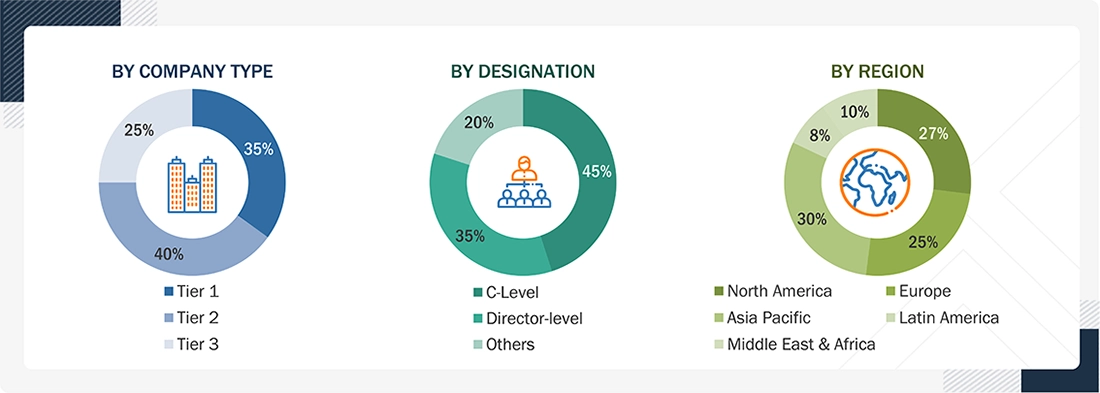
Notes: C-level primaries include CEOs, CFOs, COOs, and VPs.
Other designations include sales managers, marketing managers, business development managers, product managers, distributors, and suppliers.
Companies are classified into tiers based on their total revenue. As of 2023, Tier 1 = >USD 10.00 billion, Tier 2 = USD 1.00 billion to USD 10.00 billion, and Tier 3 = <USD 1.00 billion.
Source: MarketsandMarkets Analysis
To know about the assumptions considered for the study, download the pdf brochure
Market Size Estimation
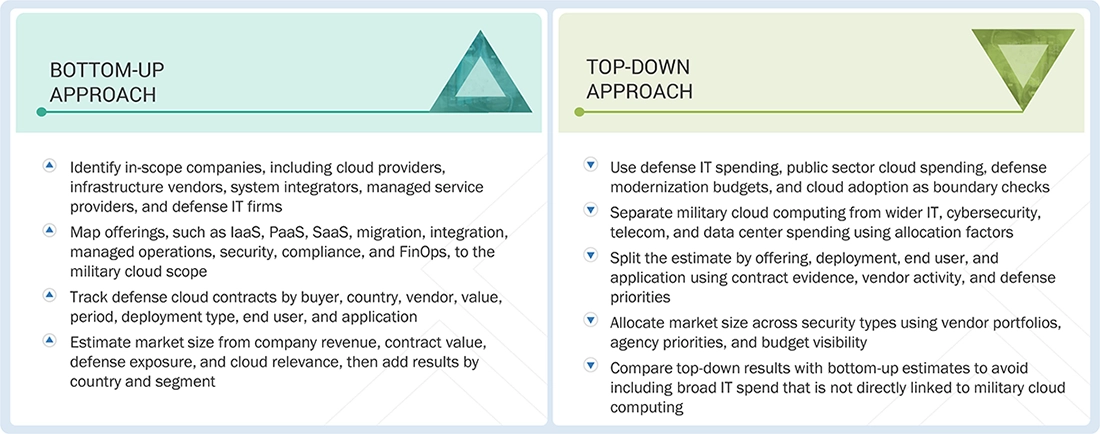
Both top-down and bottom-up approaches were used to estimate and validate the total size of the global medical robots market. These methods were also used extensively to estimate the size of various subsegments in the market. The research methodology used to estimate the market size includes the following:
- Key players in the global medical robots market were identified through secondary research, and their global market shares were determined through primary and secondary research
- The research methodology included the study of the annual and quarterly financial reports and regulatory filings, data books of major market players, and interviews with industry experts for detailed market insights.
- All percentage shares, splits, and breakdowns for the global medical robots market were determined by using secondary sources and verified through primary sources.
- All key macro indicators affecting the revenue growth of market segments and subsegments have been accounted for, viewed in extensive detail, verified through primary research, and analyzed to get validated and verified quantitative and qualitative data.
- The gathered market data was consolidated and added with detailed inputs and analysis, and presented in this report.
Medical Robots Market : Top-Down and Bottom-Up Approach
Data Triangulation
After arriving at the overall market size from the market size estimation process explained above, the medical robots market was split into segments and subsegments. To complete the overall market engineering process and arrive at the exact statistics for all segments and subsegments, data triangulation and market breakdown procedures were employed, wherever applicable. The data was triangulated by studying various factors and trends from both the demand and supply sides.
Market Definition
Medical robots are advanced technological systems designed to assist healthcare professionals in various medical procedures, tasks, and interventions. These robots are equipped with sensors, actuators, and sophisticated control systems that enable them to perform specific functions autonomously or under the guidance of human operators.
Medical robots are utilized across different domains within healthcare, including surgery, rehabilitation, diagnostics, pharmacy automation, and patient care. They play a crucial role in enhancing precision, efficiency, and safety in medical interventions, contributing to improved patient outcomes, reduced complications, and enhanced healthcare delivery.
Key Stakeholders
- Manufacturers of medical robots
- Suppliers and distributors of medical robots
- Third-party refurbishers/suppliers
- Clinical settings
- Educational institutions
- Group purchasing organizations (GPOs)
- Academic medical centers and universities
- Corporate entities
- Community centers
- Government institutes
- Market research & consulting firms
- Contract manufacturing organizations (CMOs)
- Venture capitalists & investors
Report Objectives
- To define, describe, and forecast the medical robots market by product & service, type, end user, and region
- To provide detailed information regarding the major factors influencing the market growth (such as drivers, restraints, opportunities, and challenges)
- To strategically analyze micromarkets1 with respect to individual growth trends, prospects, and contributions to the overall medical robots market
-
To analyze the opportunities in the market for stakeholders and provide details of
the competitive landscape for market leaders - To profile the key players in the market and comprehensively analyze their market shares and core competencies2
-
To forecast the size of the market segments with respect to five main regions:
North America, Asia Pacific, Europe, Latin America, and the Middle East & Africa - To track and analyze competitive developments such as product launches & approvals, acquisitions, expansions, partnerships, deployments, agreements, and collaborations in the overall medical robots market
- To benchmark players within the market using the proprietary Company Evaluation Matrix framework, which analyzes market players on various parameters within the broad categories of business and product strategy
Available customizations:
With the given market data, MarketsandMarkets offers customizations as per the company’s specific needs. The following customization options are available for the report:
Geographic Analysis
- Further breakdown of the Rest of Europe medical robots market into Switzerland, Russia, and others
- Further breakdown of the Rest of Asia Pacific medical robots market into South Korea, Singapore, and others
Get the Full Medical Robots Market Report
Full forecast, segment splits, and company analysis for all Medical Robots Market.
- Canada Medical Robots Market
- US Medical Robots Market
- Germany Medical Robots Market
- UK Medical Robots Market
- France Medical Robots Market
- Italy Medical Robots Market
- Spain Medical Robots Market
- China Medical Robots Market
- India Medical Robots Market
- Brazil Medical Robots Market
- Mexico Medical Robots Market
Need a Tailored Report?
Customize this report to your needs
Get 10% FREE Customization
Customize This Report
