
US Simulators Market (2025-2030)

The US Simulators Market was valued at $3935.3 Million in 2025 and projected to reach to $5332.8 Million by 2030, representing a compound annual growth rate of 6.3%. The US Simulators Market is poised for steady expansion through 2030, supported by continuous modernization of military training infrastructure and increased pilot certification requirements.


| Market Size in | USD 26.32 MN |
| Market Forecast in | |
| CAGR | |
| Forecast Period | |
| Units Considered | Value (USD MN) |
US Simulators Market Trends and Insights
- The US market benefits from substantial defense spending, advanced aerospace manufacturing capabilities, and significant investment in pilot training and military readiness programs.
- The US dominates North America's simulator sector, driven by demand from commercial aviation, military applications, and emerging autonomous vehicle testing requirements. Growth in the US market is underpinned by modernization of training infrastructure, increased adoption of virtual reality and AI-enabled simulation technologies, and regulatory mandates for pilot certification and crew training.
- The US aerospace and defense sector's emphasis on cost reduction and operational efficiency continues to drive simulator adoption across commercial airlines, defense contractors, and government agencies.
- By 2030, the US market is expected to capture a significant share of global simulator demand, supported by technological innovation and sustained capital investment in training ecosystems..
Key Market Statistics
- CAGR (2025-2030) 6.3% CAGR
- Market Size, 2025 ~USD 3935.3 Million
- Forecast, 2030 ~USD 5332.8 Million
- Country US
US Simulators Market Overview
Market Valuation :
The US Simulators Market is valued at $3,935.3 million in 2025, with projected growth to $5,332.8 million by 2030, driven by robust defense budgets and aerospace modernization initiatives.
Growth Trajectory :
The US market exhibits a CAGR of 6.3% through 2030, outpacing global growth rates and reflecting strong domestic demand for advanced training and simulation technologies in military and commercial aviation sectors.
Defense Investment :
Substantial US defense spending and military readiness programs fuel simulator adoption across pilot training, combat readiness, and tactical operations, positioning the country as a key market driver.
Aerospace Leadership :
Advanced aerospace manufacturing capabilities and leading commercial aviation operators in the US create sustained demand for high-fidelity flight simulators and training systems.
US Simulators Market Dynamics
- Defense procurement budgets remain robust, with significant allocations toward next-generation simulation technologies for fighter jets, transport aircraft, and rotorcraft.
- Commercial aviation operators are investing heavily in full-flight simulators to enhance pilot proficiency and reduce training costs. Emerging technologies including artificial intelligence, virtual reality, and cloud-based simulation platforms are reshaping the US market landscape.
- Government initiatives to upgrade training facilities at military bases and commercial flight schools will sustain demand.
- The market's 6.3% CAGR reflects both replacement cycles for aging simulators and expansion of training capacity to meet pilot shortage challenges..
Market Ecosystem
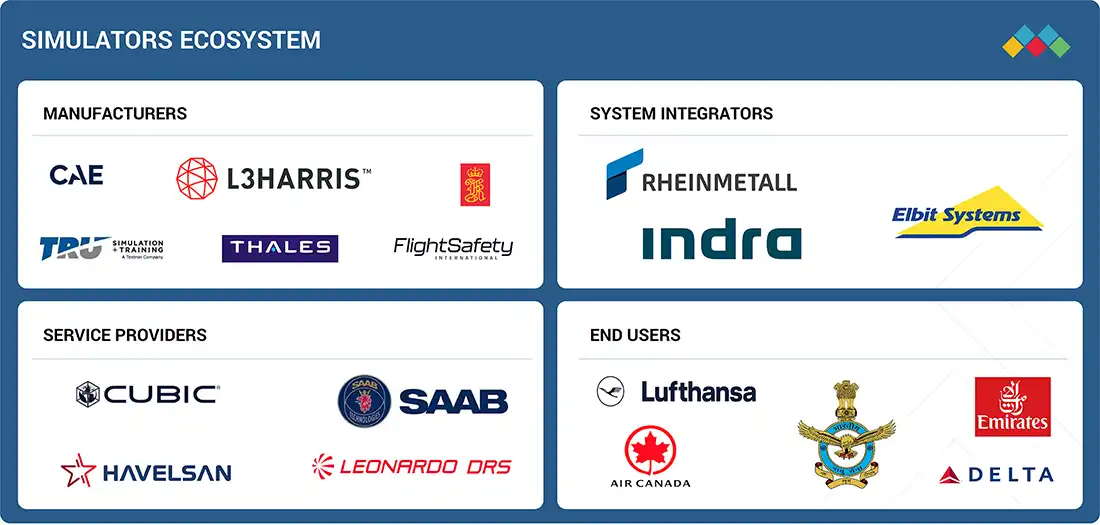
simulators market: COMMERCIAL USE CASES ACROSS INDUSTRIES
| COMPANY | USE CASE DESCRIPTION | BENEFITS |
|---|---|---|
 |
Full-flight simulators used for type-rating commercial pilots on Airbus A320 and Boeing 737 | Cuts training costs and flight hours while ensuring pilots meet regulatory certification standards |
 |
Cabin crew simulators replicate in-flight emergencies such as fire, decompression, and evacuation | Improves crew readiness and compliance with safety mandates |
 |
Military jet trainers with high-fidelity cockpits for tactical flight missions | Enables safe training of combat maneuvers without risking aircraft or pilots |
 |
Armored vehicle simulators replicate battlefield driving and gunnery scenarios | Reduces fuel, ammunition, and maintenance costs during crew training |
 |
Bridge simulators for ship navigation and maneuvering in congested ports | Enhances ship safety and reduces collision or grounding risk |
Logos and trademarks shown above are the property of their respective owners. Their use here is for informational and illustrative purposes only.
Related Ecosystem
Aviation
- Narrow Body Aircraft
- Wide Body Aircraft
- Military Helicopters
- Special Mission Aircraft
- Fighter Aircraft
- HONEYWELL INTERNATIONAL INC.
- COLLINS AEROSPACE
- Thales group
- Safran group
- HEICO Corporation
Key Takeaways
- The US Simulators Market is valued at $3,935.3 million in 2025 and will reach $5,332.8 million by 2030, growing at a 6.3% CAGR.
- The US market is driven by defense modernization, commercial aviation training demand, and regulatory compliance requirements for pilot certification.
- Advanced technologies including virtual reality, artificial intelligence, and cloud-based simulation platforms are accelerating adoption across the US aerospace and defense sector.
- The US maintains the largest simulator market in North America, supported by substantial government and commercial investment in training infrastructure and operational readiness.
Simulators Market Report Scope
| Report Metric | Details |
|---|---|
| Base Year | 2025 |
| Fastest Growing Segment | HYBRID SIMULATION (Technique) |
| Forecast Period | 2025–2030 |
| Growth Rate | CAGR of 7.3% from 2025 to 2030 |
| Largest Segment | AIR (Platform) |
| Market Size Base Year (Billions) | ~USD 13.6 (2025) |
| Revenue Forecast (Billions) | ~USD 19.35 (2030) |
| Segments Covered | Solution, Product, Service, Platform, Type, Application, Technique |
US Simulators Market Report Segmentation
7 segment dimensions are covered across the global market.
By Solution
- Products
- Services
By Product
- Hardware
- Software
By Service
- Hardware Upgrades
- Installation & Support
- Maintenance
- Software Upgrades
- Training-As-A-Service
By Platform
- Air
- Land
- Marine
By Type
- Air Traffic Control Simulators
- Command & Control Simulators
- Driver Simulators
- Fixed Base Simulators
- Flight Training Devices
- Full Flight Simulators
- Full Mission Bridge Simulators
- Full Mission Flight Simulators
- Operation Workstation Simulators
- Part Task Trainers
- Tactical Training Simulators
- Vessel Traffic Control Simulators
By Application
- Commercial Training
- Military Training
By Technique
- Constructive Simulation
- Hybrid Simulation
- Live Simulation
- Virtual Simulation
US: SIMULATORS MARKET, BY APPLICATION, 2025–2030
| Segment | 2025 | 2026 | 2027 | 2028 | 2029 | 2030 | CAGR (%) |
|---|---|---|---|---|---|---|---|
| COMMERCIAL TRAINING | 1153.4 | 1282.6 | 1342.2 | 1409.9 | 1496.7 | 1589.2 | 6.6 |
| MILITARY TRAINING | 2781.8 | 3078.8 | 3206.8 | 3352.5 | 3542.3 | 3743.6 | 6.1 |
| TOTAL | 3935.3 | 4361.5 | 4549 | 4762.3 | 5039 | 5332.8 | 6.3 |
Target Audience
- Defense Contractors : Develop competitive strategies and bid on military simulator contracts by understanding US defense budget allocations, procurement cycles, and training modernization priorities.
- Aerospace Manufacturers : Align simulator product portfolios with US commercial and military aircraft programs, ensuring compliance with certification standards and meeting operator training requirements.
- Flight Training Organizations : Optimize training infrastructure investments and simulator procurement decisions based on market growth forecasts and emerging technology adoption trends in the US aviation sector.
- Technology Solution Providers : Identify integration opportunities for AI, VR, and cloud-based platforms within the US simulator market, targeting military bases, commercial airlines, and independent training centers.
- Investment & Private Equity Firms : Evaluate acquisition targets and portfolio companies in the US simulator market with detailed growth projections, competitive positioning, and sector-specific risk assessments.
Key Companies in the US Simulators Market
| Company | HQ | Ownership | Strongest segments |
|---|---|---|---|
| ALTEN | United States | Public Company | Full Flight & Fixed Base Flight Simulators (engineering and software services),Full Mission & Tactical Training Simulators (aerospace, defense, security),Naval & Bridge Simulators (Full Mission Bridge, Vessel Traffic), |
| KRATOS DEFENSE & SECURITY SOLUTIONS | United States | Public Company | Tactical Training Simulators,Part-Task Trainers & Operational Workstations,C2 and ISR-Linked Simulation, |
| CAE INC. | Canada | Public Company | Full Flight Simulators & Civil Aviation Training Devices,Full Mission & Tactical Training Simulators (Defense),Fixed Base & Part-Task Trainers, |
| THALES | France | Public Company | Full Flight Simulators,Full Mission Simulators,Tactical Training Simulators, |
| RHEINMETALL AG | Germany | Public Company | Tactical Training Simulators (land and joint),Full Mission and Fixed Base Simulators,Part-Task Trainers and Operational Workstations, |
| KONGSBERG GRUPPEN | Norway | Public Company | Full Mission Bridge Simulators,Vessel Traffic and Port Monitoring Simulators,C2 and Operational Workstation Simulators, |
| L3HARRIS TECHNOLOGIES, INC. | United States | Public Company | Full Mission Simulators (air and joint),Tactical Training & Part-Task Trainers,C2, ATC, and Vessel Traffic Simulators, |
| SAAB AB | Sweden | ||
| WÄRTSILÄ | United States | Public Company | Full Mission Bridge Simulators,Vessel Traffic and Port & Fleet Optimization Simulators,Part-Task Trainers and Operational Workstations, |
| GENERAL DYNAMICS CORPORATION | United States | Public Company | Full Mission Simulators,Tactical Training Simulators,C2 and Operational Workstation Simulators, |
| ELBIT SYSTEMS | Israel | ||
| INDRA SISTEMAS, S.A. | United States | ||
| BOEING | United States | ||
| RTX | United States | Public Company | Full Flight Simulators,Full Mission Simulators,Tactical Training Systems, |
ALTEN
ALTEN is a publicly traded engineering and IT services company founded in 1988 with 56,376 employees across the United States. The company provides consulting, engineering, and technology solutions to clients across multiple industries.
KRATOS DEFENSE & SECURITY SOLUTIONS
Kratos Defense & Security Solutions is a publicly traded defense contractor founded in 1994 with 4,300 employees in the United States. The company specializes in defense and security technology solutions.
CAE INC.
CAE Inc. is a Canadian public company founded in 1947 with 13,000 employees. The company is a global leader in simulation and training solutions for aviation and defense sectors.
THALES
Thales is a French multinational public company founded in 1893 with 82,111 employees. The company operates in aerospace, defense, transportation, and security sectors globally.
RHEINMETALL AG
Rheinmetall AG is a German publicly traded company founded in 1889 with 28,815 employees. The company is a major defense and automotive supplier serving military and commercial markets.
KONGSBERG GRUPPEN
Kongsberg Gruppen is a Norwegian public company founded in 1814 with 7,586 employees. The company operates in defense, aerospace, and maritime technology sectors.
L3HARRIS TECHNOLOGIES, INC.
L3Harris Technologies, Inc. is a publicly traded U.S. defense contractor founded in 1895 with 45,000 employees. The company provides advanced defense, space, and security solutions.
SAAB AB
SAAB AB is a Swedish company specializing in defense, aerospace, and security solutions. The company develops advanced technology products and systems for military and commercial applications.
WÄRTSILÄ
Wärtsilä is a publicly traded company founded in 1834 with 17,938 employees based in the United States. The company provides solutions for the marine and energy sectors.
GENERAL DYNAMICS CORPORATION
General Dynamics Corporation is a publicly traded U.S. defense contractor founded in 1899 with 117,000 employees. The company is a leading provider of aerospace, combat systems, and information technology solutions.
ELBIT SYSTEMS
Elbit Systems is an Israeli defense and technology company specializing in aerospace, land, and naval systems. The company develops advanced defense electronics and unmanned systems.
INDRA SISTEMAS, S.A.
Indra Sistemas, S.A. is a company based in the United States operating in the technology and defense sectors. The company provides IT and defense solutions to government and commercial clients.
BOEING
Boeing is a major U.S. aerospace and defense company headquartered in the United States. The company is a leading manufacturer of commercial aircraft, defense systems, and space technology.
RTX
RTX is a publicly traded U.S. aerospace and defense company founded in 1934 with 180,000 employees. The company is a leading provider of advanced technologies and systems for defense, space, and commercial markets.
Reasons to Buy this Report
- Strategic Market Sizing : Obtain precise valuation data for the US market ($3.9B in 2025) with detailed forecasts through 2030, enabling accurate budget allocation and investment planning for simulators and training solutions.
- Competitive Intelligence : Understand market dynamics specific to the US aerospace and defense sectors, including key drivers, barriers, and opportunities that differentiate this market from global trends.
- Growth Opportunity Identification : Identify high-potential segments within US military and commercial aviation markets, including emerging technologies like AI-enhanced and VR-based simulators driving the 6.3% CAGR.
- Investment Decision Support : Leverage comprehensive market analysis to support M&A strategies, product development roadmaps, and market entry decisions specific to the US simulator ecosystem.
- Regulatory & Procurement Insights : Gain actionable intelligence on US defense spending trends, military modernization programs, and FAA certification requirements influencing simulator procurement and adoption.
Frequently asked questions
What is the current size of the US Simulators Market?
The US Simulators Market is valued at $3,935.3 million in 2025 and is expected to grow to $5,332.8 million by 2030.
What is the growth rate of the US Simulators Market?
The US Simulators Market is projected to grow at a compound annual growth rate (CAGR) of 6.3% from 2025 to 2030.
What are the primary drivers of growth in the US Simulators Market?
Key drivers include defense modernization initiatives, commercial aviation training requirements, regulatory mandates for pilot certification, and adoption of advanced technologies such as virtual reality and artificial intelligence.
Which sectors contribute most to the US Simulators Market?
The US market is primarily driven by military and defense applications, commercial aviation training, aerospace manufacturing, and emerging autonomous vehicle simulation testing.
How does the US market compare to the global Simulators Market?
The US represents a significant portion of the global market, with a 6.3% CAGR compared to the global CAGR of 7.3%, reflecting the mature but steady growth of the US aerospace and defense sector.
RESEARCH METHODOLOGY
The study involved four major activities in estimating the current size of the simulators market. Exhaustive secondary research collected information on the market, its adjacent markets, and its parent market. The next step was to validate these findings, assumptions, and sizing with industry experts across the value chain through primary research. Demand-side analyses were carried out to estimate the overall size of the market. After that, market breakdown and data triangulation procedures were used to estimate the sizes of different segments and subsegments of the simulators market.
Secondary Research
In the secondary research process, various sources were referred to, to identify and collect information for this study. The secondary sources included government sources, such as SIPRI; corporate filings, such as annual reports, press releases, and investor presentations of companies; white papers, journals, and certified publications; and articles from recognized authors, directories, and databases.
Primary Research
Extensive primary research was conducted after acquiring information regarding the simulators market scenario through secondary research. Several primary interviews were conducted with market experts from the demand and supply sides across major countries of North America, Europe, Asia Pacific, the Middle East, and the Rest of the World, which includes Africa and Latin America. Primary data was collected through questionnaires, emails, and telephonic interviews.
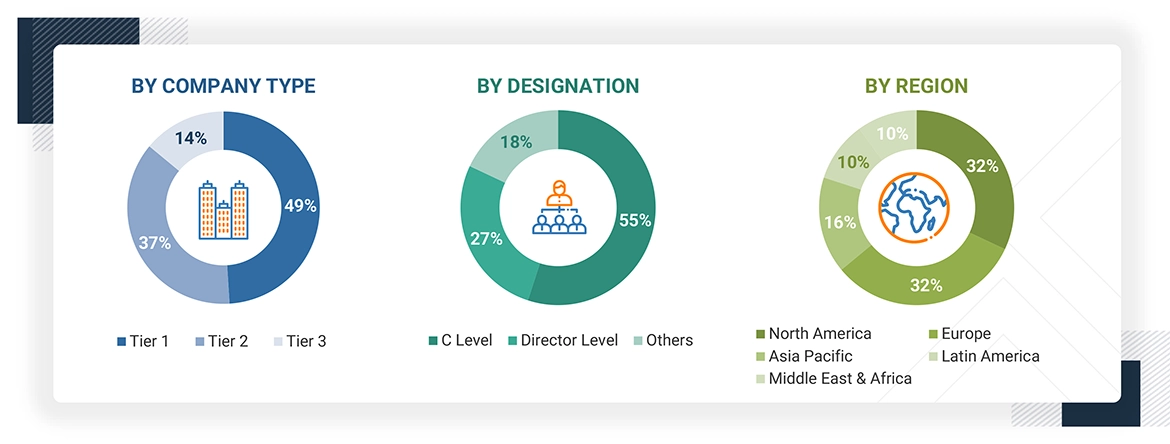
To know about the assumptions considered for the study, download the pdf brochure
Market Size Estimation
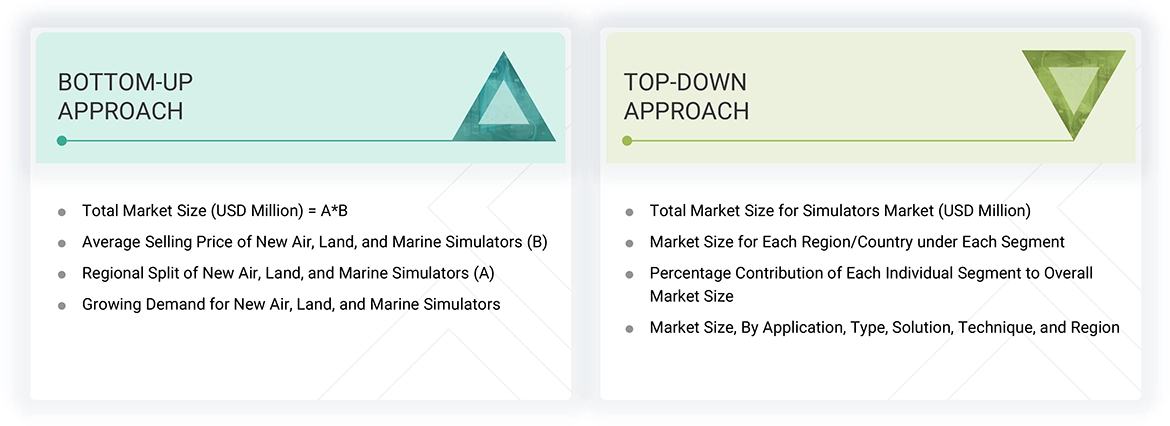
The top-down and bottom-up approaches were used to estimate and validate the size of the simulators market. The research methodology used to estimate the market size included the following details.
- Key players in the simulators market were identified through secondary research, and their market share was determined through primary and secondary research. This included a study of the annual and financial reports of the top market players and extensive interviews with leaders such as directors, engineers, marketing executives, and other stakeholders of leading companies operating in the simulators market.
- All percentage shares, splits, and breakdowns were determined using secondary sources and verified through primary sources.
- All possible parameters that affect the markets covered in this research study were accounted for, viewed in extensive detail, verified through primary research, and analyzed to obtain the final quantitative and qualitative data on the Simulators market. This data was consolidated, enhanced with detailed inputs, analyzed by MarketsandMarkets, and presented in this report.
Simulators Market : Top-Down and Bottom-Up Approach
Data Triangulation
After arriving at the overall market size, the total market was split into several segments and subsegments. The data triangulation and market breakdown procedures explained below were implemented, wherever applicable, to complete the overall market engineering process and arrive at the estimated market numbers for the market segments and subsegments. The data was triangulated by studying various factors and trends from the demand and supply sides. Along with this, the market size was validated using the top-down and bottom-up approaches.
Market Definition
Simulators combine software and hardware to provide training in a simulated environment. They are used for training, skill development, and entertainment purposes and form a dynamic market with specialized devices designed to replicate real-world environments. These devices use advanced technologies, such as virtual reality (VR), augmented reality (AR), and haptic feedback, to deliver highly realistic and immersive experiences. Simulators are used across diverse industries, such as aviation for pilot training, automotive for driver education, healthcare for medical procedures, and gaming for recreational purposes.
In addition to their applications in various industries, 3D cameras have become increasingly popular in recent years in the consumer market. They are used by hobbyists, enthusiasts, and professionals alike to capture 3D photos and videos of landscapes, people, animals, and more.
Key Stakeholders
- Simulator manufactures
- Air, land, and naval platform manufacturers
- Technology providers
- System integrators
- Transport industry players
- Simulator service providers
- Pilot training institutes
- Regulatory bodies
- Simulator suppliers and distributors
- Software providers
- End users
Report Objectives
- To define, describe, and forecast the size of the simulators market based on platform, solution, application, type, technique, and region from 2025 to 2030
- To forecast the size of market segments concerning five major regions, namely North America, Europe, Asia Pacific, the Middle East, and the Rest of the world
- To identify and analyze key drivers, restraints, opportunities, and challenges influencing the growth of the market
- To strategically analyze micromarkets with respect to individual growth trends, prospects, and their contribution to the market
- To analyze opportunities for stakeholders in the market by identifying key market trends
- To analyze competitive developments, such as contracts, acquisitions, expansions, agreements, joint ventures and partnerships, product developments, and research and development (R&D) activities in the market
- To provide a detailed competitive landscape of the market in addition to an analysis of business and corporate strategies adopted by leading market players
- To strategically profile key market players and comprehensively analyze their core competencies
Customization Options
MarketsandMarkets offers the following customization options for this report:
- Additional country-level analysis of the simulators market
- Profiling of other market players (Up to five)
Product Analysis
- Product matrix, which provides a detailed comparison of the product portfolio of each company in the simulators market
Get the Full Simulators Market Report
Full forecast, segment splits, and company analysis for all Simulators Market.
- Canada Simulators Market
- UK Simulators Market
- France Simulators Market
- Germany Simulators Market
- Italy Simulators Market
- Spain Simulators Market
- China Simulators Market
- Japan Simulators Market
- India Simulators Market
- South Korea Simulators Market
- Australia Simulators Market
- UAE Simulators Market
- Saudi Arabia Simulators Market
- Turkey Simulators Market
- Rest Of Europe Simulators Market
- Rest Of Asia Pacific Simulators Market
- Rest Of Middle East Simulators Market
Need a Tailored Report?
Customize this report to your needs
Get 10% FREE Customization
Customize This Report
