
Dental Equipment Market

Dental Equipment Market by Product [Therapeutic (Dental Chairs, Dental Units, CAD/CAM, Dental Lasers, Nd:YAG Lasers, Carbon Dioxide Lasers), Diagnostic (Dental Imaging, CBCT)], End User (Dental Hospitals & Dental Clinics) - Global Forecast to 2031




DENTAL EQUIPMENT MARKET SIZE, SHARE & GROWTH SNAPSHOT
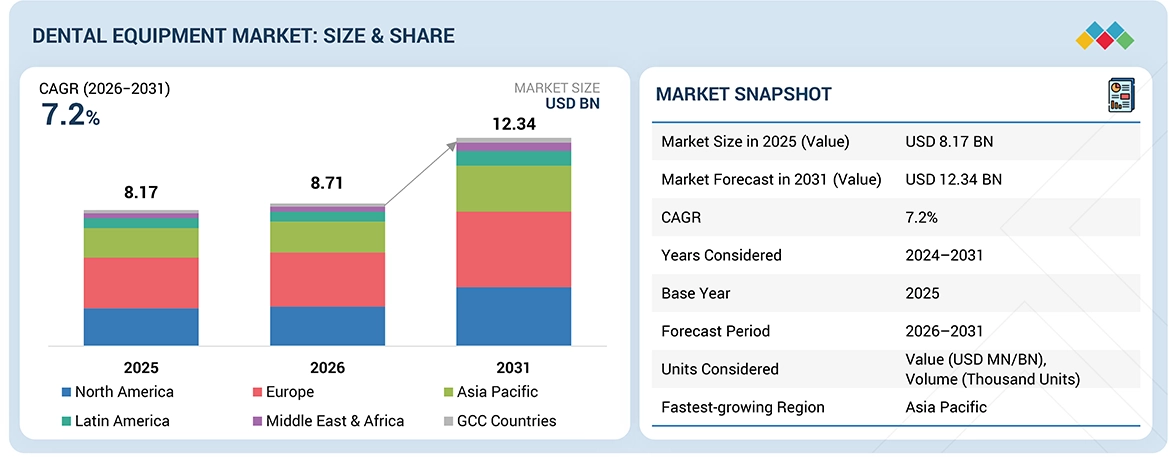
Source: Secondary Research, Interviews with Experts, MarketsandMarkets Analysis
The global dental equipment market is projected to grow from USD 8.71 billion in 2026 to USD 12.34 billion by 2031, at a CAGR of 7.2% during the forecast period. The market was valued at USD 8.17 billion in 2025. The market for dental equipment is experiencing growth, driven by a rising prevalence of oral problems such as cavities, periodontal diseases, tooth loss, and malocclusions. These issues are often attributed to poor oral hygiene, unhealthy dietary habits, harmful behaviors like smoking, and an increasing geriatric population in developing countries. Additionally, there is growing awareness of the importance of oral health, which has led to a greater emphasis on preventive and aesthetic dentistry. This shift has encouraged more people to seek routine check-ups and dental care. Advancements in modern technology within the dental industry, including digital imaging, CAD/CAM technology, laser treatments, and 3D printing, have enhanced accuracy, effectiveness, and patient comfort in dental procedures. As dental practices and hospitals become more affordable and accessible, particularly in developing countries, there is a collective increase in oral health services, including dental tourism. This overall trend is contributing to the expansion of the dental equipment market.
KEY TAKEAWAYS
-
BY REGIONBy region, Europe accounted for the largest share of 37.4% of the dental equipment market in 2025.
-
BY PRODUCT TYPEBy product type, the therapeutic dental equipment segment accounted for the largest share of 61.1% of the dental equipment market in 2025.
-
BY END USERBy end user, the dental hospitals & clinics segment held the largest share of 69.9% of the dental equipment market in 2025.
-
COMPETITIVE LANDSCAPE - KEY PLAYERSDentsply Sirona and Planmeca Oy were recognized as star players due to their established and strong product portfolios.
-
COMPETITIVE LANDSCAPE - STARTUPSCompanies such as Overjet have distinguished themselves among startups and SMEs by securing strong footholds in specialized niche areas, underscoring their potential as emerging market leaders.
The dental equipment market is expanding due to several factors, including the increasing demand for dental care, technological advancements, and improved access to healthcare services. The rising prevalence of dental issues such as cavities, periodontal diseases, tooth loss, and malocclusions—often resulting from poor oral hygiene, unhealthy dietary habits, smoking, and an aging population—is fueling the need for advanced dental care. Additionally, growing awareness of dental health and a greater emphasis on preventive and cosmetic dentistry are encouraging more people to visit their dentists regularly and invest in advanced dental equipment. Innovations in technology, including digital imaging, CAD/CAM, intraoral scanners, laser dentistry, and 3D printing, are enhancing the accuracy of diagnoses and the efficiency of dental procedures.
TRENDS & DISRUPTIONS IMPACTING CUSTOMERS' CUSTOMERS
The market is undergoing significant changes driven by new needs and technological advancements. Currently, the market is primarily dominated by conventional operatory equipment, traditional restorative solutions, standard instruments, and 2D imaging solutions, which together account for about 20% of revenue. However, it is projected that the revenue composition will shift rapidly towards more advanced solutions, including CAD/CAM technology, 3D printers and materials, as well as AI-powered imaging solutions such as CBCT. These advanced solutions are expected to contribute approximately 80% of revenue. This shift is largely fueled by increasing demand from dental hospitals, clinics, universities, and other institutions seeking to enhance patient safety, satisfaction, and efficiency. Key drivers of this technological transformation will include the need for digital transformation, the procurement of advanced imaging and simulation solutions, addressing clinician fatigue, and developing solutions that comply with regulatory standards. As a result, customers will be better positioned to achieve improved patient satisfaction, enhanced staff productivity, faster procedures, increased overall productivity, higher quality research, and reduced downtime and failure of machines and instruments. Consequently, there is a growing focus on the transition towards value-driven, technology-enabled dentistry.
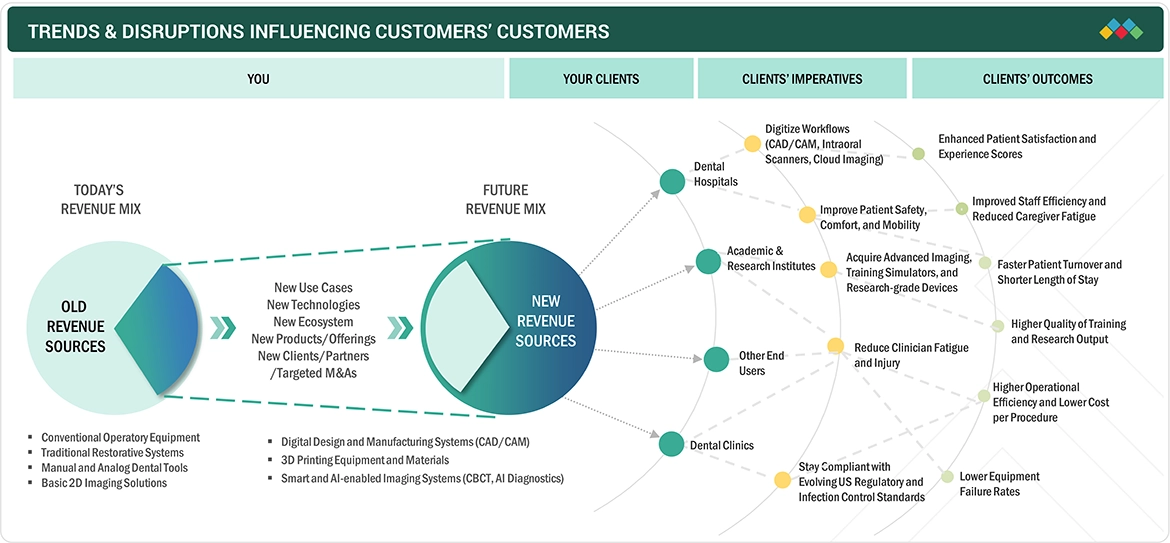
Source: Secondary Research, Interviews with Experts, MarketsandMarkets Analysis
MARKET DYNAMICS

Level
-
Development of technologically advanced solutions

-
Rise in oral health disorders


Level
-
High cost of dental imaging systems and lack of reimbursement for dental procedures


Level
-
Impact of DSOs on dental industry

-
Increasing number of dental laboratories investing in CAD/CAM technologies


Level
-
Dearth of trained dental practitioners

Source: Secondary Research, Interviews with Experts, MarketsandMarkets Analysis
Driver: Rising demand for advanced cosmetic dental procedures
The dental equipment market is significantly influenced by the growing demand for high-end cosmetic dental treatments. This demand is continuously expanding due to increasing beauty consciousness and the importance of a good dental appearance in both personal and professional lives. Popular procedures include teeth whitening, veneers, clear aligners, dental implants, and smile design, which are gaining traction worldwide, regardless of a country's economic status. This trend is intensifying the demand for the latest innovations in dental technology, such as digital imaging systems, intraoral scanners, CAD/CAM systems, laser dentistry tools, and 3D printing technologies. These advancements allow dentists to plan treatments with high precision and achieve excellent cosmetic results. Additionally, social media marketing, rising disposable incomes, and the popularity of minimally invasive cosmetic treatments are driving the adoption of advanced cosmetic dental procedures. As a result, the dental equipment market is positioned for steady growth.
Restraint: High cost of dental imaging systems and lack of reimbursement for dental procedures
The high cost of dental imaging equipment and inadequate reimbursement for dental procedures are significant barriers to the growth of the dental equipment market. Advanced technologies such as CBCT equipment, digital radiology systems, and intraoral scanners come with substantial expenses. These costs go beyond the initial purchase price to include maintenance and training requirements, making it challenging for small to mid-sized dental practices to afford or even consider adopting such equipment. Additionally, the lack of reimbursement for dental services in various international markets—particularly for advanced or aesthetic procedures—further hampers dentists' ability to invest in high-cost equipment.
Opportunity: Increasing number of dental laboratories investing in CAD/CAM technologies
CAD/CAM technologies are widely adopted in dental laboratories for the production of prosthetics and restorations, presenting a significant opportunity for entry into the dental equipment market. Dental labs are increasingly utilizing digital processes to enhance precision and speed, ensuring accurate fabrications for crowns, bridges, dentures, and dental implants. As a result, CAD/CAM technologies, along with milling machines, 3D printing instruments, and improved dental materials, enable laboratories to create high-quality personalized restorations efficiently, requiring less manpower and reducing errors compared to traditional manual methods. Furthermore, the growing collaboration between dental practices and laboratories, along with the rising demand for same-day dental care and the shift towards digital dental practices, is accelerating the adoption of CAD/CAM technologies. This trend is driving increased investment and demand within the dental equipment market.
Challenge: Dearth of trained dental practitioners
The shortage of trained dental professionals is a significant barrier to the growth of the dental equipment market. Advanced dental technologies, such as digital imaging solutions, CAD/CAM technology, laser dentistry, and robotic and AI-enabled systems, require skilled operators for optimal performance. Unfortunately, there is a critical lack of trained dental professionals, especially in emerging regions, which limits the usage of these advanced solutions and forces many to rely on traditional methods and practices. Additionally, the high costs and time associated with training and certifying dental professionals further restricts the adoption of advanced technologies.
DENTAL EQUIPMENT MARKET: COMMERCIAL USE CASES ACROSS INDUSTRIES
| COMPANY | USE CASE DESCRIPTION | BENEFITS |
|---|---|---|
 |
Dentsply Sirona's Primeprint is a high-precision dental 3D printing system for in-office and laboratory use. It enables rapid production of dental restorations, including surgical guides, crowns, bridges, and splints, through an automated, fully integrated digital workflow. Primeprint can be seamlessly integrated with intraoral scanners and CAD/CAM software, enabling efficient chairside and lab-based fabrication. | Primeprint improves workflow efficiency by reducing turnaround times and minimizing reliance on external laboratories. Its high accuracy ensures consistent restoration quality, while automation reduces manual errors and labor costs. The system supports same-day dentistry, enhances patient satisfaction, and enables dental practices to expand their digital services. |
 |
CBCT systems are part of Planmeca's 3D imaging solutions, used for advanced diagnostics and treatment planning in implantology, orthodontics, endodontics, and maxillofacial surgery. Such systems provide a three-dimensional visualization of dental and craniofacial structures in great detail, supporting very precise clinical decision-making. | Planmeca’s 3D imaging improves diagnostic accuracy and treatment predictability while enhancing patient safety through optimized radiation dosing. High-quality imaging enables precise planning of complex procedures, reduces procedural risks, and improves clinical outcomes, making it a critical tool for modern dental practices. |
 |
The Align Technology intraoral scanner captures highly accurate digital impressions for orthodontic, restorative, and cosmetic dental procedures. These eliminate the use of conventional impression materials and integrate directly into digital treatment planning and aligner manufacturing workflows. | Intraoral scanners enhance patient comfort by eliminating messy impressions and reducing chair time. They improve impression accuracy, enable faster case submission, and support seamless digital workflows. This leads to improved treatment efficiency, better clinical outcomes, and higher patient satisfaction. |
 |
Envista's dental curing lights are used to polymerize light-cured dental materials, such as composites, adhesives, and sealants, in restorative dentistry. These devices are widely used in routine restorative and cosmetic procedures in dental clinics. | Envista's curing lights provide a steady, powerful light output, ensuring the material is thoroughly cured and the restoration lasts. Their comfortable design makes the clinician's work easier, while fast curing times reduce procedure time, thereby enhancing practice efficiency and patient throughput. |
 |
Carestream Dental's dental chairs support various procedures by positioning patients securely while providing ergonomic access for clinicians. These chairs are utilized in general dentistry, orthodontics, and surgical applications within dental clinics and hospitals. | Carestream’s dental chairs are designed to prioritize patient comfort and safety during procedures while simultaneously enhancing clinician ergonomics and workflow efficiency. Features such as advanced positioning and integrated delivery systems help operators avoid fatigue, ensure smooth procedures, and create a clinical environment that is both productive and welcoming for patients. |
Logos and trademarks shown above are the property of their respective owners. Their use here is for informational and illustrative purposes only.
MARKET ECOSYSTEM
The dental equipment market ecosystem consists of an integrated network of manufacturers, distributors, end users, and government health regulation authorities, all contributing to the market's growth. Key manufacturers, such as Dentsply Sirona, Envista, Planmeca, Carestream Dental, Align, and MORITA, focus on developing innovative diagnostic, therapeutic, and digital dental technologies and devices to meet global market needs. These technologies and devices are distributed through effective networks, including Henry Schein, McKesson, Medline, and Cardinal Health. They ultimately reach end users, which include dental hospitals, dental clinics, and major healthcare organizations like the renowned Mayo Clinic, Cleveland Clinic, Johns Hopkins Medicine, and the UK's National Health Service (NHS). This distribution aims to enhance the efficiency and quality of healthcare services provided to these core end-user groups. Additionally, government health regulation authorities, such as the FDA, EMA, and various nation-specific agencies, play a crucial role in ensuring the quality and safety of devices and technologies in the global market.
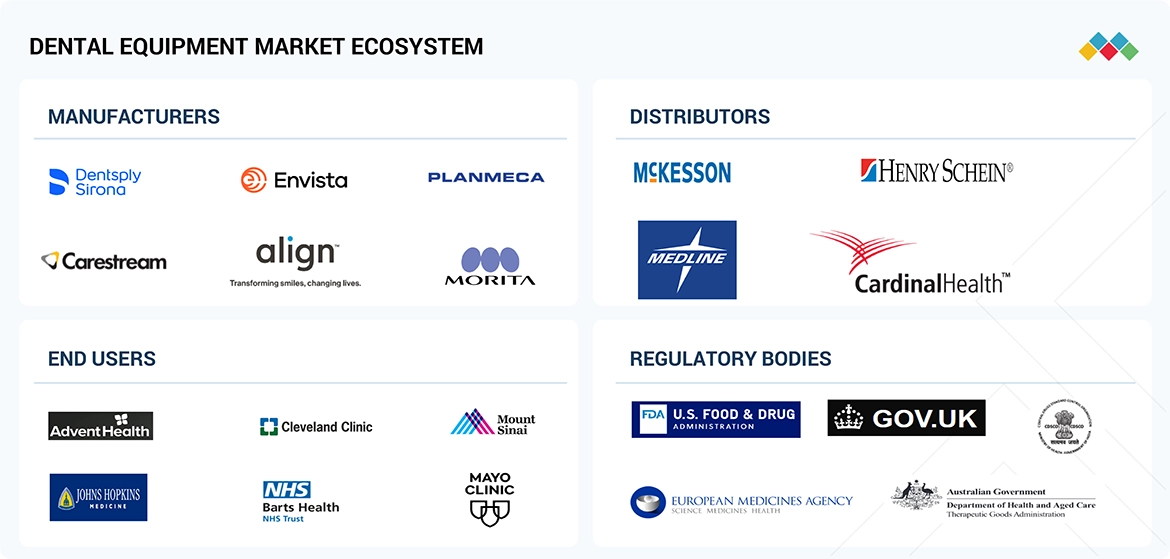
Logos and trademarks shown above are the property of their respective owners. Their use here is for informational and illustrative purposes only.
MARKET SEGMENTS
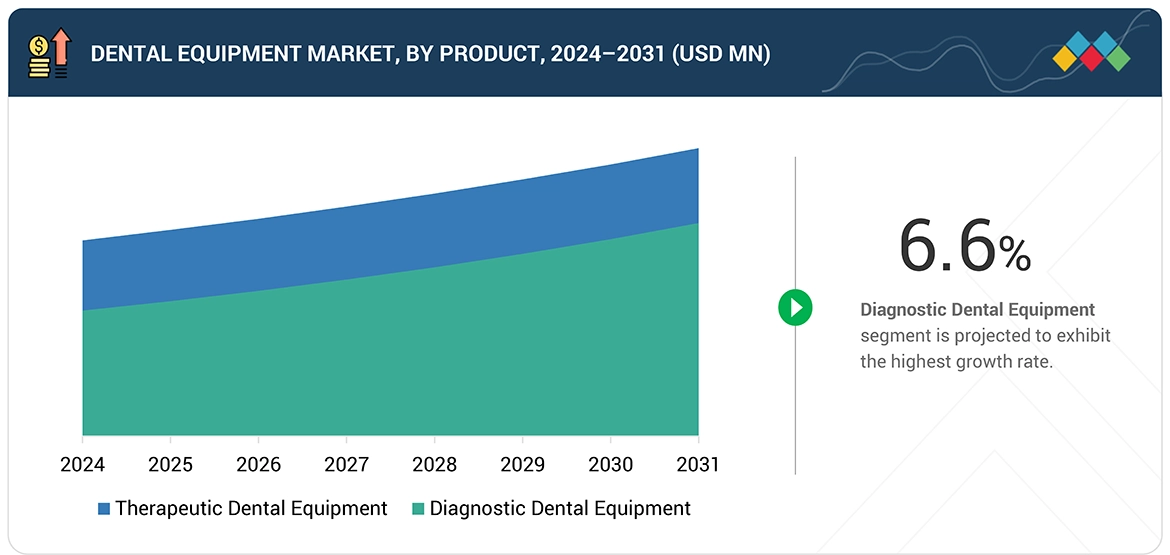
Source: Secondary Research, Interviews with Experts, MarketsandMarkets Analysis
Dental Equipment Market, by Product Type
Therapeutic dental equipment constitutes the majority of the dental equipment market due to the increasing demand for treatment-based dental procedures in both developed and emerging regions. The rise in oral health issues such as dental caries, periodontal diseases, tooth loss, and malocclusion has led to a greater need for restorative, endodontic, orthodontic, and surgical treatments. This, in turn, has driven up the demand for dental handpieces, lasers, electrosurgical units, and implant systems. Unlike diagnostic devices, therapeutic equipment is used directly during dental procedures. Therefore, if it is not highly durable, its parts often need to be replaced or maintained. This creates opportunities for repeat purchases, fostering a growing market. Additionally, the preference for non-invasive and high-tech treatment methods, the expansion of dental clinics and hospitals, and patients’ desire for aesthetically pleasing, corrective teeth all contribute to the continued dominance of therapeutic dental equipment in the market.
Dental Equipment Market, by End User
In the dental equipment market, dental hospitals & clinics hold the largest share due to the high volume of dental procedures performed and their established infrastructure. These facilities serve as key sources of referrals for a variety of treatments, including preventive, restorative, surgical, orthodontic, and cosmetic procedures, all of which require advanced dental equipment. Dental hospitals & clinics are open to adopting new technologies such as digital imaging, CAD/CAM systems, dental chairs, and therapeutic devices. This willingness enhances the precision of diagnoses, improves treatment efficiency, and benefits patients. Additionally, factors such as the presence of trained dental professionals, access to funding, favorable reimbursement mechanisms in developed regions, and patient preference for facilities equipped with advanced technologies significantly contribute to dental hospitals & clinics maintaining a dominant position in the market.
REGION
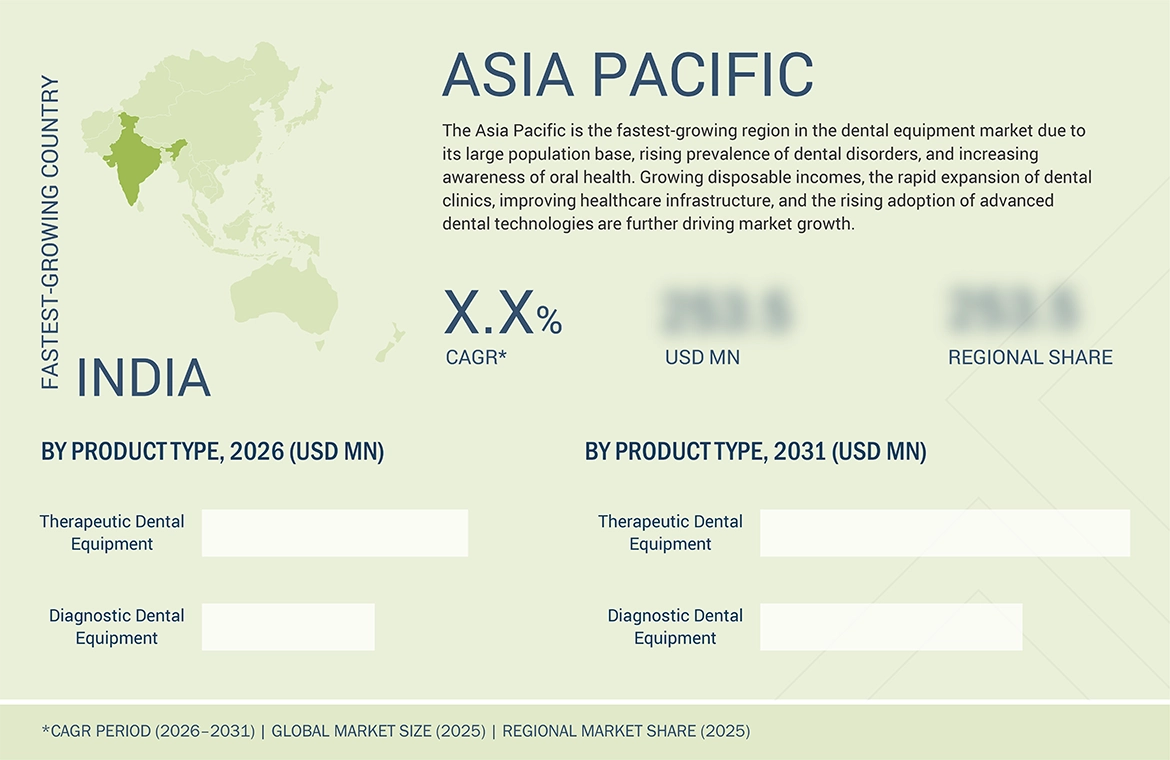
Asia Pacific to be fastest-growing region in global dental equipment market during forecast period
The Asia Pacific market is expected to experience the highest growth rate in the dental equipment sector, driven by several factors related to the region's demographics, economy, and healthcare industry. This region has a large population that suffers from a rising number of dental diseases, largely due to dietary habits, tobacco use, and poor oral health practices in various countries. Increased public awareness regarding oral health, along with a growing middle class and rising affluence, is also leading to higher spending on dental care and advanced treatments. Additionally, the expansion of dental facilities and advancements in the healthcare industry further contribute to the growth of the dental equipment market in this region. Moreover, governments in countries that attract significant dental tourism—such as India, Thailand, and South Korea—help fuel the potential in the dental equipment market due to the affordable treatment options available.
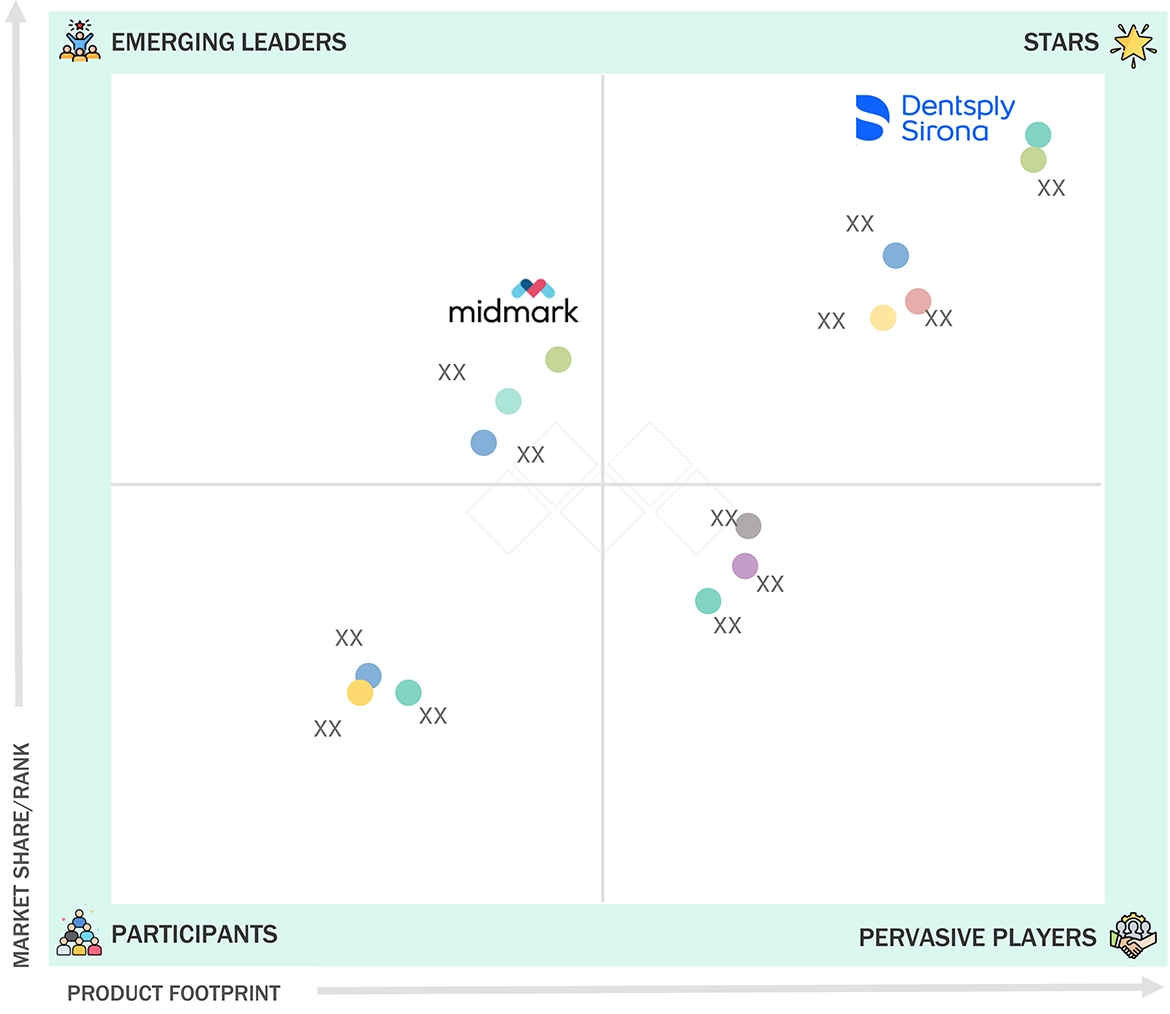
DENTAL EQUIPMENT MARKET: COMPANY EVALUATION MATRIX
In the dental equipment market, Dentsply Sirona (US) and Planmeca Oy (Finland) are the leading companies, identified as "Stars" due to their unmatched global presence, strong brand recognition, and comprehensive portfolios of dental equipment. 3Shape A/S (Denmark) is categorized as an "Emerging Leader" and is rapidly gaining traction with its versatile products, which include medical gas and equipment for various therapeutic and diagnostic applications.
Source: Secondary Research, Interviews with Experts, MarketsandMarkets Analysis
KEY MARKET PLAYERS
MARKET SCOPE
| REPORT METRIC | DETAILS |
|---|---|
| Market Size in 2025 (Value) | USD 8.17 Billion |
| Revenue Forecast in 2031 (Value) | USD 12.34 Billion |
| Growth Rate | CAGR of 7.2% from 2026–2031 |
| Years Considered | 2024–2031 |
| Base Year | 2025 |
| Forecast Period | 2026–2031 |
| Units Considered | Value (USD Million/Billion), Volume (Thousand Units) |
| Report Coverage | Revenue Forecast, Company Ranking, Competitive Landscape, Growth Factors, and Trends |
| Segments Covered |
|
| Regions Covered | North America, Europe, Asia Pacific, Latin America, Middle East & Africa, and GCC Countries |
| Related Segment & Geographic Reports |
United States Dental Equipment Market Europe Dental Equipment Market MEA Dental Equipment Market North America Dental Equipment Market APAC Dental Equipment Market |
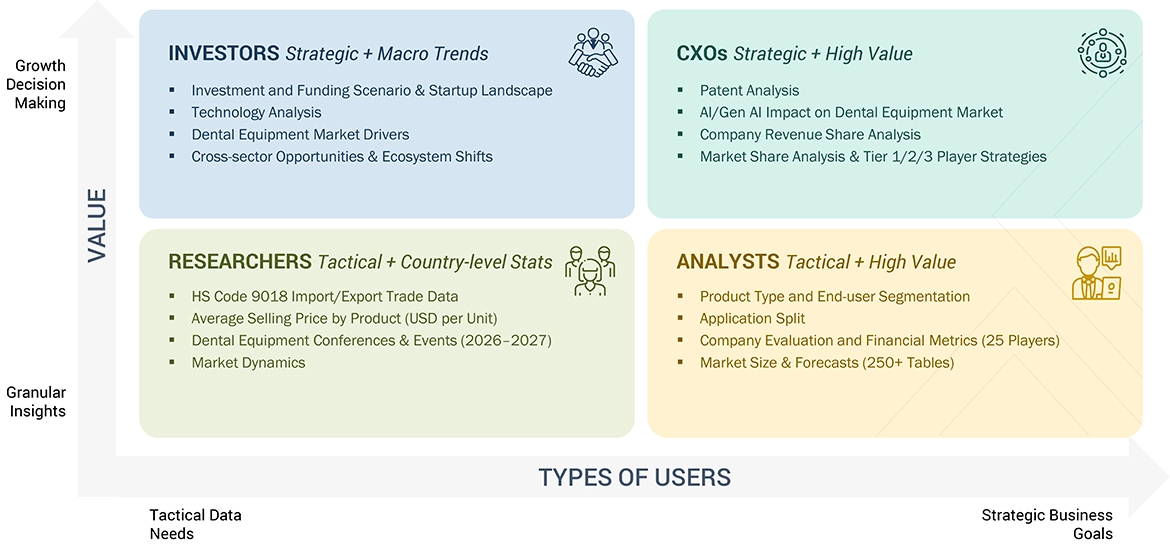
WHAT IS IN IT FOR YOU: DENTAL EQUIPMENT MARKET REPORT CONTENT GUIDE
DELIVERED CUSTOMIZATIONS
We have successfully delivered the following deep-dive customizations:
| CLIENT REQUEST | CUSTOMIZATION DELIVERED | VALUE ADDS |
|---|---|---|
| Volume Analysis | Market assessment, by volume (units), for dental equipment used in dental ecosystems |
|
| Product Analysis | Further breakdown of other applications in the market | Insights on other applications involved in the market |
| Company Information |
|
Insights on market share analysis by country |
| Geographic Analysis |
|
Country-level demand mapping for new product launches and localization strategy planning |
RECENT DEVELOPMENTS
- October 2024 : Align Technology launched the Invisalign Palatal Expander System in the US as part of its ongoing effort to expand its comprehensive range of orthodontic products. This system offers a less invasive and digitally guided option for palatal expansion, which enhances treatment precision, improves patient comfort and clinical outcomes, and integrates seamlessly with Align’s digital orthodontic workflow.
- February 2024 : Carestream Dental introduced the CS 8200 3D Access system, a compact and versatile imaging solution. This system supports panoramic imaging, cone beam computed tomography (CBCT), and object imaging. It provides high-quality images while significantly reducing radiation exposure, making it both more diagnostic and safer for use in a dental environment.
Table of Contents
 Exclusive indicates content/data unique to MarketsandMarkets and not available with any competitors.
Methodology
This research study relied heavily on both primary and secondary sources. It involved studying various factors affecting the industry to identify segmentation types, industry trends, key players, the competitive landscape, and key market dynamics, including drivers, opportunities, challenges, restraints, and key player strategies.
Secondary Research
This research study involved the wide use of secondary sources, directories, databases such as Dun & Bradstreet, Bloomberg Businessweek, and Factiva, white papers, and companies’ house documents. Secondary research was undertaken to identify and collect information for this extensive, technical, market-oriented, and commercial study of the dental equipment market. It was also used to obtain important information on the top players, market classification, segmentation by industry trends, bottom-level geographic markets, and key developments in the market. A database of the key industry leaders was also prepared using secondary research.
Primary Research
In the primary research process, various supply-side and demand-side sources were interviewed to obtain qualitative and quantitative information for this report. Primary sources from the supply side included industry experts such as CEOs, vice presidents, marketing & sales directors, technology & innovation directors, engineers, and related key executives from various companies and organizations operating in the dental equipment market. Primary sources from the demand side included hospitals, clinics, researchers, lab technicians, purchase managers, and stakeholders in corporate & government bodies.
A breakdown of the primary respondents for the dental equipment market is provided below:
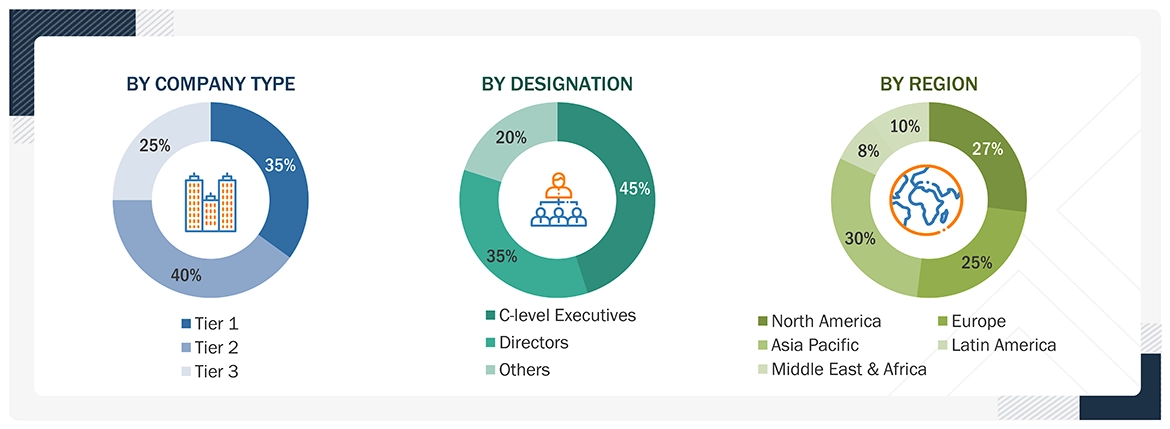
Note 1: C-level executives include CEOs, COOs, CTOs, and VPs.
Note 2: Others include sales, marketing, and product managers.
Note 3: Companies are classified into tiers based on their total revenue. As of 2025: Tier 1 = >USD 1 billion, Tier 2 = USD 500 million to USD 1 billion, and Tier 3 = <USD 500 million.
Note: Tier 1 companies’ revenue is more than USD 10 billion; Tier 2 companies’ revenue ranges between USD 1 and 10 billion; and Tier 3 companies’ revenue ranges between USD 500 million and USD 1 billion
To know about the assumptions considered for the study, download the pdf brochure
Market Size Estimation
The research methodology used to estimate the size of the dental equipment market includes the following details. The market sizing was conducted on a global basis.
Country-level Analysis: The size of the dental equipment market was obtained from the annual presentations of leading players and secondary data available in the public domain. The share of products in the overall dental equipment market was obtained from secondary data and validated by primary participants to arrive at the total dental equipment market. Primary participants further validated the numbers.
Geographic Market Assessment (By Region and Country): The geographic assessment was done using the following approaches:
Approach 1: Geographic revenue contributions/splits of leading players in the market (wherever available) and respective growth trends.
Approach 2: Geographic adoption trends for individual product segments by end users and growth prospects for each of the segments (assumptions and indicative estimates validated from primary interviews).
At each point, the assumptions and approaches were validated by industry experts contacted during the primary research. Considering the limitations of data available from secondary research, revenue estimates for individual companies (for the overall dental equipment market and geographic market assessment) were ascertained based on a detailed analysis of their respective product offerings, geographic reach/strength (direct or through distributors or suppliers), and the shares of the leading players in a particular region or country.
Global Dental Equipment Market Size: Bottom-up Approach & Top-down Approach

Data Triangulation
The market was divided into several segments when determining market size. Data triangulation and market breakdown processes were used as needed to complete the market engineering process and obtain precise statistics for all segments.
Approach to derive the market size and estimate market growth:
Using secondary data from both paid and unpaid sources, the market rankings for the major players were determined following a thorough analysis of their dental equipment sales. Due to data restrictions, the revenue share in certain cases was determined after a thorough analysis of the product portfolio of big corporations and their individual sales performance. This information was verified at each stage by in-depth interviews with professionals in the field.
Market Definition
Dental equipment encompasses the tools and instruments used to diagnose and treat a range of dental diseases and disorders. These supplies are utilized by dentists, dental hygienists, and dental laboratories. The category includes a variety of dental equipment, such as diagnostic tools and therapeutic instruments.
Key Stakeholders
- Manufacturers and distributors of medical devices
- Dental equipment manufacturers
- Contract manufacturers of dental equipment
- Distributors of dental equipment
- Research and consulting firms
- Raw material suppliers of dental equipment
- Dental hospitals & clinics
- Dental laboratories and associations
- Dental practitioners
- Dental laboratory technicians
- Healthcare institutions
- Diagnostic laboratories
- Academic institutions
- Research institutions
- Government associations
- Market research & consulting firms
- Venture capitalists & investors
Report Objectives
- To define, describe, and forecast the dental equipment market based on product type, end user, and region
- To provide detailed information about the major factors influencing the market growth (such as drivers, restraints, challenges, and opportunities)
- To strategically analyze micromarkets with respect to individual growth trends, prospects, and contributions to the overall dental equipment market
- To analyze market opportunities for stakeholders and provide details of the competitive landscape for key players
- To forecast the size of the dental equipment market in North America, Europe, the Asia Pacific, Latin America, the Middle East & Africa, and GCC Countries
- To profile the key players and comprehensively analyze their market shares and core competencies in the dental equipment market
- To track and analyze competitive developments such as partnerships, expansions, acquisitions, collaborations, product launches, agreements, and other developments in the dental equipment market
- To benchmark players within the dental equipment market using the Company Evaluation Quadrant framework, which analyzes market players on various parameters within the broad categories of business strategy, market share, and product offerings
Available customizations:
Based on the given market data, MarketsandMarkets offers customizations tailored to your company’s specific needs. The following customization options are available for the report:
Company Information
- Detailed analysis and profiling of additional market players (up to 5)
Geographic Analysis
- Further breakdown of the Rest of Europe dental equipment market into Switzerland, Austria, Belgium, and others
- Further breakdown of the Rest of Asia Pacific dental equipment market into Singapore, Malaysia, and others
Company Information
- Detailed analysis and profiling of additional market players
Need a Tailored Report?
Customize this report to your needs
Get 10% FREE Customization
Customize This ReportPersonalize This Research
- Triangulate with your Own Data
- Get Data as per your Format and Definition
- Gain a Deeper Dive on a Specific Application, Geography, Customer or Competitor
- Any level of Personalization
Let Us Help You
- What are the Known and Unknown Adjacencies Impacting the Dental Equipment Market
- What will your New Revenue Sources be?
- Who will be your Top Customer; what will make them switch?
- Defend your Market Share or Win Competitors
- Get a Scorecard for Target Partners

Custom Market Research Services
We Will Customise The Research For You, In Case The Report Listed Above Does Not Meet With Your Requirements
Get 10% Free CustomisationGrowth opportunities and latent adjacency in Dental Equipment Market

Still Researching the
Dental Equipment Ecosystem?
See the competitors, opportunities, and growth signals shaping it - instantly.
Generate 15+ consulting-grade strategic insights tailored to your growth question.






MnM Analyst
Sep, 2023
Hi Ivan,
The growth of the European dental manufacturing market is attributed to a number of factors, including:
1. Increasing geriatric population: The aging population in Europe is leading to an increase in the prevalence of dental diseases, such as cavities, gum disease, and tooth loss. This is driving the demand for dental implants, crowns, bridges, and other restorative devices.
2. Growing awareness about oral health: There is a growing awareness about the importance of oral health among the general population in Europe. This is leading to an increase in the demand for preventive dental care, such as dental cleanings and checkups.
3. Advances in dental technology: There have been significant advances in dental technology in recent years. This has led to the development of new dental products and services, such as 3D printing, laser dentistry, and digital imaging. These new technologies are making it possible to provide more accurate and efficient dental care.
4. Increased disposable income: The rising disposable income of consumers in Europe is making it possible for them to afford more expensive dental care. This is driving the demand for high-end dental products and services.
The European dental manufacturing market is highly competitive. Some of the major players in the market include:
1. 3M
2. Dentsply Sirona
3. Straumann
4. Danaher
5. Henry Schein
6. Zimmer Biomet
7. Planmeca
8. Ivoclar Vivadent
9. GC Corporation
10. Biolase Inc.
These companies are investing heavily in research and development to develop new products and services that meet the needs of consumers. They are also expanding their geographic presence to tap into new markets.
The European dental manufacturing market is expected to continue to grow in the coming years. The growth of the market will be driven by the factors mentioned above, as well as by the increasing demand for dental care in emerging markets, such as China and India..
Ivan
Sep, 2023
WHAT IS EUROPE OF GLOBAL DENTAL MANUFACTURING MARKET.