-
BASF SE (Germany) and ADM (US) are the leading key players in the Vegetable Oils in Beauty and Personal Care Market
The vegetable oils in beauty and personal care market is estimated to be USD 5.84 billion in 2026 and is projected to reach USD 7.72 billion by 2031 at a CAGR of 5.8% from 2026 to 2031. The market is experiencing steady growth, driven by increasing demand for natural and plant-based ingredients in skincare, haircare, and body care products. Growing consumer preference for clean label, sustainable, and naturally derived formulations is encouraging brands to incorporate vegetable oils for their moisturizing, nourishing, and skin conditioning properties. Rising awareness of botanical ingredients and the expansion of premium and organic personal care products are further supporting the adoption of vegetable oils across various applications.
- Published: August 2026
-
-
Merck KGaA (Germany) and Thermo Fisher Scientific Inc. (US) are the leading key players in the IVD Raw Material Market
The IVD raw material market is projected to grow from USD 21.5 billion in 2026 to USD 31.1 billion in 2031 at a CAGR of 7.7%. The increasing global prevalence of chronic and infectious diseases, along with the growing demand for accurate and early disease diagnosis, has underscored the critical role of high-quality raw materials in the development of in vitro diagnostic assays. The intersection of rising disease burden, expanding access to healthcare services, and heightened emphasis on preventive healthcare is driving demand for advanced IVD raw materials. Innovations in recombinant technologies, monoclonal antibody production, synthetic biology, and molecular biology are transforming the development and performance of diagnostic reagents used across clinical laboratory and point-of-care testing applications.
- Published: August 2026
-
-
Why LEO PNT Is Emerging as the Next Layer of Resilient Navigation
The Global LEO Position Navigation Timing (PNT) Market is projected to grow from USD 0.07 billion in 2025 to USD 0.57 billion by 2030, reflecting a CAGR of 53.9%. This represents an incremental revenue opportunity of about USD 0.50 billion and an increase of more than eight times over five years. In volume terms, the market is expected to expand from 31 units in 2025 to 299 units in 2030.
- Published: August 2026
-
-
Automated Guided Vehicle Market Research Insight: Key Industry Opportunities Shaping Future Growth
Automated Guided Vehicle Market: Key Opportunities by Industry
The global Automated Guided Vehicle (AGV) market is entering a new phase of growth as industries move beyond basic warehouse automation toward fully connected, AI-driven material handling ecosystems. What was once a niche technology used primarily in automotive plants has evolved into a strategic infrastructure layer for manufacturing, logistics, healthcare, retail, and transportation. The convergence of artificial intelligence (AI), machine vision, IoT connectivity, cloud fleet management, and autonomous navigation is enabling AGVs and Autonomous Mobile Robots (AMRs) to operate with greater flexibility, safety, and productivity than ever before.
The global automated guided vehicle market is expected to be valued at USD 2.68 billion in 2025 and is projected to reach USD 4.72 billion by 2032, registering a CAGR of 8.7%. The growth of the global automated guided vehicle industry is driven by increasing adoption of automation across manufacturing, warehousing, logistics, and e-commerce industries. Rising labor costs, the need for efficient material handling, and the shift toward smart factories and warehouse automation are accelerating AGV deployments. Continuous advancements in navigation technologies, fleet management software, and system integration capabilities are further supporting market expansion.
- Published: August 2026
-
-
Intelligent Transportation Systems (ITS) Research Outlook 2026: Current Research Trends, Technologies, and Future Opportunities
Intelligent Transportation Systems (ITS) Research Outlook 2026
The global transportation sector is undergoing one of the most significant technological transformations in its history. Rapid urbanization, rising vehicle ownership, climate commitments, and the emergence of connected and autonomous mobility are placing unprecedented pressure on transportation infrastructure. Governments, research institutions, technology companies, automotive manufacturers, and telecom operators are investing heavily in Intelligent Transportation Systems (ITS) to improve traffic efficiency, road safety, environmental sustainability, and mobility accessibility.
- Published: August 2026
-
-
The Future of Automated Material Handling Equipment: From Automated Machines to an AI-Driven Autonomous Logistics Ecosystem
Future of Automated Material Handling Equipment: From Automated Machines to an AI-Driven Autonomous Logistics Ecosystem
The future of Automated Material Handling Equipment (AMHE) is no longer defined by isolated conveyors, forklifts, or robotic arms working independently on a factory floor. The industry is undergoing a fundamental transformation toward an AI-driven autonomous logistics ecosystem in which robots, software platforms, IoT sensors, cloud analytics, edge computing, and digital twins continuously optimize material flow in real time. This shift is comparable to the transition from traditional manufacturing to Industry 4.0: automation is evolving into intelligence, connectivity, and autonomous decision-making.
- Published: August 2026
-
-
Next-Generation ASRS Outlook 2026: AI, AMRs, Digital Twins, and Intelligent Warehouse Automation
For decades, Automated Storage & Retrieval Systems (ASRS) were designed around a relatively simple concept: a fixed crane moved along predefined aisles and stored pallets or totes in predetermined locations. These systems were engineered for stability, repeatability, and high-density storage, and they delivered significant productivity improvements compared with manual warehousing. However, they were also relatively rigid. Storage locations were often assigned in advance, throughput was constrained by crane movement, and operational optimization depended heavily on static rules configured during system design.
- Published: August 2026
-
-
Abbott Laboratories (US) and F. Hoffmann-La Roche Ltd (Switzerland) are the leading key players in the Disposable Medical Device Sensors Market
The disposable medical device sensors market is projected to reach USD 16.13 billion by 2031 from USD 11.86 billion in 2026, at a CAGR of 6.4% during the forecast period.
- Published: August 2026
-
-
Securitas Healthcare (US) and Zebra Technologies (US) are the leading key players in the Healthcare Indoor Location
The healthcare indoor location market is projected to grow from USD 3.17 billion in 2026 to USD 13.83 billion by 2032 at a CAGR of 27.8% during the forecast period. The market is projected to grow strongly during the forecast period as hospitals and healthcare facilities increasingly adopt location technologies to improve asset visibility, patient flow, staff safety, and operational efficiency. Technologies such as Wi-Fi, Bluetooth Low Energy (BLE), RFID, Ultra-Wideband (UWB), ultrasound, and infrared enable healthcare organizations to locate and monitor patients, personnel, medical equipment, and other critical assets within indoor environments. The growing focus on connected hospitals and digital healthcare infrastructure is further supporting adoption of indoor location solutions.
- Published: August 2026
-
-
Counter Drone Market Future Trends: AI Detection, Autonomous Defense and Next Generation Airspace Security

Introduction to Counter Drone Technology
The rapid expansion of unmanned aerial systems is transforming military operations, commercial activities, public safety, infrastructure monitoring, and logistics. At the same time, the increasing availability of drones has created new security challenges for organizations responsible for protecting sensitive airspace. Unauthorized drones can be used for surveillance, intelligence gathering, smuggling, disruption, or other security threatening activities. As these risks increase, Counter Drone technology is becoming an essential component of modern airspace protection.
- Published: August 2026
-
-
How AI Is Transforming the Future of the Counter UAV Market

Introduction to Counter UAV Technology
The rapid proliferation of unmanned aerial vehicles has transformed military operations, commercial activities, infrastructure inspection, logistics, public safety, and surveillance. While drones provide significant operational and economic benefits, their increasing availability has also created new security risks. Unauthorized and hostile drones can be used for surveillance, intelligence collection, smuggling, disruption, and attacks against sensitive locations. This changing threat environment is driving the development of advanced Counter UAV technologies designed to protect controlled airspace.
- Published: August 2026
-
-
Future Trends of Counter UAS Market: AI and Smart Drone Defense
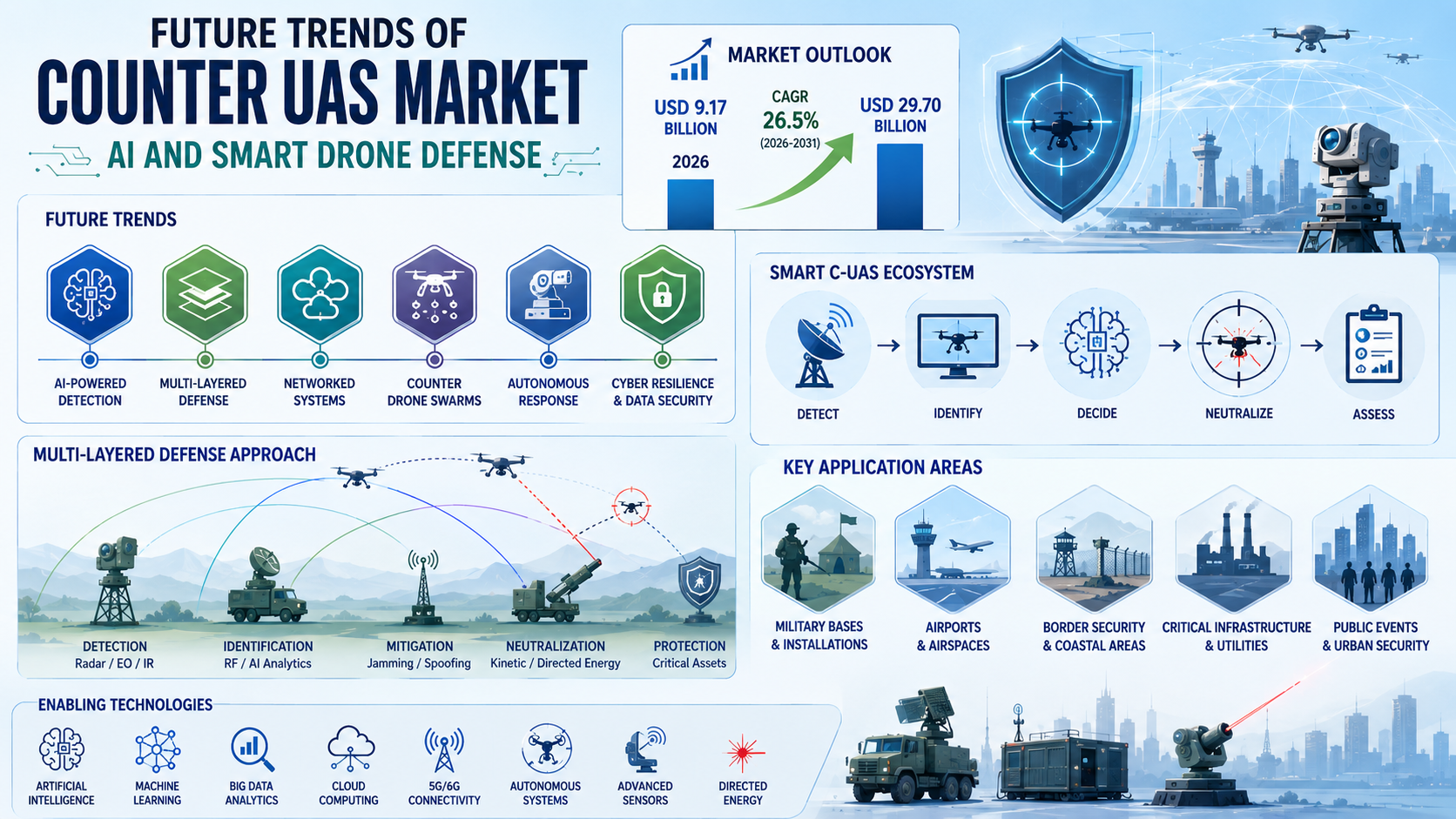
Introduction to Counter UAS Technology
In the rapidly evolving world of unmanned aviation, Counter UAS technology has emerged as a critical component of modern airspace security. The widespread availability of commercial and military drones has created new opportunities for surveillance, logistics, inspection, agriculture, and defense while also introducing significant security challenges. Unauthorized drones can enter restricted airspace, conduct surveillance, disrupt airport operations, compromise critical infrastructure, or support hostile activities.
- Published: August 2026
-
-
Robert Bosch GmbH (Germany) and NVIDIA Corporation (US) are the leading key players in the Automotive Software Market
The global automotive software market is projected to grow from USD 43.22 billion in 2026 to USD 83.26 billion by 2033, at a CAGR of 9.8%. Automotive software is helping OEMs add more vehicle functions, reduce software development time, and generate revenue from software-based features throughout the vehicle lifecycle. OEMs are investing in centralized computing, vehicle operating systems, cloud-connected platforms, and in-house software capabilities to support ADAS, autonomous driving, digital cockpit, vehicle control, and OTA functions across multiple vehicle programs. For instance, Mercedes-Benz, Volkswagen AG, BMW, Toyota Motor Corporation, and Hyundai Motor Company are developing software platforms and centralized architectures to reuse software across models, integrate vehicle functions, and provide continuous software updates. This is also creating opportunities for Tier 1 suppliers to provide integrated software solutions across multiple vehicle programs. Bosch, NVIDIA, Mobileye, Aumovio, and Elektrobit are developing vehicle operating systems, middleware, AI software, ADAS platforms, and connected vehicle solutions for OEM software architectures. The growing use of AI-based vehicle functions, cybersecurity, virtual testing, and OTA software management is increasing demand for reusable software platforms and creating opportunities for OEMs and Tier 1 suppliers to generate revenue from software development and post-sale services.
- Published: August 2026
-
-
3M Company (US) and Tesa SE (Germany) are the leading key players in the Pressure Sensitive Adhesive Tapes Market
The pressure-sensitive adhesive (PSA) tapes market is projected to rise from USD 75.85 billion in 2026 to USD 96.28 billion by 2031, at a CAGR of 4.89% during the forecast period. The market is driven by the increasing demand for versatile, efficient, and high-performance bonding solutions across a broad range of end-use industries. The growing adoption of PSA tapes in automotive, electronics, healthcare, packaging, construction, and consumer goods is significantly contributing to market expansion. Their ability to provide instant adhesion without heat, water, or solvents, along with benefits such as lightweight bonding, ease of application, enhanced durability, and improved manufacturing efficiency, is accelerating their widespread use. Moreover, continuous advancements in pressure-sensitive adhesive formulations, including acrylic, rubber, and silicone-based technologies, are enhancing product performance in demanding applications. The rising preference for sustainable and low-VOC adhesive solutions, increasing use of high-performance tapes in lightweight vehicles and electronic devices, and growing demand for automated assembly and advanced packaging processes are further supporting the growth of the pressure-sensitive adhesive tapes market.
- Published: August 2026
-
-
Waters Corporation (US) and bioMérieux (France) are Leading Players in the Blood Culture Tests Market
The global blood culture tests market is projected to reach USD 8.94 billion by 2031 from USD 6.66 billion in 2026, growing at a CAGR of 6.1% during the forecast period. The adoption of blood culture testing is increasing due to the growing burden of bloodstream infections (BSIs), sepsis, and other systemic bacterial and fungal infections, coupled with the rising need for rapid and accurate pathogen detection. Increasing hospital admissions, surgical procedures, immunocompromised patient populations, and the prevalence of healthcare-associated infections are contributing to higher blood culture testing volumes. Healthcare providers are increasingly emphasizing early diagnosis of bloodstream infections and timely initiation of appropriate antimicrobial therapy to reduce sepsis-related morbidity and mortality.
- Published: August 2026
-
-
F. Hoffmann-La Roche AG (Switzerland) and llumina, Inc. (US) are the leading key players in the Cancer Tumor Profiling Market
The cancer tumor profiling market is projected to reach USD 19.87 billion by 2031 from USD 12.02 billion in 2026, at a CAGR of 10.6%.
- Published: August 2026
-
-
Top Companies in Customer Data Platform Market - Salesforce (US), Oracle (US) and Adobe
The customer data platform (CDP) market is projected to grow from USD 7.34 billion in 2026 to USD 14.04 billion by 2031, at a CAGR of 13.8%. The market is witnessing significant growth as organizations increasingly adopt CDP solutions to unify fragmented customer data, develop persistent customer profiles, and improve personalized engagement across digital and physical channels. Demand is rising with the expansion of ecommerce, digital banking, mobile applications, loyalty programs, subscription services, and omnichannel customer journeys across industries. Organizations are deploying identity resolution, audience segmentation, real-time data activation, journey orchestration, consent management, and customer analytics capabilities to improve marketing effectiveness, customer retention, and lifetime value. Vendors are continuously enhancing CDP platforms with artificial intelligence, composable architectures, cloud data integrations, privacy controls, and real-time decisioning capabilities to support scalable, governed, and insight-driven customer experience strategies.
- Published: August 2026
-
-
3M Company (US) and tesa SE (Germany) are Leading Players in the Adhesive Tapes Market
The adhesive tapes market is projected to grow from USD 92.15 billion in 2026 to USD 117.47 billion by 2031, at a CAGR of 4.97% in terms of value. Market growth is driven by increasing demand for reliable, high-performance bonding and fastening solutions across a wide range of end-use industries. The expanding use of adhesive tapes in automotive, electronics, packaging, healthcare, construction, and industrial manufacturing is fueling market demand. Their ability to provide lightweight bonding, improved durability, ease of application, and enhanced performance compared to conventional fastening methods is accelerating adoption. Additionally, ongoing advancements in adhesive technologies, growing preference for sustainable and solvent-free tape solutions, and increasing demand for efficient assembly and packaging processes are further contributing to the growth of the adhesive tapes market.
- Published: August 2026
-
-
Midmark Corporation (US) and Shenzhen Mindray Bio-Medical Electronics Co., Ltd. (China) are the leading key players in the Veterinary Monitoring Equipment Market
The global veterinary monitoring equipment market is projected to reach USD 1.03 billion by 2031 from USD 0.69 billion in 2026, growing at a CAGR of 8.3% during the forecast period.
- Published: August 2026
-
-
Enovis Corp. (US) and BTL Industries (UK) are the leading key players in the Physiotherapy Equipment Market
The global physiotherapy equipment market size is projected to reach USD 8.37 billion by 2031 from USD 6.11 billion in 2026, at a CAGR of 6.5% during the forecast period. The rising prevalence of musculoskeletal disorders, the increasing incidence of sports injuries and neurological conditions, the growing geriatric population, and expanding awareness of the benefits of rehabilitation are key factors driving growth in the physiotherapy equipment market. However, the high cost of advanced physiotherapy equipment and limited reimbursement for rehabilitation services in several countries are expected to restrain market growth during the forecast period. Meanwhile, rising healthcare investments in emerging economies, improved access to rehabilitation services, and growing adoption of home-based physiotherapy are expected to create lucrative opportunities for companies in the physiotherapy equipment market.
- Published: August 2026
-
-
Milwaukee Tool (US) and Hilti (Liechtenstein) are the leading key players in the Interior Levelling Tools Market
The interior leveling tools market is projected to reach USD 1.78 billion by 2032 from USD 1.23 billion in 2026, at a CAGR of 6.4%.
- Published: August 2026
-
-
AI Impact Analysis on Software Defined Radio (SDR) Market
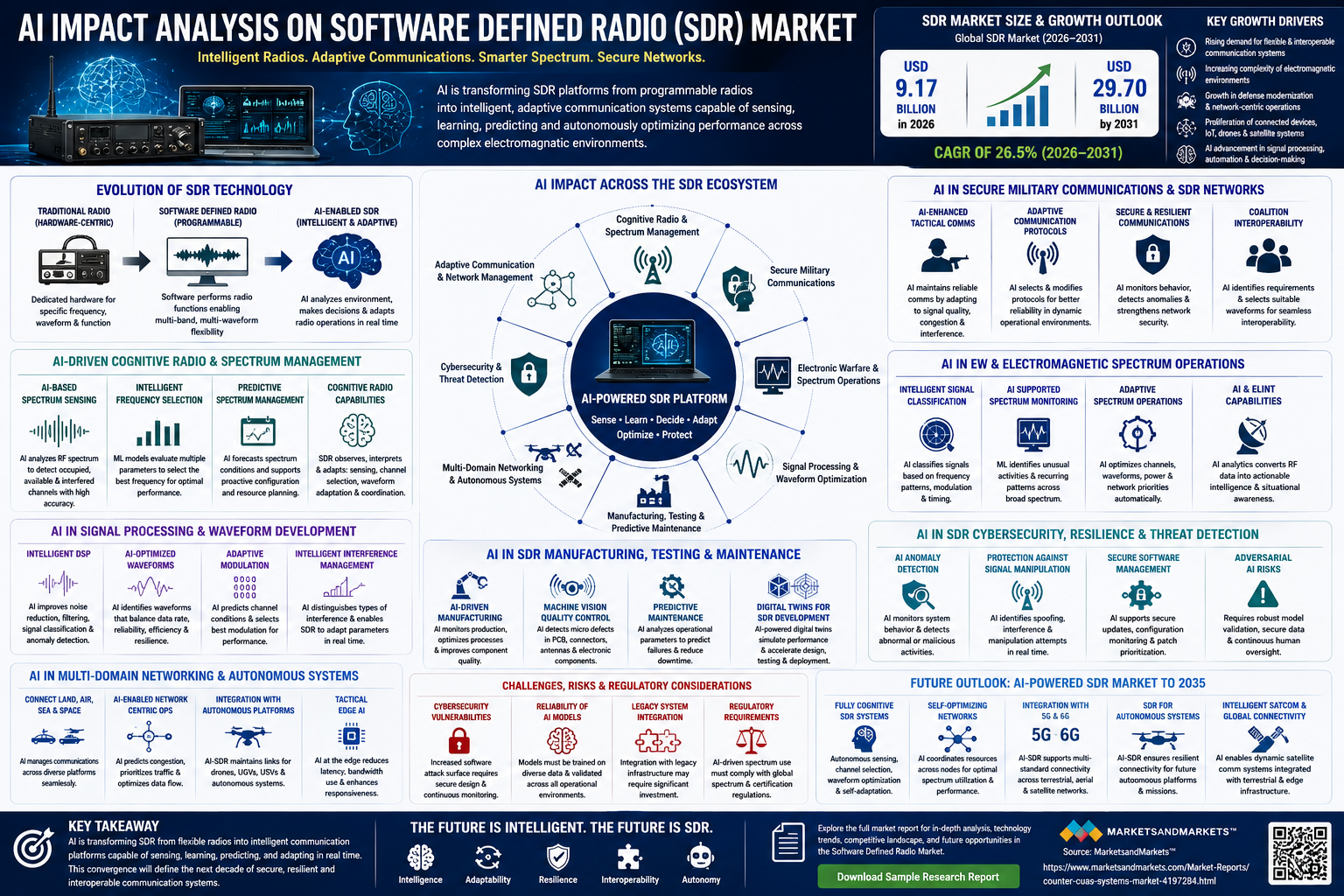
The Software Defined Radio Market is undergoing a fundamental transformation as artificial intelligence becomes increasingly integrated into communication, spectrum management, signal processing, electronic warfare, cybersecurity, and network centric operations. Software Defined Radio technology has already changed the architecture of modern communication systems by shifting many traditionally hardware based radio functions into software. This flexibility allows a single radio platform to support multiple frequencies, waveforms, communication standards, and mission requirements. The integration of artificial intelligence is taking this flexibility further by enabling radios to analyze their electromagnetic environment, adapt communication parameters, identify interference, optimize spectrum usage, and support increasingly autonomous network operations.
- Published: August 2026
-
-
Shenzhen Mindray Bio-Medical Electronics Co., Ltd. (China) and ResMed (US) are the leading key players in the Ventilators Market
The ventilators market is projected to reach USD 3.10 billion by 2031 from USD 2.49 billion in 2026 at a CAGR of 4.4% during the forecast period. The ventilators market is driven by several factors. One key driver is the increasing prevalence of chronic respiratory diseases, such as COPD and asthma, largely due to rising pollution levels and an aging global population. Additionally, there is a significant demand for ICU ventilators, with millions of patients requiring mechanical ventilation each year. Technological advancements, particularly in non-invasive and portable ventilators, are enhancing both treatment effectiveness and patient comfort. Furthermore, the long-term effects of the COVID-19 pandemic have heightened awareness and investment in respiratory care units worldwide, contributing to the ongoing expansion of the market.
- Published: August 2026
-
-
VERTIV GROUP CORP. (US) and SCHNEIDER ELECTRIC (FRANCE) are Leading Players in the Data Center Cooling Market
The global data center cooling market is projected to grow from USD 13.23 billion in 2026 to USD 37.62 billion by 2033, at a CAGR of 16.1% over the forecast period. The market is driven by the rapid global expansion of data centers, fueled by rising demand for cloud computing, big data analytics, and AI applications. As server densities rise to meet performance needs, efficient cooling is critical to maintaining optimal operating conditions and reducing energy consumption. Regulatory pressures for energy-efficient, sustainable infrastructure further accelerate the adoption of advanced cooling technologies, such as direct-to-chip and immersion cooling. Additionally, growing awareness of the need to reduce carbon footprints and operational costs drives investment in innovative, eco-friendly cooling solutions.
- Published: August 2026
-
-
Merck & Co., Inc. (US) and GSK Plc (UK) are the leading key players in the Vaccines Market
The vaccines market (excluding COVID-19) is projected to reach USD 71.14 billion by 2031 from USD 55.68 billion in 2026, at a CAGR of 5.0% during the forecast period. An increase in investments in vaccine development, a subsequent rise in product launches, technological advancements in vaccine development, and the growing prevalence of infectious diseases are key factors expected to drive market growth.
- Published: August 2026
-
-
Thermo Fisher Scientific, Inc. (US) and Danaher Corporation (US) are the leading key players in the Process Analytical Technology Market
The global process analytical technology market is projected to reach USD 11.49 billion by 2031 from USD 5.79 billion in 2026, at a CAGR of 14.7% during the forecast period. Market growth is primarily driven by increasing adoption of PAT solutions to support real-time process monitoring and quality assurance, growing implementation of continuous manufacturing in the pharmaceutical and biopharmaceutical industries, stringent regulatory requirements promoting Quality by Design (QbD) and process analytical technology frameworks, and rising investments in bioprocessing and advanced manufacturing technologies. The integration of artificial intelligence, machine learning, and data analytics into process monitoring systems, along with the growing demand for automation and operational efficiency, is further accelerating market growth. However, the high implementation costs of PAT systems, complexities associated with system integration and validation, and a shortage of skilled professionals are expected to restrain market growth to some extent during the forecast period.
- Published: August 2026
-
-
Nucor Corporation (US) and ArcelorMittal (Luxembourg) are Leading Players in the Commercial Sandwich Panels Market
The commercial sandwich panels market is projected to grow from USD 9.69 billion in 2026 to USD 11.55 billion by 2031, at a CAGR of 3.57% during the forecast period. The commercial sandwich panels market will grow due to rising demand for energy-efficient and sustainable commercial and industrial buildings. The use of commercial sandwich panels is being driven by superior thermal insulation, durability, and quick installation, and they are being used in various applications such as warehouses, data centers, manufacturing units, cold storage, healthcare, and institutional buildings.
- Published: August 2026
-
-
F. Hoffmann-La Roche Ltd. (Switzerland) and Danaher Corporation (US) are the leading key players in the Anatomic Pathology Market
The anatomic pathology market is projected to grow from USD 8.9 billion in 2026 to USD 14.5 billion in 2031, at a CAGR of 10.2% during the forecast period. The growing global burden of cancer and other chronic diseases, which require tissue-based diagnoses for accurate disease characterization and treatment planning, has highlighted the importance of histopathology and cytopathology in clinical practice. There is an increasing demand for early disease detection and precision medicine, which has further reinforced this need.
- Published: August 2026
-
-
Optum (US) and Epic Systems Corporation (US) are the leading key players in the Care Management Solutions Market
The global care management solutions market is projected to reach USD 42.62 billion by 2031, up from USD 22.56 billion in 2026, at a CAGR of 13.6% over the forecast period. The rising prevalence of chronic conditions, aging populations, rising healthcare spending, growing emphasis on value-based care, and the need for better care coordination, patient engagement, and clinical outcomes have significantly accelerated the adoption of care management solutions across healthcare systems. These solutions are increasingly deployed by healthcare providers, payers, accountable care organizations (ACOs), and integrated delivery networks (IDNs) to support disease management, care coordination, utilization management, population health management, transition of care, remote patient monitoring, and personalized patient engagement. The market is evolving from traditional rule-based care management platforms toward AI-led, interoperable, and cloud-based solutions. These solutions can integrate clinical, administrative, and patient-generated health data across the continuum of care. A key emerging trend is the integration of artificial intelligence (AI), predictive analytics, natural language processing (NLP), and generative AI into care management platforms to enable risk stratification, proactive intervention, intelligent care planning, workflow automation, and personalized, data-driven care delivery.
- Published: August 2026
-
-
PureTech Scientific Inc. (US) and China Petrochemical Corporation (Sinopec) (China) are Leading Players in the Glycolic Acid Market
The glycolic acid market is projected to reach USD 0.70 billion by 2032 from USD 0.47 billion in 2026, at a CAGR of 6.9% from 2026 to 2032. The glycolic acid market is driven by growing demand from the cosmetics industry, expanding use in household and industrial cleaning, and increasing adoption in oil & gas applications. Market growth is constrained by concerns about skin irritation and by competition from alternative active ingredients. Key opportunities include the expanding Asia Pacific cosmetics market, the growth of e-commerce and direct-to-consumer beauty brands, and the development of bio-based glycolic acid. However, manufacturers continue to face challenges from complex regional regulations, volatile raw material prices, and supply chain disruptions.
- Published: August 2026
-
-
Military Drones Market Growth Analysis: Emerging Technologies, Procurement Trends, and Global Opportunities
The Global Military Drones Market is projected to grow from USD 34.85 billion in 2026 to USD 109.22 billion by 2031, reflecting a CAGR of 25.7%. This represents an absolute revenue opportunity of about USD 74.37 billion and market expansion of more than 3.1x over five years.
- Published: August 2026
-
-
DOW (US) and Covestro AG (Germany) are Leading Players in the Polyols Market
The polyols market is projected to grow from USD 17.53 billion in 2026 to USD 22.49 billion by 2031, at a CAGR of 5.1% during the forecast period. The polyols market will see growth as demand from various industries such as construction, automotive, furniture, and other sectors, in which polyols are used in the production of polyurethane foam, rises. The increasing use of insulation materials for energy efficiency and lightweight automotive parts is also fueling demand.
- Published: August 2026
-
-
Mueller Industries, Inc and Wieland-Werke AG are Leading Players in the North America Copper & Alloys Tubes & Pipes Market
The North America copper & alloys tubes & pipes market is projected to grow from USD 3.36 billion in 2026 to USD 4.13 billion by 2031, registering a CAGR of 4.2% during the forecast period (2026-2031). Market growth is anticipated owing to the rising demand from various end-use industries, including construction, HVAC/R, plumbing, processing, and energy. The growing investments in the residential construction and commercial construction sectors, along with the modernization of the aging infrastructure for water and gas distribution and growing demand for energy-efficient HVAC systems and heat pumps, will continue to drive the growth of the market. In addition to this, the growing investments in the renewable energy sector, data centers and advanced manufacturing facilities have created an array of new opportunities for the copper tubes and pipes that find their use in transferring heat and fluids and for refrigeration purposes. Also, the strict regulations in buildings and plumbing sector, combined with the growing preference for recyclable and sustainable material is driving the growth of the North America copper & alloys tubes & pipes market.
- Published: August 2026
-
-
LG Electronics (South Korea) and HARMAN International (US) are the leading key players in the Vehicle Telematics Market
The vehicle telematics market is projected to grow from USD 11.18 billion in 2026 to USD 18.25 billion by 2033, at a CAGR of 7.2%. Automotive telematics is evolving beyond basic vehicle connectivity to support data-driven decision-making across connected mobility ecosystems. In passenger cars, it enables remote diagnostics, predictive maintenance, OTA updates, stolen vehicle tracking, and personalized connected services. For LCVs, telematics improves route optimization, driver behavior monitoring, idle time reduction, and last-mile fleet utilization. In trucks, it supports fuel optimization, hours of service (HOS) compliance, predictive maintenance, and long-haul fleet management, while in buses it enhances route scheduling, fleet availability, vehicle health monitoring, and service reliability. Collectively, these capabilities help improve operational efficiency, reduce operating costs, maximize vehicle uptime, and enhance the overall ownership and fleet management experience.
- Published: August 2026
-
-
Toray Industries, Inc. (Japan) and Hexcel Corporation (US) are the Key Players in the Unidirectional Tapes (UD) Market
The unidirectional tapes market is projected to grow from USD 0.33 billion in 2026 to USD 0.53 billion by 2031, at a CAGR of 9.6% during the forecast period.
- Published: August 2026
-
-
TE Connectivity (Ireland) and Aptiv (Ireland) are the leading key players in the EV Connector Market
The EV connector market is projected to reach USD 8.84 billion by 2033, up from USD 3.67 billion in 2026, at a CAGR of 13.4%. The market is shifting from conventional electrical interconnects to advanced connector solutions that support battery electrification, digital vehicle architectures, and growing electronic content.
- Published: August 2026
-
-
10x Genomics, Inc. (US) and Thermo Fisher Scientific Inc. (US) are the leading key players in the Multiomics Market
The multiomics market is projected to reach USD 5.70 billion by 2031 from USD 3.18 billion in 2026, at a CAGR of 12.3%. The growth of the multiomics market is driven by the rising use of multiomics in precision medicine and disease stratification, along with the increasing accessibility of high-quality, integrated omics data for research. Additionally, rapid adoption of single-cell and spatial multiomics is expected to support market growth.
- Published: August 2026
-
-
Siemens AG (Germany) and Schneider Electric SE (France) are the leading key players in the DERMS Architecture & Edge Control Market
The DERMS architecture and edge control market is projected to grow from USD 1.77 billion in 2026 to USD 4.07 billion by 2031, at a CAGR of 18.8% during the forecast period. The rapid expansion of rooftop solar, battery storage, electric vehicles, and flexible loads is pushing utilities to adopt digital grid platforms that can maintain visibility and control as networks become more decentralized. Rising grid connection congestion and growing investment in grid modernization are further accelerating deployment of DERMS and edge control solutions across distribution networks.
- Published: August 2026
-
-
Vertiv Group Corp (US) and Johnson Controls, Inc. (US) are the leading key players in the Data Center Thermal Management Market
The data center thermal management market is projected to grow from USD 13.24 billion in 2026 to USD 32.38 billion by 2032, at a CAGR of 16.1% during the forecast period. The rapid expansion of artificial intelligence (AI), generative AI, high performance computing (HPC), and cloud computing is driving the data center thermal management market. AI servers, particularly those equipped with high-performance GPUs and AI accelerators, consume significantly more power than older CPU-based machines. As a result, rack densities have increased significantly, rising from the typical range of 5–15 kW to as high as 50–100 kW. In some large hyperscale setups, racks can exceed 120 kW. With such high thermal loads, conventional air cooling systems struggle to keep pace. This has led to a strong demand for innovative thermal management solutions, including direct-to-chip liquid cooling, immersion cooling, rear-door heat exchangers, smart airflow management, precision cooling systems, and liquid distribution layer infrastructure.
- Published: August 2026
-
-
Toray Industries, Inc. (Japan) and Teijin Limited (Japan) are the leading key players in the EV Composites Market
The EV composites market is projected to grow from USD 2.69 billion in 2026 to USD 5.45 billion in 2031, at a CAGR of 15.2% during the forecast period. The EV composites market is primarily driven by the automotive industry's increasing focus on lightweighting, electrification, and fuel efficiency. Nearly 22 million electric cars were produced globally in 2025, with Asia Pacific accounting for 78.2% of total EV production, highlighting the region's strong demand for composite materials. Asia Pacific represented 71.4% of global motor vehicle production, reinforcing its position as the largest market for EV composites. The growing adoption of EVs and premium vehicles, coupled with stringent emission regulations and advancements in composite manufacturing technologies, continues to accelerate the use of composites in structural components, body panels, and battery enclosures. High material and processing costs remain key challenges for wider market adoption.
- Published: August 2026
-
-
Noom, Inc (US) and Teladoc Health, Inc. (US) are Leading Players in the Digital Therapeutics Market
The global digital therapeutics market is projected to reach USD 35.37 billion by 2031 from USD 10.95 billion in 2026, at a CAGR of 26.4% from 2026 to 2031. The rising prevalence of chronic diseases, increasing healthcare expenditure, growing demand for personalized remote care, and the shift toward value-based healthcare are driving the adoption of digital therapeutics (DTx) across healthcare providers, payers, employers, and pharmaceutical companies. According to the World Health Organization (WHO), noncommunicable diseases (NCDs) account for approximately 43 million deaths annually, representing 75% of all deaths worldwide. In the US, the Centers for Disease Control and Prevention (CDC) estimates that 90% of the nation’s annual healthcare expenditure is spent on individuals with chronic and mental health conditions. These trends are accelerating the adoption of evidence-based DTx solutions leveraging technologies such as artificial intelligence (AI), cognitive behavioral therapy (CBT), remote patient monitoring (RPM), wearable integration, and mobile health applications to improve disease management and patient outcomes. Additionally, the American Medical Association (AMA) reports that digital therapeutics are among the digital health technologies with the highest planned future adoption by physicians, while evolving regulatory frameworks and reimbursement pathways are further supporting market growth. However, the market continues to face challenges related to limited reimbursement, evolving regulatory requirements, data privacy and cybersecurity concerns, patient engagement, and integration with existing clinical workflows.
- Published: August 2026
-
-
Hexagon Purus and NPROXX are Leading Players in the Hydrogen Storage Tanks and Transportation Market
The hydrogen storage tanks and transportation market is projected to grow from USD 295.5 million in 2026 to USD 2,280.6 million by 2031, at a CAGR of 50.5%. This rapid growth can largely be attributed to the fast-paced global shift toward using hydrogen as a key source of fuel. Hydrogen is becoming a major energy source for industries and sectors that are difficult to decarbonize. This has stimulated an increasing need for the safe, efficient, and high-performance storage and transportation of hydrogen. Millennia of innovation and progress in various sectors have led to the use of hydrogen storage tanks designed for the storage, transfer, and consumption of hydrogen in the fields of transport, industry, and energy, as well as vehicles and transportation systems such as tube trailers and liquid hydrogen.
- Published: August 2026
-
-
Software Defined Radio Market Companies: Motorola Solutions, Inc. and L3Harris Technologies, Inc. are the Leading Key Players
The Software Defined Radio (SDR) Market is projected to grow from USD 23.52 billion in 2026 to USD 36.80 billion by 2033 at a CAGR of 6.6% during the forecast period, and in terms of volume, the market is projected to grow from 3,424,776 units in 2026 to 4,476,811 units by 2033. Companies are using SDRs for secure and reliable communication. These radios can support different frequencies and waveforms in one device. Software updates allow users to add new features without replacing the full radio. SDRs are widely used in military, naval, public safety, and aviation communication.
- Published: August 2026
-
-
BASF SE (Germany) and Stepan Company (US) are Leading Players in the Surfactants Market
The surfactants market is estimated to grow from USD 52.25 billion in 2026 to USD 66.95 billion by 2031, at a CAGR of 5.08%. The growing consumption of home care and personal care products is supporting the expansion of the surfactants market. Surfactants are essential ingredients in products such as detergents, shampoos, body washes, facial cleansers, dishwashing liquids, and household cleaners because they provide cleansing, foaming, emulsifying, and wetting properties. Rising hygiene awareness, improving living standards, and changing consumer lifestyles are increasing the use of these products across both developed and emerging economies. Manufacturers are continuously introducing new formulations with enhanced performance and improved consumer experience, further supporting surfactant demand. Product diversification across premium, specialized, and everyday consumer products is also increasing surfactant consumption. This steady growth in home and personal care applications continues to create long-term opportunities for surfactant manufacturers worldwide.
- Published: August 2026
-
-
Vaisala (Finland) and Mitsubishi Electric Corporation (Japan) are the leading key players in the Weather Monitoring Systems Market
The Weather Monitoring Systems market is projected to grow from USD 1.10 billion in 2026 to USD 1.40 billion by 2031 at a CAGR of 5.0%. The Weather Monitoring Systems market is driven by rising demand for early warning of storms, floods, strong winds and other weather risks. Growth also comes from replacing old equipment and expanding monitoring networks for aviation, transport, agriculture, energy, utilities, defense and cities.
- Published: August 2026
-
-
TESLA and VOLKSWAGEN AG are the leading players in the Over the Air (OTA) Updates Market
The over the air updates market for automotive is projected to grow from USD 5.61 billion in 2026 to USD 17.10 billion by 2033, at a CAGR of 17.2%.
- Published: August 2026
-
-
Thermo Fisher Scientific Inc. (US) and Bio-Techne (US) are the leading key players in the Research Use (RUO) Recombinant Protein Market
The research use recombinant protein market is projected to reach USD 1.55 billion by 2031 from USD 1.11 billion in 2026, at a CAGR of 7.0% during the forecast period. Thermo Fisher Scientific Inc. (US), Bio-Techne (US), Merck KGaA (Germany), Danaher Corporation (US), Revvity (US), BPS Bioscience, Inc. (US), Bio-Rad Laboratories, Inc. (US), Sartorius AG (Germany), Sino Biological, Inc. (China) and GenScript (China) are the key players in this market. These market players have adopted various approaches, including product launches, collaborations, acquisitions, agreements, and expansions, to enhance their market positions.
- Published: August 2026
-
-
Hilti Group (Liechtenstein) and Leica Geosystems (Switzerland) are the leading key players in the Rotary laser exterior levelling tool Market
The rotary laser exterior leveling tool market is projected to reach USD 0.79 billion by 2032, up from USD 0.58 billion in 2026, at a 5.4% CAGR over the forecast period. Demand for these tools is expanding steadily due to rising construction, infrastructure development, and landscaping activities worldwide. These tools provide highly accurate horizontal and vertical leveling over long distances, making them essential for applications such as road construction, foundation layout, grading, drainage installation, fencing, and large-scale site preparation. Contractors, surveyors, and civil engineering firms are increasingly replacing traditional leveling methods with rotary laser systems because they improve precision, reduce labor requirements, and shorten project completion times. Growing investments in residential, commercial, and industrial construction, particularly in developing economies, continue to fuel market demand.
- Published: August 2026
-
-
Medtronic plc (Ireland) and Boston Scientific Corporation (US) are the leading key players in the Tumor Ablation Market
The global tumor ablation market is projected to reach USD 1.89 billion by 2031 from USD 1.10 billion in 2026, at a CAGR of 11.4% during the forecast period. The market for tumor ablation is witnessing sustained growth on account of the growing incidence of cancers, such as liver, lung, kidney, bone, and prostate cancers around the world, where tumor ablation has emerged as a viable alternative to surgery. Growing preferences for minimally invasive therapies compared with conventional surgery have been boosting demand for tumor ablations, owing to factors such as shorter hospital stay times, fewer procedure-related complications, faster recovery times, and the ability to treat patients unfit for surgery due to age and other comorbid conditions. Advances in tumor ablation technology for various energy sources, namely radiofrequency, microwave, cryoablation, laser, HIFU, and IRE, have increased the precision and safety of the procedures, thus encouraging physicians to adopt them more extensively. Other factors fueling the market include a growing number of dedicated cancer centers, increasing expertise of healthcare professionals in image-guided percutaneous procedures, favorable reimbursement policies in several developed countries, and investment in interventional oncology.
- Published: August 2026
-
-
BASF SE (Germany) and Bayer AG (Germany) are the leading key players in the Agricultural Microbials Market
The agricultural microbials market was estimated at USD 10.83 billion in 2026 and is projected to reach USD 21.57 billion by 2031, registering a CAGR of 14.8%. The market is gaining impetus from surging utilization of sustainable and organic agricultural measures along with heightened demand for biological crop inputs, and the need to enhance crop yield with minimal reliance on synthetic agrochemicals. The rising concerns regarding soil deterioration, dwindling soil microbial diversity, and environmental issues associated with chemical sprays are pushing farmers to better integrate beneficial microbials to promote nitrogen fixation, pest control, and improved crop health. Advancements in microbial strain identification, fermentation processes, coating and shelf life extension technologies have helped microbial products demonstrate proven results and commercial appeal across a wide variety of crops and climatic zones. The liberal government policies on organic and sustainable farming, integrated crop management, and organic farming, and the increasing investment in R&D are several factors augmenting the market. Apart from this, the adoption of precision farming strategies and the increased realization among growers about the long-term benefits of soil health, input efficiency, and climate-resilient cultivation systems are driving the adoption of agricultural microbials worldwide.
- Published: August 2026
-
Market Research Reports
- ›
Information and Communications Technology
- ›
Semiconductor and Electronics
- ›
Medical Devices
- ›
Chemicals
- ›
Advanced Materials
- ›
Energy and Power
- ›
Food and Beverage
- ›
Biotechnology
- ›
Aerospace and Defence
- ›
Healthcare IT
- ›
Automotive and Transportation
- ›
Automation and Process Control
- ›
Agriculture Industry
- ›
Packaging
- ›
Pharmaceuticals
- ›
Building and Construction
- ›
Mining, Minerals and Metals
- ›
Analytical and Scientific Instrumentation
- ›
Engineering Equipment and Devices
